13.1.2.3 Infringement - Elements - Likelihood Of Confusion - Factor
Overview of this form
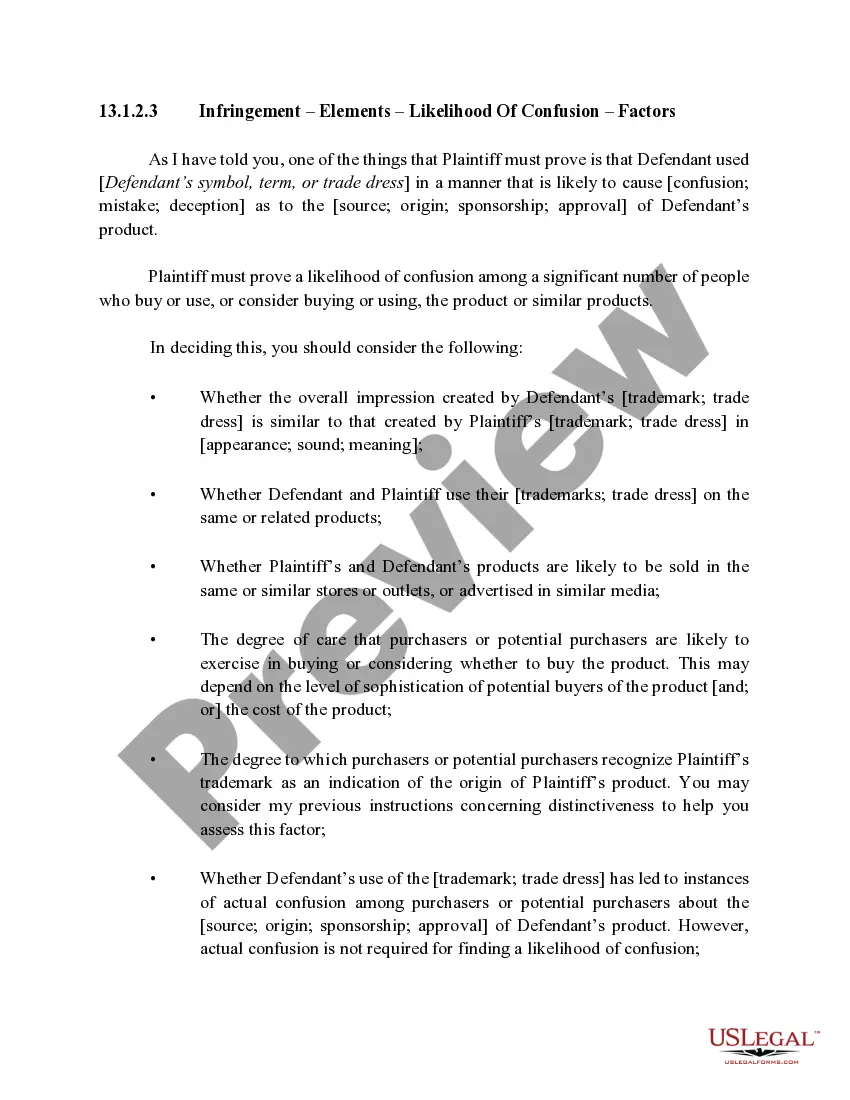
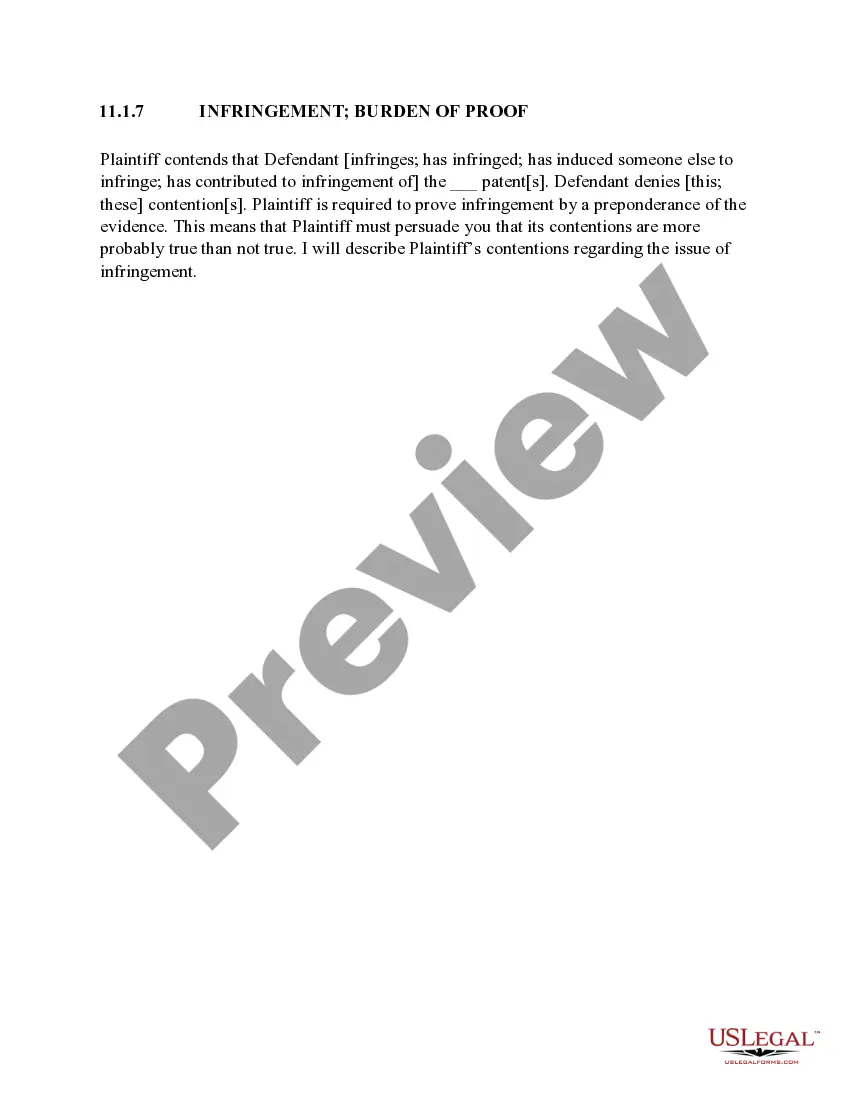
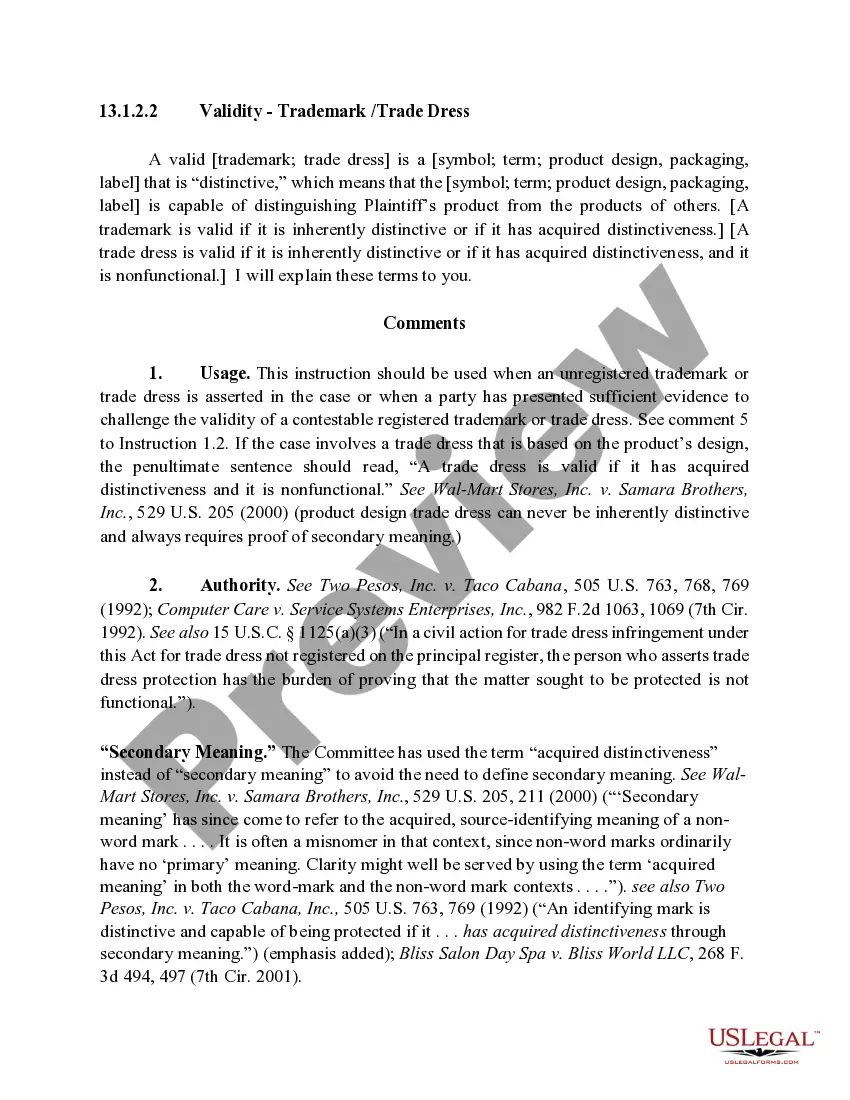
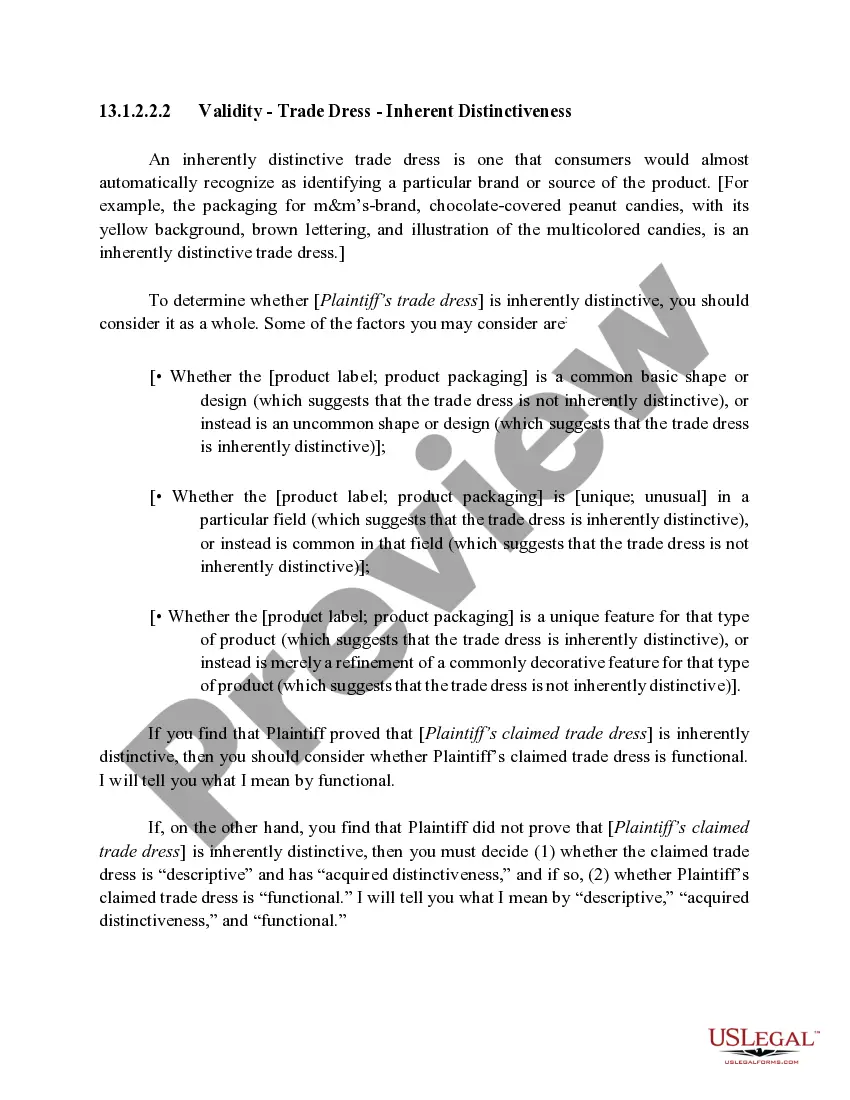
The 13.1.2.3 Infringement - Elements - Likelihood Of Confusion - Factor form provides official jury instructions for assessing trademark infringement based on the likelihood of confusion. This form, adopted by the Federal 7th Circuit Court, guides jurors in determining whether the use of a mark by a defendant may mislead consumers regarding the origin or sponsorship of the products involved. It is distinct in that it emphasizes various factors that influence consumer confusion, setting it apart from other legal instructions related to trademark disputes.
What’s included in this form
- Definition of likelihood of confusion and its significance in trademark infringement cases.
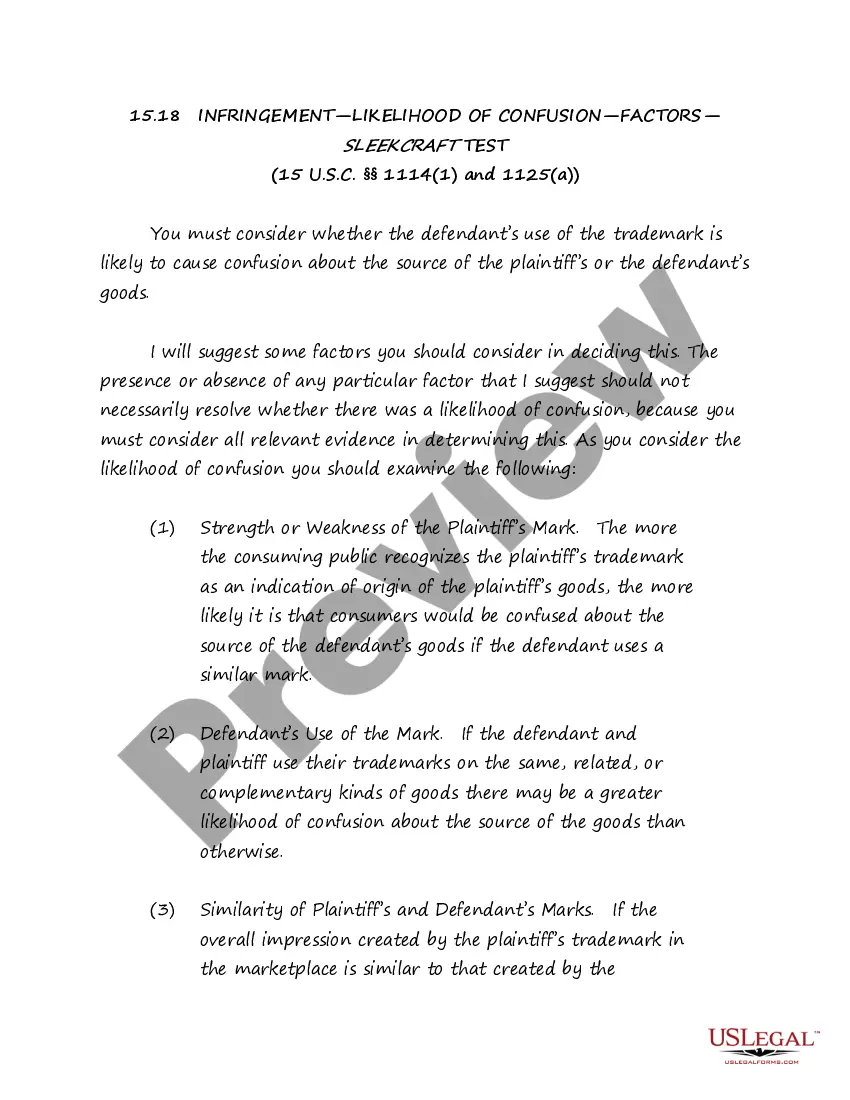
- Factors to consider when evaluating confusion, such as similarities between marks and their usage in the marketplace.
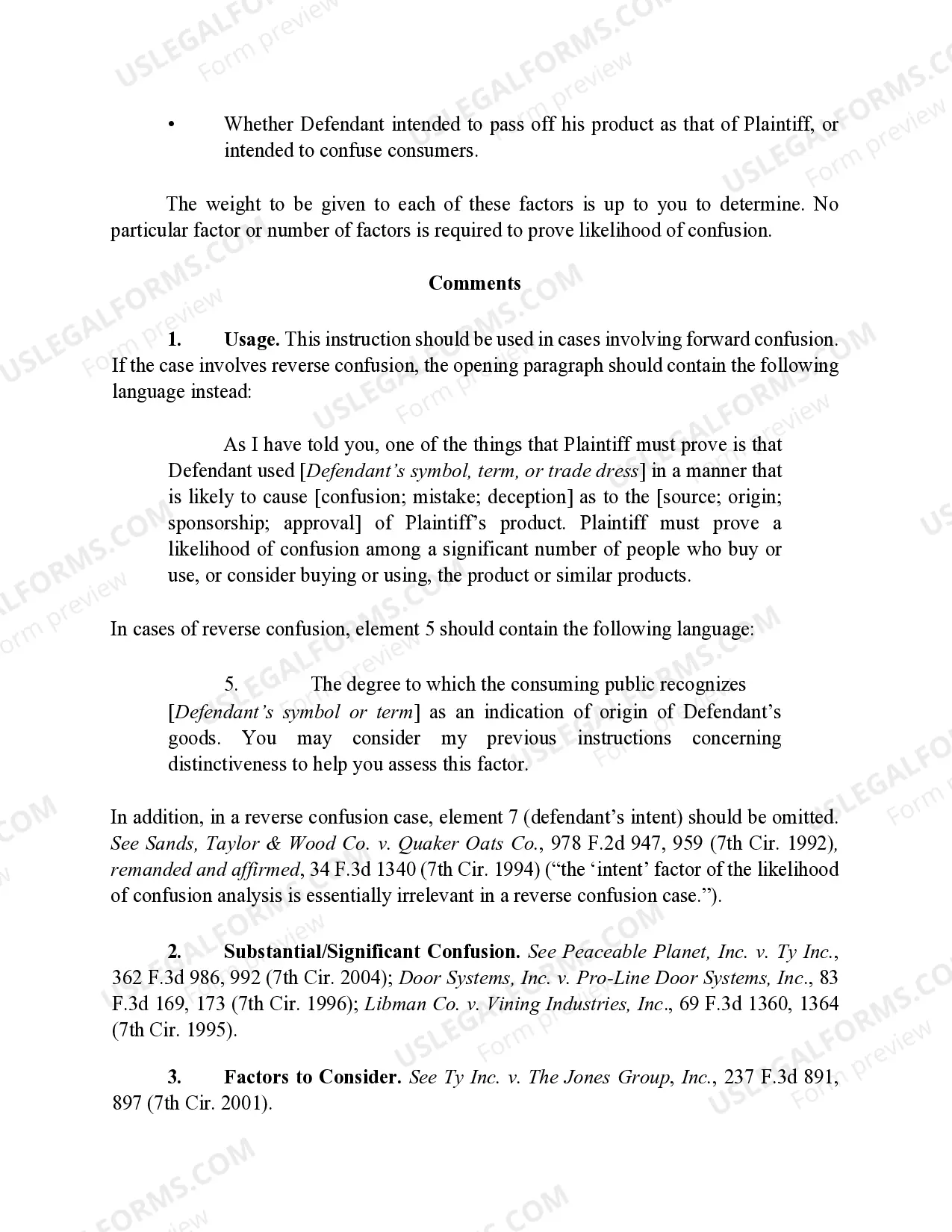
- Guidance on distinguishing forward confusion from reverse confusion.
- Instructions regarding the relevance of actual confusion and intent in the evaluation process.
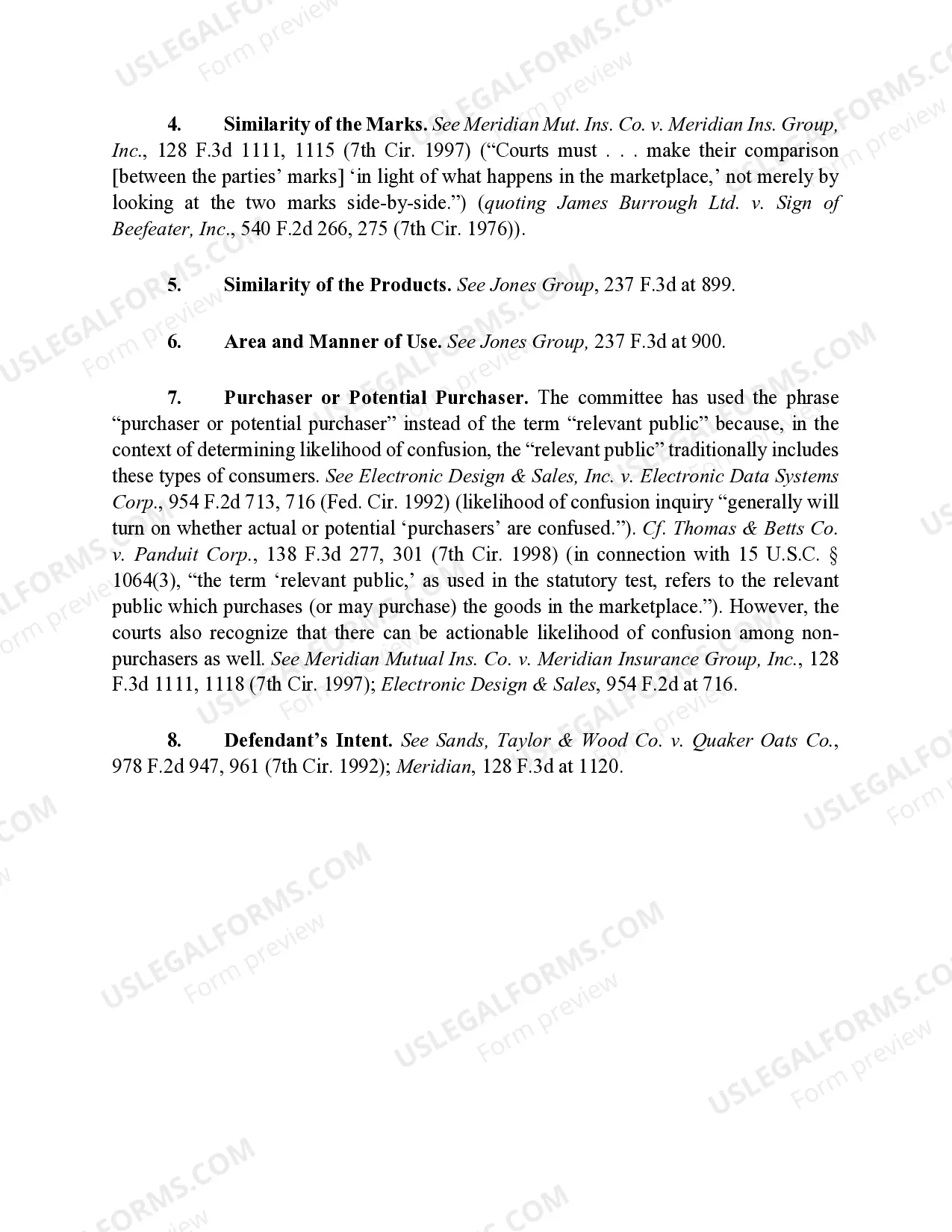
- References to relevant case law for further clarity on legal standards.
Common use cases
This form should be used in legal cases where a plaintiff alleges trademark infringement based on a likelihood of confusion. It is particularly relevant when assessing disputes involving similar trademarks, trade dress, or goods that could potentially mislead consumers about their source. Legal practitioners use this form during jury instructions in federal court to help jurors systematically evaluate the evidence presented in such cases.
Who should use this form
- Attorneys representing clients in trademark infringement cases.
- Judges overseeing cases that involve jury trials related to trademark disputes.
- Legal scholars studying trademark law and jury instruction processes.
Instructions for completing this form
- Identify the parties involved in the infringement case: the plaintiff and defendant.
- Review the trademarks or trade dress that is in dispute.
- Assess the likelihood of confusion based on the factors provided in the instruction.
- Consider any evidence of actual confusion among consumers.
- Weigh the relevance of each factor to determine the overall likelihood of confusion.
Notarization requirements for this form
This form does not typically require notarization to be legally valid. However, some jurisdictions or document types may still require it. US Legal Forms provides secure online notarization powered by Notarize, available 24/7 for added convenience.
Get your form ready online
Our built-in tools help you complete, sign, share, and store your documents in one place.
Make edits, fill in missing information, and update formatting in US Legal Forms—just like you would in MS Word.
Download a copy, print it, send it by email, or mail it via USPS—whatever works best for your next step.
Sign and collect signatures with our SignNow integration. Send to multiple recipients, set reminders, and more. Go Premium to unlock E-Sign.
If this form requires notarization, complete it online through a secure video call—no need to meet a notary in person or wait for an appointment.
We protect your documents and personal data by following strict security and privacy standards.

Make edits, fill in missing information, and update formatting in US Legal Forms—just like you would in MS Word.

Download a copy, print it, send it by email, or mail it via USPS—whatever works best for your next step.

Sign and collect signatures with our SignNow integration. Send to multiple recipients, set reminders, and more. Go Premium to unlock E-Sign.

If this form requires notarization, complete it online through a secure video call—no need to meet a notary in person or wait for an appointment.

We protect your documents and personal data by following strict security and privacy standards.
Avoid these common issues
- Failing to consider all relevant factors when determining likelihood of confusion.
- Confusing forward confusion with reverse confusion and applying incorrect legal standards.
- Neglecting to evaluate the sophistication of the target consumer group.
- Overlooking the importance of actual confusion evidence in the analysis.
Benefits of completing this form online
- Easy access to official legal language and guidance created by licensed attorneys.
- Convenient download options for immediate use in legal proceedings.
- Editable format allows customization to meet specific case needs.
- Reliable resources that reflect up-to-date legal standards and practices.
Legal use & context
- This form is crucial in federal trademark infringement cases under the 7th Circuit jurisdiction.
- It serves as a legal framework for assessing claims and guiding jury decisions.
- The factors outlined are based on established legal precedents, ensuring fair evaluations.
Quick recap
- The 13.1.2.3 Infringement form is crucial for establishing trademark confusion cases.
- Key factors must be evaluated to prove a likelihood of confusion.
- The form is applicable in multiple states under federal law.
- Understanding the criteria and how to document them is essential for legal proceedings.
Looking for another form?
Form popularity
FAQ
Likelihood of confusion exists between trademarks when the marks are so similar and the goods and/or services for which they are used are so related that consumers would mistakenly believe they come from the same source.
These factors include the strength of the mark, the proximity of the goods, the similarity of the marks, evidence of actual confusion, the marketing channels used, the types of goods, the degree of care likely to be exercised by the purchaser, the defendant's intent in selecting the allegedly infringing mark and the
What is Likelihood of Confusion? Likelihood of confusion is a part of a proving trademark infringement. It means that the public is likely to confuse your mark and the mark of another business.
The CAFC stated that under a dilution claim, fame either exists or does not exist; it is an all or nothing test. In contrast, under likelihood of confusion, fame is measured along a spectrum from very weak to very strong.
"Likelihood of confusion" the strength of the trademark owner's mark; the degree of similarity between the trademark owner's mark and the allegedly infringing mark; evidence of actual consumer confusion; the marketing channels used;
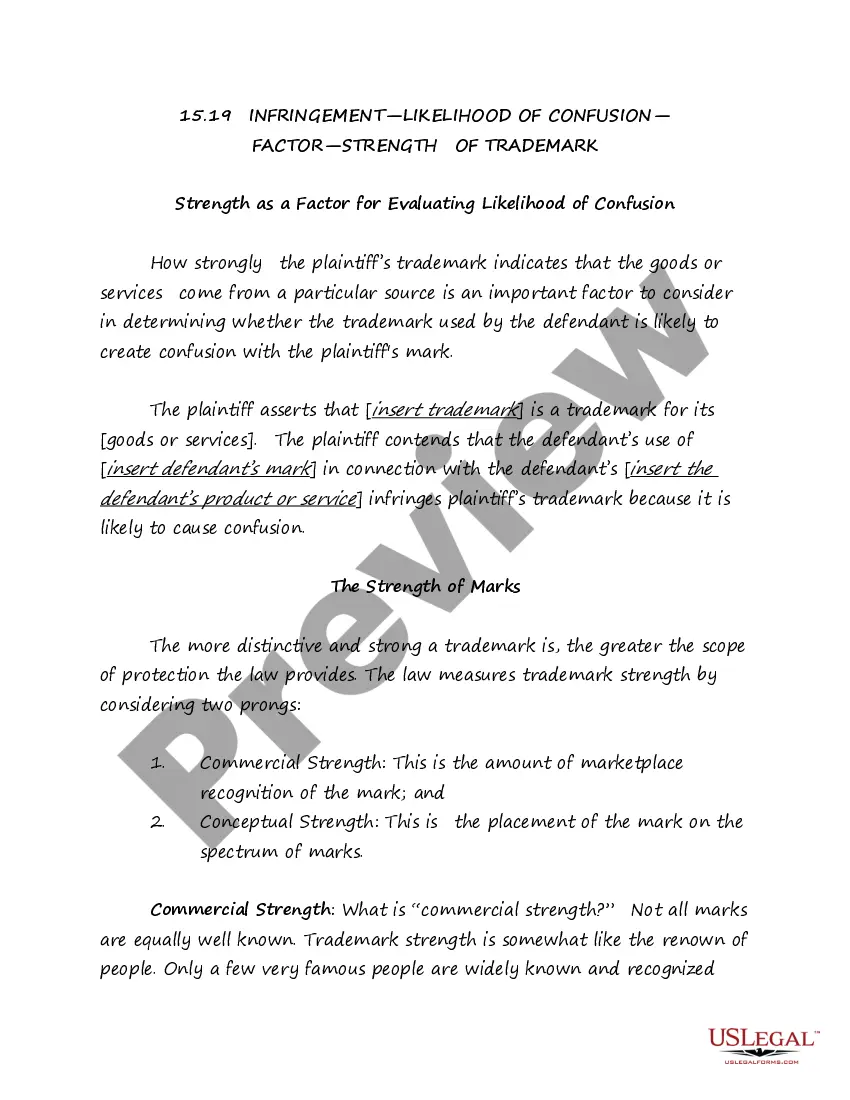
Strength as a Factor for Evaluating Likelihood of Confusion How strongly the plaintiff's trademark indicates that the goods or services come from a particular source is an important factor to consider in determining whether the trademark used by the defendant is likely to create confusion with the plaintiff's mark.
Eight Factors for Likelihood of Confusion Strength of the Senior Mark.Relatedness of the Products.Similarity of the Marks.Evidence of Actual Confusion.Marketing Channels Used.The Degree of Purchaser Care.The Intent of the Defendant in Selecting the Mark.Likelihood of Expansion of the Product Lines.