Sample Letter to Client to Notify of Full, Final and Absolute Release
Understanding this form
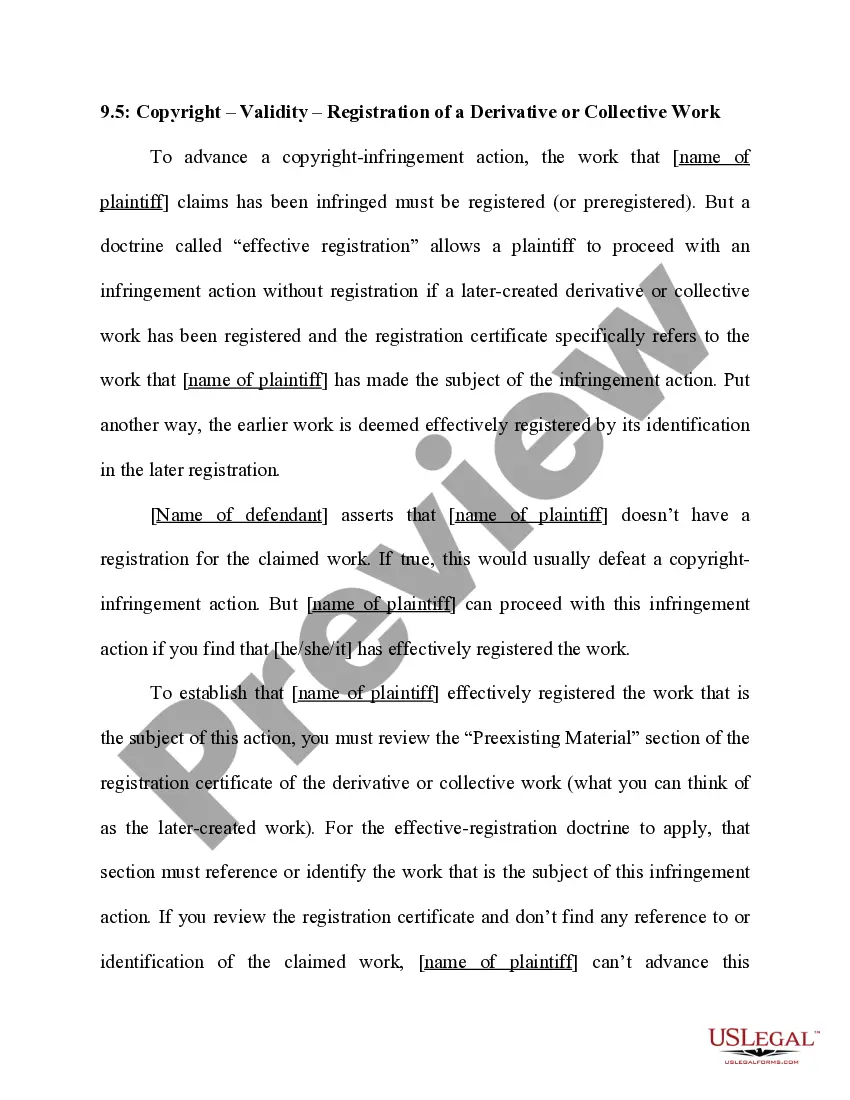
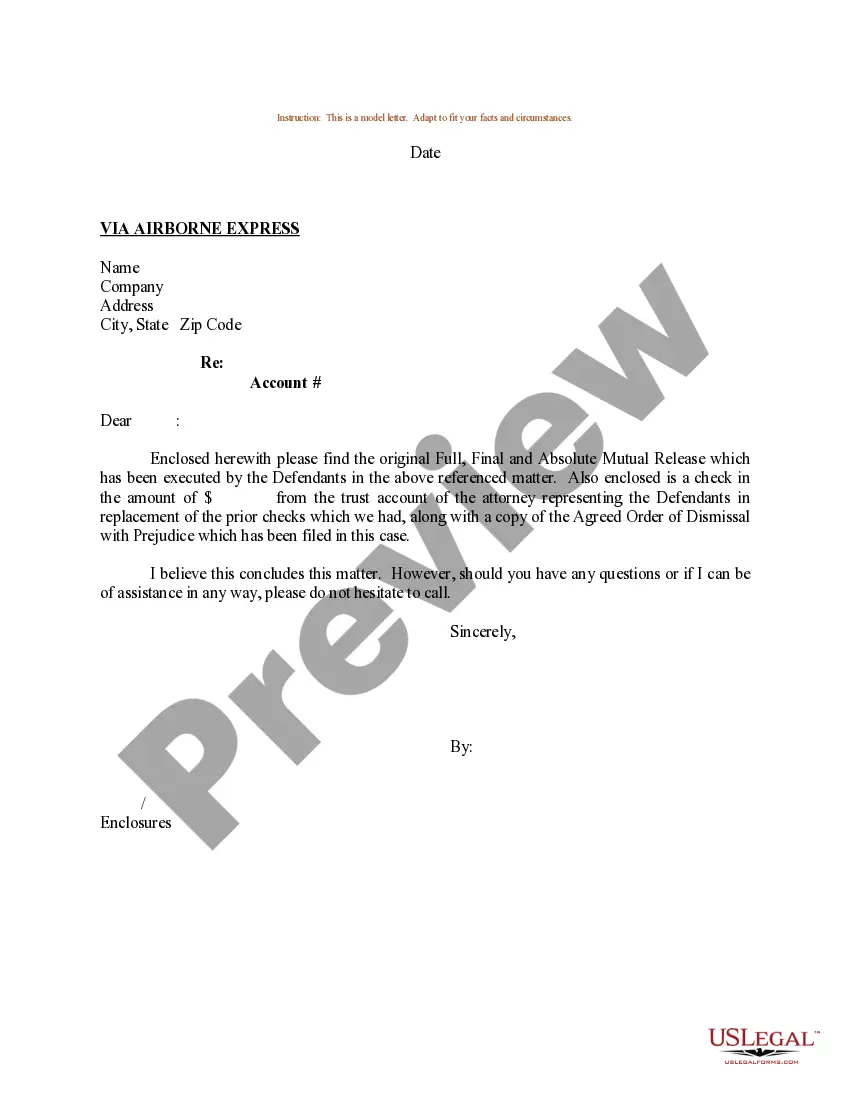
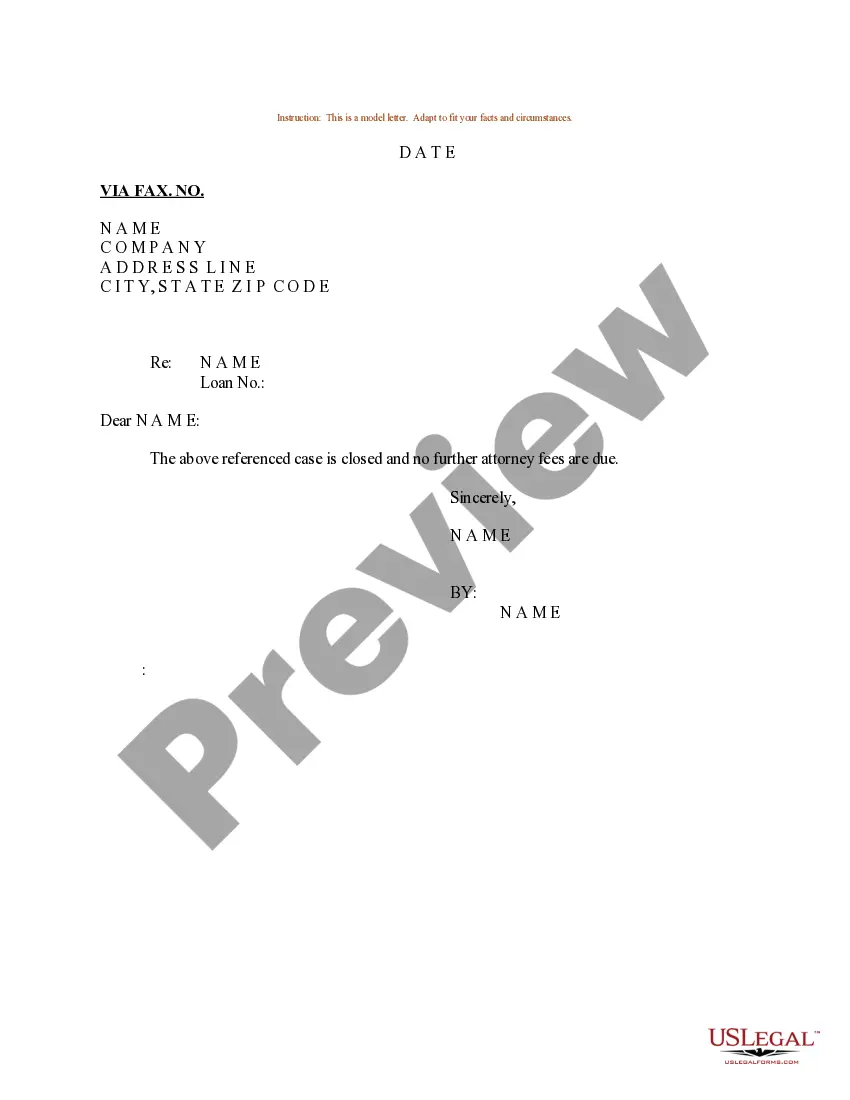
This form is a Sample Letter to Client to Notify of Full, Final and Absolute Release. It serves as a professional communication tool for attorneys to inform clients about the completion and closure of a matter. This letter outlines that the client has received a full release from obligations and is distinct from other legal notices due to its specific focus on release acknowledgment.
What’s included in this form
- Date: The date the letter is written.
- Recipient Info: Name and address of the client.
- Subject Line: Clearly states the purpose of the letter.
- Body: Acknowledges the pleasure of assisting the client and offers further assistance if needed.
- Signature: Space for the attorneyâs signature and name.

When to use this document
This form should be used when an attorney has completed a legal matter for a client and needs to formally notify them of the final resolution. It is essential when ensuring that the client understands they have no further obligations and that their matter is fully resolved.
Intended users of this form
- Attorneys completing a legal matter on behalf of a client.
- Law firms that want to maintain clear communication with clients.
- Clients who have received legal services and need assurance of their release from obligations.
Completing this form step by step
- Identify the date of the letter.
- Enter the recipientâs name and address at the top.
- Specify the subject line clearly stating the purpose of the letter.
- Compose the body of the letter, emphasizing the finality of the release.
- Sign the letter and print the attorney's name beneath the signature.
Does this document require notarization?
This form does not typically require notarization unless specified by local law. Ensure compliance with relevant legal standards based on your jurisdiction.
Get your form ready online
Our built-in tools help you complete, sign, share, and store your documents in one place.
Make edits, fill in missing information, and update formatting in US Legal Forms—just like you would in MS Word.
Download a copy, print it, send it by email, or mail it via USPS—whatever works best for your next step.
Sign and collect signatures with our SignNow integration. Send to multiple recipients, set reminders, and more. Go Premium to unlock E-Sign.
If this form requires notarization, complete it online through a secure video call—no need to meet a notary in person or wait for an appointment.
We protect your documents and personal data by following strict security and privacy standards.

Make edits, fill in missing information, and update formatting in US Legal Forms—just like you would in MS Word.

Download a copy, print it, send it by email, or mail it via USPS—whatever works best for your next step.

Sign and collect signatures with our SignNow integration. Send to multiple recipients, set reminders, and more. Go Premium to unlock E-Sign.

If this form requires notarization, complete it online through a secure video call—no need to meet a notary in person or wait for an appointment.

We protect your documents and personal data by following strict security and privacy standards.
Mistakes to watch out for
- Failing to include the date of the letter.
- Omitting important client details, such as their full name and address.
- Not clearly stating the purpose of the letter in the subject line.
- Neglecting to sign the letter, which can undermine its authority.
Why complete this form online
- Convenience of downloading a ready-made template tailored to your needs.
- Editability to customize the form content as necessary.
- Reliability of using a form drafted by licensed attorneys to ensure legal compliance.
Legal use & context
- This letter serves as an official record of the resolution of a legal matter.
- It can be presented as proof of release in case of future disputes.
- The document may be subject to specific state regulations, so ensure it aligns with local laws.
Key takeaways
- This form is crucial for confirming the resolution of legal matters.
- Proper completion ensures clarity and legal compliance.
- Always review state requirements for any additional specifications.
Looking for another form?
Form popularity
FAQ
Most formal letters will start with 'Dear' before the name of the person that you are writing to: 'Dear Ms Brown,' or 'Dear Brian Smith,' You can choose to use first name and surname, or title and surname. 'Dear Sir/Madam,' Remember to add the comma.
Address or greet the concerned person properly like Dear Sir/Madam. Always mention the subject of writing the letter. Be concise in your letter. The tone of the letter should be very polite and not harsh. Write in a proper format and take care of the presentation of a letter. Mention the address and date correctly.
Set up your font and margins. Create your heading. Write your salutation. Use your body paragraphs to state your reasons for writing. Add your closing body paragraph and signature. Mention and add your enclosures. Proofread and send your letter.
Grammar Clinic: Summary of the 3 Types of Letters {Formal, Informal and Semi-Formal Letter} You can find four basic elements in both formal and informal letters: a salutation, an introduction, body text and a conclusion with signature. The salutation is also known as the greeting.
The general greetings used in formal letters are Sir or Madam. If you know the name of the person the salutation may also be Mr. XYZ or Ms. ABC.
Broadly there are two types of letters Formal Letters and Informal Letters but the classification of letters are also based on the contents, formalities, the purpose of letter writing etc.
Begin your letter. Begin your letter by including your address at the top right-hand corner of the page, and the address and name of the person you are writing to at the top left hand corner. Writing the letter. Your letter does not need to be long, but be clear. Signing off.
Audio letter. Business letter. Cease and desist letter. Chain letter. Cover letter. Crossed letter. Dear John letter. Epistle.
Formal Letter: A formal letter is one written in an orderly and conventional language and follows a specific stipulated format.An example of a formal letter is writing a resignation letter to the manager of the company, stating the reason for resignation in the same letter.