Complaint For Wrongful Discharge of Physician - Jury Trial Demand
What this document covers
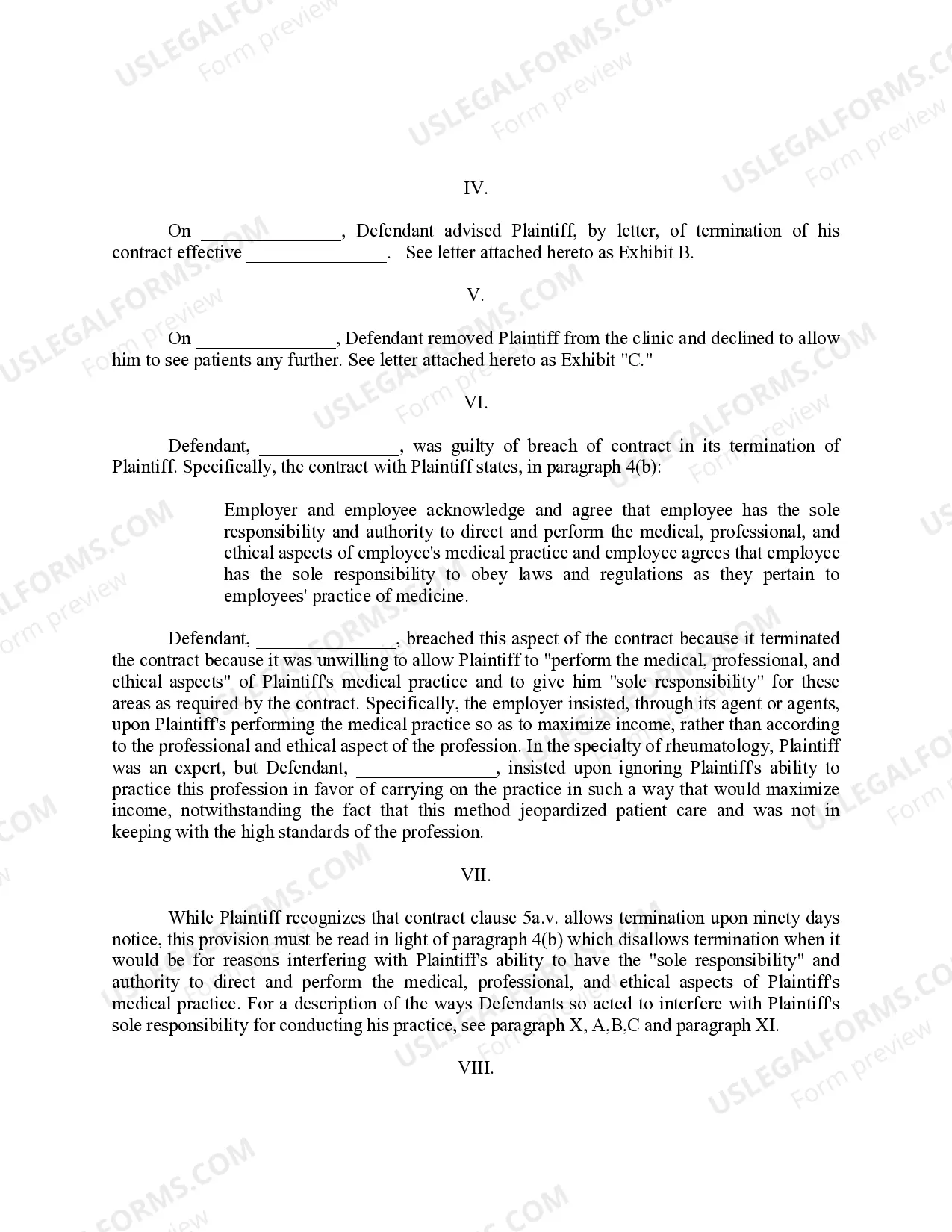
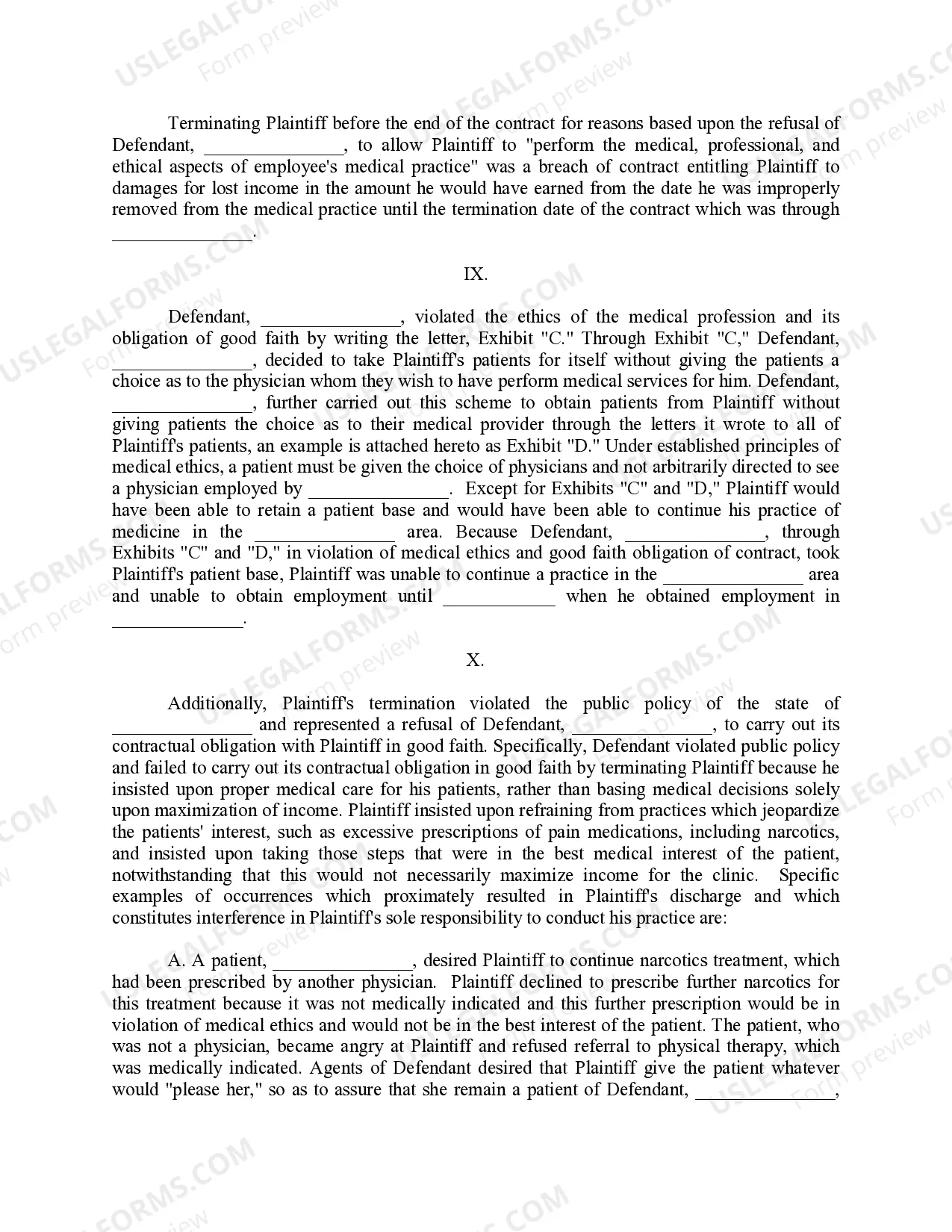
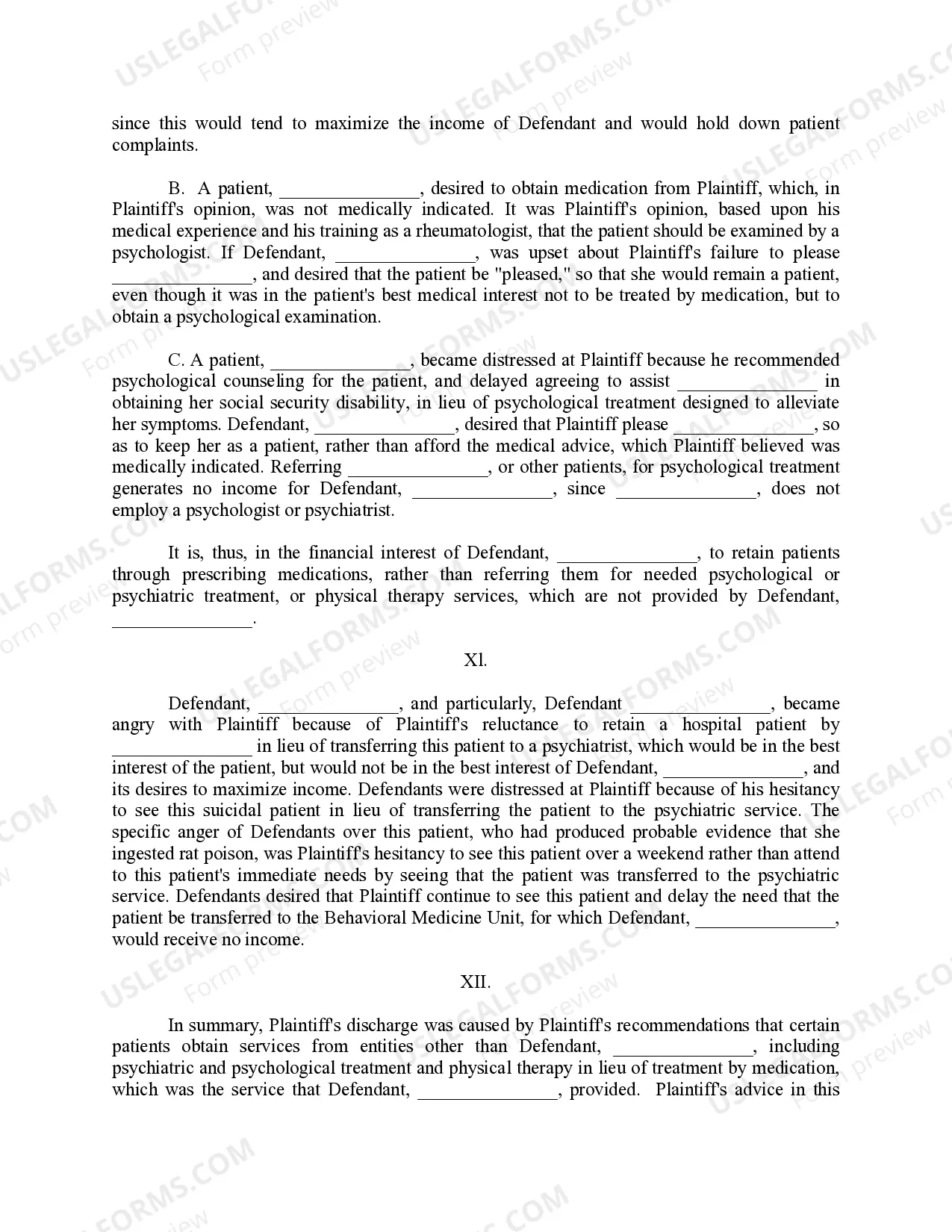
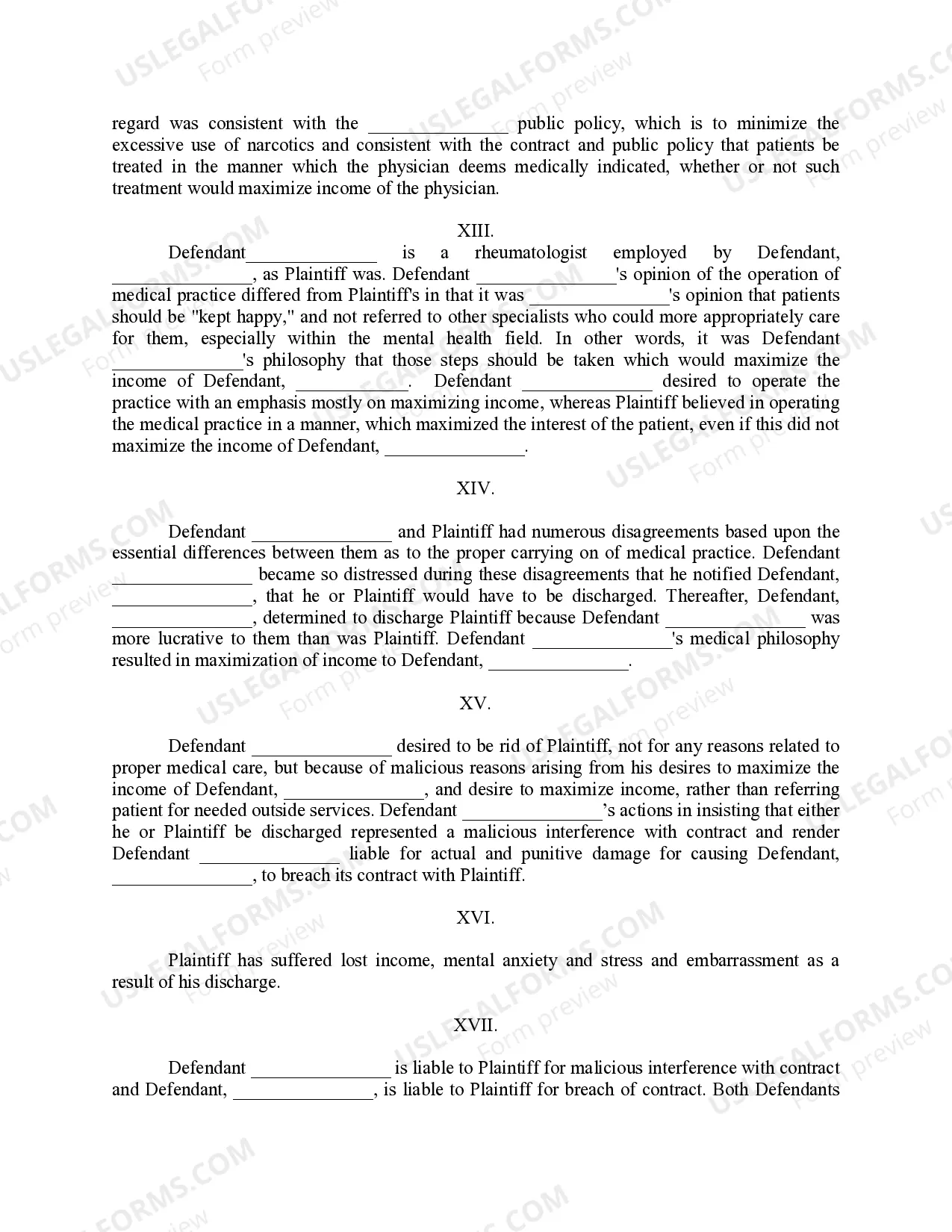
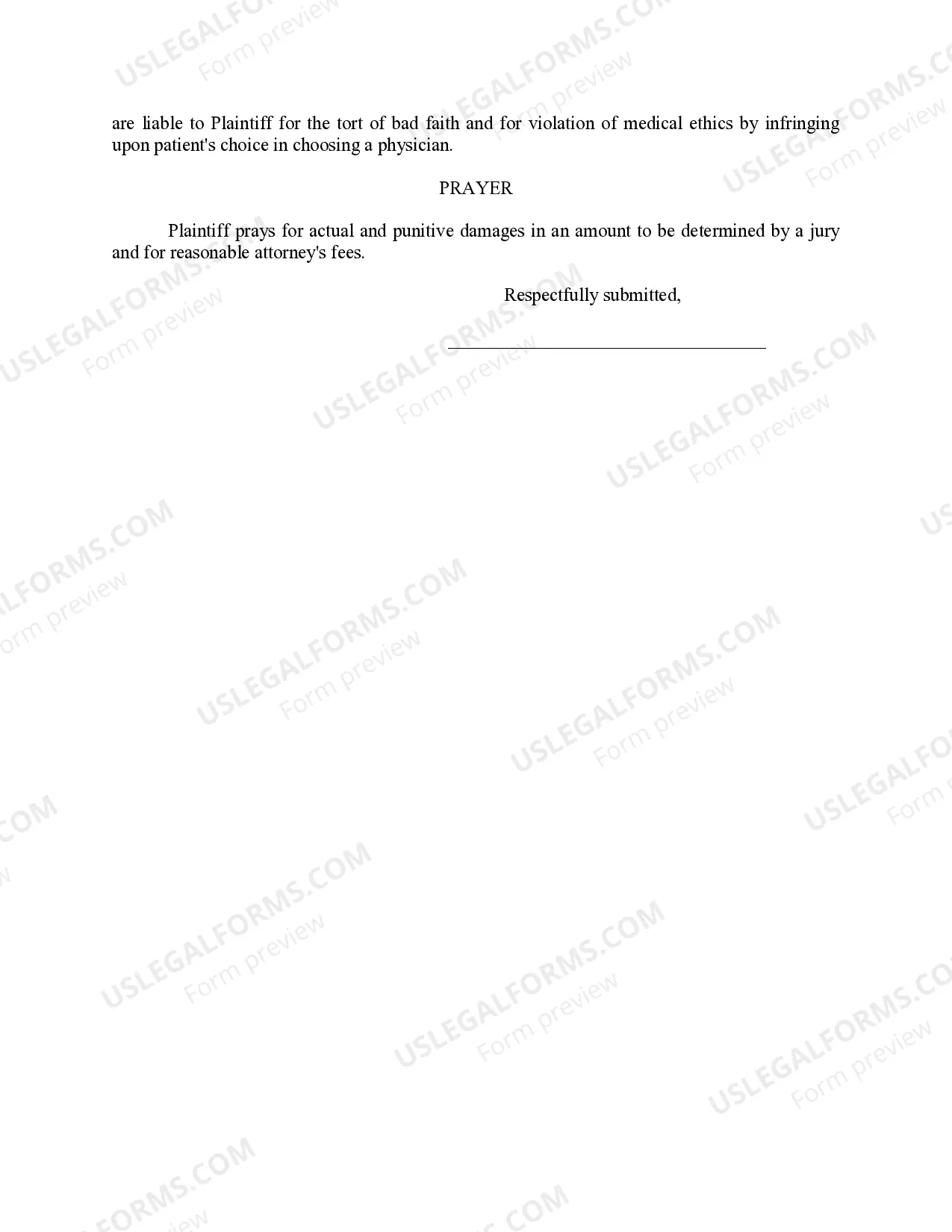
This Complaint for Wrongful Discharge of Physician is a legal document designed for use in litigation related to the wrongful termination of a physician's employment. This form allows the plaintiff to seek both actual and punitive damages for breaches of contract and violations of public policy. It offers a structured approach to assert legal claims that differ from other employment-related forms by emphasizing the unique aspects of a medical practitioner's contractual obligations and ethical considerations.
Key parts of this document
- Parties involved: Identifies the plaintiff (physician) and defendant (employer).
- Jurisdiction: Establishes the court's authority to hear the case based on diversity jurisdiction.
- Details of employment: Outlines the employment contract and nature of the termination.
- Claims for damages: Specifies the basis for claiming actual and punitive damages.
- Evidence references: Includes exhibits that support the claims made in the complaint.





When to use this document
This form should be used when a physician believes they have been wrongfully discharged from their position in violation of their employment contract or public policy. It is particularly relevant in cases where termination interferes with a physician's ethical responsibilities and decision-making regarding patient care.
Who this form is for
- Physicians who have been terminated from employment and believe the discharge violated contract terms.
- Attorneys representing physicians in wrongful termination lawsuits.
- Medical professionals seeking to assert their rights under employment contracts.
How to prepare this document
- Identify the parties: Fill in the names and addresses of the plaintiff and defendants.
- Establish jurisdiction: Complete the section validating the court's jurisdiction based on diversity.
- Detail employment contract: Include relevant contract provisions and details surrounding the termination.
- List claims for damages: Clearly state the basis for actual and punitive damages being sought.
- Attach exhibits: Gather and reference any letters or documents that support your claims, labeled as exhibits.
Does this form need to be notarized?
This form does not typically require notarization to be legally valid. However, some jurisdictions or document types may still require it. US Legal Forms provides secure online notarization powered by Notarize, available 24/7 for added convenience.
Get your form ready online
Our built-in tools help you complete, sign, share, and store your documents in one place.
Make edits, fill in missing information, and update formatting in US Legal Forms—just like you would in MS Word.
Download a copy, print it, send it by email, or mail it via USPS—whatever works best for your next step.
Sign and collect signatures with our SignNow integration. Send to multiple recipients, set reminders, and more. Go Premium to unlock E-Sign.
If this form requires notarization, complete it online through a secure video call—no need to meet a notary in person or wait for an appointment.
We protect your documents and personal data by following strict security and privacy standards.

Make edits, fill in missing information, and update formatting in US Legal Forms—just like you would in MS Word.

Download a copy, print it, send it by email, or mail it via USPS—whatever works best for your next step.

Sign and collect signatures with our SignNow integration. Send to multiple recipients, set reminders, and more. Go Premium to unlock E-Sign.

If this form requires notarization, complete it online through a secure video call—no need to meet a notary in person or wait for an appointment.

We protect your documents and personal data by following strict security and privacy standards.
Common mistakes to avoid
- Failing to properly identify all parties involved in the case.
- Neglecting to attach crucial evidence or exhibits that support the claims.
- Omitting the description of how the breach of contract occurred.
Why use this form online
- Convenience of downloading and completing the form from home.
- Editability to tailor the complaint to the specific circumstances of the case.
- Access to forms drafted by licensed attorneys, ensuring legal accuracy.
Looking for another form?

Form popularity
FAQ
All defendants in state criminal cases are entitled to jury trials according to the federal standard for "serious penalties" used by the Supreme Court. However, if the offense carries a sentence of 6 months or less, then a jury trial isn't mandated and the state can decide whether to require a jury trial.
The trial is a structured process where the facts of a case are presented to a jury, and they decide if the defendant is guilty or not guilty of the charge offered. During trial, the prosecutor uses witnesses and evidence to prove to the jury that the defendant committed the crime(s).
Today, prosecutors routinely deny jury trials to individuals who request them.If that is so, lawmakers should tweak federal law and give persons who are accused of crimes the choice of judge or jury. In 1965, a man named Mortimer Singer asked the Supreme Court to recognize an unconditional right to trial by judge.
Check if you can request a jury trial. Contact your court clerk and ask. In some states, either party may request a jury trial. In other states, the person bringing the lawsuit cannot request a jury trial but the defendant may. Also check whether the jury trial will be held in small claims court.
When cases are tried before a jury, the judge still has a major role in determining which evidence may be considered by the jury. The jury is the fact-finder, but it is left to "find" facts only from the evidence which is legally admissible.
According to the Supreme Court, the jury-trial right applies only when serious offenses are at handpetty offenses don't invoke it. For purposes of this right, a serious offense is one that carries a potential sentence of more than six months' imprisonment.
Step 7 (Execution of judgment) Step 6 (Judgment) Step 6 (Verdict) Step 5 (Instructions to the Jury) Step 4 (Closing Arguments) Step 3 (Introduction Of Evidence) Step 2 (Opening statemant. Step 1 ( Selecting Jury)
A jury trial demand is a request to have your case decided by fellow citizens as opposed to the judge should you proceed to trial. The decision to choose or waive a jury trial lies with the defendant.
In most civil litigation, either party may demand a jury trial, and this demand cannot be vetoed by the other party.