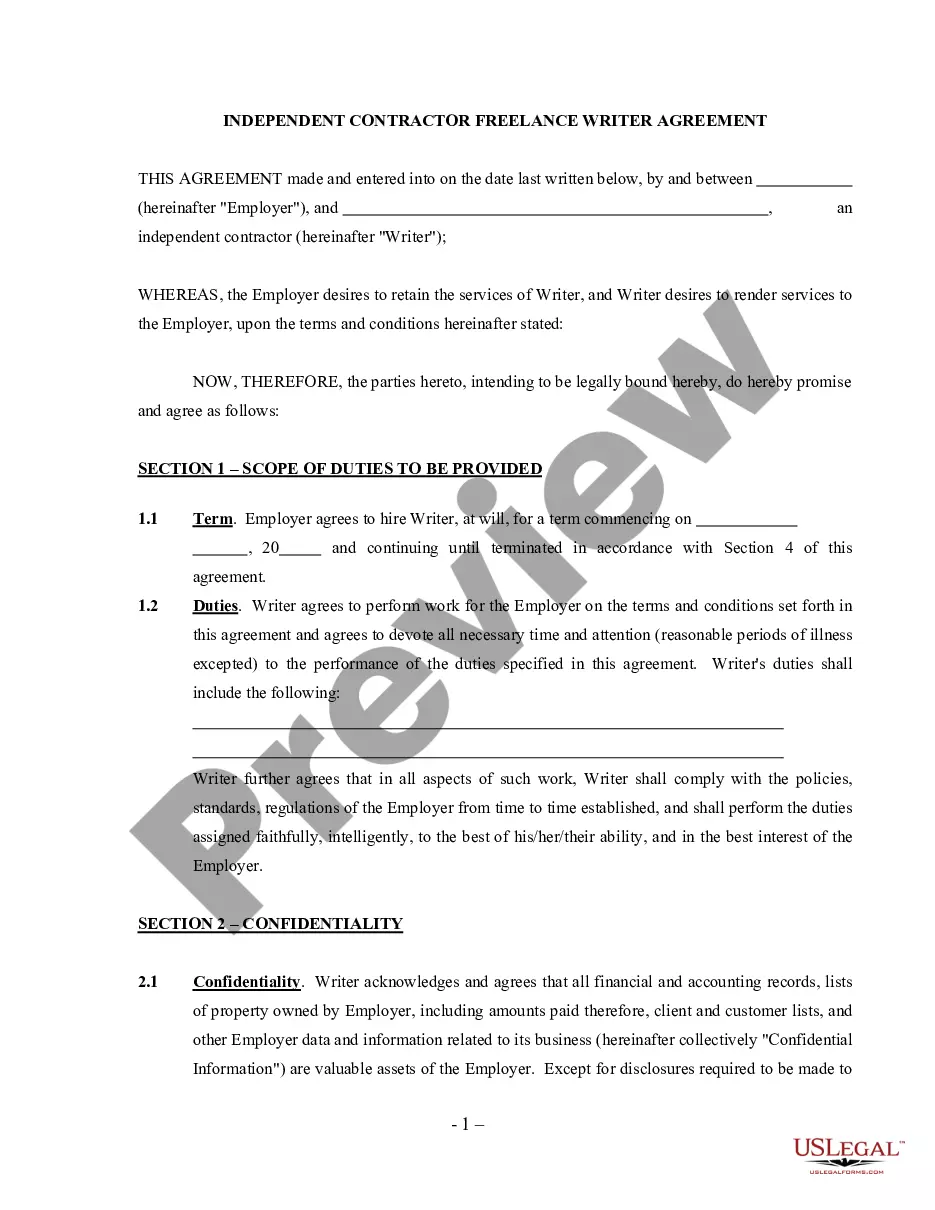
Complaint For Loss Due To Product Defect and For Discovery
Understanding this form
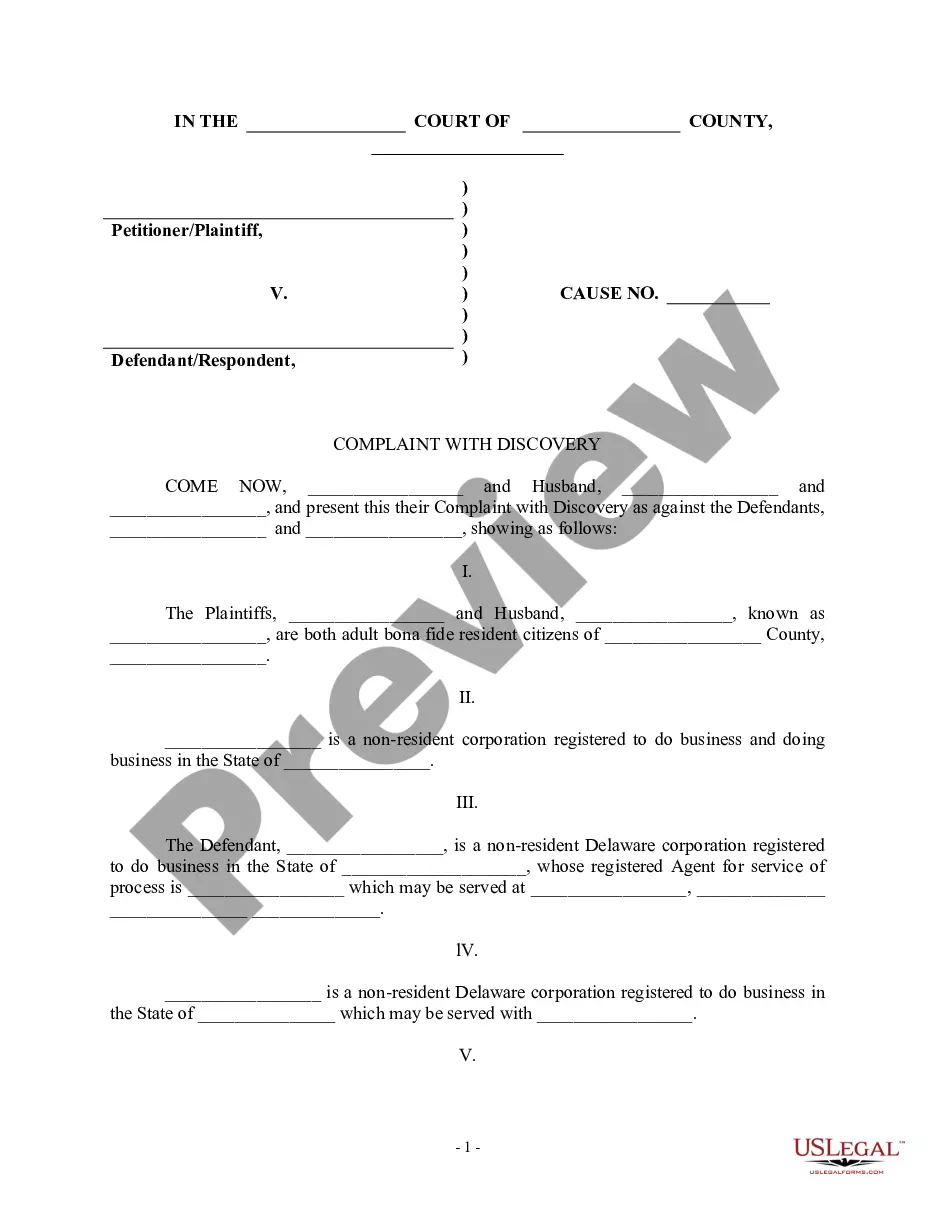
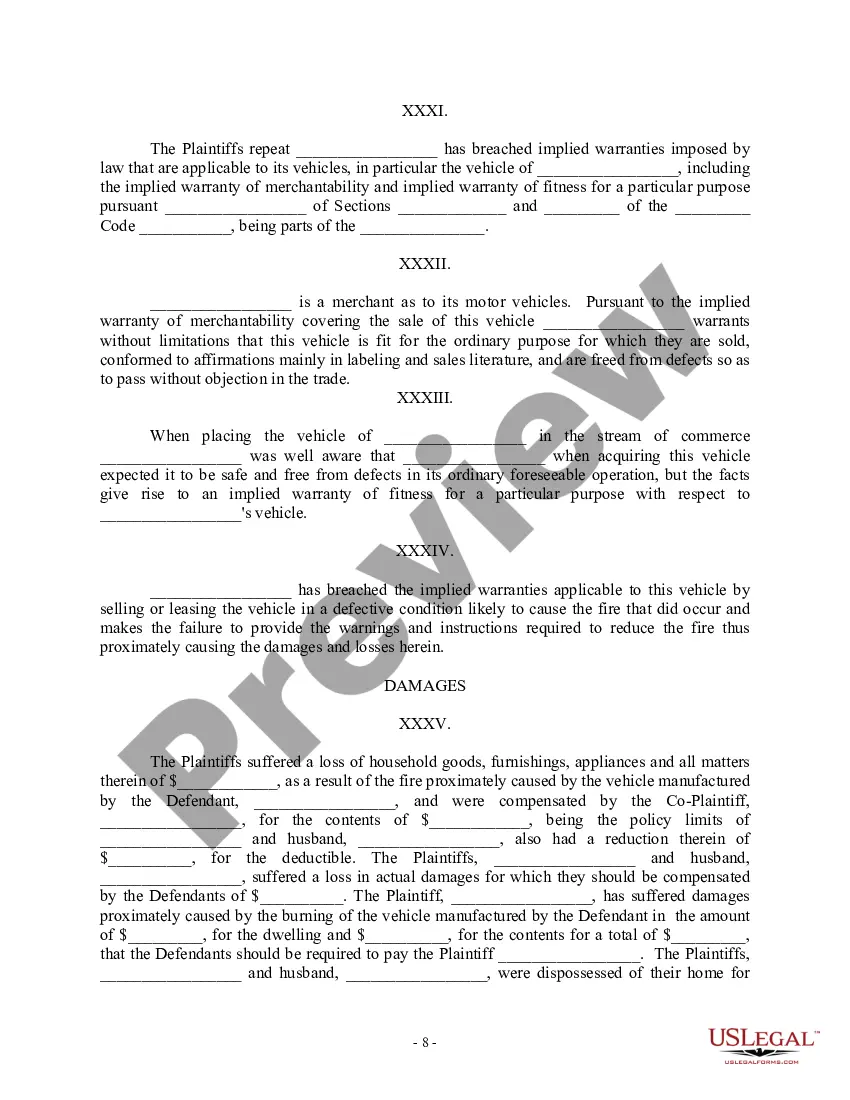
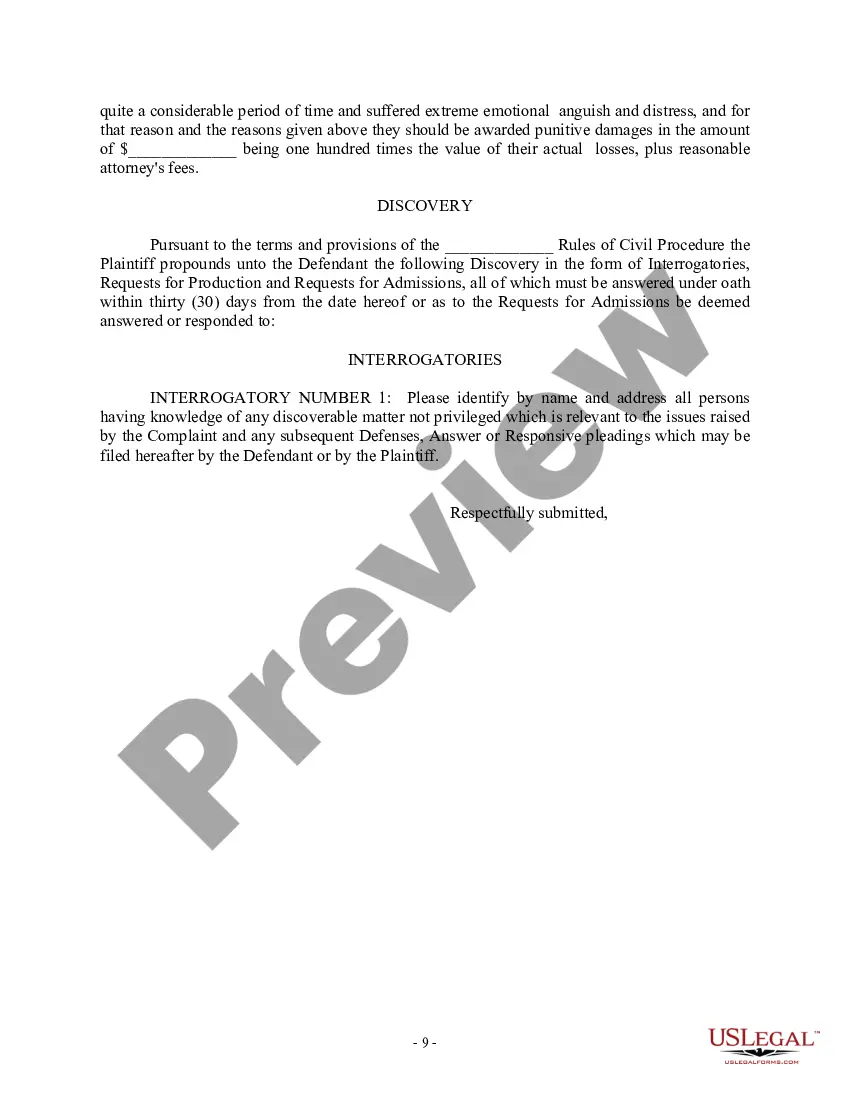
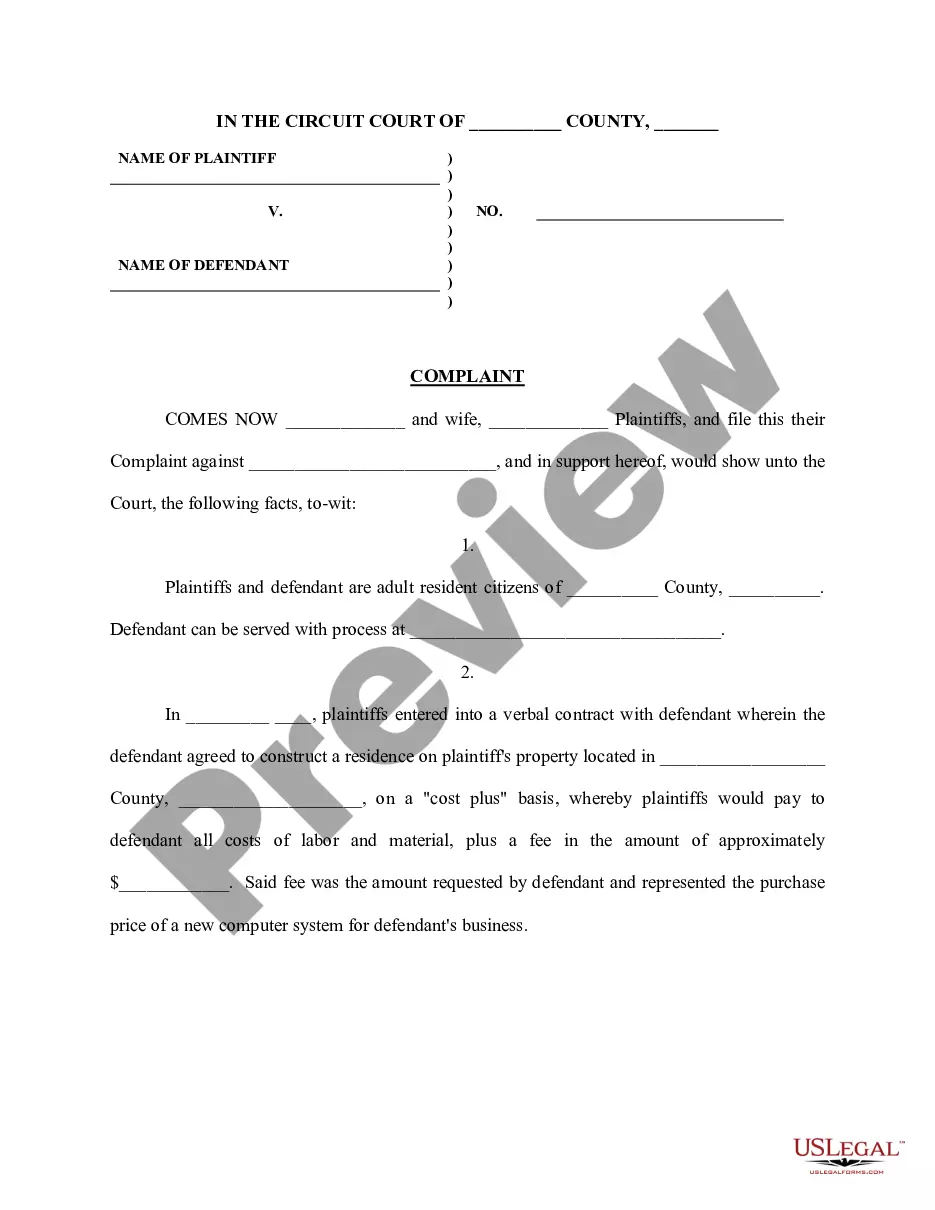
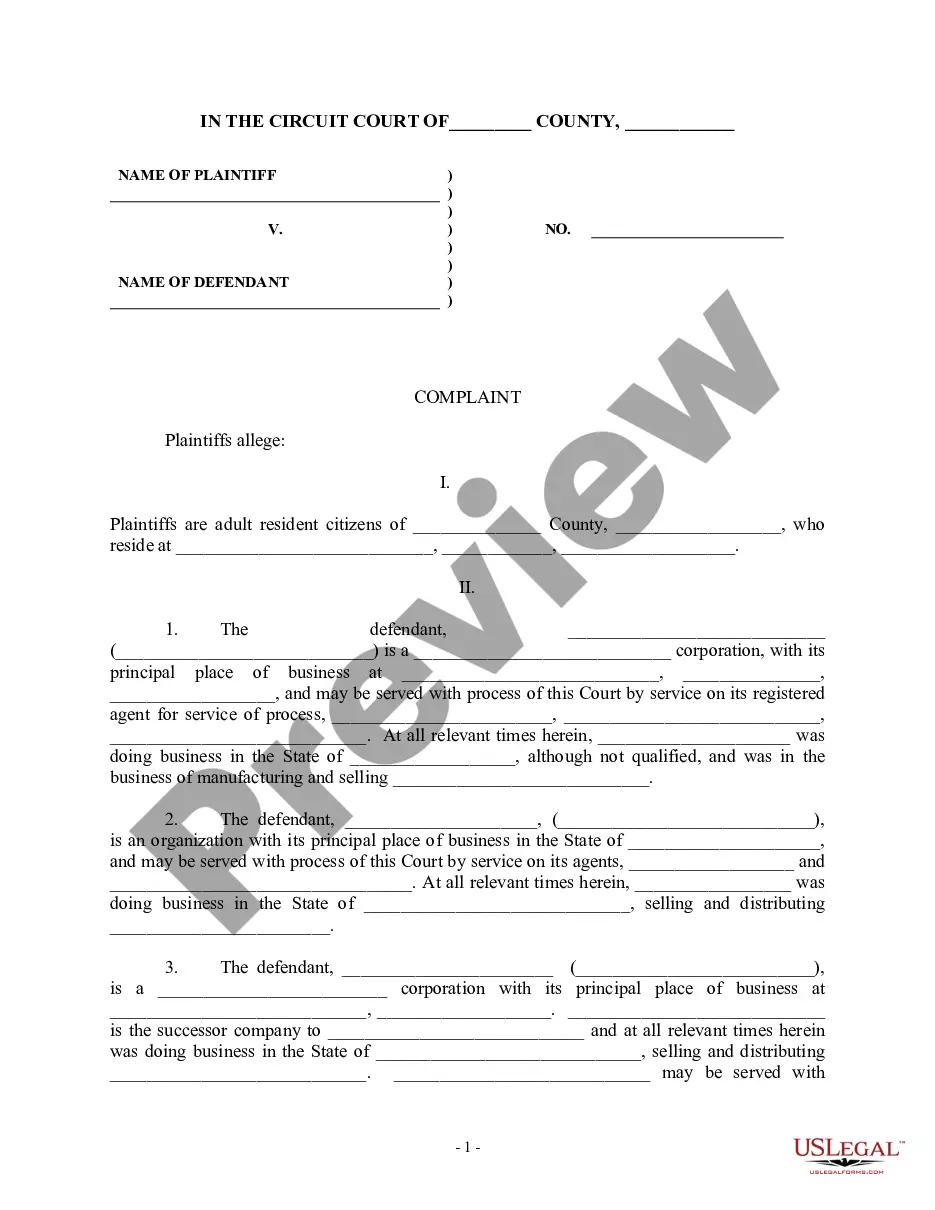
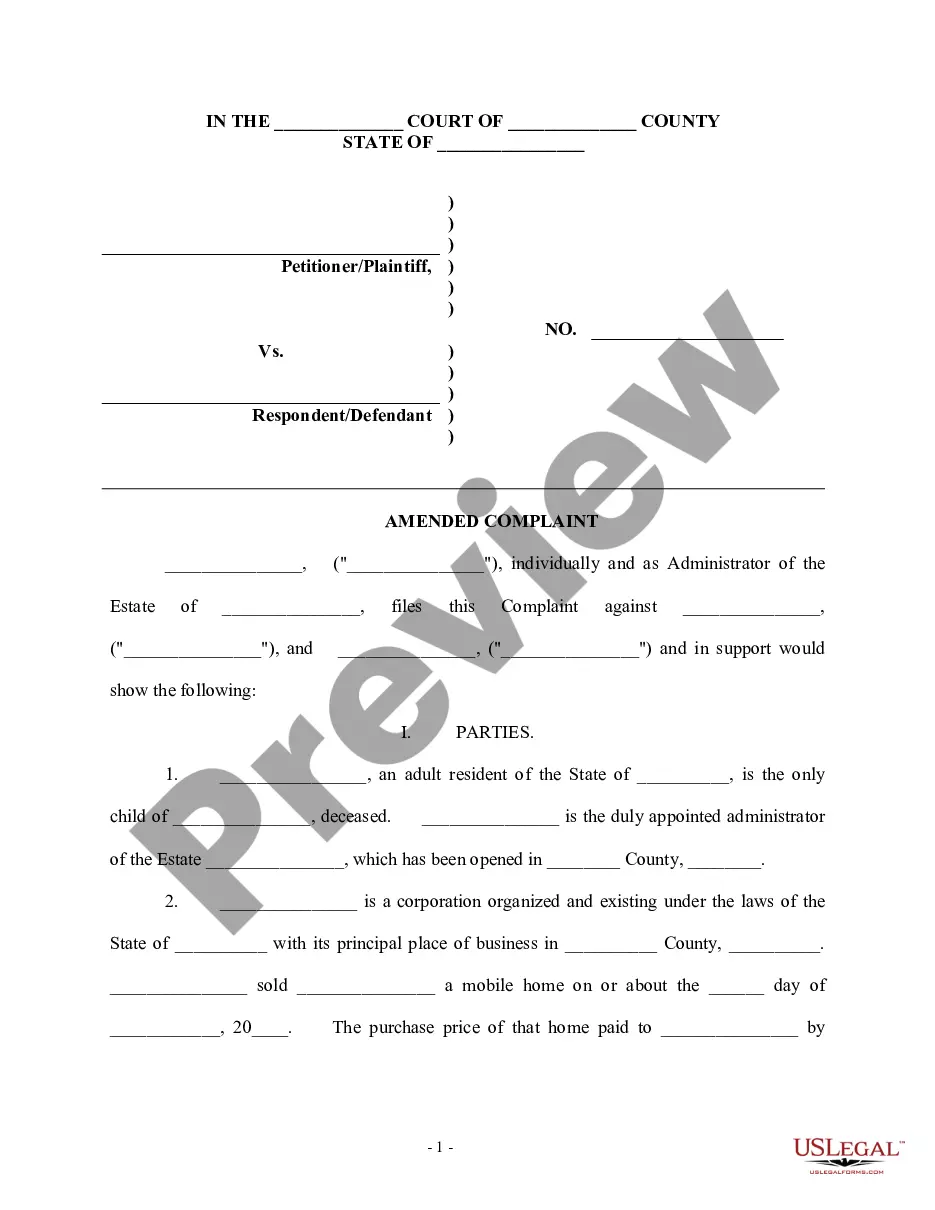
The Complaint for Loss Due to Product Defect and for Discovery is a legal document used to initiate a lawsuit against a manufacturer or corporation for damages caused by a defective product. This form specifically addresses issues related to product defects that lead to losses, such as property damage, and includes provisions for discovery, allowing the parties to exchange relevant information during litigation. Unlike general complaint forms, this form is tailored to product defect cases, ensuring that you can assert your rights effectively and seek compensation for your losses.
Key parts of this document
- Identification of the plaintiffs and defendants involved in the case.
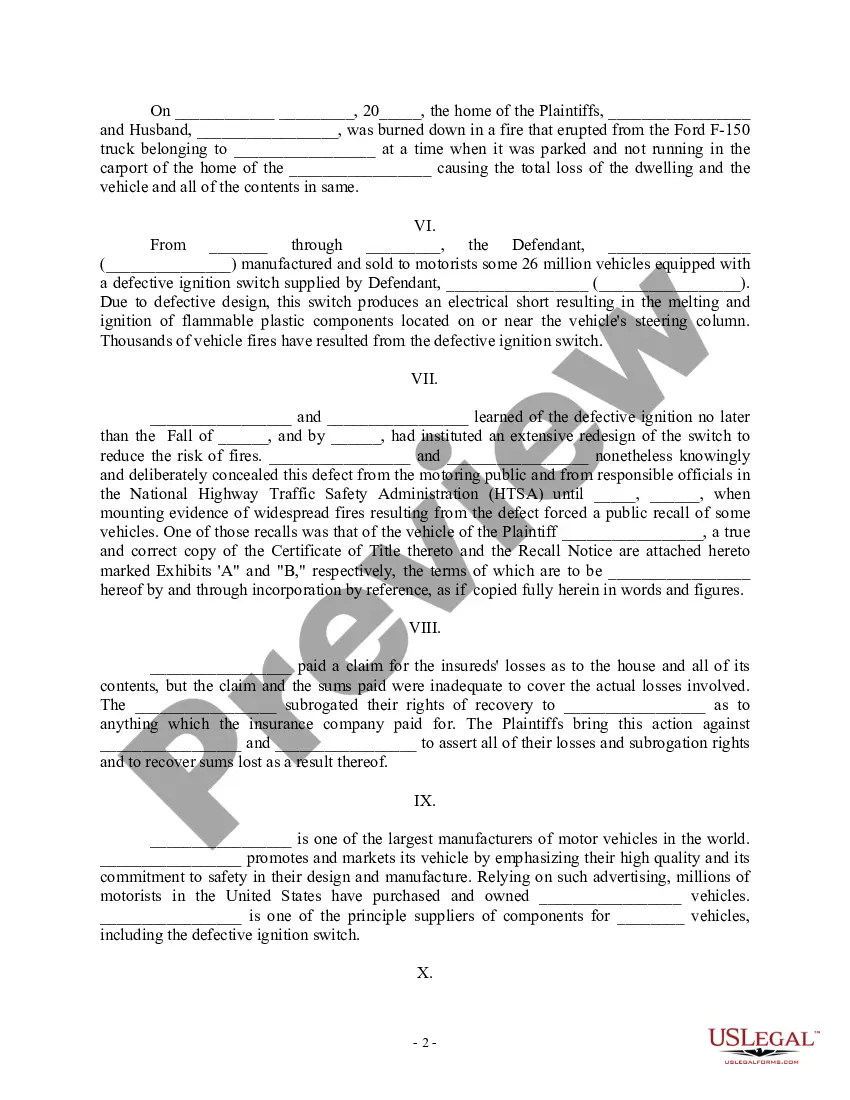
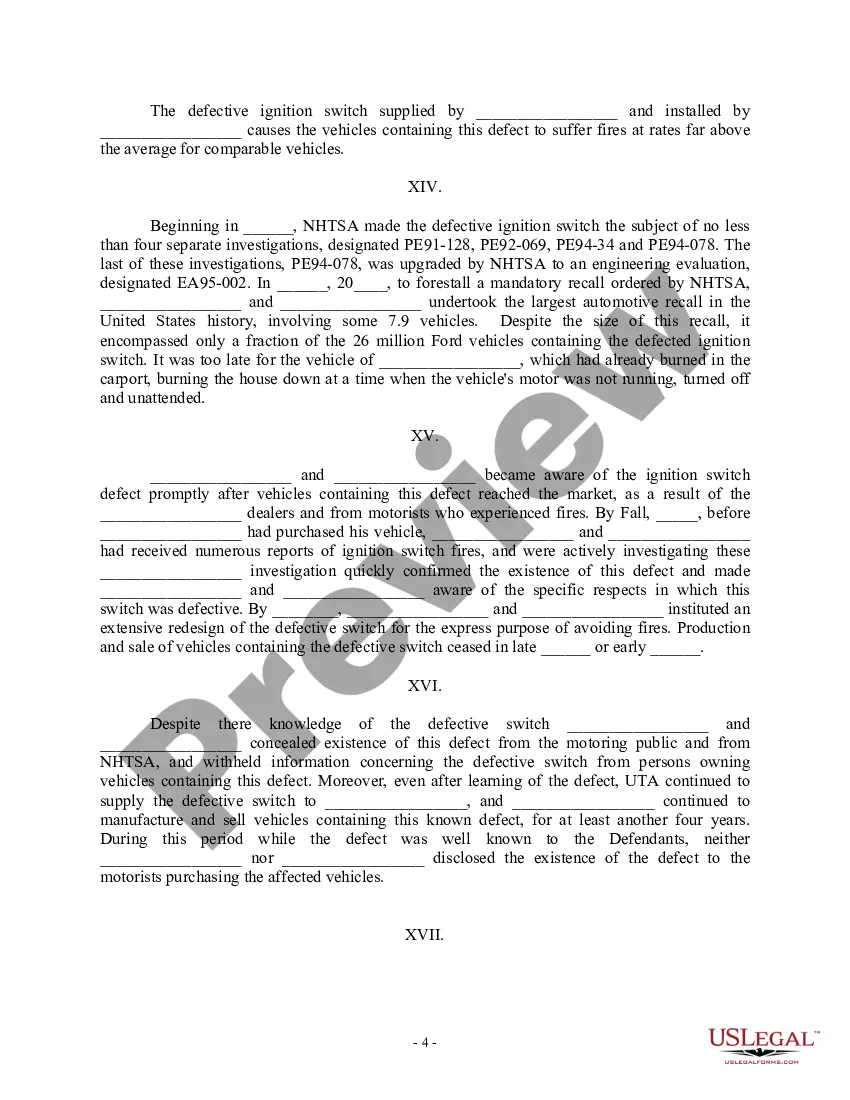
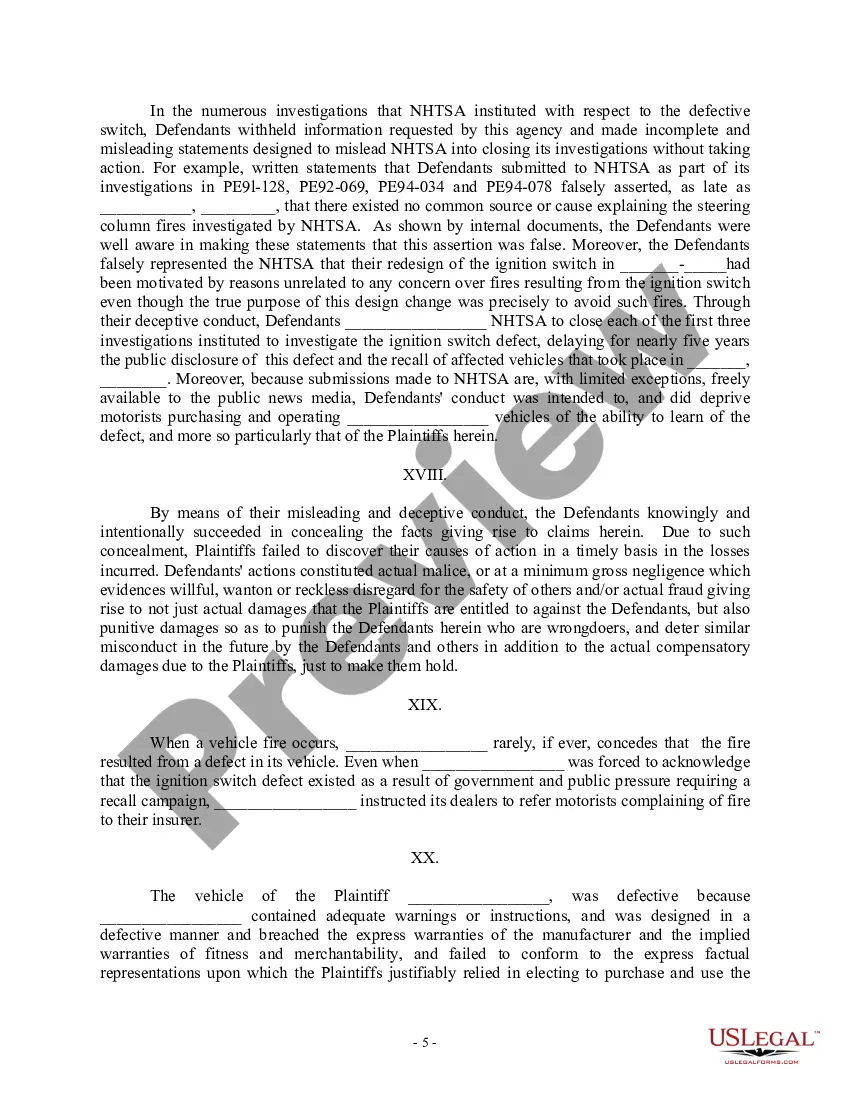
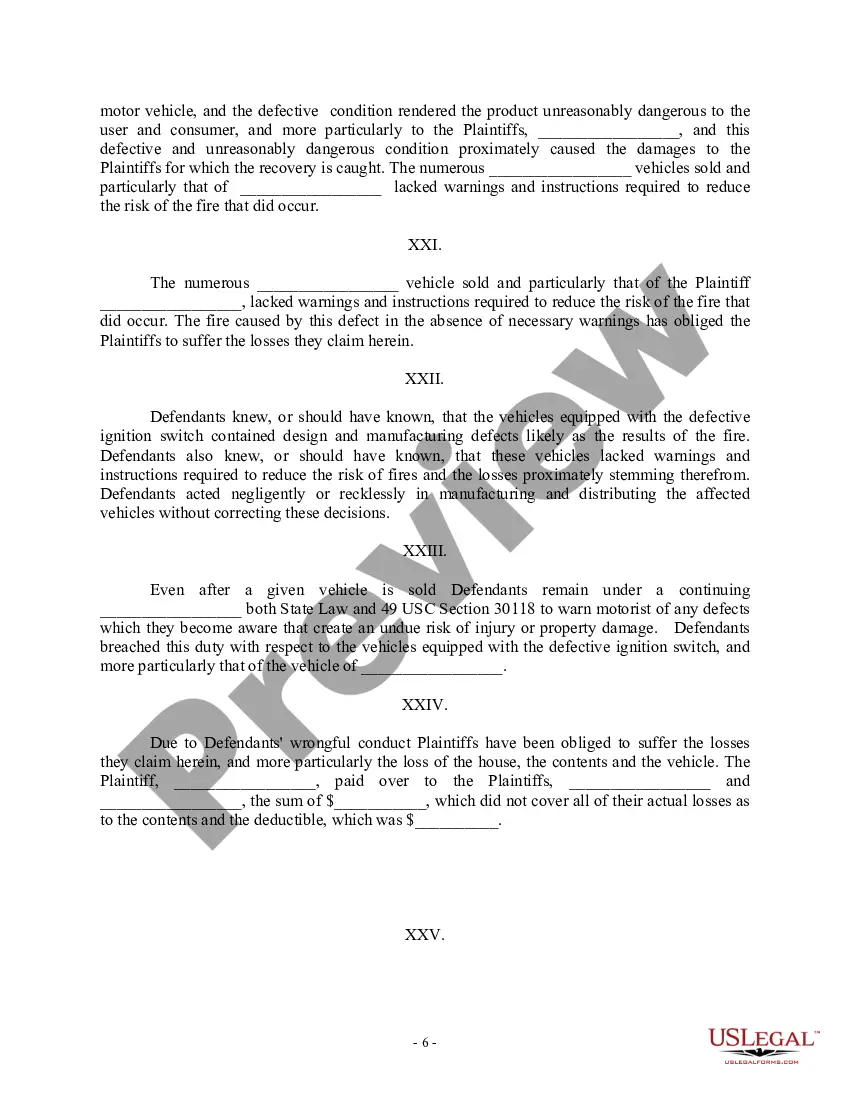
- Details about the defective product and the damages incurred.
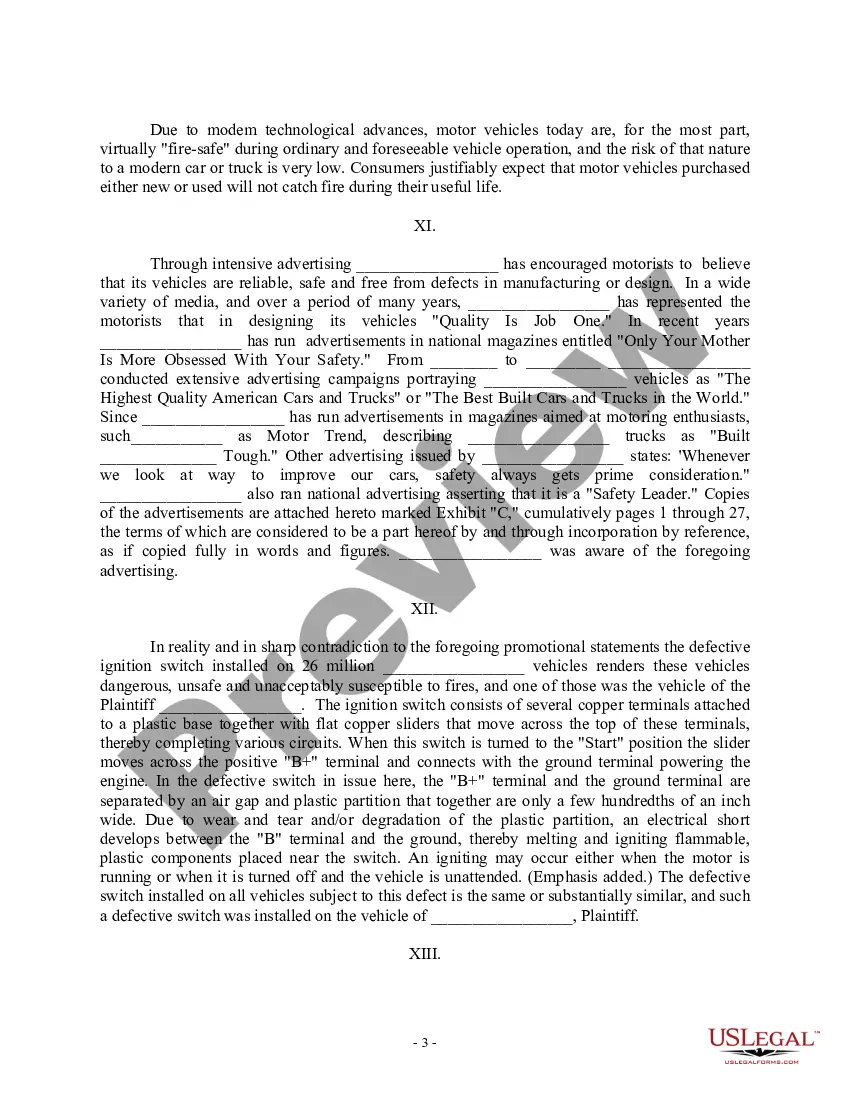
- Claims for actual damages and potential punitive damages for negligence or fraud.
- Provisions for discovery, allowing the collection of evidence and information from the defense.
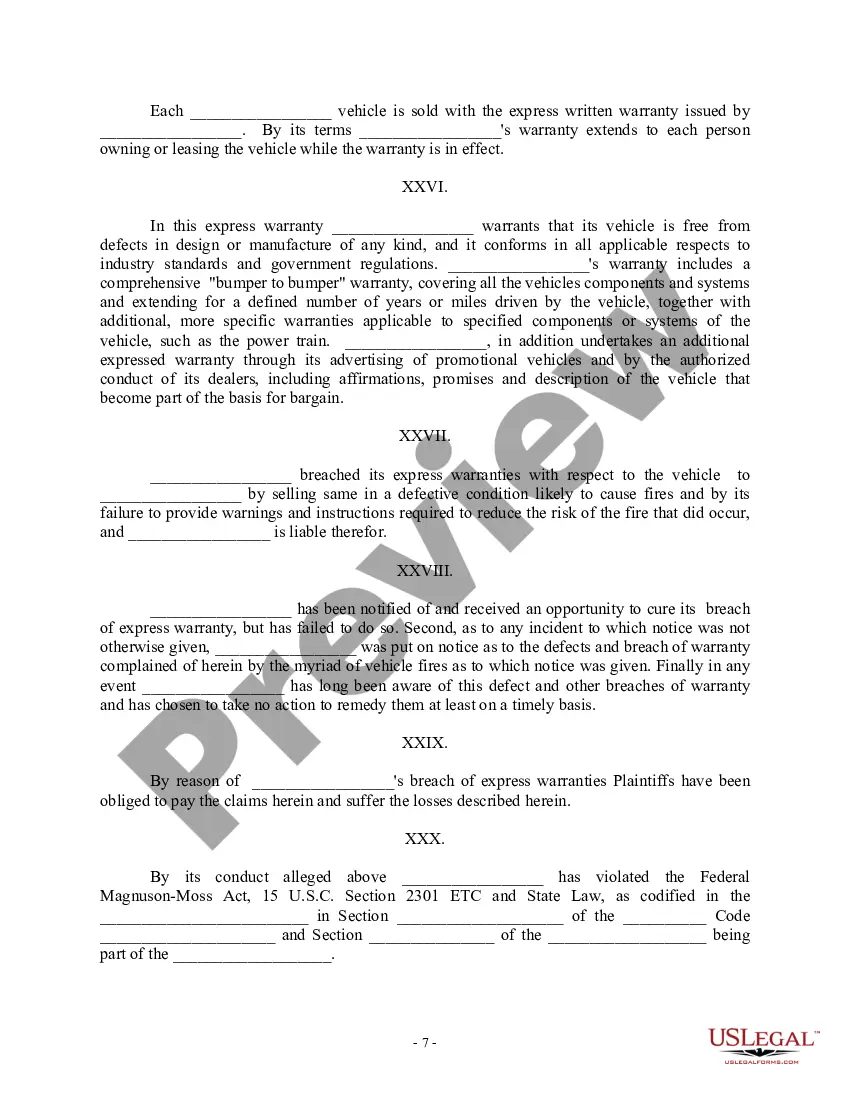
- Warranties and representations related to the product's safety and quality.
- Specific findings of liability based on the product's defect and performance.


When this form is needed
This form is needed when an individual or business has suffered loss or damage due to a product defect and wishes to pursue legal action against the responsible manufacturer or seller. Common situations that may require this form include fires caused by defective vehicles, hazardous materials, or any product that has failed to perform safely and resulted in property damage or personal injury.
Who needs this form
- Individuals who have experienced property damage due to a defective product.
- Businesses seeking to recover losses incurred from defective merchandise.
- Parties wanting to hold manufacturers or sellers accountable for negligence related to product defects.
Steps to complete this form
- Identify all parties involved, including plaintiffs and defendants, and provide their addresses.
- Detail the nature of the product defect and how it caused the loss.
- State the claims for damages, including both actual and punitive damages.
- Include any relevant documentation, such as warranties, receipts, or photographs related to the defect.
- Sign and date the document, ensuring that it is filed with the appropriate court.
Does this form need to be notarized?
This form does not typically require notarization unless specified by local law. Ensure to check your stateâs requirements for any particular legal formalities that may apply.
Get your form ready online
Our built-in tools help you complete, sign, share, and store your documents in one place.
Make edits, fill in missing information, and update formatting in US Legal Forms—just like you would in MS Word.
Download a copy, print it, send it by email, or mail it via USPS—whatever works best for your next step.
Sign and collect signatures with our SignNow integration. Send to multiple recipients, set reminders, and more. Go Premium to unlock E-Sign.
If this form requires notarization, complete it online through a secure video call—no need to meet a notary in person or wait for an appointment.
We protect your documents and personal data by following strict security and privacy standards.
Make edits, fill in missing information, and update formatting in US Legal Forms—just like you would in MS Word.
Download a copy, print it, send it by email, or mail it via USPS—whatever works best for your next step.
Sign and collect signatures with our SignNow integration. Send to multiple recipients, set reminders, and more. Go Premium to unlock E-Sign.

If this form requires notarization, complete it online through a secure video call—no need to meet a notary in person or wait for an appointment.
We protect your documents and personal data by following strict security and privacy standards.
Common mistakes to avoid
- Failing to accurately identify all involved parties.
- Not providing sufficient details about the defective product and the resulting damages.
- Missing deadlines for filing or responding to the form.
- Not including all necessary supporting documents or evidence.
- Using vague language in claims, which can weaken the case.
Advantages of online completion
- Quick and convenient access to legally compliant forms.
- Edit and customize the form easily to fit specific needs.
- Reliable and securely stored documents that can be downloaded at any time.
- Access to legal guidance and support without the need to visit a lawyer's office.
Legal use & context
- This form serves as an official complaint filed in civil court, allowing plaintiffs to seek judicial remedies for losses caused by product defects.
- It establishes a legal basis for claims of negligence, breach of warranty, and product liability.
- Defendants preparing their response must accurately address the allegations included in this complaint.
Key takeaways
- The Complaint for Loss Due to Product Defect is a crucial tool for asserting legal rights in product liability cases.
- Detailed information about the defect and damages is essential for a strong case.
- Consult local legal standards to ensure compliance with filing requirements.
Looking for another form?
Form popularity
FAQ
Product Liability: What You Need To Know About Manufacturer's Warranties. Product liability allows a person injured by a product to bring a claim against the manufacturer and/or the supplier of the product. These claims can be based on different theories such as negligence, strict liability, and warranty.
Under California law, manufacturers, designers, and retailers are strictly liable for injuries that are caused to plaintiffs when they use defective products in a reasonably foreseeable way.The product's defect was the direct or proximate cause of the plaintiff's injury.
Products Liability is a field of tort law which concerns the responsibility of the manufacturer or vendor of a product to ensure that products are safe and do not cause injury.Contact a product liability lawyer to consult your case.
Product liability negligence occurs when a supplier, such as a wholesaler, retailer, distributor, manufacturer, or other party in the supply chain, places a product the stream of commerce with inaccurate or inadequate labeling, or manufacturing or design defects or flaws.
Yes, in many cases a retailer can, indeed, be held liable for a defective product at least if an injury or a death resulted.
If a product with manufacturing defects causes injury to the intended user, then the manufacturer can be held liable. Manufacturing defect claims can be difficult to prove in court because they usually involve a limited number of products, unlike design or warning defects.
There are three types of product defects that can result in product liability cases: Design defects, Manufacturing defects, and Marketing defects.
In general, there are three types of defects which could render a product unreasonably dangerous: Manufacturing defect - Error in product manufacture or assembly. Design defect - Faulty product design. Manufacturer or seller's failure to warn of danger associated with use of the product.
Product liability refers to a manufacturer or seller being held liable for placing a defective product into the hands of a consumer. Responsibility for a product defect that causes injury lies with all sellers of the product who are in the distribution chain.