Texas Last Will and Testament for Divorced and Remarried Person with Mine, Yours and Ours Children
About this form
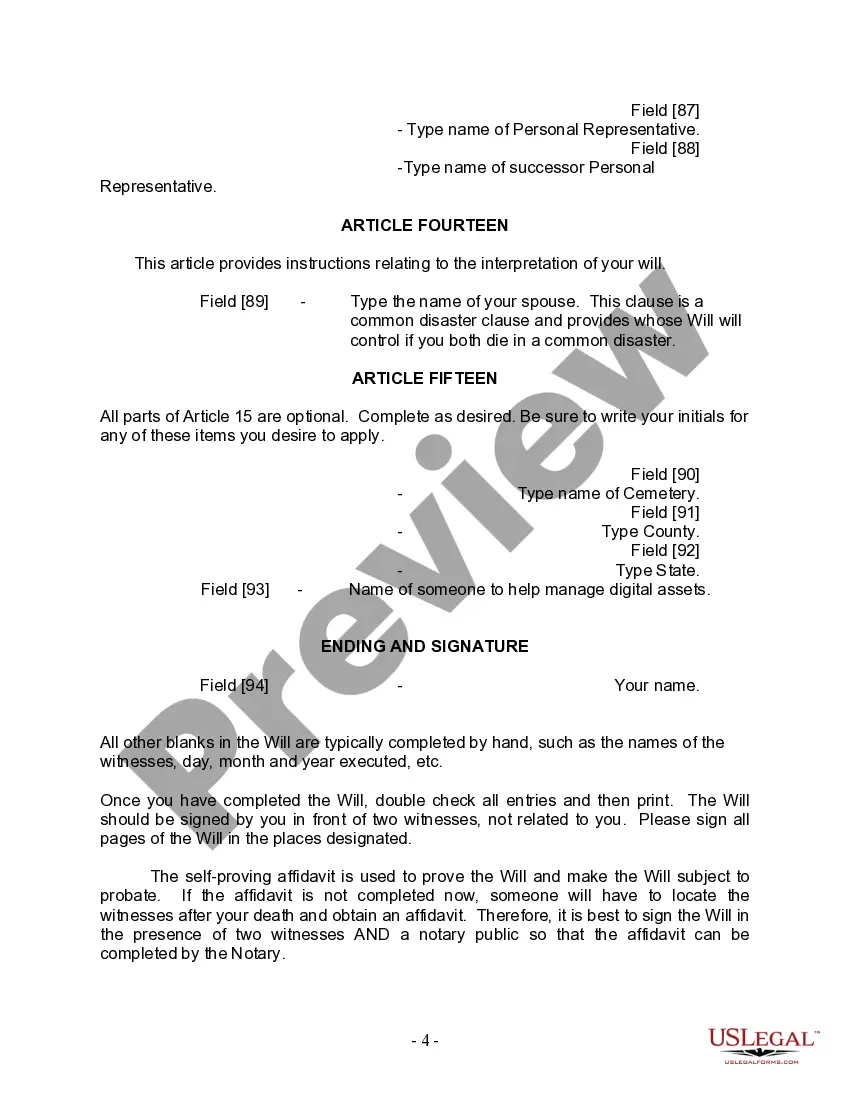
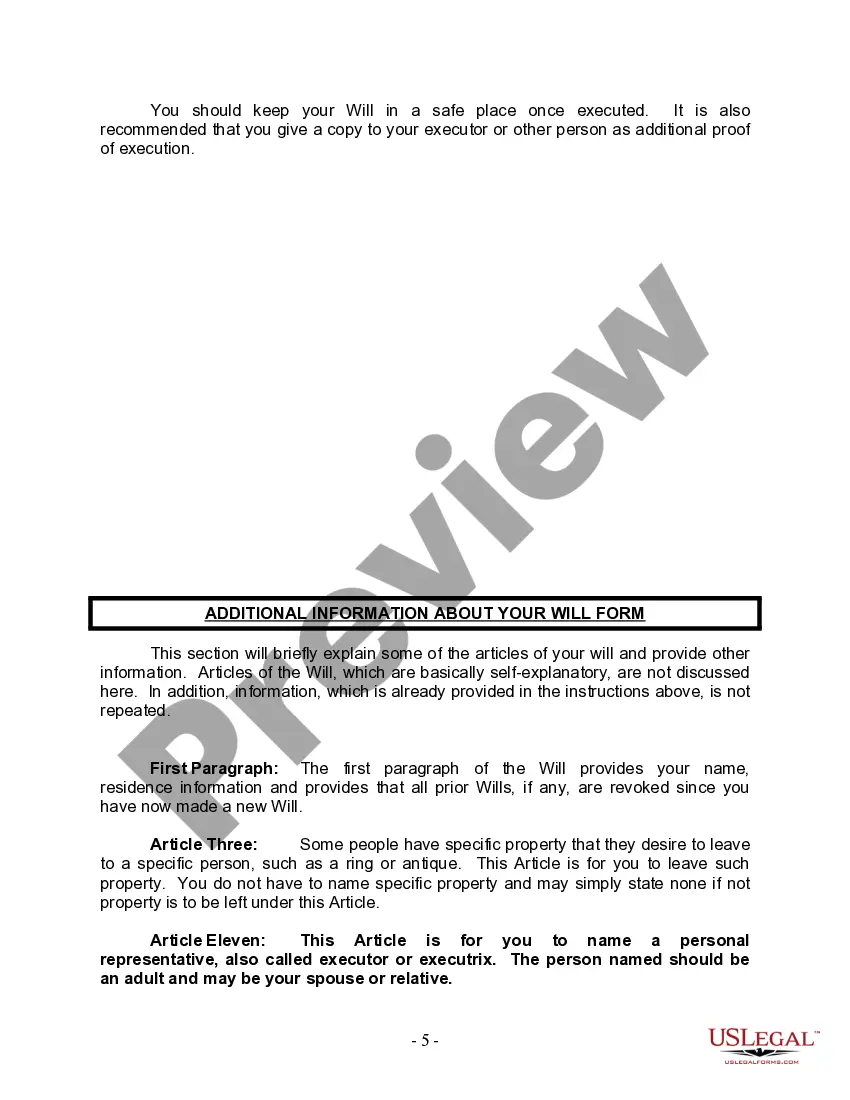
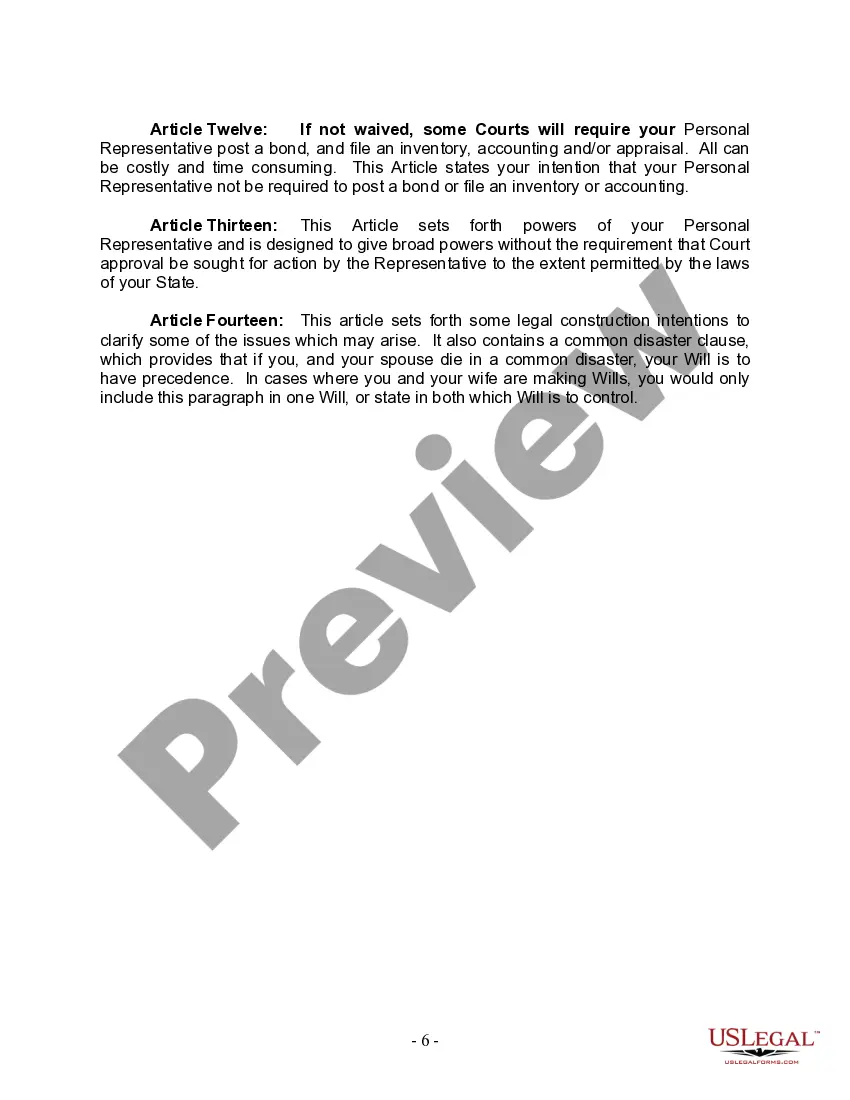
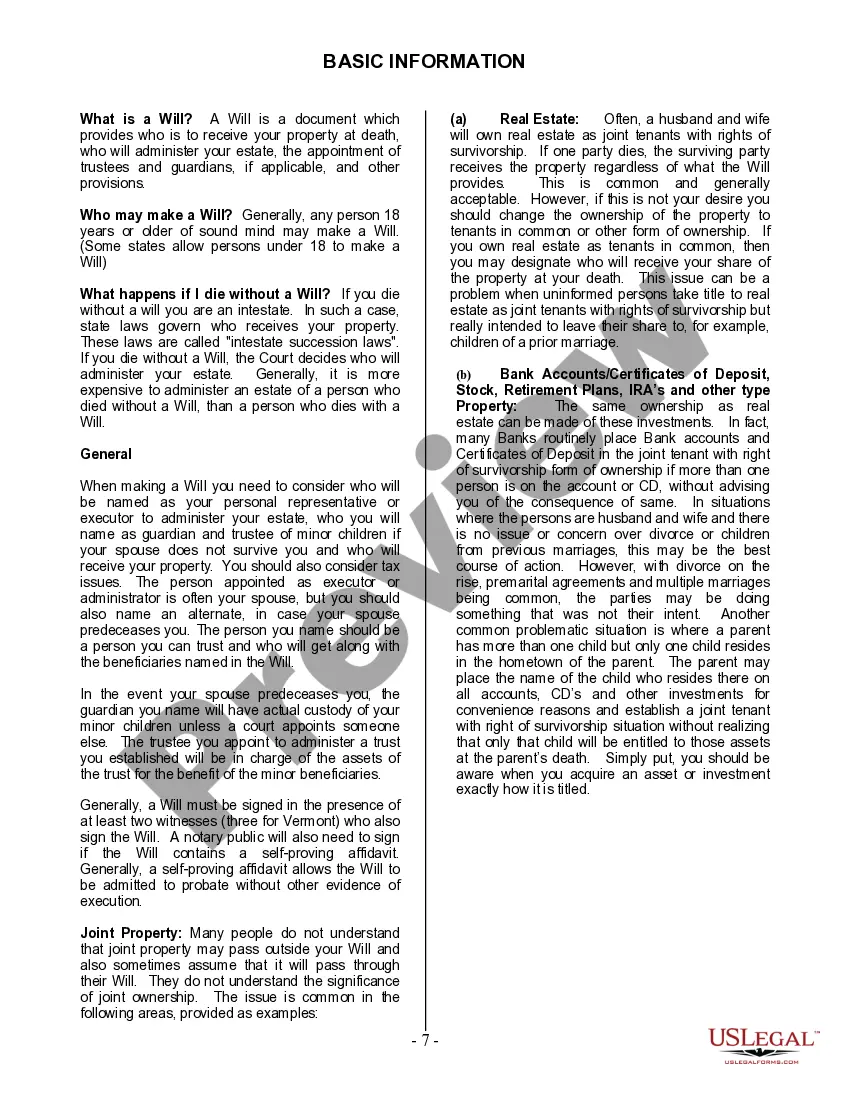
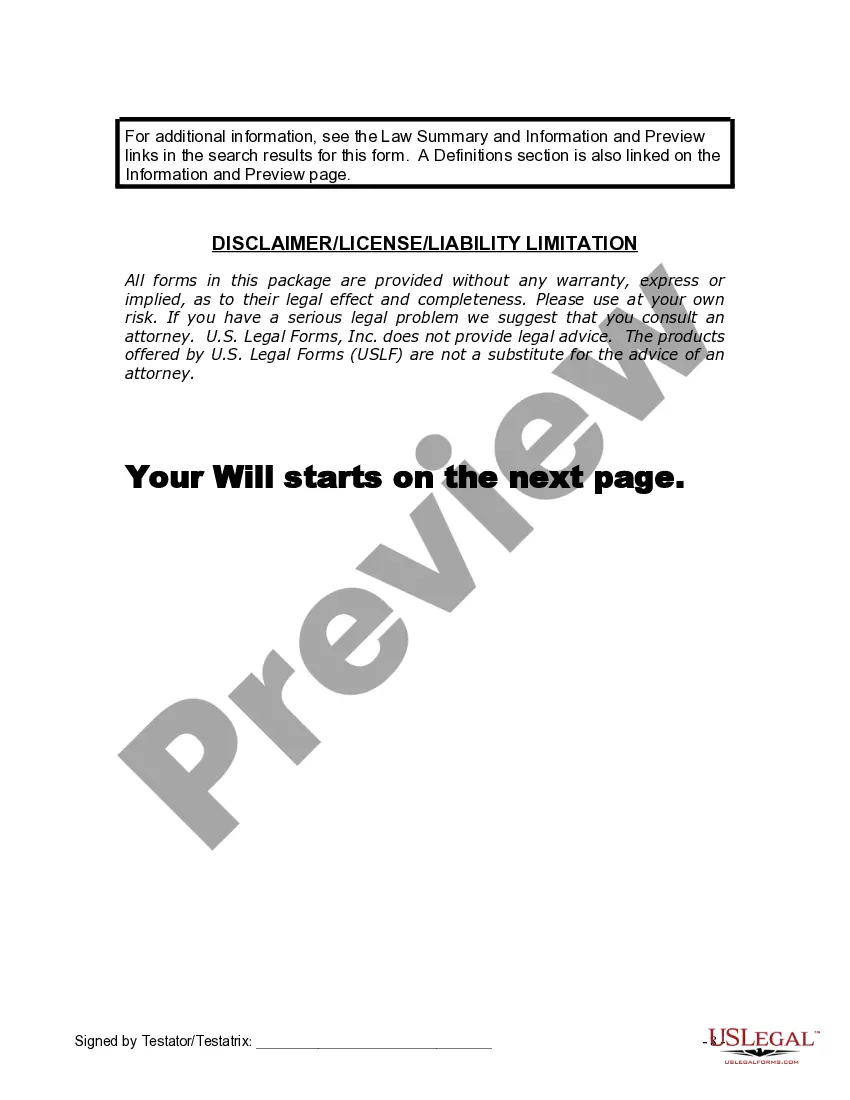
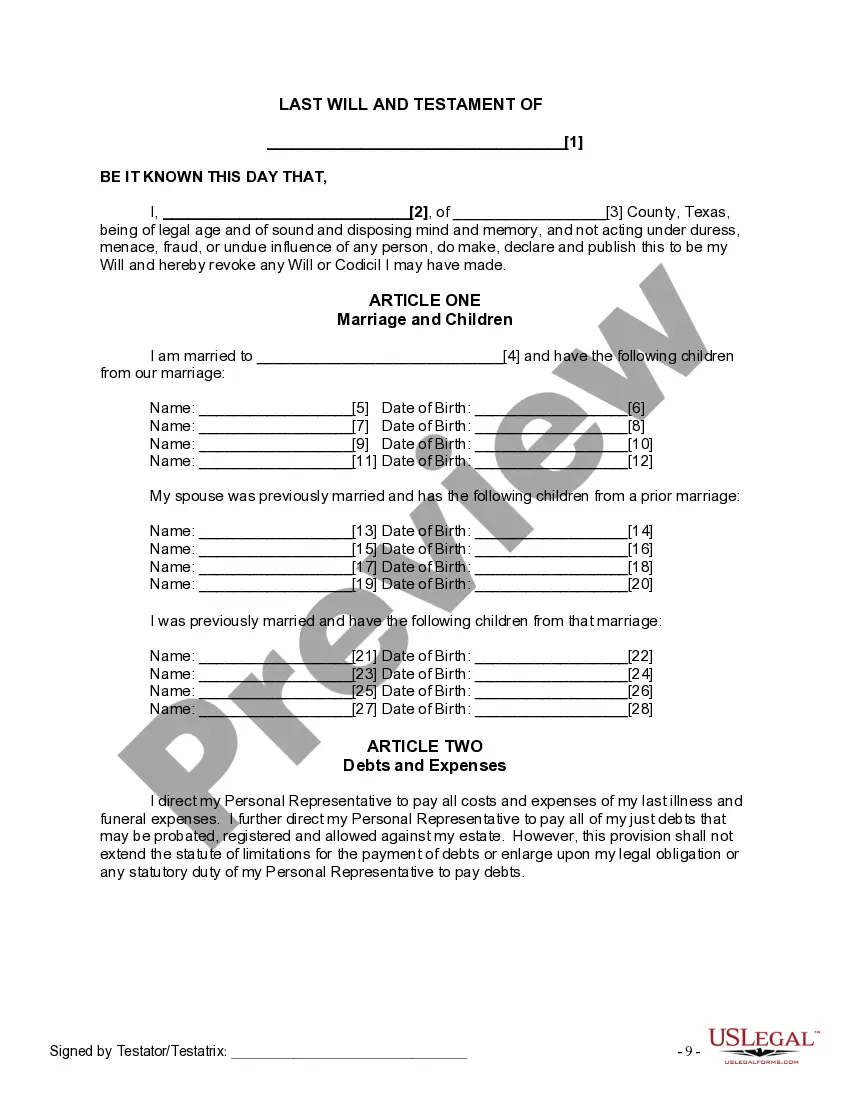
This Last Will and Testament is designed for individuals who are divorced and have remarried, specifically those who have children from previous relationships as well as children from the current marriage. This document allows you to designate who will receive your property upon death, appoint a personal representative, and outline specific wishes regarding your estate. Unlike generic wills, this form addresses the complexities that may arise in blended families, ensuring all children are considered in the distribution of assets.
What’s included in this form
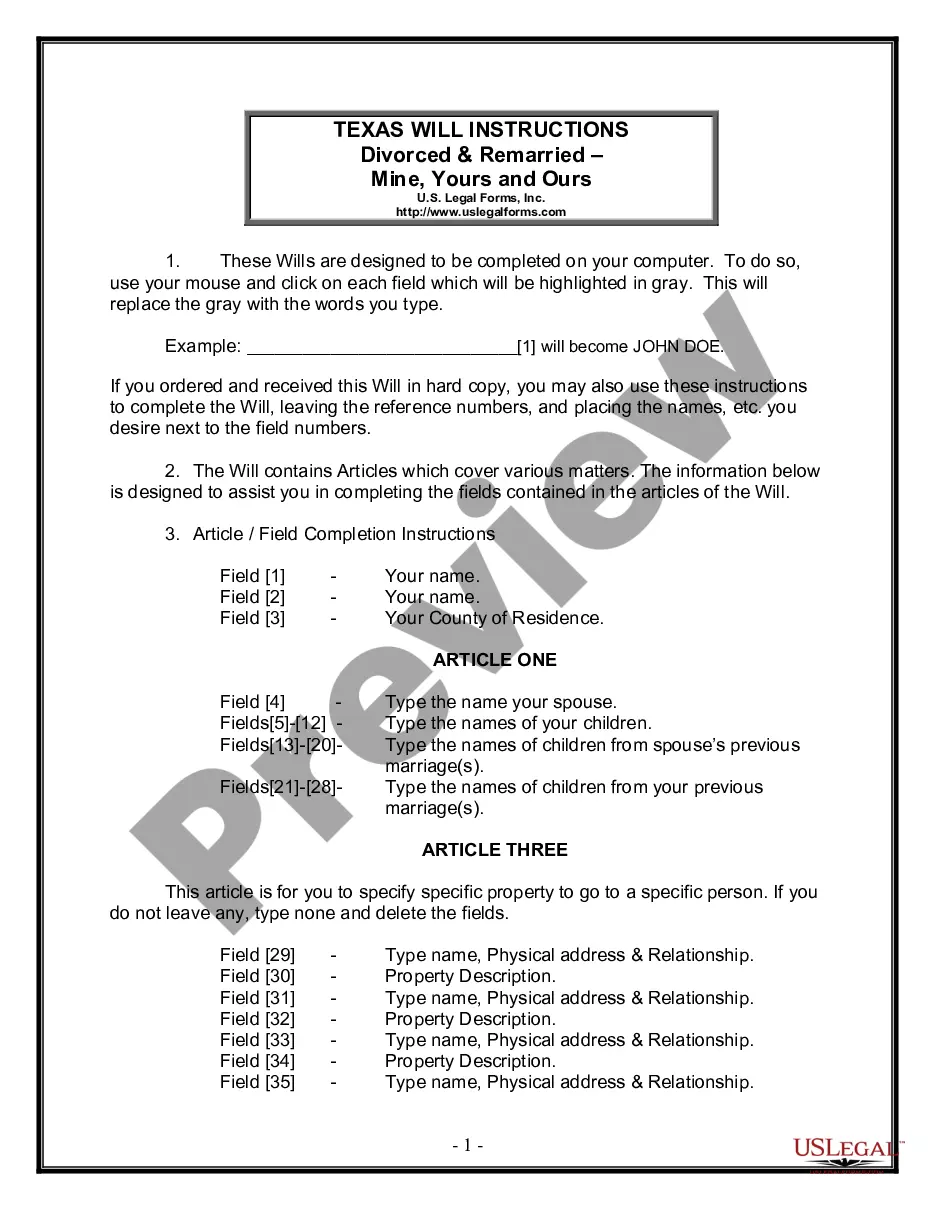
- Article One: Details about your marriage and children from both your current and previous marriages.
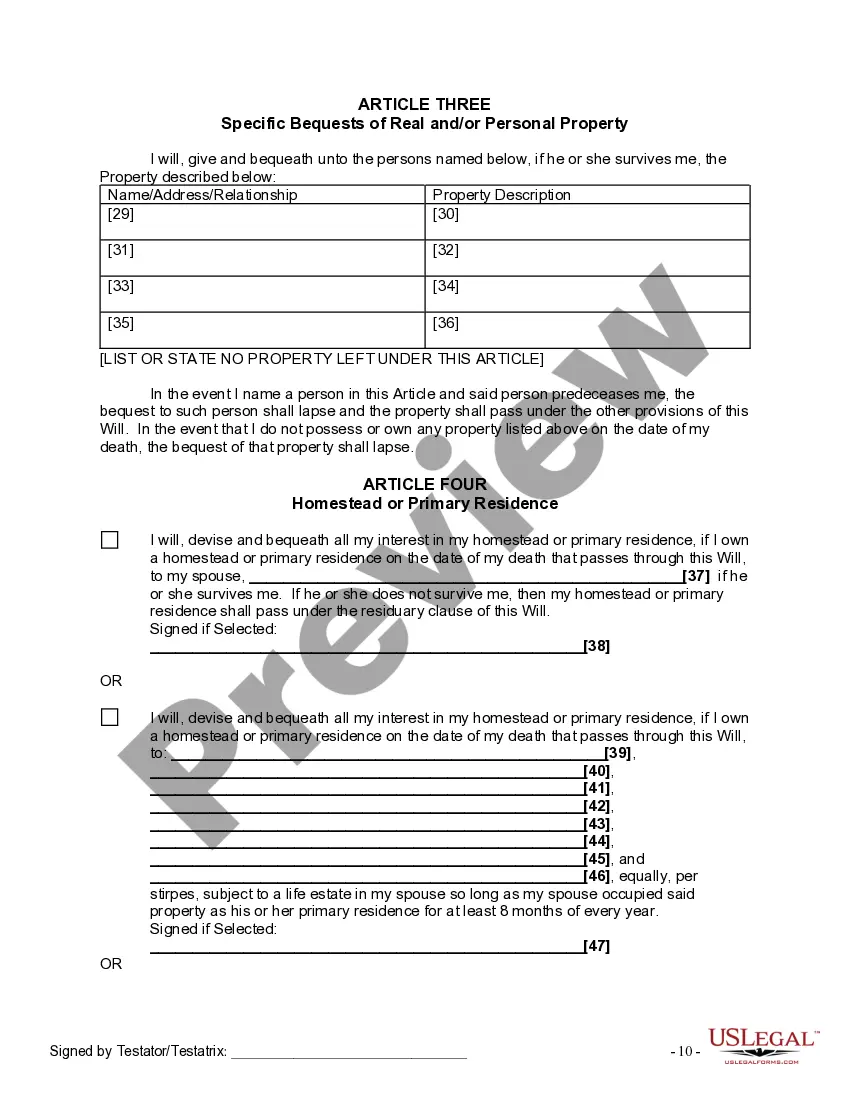
- Article Three: Specific bequests of property to individuals.
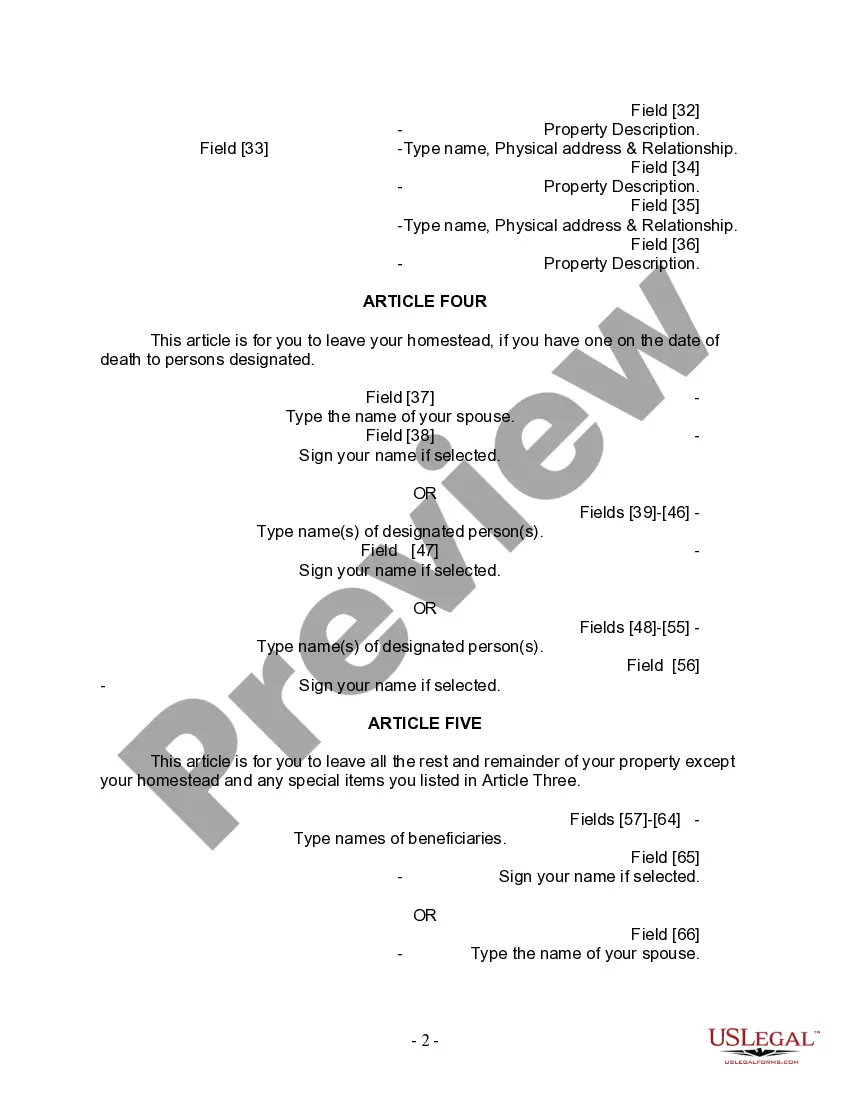
- Article Four: Provisions for your homestead or primary residence.
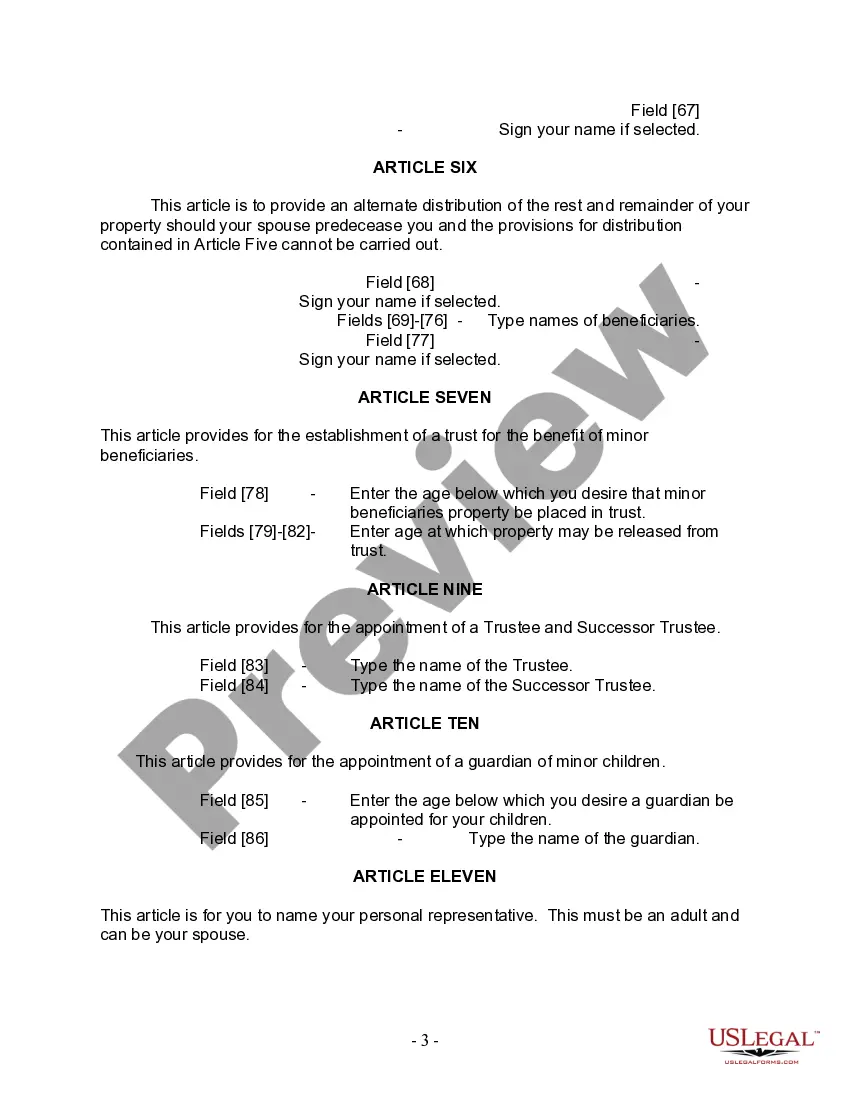
- Article Eleven: Appointment of a personal representative to manage your estate.
- Article Seven: Establishment of a trust for minor beneficiaries.





When to use this document
This form is ideal when you want to ensure that your estate is distributed according to your wishes after your death, particularly if you have children from different marriages. It is especially useful if you wish to appoint a guardian for minor children or establish trusts to manage their inheritance responsibly. You should consider using this form if you have recently remarried and have a blended family, as it addresses the unique needs that come with such family dynamics.
Who this form is for
- Individuals who are divorced and have remarried.
- Parents with biological and stepchildren.
- Those who wish to create specific trusts for minor children.
- People seeking a legally binding document to express their wishes regarding the distribution of their estate.
Instructions for completing this form
- Identify your personal details, including your name and county of residence.
- List the names of your current spouse and children, and when applicable, the names of children from previous marriages.
- Designate specific property to be bequeathed to named individuals in Article Three.
- Choose and appoint a personal representative and a guardian for any minor children.
- Ensure the document is signed in front of two witnesses and, if needed, notarized for validation.
Notarization requirements for this form
Yes, this form must be notarized to be legally valid. It is essential that you sign your will in the presence of a notary public to ensure its enforcement and to follow the self-proving affidavit requirements mandated by state law.
Get your form ready online
Our built-in tools help you complete, sign, share, and store your documents in one place.
Make edits, fill in missing information, and update formatting in US Legal Forms—just like you would in MS Word.
Download a copy, print it, send it by email, or mail it via USPS—whatever works best for your next step.
Sign and collect signatures with our SignNow integration. Send to multiple recipients, set reminders, and more. Go Premium to unlock E-Sign.
If this form requires notarization, complete it online through a secure video call—no need to meet a notary in person or wait for an appointment.
We protect your documents and personal data by following strict security and privacy standards.

Make edits, fill in missing information, and update formatting in US Legal Forms—just like you would in MS Word.

Download a copy, print it, send it by email, or mail it via USPS—whatever works best for your next step.

Sign and collect signatures with our SignNow integration. Send to multiple recipients, set reminders, and more. Go Premium to unlock E-Sign.

If this form requires notarization, complete it online through a secure video call—no need to meet a notary in person or wait for an appointment.

We protect your documents and personal data by following strict security and privacy standards.
Mistakes to watch out for
- Failing to name all children, leading to potential disputes.
- Not updating the will after significant life events, such as births or deaths.
- Signing the document without the required witnesses or notarization, affecting its validity.
- Omitting or misclassifying specific bequests, leading to unintended distributions.
Why complete this form online
- Convenient: Complete the form from the comfort of your home.
- Editability: Easily make changes to reflect your current wishes.
- Accessibility: Downloadable format allows for immediate use and filing.
- Compliance: Forms drafted by licensed attorneys ensure legal adherence.
Main things to remember
- This will is tailored for individuals in blended families, ensuring fair distribution of assets.
- Proper completion includes specific bequests and clear instructions for minor children's trusts.
- Legal validity requires proper witnessing and, in many cases, notarization.
- Using this form online provides flexibility and ease in managing your estate planning needs.
Looking for another form?
Form popularity
FAQ
BCE/CE usually refers to the Common Era (the years are the same as AD/BC).The simplest reason for using BCE/CE as opposed to AD/BC is to avoid reference to Christianity and, in particular, to avoid naming Christ as Lord (BC/AD: Before Christ/In the year of our Lord).
If you encounter a date in the CE (Common Era) or BCE (Before Common Era) format, don't fret. They mean exactly the same thing as AD (anno Domini) and BC (before Christ).
The US system does not use CE marking or any other (general) conformity marking.In the US product requirements are based on national laws as enacted by the Congress. Standards are on a voluntary base in the EU as a rule, but can be mandatory in the US.
Common Era (CE) is one of the year notations used for the Gregorian calendar (and its predecessor, the Julian calendar), the world's most widely used calendar era. Before the Common Era (BCE) is the era before CE. BCE and CE are alternatives to the Dionysian BC and AD notations, respectively.
The CE mark (above) is a symbol that a manufacturer (see definition below) affixes to a product so that it can be sold in Europe.CE stands for Conformite EuropA©enne", the French for European conformity.
Common Era or Christian Era (CE) is a method used to identify a year.CE is an alternative to the AD, system used by Christians but the numbers are the same: this year is 2021 CE or equally AD 2021 (but usually we just say "this year is 2021"). AD is an abbreviation of Anno Domini, which means "Year of the Lord".
The use of BCE/CE certainly has become more common in recent years but it is not a new invention of the "politically correct" nor is it even all that new; the use of "common era" in place of A.D. first appears in German in the 17th century CE and in English in the 18th.
CE stands for common (or current) era, while BCE stands for before the common (or current) era. These abbreviations have a shorter history than BC and AD, although they still date from at least the early 1700s.