Texas Mutual Wills Package with Last Wills and Testaments for Married Couple with Adult Children
Understanding this form
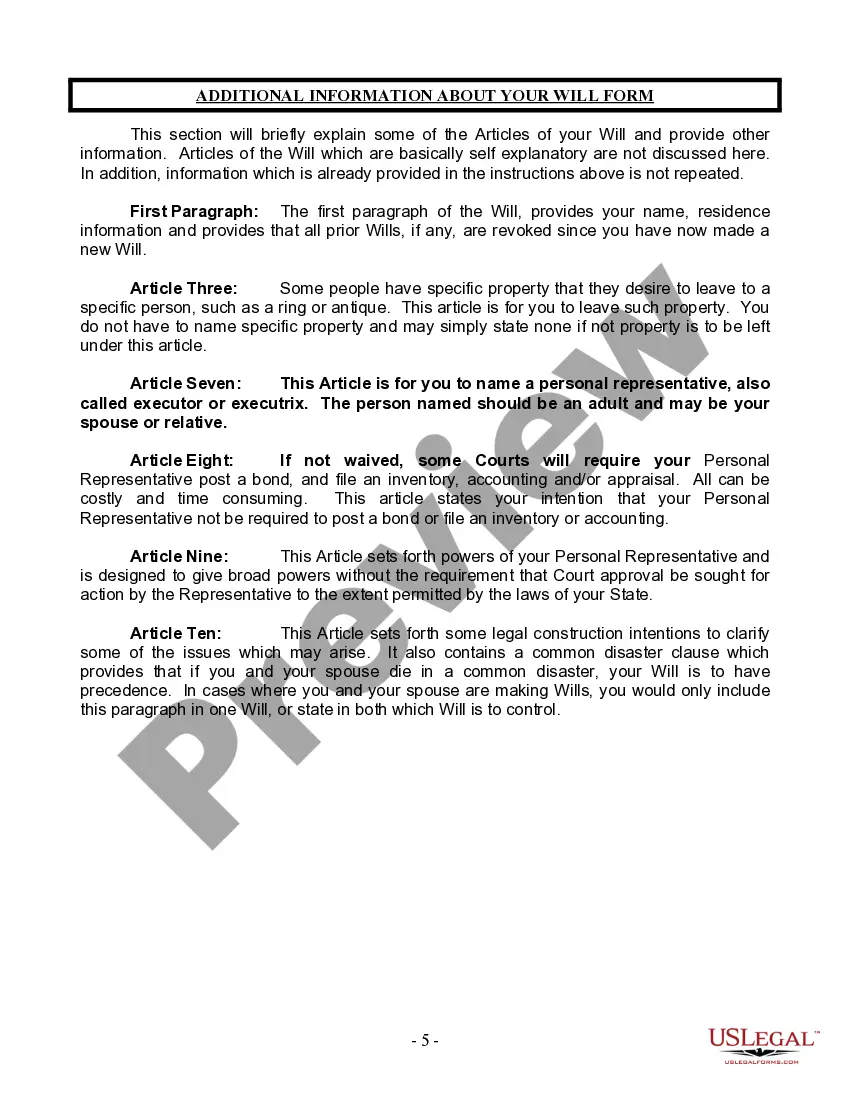
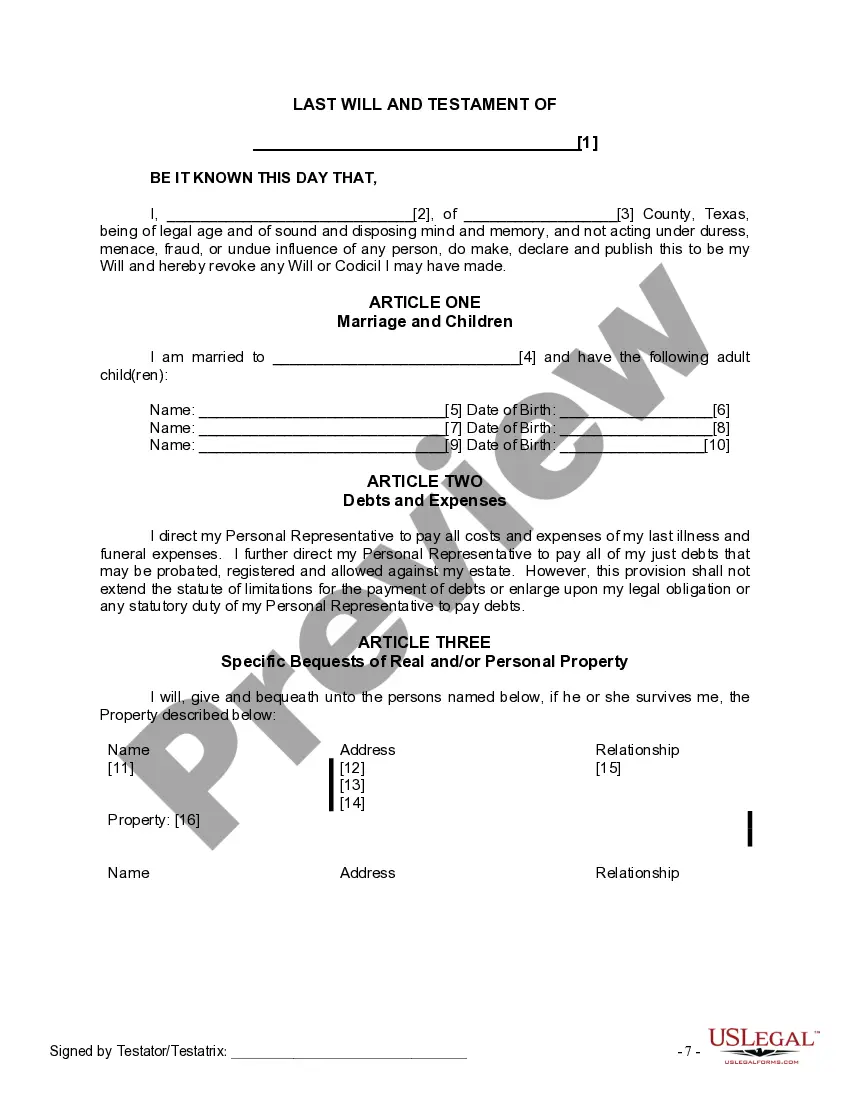
The Mutual Wills Package with Last Wills and Testaments for Married Couple with Adult Children is a comprehensive legal document designed specifically for married couples who wish to outline the distribution of their assets upon their passing. This package includes two willsâone for each spouseâtailored to ensure that adult children are included in the estate plan. Unlike standard wills, this package emphasizes mutual agreement between spouses, ensuring that both parties' wishes are honored in a unified manner.
What’s included in this form
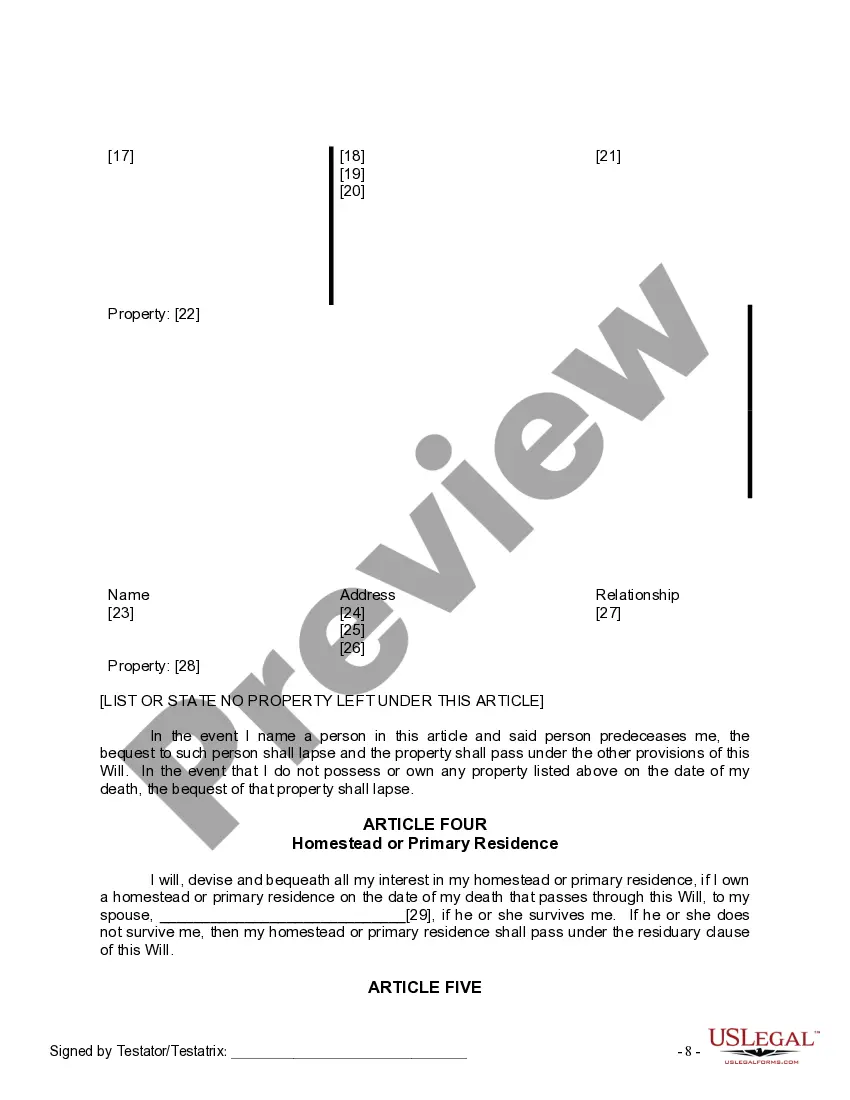
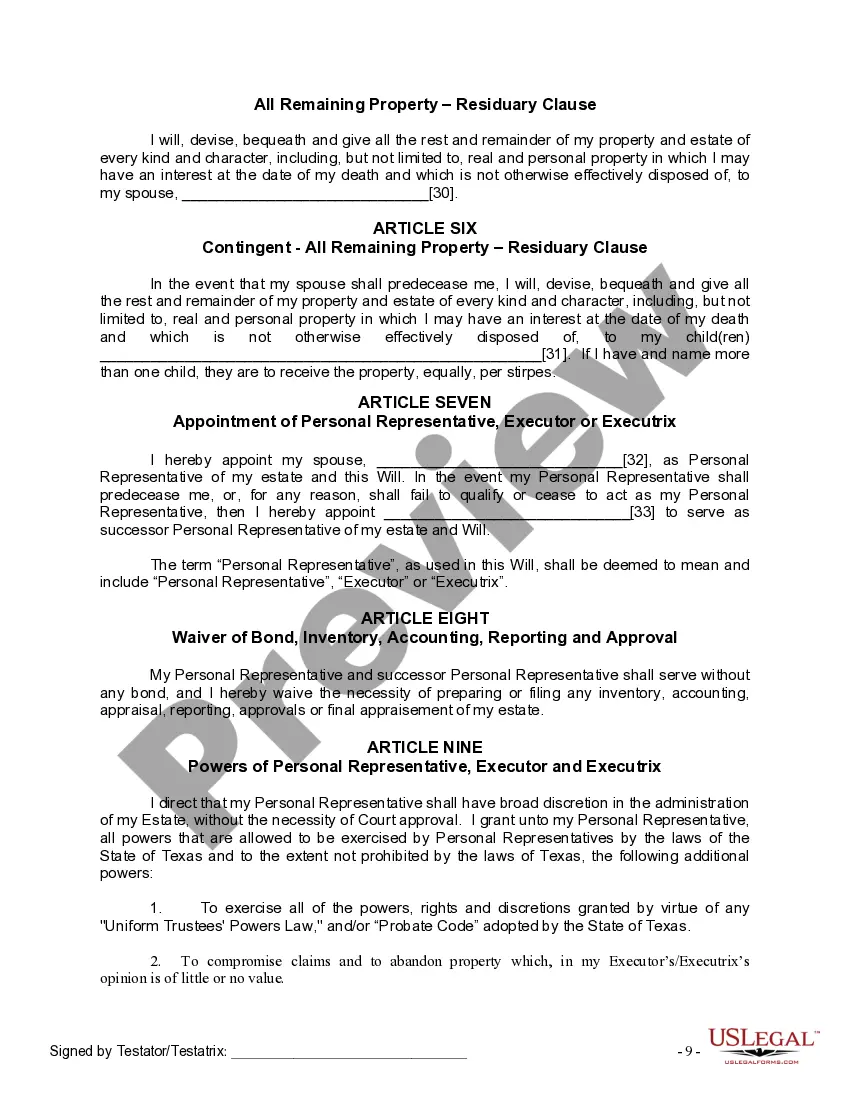
- Appointment of personal representative or executor
- Designation of property beneficiaries
- Specific bequests for personal items
- Provisions for homestead or primary residence
- Contingency plans if one spouse predeceases the other
- Instructions for execution and witness requirements





When to use this document
This form is suitable when married couples want to formalize their last wills and mutual intentions regarding property distribution, especially when they have adult children. It is particularly important if the couple wishes to ensure equal sharing among children, manage specific assets, or designate a personal representative for their estate. Utilizing this form helps avoid complications and misunderstandings among family members after their passing.
Who should use this form
- Married couples with adult children
- Couples seeking to create a mutual estate plan
- Individuals looking to specify property distribution clearly
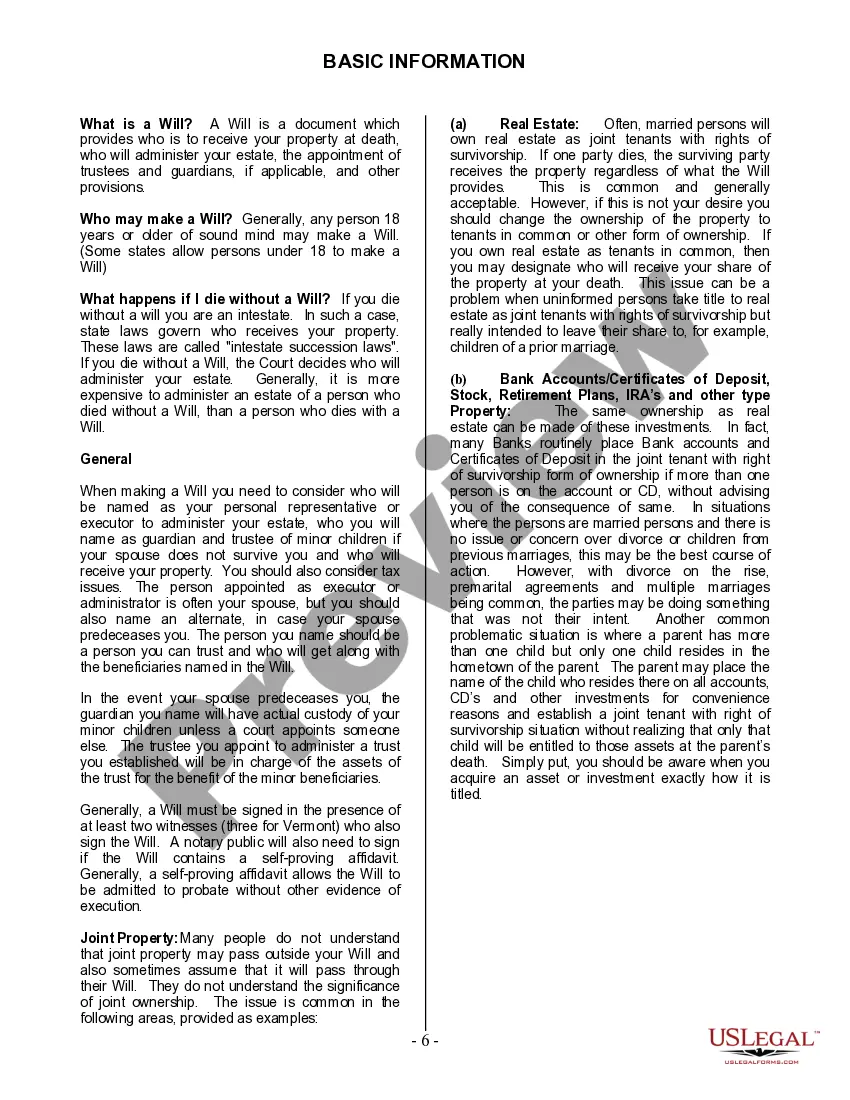
- Those who want to address issues of joint property ownership
Completing this form step by step
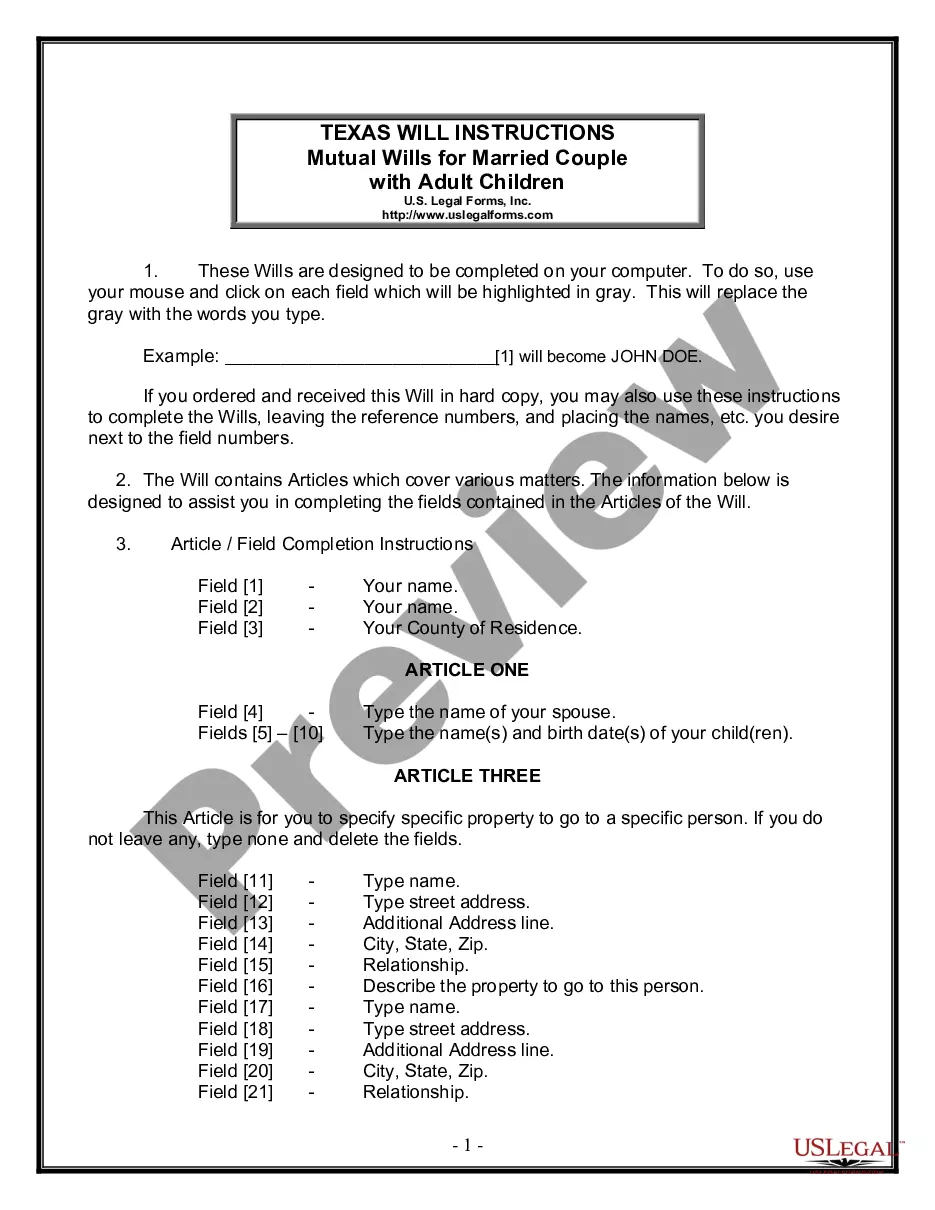
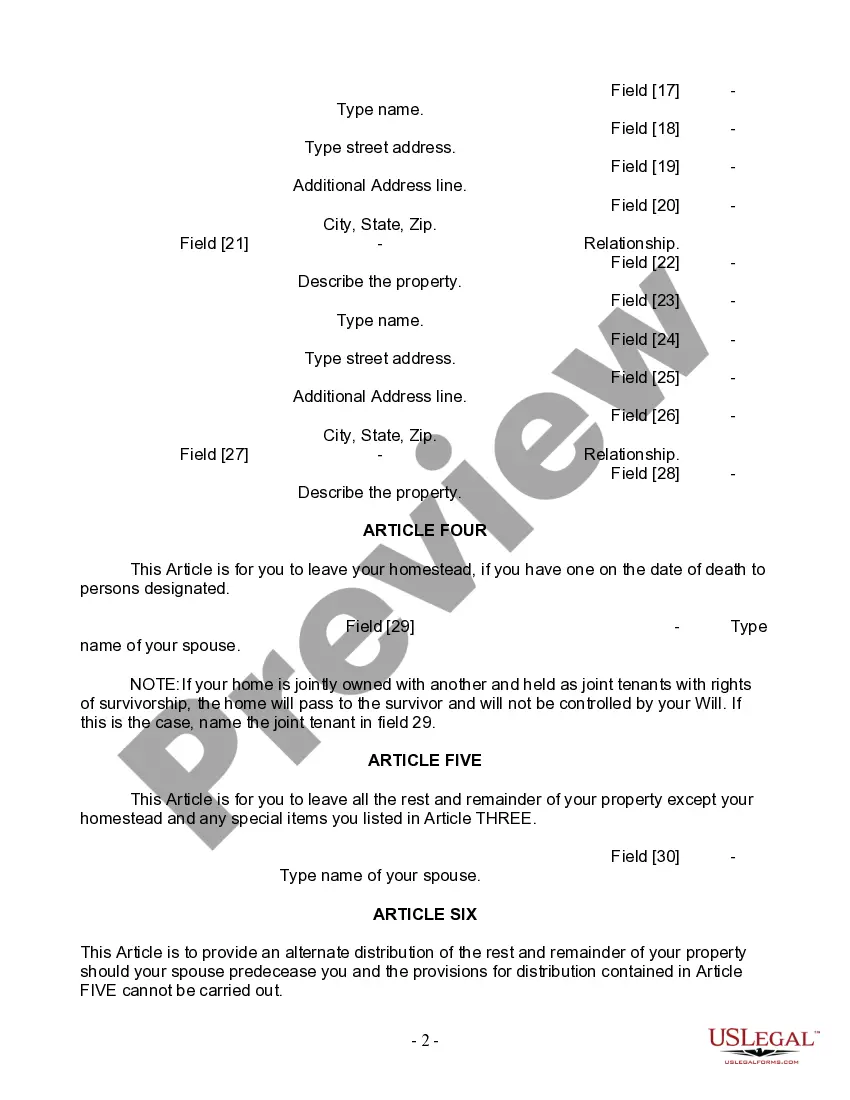
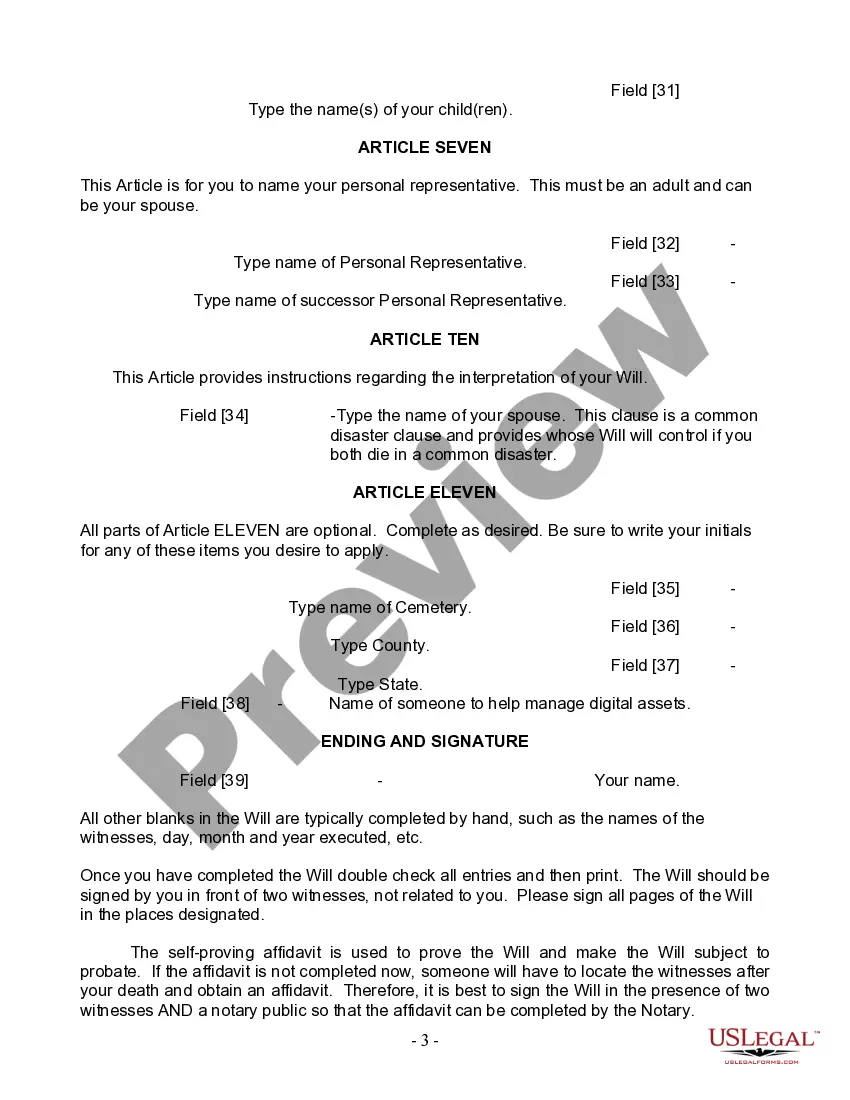
- Open the form and click on the highlighted fields to enter required information, such as names, addresses, and property details.
- Designate beneficiaries for specific property by completing the relevant fields.
- Include provisions for your homestead and any remaining property in the designated sections.
- Identify a personal representative and any successor to ensure estate administration runs smoothly.
- Sign the completed will in front of two witnesses and ensure that a notary is present if a self-proving affidavit is used.
Notarization guidance
Yes, this form must be notarized to be legally valid. It is recommended to sign the wills in the presence of a notary public, which allows for the completion of a self-proving affidavit. This ensures that the will can be admitted to probate without needing additional evidence of execution.
Get your form ready online
Our built-in tools help you complete, sign, share, and store your documents in one place.
Make edits, fill in missing information, and update formatting in US Legal Forms—just like you would in MS Word.
Download a copy, print it, send it by email, or mail it via USPS—whatever works best for your next step.
Sign and collect signatures with our SignNow integration. Send to multiple recipients, set reminders, and more. Go Premium to unlock E-Sign.
If this form requires notarization, complete it online through a secure video call—no need to meet a notary in person or wait for an appointment.
We protect your documents and personal data by following strict security and privacy standards.

Make edits, fill in missing information, and update formatting in US Legal Forms—just like you would in MS Word.

Download a copy, print it, send it by email, or mail it via USPS—whatever works best for your next step.

Sign and collect signatures with our SignNow integration. Send to multiple recipients, set reminders, and more. Go Premium to unlock E-Sign.

If this form requires notarization, complete it online through a secure video call—no need to meet a notary in person or wait for an appointment.

We protect your documents and personal data by following strict security and privacy standards.
Common mistakes to avoid
- Not having the wills signed in the presence of enough witnesses.
- Failing to update the will after major life changes (e.g., divorce, birth of a child).
- Omitting essential details about properties or beneficiaries.
- Not providing clear instructions for the distribution of assets.
Why use this form online
- Convenient access to professionally drafted legal forms anytime.
- Editable forms that allow customization to fit individual family needs.
- Cost-effective solution that removes the need for personal legal consultations.
Legal use & context
- The mutual wills package creates binding documents that may limit the ability to change the will without the other spouse's consent.
- Ensures that both partners have a clear understanding and agreement on the distribution of assets.
- Can help avoid potential legal disputes among heirs in the case of the death of one or both spouses.
Main things to remember
- This form includes essential legal documents for married couples with adult children.
- It facilitates clear communication of each spouse's wishes regarding estate distribution.
- Proper execution involves witnesses and notary requirements specific to Texas.
Looking for another form?


Form popularity
FAQ
It is a customary estate planning practice for each spouse to have his or her own will. While some practitioners may draft a joint will for a married couple, it is not recommended.
In Texas, marriage does not invalidate a valid preexisting Will. If you make a Will before you get married, and would like your new spouse to be your beneficiary, it is important that you update your Will. Please note that spouses in Texas are afforded certain constitutional rights.
If you have no spouse or children, your property will be split among your parents and/or siblings, depending on who survives you: If both parents are still living, ½ goes to Mother and A½ goes to Father. If one parent and siblings (or siblings' descendants) are still living, A½ goes to surviving parent and A½ to siblings.
A joint will is a legal document executed by two (or more) people, which merges their individual wills into a single, combined last will and testament. Like most wills, a joint will lets the will-makers name who will get their property and assets after they die. Joint wills are usually created by married couples.
The community estate of a married couple is owned by both persons. In other words, each spouse owns one half of the community estate. When a married person dies, only one half of the community estate can be given away because the other half is still owned by the living spouse.
The laws in Texas surrounding intestate wills for married individuals without children are much simpler. The surviving spouse automatically receives all community property.If there are no surviving parents, siblings or descendants of siblings, the spouse gets the remainder of the estate's separate real property.
A will can override a marriage to the extent that it can devise (give to another) 1/2 of the deceased's community property and all of the deceased's separate property. A will cannot override 1/2 of the deceased's community property as that is legally...
It requires married employees to designate their spouse as the primary beneficiary unless the spouse provides a waiver. The Texas Family Code voids ex-spouses as beneficiaries on financial assets when the final order dissolving the marriage issues.
Under Texas law, inheritances are separate property not subject to division in divorce, even if assets are inherited during the course of a marriage.A husband received a $10,000 inheritance during his marriage, and deposits that inheritance into a joint account he has with his husband.