Texas Last Will and Testament for Divorced Person Not Remarried with No Children
What this document covers
This Last Will and Testament is specifically designed for a divorced person who is not remarried and has no children. It outlines how your property will be distributed after your death and allows you to appoint a personal representative to manage your estate. This form differs from other wills by recognizing your single status and simplifying the distribution process since there are no children or spouses involved.
Key parts of this document
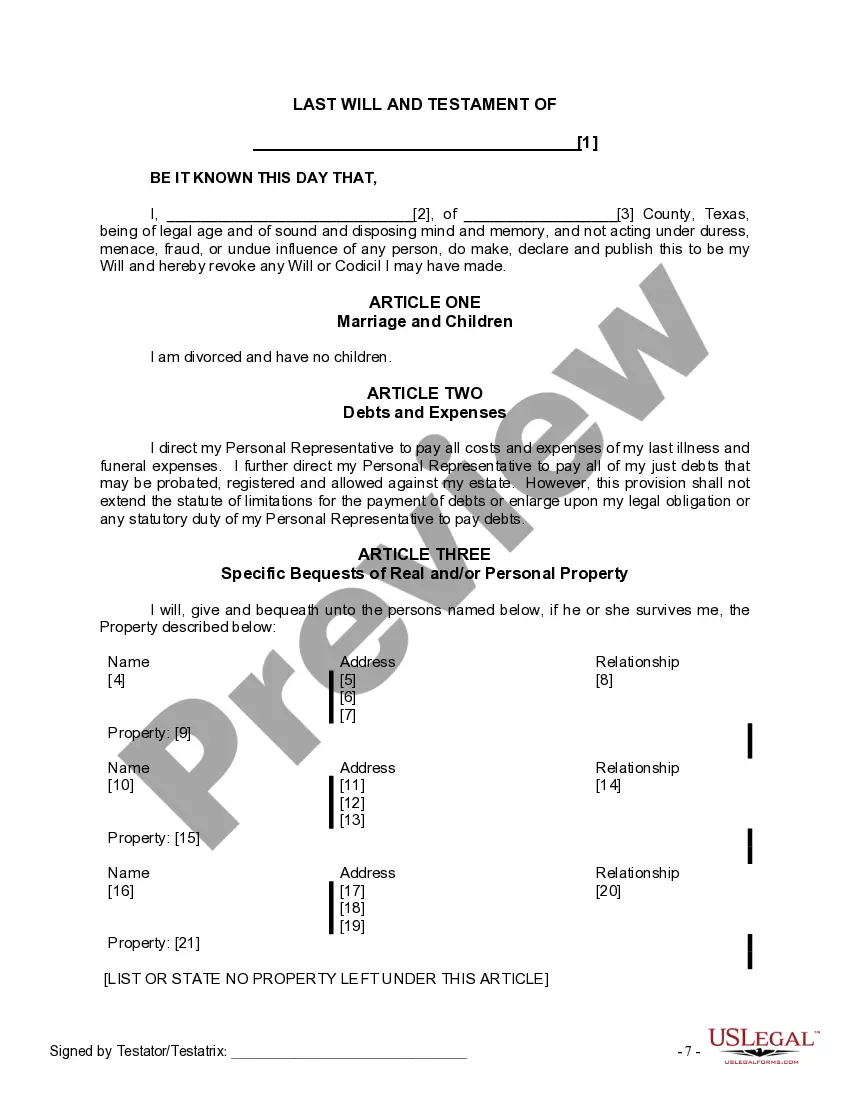
- Identification of the testator and revocation of previous wills.
- Clearly states marital status and the absence of children.
- Instructions for settling debts and funeral expenses.
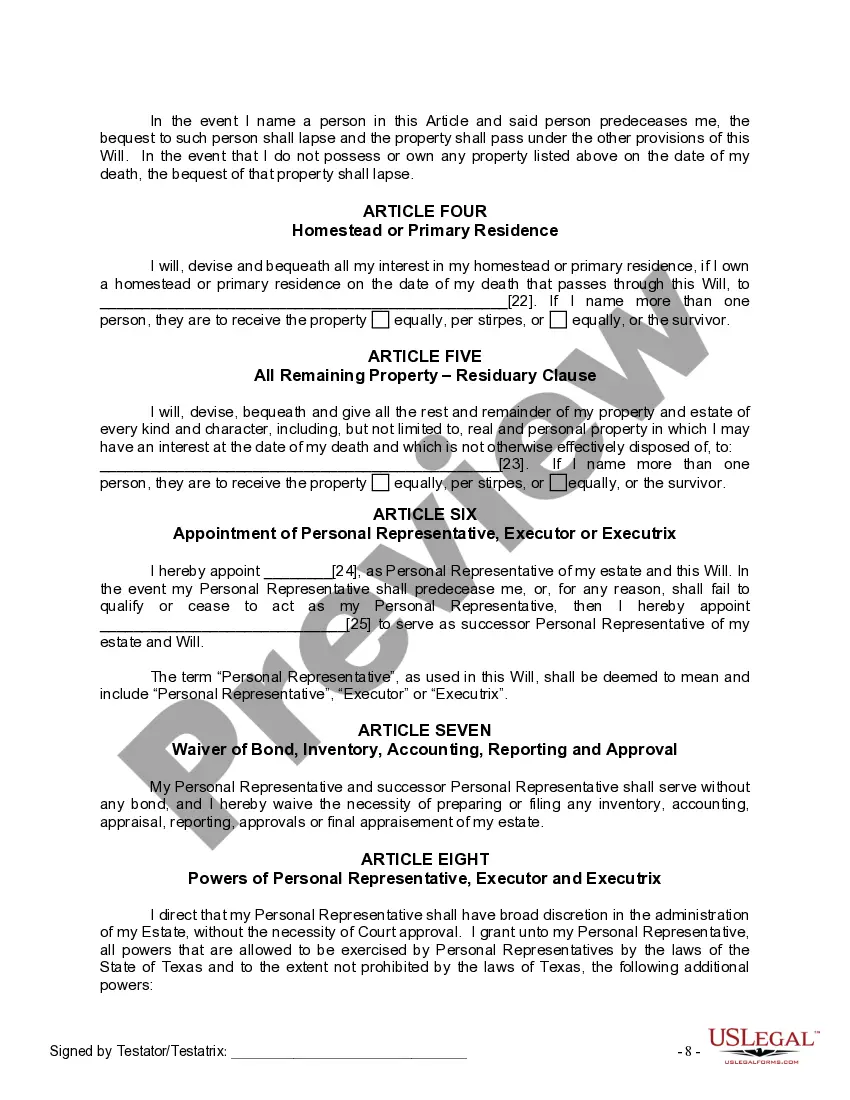
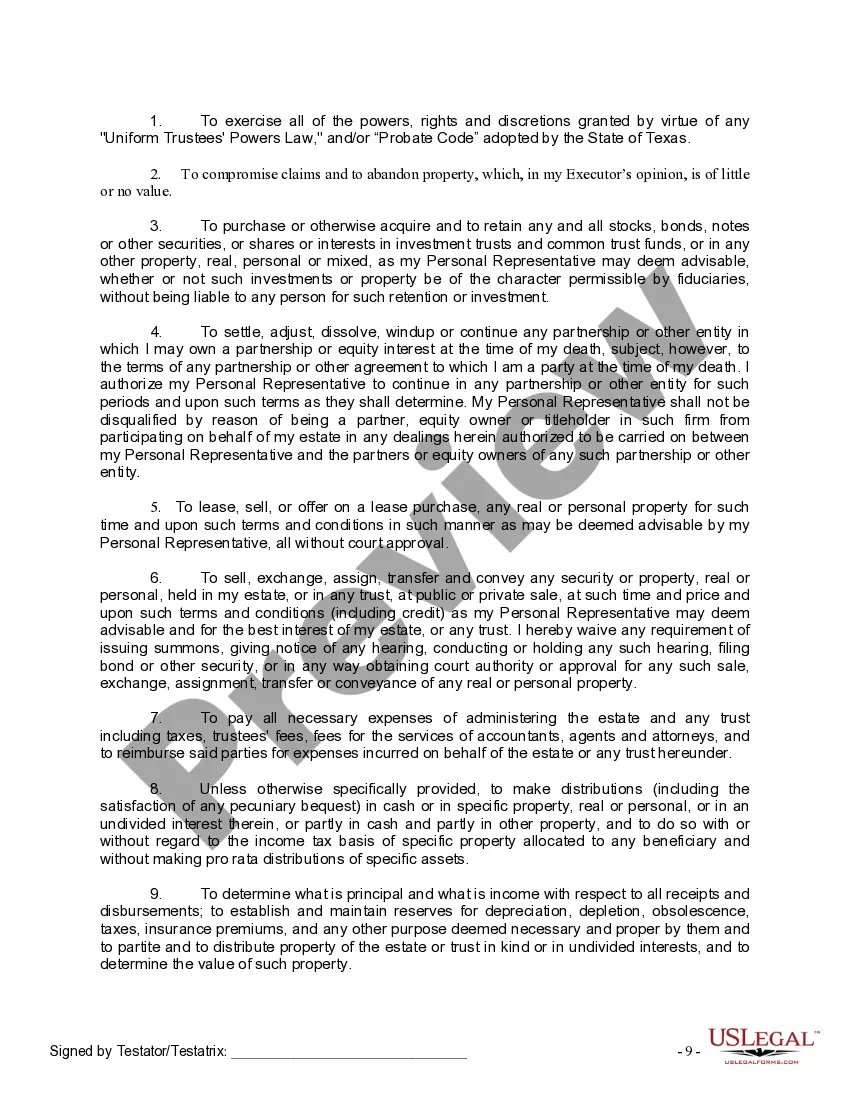
- Specific bequests of property to designated individuals.
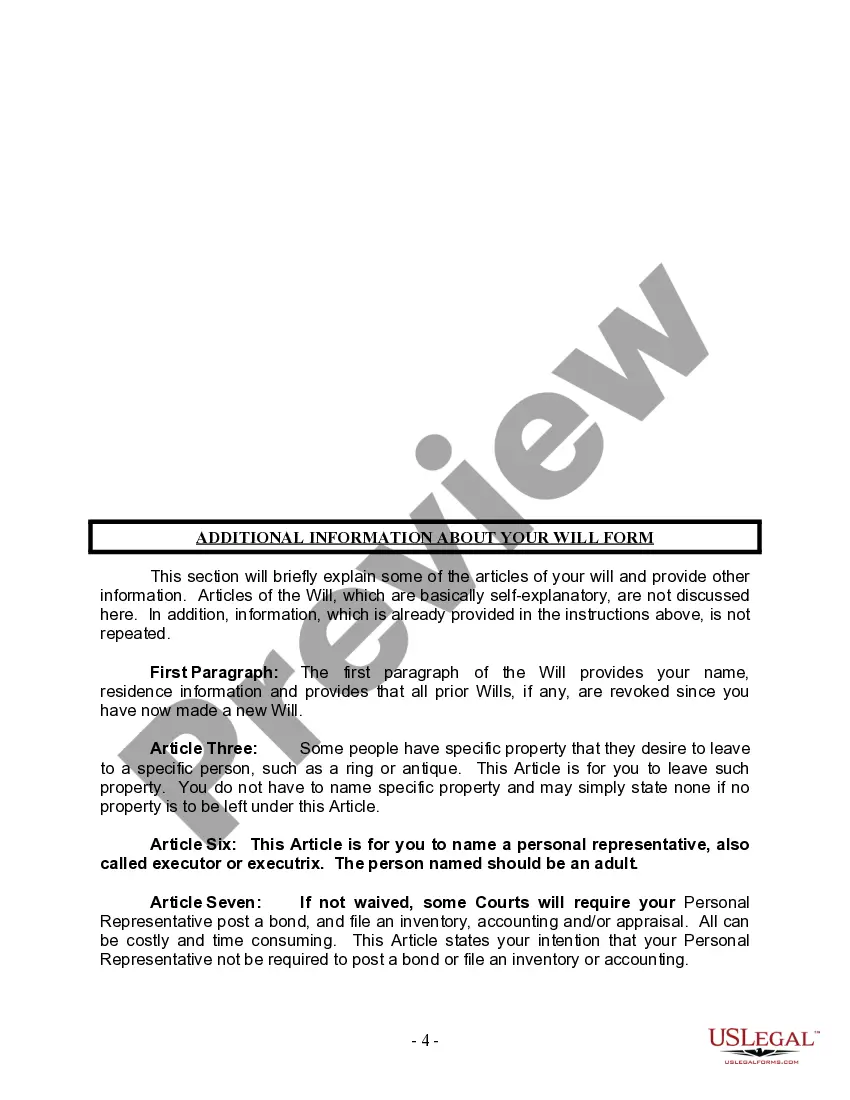
- Appointment of a personal representative to execute the will.
- Provisions regarding the homestead or primary residence.



When this form is needed
This form should be used when an individual who is divorced, not remarried, and without children wants to ensure their assets are distributed according to their wishes after death. It is particularly useful for those wanting to avoid intestate succession laws, which dictate how property is divided when someone dies without a will. Additionally, this form aids in reducing family disputes by clarifying your intentions.
Who can use this document
- Divorced individuals who have not remarried.
- Those without children or dependents.
- People wanting to specify how their assets should be distributed after their death.
- Individuals seeking to appoint someone to manage their estate after passing.
How to complete this form
- Enter your name and county at the beginning of the document.
- Clearly state your marital status and confirm that you have no children.
- List your debts and funeral expenses to ensure they are paid from your estate.
- Identify specific property you wish to bequeath to named individuals.
- Sign the document in the presence of two witnesses and include a notary's signature if using the self-proving affidavit.
Is notarization required?
Yes, this form must be notarized to be legally valid. Including a self-proving affidavit allows the will to be validated without the witnesses needing to testify in court, simplifying the probate process. US Legal Forms offers integrated online notarization, allowing you to notarize your document securely via video call at your convenience.
Get your form ready online
Our built-in tools help you complete, sign, share, and store your documents in one place.
Make edits, fill in missing information, and update formatting in US Legal Forms—just like you would in MS Word.
Download a copy, print it, send it by email, or mail it via USPS—whatever works best for your next step.
Sign and collect signatures with our SignNow integration. Send to multiple recipients, set reminders, and more. Go Premium to unlock E-Sign.
If this form requires notarization, complete it online through a secure video call—no need to meet a notary in person or wait for an appointment.
We protect your documents and personal data by following strict security and privacy standards.

Make edits, fill in missing information, and update formatting in US Legal Forms—just like you would in MS Word.

Download a copy, print it, send it by email, or mail it via USPS—whatever works best for your next step.

Sign and collect signatures with our SignNow integration. Send to multiple recipients, set reminders, and more. Go Premium to unlock E-Sign.

If this form requires notarization, complete it online through a secure video call—no need to meet a notary in person or wait for an appointment.

We protect your documents and personal data by following strict security and privacy standards.
Mistakes to watch out for
- Failing to have two qualified witnesses sign the will.
- Not specifying the location of property clearly.
- Overlooking the stipulation regarding debts and funeral expenses.
- Neglecting to revoke previous wills, leading to potential conflicts.
- Not providing instructions for digital assets, if applicable.
Benefits of using this form online
- Convenient access to legally compliant templates that can be downloaded instantly.
- Easy customization of the form to fit your specific needs and circumstances.
- Confidence in the reliability and accuracy, as these forms are drafted by licensed attorneys.
What to keep in mind
- This Last Will and Testament is tailored for divorced individuals with no children.
- It is essential for ensuring your assets are distributed according to your wishes.
- Completing the form correctly helps avoid legal disputes among potential heirs.
- Notarization may simplify the probate process in Texas.
Looking for another form?
Form popularity
FAQ
No, in Texas, you do not need to notarize your will to make it legal. However, Texas allows you to make your will "self-proving" and you'll need to go to a notary if you want to do that. A self-proving will speeds up probate because the court can accept the will without contacting the witnesses who signed it.
No, in Texas, you do not need to notarize your will to make it legal. However, Texas allows you to make your will "self-proving" and you'll need to go to a notary if you want to do that. A self-proving will speeds up probate because the court can accept the will without contacting the witnesses who signed it.
In order to make a valid handwritten will in Texas, the entire document must be in your own handwriting. No one can write any part of it except for you and no part of it can be typed. You can write in cursive or print, but the entire will must be in your handwriting only.
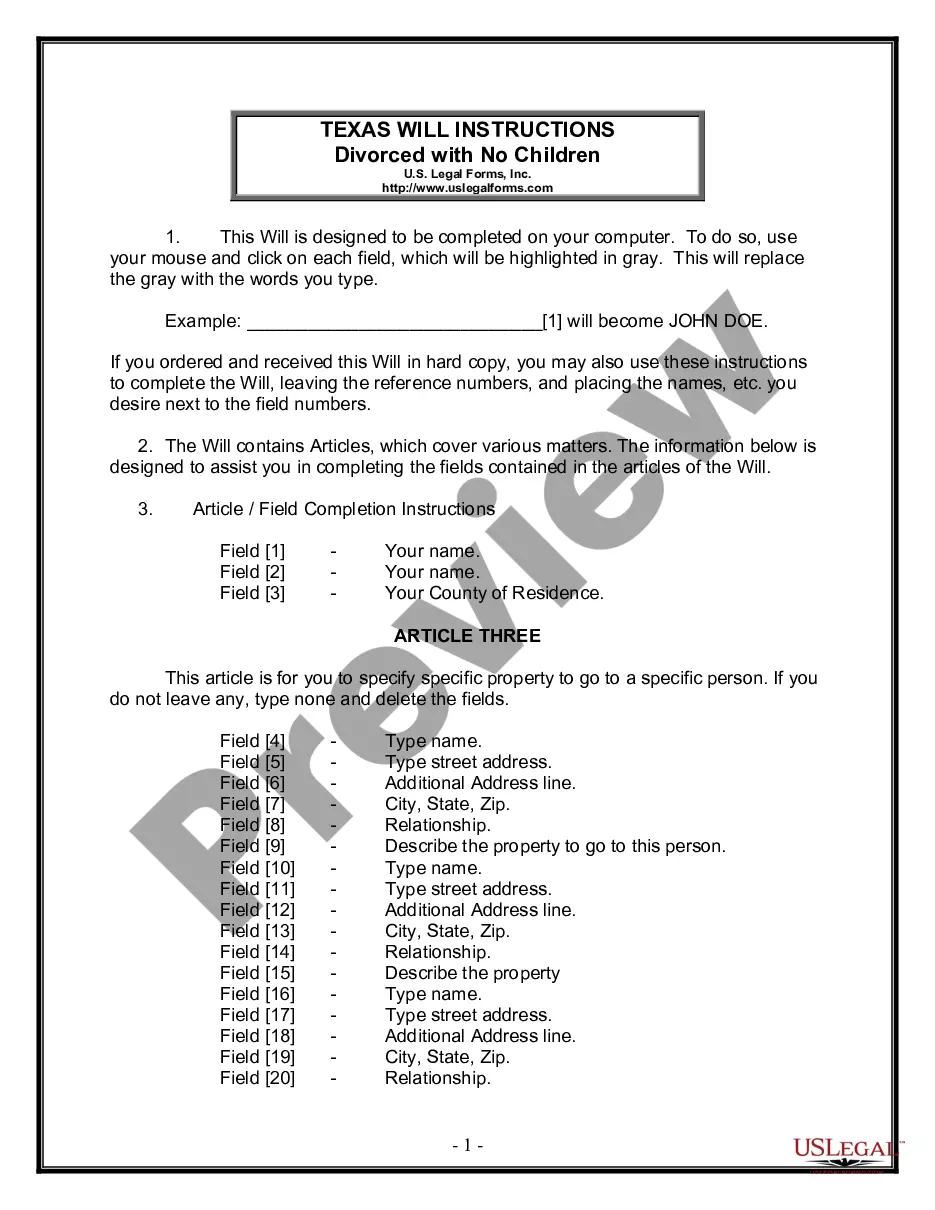
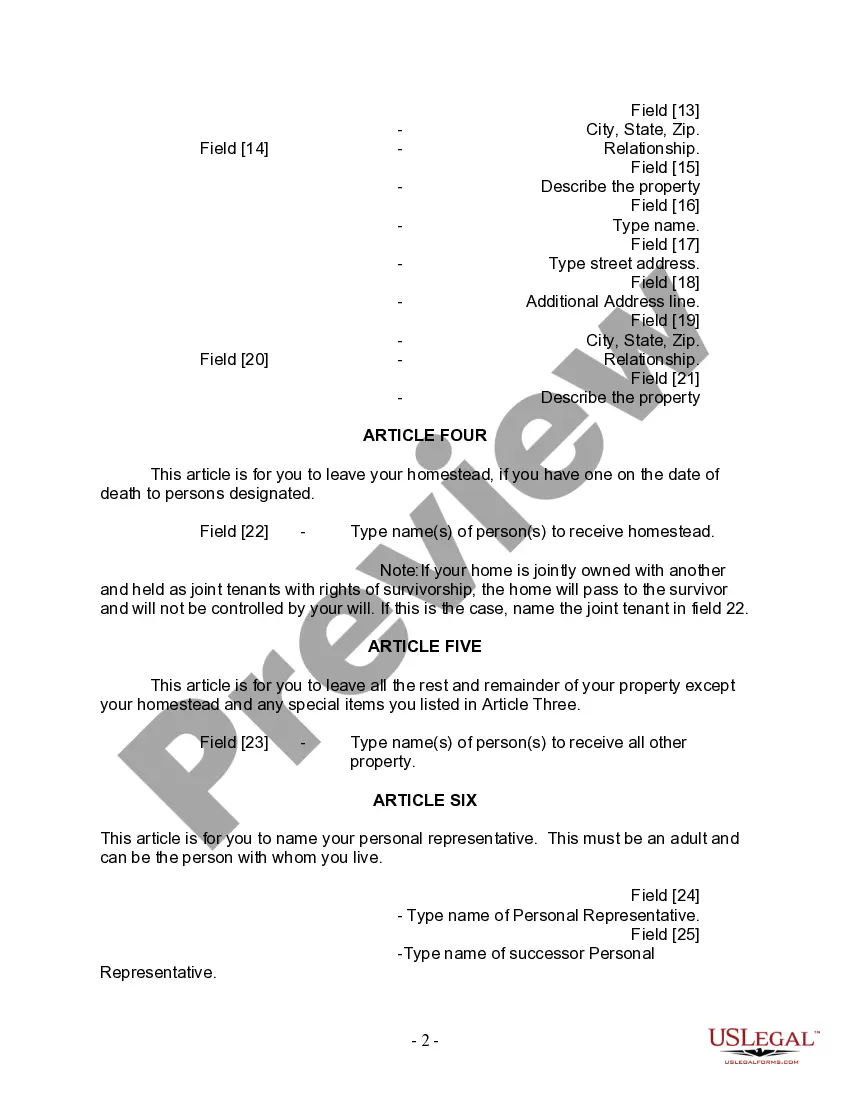
Their legal name. A physical addresses for named beneficiaries. Provide a description of the relationship to the testator. Enter the last four digits of the SSN for all persons named beneficiaries. Enter a list/descriptions of property that the testator shall provide per beneficiary.
Texas law recognizes holographic, or handwritten, wills, but such a will must be signed by the testator and drafted entirely in his or her handwriting. In this instance, the will does not need to have the signatures of witnesses and may be self-proved at any time during the lifetime of the testator.
Are 18 years of age or older, have been lawfully married, or. are a member of the armed forces of the United States.
A simple/basic Will in Texas averages between $250 to $2,500+. The price depends on the experience of the attorney drafting the Will. Reputable attorneys will charge a minimum of $500+, since a Will is only valid if it is properly drafted and executed.