Texas Limited Power of Attorney where you Specify Powers with Sample Powers Included
Understanding this form
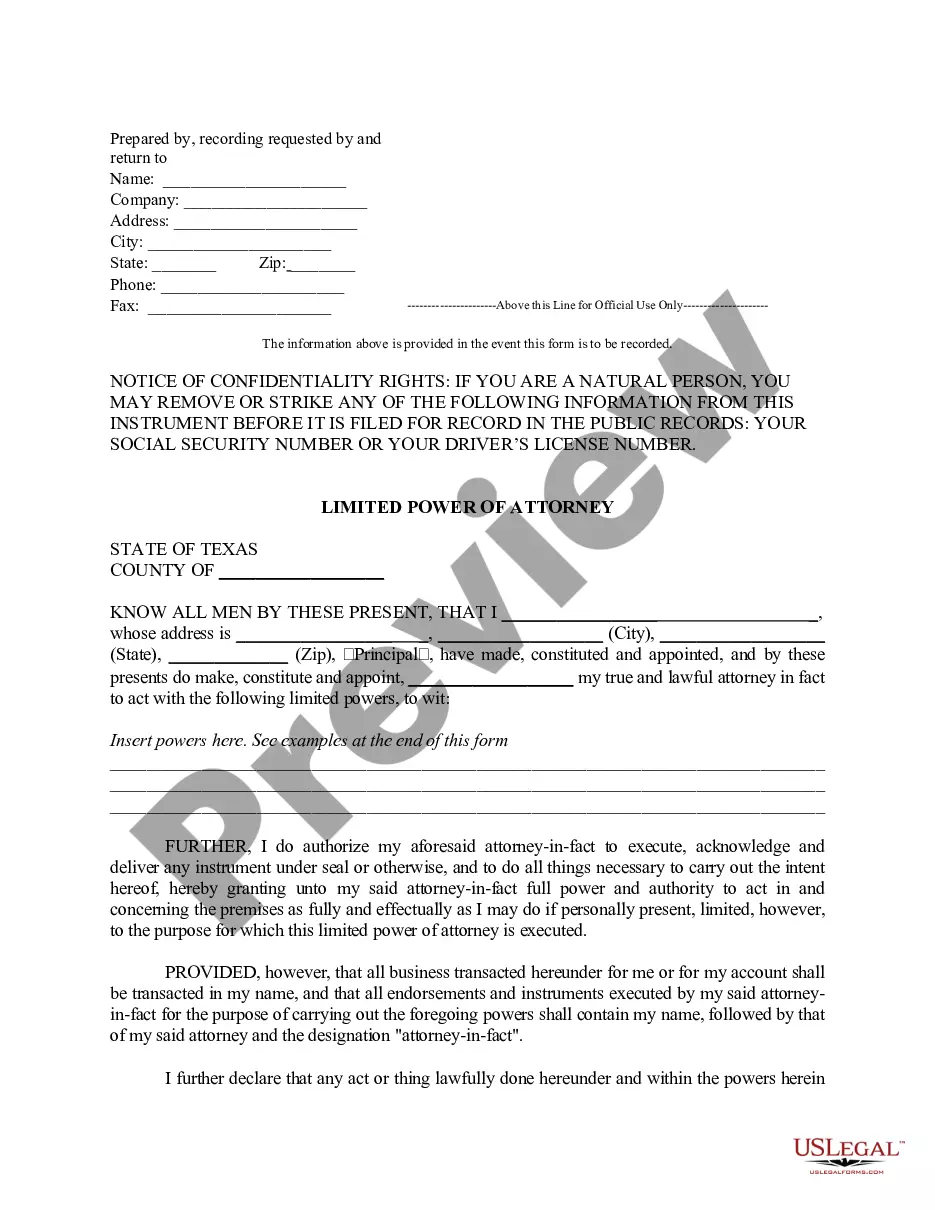
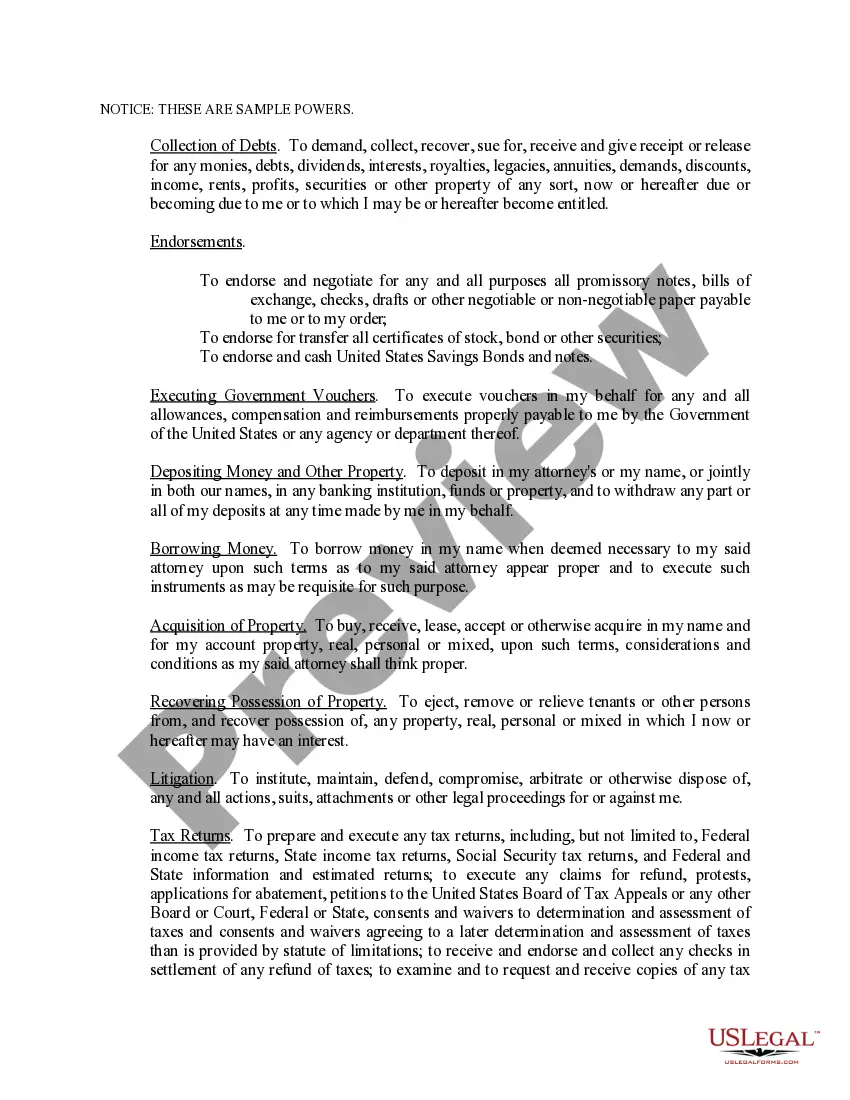
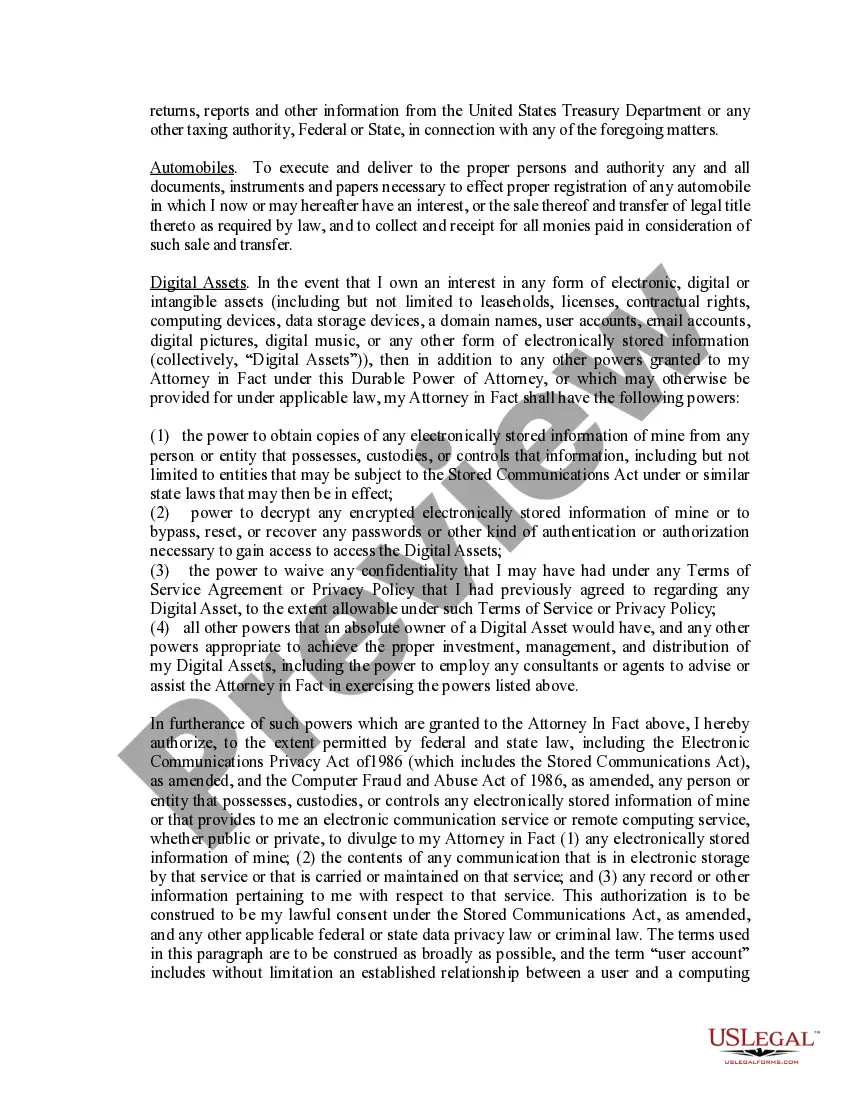
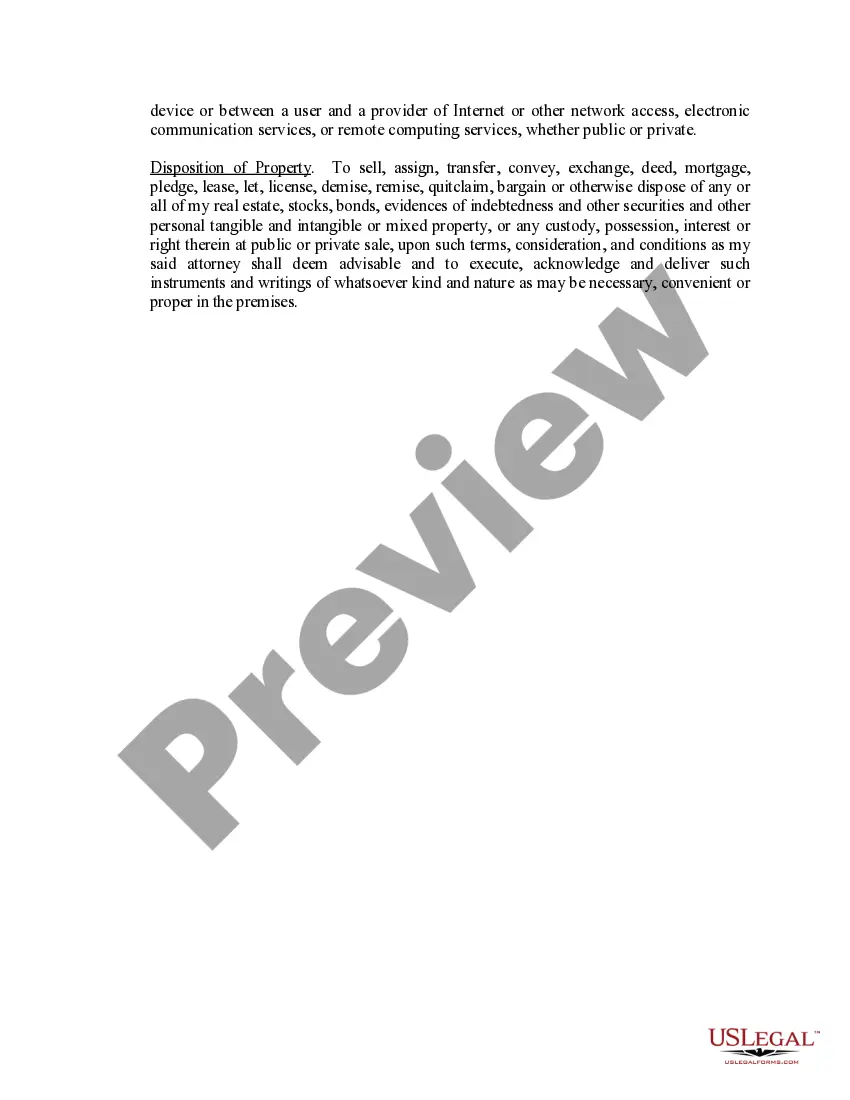
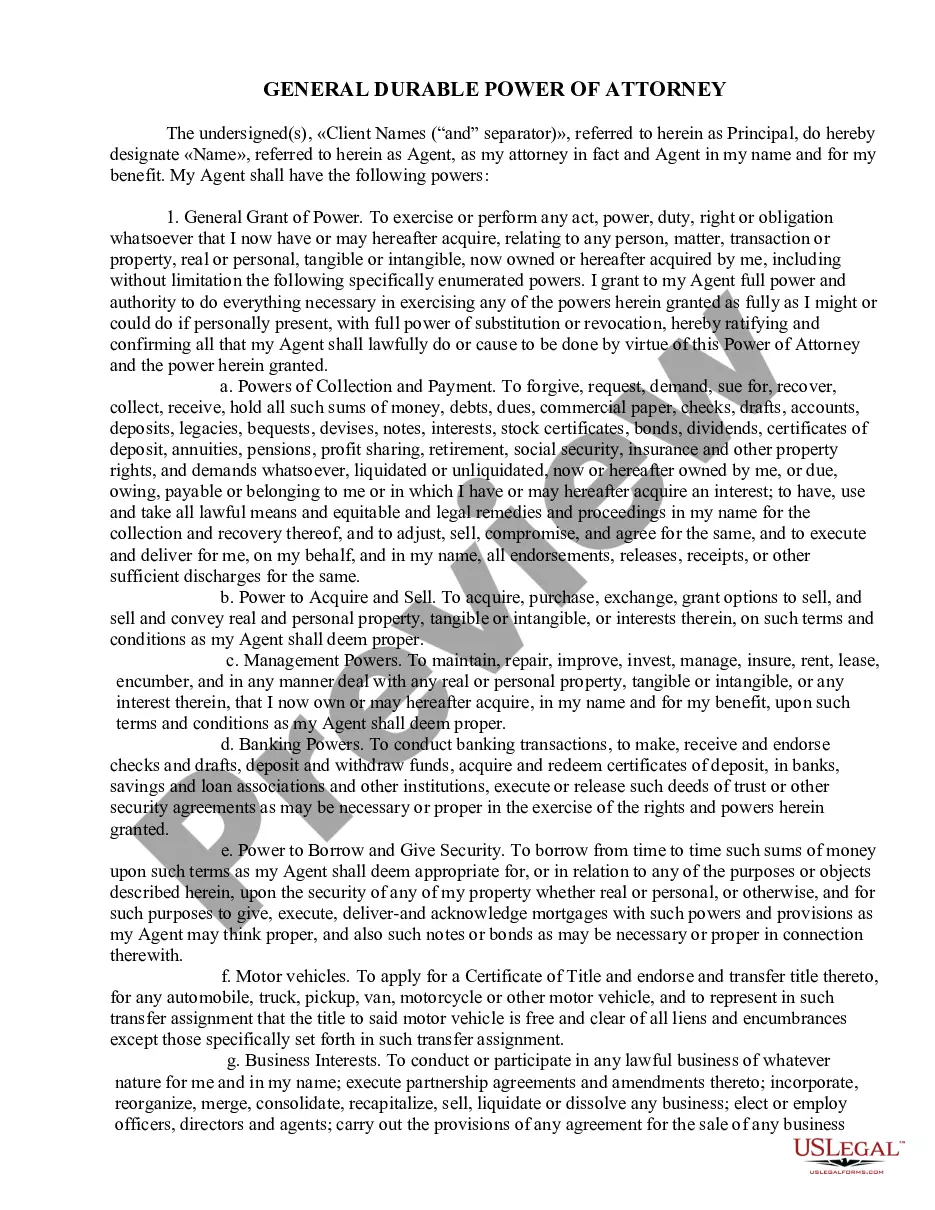
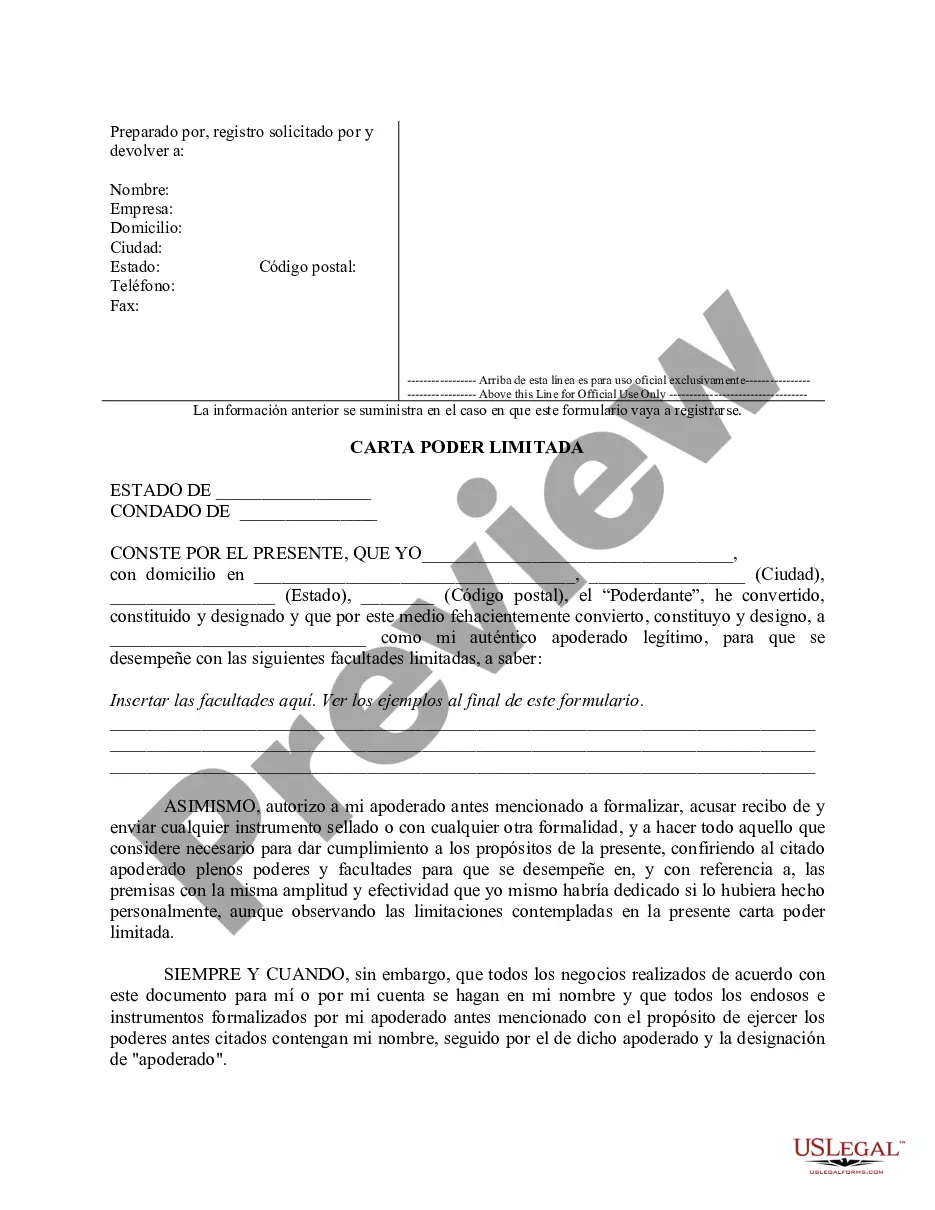
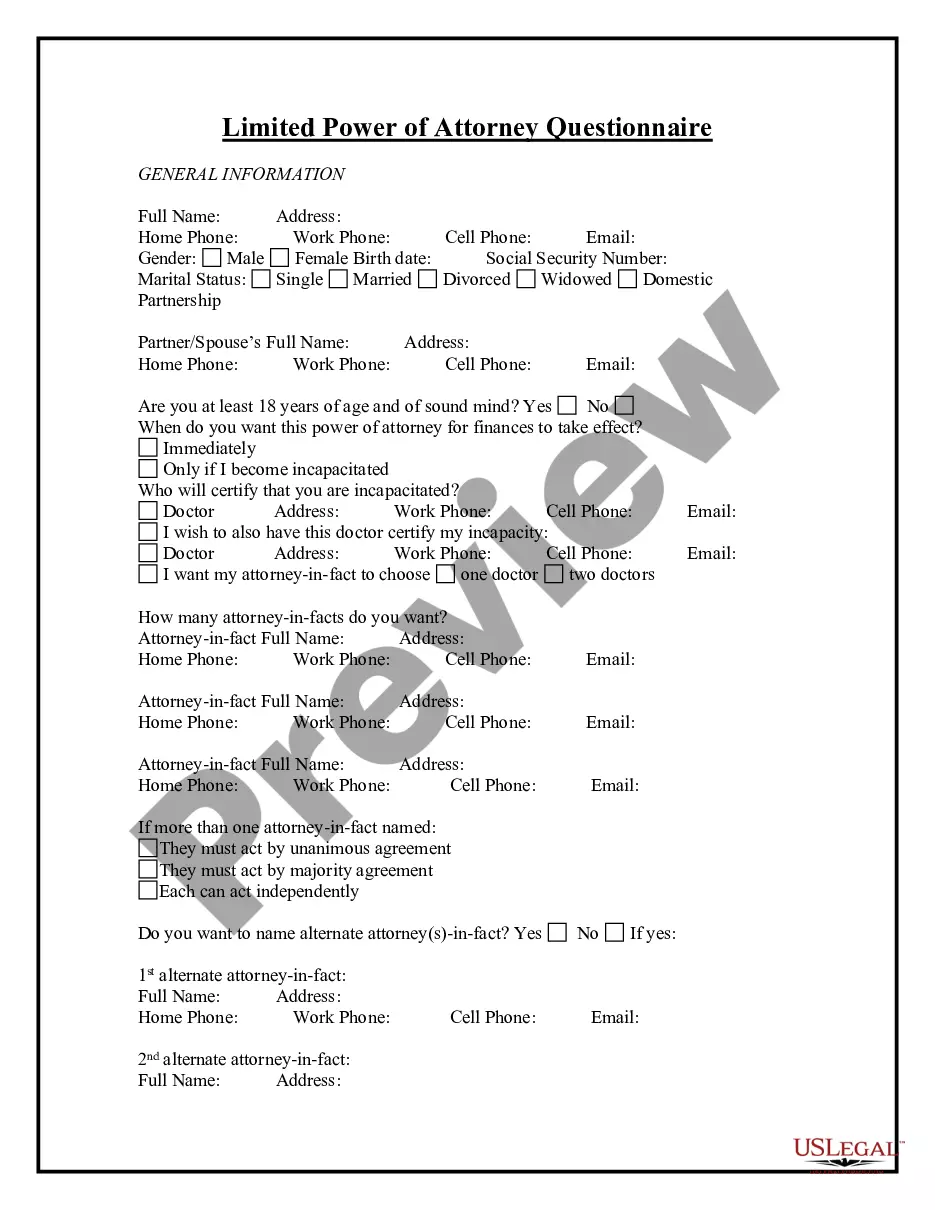
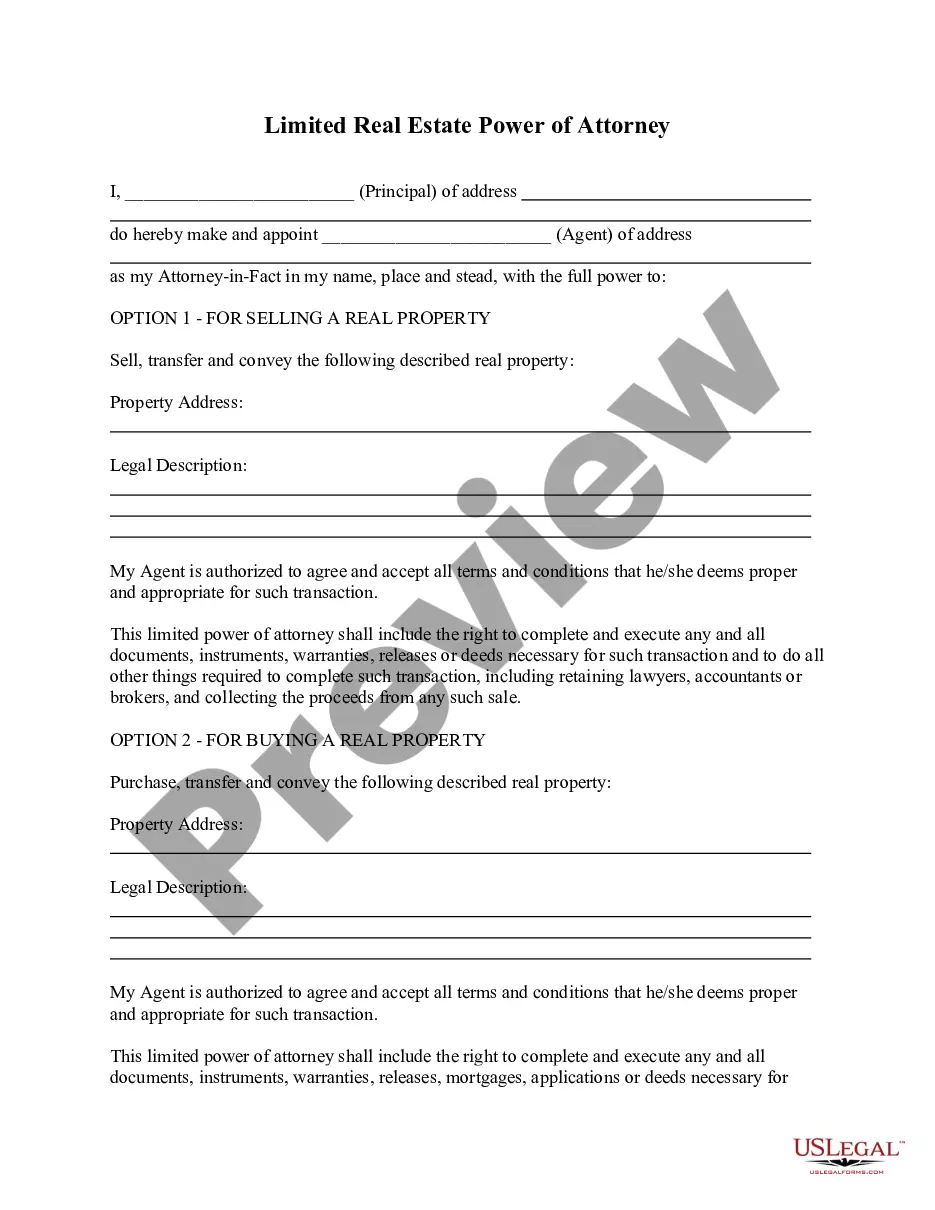
This Limited Power of Attorney allows you to specify particular powers that you grant to an agent in Texas. Unlike a general power of attorney, which grants broad authority, this limited form focuses on designated responsibilities. This makes it ideal for situations where you wish to authorize someone to act on your behalf but only in specific matters.
Key components of this form
- Principalâs information including name and address.
- Designated attorney-in-fact's name and powers to be granted.
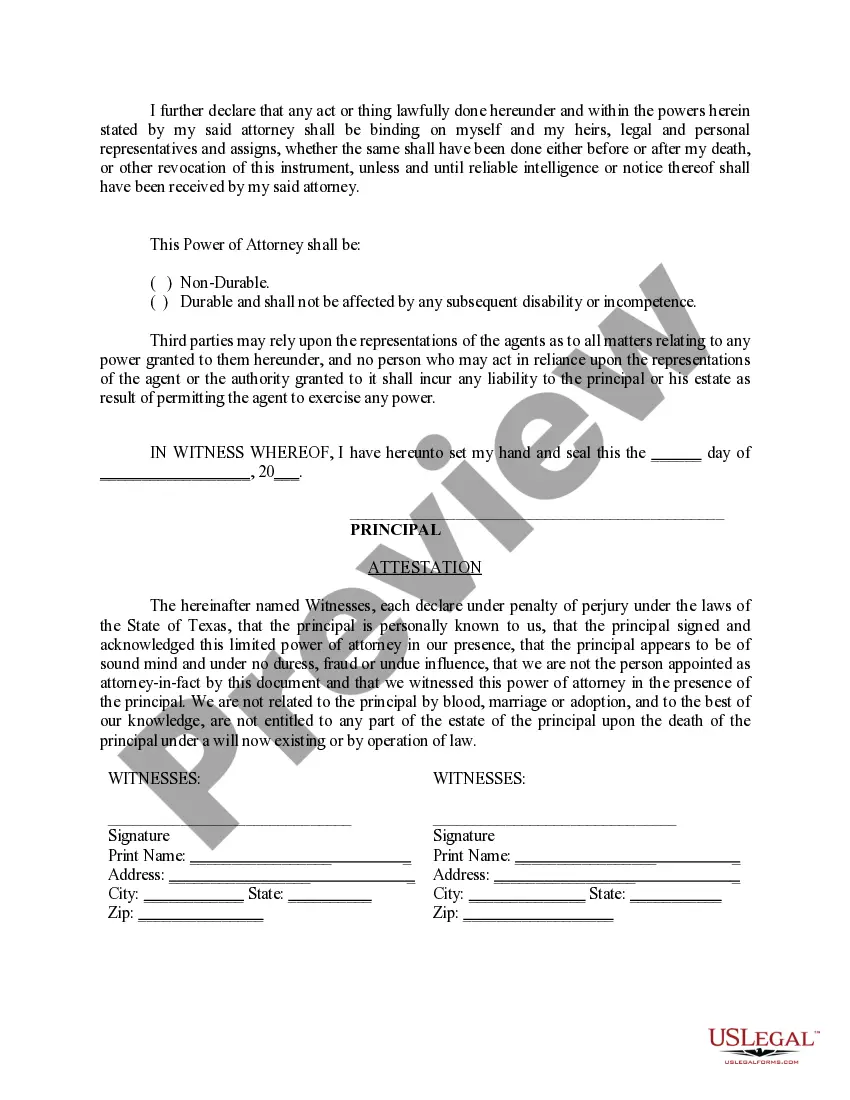
- Clear distinction between durable and non-durable power of attorney.
- Signature and date fields for validation.
- Attestation from witnesses confirming the principal's competency and willingness.
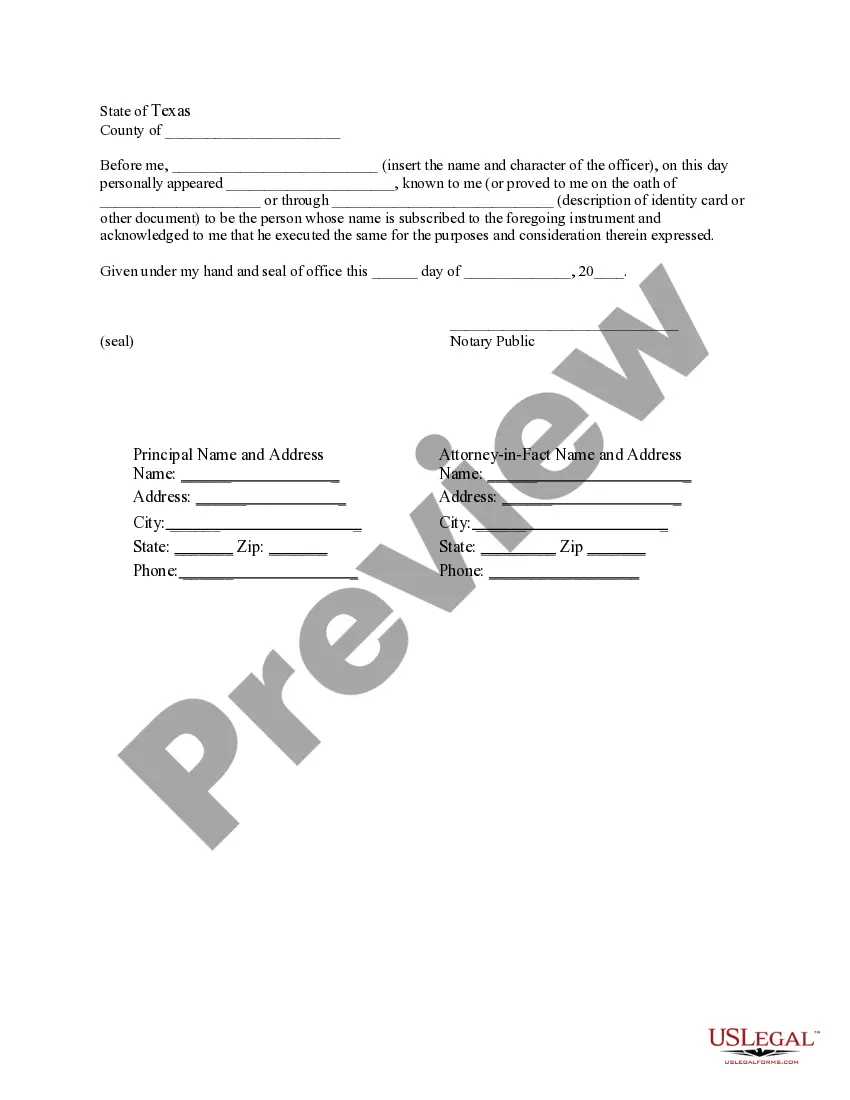
- Notary acknowledgment section for formal recognition.
When to use this form
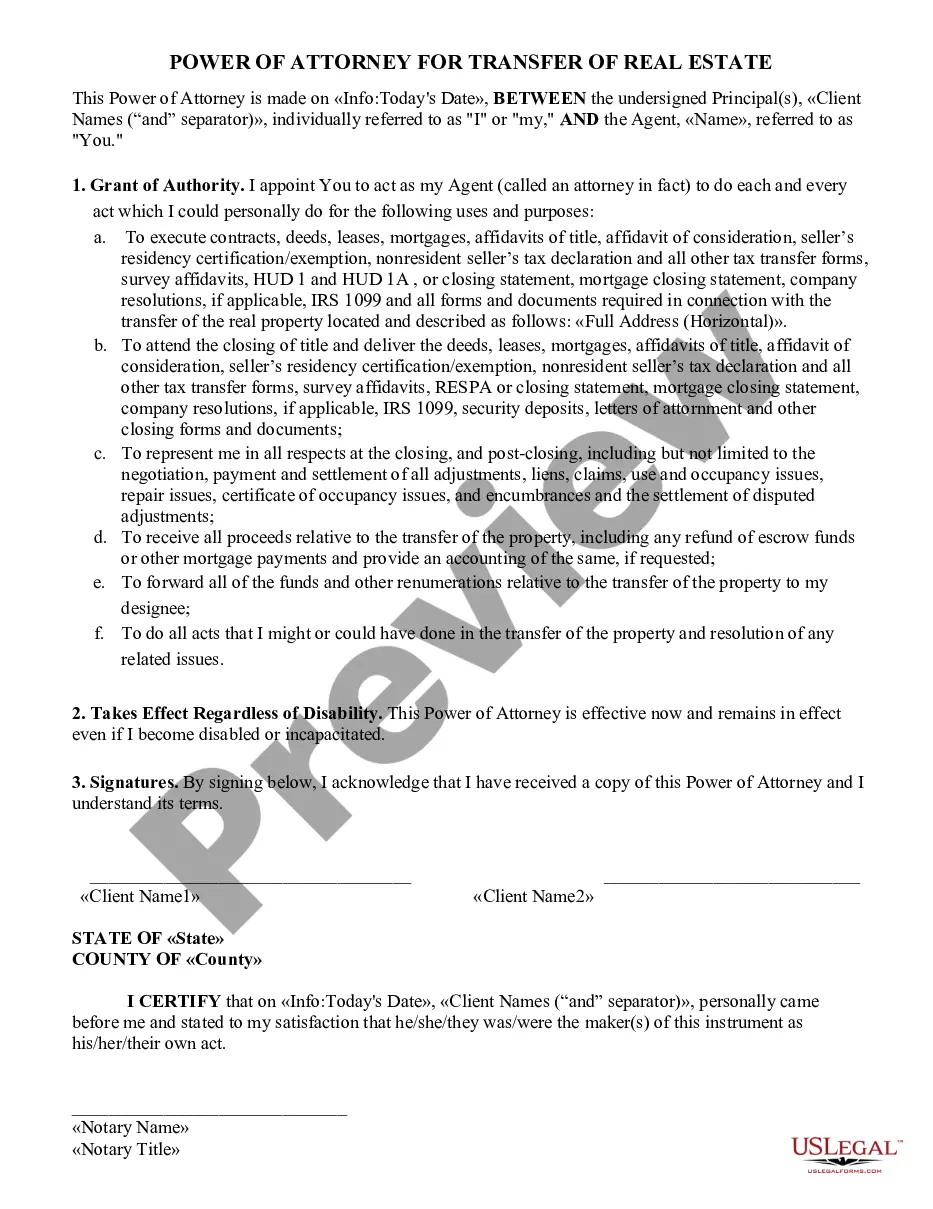
This form is beneficial in various scenarios, such as when you need someone to handle specific financial transactions, manage real estate matters, or execute legal documents on your behalf while you are unavailable. It serves well during temporary absences, business dealings, or when managing particular assets.
Who should use this form
This Limited Power of Attorney form is intended for:
- Individuals in need of temporary assistance in legal or financial matters.
- People managing property or financial transactions who are unable to attend to these matters personally.
- Those wishing to limit the authority of an agent to specific powers.
Completing this form step by step
- Identify the principal by providing personal details, including name and address.
- Designate the attorney-in-fact and specify the powers you wish to grant.
- Choose whether the power of attorney is durable or non-durable.
- Sign and date the form in the designated area.
- Have at least two witnesses sign the form, ensuring they meet eligibility criteria.
- Complete the notary section to formalize the document for recording.
Is notarization required?
Yes, this form must be notarized to be legally valid in Texas. The integrated online notarization service offered allows you to complete this step conveniently through a secure video call, ensuring your document is recognized without needing to travel.
Get your form ready online
Our built-in tools help you complete, sign, share, and store your documents in one place.
Make edits, fill in missing information, and update formatting in US Legal Forms—just like you would in MS Word.
Download a copy, print it, send it by email, or mail it via USPS—whatever works best for your next step.
Sign and collect signatures with our SignNow integration. Send to multiple recipients, set reminders, and more. Go Premium to unlock E-Sign.
If this form requires notarization, complete it online through a secure video call—no need to meet a notary in person or wait for an appointment.
We protect your documents and personal data by following strict security and privacy standards.

Make edits, fill in missing information, and update formatting in US Legal Forms—just like you would in MS Word.

Download a copy, print it, send it by email, or mail it via USPS—whatever works best for your next step.

Sign and collect signatures with our SignNow integration. Send to multiple recipients, set reminders, and more. Go Premium to unlock E-Sign.

If this form requires notarization, complete it online through a secure video call—no need to meet a notary in person or wait for an appointment.

We protect your documents and personal data by following strict security and privacy standards.
Avoid these common issues
- Failing to specify the exact powers granted to the agent.
- Not having the form signed or witnessed as required by Texas law.
- Using the form without understanding the implications of granting authority.
- Not revoking any previous power of attorney, if applicable.
Benefits of using this form online
- Quick access to professionally drafted legal documents.
- Edit and customize the form easily to fit your specific needs.
- Secure and legally valid forms that can be downloaded immediately.
Legal use & context
- This Limited Power of Attorney allows the agent to act strictly within the powers defined in the document.
- Actions taken by the agent within the scope of granted powers are binding on the principal and their estate.
- It is crucial to keep the document updated to reflect any changes in the principalâs wishes or circumstances.
What to keep in mind
- A Limited Power of Attorney allows for specific powers to be granted to an agent in Texas.
- This document must be filled out correctly and signed in the presence of witnesses and a notary.
- Using this form online offers a convenient, reliable way to manage your legal needs.
Looking for another form?

Form popularity
FAQ
Choose the limited power of attorney made for your state. Input personal information about both the principal and the agent or attorney-in-fact. Explain the powers of the agent. Include the date the limited power of attorney expires or will be revoked.
A limited power of attorney grants the representative that you choose (the agent or attorney-in-fact) the power to act on your behalf under limited circumstances.Under a general power of attorney, the agent or attorney-in-fact can do anything that you can do.
Draft a list of special powers. Decide what powers are springing. Pick an agent and a successor agent. Note the expiration date. Compile the information into one document. Execute the power of attorney letter.
In Texas, all power of attorney forms need to be notarized.The current Texas statutory durable power of attorney forms do not provide for witnesses other than a notary public. Your agent is not required to sign any power of attorney forms.
Draft a list of special powers. Decide what powers are springing. Pick an agent and a successor agent. Note the expiration date. Compile the information into one document. Execute the power of attorney letter.
You can draft a durable power of attorney by writing out or typing the document, which should include the date, your full name, and speech that clearly identifies the document as a durable power of attorney that applies even in the case of your incapacitation.
Download the form. In just a few minutes, you can locate appropriate power of attorney forms from reputable sources. Appoint an agent. Your agent is the person you authorize to act on your behalf. Draft a statement of authority. Set time limits. Sign and date the form.
Choose the limited power of attorney made for your state. Input personal information about both the principal and the agent or attorney-in-fact. Explain the powers of the agent. Include the date the limited power of attorney expires or will be revoked.
Limited Power of Attorney (LPOA) is an authorization that permits a portfolio manager to perform specific functions on behalf of the account owner.Before signing an LPOA, the client should be aware of the specific functions they have delegated to the portfolio manager, as the client remains liable for the decisions.