Texas Statutory Directive to Physicians and Family or Surrogates includes Living Will provisions
Overview of this form
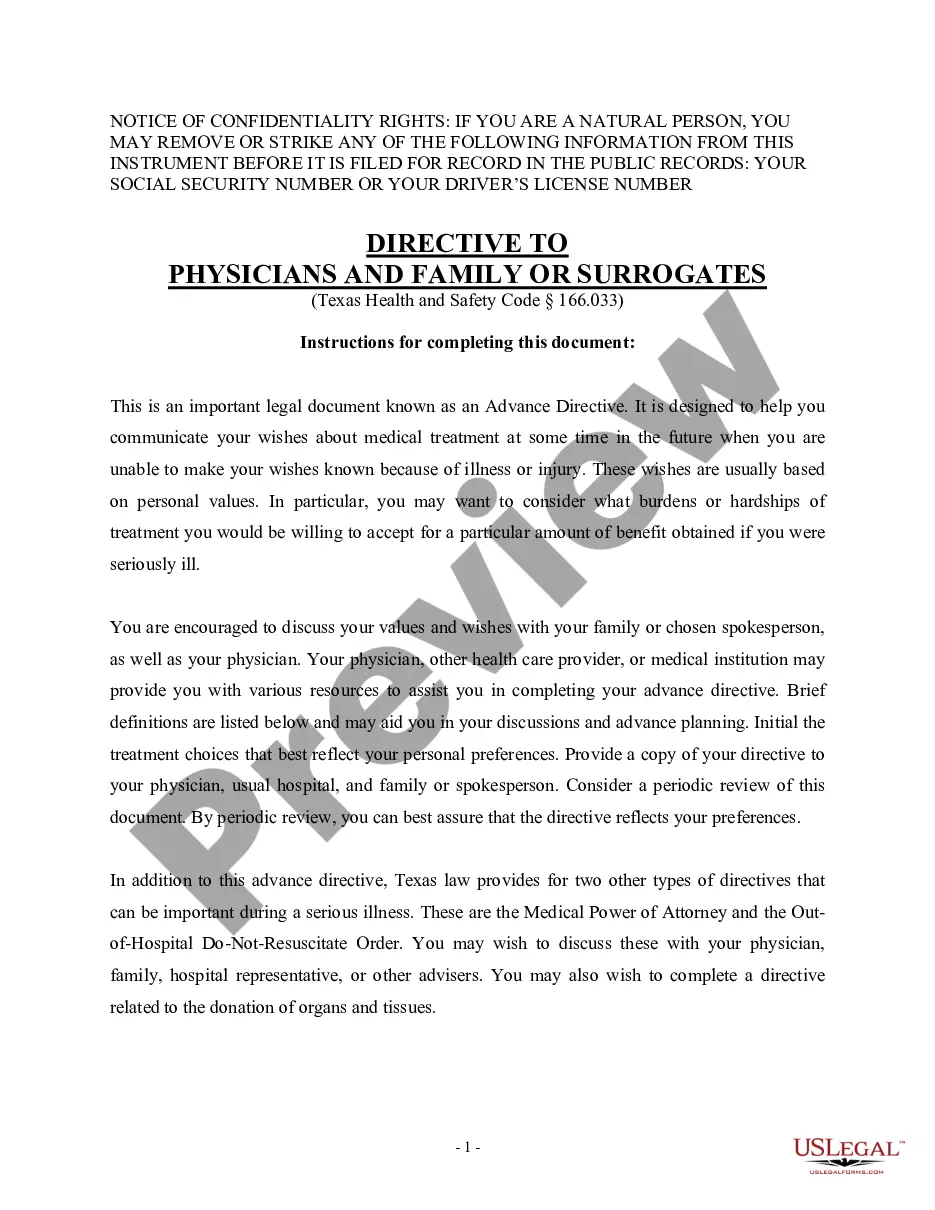
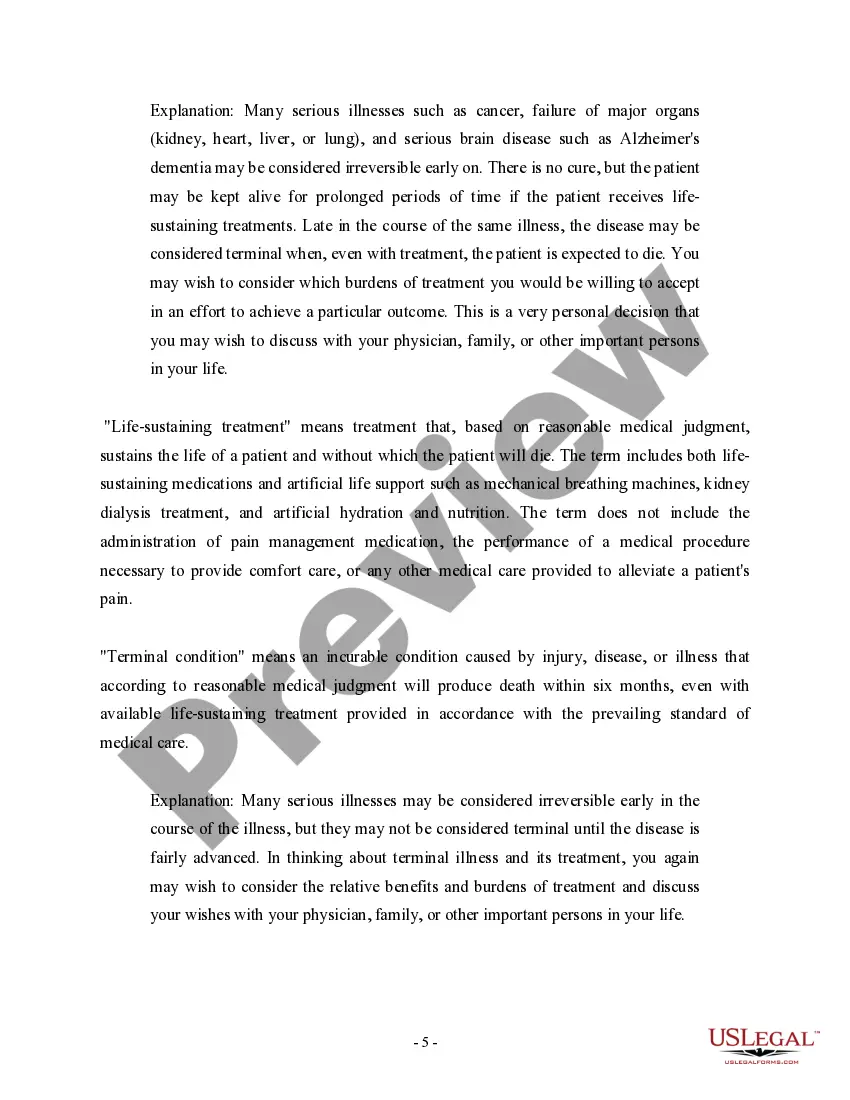
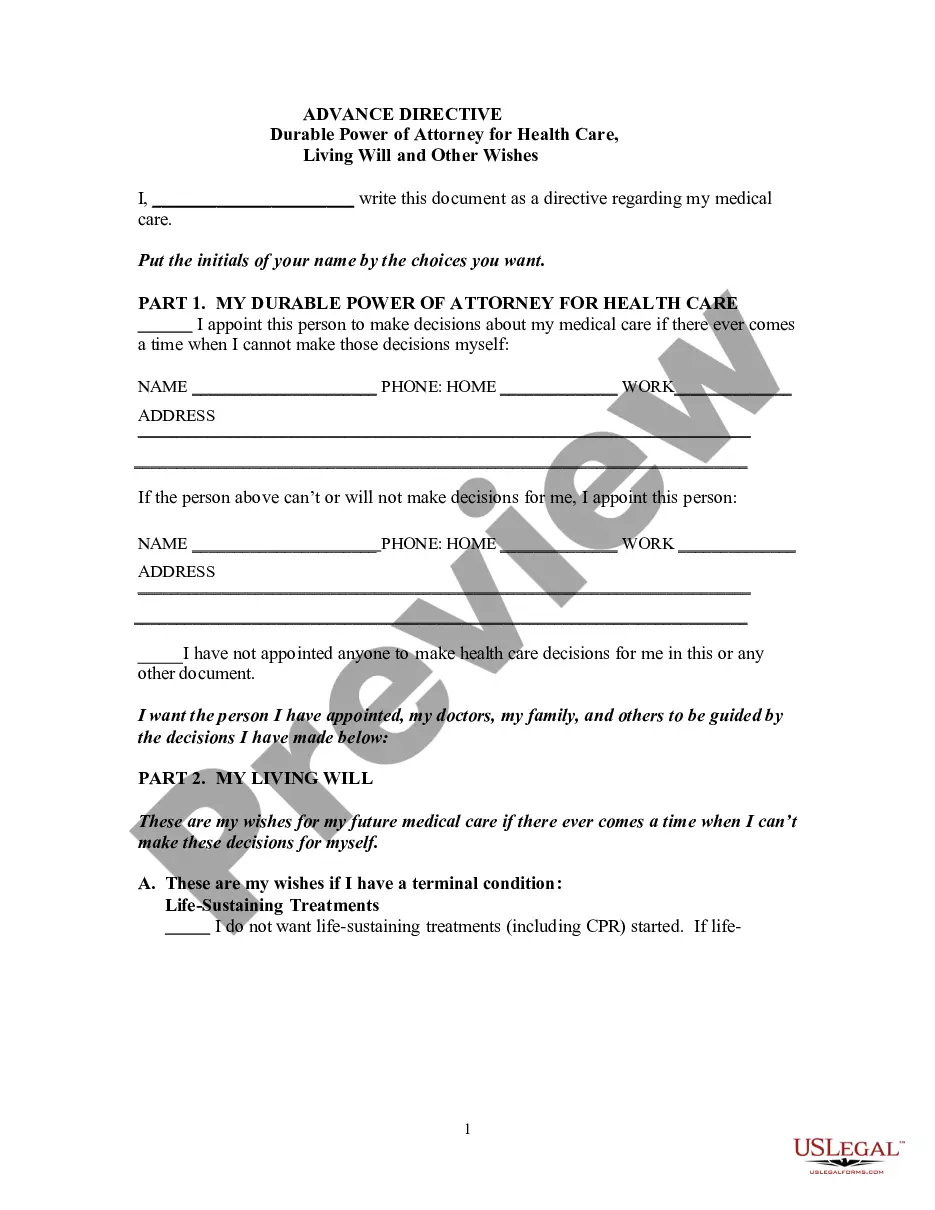
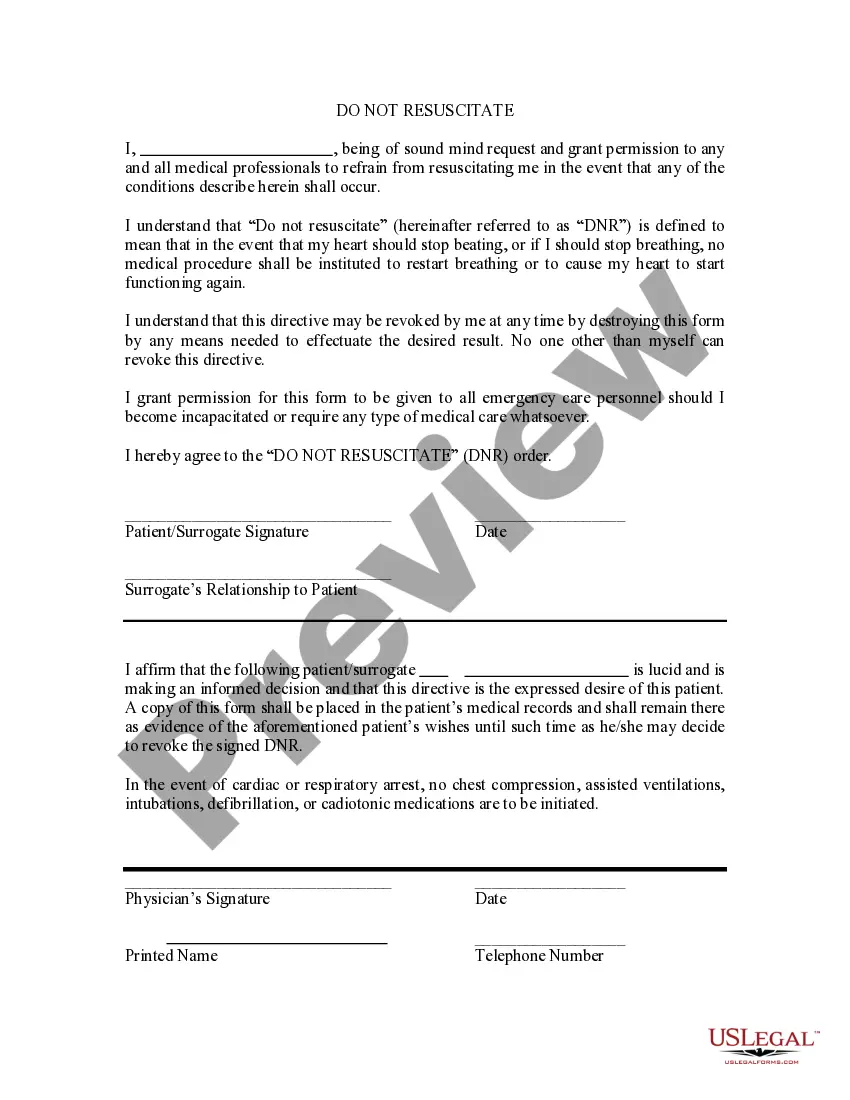
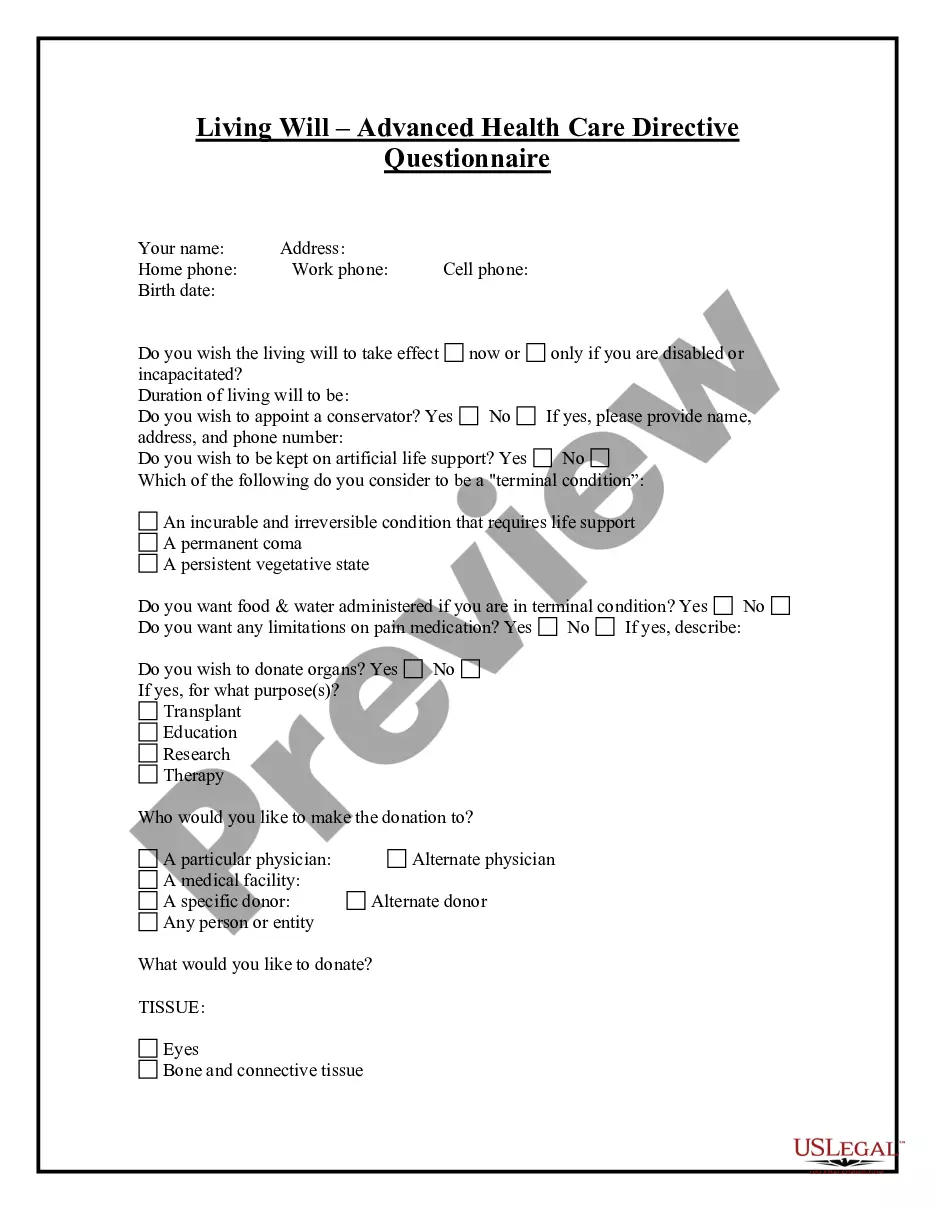
The Statutory Directive to Physicians and Family or Surrogates, which includes Living Will provisions, is an important legal document that allows individuals to outline their medical treatment preferences for situations when they are unable to communicate due to illness or injury. This advance directive empowers you to express your healthcare wishes related to life-sustaining treatments and provides clarity to your family and medical team about your preferences, setting it apart from other forms like Medical Power of Attorney or Do-Not-Resuscitate orders.
What’s included in this form
- Identification of the declarant and their healthcare wishes.
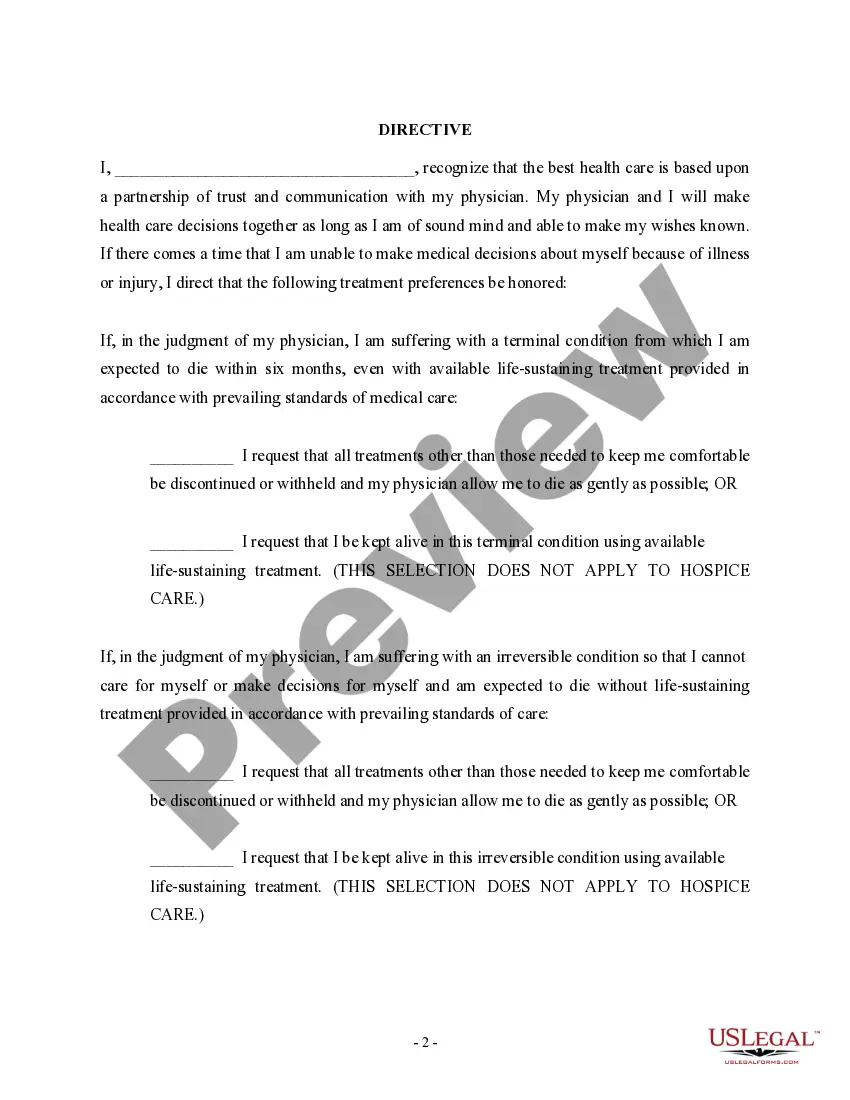
- Options for life-sustaining treatment in terminal or irreversible conditions.
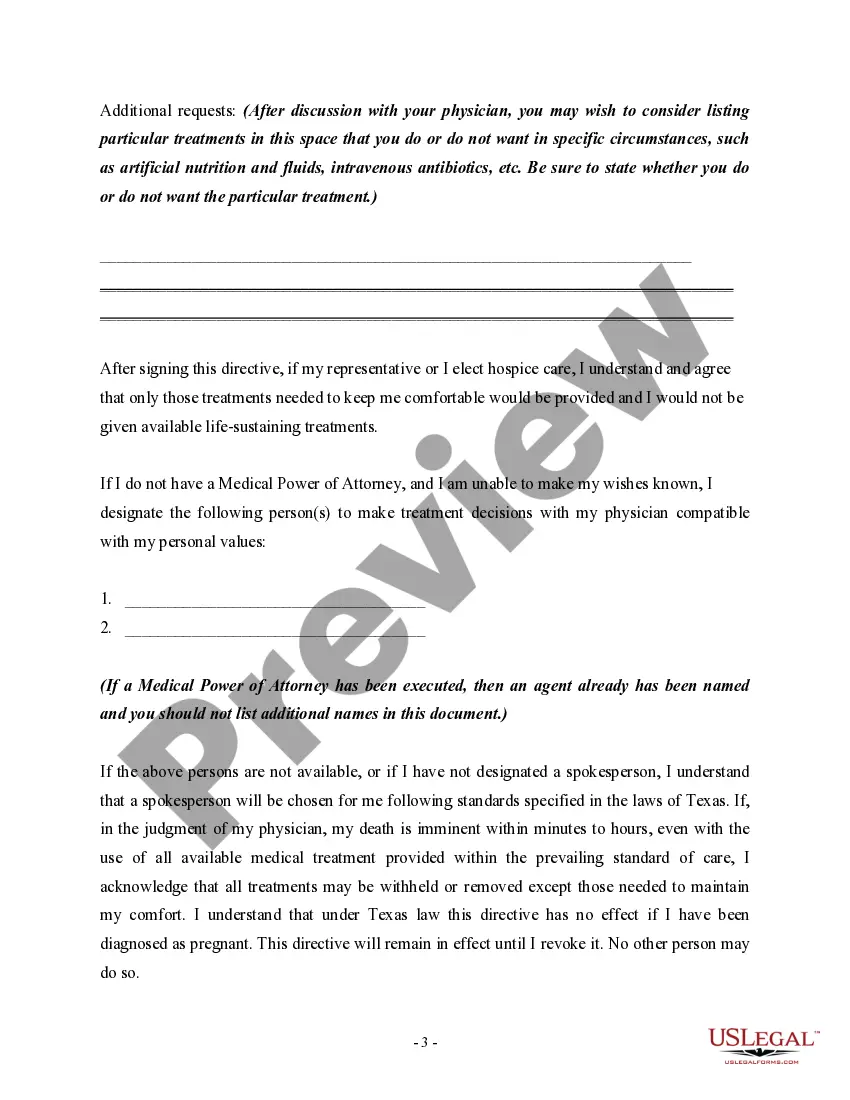
- Designation of a spokesperson for treatment decisions if the declarant cannot communicate.
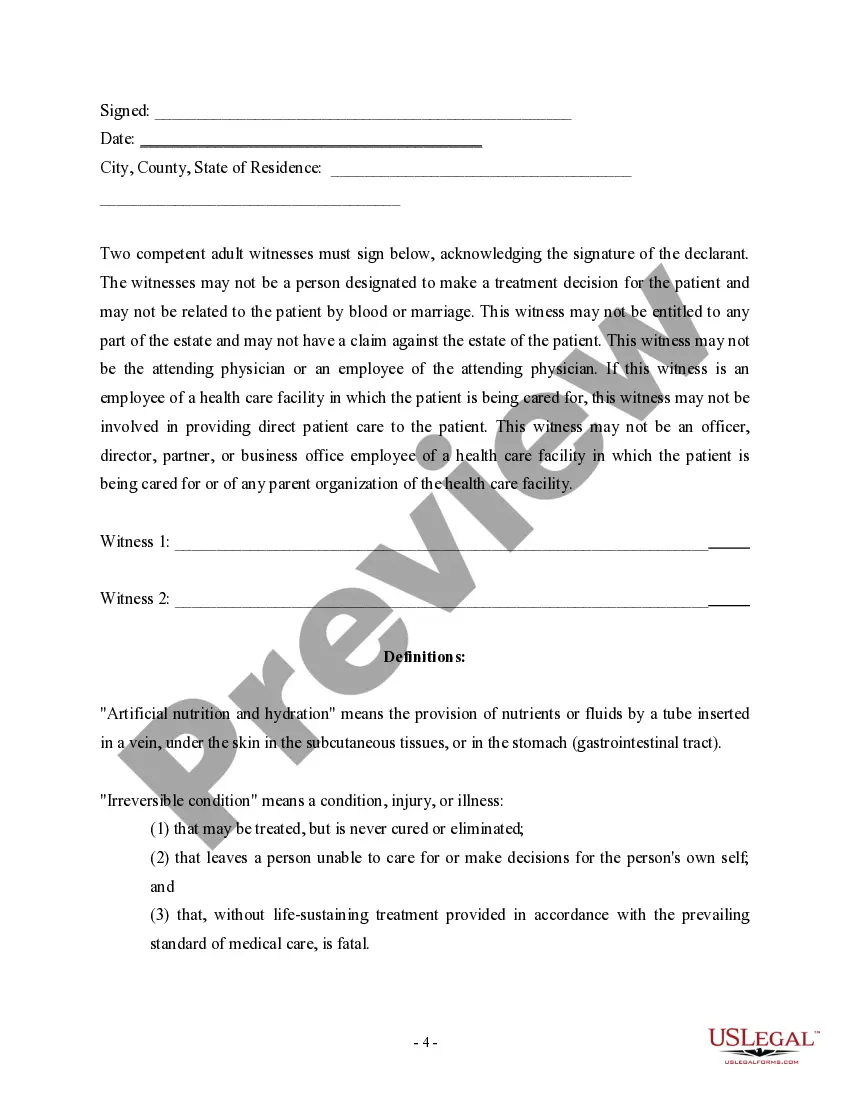
- Signature and witness requirements to validate the document.
- Instructions for revising and sharing the directive.
When to use this document
This form should be used when you want to ensure that your medical treatment preferences are respected in the event that you become incapacitated. It is particularly important in situations where you are facing serious illnesses, such as terminal conditions or irreversible medical states, where decisions regarding life-sustaining treatments may need to be made on your behalf.
Who can use this document
- Competent adults who wish to communicate their healthcare decisions in advance.
- Individuals with specific preferences regarding life-sustaining treatments.
- People who want to alleviate the burden of decision-making from family members during critical health situations.
Instructions for completing this form
- Clearly state your full name and identify yourself as the declarant.
- Specify your treatment preferences regarding life-sustaining treatments in terminal and irreversible conditions.
- Designate a spokesperson to make treatment decisions on your behalf if needed.
- Sign the document in the presence of two qualified witnesses.
- Provide copies of the directive to your chosen spokesperson, physician, and family members to ensure they are informed.
Does this form need to be notarized?
This form does not typically require notarization unless specified by local law. However, ensuring compliance with Texas regulations regarding witness requirements is essential to validify the directive.
Get your form ready online
Our built-in tools help you complete, sign, share, and store your documents in one place.
Make edits, fill in missing information, and update formatting in US Legal Forms—just like you would in MS Word.
Download a copy, print it, send it by email, or mail it via USPS—whatever works best for your next step.
Sign and collect signatures with our SignNow integration. Send to multiple recipients, set reminders, and more. Go Premium to unlock E-Sign.
If this form requires notarization, complete it online through a secure video call—no need to meet a notary in person or wait for an appointment.
We protect your documents and personal data by following strict security and privacy standards.

Make edits, fill in missing information, and update formatting in US Legal Forms—just like you would in MS Word.

Download a copy, print it, send it by email, or mail it via USPS—whatever works best for your next step.

Sign and collect signatures with our SignNow integration. Send to multiple recipients, set reminders, and more. Go Premium to unlock E-Sign.

If this form requires notarization, complete it online through a secure video call—no need to meet a notary in person or wait for an appointment.

We protect your documents and personal data by following strict security and privacy standards.
Common mistakes to avoid
- Failing to discuss healthcare wishes with family and healthcare providers before completing the form.
- Not having two qualified witnesses present when signing the directive.
- Neglecting to provide copies of the signed directive to relevant parties.
- Omitting specific treatment preferences or failing to update the document as wishes change.
Benefits of using this form online
- Convenience of accessing and completing the form from home, at any time.
- Ability to edit and customize the directive to suit your specific needs.
- Reliable and accurate legal documents drafted by licensed attorneys.
Legal use & context
- This form serves as a legally binding directive for healthcare providers regarding your treatment preferences.
- It is crucial for ensuring that your wishes are respected, especially during critical health situations.
- Texas law provides guidelines regarding its use and execution, which must be followed for it to be enforceable.
Key takeaways
- The Statutory Directive helps you communicate medical treatment preferences in advance.
- Designating a spokesperson can help ensure your wishes are followed if you cannot voice them.
- Signing with witnesses is essential for the document's validity in Texas.
- Review your directive periodically to align it with your current wishes and medical landscape.
Looking for another form?


Form popularity
FAQ
A living will is a vital part of the estate plan.But your family cannot override your living will. They cannot take away your authority to make your own treatment and care plans. In fact, you always retain the right to override your own decisions.
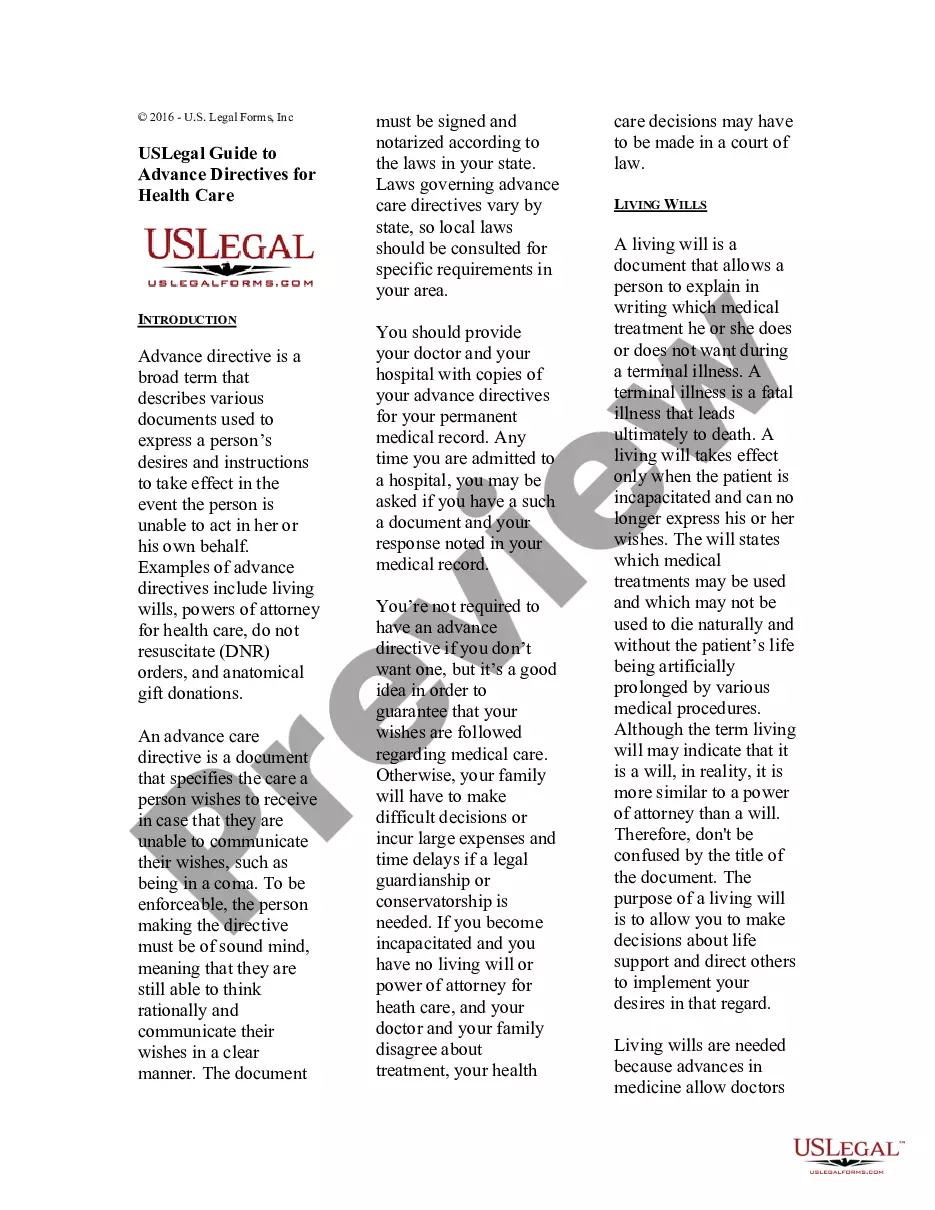
An advance directive is a set of instructions someone prepares in advance of ill health that determines his healthcare wishes. A living will is one type of advance directive that becomes effective when a person is terminally ill.
Not necessarily. A doctor is not required to be involved in this process. However, it may be wise to ask your doctor his or her feelings about honoring your Living Will and ask about the policy on Living Wills at the hospital where he or she practices.
An advance health care directive or AHCD (otherwise known as a living will, personal directive, or medical directive) is a document that instructs others about your medical care should you be unable to make decisions on your own.
Overview: In Texas you must fill out two separate forms to have a complete Advance Directive: A Living Will called a "Directive to Physicians and Family or Surrogates" and a "Medical Power of Attorney" (a.k.a. Health Care Proxy).
An advance healthcare directive, also known as living will, personal directive, advance directive, medical directive or advance decision, is a legal document in which a person specifies what actions should be taken for their health if they are no longer able to make decisions for themselves because of illness or
The law requires that you sign your advance directive, or direct another to sign it, in the presence of two adult witnesses, who must also sign the document.
A living will is a type of an advance directive. It is also a written document outlining your wishes for your health, to be followed if you cannot make decisions or express your wishes. It typically focuses on situations where you are terminally ill, and explains whether you would wish life-sustaining efforts be made.
Advance directives generally fall into three categories: living will, power of attorney and health care proxy. LIVING WILL: This is a written document that specifies what types of medical treatment are desired.