Texas Letter from Tenant to Landlord containing Request for permission to sublease
Understanding this form
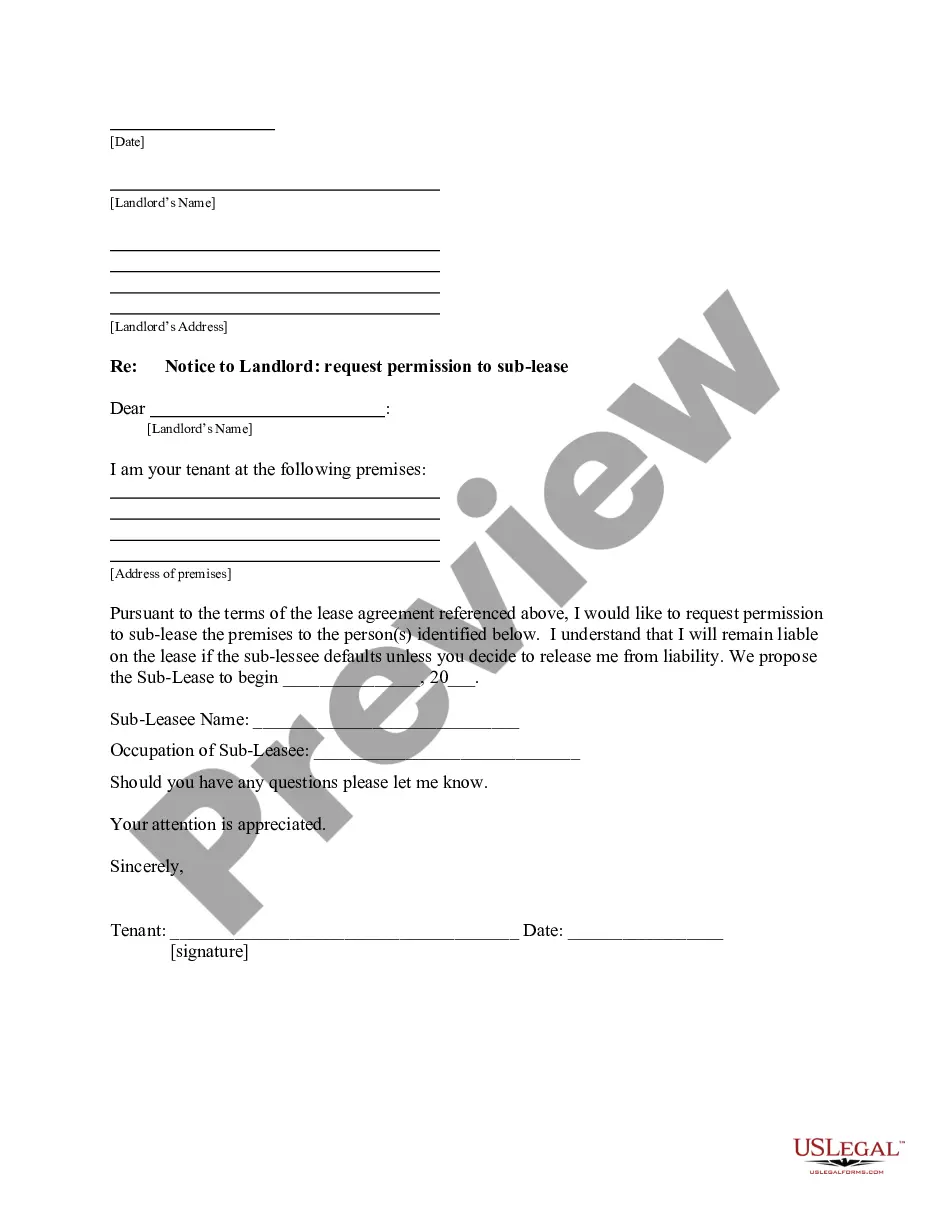
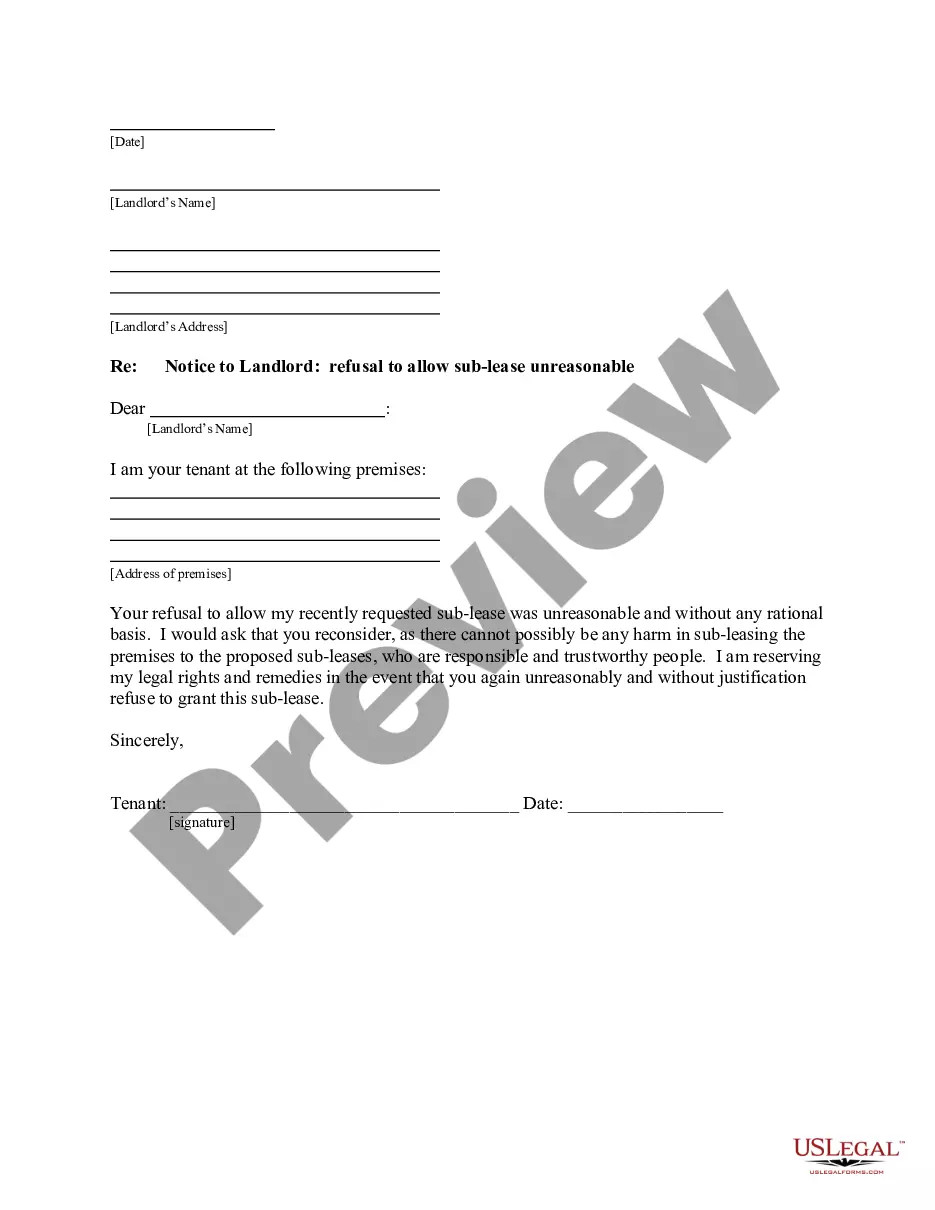
The Letter from Tenant to Landlord containing Request for Permission to Sublease is a formal communication in which a tenant seeks consent from their landlord to sublease the rental property to another individual. This form is essential because it helps document the tenant's request for subletting, which is often required by lease agreements. Unlike other lease forms, this document specifically addresses the tenant's request for approval related to subleasing the property rather than entering into a new rental agreement.
Key parts of this document
- Sub-Leasee Name: Includes the full name of the proposed subtenant.
- Occupation of Sub-Leasee: Allows the tenant to indicate the profession of the subtenant.
- Tenant Confirmation: A statement acknowledging tenant liability under the original lease agreement.
- Date: The date when the letter is drafted.
- Signature: The tenant's signature to validate the request.
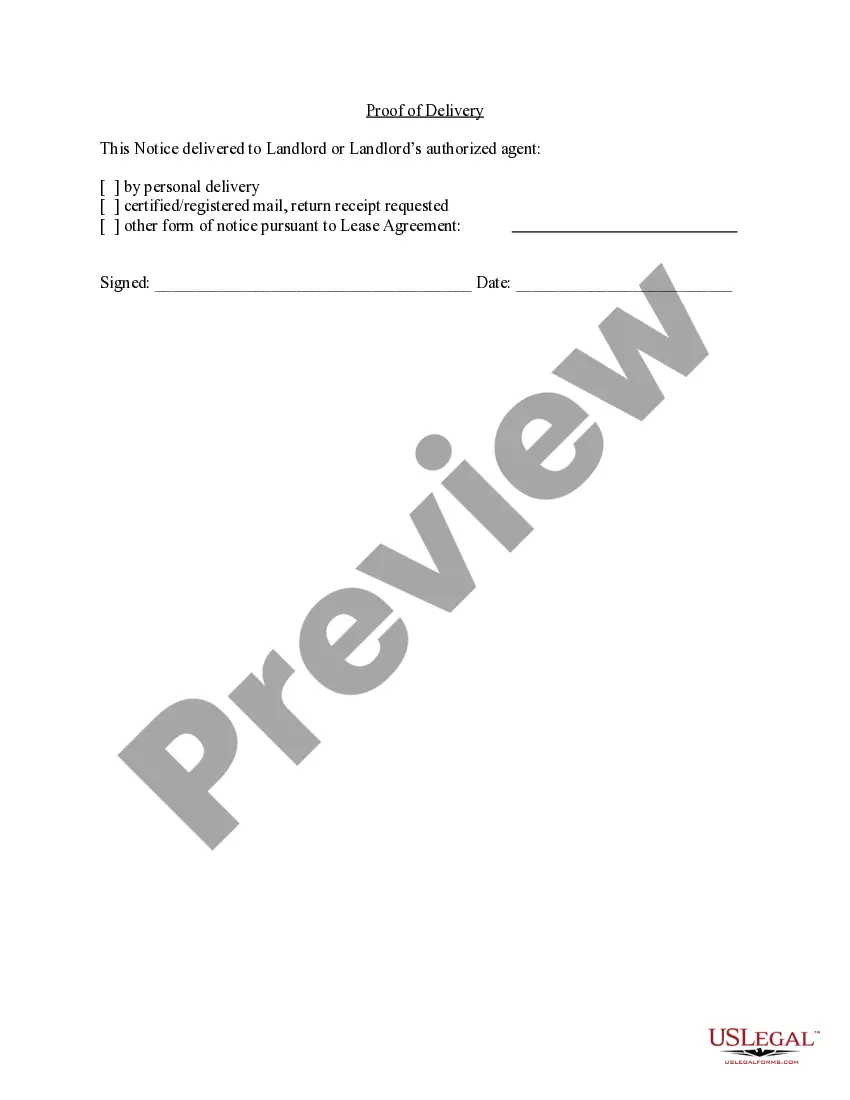
- Proof of Delivery: Details on how the notice was delivered to the landlord.
Situations where this form applies
This form should be used when a tenant wishes to sublease their rental unit to another party and needs to formally request the landlord's permission. Situations may include a temporary job relocation, travel plans, or financial needs that necessitate finding someone else to occupy the rented space. In some cases, the lease agreement may explicitly require this permission, making the letter a necessary step in the subleasing process.
Who this form is for
- Current tenants wishing to sublease their rental unit.
- Individuals intending to maintain accountability for the rental agreement during a sublease period.
- Tenants who want to ensure compliance with local housing regulations regarding subletting.
How to prepare this document
- Identify the subleasee: Fill in the full name of the prospective subtenant in the designated field.
- Specify the occupation: Indicate the subleasee's occupation to provide context to the landlord.
- Include your acknowledgment: Clearly state your understanding of your liabilities as a tenant under the existing lease.
- Sign and date the letter: Ensure you sign and date the document where indicated.
- Deliver the letter: Use certified mail or personal delivery to send the letter to the landlord, ensuring you have proof of delivery.
Notarization guidance
In most cases, this form does not require notarization. However, some jurisdictions or signing circumstances might. US Legal Forms offers online notarization powered by Notarize, accessible 24/7 for a quick, remote process.
Get your form ready online
Our built-in tools help you complete, sign, share, and store your documents in one place.
Make edits, fill in missing information, and update formatting in US Legal Forms—just like you would in MS Word.
Download a copy, print it, send it by email, or mail it via USPS—whatever works best for your next step.
Sign and collect signatures with our SignNow integration. Send to multiple recipients, set reminders, and more. Go Premium to unlock E-Sign.
If this form requires notarization, complete it online through a secure video call—no need to meet a notary in person or wait for an appointment.
We protect your documents and personal data by following strict security and privacy standards.

Make edits, fill in missing information, and update formatting in US Legal Forms—just like you would in MS Word.

Download a copy, print it, send it by email, or mail it via USPS—whatever works best for your next step.

Sign and collect signatures with our SignNow integration. Send to multiple recipients, set reminders, and more. Go Premium to unlock E-Sign.

If this form requires notarization, complete it online through a secure video call—no need to meet a notary in person or wait for an appointment.

We protect your documents and personal data by following strict security and privacy standards.
Common mistakes to avoid
- Failing to provide all required details about the subleasee.
- Not including the tenant's acknowledgment of ongoing responsibility under the lease.
- Sending the letter without proof of delivery, risking non-receipt by the landlord.
Benefits of completing this form online
- Convenient downloads: Receive the form instantly without needing to wait for physical copies.
- Editable templates: Customize the form as needed to fit your specific situation.
- Reliable legal compliance: Ensures that the document meets legal standards and protects your rights as a tenant.
Looking for another form?


Form popularity
FAQ
Texas allows subletting but only if your lease says its okay. If your lease says no sublets, then that means no sublets. Texas law allows subletting but only if your lease says its okay. If your lease says no sublets, then that means no sublets.
If there is no lease, the girlfriend or boyfriend is essentially a squatter. Texas does not permit "self-help" evictions, meaning that it is not permissible for you to change the locks and throw all their belongings on the lawn. You must go through the evictions process established by law.
If a tenant is subletting without consent, it's likely they will have broken terms in their tenancy agreement. This breach of contract means that the landlord can take action to evict them from their home. Possession proceedings can be started quickly, but it's important to follow the correct legal process.
Under Texas law, you cannot sublease the apartment without your landlord's prior consent.A lease that does not mention subleasing means your landlord has not given consent to sublease. But don't give up even if your lease doesn't give you the right to sublease.
The landlord cannot refuse the assignment or sublet unless there is a good reason, such as the proposed tenant's inability to pay the rent or problematic behavior of this tenant. This is the case no matter what your lease or the building rules say.
There are some reasons why subletting your apartment may be a good idea, and even a necessity. The pros of subletting are:Having a physical presence in the apartment will help to prevent apartment robbery. A subtenant can alert you and the landlord to urgent repair issues, which you'll miss if you're away.
Unless you live in a rent-stabilized apartment, there are probably no laws stopping you from overcharging a subletter. If you live in unregulated housing, then you're probably allowed to charge a subtenant or a roommate extra for their monthly rent.
Get your logistics together. Don't give your landlord much extra work (if any at all). Let your landlord know you're going to thoroughly screen applicants. Communicate with your landlord about how things are going with the subtenant.
Keep it short and only reference information relevant for an apartment application. If you are a landlord or property manager, outline your rental history and your experience with the tenant. Know what you can or cannot say. Be honest and accountable. Never lie. Keep emotions at bay. Keep it structured.