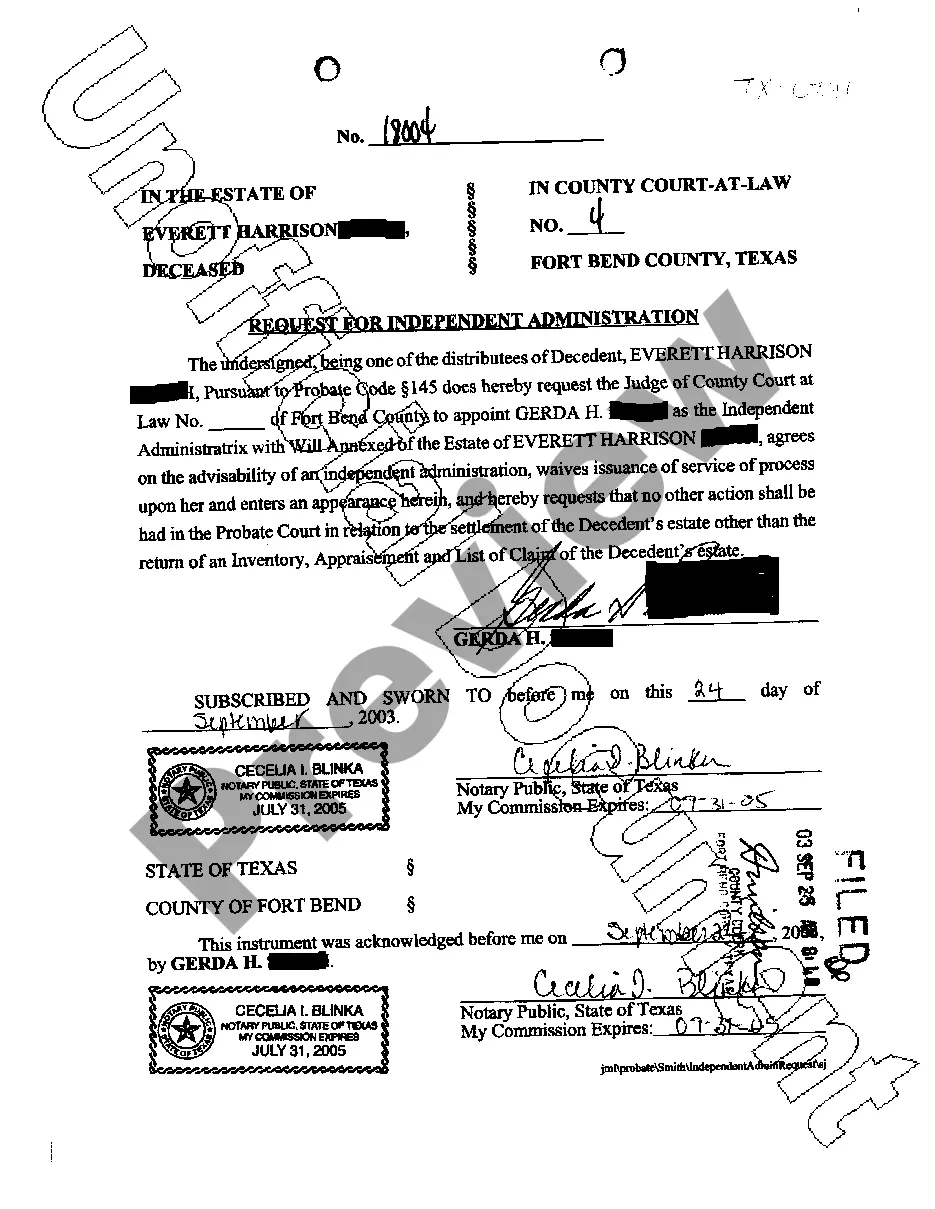
Texas Letter from Landlord to Tenant where Tenant Complaint was caused by the deliberate or negligent act of Tenant or Tenant's guest
About this form
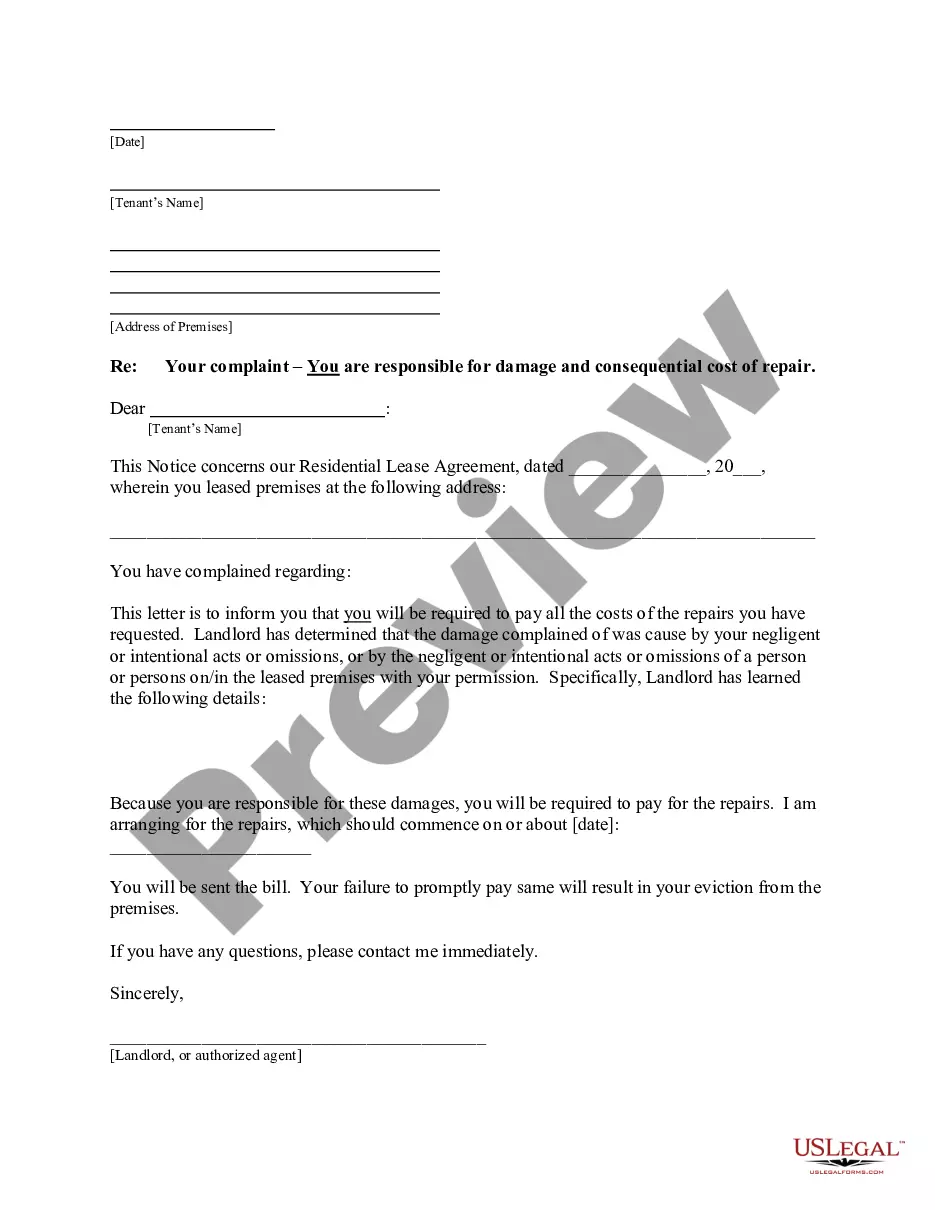
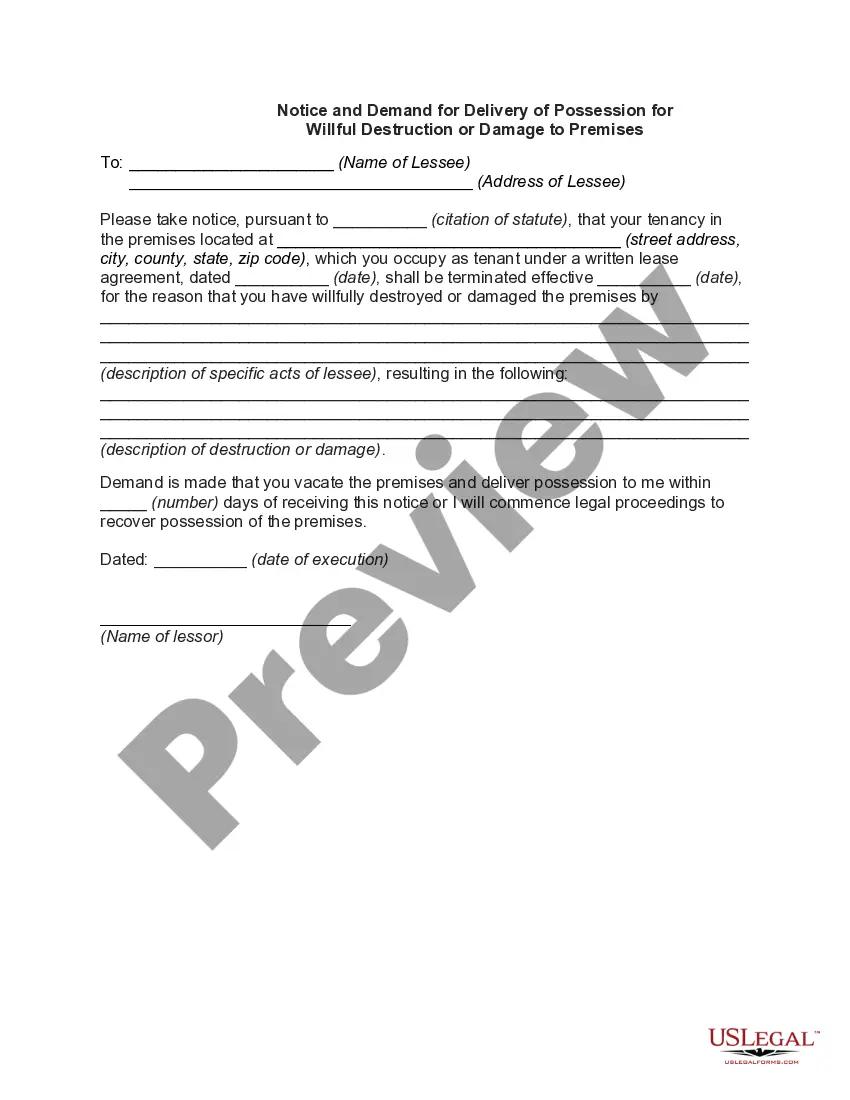
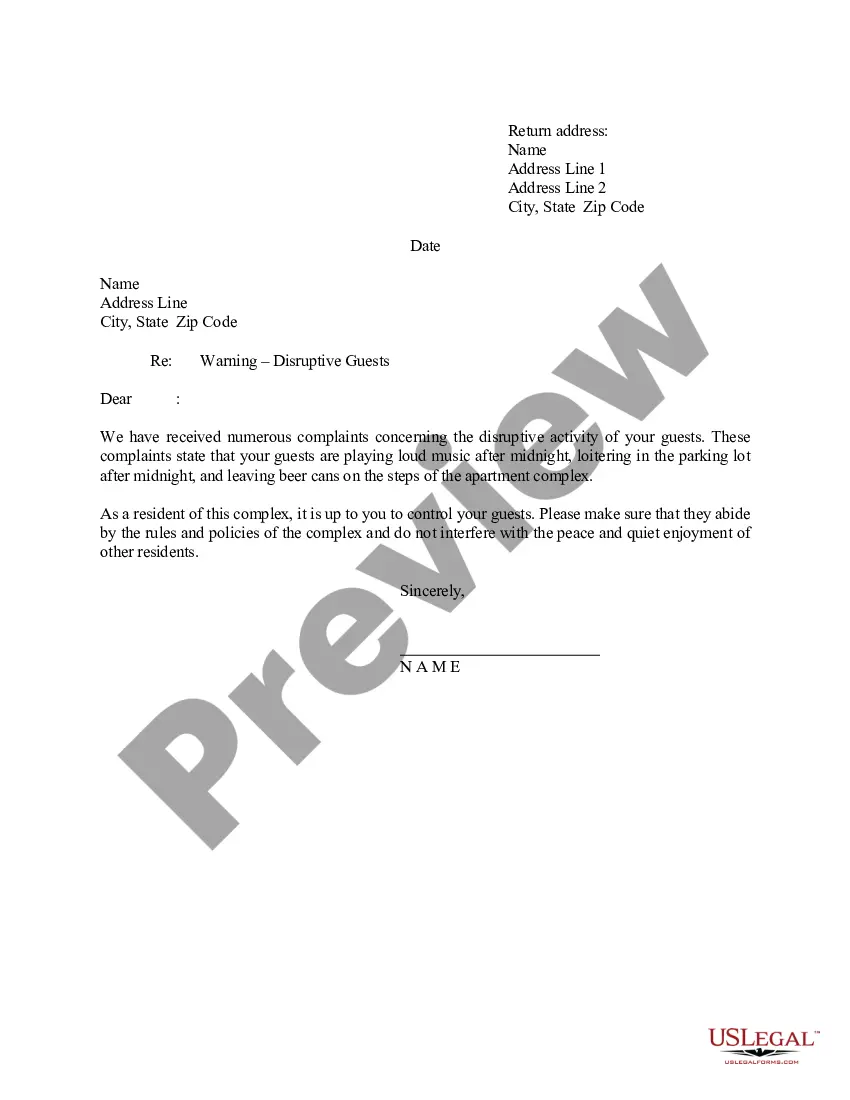
This form is a letter from a landlord to a tenant addressing a complaint made by the tenant regarding damages. It specifies that the claimed damages were caused by the negligent or intentional acts of the tenant or their guest. This letter is crucial for establishing responsibility and outlining the landlord's position concerning repair costs, distinguishing it from other tenant communications such as general notices or eviction letters.
What’s included in this form
- Identification of the landlord and tenant involved in the dispute.
- A clear statement outlining the nature of the complaint.
- Details explaining that the damage is due to the tenant's or their guest's actions.
- Request for the tenant to address the issue promptly.
- Signature line for the landlord or authorized agent.
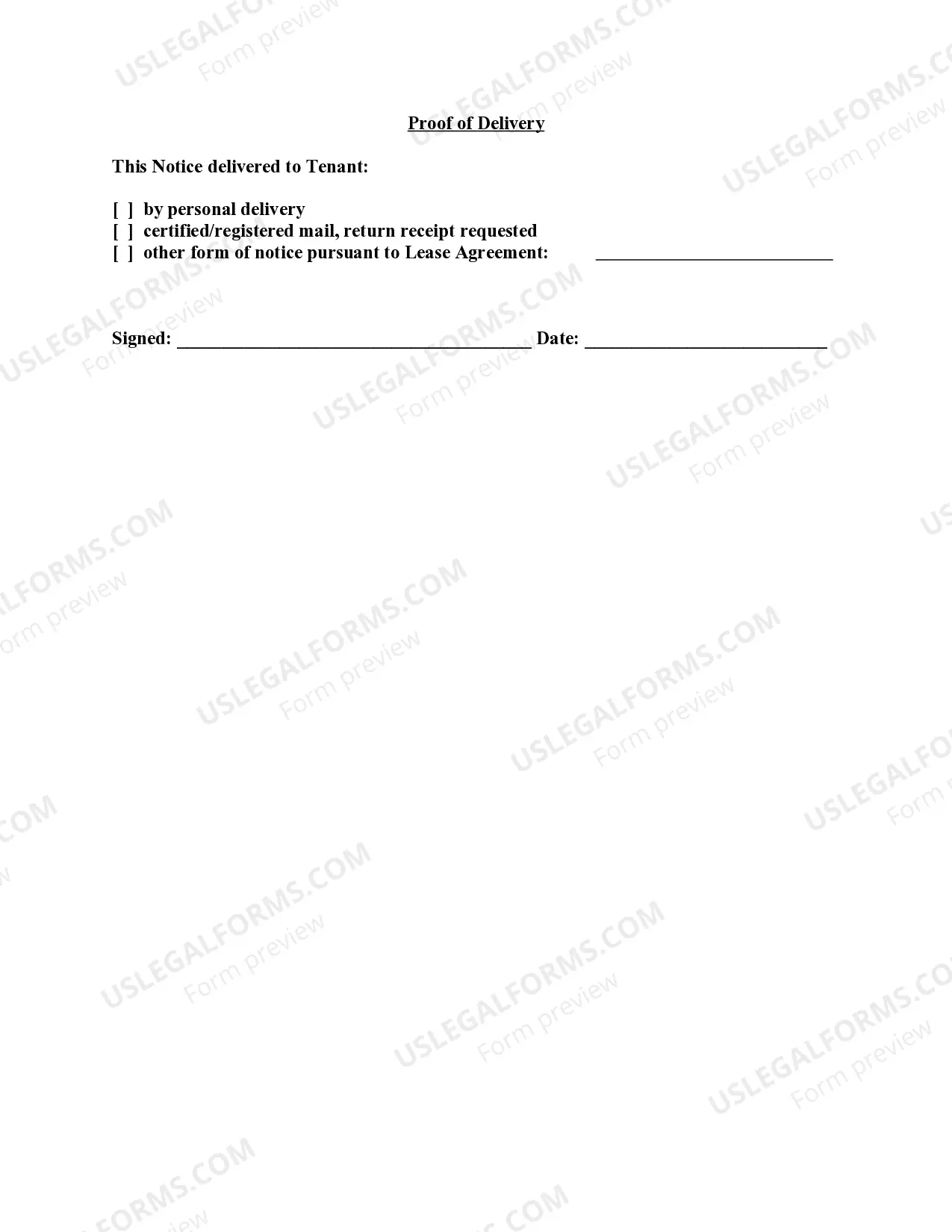
- Method of delivery confirmation for the notice sent to the tenant.


When this form is needed
This letter should be used when a landlord has received a request for repairs from a tenant, but upon investigation, determines that the damage was caused by the tenant's own actions or those of their guests. It is appropriate to send this letter as a formal response to clarify responsibilities and manage expectations regarding repairs and liability.
Who can use this document
This form is intended for:
- Landlords who wish to formally address a tenant's complaint about property damages.
- Property managers acting on behalf of landlords to communicate with tenants regarding legal responsibilities.
- Tenants who wish to understand the implications of their actions or the actions of guests on rented property.
Completing this form step by step
- Identify the parties involved by providing the landlord's and tenant's names and addresses.
- Clearly state the complaint raised by the tenant regarding damages.
- Include a detailed explanation clarifying that the damages result from the tenant's or guest's actions.
- Sign the letter as the landlord or authorized agent.
- Choose an appropriate method for delivering the letter and indicate it in the proof of delivery section.
Does this document require notarization?
This form does not typically require notarization unless specified by local law. Always check state-specific requirements to ensure compliance.
Get your form ready online
Our built-in tools help you complete, sign, share, and store your documents in one place.
Make edits, fill in missing information, and update formatting in US Legal Forms—just like you would in MS Word.
Download a copy, print it, send it by email, or mail it via USPS—whatever works best for your next step.
Sign and collect signatures with our SignNow integration. Send to multiple recipients, set reminders, and more. Go Premium to unlock E-Sign.
If this form requires notarization, complete it online through a secure video call—no need to meet a notary in person or wait for an appointment.
We protect your documents and personal data by following strict security and privacy standards.

Make edits, fill in missing information, and update formatting in US Legal Forms—just like you would in MS Word.

Download a copy, print it, send it by email, or mail it via USPS—whatever works best for your next step.

Sign and collect signatures with our SignNow integration. Send to multiple recipients, set reminders, and more. Go Premium to unlock E-Sign.

If this form requires notarization, complete it online through a secure video call—no need to meet a notary in person or wait for an appointment.

We protect your documents and personal data by following strict security and privacy standards.
Common mistakes to avoid
- Failing to specify the exact nature of the damage or complaint.
- Not including adequate details about the negligent or intentional acts causing the damage.
- Omitting signatures or forgetting to specify the delivery method.
- Sending the letter without confirming the correct address for the tenant.
Why complete this form online
- Quick and convenient access to a legally vetted template.
- Editable format allows for easy personalization and modification.
- Reliable resource, ensuring compliance with current legal standards.
Legal use & context
- This form outlines the legal responsibility of the tenant for damages.
- It serves as a formal record that can be used in any future legal disputes.
- Ensures the landlord fulfills their obligation to inform the tenant about liability issues.
Main things to remember
- This letter serves as a formal response from the landlord to a tenant about repair costs related to tenant-caused damages.
- Understanding the distinction of negligence or intentional acts is critical for both landlords and tenants.
- Completing this form correctly is essential to uphold legal standing in disputes regarding property damages.
Looking for another form?
Form popularity
FAQ
The Meek Customer. The Aggressive Customer. The High Roller Customer. The Rip-Off Customer. The Chronic Complainer Customer.
S T Is that a complaint? ( CK) S T I've got a complaint. ( S T Tom filed a complaint. ( S T We have no complaints. ( S T We've had a complaint. ( S T What's your complaint? ( S T I've got no complaints. ( S T I should make a complaint. (
1 : expression of grief, pain, or dissatisfaction She did her chores without complaint. 2a : something that is the cause or subject of protest or outcry Inefficiency was the main complaint against the local government.3 : a formal allegation against a party The complaint alleges sexual harassment.
Criticize. denounce. disagree. gripe. grumble. lament. moan. object.
1 : expression of grief, pain, or dissatisfaction She did her chores without complaint. 2a : something that is the cause or subject of protest or outcry Inefficiency was the main complaint against the local government.
To claim or express pain, displeasure, etc. To complain is to express your dissatisfaction or to indicate that you have an illness. An example of complain is when you tell a restaurant they gave you poor service because your food was cold. An example of complain is when you say you have a headache.
Hello Hellen: The verb 'complain' belongs to the group of English verbs kown as 'regular verbs', which means that they form both their past simple and past participle forms by taking the -ed ending. Thus, the past simple form of 'complain' is 'complained'. Do not confuse 'complaint', a noun, with 'complain', a verb.
Long Wait on Hold. Unavailable or Out of Stock Product. Repeating the Customer's Problem. Uninterested Service Rep. Poor Product or Service. No First Call Resolution. Lack of Follow Up. New Product or Feature Request.
Complaints means expressions of discontent, pain, or grief when used as a noun. Complains means expressing discomfort, pain, or unease when used as a verb.Complains is the third-person singular form of the verb "complain." It means "to express unease or discomfort, to lament."
The definition of a complaint is an expression of, or the cause of, pain, anger, discontent, regret or annoyance. An example of complaint is a statement about how poorly a certain shop runs its business. An example of complaint is a major fault in a chain restaurant.