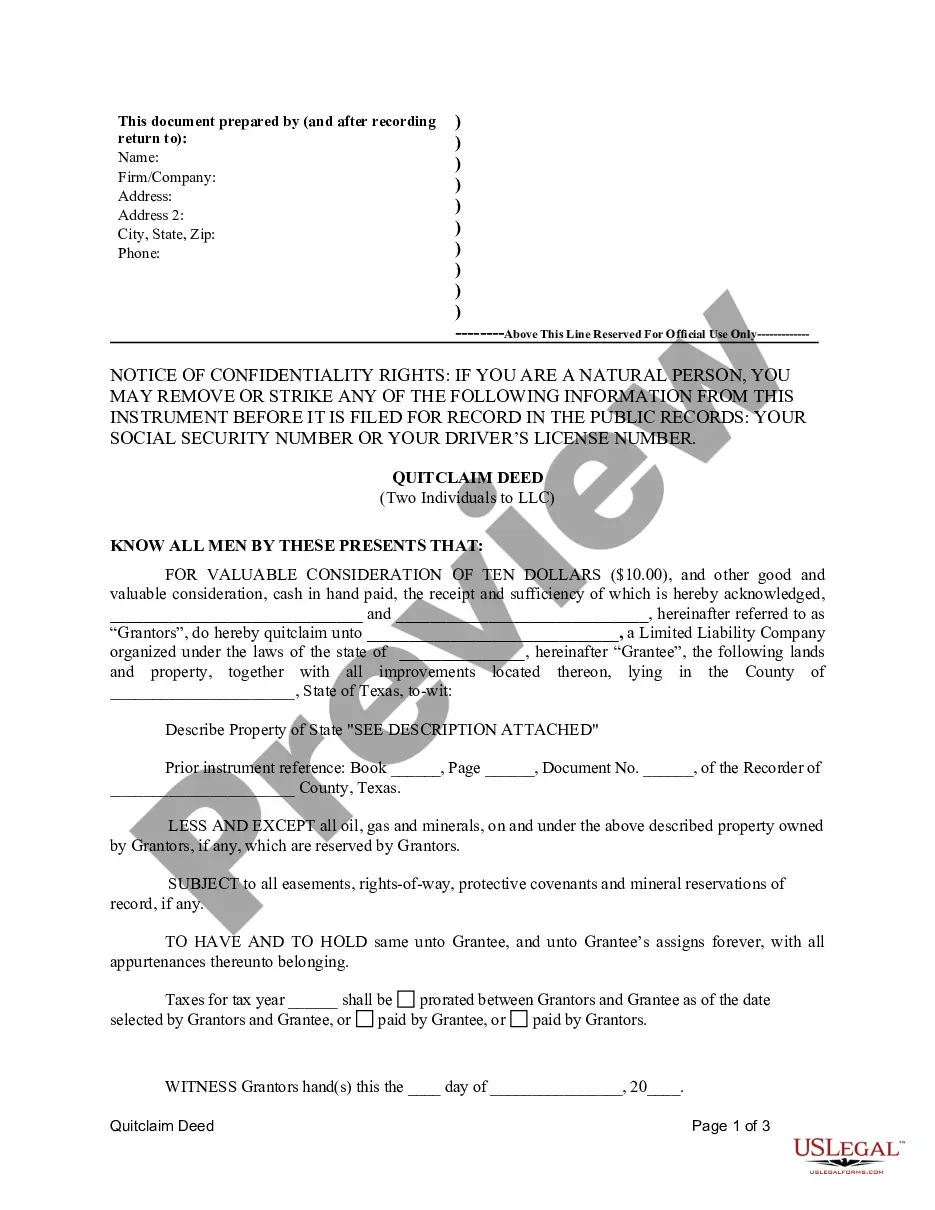
Texas Warranty Deed from two Individuals to Husband and Wife
What is this form?
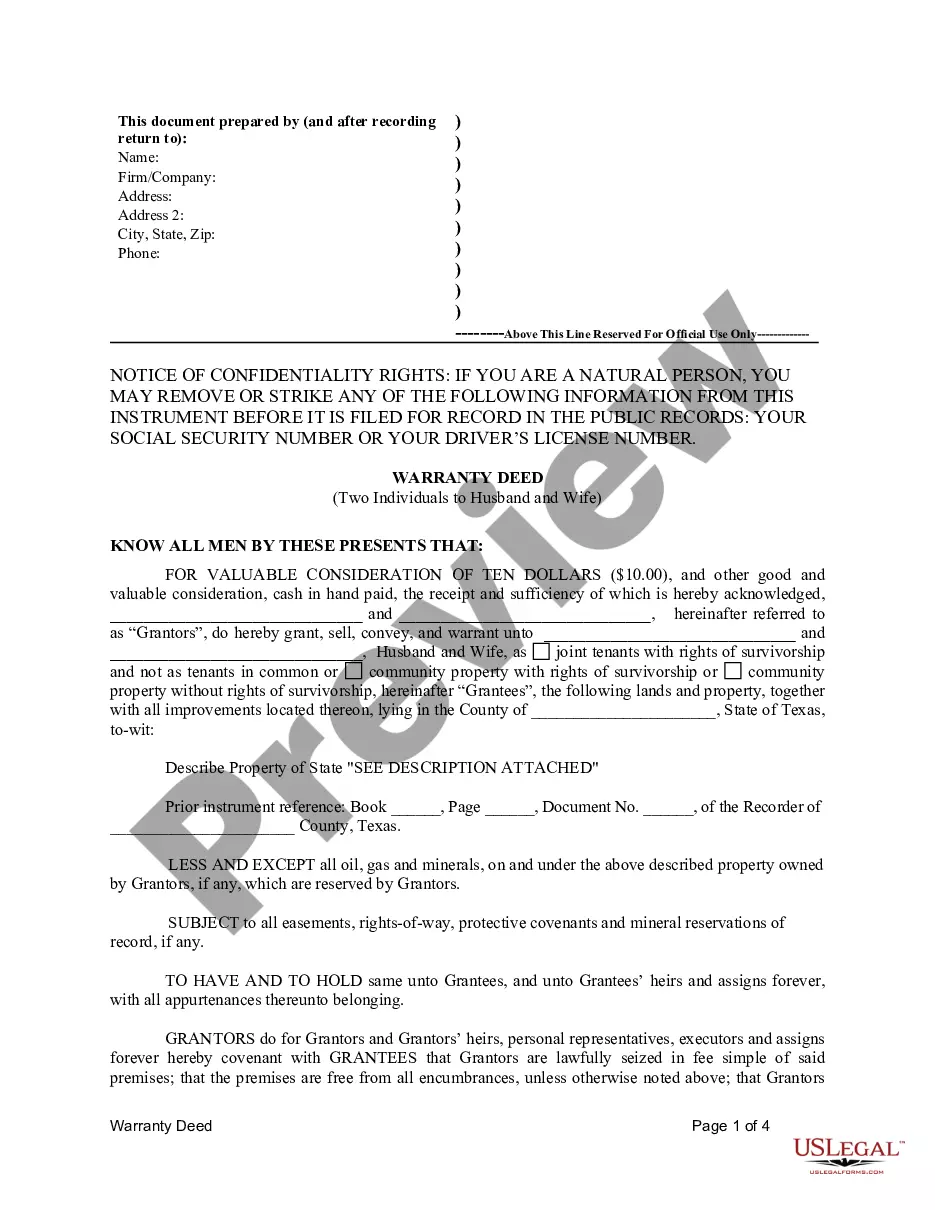
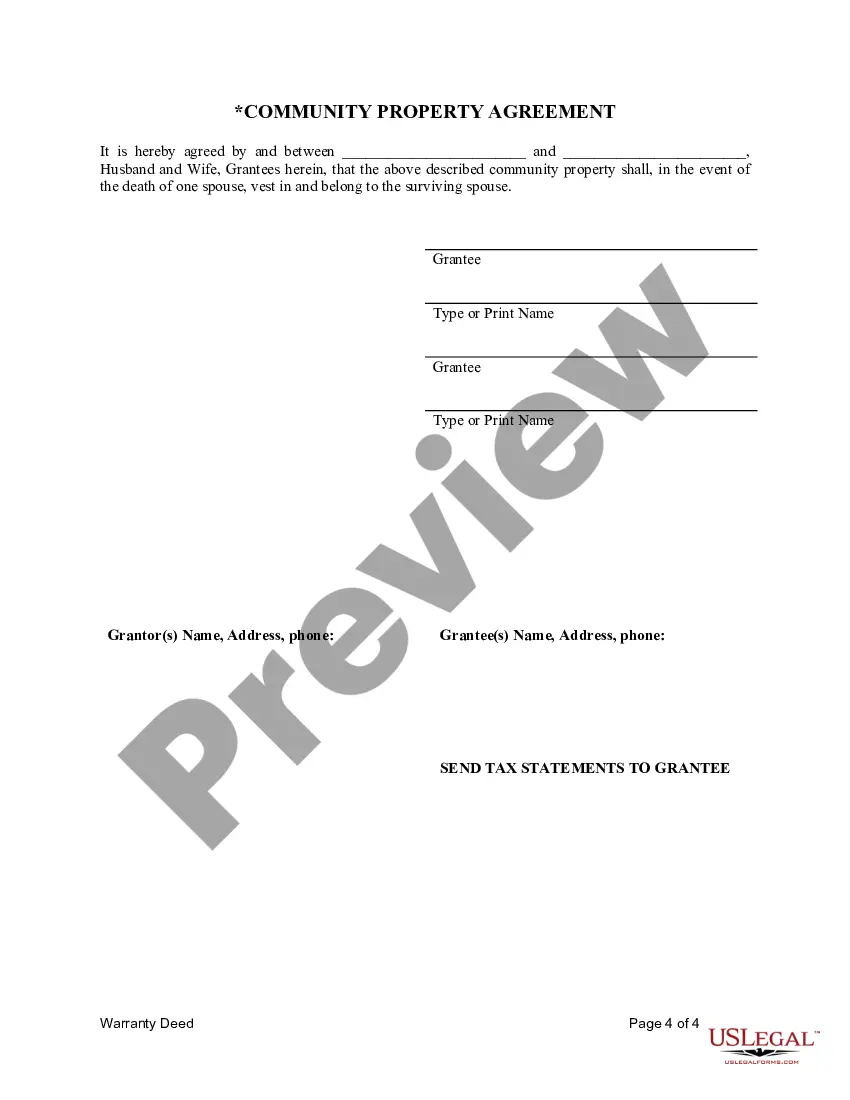
This Warranty Deed from two Individuals to Husband and Wife is a legal document that transfers ownership of property from two individuals (the Grantors) to a married couple (the Grantees). This deed provides a warranty, ensuring that the Grantors have the legal right to convey the property and that the property is free of encumbrances, except as noted. This form is specifically suited for property transfers involving a couple, distinguishing it from more general warranty deeds.
Key components of this form
- Details of the Grantors and Grantees involved.
- Property description and details regarding its legal status.
- Covenant of the Grantors assuring they hold clear title to the property.
- Terms regarding the reservation of oil, gas, and minerals by the Grantors.
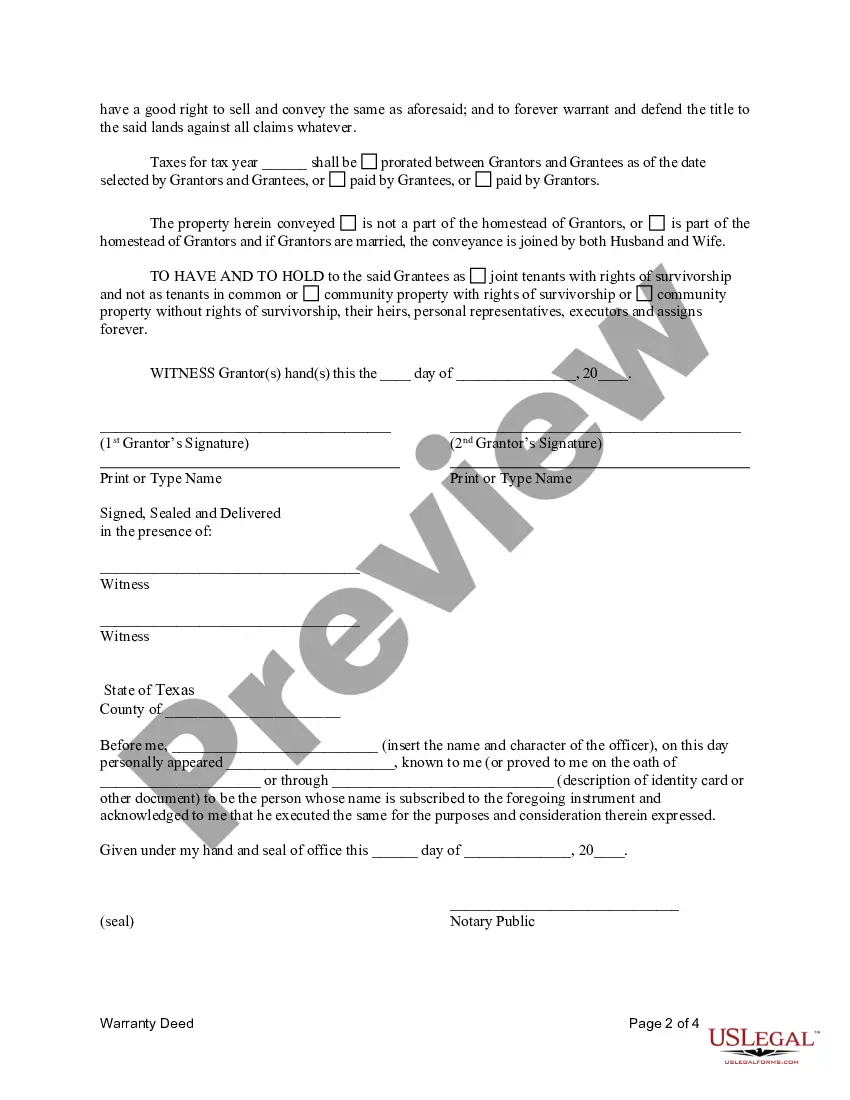
- Provisions for taxes and if the property is part of the Grantors' homestead.
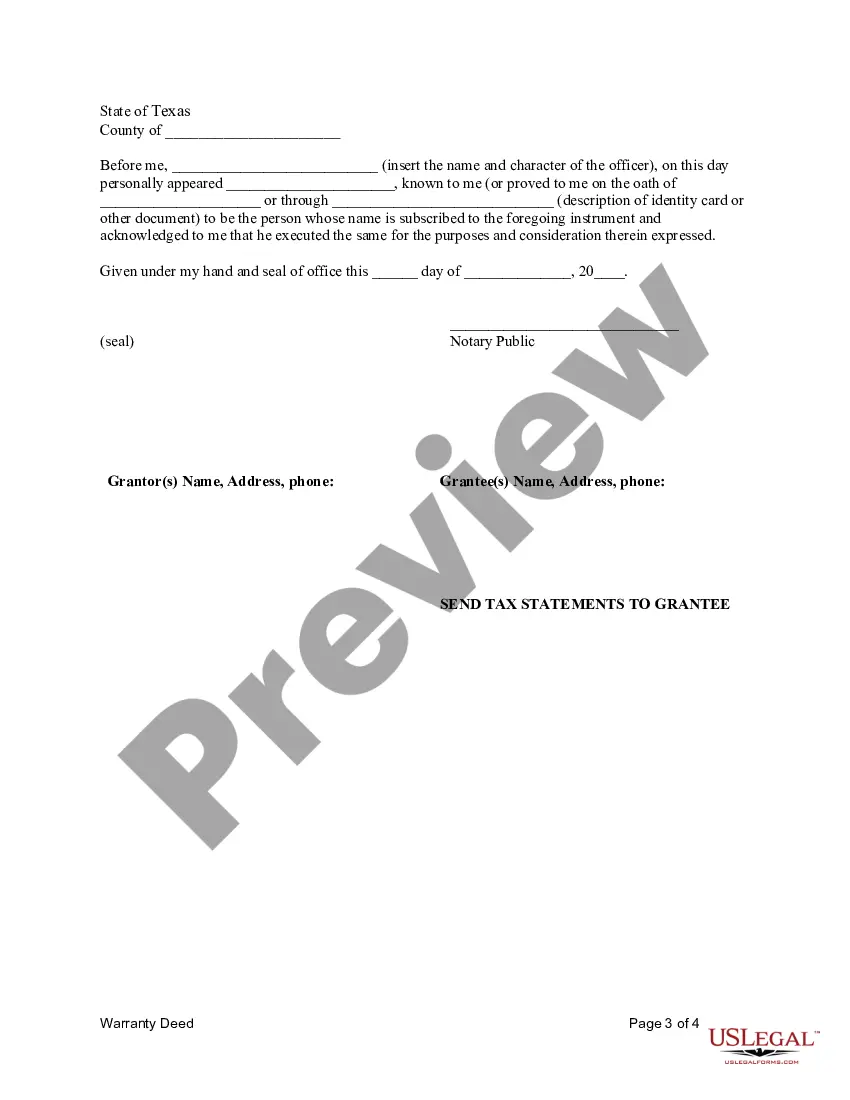
- Signatures and acknowledgments needed for legal validation.




When to use this document
This form is used when two individuals wish to legally transfer property ownership to a married couple. It is particularly relevant in situations such as gifting property to a spouse, managing joint ownership in real estate, or formalizing property agreements in estate planning. Utilizing this warranty deed ensures that both parties are protected under the law during the transfer process.
Intended users of this form
- Two individuals looking to transfer property ownership to a married couple.
- Married couples acquiring property from friends or family members.
- Individuals seeking to clarify property rights in relation to their marriage.
- Real estate professionals facilitating property transactions for clients.
How to prepare this document
- Identify the Grantors by entering their full names.
- Specify the Grantees' names, which should be the married couple.
- Provide a detailed description of the property being transferred.
- Include necessary clauses, such as reservations of mineral rights and tax responsibilities.
- Have all parties sign the document in the presence of a witness.
- Ensure acknowledgment by a notary public if required.
Does this document require notarization?
This form must be notarized to be legally valid. US Legal Forms provides secure online notarization powered by Notarize, allowing you to complete the process through a verified video call.
Get your form ready online
Our built-in tools help you complete, sign, share, and store your documents in one place.
Make edits, fill in missing information, and update formatting in US Legal Forms—just like you would in MS Word.
Download a copy, print it, send it by email, or mail it via USPS—whatever works best for your next step.
Sign and collect signatures with our SignNow integration. Send to multiple recipients, set reminders, and more. Go Premium to unlock E-Sign.
If this form requires notarization, complete it online through a secure video call—no need to meet a notary in person or wait for an appointment.
We protect your documents and personal data by following strict security and privacy standards.

Make edits, fill in missing information, and update formatting in US Legal Forms—just like you would in MS Word.

Download a copy, print it, send it by email, or mail it via USPS—whatever works best for your next step.

Sign and collect signatures with our SignNow integration. Send to multiple recipients, set reminders, and more. Go Premium to unlock E-Sign.

If this form requires notarization, complete it online through a secure video call—no need to meet a notary in person or wait for an appointment.

We protect your documents and personal data by following strict security and privacy standards.
Typical mistakes to avoid
- Failing to include a complete and accurate property description.
- Not specifying the correct marital status of the Grantees.
- Forgetting necessary signatures from all parties involved.
- Omitting witness signatures and notary acknowledgment if required.
Benefits of completing this form online
- Convenience of downloading the form at any time.
- Editability allows you to customize the form for your specific situation.
- Access to forms drafted by licensed attorneys ensures legal compliance.
- Instantly available, avoiding delays in legal processes.
Looking for another form?

Form popularity
FAQ
You can buy a house under one name, and most of the time couples do this because one partner's credit is bad. However, there are advantages to joint mortgages. You should carefully consider the pros and cons of buying a house under only one partner's name.
How do I add my spouse to the deed? In Texas, you can't add your spouse's name to an existing deed, but you can create a new deed by transferring the property from yourself to you and your spouse jointly. You can do this by using either a deed without warranty or a quit claim deed.
California married couples generally have three options to take title to their community (vs separate) property real estate: community property, joint tenancy or Community Property with Right of Survivorship. The latter coming into play in California July of 2001.
In every sale transaction a title company is required to determine if the seller of the property is married. If they are married, their spouse is typically required to sign a document at closing and the document changes depending on the classification of the property as homestead or investment.
Can you get a home loan without your spouse? You can purchase a home and be the only person financially obligated. Your name can be the only person on the loan. However in Texas, your spouse will still be required to sign the security instrument at closing because Texas is a community property state.
In California, all property bought during the marriage with income that was earned during the marriage is deemed "community property." The law implies that both spouses own this property equally, regardless of which name is on the title deed.
The easiest way to grant your spouse title to your home is via a quitclaim deed (Californians generally use an interspousal grant deed). With a quitclaim deed, you can name your spouse as the property's joint owner. The quitclaim deed must include the property's description, including its boundary lines.
Texas is one of nine states that is a community property jurisdiction. In general, this means that any property acquired by a couple during their marriage (with a few exceptions) is equally owned by both spouses. This can have a profound effect on the dissolution of property during divorce proceedings.
Find the most recent deed to the property. It is best to begin with a copy of the most recent deed to the property (the deed that transferred the property to the current grantor). Create a new deed. Sign and notarize the deed. File the documents in the county land records.