Texas Motion for Order of Contempt for Failure to Pay Spousal Maintenance
What this document covers
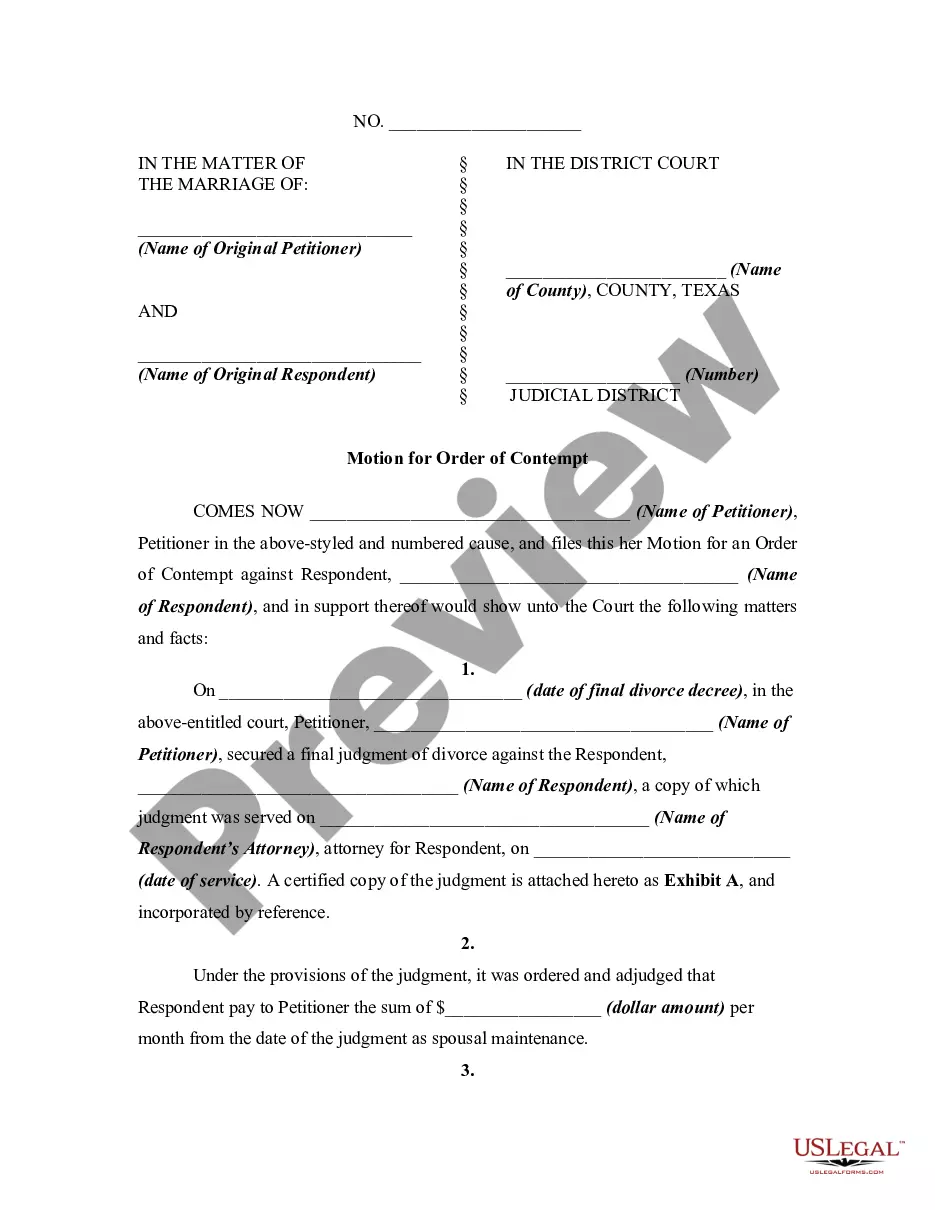
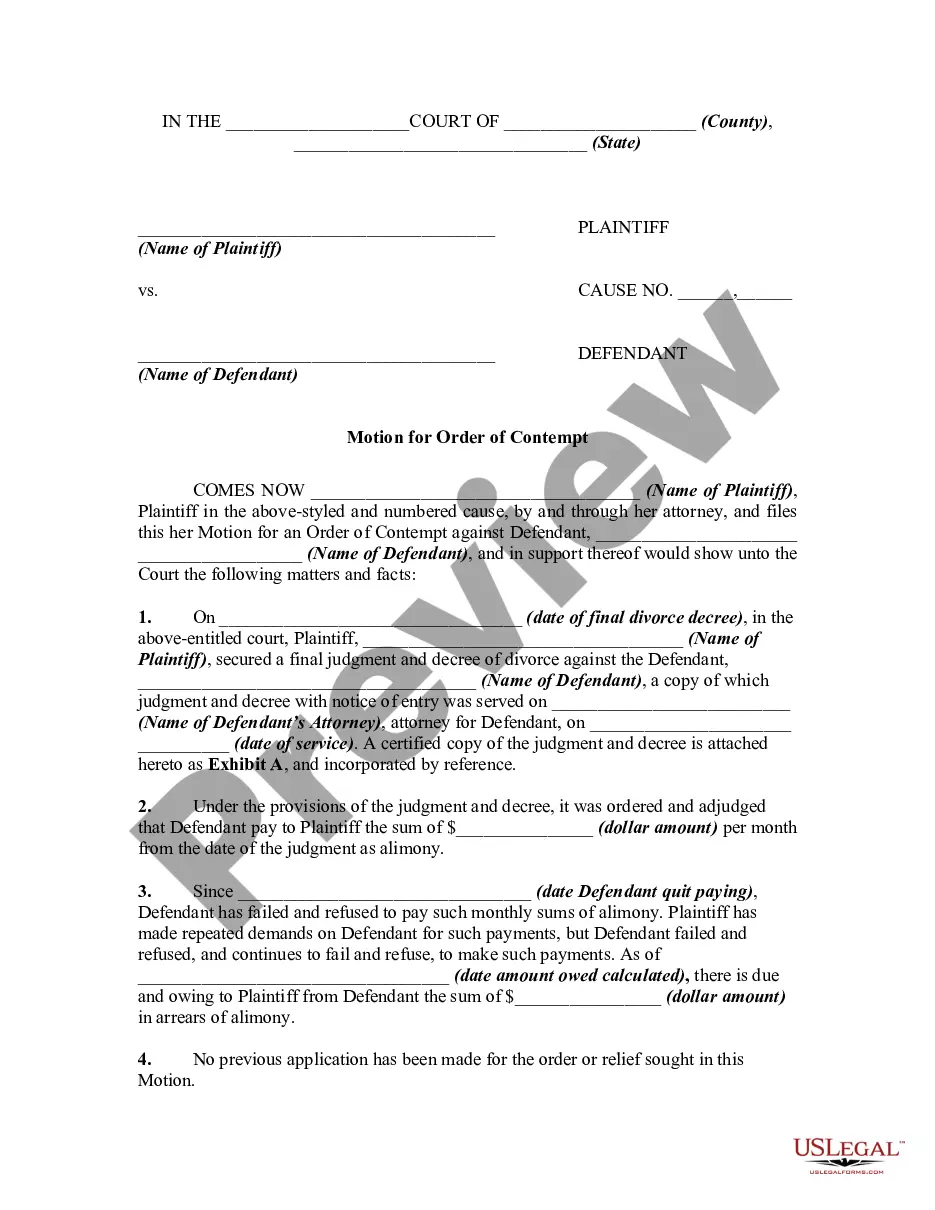
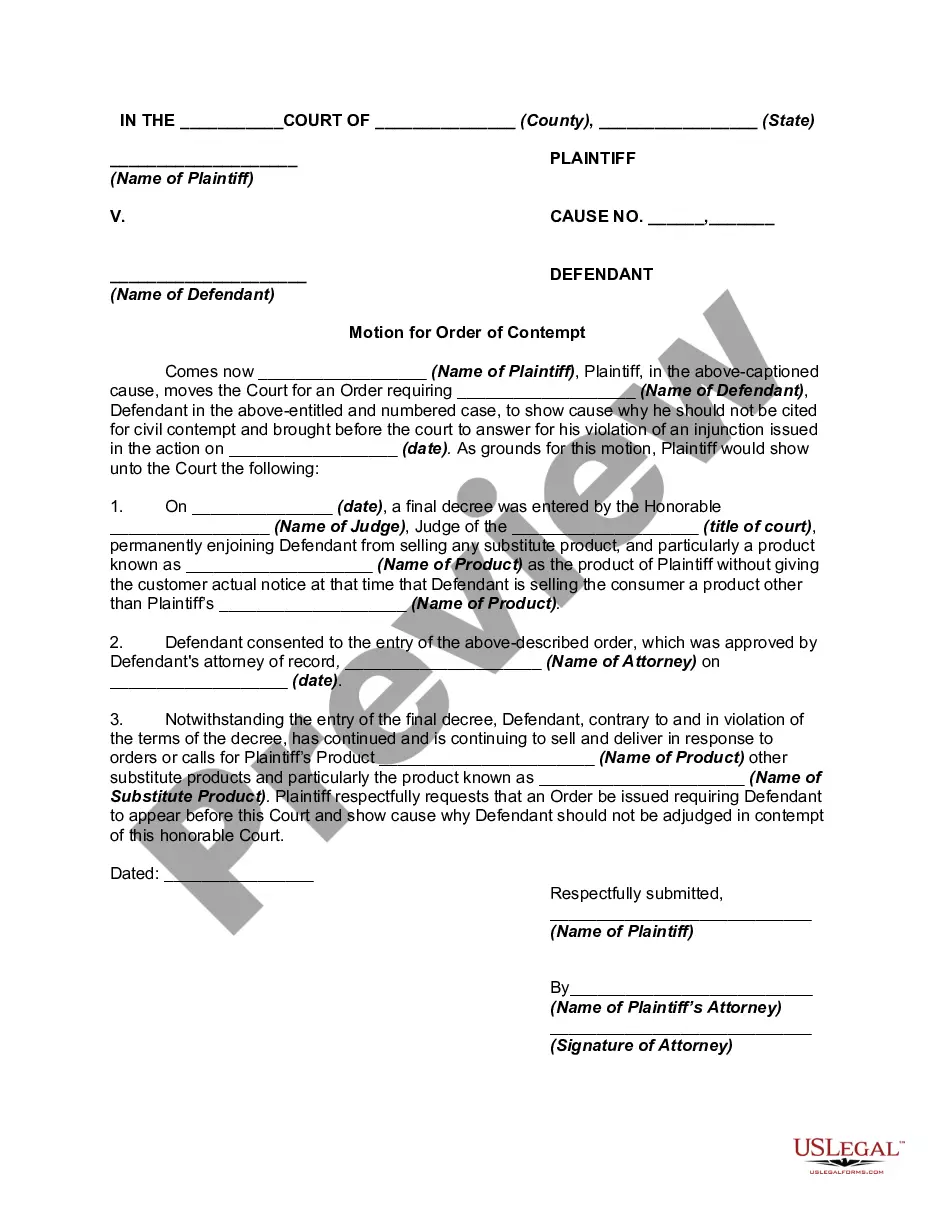
The Motion for Order of Contempt for Failure to Pay Spousal Maintenance is a legal document used when a former spouse fails to pay court-ordered spousal maintenance. This form allows the petitioner to request the court to hold the non-compliant spouse in contempt for not adhering to the divorce decree regarding maintenance payments. Unlike other forms, this motion specifically addresses non-payment issues, ensuring enforcement of the courtâs spousal maintenance orders under Texas law.
What’s included in this form
- Case information, including the names of the petitioner and respondent.
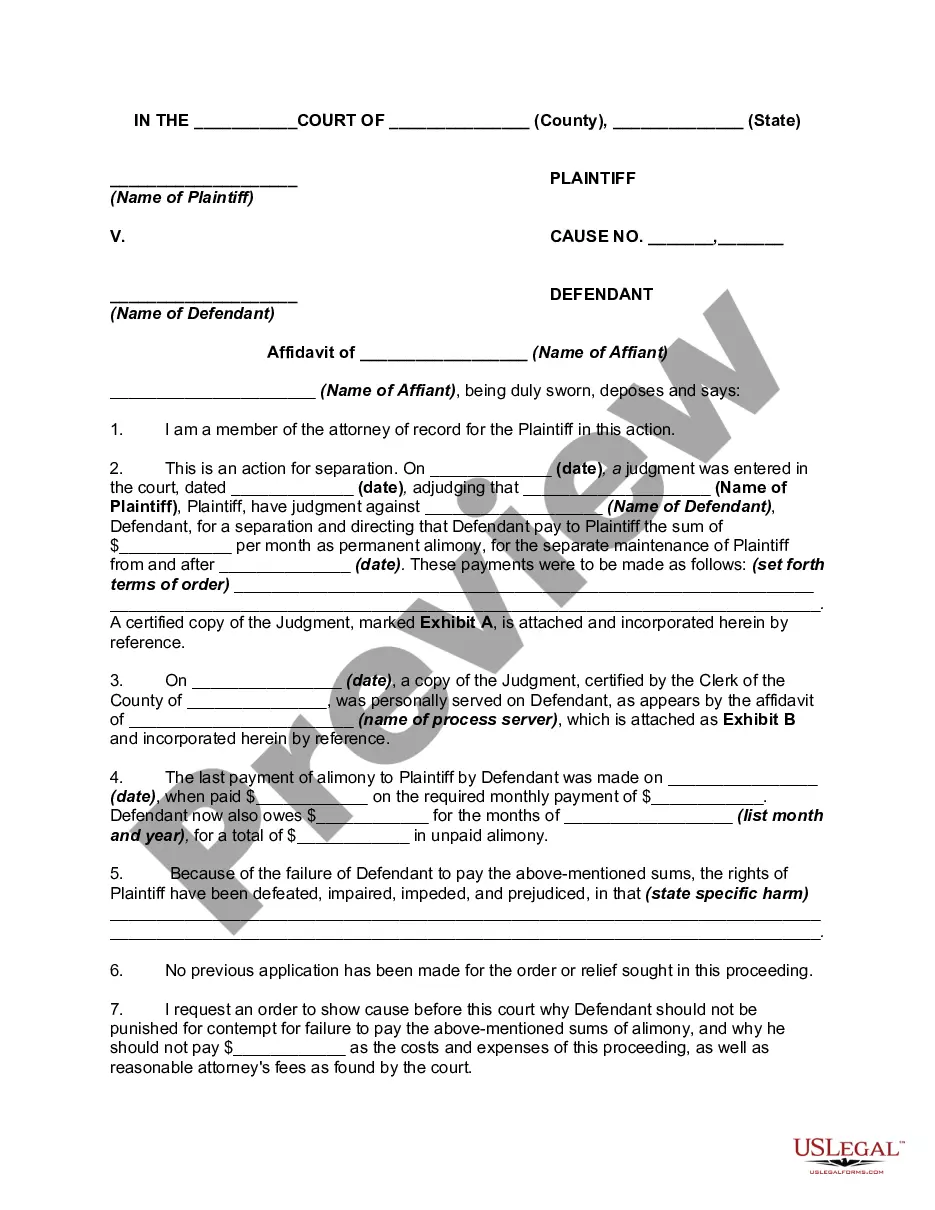
- Date of the final divorce decree and service of judgment.
- Details of the spousal maintenance order, including payment amounts.
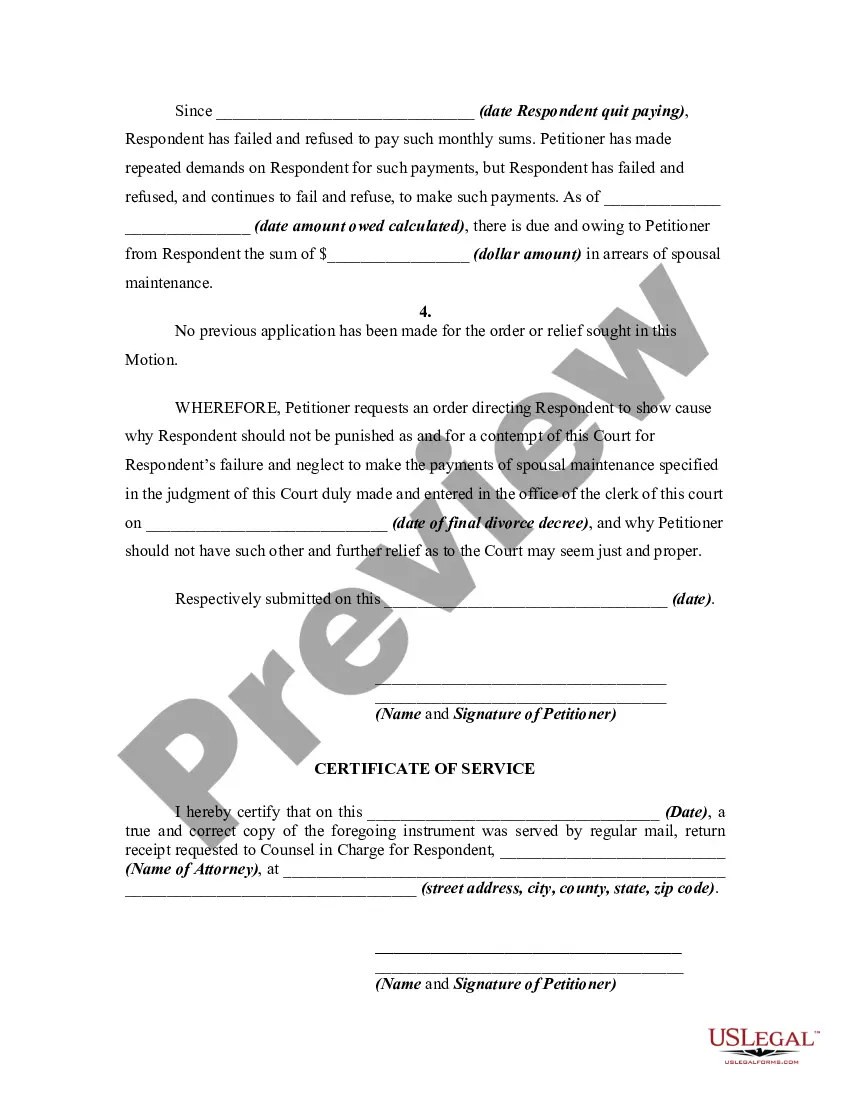
- Chronology of missed payments and amounts owed.
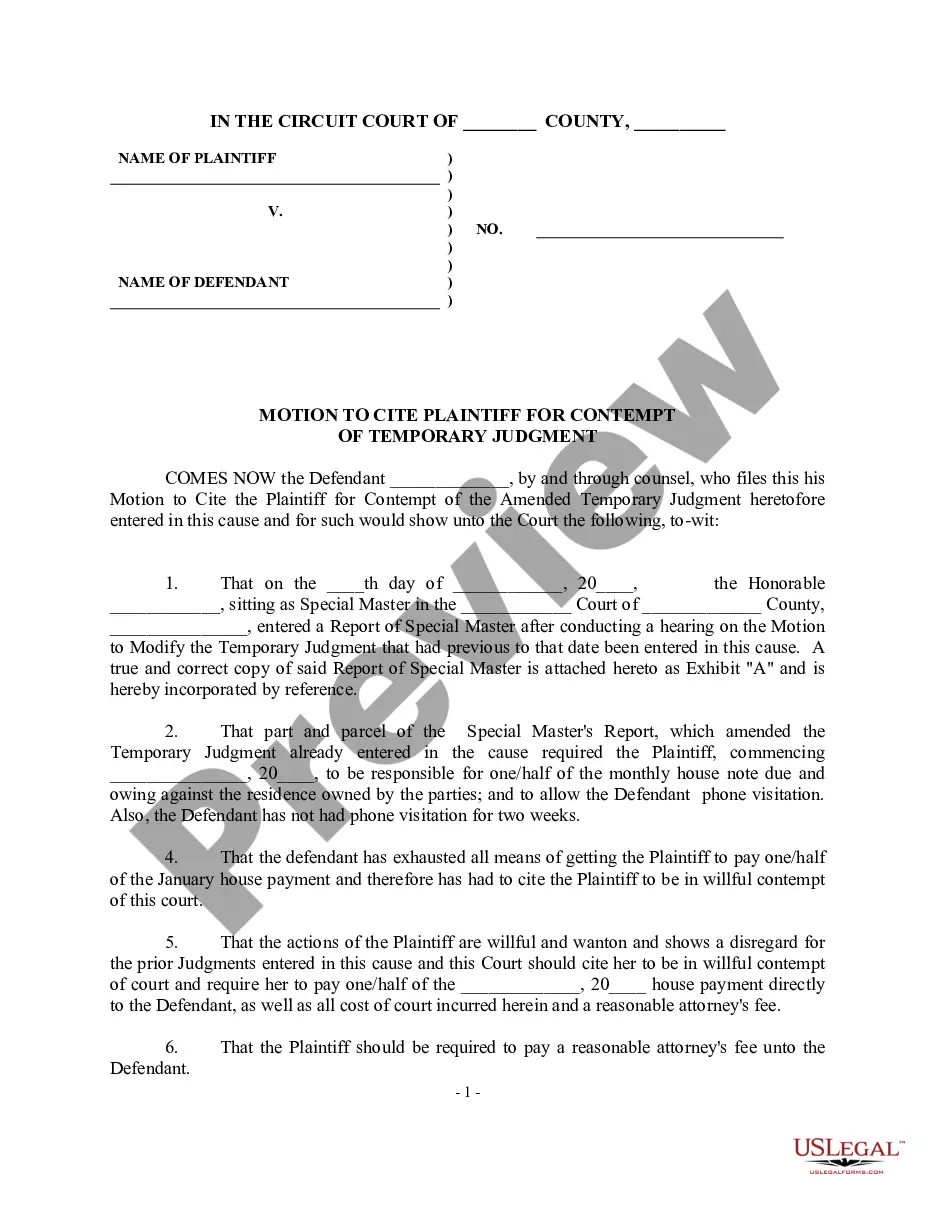
- Request for the court to enforce the payment and hold the respondent in contempt.
- Petitioner's signature and certification of service to the respondent's attorney.

When this form is needed
This form should be used when a spouse who was ordered to pay spousal maintenance fails to make the required payments. If you have made repeated requests for payment without success, or if the payment is significantly overdue, this motion can serve as a necessary legal step to enforce compliance and seek remedies from the court.
Who can use this document
- Individuals who have a court order for spousal maintenance that is not being followed.
- Petitioners who have made efforts to collect overdue payments without success.
- Any person involved in a divorce proceeding where spousal maintenance was granted.
Instructions for completing this form
- Identify the parties involved by clearly stating the names of the petitioner and respondent.
- Enter the date of the final divorce decree and indicate when the maintenance payments became overdue.
- Specify the amount of spousal maintenance owed and clearly outline any missed payments.
- State the relief requested from the court, including your reasons for holding the respondent in contempt.
- Sign the document and ensure it is correctly served to the respondent's attorney.
Notarization guidance
This form does not typically require notarization unless specified by local law. However, it is important to ensure that all signatures are completed accurately and any required certifying details are included.
Get your form ready online
Our built-in tools help you complete, sign, share, and store your documents in one place.
Make edits, fill in missing information, and update formatting in US Legal Forms—just like you would in MS Word.
Download a copy, print it, send it by email, or mail it via USPS—whatever works best for your next step.
Sign and collect signatures with our SignNow integration. Send to multiple recipients, set reminders, and more. Go Premium to unlock E-Sign.
If this form requires notarization, complete it online through a secure video call—no need to meet a notary in person or wait for an appointment.
We protect your documents and personal data by following strict security and privacy standards.

Make edits, fill in missing information, and update formatting in US Legal Forms—just like you would in MS Word.

Download a copy, print it, send it by email, or mail it via USPS—whatever works best for your next step.

Sign and collect signatures with our SignNow integration. Send to multiple recipients, set reminders, and more. Go Premium to unlock E-Sign.

If this form requires notarization, complete it online through a secure video call—no need to meet a notary in person or wait for an appointment.

We protect your documents and personal data by following strict security and privacy standards.
Common mistakes
- Failing to include the correct case information or dates.
- Not providing evidence of previous payment requests made to the respondent.
- Missing signatures or improperly certifying service to the respondentâs attorney.
Why complete this form online
- Convenience of downloading and completing the form from home.
- Editability allows for easy customization to fit your specific situation.
- Access to professionally drafted forms, ensuring legal clarity and compliance.
Looking for another form?
Form popularity
FAQ
The Texas Motion for Order of Contempt for Failure to Pay Spousal Maintenance is a legal form used to enforce a court-ordered spousal maintenance when payments are missed. It asks the court to find the non-paying spouse in contempt and to enforce the maintenance obligation under the divorce decree. Use it after standard requests for payment have failed.
Contempt findings are enforceable by the court and can result in enforcement actions to compel payment; whether jail is imposed depends on the court’s decision and the specifics of the case. This form requests that a judge enforce the spousal maintenance obligation by holding the other party in contempt.
If spousal maintenance is not paid as ordered, this motion can be used to ask the court to enforce the order and to hold the other party in contempt; the document includes a chronology of missed payments to support the request.
The form includes case information for the petitioner and respondent; the date of the final divorce decree and service of judgment; details of the spousal maintenance order, including payment amounts; a chronology of missed payments; a request for enforcement and contempt; and the petitioner's signature plus certification of service to the respondent's attorney.
This motion is intended for individuals who have a court order for spousal maintenance that is not being followed; petitioners who have attempted to collect overdue payments without success; and anyone in a divorce where spousal maintenance was granted.
It targets non-payment of spousal maintenance under a divorce decree and includes a detailed chronology of missed payments, a direct enforcement request, and a certification of service to the respondent’s attorney; these elements distinguish it from contempt motions aimed at other obligations.