Texas Warranty Deed from Corporation to Husband and Wife
About this form
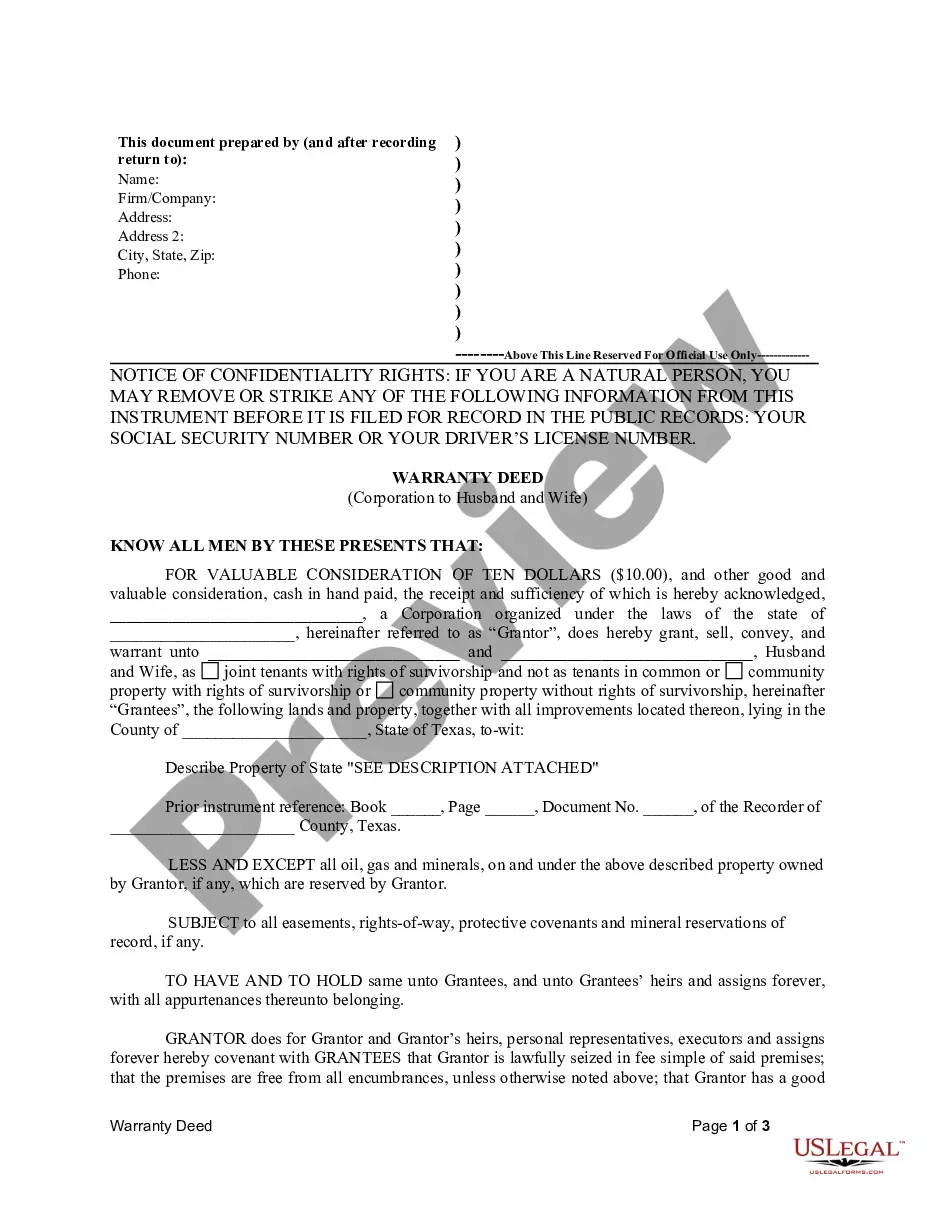
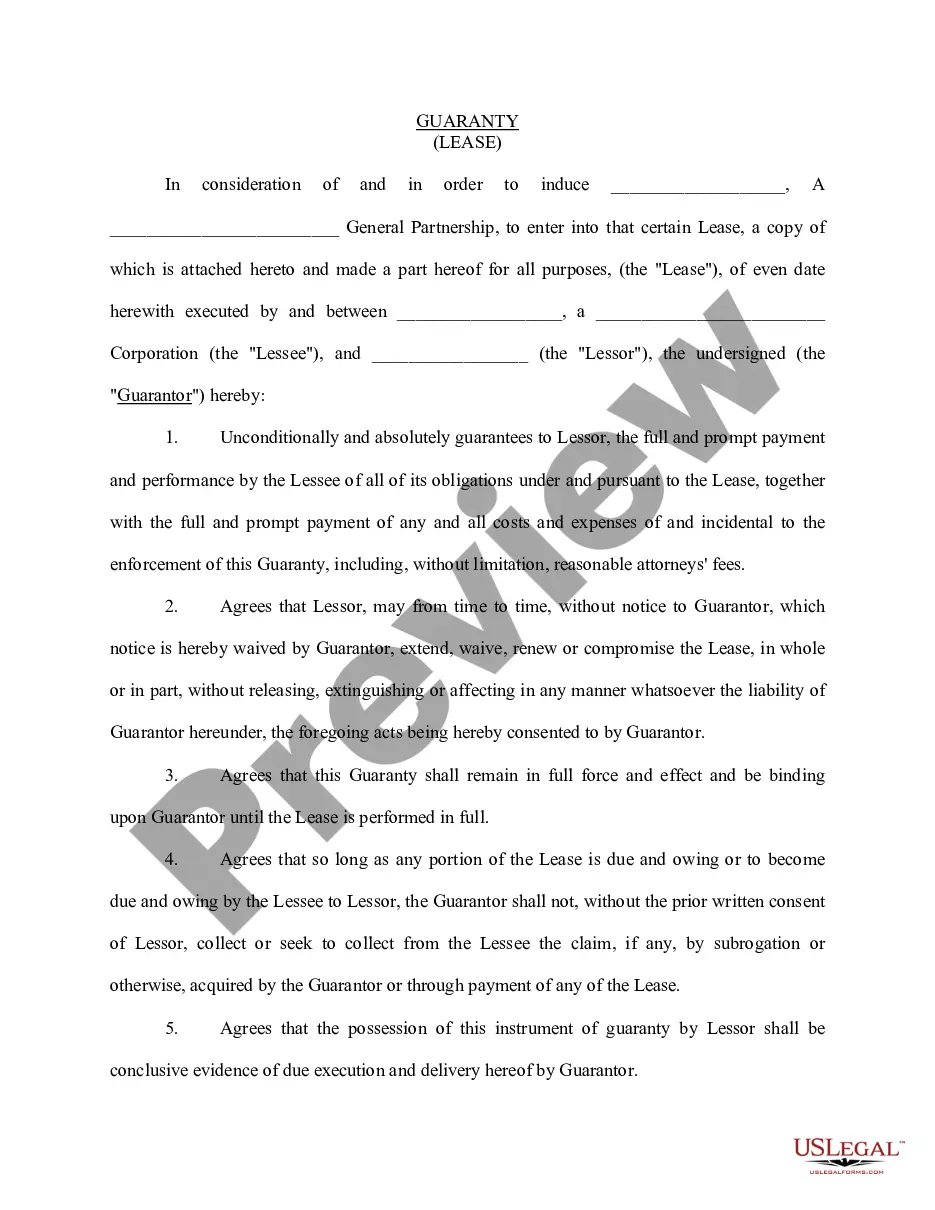
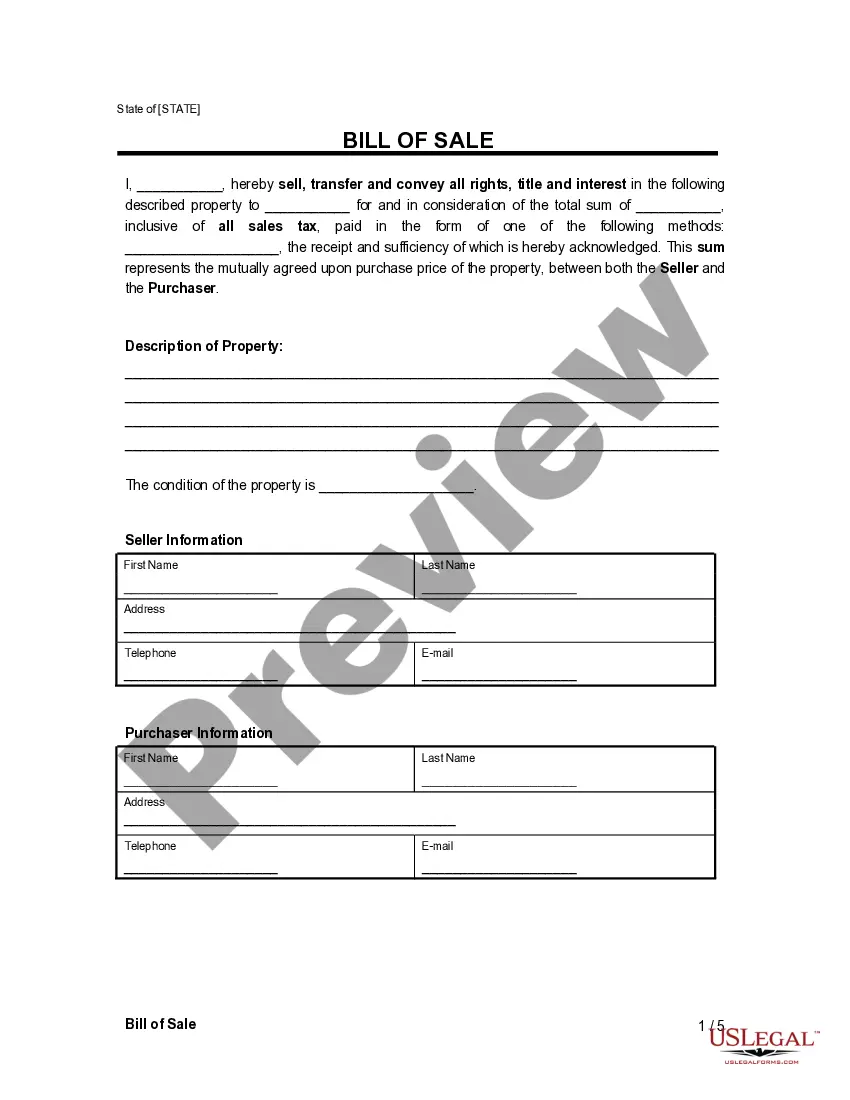
The Warranty Deed from Corporation to Husband and Wife is a legal document used to transfer property ownership from a corporation to a married couple. This form provides a clear title and warranty of the property, less any rights to oil, gas, or minerals. Unlike other property transfer forms, this deed specifically involves a corporate grantor and ensures protection for the grantees regarding ownership claims.
Key components of this form
- Grantor information: Details about the corporation transferring the property.
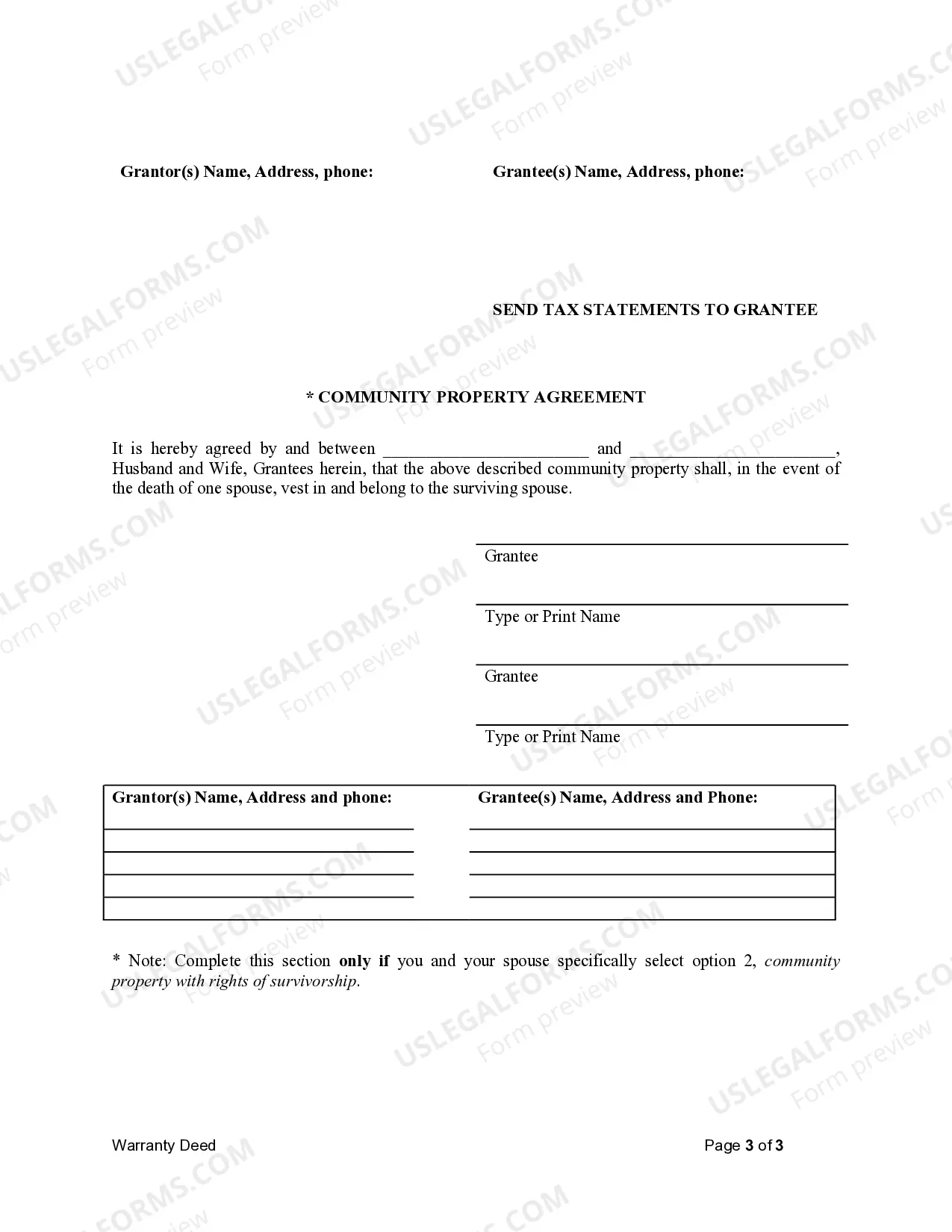
- Grantee information: Names of the husband and wife receiving the property.
- Property description: A clear description of the property being transferred.
- Warranty clause: Assures that the grantor holds legal title and protects against claims.
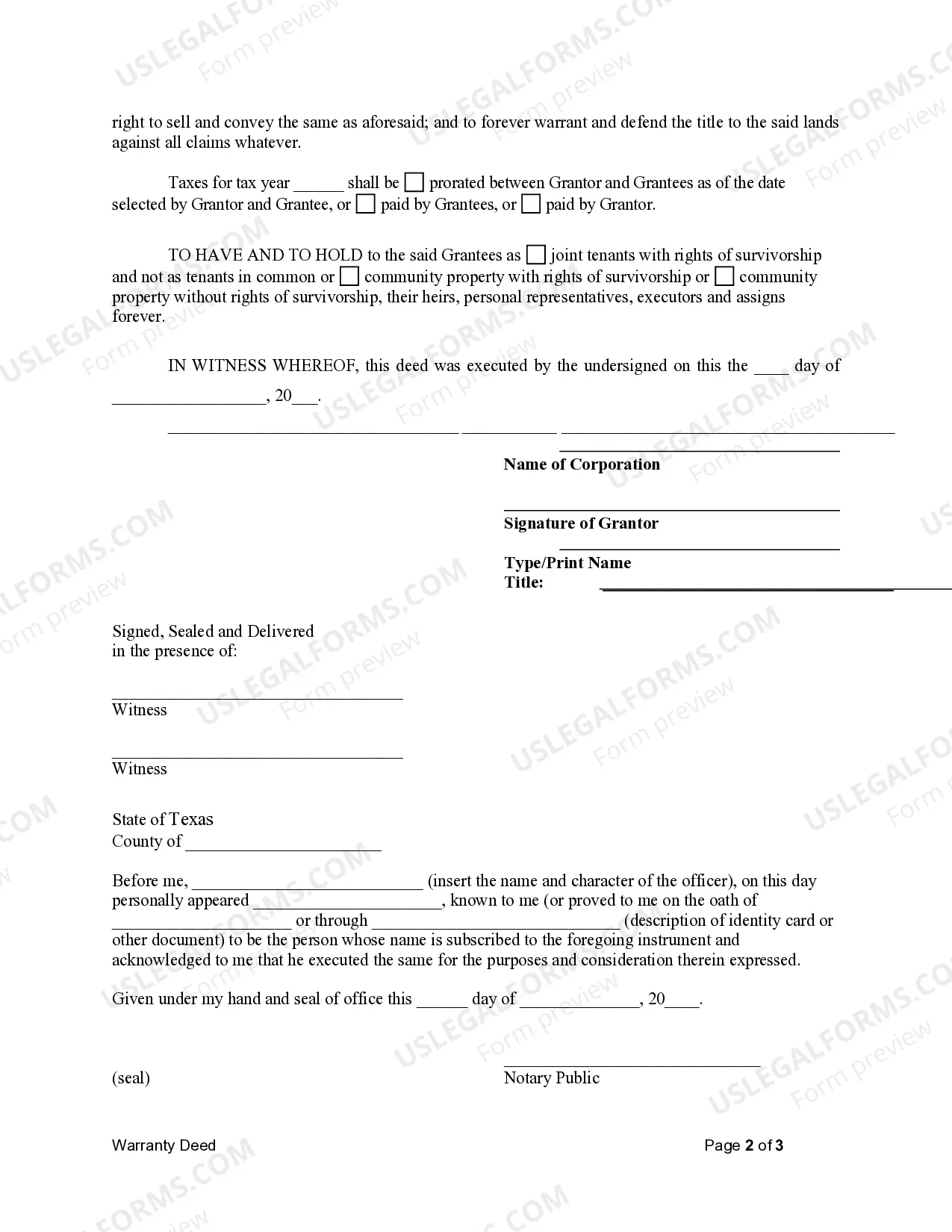
- Tax responsibilities: Specifies how taxes will be handled between the parties.
- Notarization section: Provides space for a notaryâs acknowledgment if required.



When to use this form
This warranty deed is typically used when a corporation wishes to transfer real estate to a married couple. It is especially relevant during property transactions involving joint ownership where both spouses will hold legal title. This form is helpful in situations such as estate planning, gift transfers, or corporate property reallocations.
Intended users of this form
- Corporations looking to transfer real estate to shareholders who are married.
- Husbands and wives receiving property from a corporation as part of a business transaction.
- Legal professionals handling property transfers for clients involving marital ownership.
How to complete this form
- Identify the grantor: Enter the corporation's name and state of incorporation.
- Identify the grantees: Enter the full names of the husband and wife receiving the property.
- Describe the property: Provide an accurate description of the real estate being conveyed.
- Specify tax arrangements: Determine how property taxes will be handled between parties.
- Obtain signatures: Ensure all required parties sign the document and have it notarized if necessary.
Does this document require notarization?
Yes, this form must be notarized to be legally valid. This notarization ensures that the signatures are verified and the document is properly executed. US Legal Forms offers integrated online notarization services for convenience, allowing you to complete the process via secure video call anytime.
Get your form ready online
Our built-in tools help you complete, sign, share, and store your documents in one place.
Make edits, fill in missing information, and update formatting in US Legal Forms—just like you would in MS Word.
Download a copy, print it, send it by email, or mail it via USPS—whatever works best for your next step.
Sign and collect signatures with our SignNow integration. Send to multiple recipients, set reminders, and more. Go Premium to unlock E-Sign.
If this form requires notarization, complete it online through a secure video call—no need to meet a notary in person or wait for an appointment.
We protect your documents and personal data by following strict security and privacy standards.

Make edits, fill in missing information, and update formatting in US Legal Forms—just like you would in MS Word.

Download a copy, print it, send it by email, or mail it via USPS—whatever works best for your next step.

Sign and collect signatures with our SignNow integration. Send to multiple recipients, set reminders, and more. Go Premium to unlock E-Sign.

If this form requires notarization, complete it online through a secure video call—no need to meet a notary in person or wait for an appointment.

We protect your documents and personal data by following strict security and privacy standards.
Common mistakes
- Failing to accurately describe the property being transferred.
- Not providing complete legal names of all grantees or the corporation.
- Omitting necessary signatures or notary acknowledgments.
- Misunderstanding the tax responsibility clauses in the deed.
Why complete this form online
- Convenience: Easily fill out and download the form from home.
- Editability: Make necessary changes to the form template before finalizing the document.
- Reliability: Utilize professionally drafted templates to ensure legal compliance and accuracy.
Summary of main points
- The Warranty Deed facilitates the transfer of property from a corporation to a married couple.
- Always ensure the deed is notarized to uphold its legal standing.
- Carefully check state-specific requirements for property transfers.
- Understand the implications of any reservations included in the deed.
Looking for another form?


Form popularity
FAQ
A warranty deed guarantees that: The grantor is the rightful owner of the property and has the legal right to transfer the title.The title would withstand third-party claims to ownership of the property. The grantor will do anything to ensure the grantee's title to the property.
Let's start with the definition of a deed: DEED: A written instrument by which one party, the Grantor, conveys the title of ownership in property to another party, the Grantee. A Warranty Deed contains promises, called covenants, that the Grantor makes to the Grantee.
Because the Deed of Trust basically "shares" ownership between the borrower and the lender's trustee, and because Texas is a community property state, both the borrower and the spouse (even if they are not on the mortgage note) must be on the Deed of Trust.
In a Non-Warranty Deed, the seller gives no warranties.In a Non-Warranty or Quitclaim Deed, the seller merely is giving the buyer whatever rights, if any, that the seller has in the property and the seller makes no warranties of any nature about the seller's rights in the property.
State of Texas (and perhaps other community-property states), gives that right to the non-owner spouse that other spouse (separate-property owner) cannot sell properties without her consent and approval, regardless if she is entitled to the property or not.
If you are married and your name is not on the title deed, you may have relinquished your ownership right.
It is also crucial that a spouse know about the loan, even if he or she is not on the mortgage. In general, the spouse must sign a deed of trust, the Truth in Lending and Right to Cancel documents. By signing these documents, they are simply acknowledging the existence of the mortgage.
In every sale transaction a title company is required to determine if the seller of the property is married. If they are married, their spouse is typically required to sign a document at closing and the document changes depending on the classification of the property as homestead or investment.
How do I add my spouse to the deed? In Texas, you can't add your spouse's name to an existing deed, but you can create a new deed by transferring the property from yourself to you and your spouse jointly. You can do this by using either a deed without warranty or a quit claim deed.