Tennessee Warranty Deed from Husband and Wife to LLC
Understanding this form
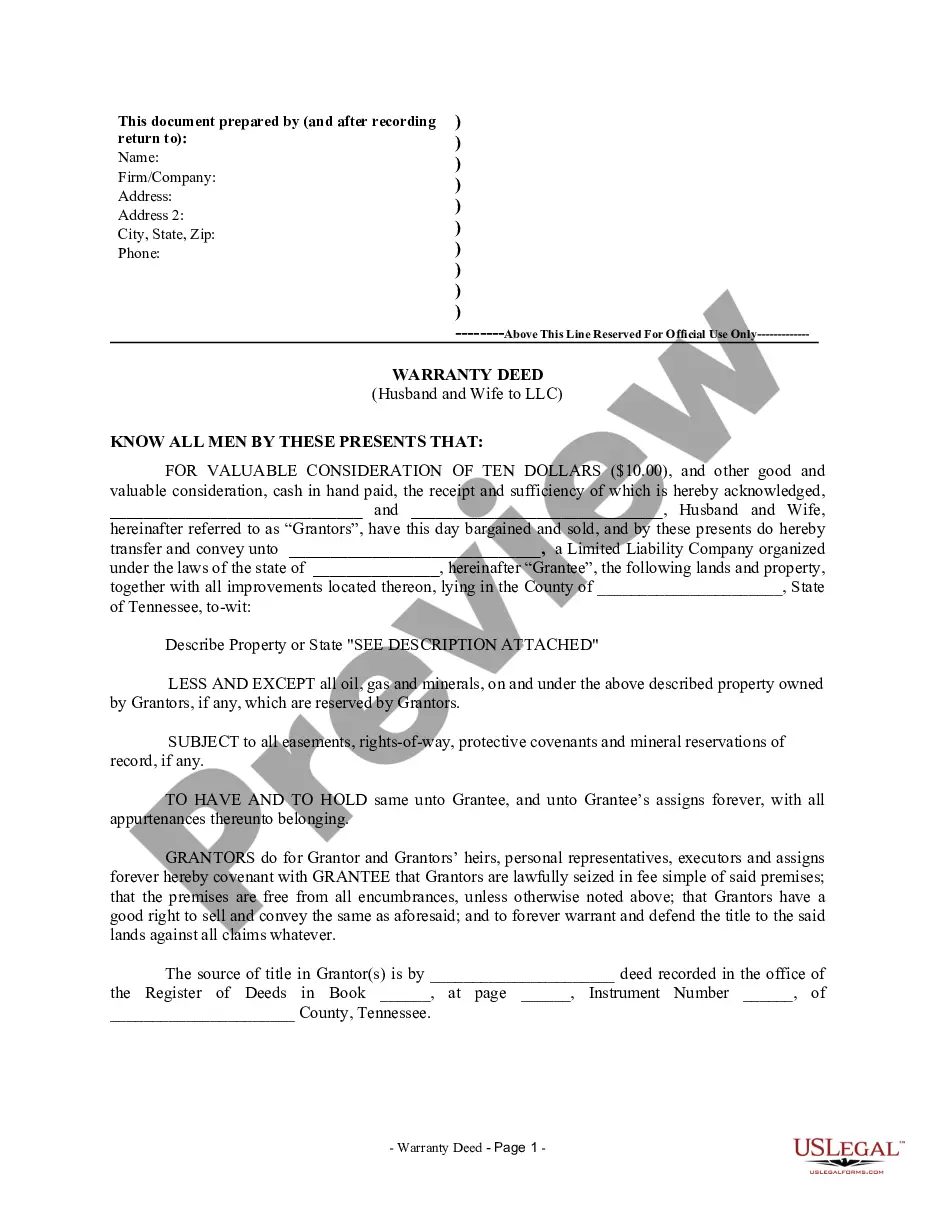
The Warranty Deed from Husband and Wife to LLC is a legal document used to transfer ownership of property from a husband and wife (the grantors) to a limited liability company (the grantee). This form is distinct from other types of deeds, as it involves two individuals transferring property to a business entity while reserving rights to specific resources like oil, gas, and minerals. It ensures that the grantors warrant the title to the property, meaning they confirm they have the legal right to transfer the property without encumbrances.
Form components explained
- Description of the property being conveyed.
- Reservation of rights to oil, gas, and minerals by the grantors.
- Covenant stating the grantors are the lawful owners with a clear title.
- Details regarding the source of the title and any previous conveyances.
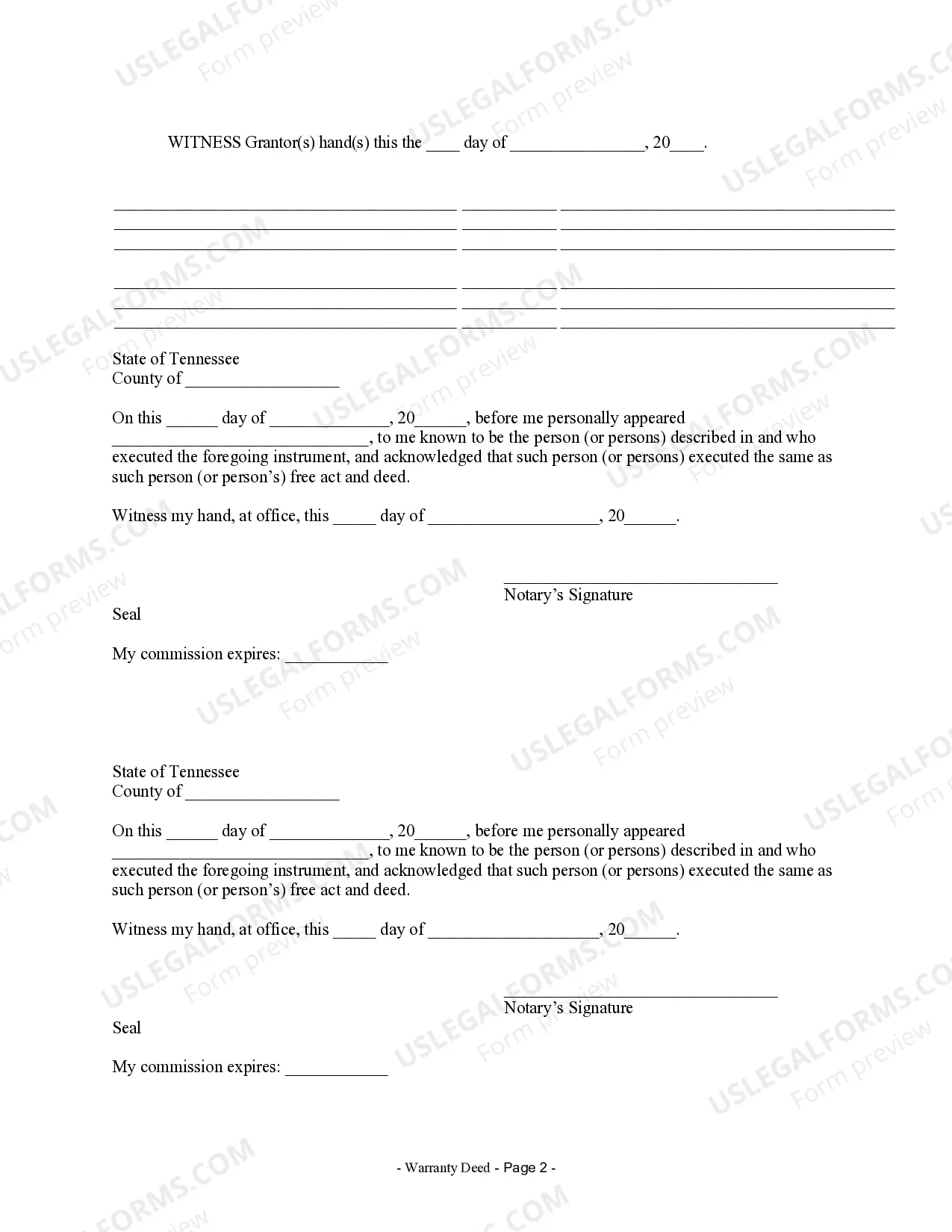
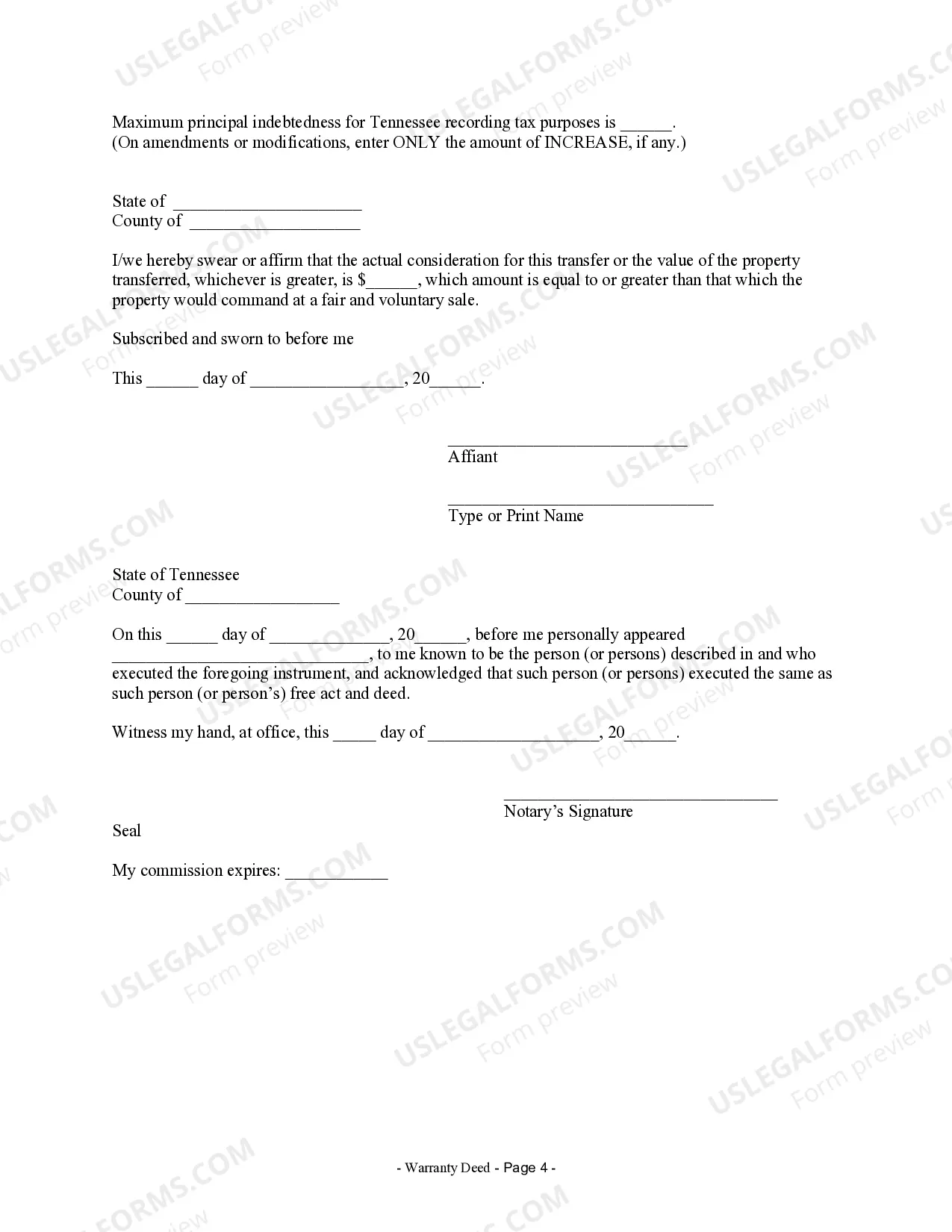
- Signature lines for the grantors and notary acknowledgment.
- Statement regarding the consideration for the transfer of property.





When this form is needed
This form should be used when a husband and wife wish to transfer ownership of their property to a limited liability company. Common scenarios may include business partnerships where real estate is involved, estate planning among business owners, or when converting personal property into a business asset. It is essential for legal ownership and to remove any ambiguity about who owns the property going forward.
Who needs this form
This form is primarily intended for:
- Husbands and wives looking to transfer property to their LLC.
- Business owners wanting to separate personal and business assets.
- Individuals involved in estate planning or asset protection strategies.
Instructions for completing this form
- Identify the parties involved: the husband and wife as grantors and the LLC as grantee.
- Clearly describe the property being transferred, including any exceptions for reserved rights.
- Fill in the source of title and record details regarding previous deeds.
- Ensure all grantors sign and date the form in front of a notary public.
- Provide the actual consideration amount for the transfer, if applicable.
- Submit the completed form to the appropriate county recorder's office for record keeping.
Notarization guidance
Yes, this form must be notarized to be legally valid. A notary public will need to witness the signatures of the grantors to confirm that they entered into the agreement freely and voluntarily. US Legal Forms offers integrated online notarization services that are available 24/7, secure, and legally equivalent to traditional notarization, eliminating the need for in-person visits.
Get your form ready online
Our built-in tools help you complete, sign, share, and store your documents in one place.
Make edits, fill in missing information, and update formatting in US Legal Forms—just like you would in MS Word.
Download a copy, print it, send it by email, or mail it via USPS—whatever works best for your next step.
Sign and collect signatures with our SignNow integration. Send to multiple recipients, set reminders, and more. Go Premium to unlock E-Sign.
If this form requires notarization, complete it online through a secure video call—no need to meet a notary in person or wait for an appointment.
We protect your documents and personal data by following strict security and privacy standards.

Make edits, fill in missing information, and update formatting in US Legal Forms—just like you would in MS Word.

Download a copy, print it, send it by email, or mail it via USPS—whatever works best for your next step.

Sign and collect signatures with our SignNow integration. Send to multiple recipients, set reminders, and more. Go Premium to unlock E-Sign.

If this form requires notarization, complete it online through a secure video call—no need to meet a notary in person or wait for an appointment.

We protect your documents and personal data by following strict security and privacy standards.
Typical mistakes to avoid
- Not including a clear description of the property.
- Failing to reserve rights for oil, gas, and minerals if applicable.
- Missing signatures from all grantors or the notary acknowledgment.
- Incorrectly stating the consideration amount.
- Not recording the deed after completion.
Benefits of using this form online
- Convenience of downloading instantly from anywhere.
- Editability allows you to fill in details as needed.
- Reliability, as the forms are drafted by licensed attorneys.
- Avoids mistakes with guided instructions during the completion process.
Legal use & context
- This form creates a legally binding transfer of property rights.
- It helps ensure that the new owners, the LLC, have clear title to the property.
- Failure to follow proper procedures, like notarization, can lead to disputes over property ownership.
Summary of main points
- The Warranty Deed from Husband and Wife to LLC is essential for transferring property ownership to a business entity.
- Proper completion and notarization are vital for the document's validity.
- Using this form helps clarify ownership and protects both the grantors and the grantee.
Looking for another form?
Form popularity
FAQ
1Retrieve your original deed.2Get the appropriate deed form.3Draft the deed.4Sign the deed before a notary.5Record the deed with the county recorder.6Obtain the new original deed.
In order to transfer ownership of the marital home pursuant to a divorce, one spouse is going to need to sign a quitclaim deed, interspousal transfer deed, or a grant deed, in order to convey the title to the property.
In order to convey any real property or an interest in property in Tennessee, the deed must be in writing, acknowledged by the grantor, and registered in the county where the property is located. The Annotated Code of Tennessee allows for the transfer of real property through the usage of a variety of deeds.
1A Tennessee Quit Claim Deed may be filled out and filed with the Tennessee Register of Deeds of the same County the Property being transferred is in.2Laws § 66-5-103(2)3Recording (A§ 66-5-106) Submit the quit claim along with the filing fee to the Register's Office in your County.Free Tennessee Quit Claim Deed Form - PDF Word \n.com > deeds > tn > tennessee-quit-claim-deed-form
Quitclaim Deeds are used when the transfer of ownership in the property does not occur as the result of a traditional sale.Under a warranty deed, if it turns out that the property is not what the seller promised or there's an uncleared lien or other block to the title, the buyer can sue the seller and recover damages.
It will not protect against title issues that arose prior to the time the seller took occupancy. Consequently, it offers less protection to buyers, and more protection to sellers, than a general warranty deed, which is the most common option for selling or buying a property.
The Tennessee general warranty deed is a form that conveys real estate with a guarantee from a Seller to a Buyer that the title shall be free and clear of all liens and encumbrances (fee simple).
When recorded, a special warranty deed conveys an interest in real property to the named grantee with limited warranties of title. In Tennessee, special warranty deeds are statutory.This means that the deed will not protect the grantee against title issues that arose prior to the time the grantor acquired title.
A special warranty deed to real estate offers protection to the buyer through the seller's guarantee that the title has been free and clear of encumbrances during their ownership of the property. It does not guarantee clear title beyond their ownership.