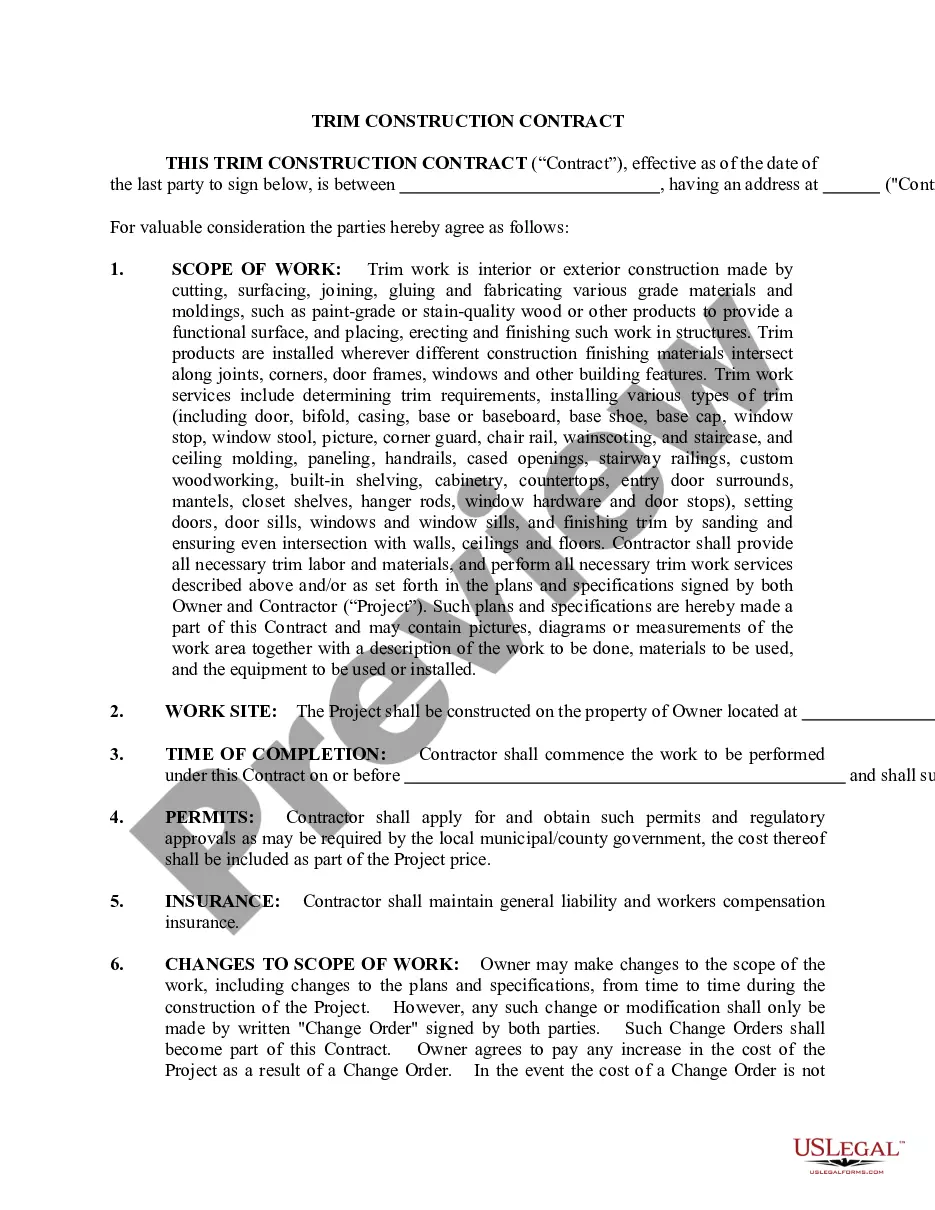
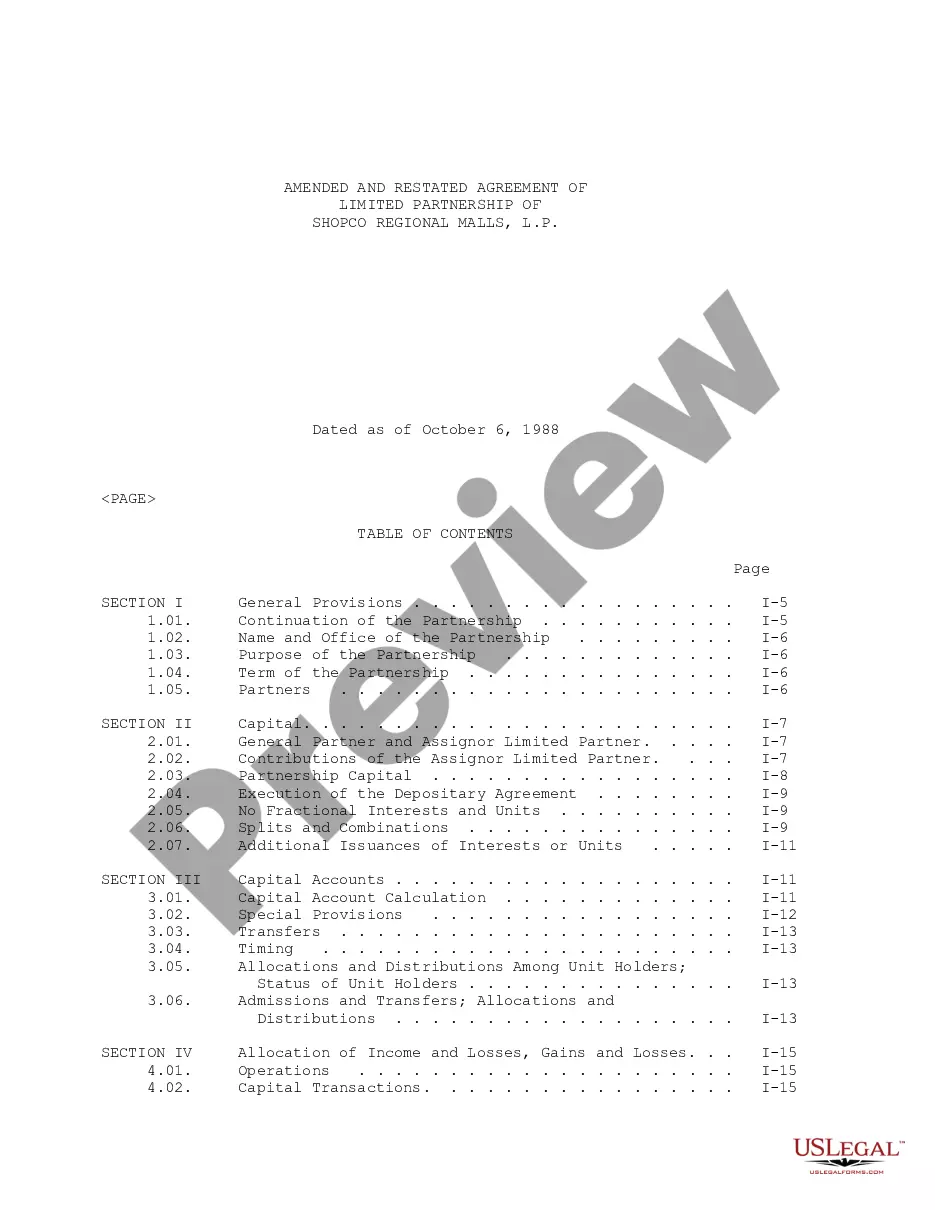
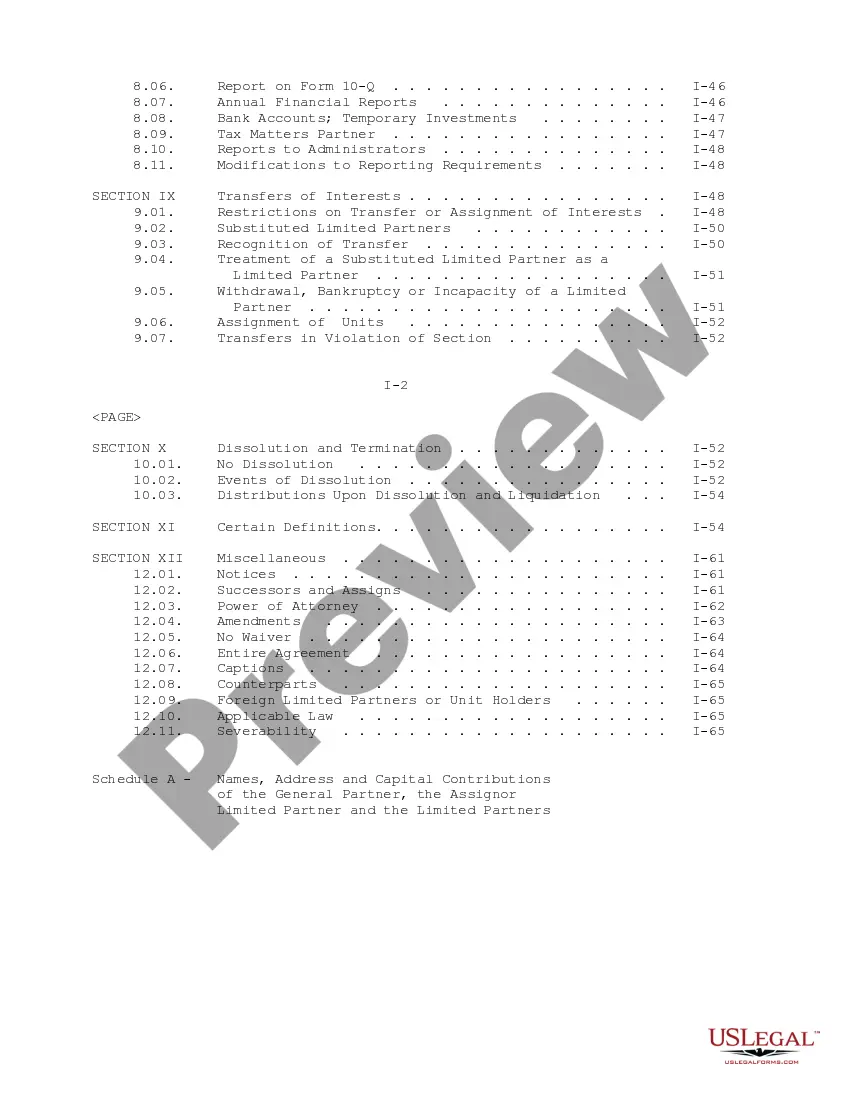
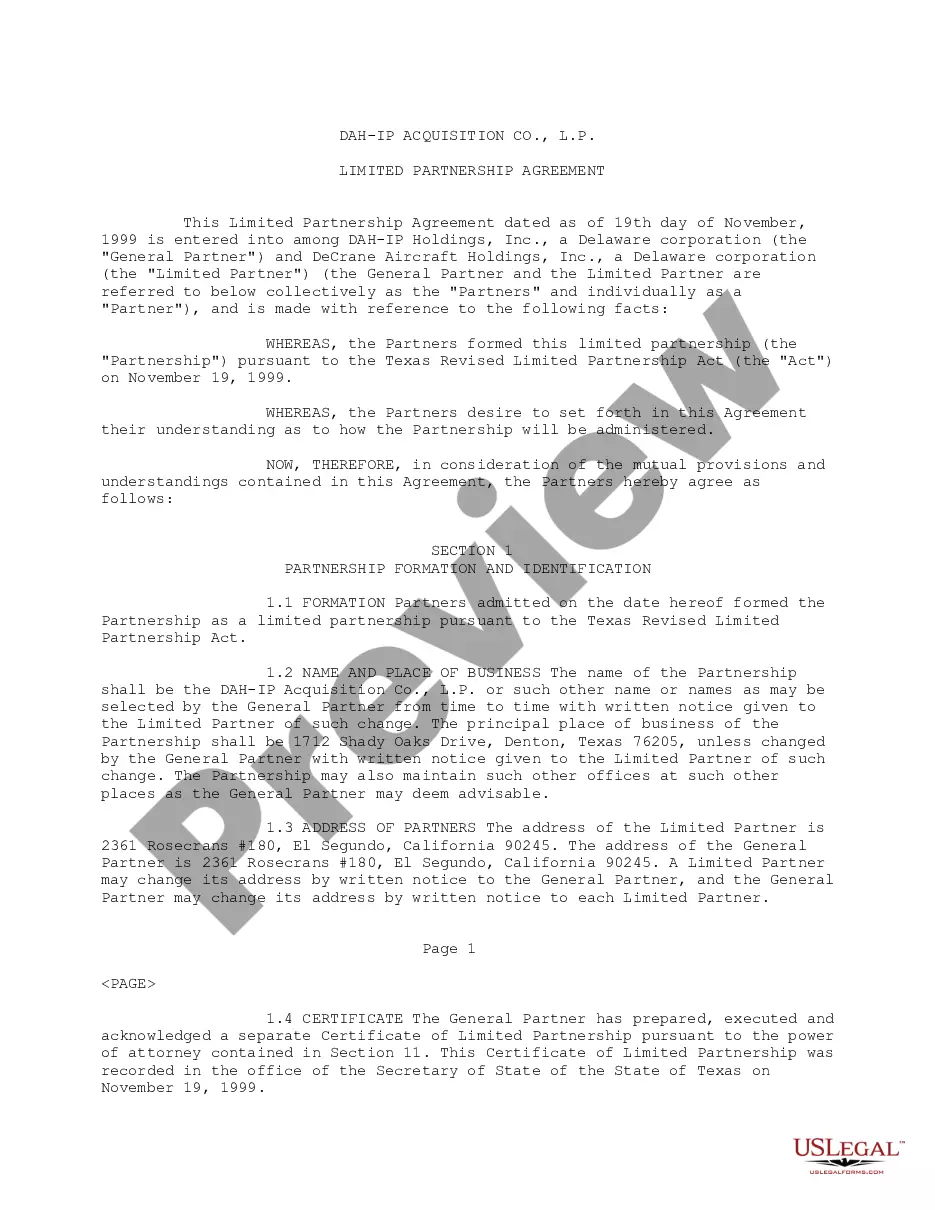
Sample Limited Partnership Agreement between Shearson Regional Malls, Inc. and Shearson Regional Malls Depositary Corp.
Understanding this form
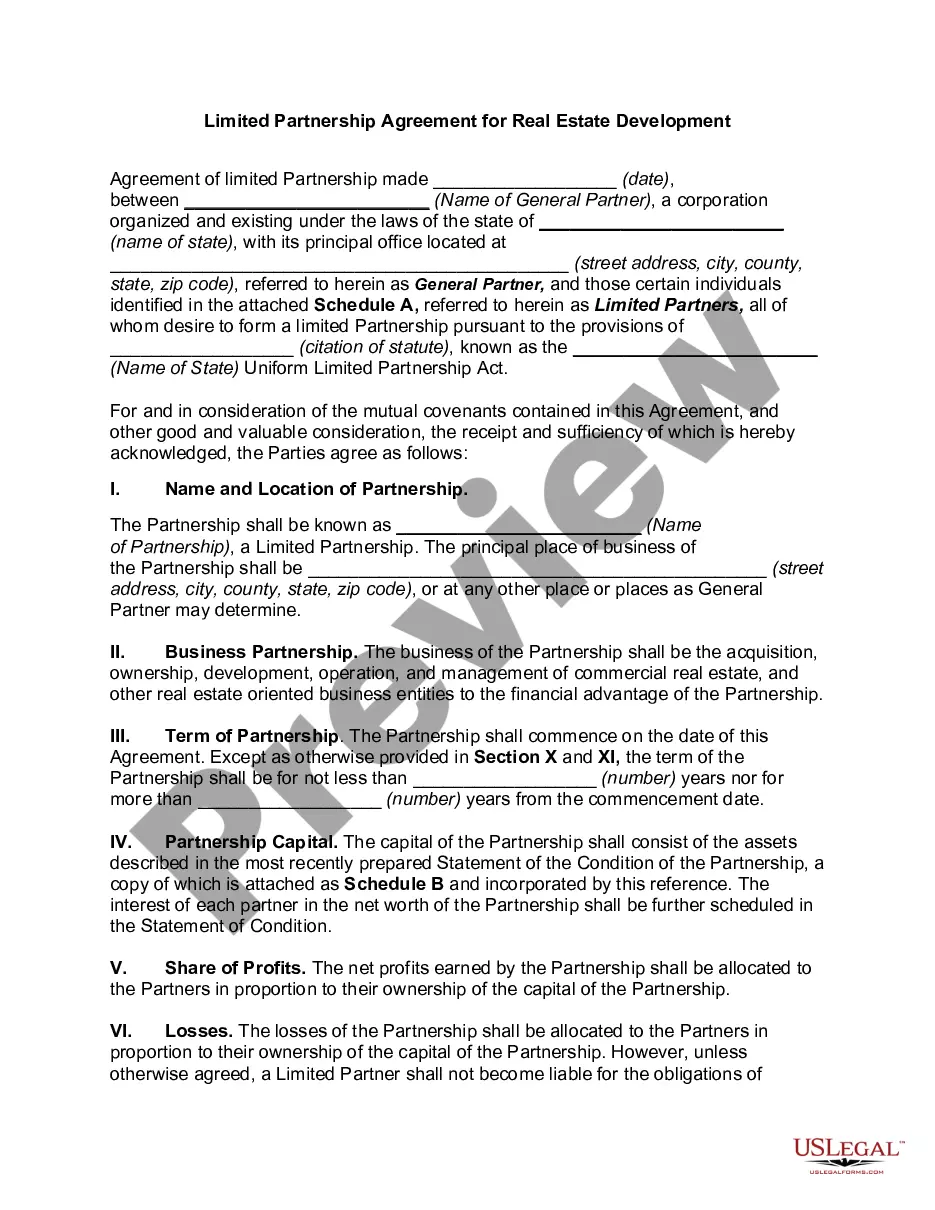
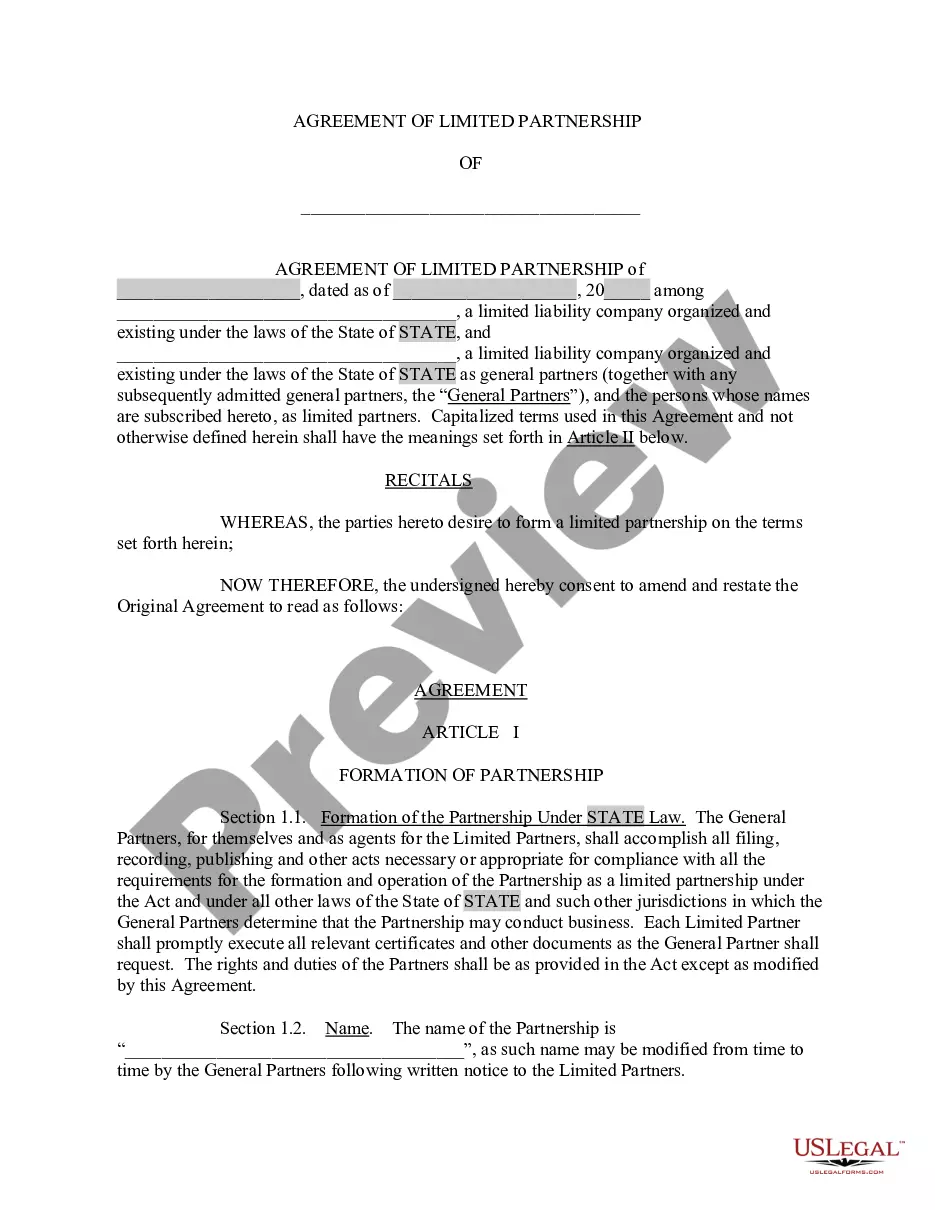
This Sample Limited Partnership Agreement is a legal document that outlines the terms and conditions governing the partnership between Shearson Regional Malls, Inc. and Shearson Regional Malls Depositary Corp. It is designed to establish the rights and obligations of the general partner and limited partners related to the operations and management of Shopco Regional Malls, L.P. Unlike other partnership agreements, this form ensures compliance with specific provisions of the Delaware Revised Uniform Limited Partnership Act, making it essential for parties engaging in limited partnership arrangements particularly within real estate investments.
Form components explained
- General Provisions: Covers the name, purpose, and office location of the partnership.
- Capital Contributions: Details the contributions required by partners and how capital accounts are managed.
- Management Structure: Outlines the powers and duties of the general partner in managing the partnership.
- Income Allocation: Explains how profits and losses are distributed among partners and how those distributions are calculated.
- Dissolution Terms: Provides conditions under which the partnership may be dissolved and how assets will be liquidated.
- Transfer of Interests: Specifies the rules around transferring partnership interests among partners.



When this form is needed
This form should be used when two or more parties wish to form a limited partnership for the purpose of investing in regional malls or similar real estate developments. It is particularly relevant during the establishment phase of a partnership to ensure all parties are legally protected and obligations clearly defined. This agreement is useful for formalizing contributions, management roles, and profit distribution mechanisms.
Who needs this form
- Businesses or individuals looking to establish a limited partnership to invest in real estate.
- General partners who will manage the partnership and its day-to-day operations.
- Limited partners who wish to invest capital without taking part in management decisions.
- Legal professionals drafting partnership agreements for clients in real estate.
Instructions for completing this form
- Identify the partners: List Shearson Regional Malls, Inc. and Shearson Regional Malls Depositary Corp. as the involved parties.
- Define the capital contributions: Clearly state the initial contributions and what they represent.
- Outline management responsibilities: Describe the roles of the general partner and the limitations of the limited partners.
- Specify terms for income allocation: Detail how profits and losses will be distributed.
- Include dissolution terms: Explain what events may trigger the dissolution of the partnership.
Does this form need to be notarized?
This form does not typically require notarization unless specified by local law. It is advised to consult legal counsel to confirm any such requirements based on jurisdiction.
Get your form ready online
Our built-in tools help you complete, sign, share, and store your documents in one place.
Make edits, fill in missing information, and update formatting in US Legal Forms—just like you would in MS Word.
Download a copy, print it, send it by email, or mail it via USPS—whatever works best for your next step.
Sign and collect signatures with our SignNow integration. Send to multiple recipients, set reminders, and more. Go Premium to unlock E-Sign.
If this form requires notarization, complete it online through a secure video call—no need to meet a notary in person or wait for an appointment.
We protect your documents and personal data by following strict security and privacy standards.

Make edits, fill in missing information, and update formatting in US Legal Forms—just like you would in MS Word.

Download a copy, print it, send it by email, or mail it via USPS—whatever works best for your next step.

Sign and collect signatures with our SignNow integration. Send to multiple recipients, set reminders, and more. Go Premium to unlock E-Sign.

If this form requires notarization, complete it online through a secure video call—no need to meet a notary in person or wait for an appointment.

We protect your documents and personal data by following strict security and privacy standards.
Common mistakes to avoid
- Failing to accurately detail each partner's capital contribution.
- Neglecting to specify management powers clearly, which can lead to conflicts.
- Not including terms for profit allocation, resulting in ambiguity.
- Ignoring state-specific provisions that may impact the validity of the agreement.
Benefits of completing this form online
- Easily editable to suit specific partnership needs.
- Instant access to the legal document, saving time and effort in drafting.
- Access to attorney-drafted templates ensuring compliance with relevant laws.
- Convenience of downloading and printing for immediate use.
Legal use & context
- This agreement serves as a legally binding contract between the partners, outlining governance of the partnership.
- It is enforceable in a court of law, provided it is completed correctly and in accordance with applicable state laws.
- Understanding the terms can help partners avoid disputes regarding management and financial contributions in the future.
Quick recap
- A Limited Partnership Agreement is crucial for defining the structure and function of the partnership.
- Clear communication of each partner's roles and contributions helps mitigate potential conflicts.
- Be aware of state-specific regulations that might affect partnership formation and operation.
Looking for another form?


Form popularity
FAQ
A limited partnership (LP) exists when two or more partners go into business together, but the limited partners are only liable up to the amount of their investment. An LP is defined as having limited partners and a general partner, which has unlimited liability.
If you're wondering, can a partnership be incorporated, the answer is yes. You can incorporate a general partnership and form a business entity with limited liability.
A limited partnership is usually a type of investment partnership, often used as investment vehicles for investing in such assets as real estate. LPs differ from other partnerships in that partners can have limited liability, meaning they are not liable for business debts that exceed their initial investment.
Pros of a Limited Partnership. Capital Amount is Quite Generous. Limited Partner Faces Limited Liability for Losses. Shared Responsibility of Work. Cons of a Limited Partnership. Breach in Agreement. General Partners Bear Maximum Risk in Case of Debts.
A limited partnership (LP) exists when two or more partners go into business together, but the limited partners are only liable up to the amount of their investment.
Unlimited Shareholders. Certain Tax Advantages. Utilization of Financial/Managerial Strengths of Partners. Unlimited Cap on Capital Acquisition with Partnership Agreement. Liability Protection for Limited Partners.
A Limited Partnership is a business entity that consists of one or more General Partners, whose responsibilities include daily management of the company, and one or more Limited Partners, who do not participate in management. A General Partner may be an individual or an entity, such as a corporation.
In limited partnerships (LPs), at least one of the owners is considered a "general" partner who makes business decisions and is personally liable for business debts.The limited liability partnership (LLP) is a similar business structure but it has no general partners.
As a limited partner, you will use the K1 issued by the business to populate your Schedule E.Guaranteed payments differ from a salary or wages in that the business does not withhold taxes on guaranteed payments. However, the guaranteed payments are an expense to the business that will lower its taxable income.