Tennessee Warranty Deed from two Individuals to LLC
Understanding this form
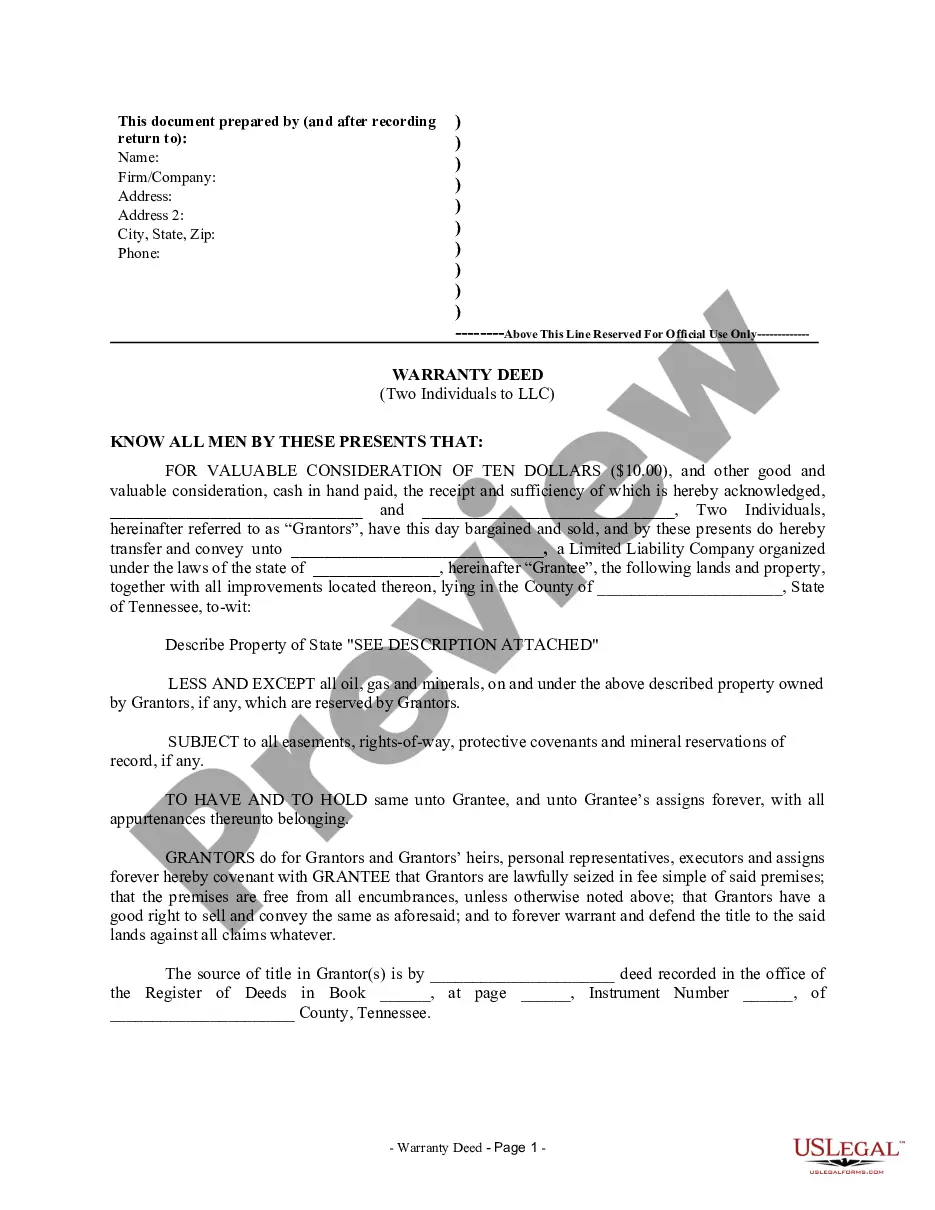
This Warranty Deed from two Individuals to LLC is a legal document that transfers property ownership from two individual Grantors to a limited liability company (LLC) Grantee. This form not only conveys the property but also includes warranties regarding the title, protecting the buyer from encumbrances. It is crucial in property transactions where individuals are transferring their ownership rights to a business entity, differentiating it from standard deeds that may not involve an LLC.
Key components of this form
- Descriptions of the property being transferred, including parcel information.
- Reservations for oil, gas, and minerals, which clarifies what is excluded from the transfer.
- Covenants from Grantors ensuring they have legal title and the right to sell.
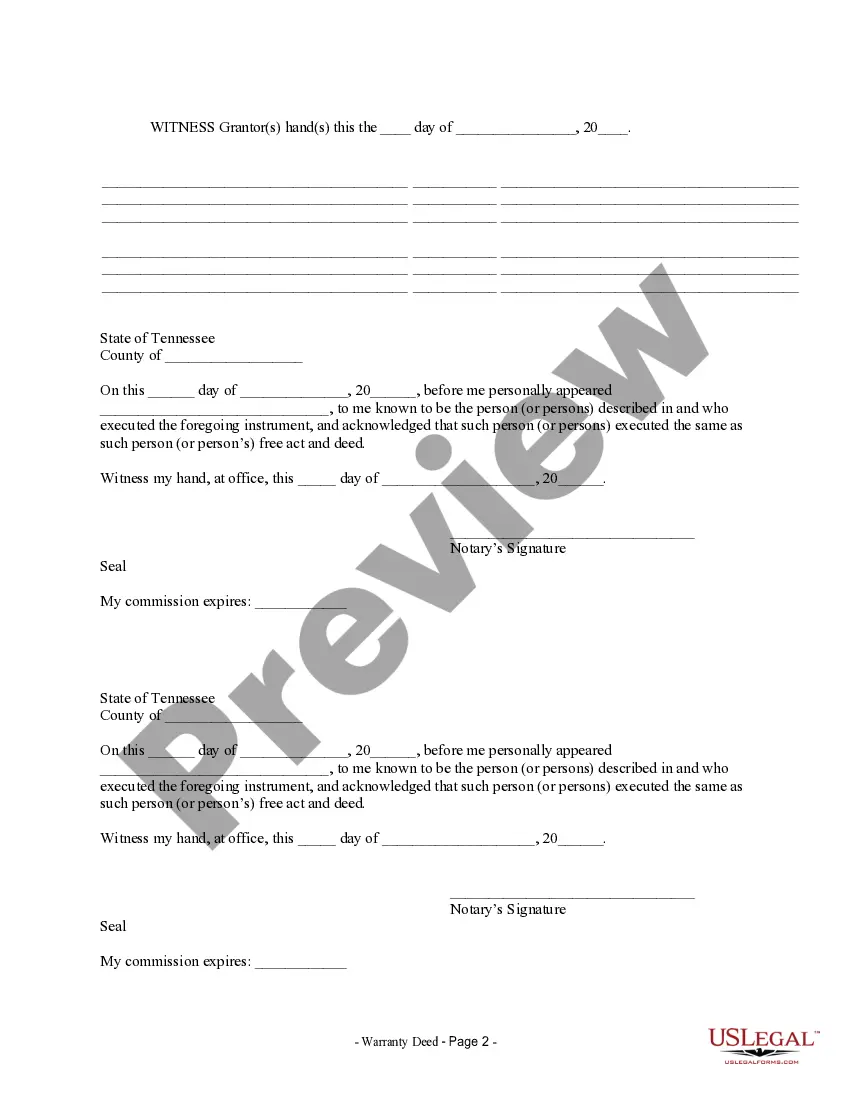
- Notary acknowledgment section to validate the deed upon signing.
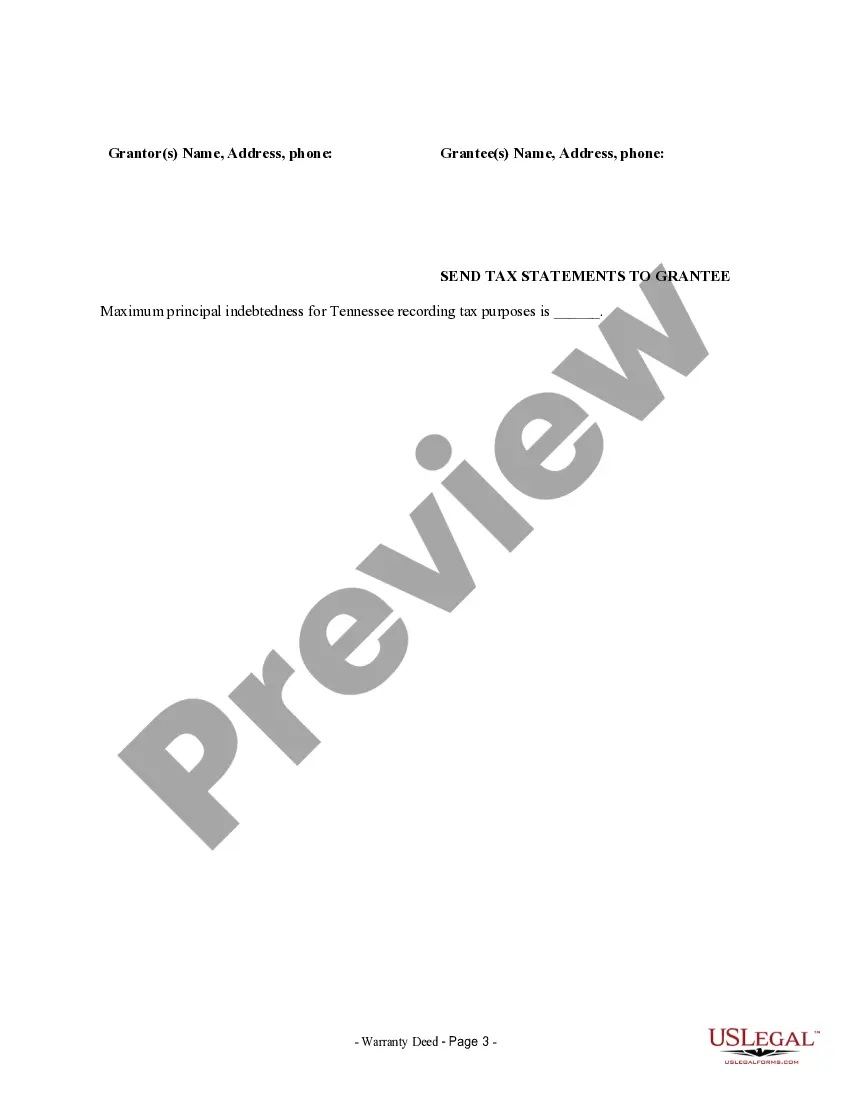
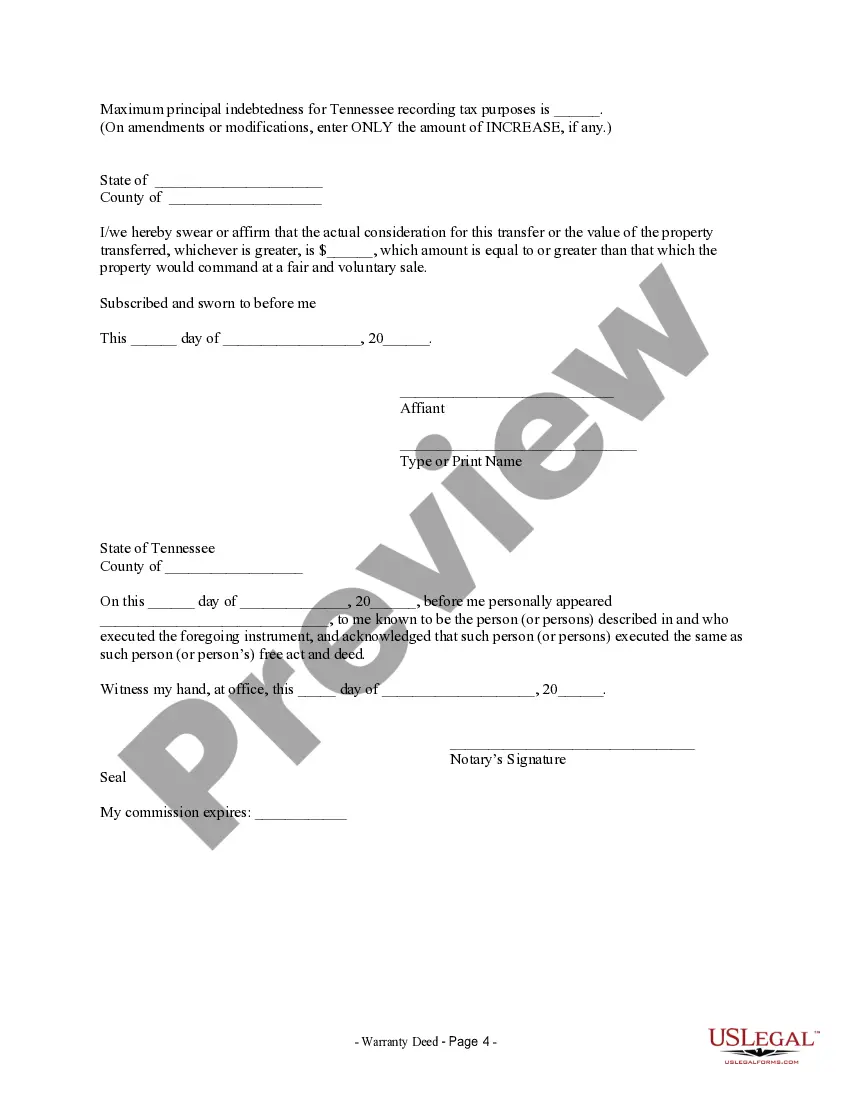
- Affidavit of consideration to declare the value of the transfer.




When to use this form
This form should be used when two individuals wish to convey real estate to a limited liability company. It is relevant in various scenarios, such as business partners transferring property into a corporate entity for operational use, or when individuals seek to limit personal liability by holding property under an LLC. This deed ensures all legal obligations and rights are clearly documented during the transfer process.
Who should use this form
This form is intended for:
- Individuals who are co-owners of a property and wish to transfer it to their LLC.
- Business partners looking to consolidate property ownership within their business structure.
- Real estate investors who wish to ensure properties are held under a legal entity for liability protection.
How to complete this form
- Identify the parties involved: enter the full names and addresses of both Grantors and the Grantee (LLC).
- Describe the property: provide a detailed description of the property being transferred, ensuring accuracy.
- Specify any reservations: indicate any oil, gas, or mineral rights being retained by the Grantors.
- Sign and date the document: both Grantors must sign in the presence of a notary.
- Complete the acknowledgment section: have the notary public sign and stamp the document to validate it.
Is notarization required?
Yes, this form must be notarized to be legally valid. The notarization process provides an extra layer of security and ensures the identities of the parties are verified. US Legal Forms offers integrated online notarization, available 24/7 via secure video calls, simplifying the process for users without the need for travel.
Get your form ready online
Our built-in tools help you complete, sign, share, and store your documents in one place.
Make edits, fill in missing information, and update formatting in US Legal Forms—just like you would in MS Word.
Download a copy, print it, send it by email, or mail it via USPS—whatever works best for your next step.
Sign and collect signatures with our SignNow integration. Send to multiple recipients, set reminders, and more. Go Premium to unlock E-Sign.
If this form requires notarization, complete it online through a secure video call—no need to meet a notary in person or wait for an appointment.
We protect your documents and personal data by following strict security and privacy standards.

Make edits, fill in missing information, and update formatting in US Legal Forms—just like you would in MS Word.

Download a copy, print it, send it by email, or mail it via USPS—whatever works best for your next step.

Sign and collect signatures with our SignNow integration. Send to multiple recipients, set reminders, and more. Go Premium to unlock E-Sign.

If this form requires notarization, complete it online through a secure video call—no need to meet a notary in person or wait for an appointment.

We protect your documents and personal data by following strict security and privacy standards.
Avoid these common issues
- Failing to include a complete and accurate property description.
- Not specifying any reservations for oil, gas, and minerals, leading to potential disputes.
- Neglecting to have the form notarized, rendering it ineffective in some jurisdictions.
- Omitting signatures from both Grantors.
Advantages of online completion
- Convenience of instant access and downloadable format for easy completion.
- Editability allows users to customize the form for their specific needs.
- Reliability ensured by templates reviewed by licensed attorneys for legal accuracy.
Main things to remember
- The Warranty Deed transfers property ownership from individuals to an LLC.
- It includes crucial details such as property description and any reserved rights.
- Proper notarization is essential for the document's effectiveness.
- Using this form helps protect against potential legal disputes regarding the title.
Looking for another form?







Form popularity
FAQ
In order to convey any real property or an interest in property in Tennessee, the deed must be in writing, acknowledged by the grantor, and registered in the county where the property is located. The Annotated Code of Tennessee allows for the transfer of real property through the usage of a variety of deeds.
When recorded, a special warranty deed conveys an interest in real property to the named grantee with limited warranties of title. In Tennessee, special warranty deeds are statutory.This means that the deed will not protect the grantee against title issues that arose prior to the time the grantor acquired title.
Retrieve your original deed. Get the appropriate deed form. Draft the deed. Sign the deed before a notary. Record the deed with the county recorder. Obtain the new original deed.
The original deed is returned to the owner of the property from the office of the recorder after proper entry. The office of the Recorder of Deeds maintains a set of indexes about each deed recorded, for an easy search. Almost all states have a grantor-grantee index including a reference to all documents recorded.
Typically, the lender will provide you with a copy of the deed of trust after the closing. The original warranty deeds are often mailed to the grantee after they are recorded. These are your original copies and should be kept in a safe place, such as a fireproof lockbox or a safe deposit box at a financial institution.
It is possible to transfer the ownership of a property to a family member as a gift, meaning no money exchanges hands. This differs to a Transfer of Equity, where the owner remains on the title and simply adds someone else to it.
Two of the most common ways to transfer property in a divorce are through an interspousal transfer deed or quitclaim deed. When spouses own property together, but then one spouse executes an interspousal transfer or a quitclaim deed, this is known as transmutation.
Tennessee deed forms convey interest in property from one party (the Grantor) to another (the Grantee). The documents can be prepared by anyone as long as the required information is written in the deed as outlined in § 66-5-103.