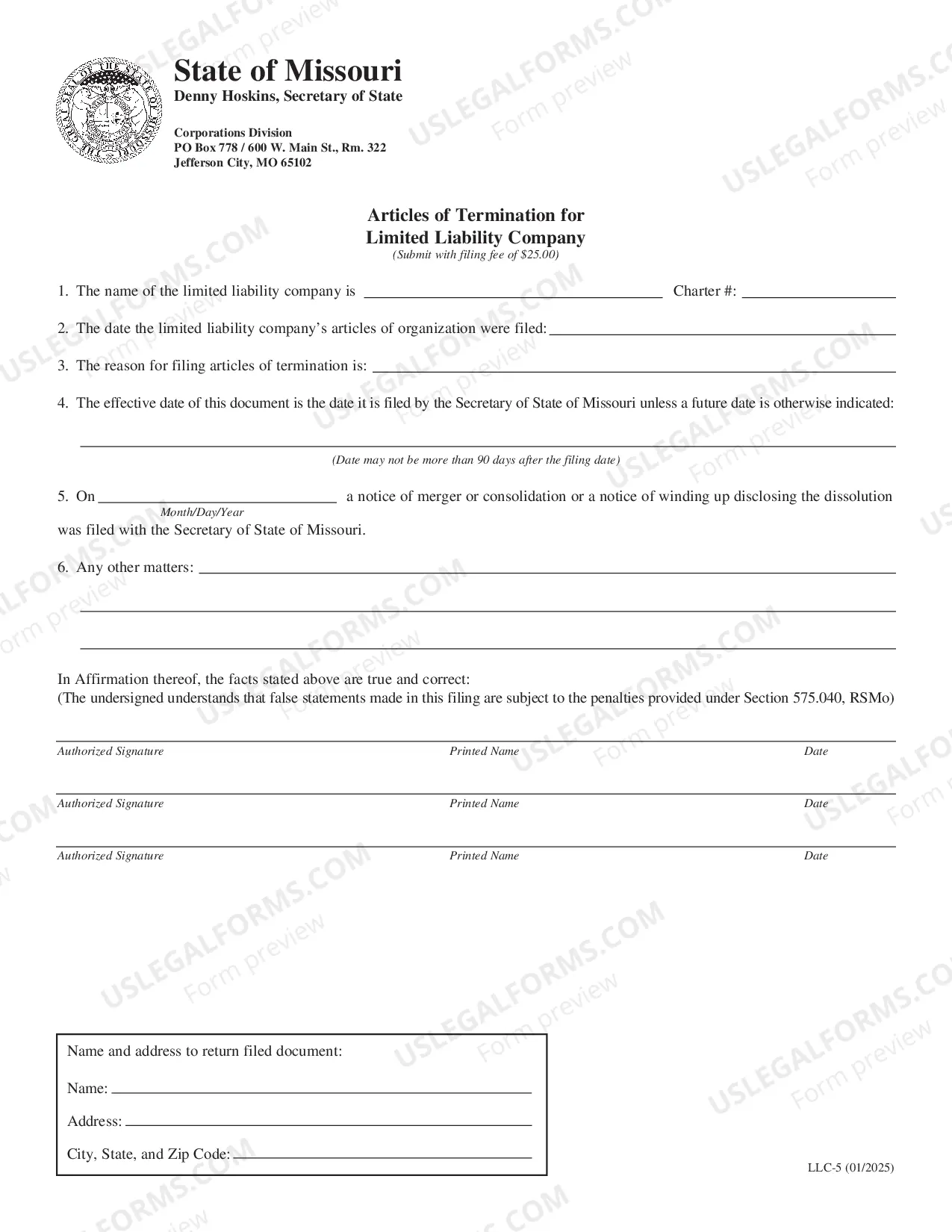
California Demurrer to Complaint - General
About this form
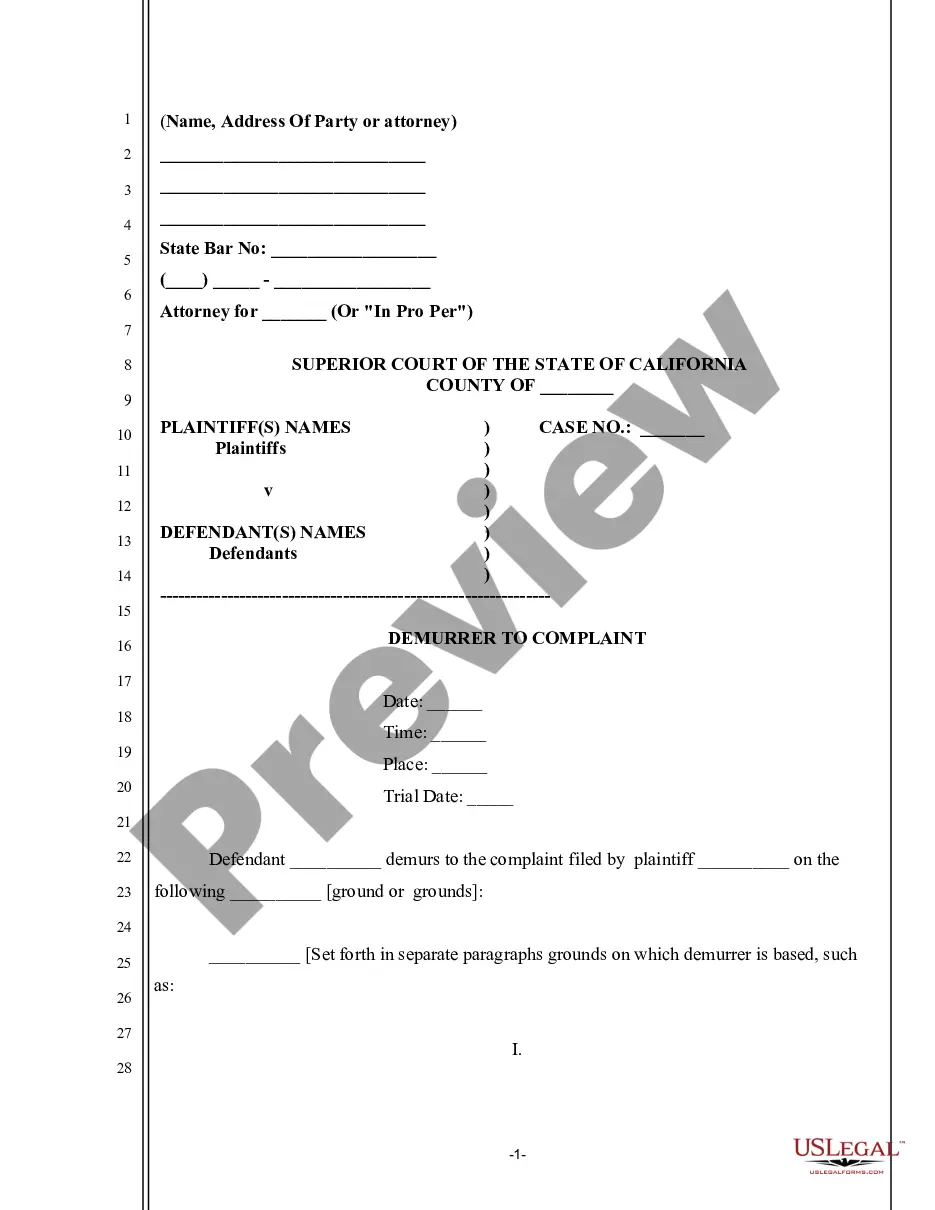
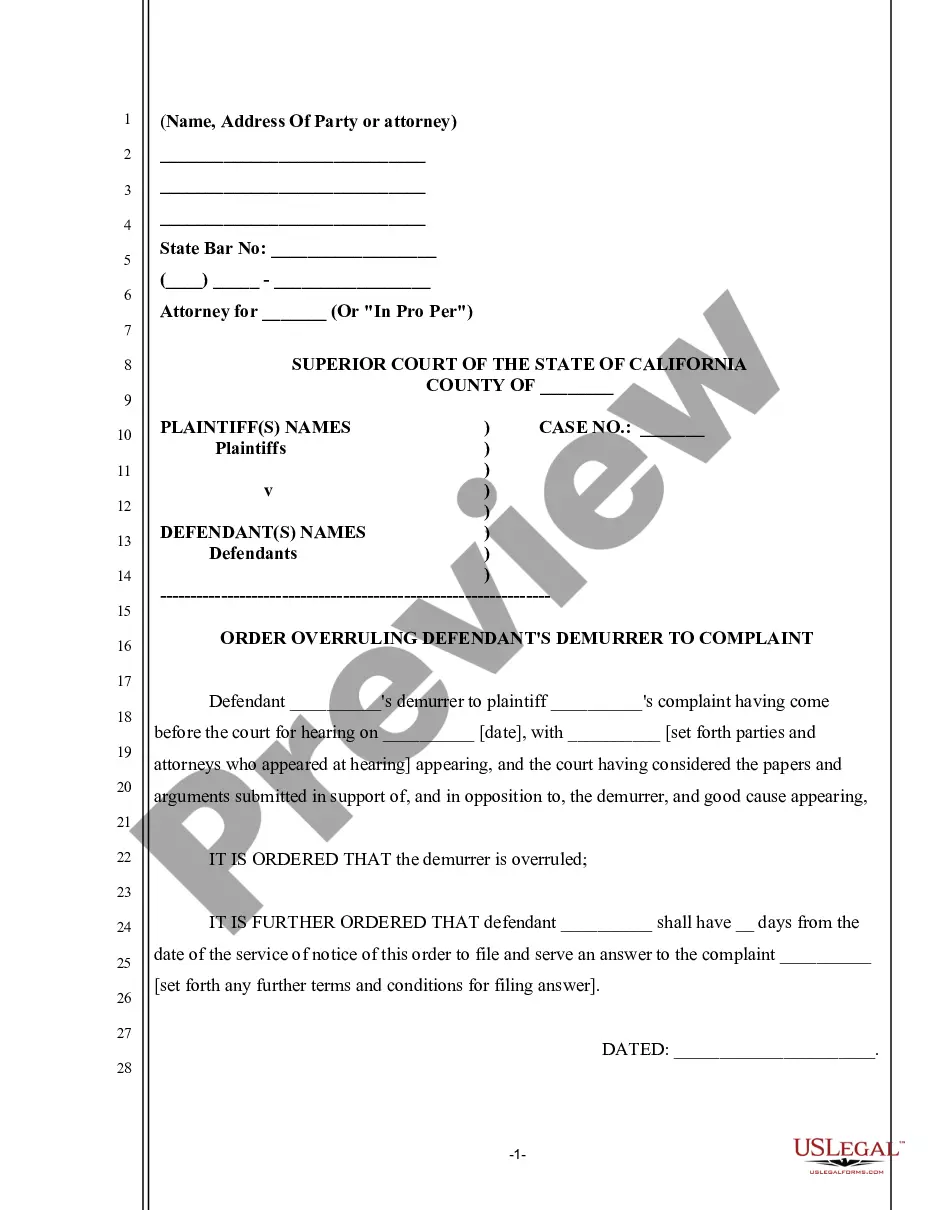
The Demurrer to Complaint is a legal document that allows a defendant to challenge the legal sufficiency of a complaint filed against them. This form is essential for defendants who believe that the complaint does not state a valid legal claim. It serves to request the court to dismiss the case without allowing the plaintiff to make amendments, distinguishing it from other responsive pleadings such as answers or motions to dismiss.
What’s included in this form
- Date and time of the scheduled hearing
- Defendant's name and signature
- Statement of grounds for the demurrer
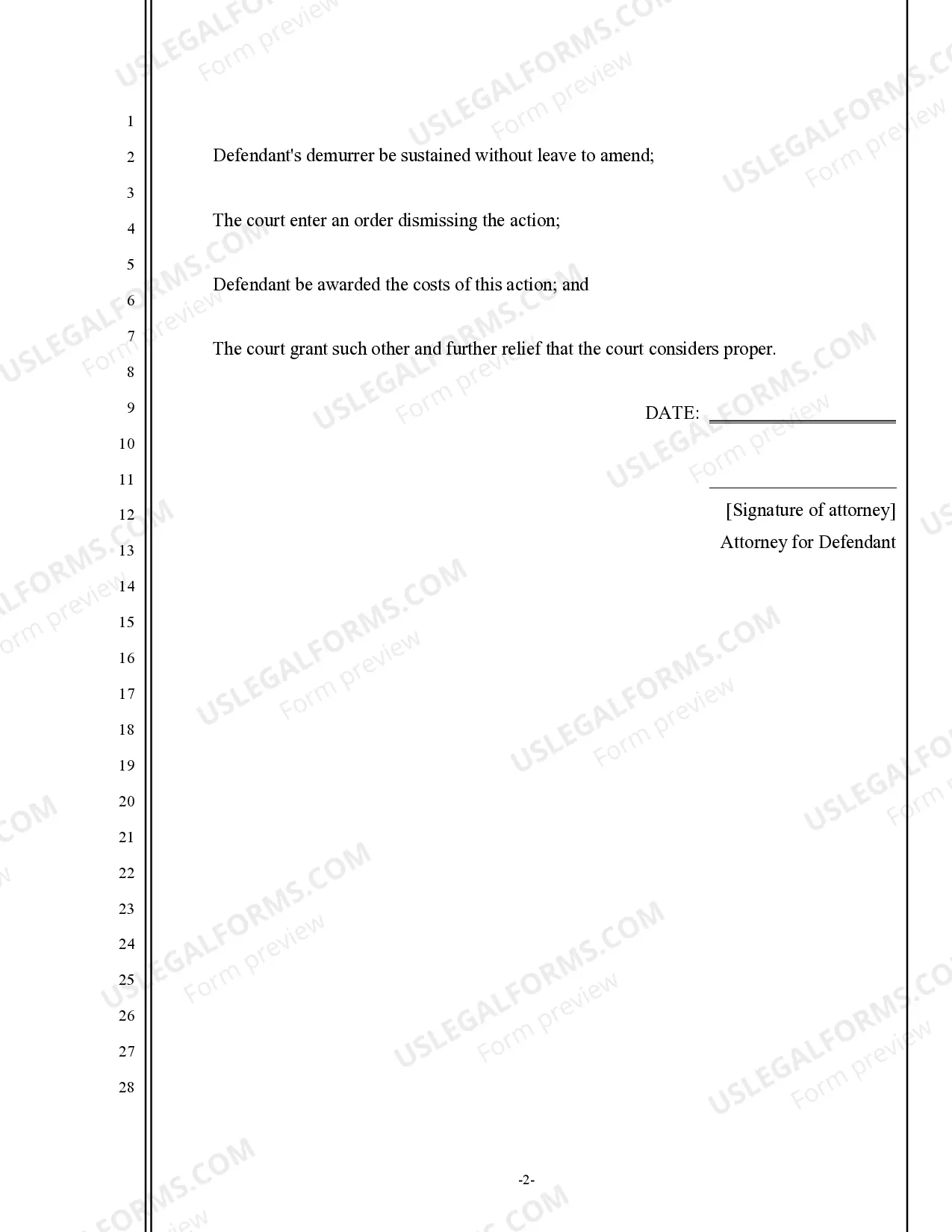
- Request for the court to dismiss the action without leave to amend
- Request for costs of the action
When to use this form
This form is used when a defendant wants to contest the legal validity of the allegations made in a complaint. It is appropriate in situations where the defendant believes that the court lacks jurisdiction over the matter or that the complaint fails to state sufficient facts to support a cause of action. Using this form can help streamline legal proceedings by potentially resolving the issue before it goes to trial.
Intended users of this form
- Individuals or corporations named as defendants in a lawsuit
- Defendants who seek to challenge the sufficiency of the plaintiffâs claim
- Anyone representing themselves in a legal matter (In Pro Per)
Instructions for completing this form
- Identify and enter the names of the parties involved in the case.
- Provide the case number assigned by the court.
- Fill in the date, time, and location of the hearing.
- Clearly state the grounds for demurring to the complaint in separate paragraphs.
- Sign and date the form, including the attorney's name or indicate if representing yourself.
Is notarization required?
This form does not typically require notarization unless specified by local law.
Get your form ready online
Our built-in tools help you complete, sign, share, and store your documents in one place.
Make edits, fill in missing information, and update formatting in US Legal Forms—just like you would in MS Word.
Download a copy, print it, send it by email, or mail it via USPS—whatever works best for your next step.
Sign and collect signatures with our SignNow integration. Send to multiple recipients, set reminders, and more. Go Premium to unlock E-Sign.
If this form requires notarization, complete it online through a secure video call—no need to meet a notary in person or wait for an appointment.
We protect your documents and personal data by following strict security and privacy standards.

Make edits, fill in missing information, and update formatting in US Legal Forms—just like you would in MS Word.

Download a copy, print it, send it by email, or mail it via USPS—whatever works best for your next step.

Sign and collect signatures with our SignNow integration. Send to multiple recipients, set reminders, and more. Go Premium to unlock E-Sign.

If this form requires notarization, complete it online through a secure video call—no need to meet a notary in person or wait for an appointment.

We protect your documents and personal data by following strict security and privacy standards.
Avoid these common issues
- Failing to specify the grounds for the demurrer clearly.
- Not including the proper case number or party names.
- Missing deadlines for submitting the demurrer after being served with the complaint.
Why use this form online
- Convenient access to legal forms anytime, enabling quick preparation.
- Easy editing and customization of forms to meet specific needs.
- Reliability and accuracy, with templates drafted by licensed attorneys.
Summary of main points
- The Demurrer to Complaint helps challenge the validity of a legal claim.
- Proper completion and timely filing are crucial for effectiveness.
- Understand the specific grounds on which you are demurring to strengthen your case.
Looking for another form?

Form popularity
FAQ
To write a California Demurrer to Complaint - General, begin by stating the grounds for your demurrer clearly, followed by a summary of the relevant facts. Include legal authority supporting your position and articulate why the complaint fails to meet legal standards. Using resources like US Legal Forms can simplify this process by providing templates and guidance tailored to California laws. Following these steps can help ensure that your demurrer meets court requirements.
You might say, 'After reviewing the allegations thoroughly, we decided to file a California Demurrer to Complaint - General to challenge its foundational validity.' This sentence demonstrates the practical application of a demurrer in a legal context. Such usage clearly indicates your intention to contest a complaint’s legal sufficiency. It’s helpful for clearly expressing your legal strategy in discussions or documents.
An example of a California Demurrer to Complaint - General could involve a situation where the complaint fails to state facts that state a cause of action. For instance, if a plaintiff files a complaint alleging breach of contract, but does not include enough details about the terms of the contract, a demurrer can be filed. This demurrer challenges the foundation of the complaint itself. Notably, using the appropriate legal language is crucial when presenting this type of argument.
A California Demurrer to Complaint - General challenges a complaint's legal sufficiency without addressing the specific details. In contrast, a specific demurrer points to particular defects or issues within the complaint. Understanding this distinction helps you determine the most effective approach for your legal strategy. Choosing the right type of demurrer is vital for a successful defense.
When a demurrer is overruled in California, the case continues, and the plaintiff is typically allowed to amend the complaint to address specific legal concerns. This ruling signifies that the court finds the complaint has sufficient merit to proceed, often pushing both parties towards a potential trial or settlement. Following an overruled demurrer, it's important to prepare for the next steps efficiently. For comprehensive support during this process of California Demurrer to Complaint - General, consider exploring resources on USLegalForms.
In California, the timeline to oppose a demurrer typically requires your response to be filed within 10 days after the demurrer is served. This time frame can feel tight, so act promptly to ensure that your opposition is thorough and well-prepared. Understanding this deadline is essential in the context of California Demurrer to Complaint - General to maintain your rights in the legal process. For further assistance, consider utilizing USLegalForms to streamline your documents and filings.
The distinction between a general and special demurrer in California lies in their focus. A general demurrer asserts that the complaint is not legally sufficient on its face, while a special demurrer targets specific issues, such as lack of clarity or ambiguity. Knowing this difference is crucial, as it influences how you approach your legal strategy. If you find yourself dealing with California Demurrer to Complaint - General, be sure to clearly identify which type of demurrer applies to your situation.
A demurrer to form complaint in California is a legal objection that argues the complaint does not meet the necessary legal standards. Essentially, it challenges the sufficiency of the complaint's structure rather than its content. This is a critical step in the legal process, as it allows the defendant to assert that the complaint is not valid before any substantive issues are debated. For those navigating California Demurrer to Complaint - General, understanding this aspect is vital in preparing a strong defense.
An example of a general demurrer includes a situation where a plaintiff files a complaint alleging breach of contract without stating the essential elements of the agreement. In this case, the defendant can file a demurrer asserting that the complaint fails to show a valid claim. This action effectively stops the case unless the plaintiff can fix the deficiencies. Utilizing uslegalforms can provide examples and templates, guiding you through the process.
In California, a general demurrer challenges the overall sufficiency of a complaint, asserting that no valid legal claim exists. Conversely, a special demurrer pinpoints specific issues in the pleadings, like vagueness or ambiguity. Knowing these differences enables you to select the appropriate response strategy when facing a California demurrer to complaint. Consulting resources like uslegalforms can further clarify these aspects.