California Order Overruling Defendants Demurrer to Complaint
What is this form?
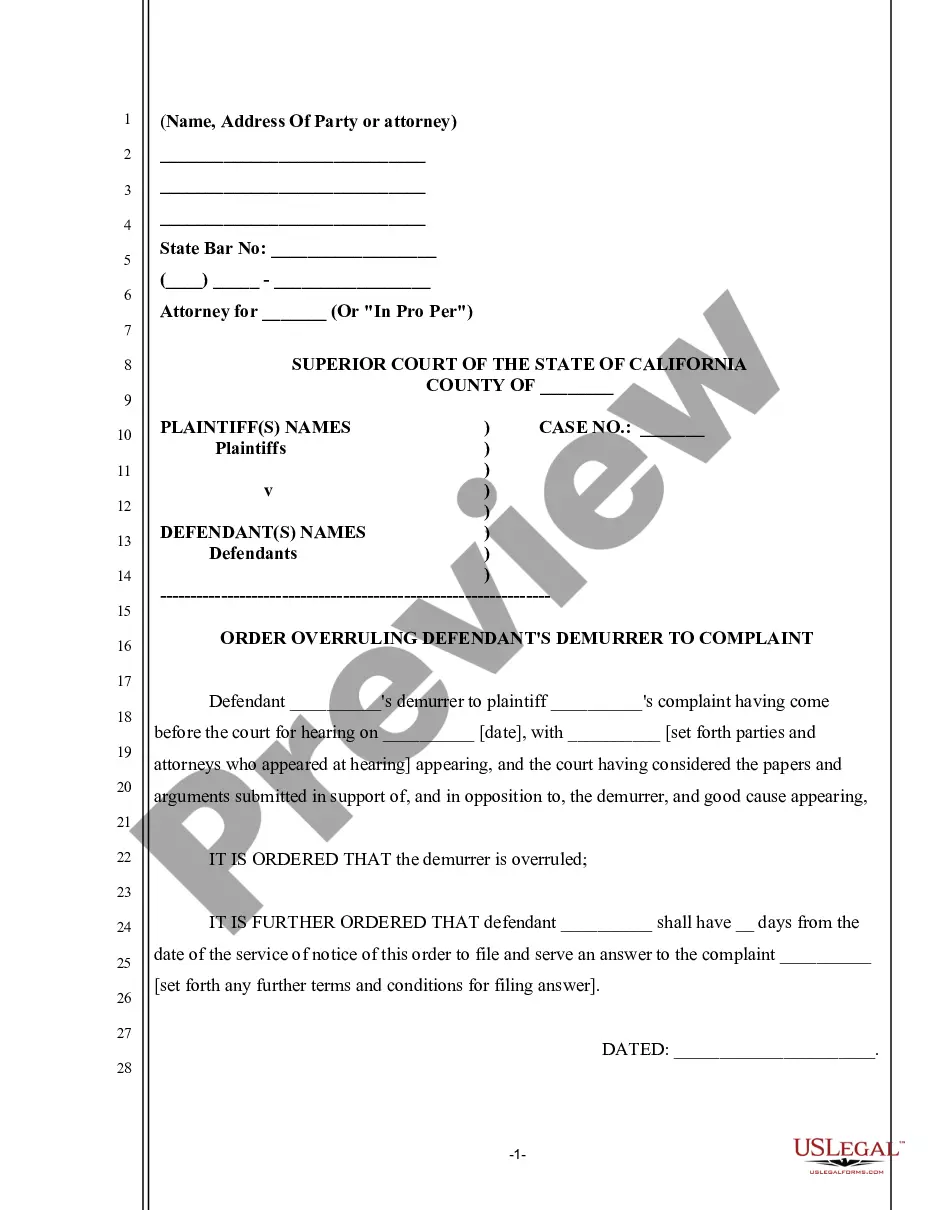
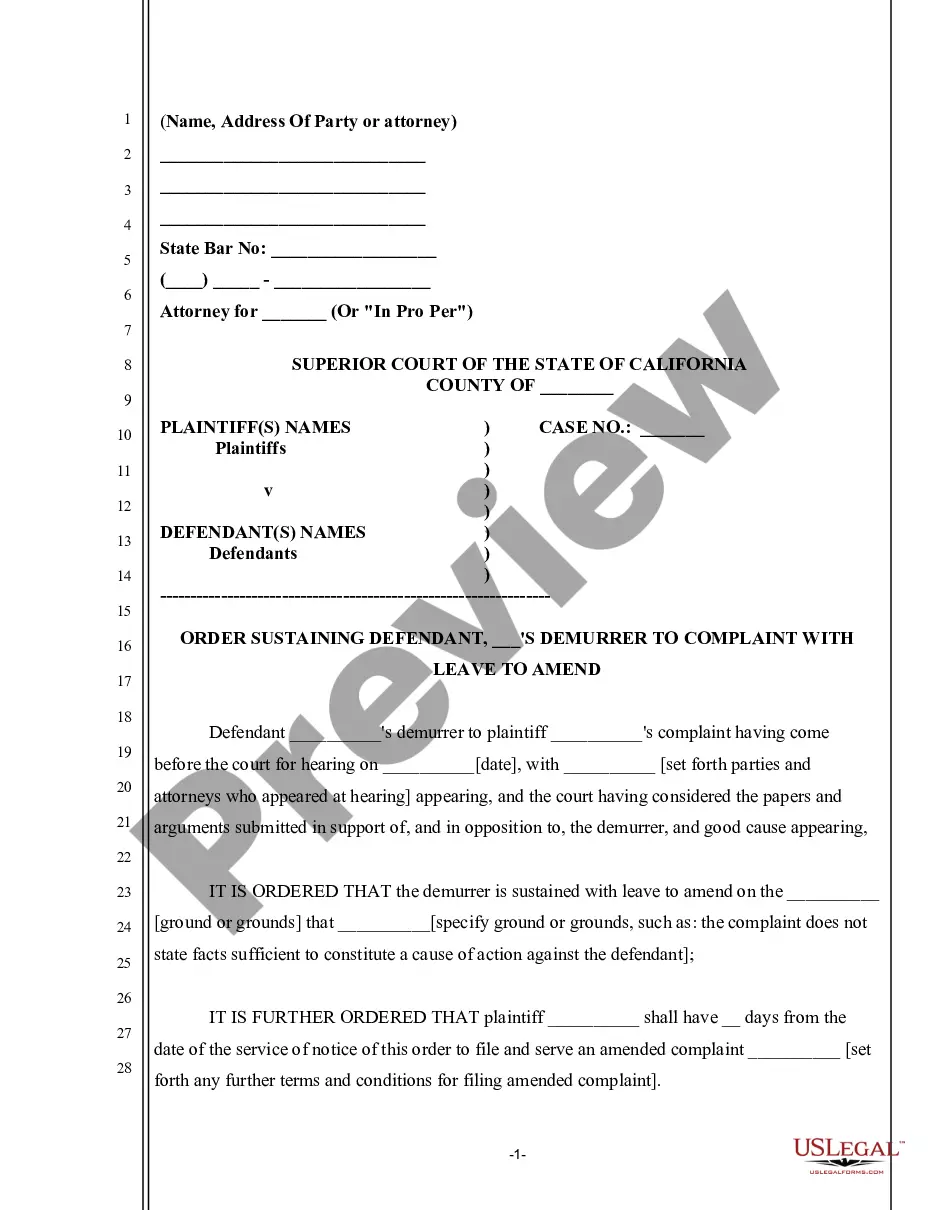
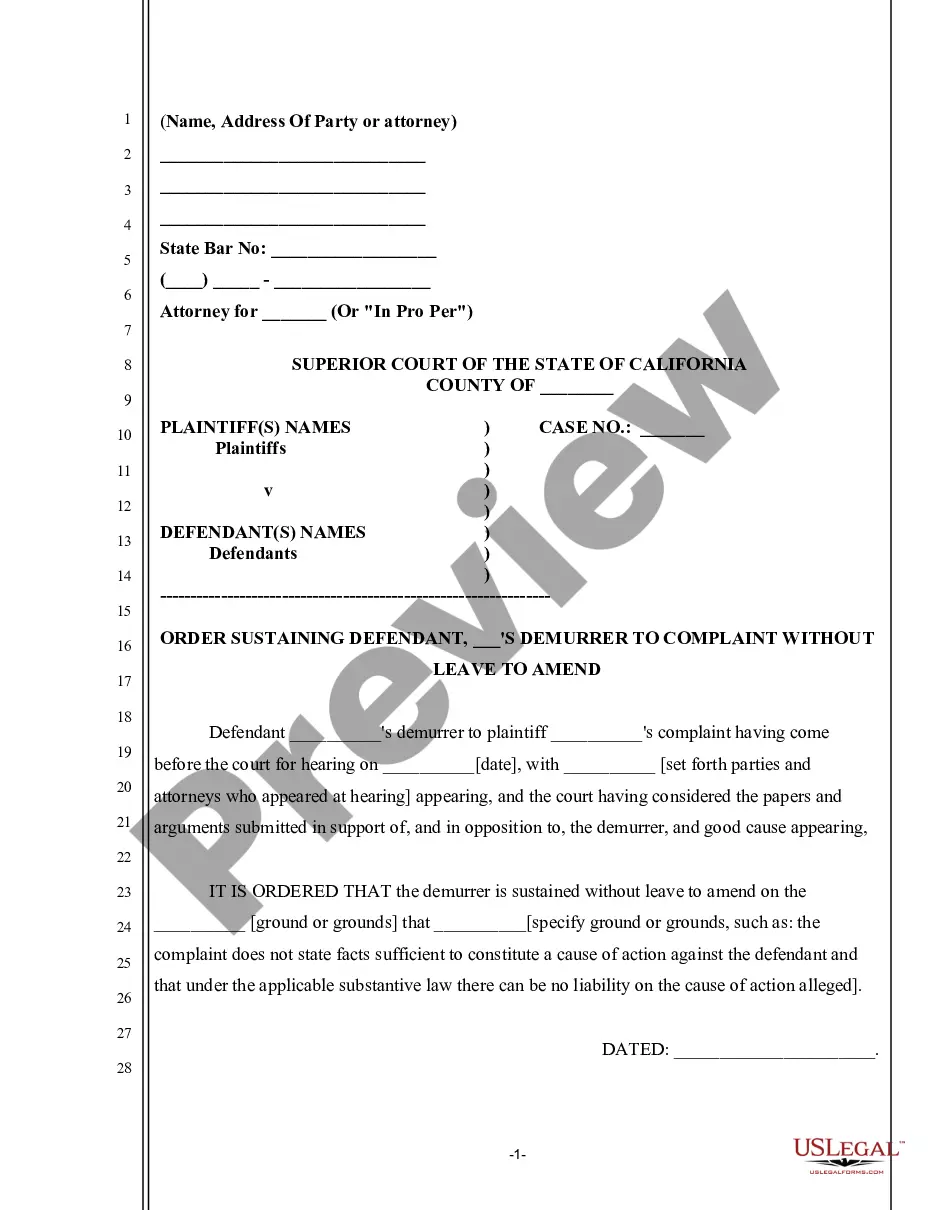
The Order Overruling Defendant's Demurrer to Complaint is a legal document used in civil court proceedings. This form formally dismisses a defendant's objection, known as a demurrer, to the plaintiff's complaint. It is important because it moves the litigation forward and compels the defendant to respond to the plaintiff's claims.
Main sections of this form
- Information on the attorney and their State Bar number.
- Details regarding the plaintiff and defendant, including names.
- The case number assigned by the court.
- The date and location of the court hearing.
- The judge's ruling, which states that the demurrer is overruled.
- A directive for the defendant to file an answer to the complaint within a specified time frame.
When this form is needed
This form is used after a defendant files a demurrer against a plaintiff's complaint in a civil case. If the court finds that the demurrer lacks merit, this order is required to officially override it, allowing the case to proceed. You should use this form to ensure that the defendant is mandated to respond to the allegations made in the complaint.
Who can use this document
This form is designed for:
- Plaintiffs who have received a demurrer filed by the defendant.
- Attorneys representing either the plaintiffs or defendants in civil matters.
- Individuals representing themselves in court (In Pro Per).
Steps to complete this form
- Enter the names and contact details of the attorney or indicate if you are representing yourself.
- Fill in the names of the plaintiffs and defendants involved in the case.
- Specify the case number assigned by the court.
- Include the hearing date and any parties that were present.
- State the ruling that the demurrer is overruled and specify the timeframe the defendant has to respond.
- Ensure the form is signed by the presiding judge to validate the order.
Does this document require notarization?
In most cases, this form does not require notarization. However, some jurisdictions or signing circumstances might. US Legal Forms offers online notarization powered by Notarize, accessible 24/7 for a quick, remote process.
Get your form ready online
Our built-in tools help you complete, sign, share, and store your documents in one place.
Make edits, fill in missing information, and update formatting in US Legal Forms—just like you would in MS Word.
Download a copy, print it, send it by email, or mail it via USPS—whatever works best for your next step.
Sign and collect signatures with our SignNow integration. Send to multiple recipients, set reminders, and more. Go Premium to unlock E-Sign.
If this form requires notarization, complete it online through a secure video call—no need to meet a notary in person or wait for an appointment.
We protect your documents and personal data by following strict security and privacy standards.

Make edits, fill in missing information, and update formatting in US Legal Forms—just like you would in MS Word.

Download a copy, print it, send it by email, or mail it via USPS—whatever works best for your next step.

Sign and collect signatures with our SignNow integration. Send to multiple recipients, set reminders, and more. Go Premium to unlock E-Sign.

If this form requires notarization, complete it online through a secure video call—no need to meet a notary in person or wait for an appointment.

We protect your documents and personal data by following strict security and privacy standards.
Common mistakes
- Failing to include the exact date of the court hearing.
- Not providing the correct case number.
- Leaving out the judge's signature, which is crucial for the order's validity.
- Inaccurately identifying the parties involved in the case.
Benefits of completing this form online
- Convenient and accessible; can be downloaded and filled out anywhere.
- Editability allows for corrections before submission to the court.
- Reliable and professionally drafted to adhere to legal standards.
Looking for another form?
Form popularity
FAQ
To file a demurrer in California, you must prepare a written response that challenges the legal sufficiency of the complaint. This involves clearly stating the reasons why the complaint is insufficient and filing it with the appropriate court. After filing, you must serve the demurrer to all involved parties and attend the hearing to present your argument. For detailed guidance, consider using US Legal Forms, which provides valuable templates and resources for filing a demurrer.
Yes, you can amend a complaint even after a California Order Overruling Defendants Demurrer to Complaint. This action allows you to address the issues raised in the demurrer and strengthen your case. It is important to follow the proper procedures and timelines for amending your complaint as outlined by California law. Utilizing resources like US Legal Forms can help you navigate this process effectively.
When responding to a complaint, it is essential to use clear and precise language that communicates your position. Use phrases such as 'I deny,' 'I admit,' or 'I have insufficient information' to articulate your responses. It's vital to maintain professionalism and clarity in your narrative, ensuring that you address the concerns related to the California Order Overruling Defendants Demurrer to Complaint adequately.
The four most important parts of a complaint include the statement of jurisdiction, the facts of the case, the legal claims, and the prayer for relief. These components outline the basis for the court's authority, the factual background, the laws violated, and the specific relief sought by the plaintiff. Understanding these parts is essential for effectively crafting your response and addressing the California Order Overruling Defendants Demurrer to Complaint.
A defendant can respond to a complaint in several ways: by filing an answer, submitting a demurrer, entering a motion to dismiss, requesting a motion for summary judgment, or preparing a counterclaim. Each option allows for different legal strategies and can lead to varied outcomes in court. Choosing the right response is crucial and can significantly affect your stance in the case, including issues like the California Order Overruling Defendants Demurrer to Complaint.
If you fail to respond to a complaint, the court may issue a default judgment against you. This judgment often means you lose the case without having the opportunity to present your arguments or defenses. Additionally, a default can have long-lasting impacts on your rights and obligations, emphasizing the importance of addressing the California Order Overruling Defendants Demurrer to Complaint effectively.
An example of a demurrer to a complaint could be arguing that the complaint fails to state a claim upon which relief can be granted. This might happen when essential elements of a legal claim are missing or when the law does not recognize the claim presented. In such cases, you can request the court to dismiss the complaint based on its insufficiencies, directly relating to the California Order Overruling Defendants Demurrer to Complaint.
To write a demurrer in California, start by citing the specific laws that support your objections to the complaint. Clearly outline the legal grounds for your demurrer, indicating any flaws or defects in the complaint’s structure that may warrant dismissal. Ensure your document is well-organized, and remember to file it within the designated time frame for a proper review. This process is critical when dealing with the California Order Overruling Defendants Demurrer to Complaint.
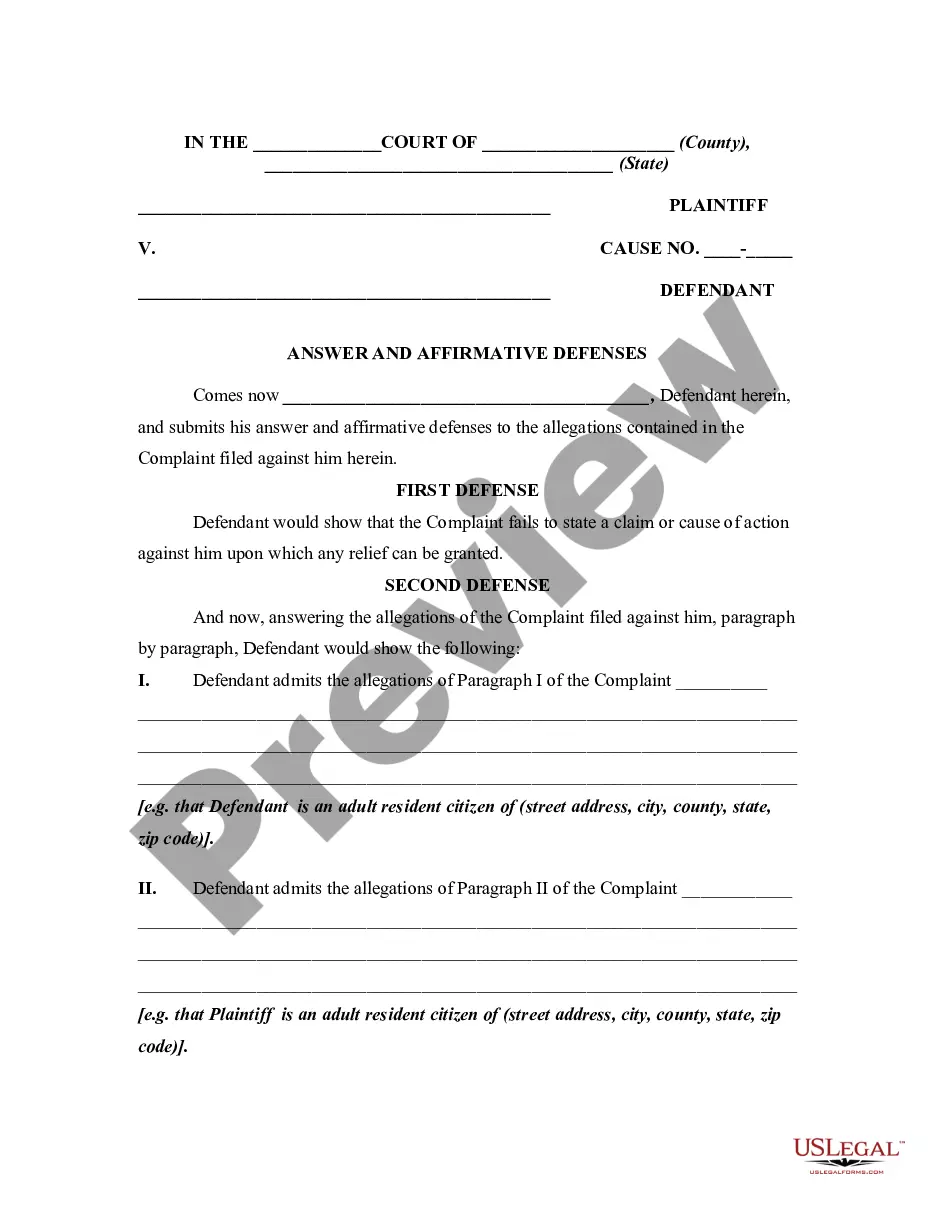
To respond to a complaint, begin by drafting an appropriate legal document called an answer. In your response, address each allegation made in the complaint clearly and concisely. For instance, if the complaint states a fact, you can either admit, deny, or state that you lack sufficient information to respond. It is crucial to promptly file your answer to avoid a default judgment against you, which relates to the California Order Overruling Defendants Demurrer to Complaint.
In court, a demurrer is a formal objection to a complaint, asserting that even if the allegations are true, there is no legal basis for a lawsuit. It serves as a tool for defendants to challenge the sufficiency of claims before moving forward. Understanding its implications is essential, especially after a California Order Overruling Defendants Demurrer to Complaint, as it shapes case strategies.