Tennessee Warranty Deed from Husband and Wife to Husband and Wife
What is this form?
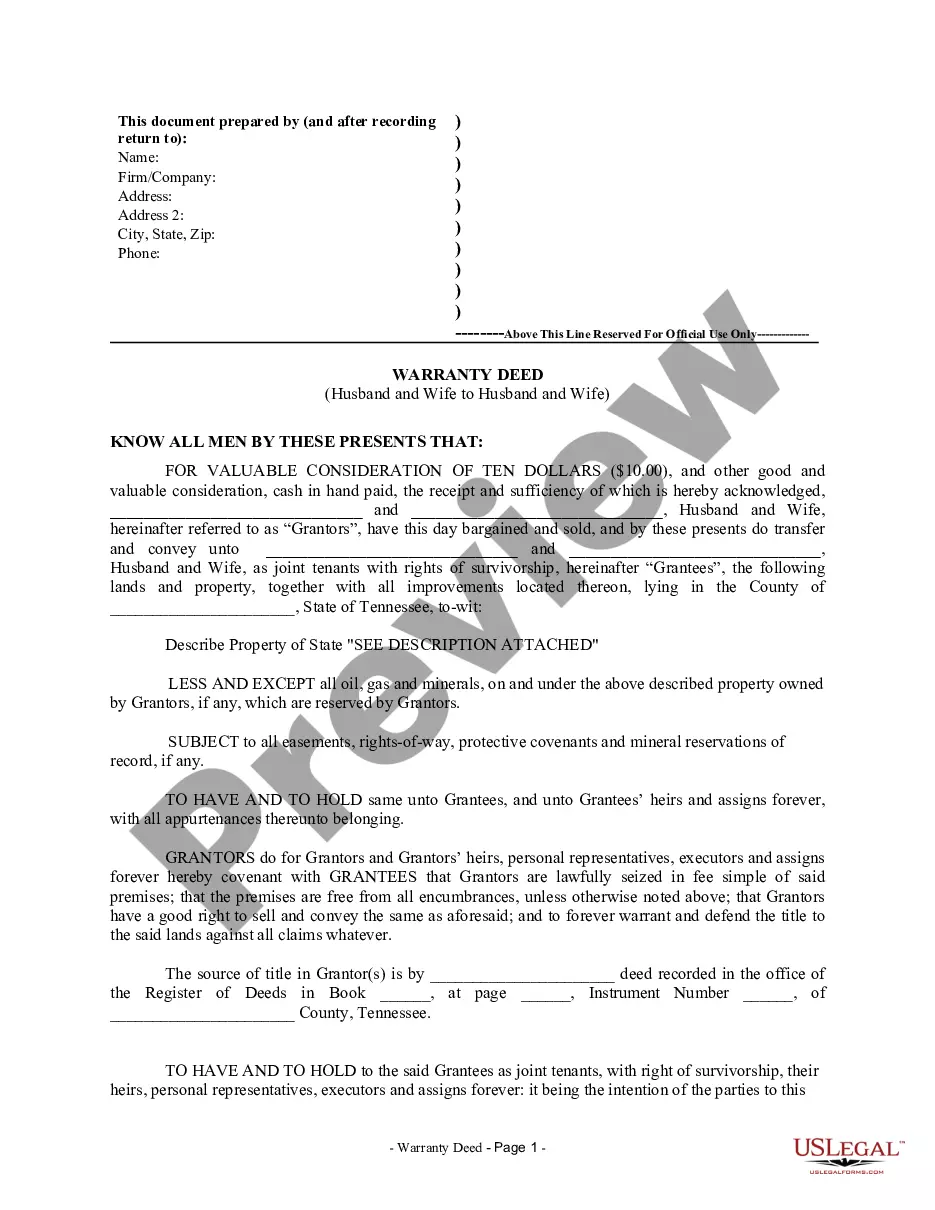
The Warranty Deed from Husband and Wife to Husband and Wife is a legal document used to transfer property ownership between married couples. This form ensures that the grantors, both being husband and wife, convey their interest in the property to themselves as joint tenants, while also protecting their rights and defining future inheritance. Unlike other types of deeds, this warranty deed includes a covenant that guarantees the property is free from liens or claims, except for those noted in the document.
Key components of this form
- Description of the property being transferred.
- Grantors' and grantees' names and signatures.
- Covenant of seisin assuring the grantees that the property is free of claims.
- Reservation of oil, gas, and mineral rights by the grantors.
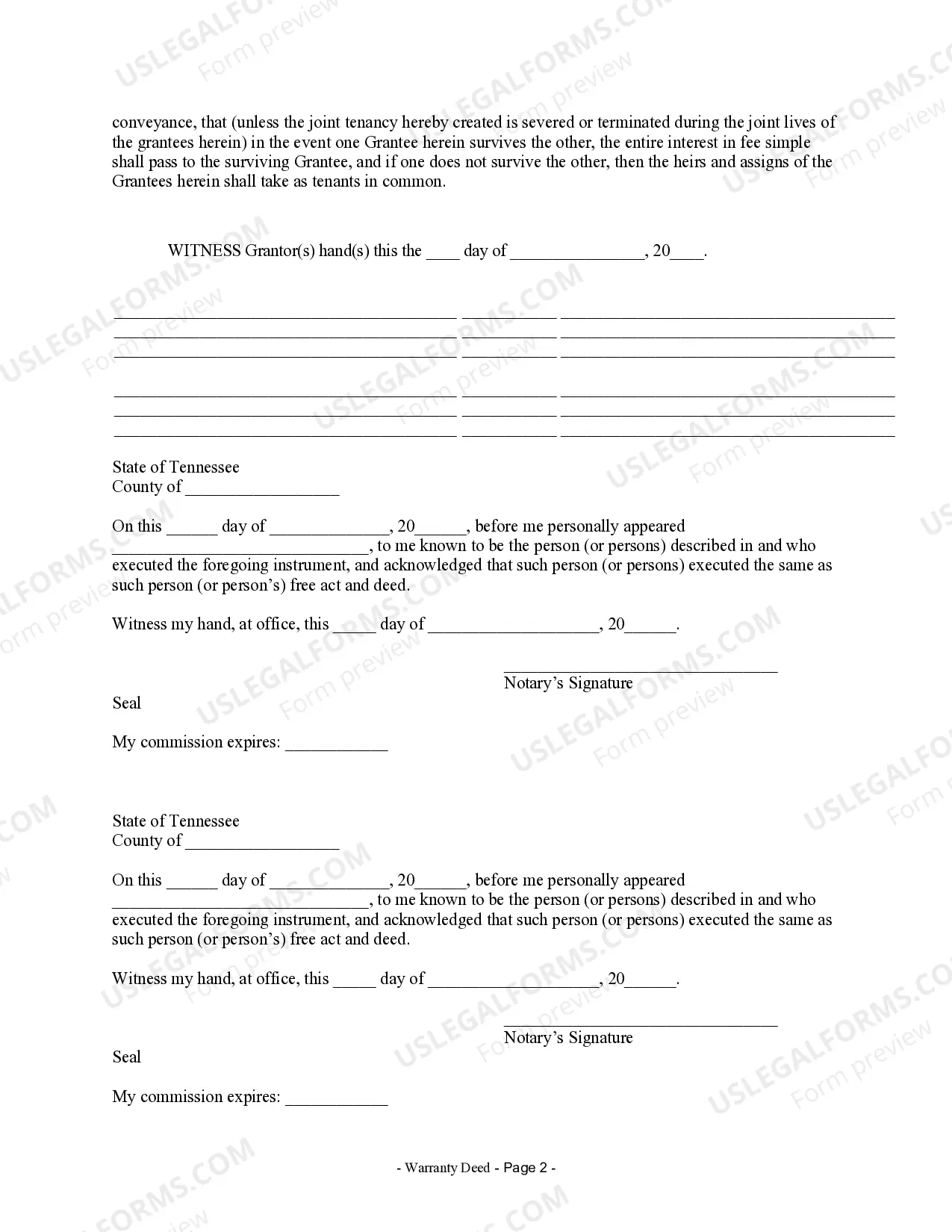
- Joint tenancy provision with right of survivorship.
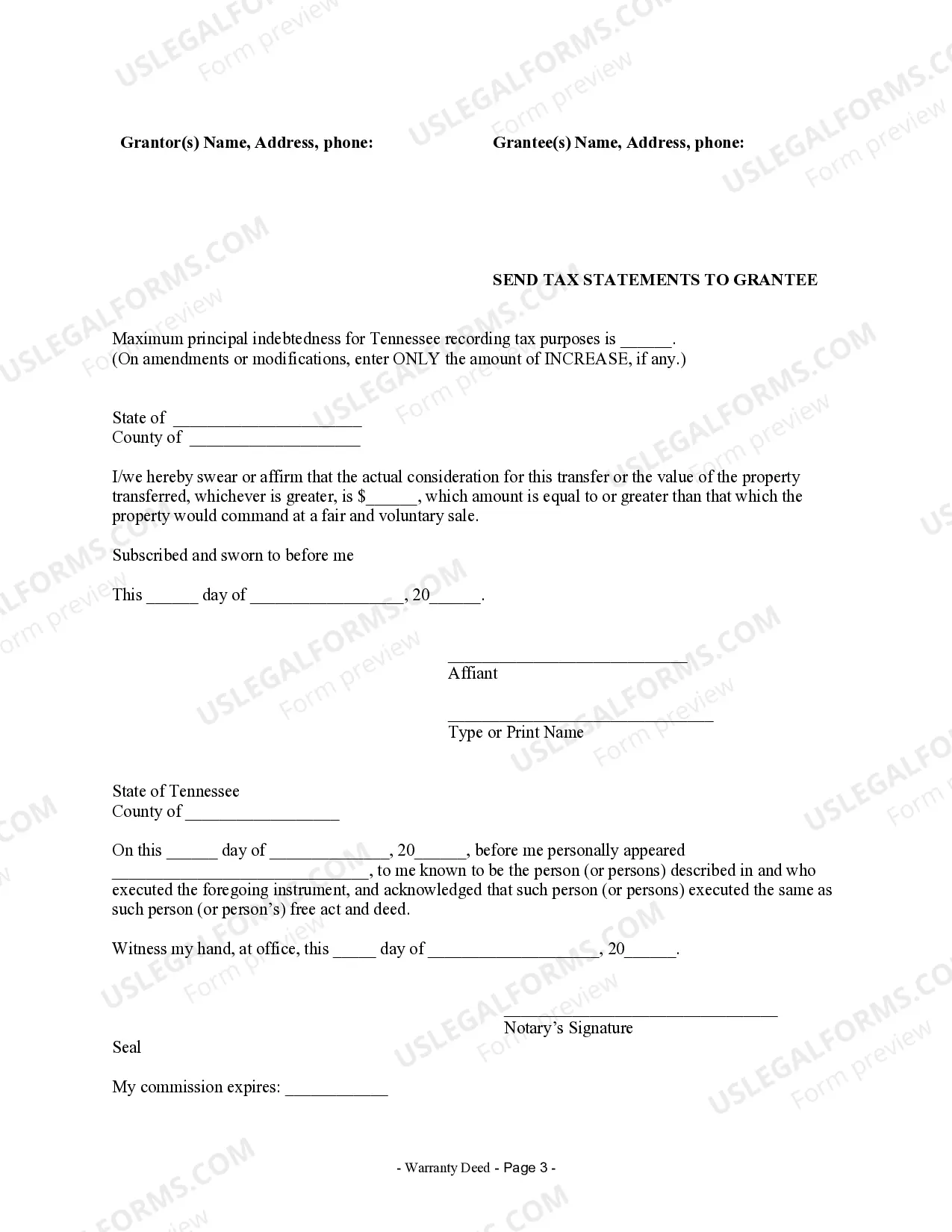
- Notary acknowledgment for legally binding effect.




When to use this form
This form is ideal when a married couple wants to transfer ownership of property to themselves, either for estate planning, tax planning, or creating a joint ownership arrangement. It can also be beneficial when one spouse wants to ensure that the other maintains ownership rights in the event of one spouse's death, thereby simplifying the transfer of property at that time.
Intended users of this form
This warranty deed is intended for:
- Married couples looking to consolidate property ownership.
- Individuals seeking to clarify property rights and responsibilities.
- Couples engaging in estate planning to provide rights of survivorship.
How to complete this form
- Identify the grantors and grantees in the document.
- Provide a clear description of the property being transferred.
- Specify any reservations or exceptions, like mineral rights.
- Include the signatures of both grantors, along with the date.
- Obtain a notary acknowledgment to finalize the deed.
Notarization requirements for this form
Yes, this form must be notarized to be legally valid. US Legal Forms offers integrated online notarization, allowing you to complete the notarization process through secure video calls, available 24/7, ensuring a convenient and legally sound experience without the need for in-person visits.
Get your form ready online
Our built-in tools help you complete, sign, share, and store your documents in one place.
Make edits, fill in missing information, and update formatting in US Legal Forms—just like you would in MS Word.
Download a copy, print it, send it by email, or mail it via USPS—whatever works best for your next step.
Sign and collect signatures with our SignNow integration. Send to multiple recipients, set reminders, and more. Go Premium to unlock E-Sign.
If this form requires notarization, complete it online through a secure video call—no need to meet a notary in person or wait for an appointment.
We protect your documents and personal data by following strict security and privacy standards.

Make edits, fill in missing information, and update formatting in US Legal Forms—just like you would in MS Word.

Download a copy, print it, send it by email, or mail it via USPS—whatever works best for your next step.

Sign and collect signatures with our SignNow integration. Send to multiple recipients, set reminders, and more. Go Premium to unlock E-Sign.

If this form requires notarization, complete it online through a secure video call—no need to meet a notary in person or wait for an appointment.

We protect your documents and personal data by following strict security and privacy standards.
Avoid these common issues
- Failing to properly identify the property, leading to ambiguity.
- Not including all necessary grantor and grantee signatures.
- Omitting notarization, which may invalidate the deed.
- Using outdated or incorrect legal terminology.
Why complete this form online
- Convenience of completing the form at your own pace.
- Editability allows you to customize details as needed.
- Access to templates prepared by licensed attorneys for reliability.
- Immediate download for faster processing.
Looking for another form?





Form popularity
FAQ
To add a co-owner, the bank would have to create a new home loan agreement, which must be registered after paying the due stamp duty and registration charges. The bank would also insist on making the co-owner a co-borrower in the home loan applicable.
A deed that conveys an interest in your real estate ownership (adds someone on) has the legal effect of giving that additional person the same bundle of rights to which you are entitled. Once the conveyance happens, it cannot be undone except with that other additional owner's consent.
Two of the most common ways to transfer property in a divorce are through an interspousal transfer deed or quitclaim deed. When spouses own property together, but then one spouse executes an interspousal transfer or a quitclaim deed, this is known as transmutation.
To add a spouse to a deed, all you have to do is literally fill out, sign and record a new deed in your county recorder's office.
If you've recently married and already own a home or other real estate, you may want to add your new spouse to the deed for your property so the two of you own it jointly. To add a spouse to a deed, all you have to do is literally fill out, sign and record a new deed in your county recorder's office.
In California, all property bought during the marriage with income that was earned during the marriage is deemed "community property." The law implies that both spouses own this property equally, regardless of which name is on the title deed.
Adding someone to your house deed requires the filing of a legal form known as a quitclaim deed. When executed and notarized, the quitclaim deed legally overrides the current deed to your home. By filing the quitclaim deed, you can add someone to the title of your home, in effect transferring a share of ownership.
It is possible to be named on the title deed of a home without being on the mortgage. However, doing so assumes risks of ownership because the title is not free and clear of liens and possible other encumbrances.If a mortgage exists, it's best to work with the lender to make sure everyone on the title is protected.
It's often easier to qualify for a joint mortgage, because both spouses can contribute income and assets to the application. However, if one spouse can qualify for a mortgage based on his own income and credit, the mortgage does not need to be in both spouses' names unless you live in a community property state.