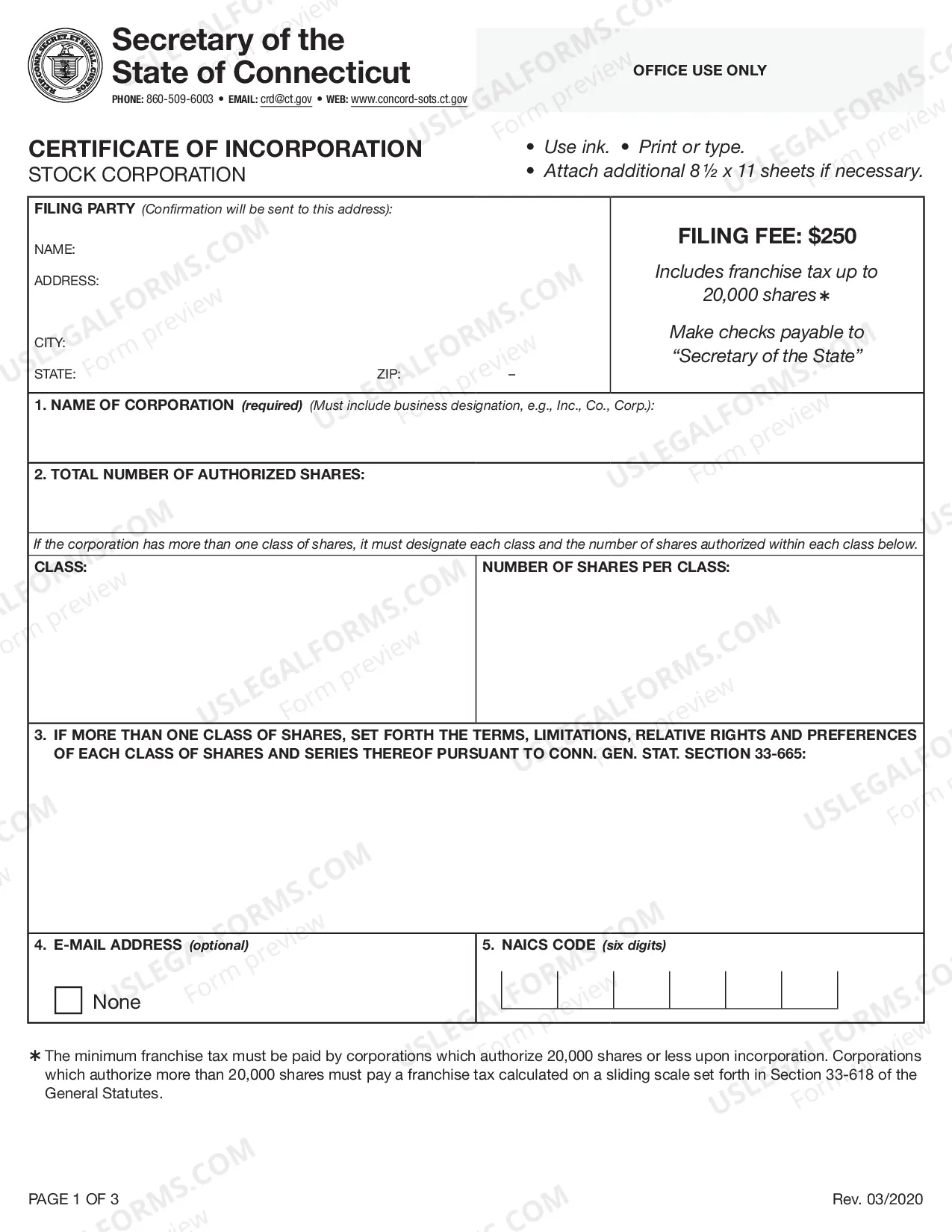
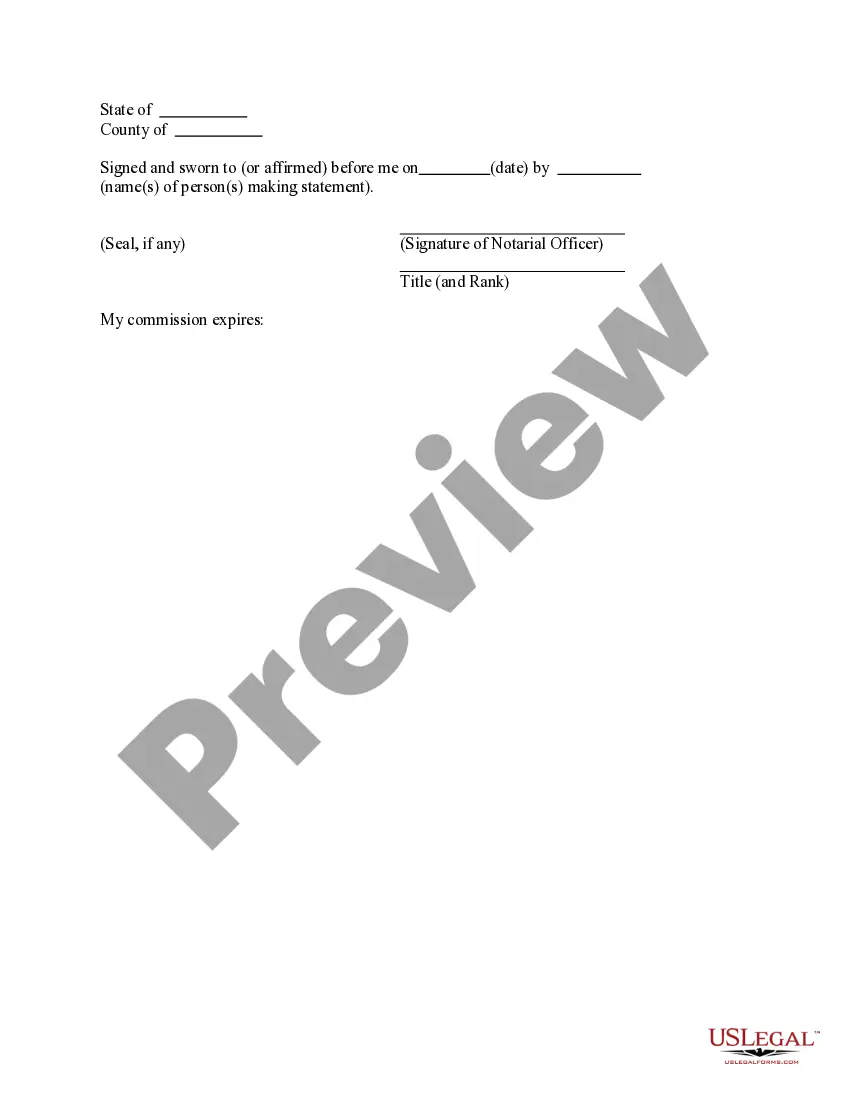
Oklahoma Acknowledgment for a verification upon oath or affirmation
What this document covers
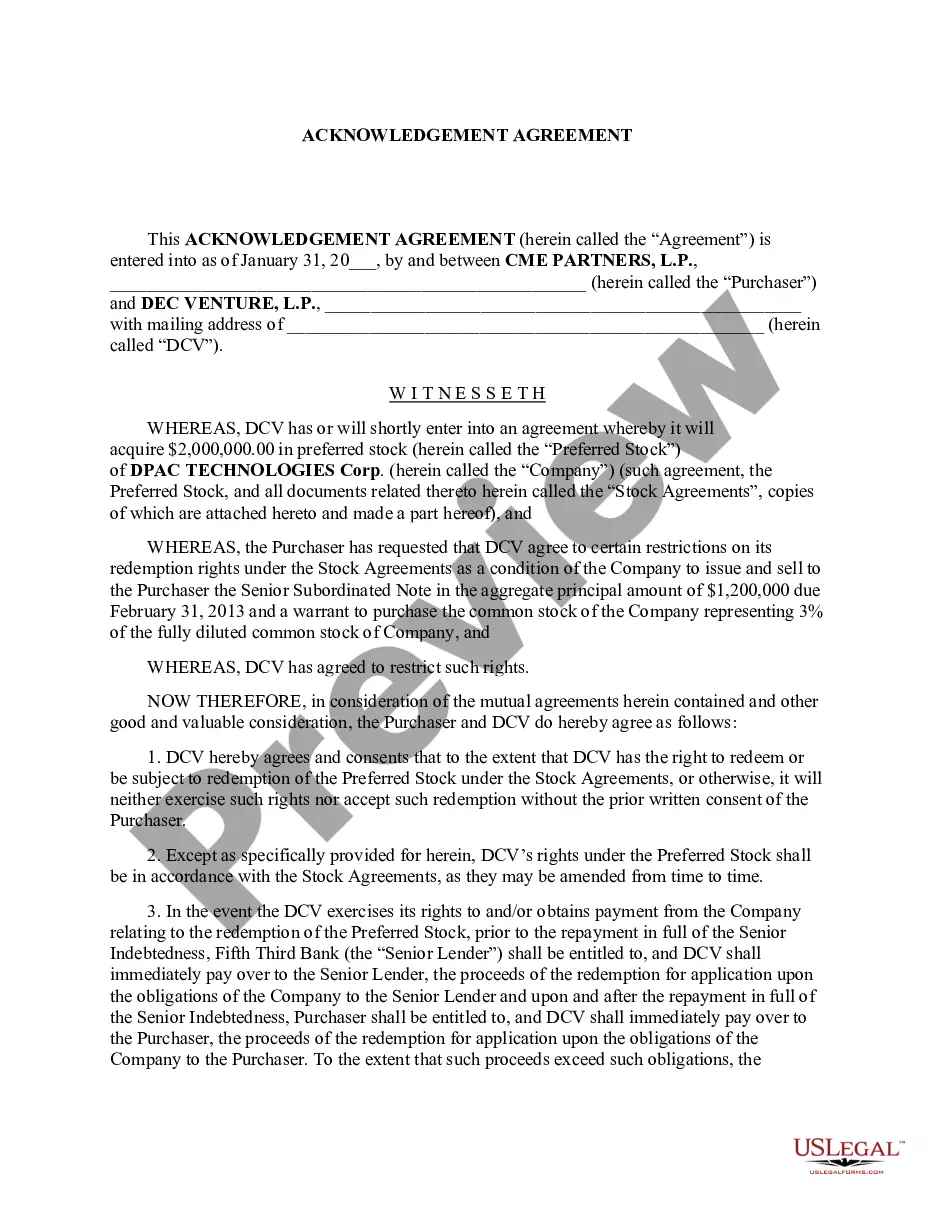
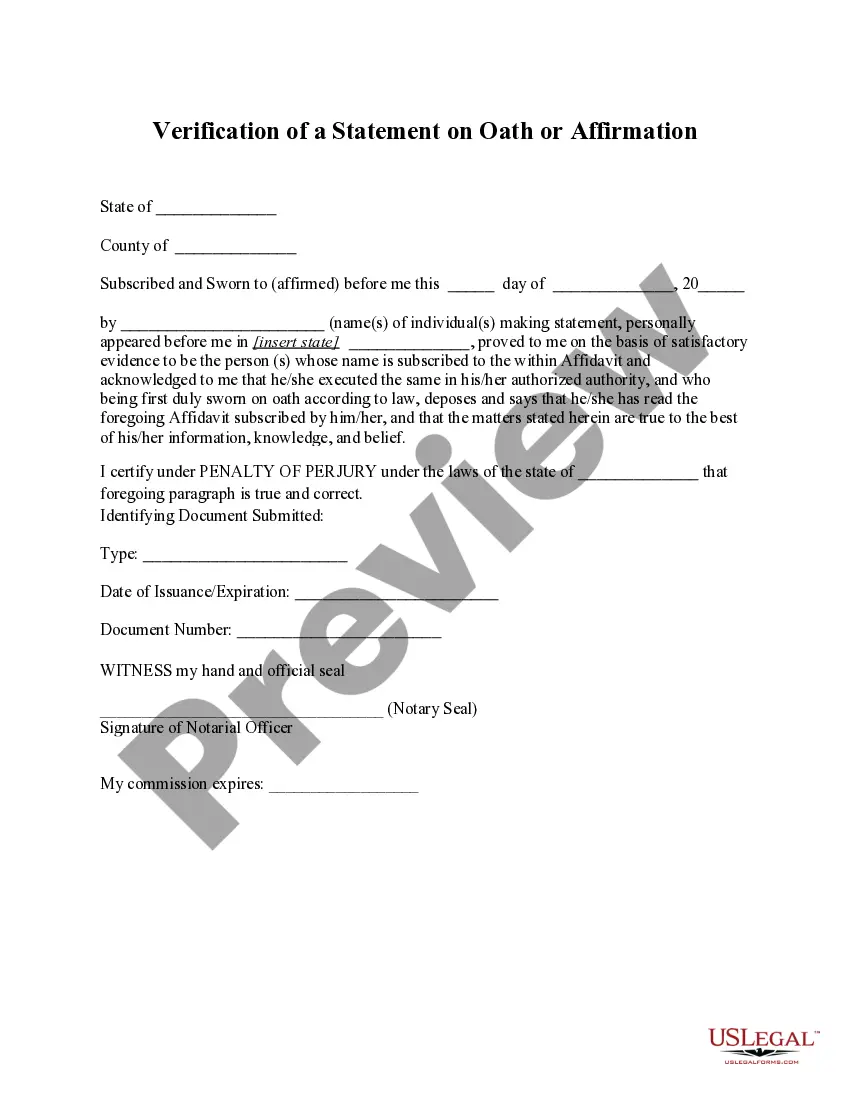
The acknowledgment for a verification upon oath or affirmation is a legal document used to confirm that a statement or declaration has been sworn or affirmed in front of an authorized official. This form serves an important role in legal proceedings, ensuring that the information provided under oath can be relied upon in various legal contexts. Unlike simple affidavits, this acknowledgment specifically verifies that the declarant's statement has been duly affirmed before an official, adding weight and authenticity to the testimony.
Main sections of this form
- Identification of the person making the statement
- Details regarding the notary public or official witnessing the affirmation
- The date when the affirmation took place
- Signature of the notarial officer
- Space for the official seal, if required

Common use cases
This form is necessary when an individual needs to affirm a statement in a legal context, such as in court, for legal documents, or when filing certain types of declarations. It is commonly used in situations involving legal testimonies, applications for various licenses, and whenever a sworn statement is required to substantiate claims or provide evidence in legal matters.
Who this form is for
This form is intended for:
- Individuals making legal declarations
- Affiants or deponents who need to attest their statements
- Legal representatives ensuring compliance with legal requirements
- Notary publics and officials witnessing oaths and affirmations
Completing this form step by step
- Identify the party making the statement and complete their information.
- Indicate the date on which the affirmation will take place.
- The notary public or authorized official should verify the identity of the declarant.
- Have the declarant sign the form in front of the notary public.
- The notary public should complete their section by signing and applying their seal.
Notarization guidance
This form needs to be notarized to ensure legal validity. US Legal Forms provides secure online notarization powered by Notarize, allowing you to complete the process through a verified video call, available anytime.
Get your form ready online
Our built-in tools help you complete, sign, share, and store your documents in one place.
Make edits, fill in missing information, and update formatting in US Legal Forms—just like you would in MS Word.
Download a copy, print it, send it by email, or mail it via USPS—whatever works best for your next step.
Sign and collect signatures with our SignNow integration. Send to multiple recipients, set reminders, and more. Go Premium to unlock E-Sign.
If this form requires notarization, complete it online through a secure video call—no need to meet a notary in person or wait for an appointment.
We protect your documents and personal data by following strict security and privacy standards.

Make edits, fill in missing information, and update formatting in US Legal Forms—just like you would in MS Word.

Download a copy, print it, send it by email, or mail it via USPS—whatever works best for your next step.

Sign and collect signatures with our SignNow integration. Send to multiple recipients, set reminders, and more. Go Premium to unlock E-Sign.

If this form requires notarization, complete it online through a secure video call—no need to meet a notary in person or wait for an appointment.

We protect your documents and personal data by following strict security and privacy standards.
Common mistakes to avoid
- Failing to sign the form in front of the notary
- Incorrectly completing personal information of the declarant
- Not providing the notary with proper identification
- Forgetting to include the date of affirmation
- Leaving the notary section incomplete or unsigned
Why complete this form online
- Convenience of immediate access and downloadable format
- Editability to customize the form for specific needs
- Reliability of templates drafted by licensed attorneys
- Available guidance for proper completion of the form
Looking for another form?
Form popularity
FAQ
A notary acknowledgement ensures that the signer of the document is indeed the person named in the document. The function of the notary in this case is to verify the identity of the signer. On the other hand, a notary is asked to perform a Jurat, when the signer takes an oath or makes an affirmation.
They key difference is that for a signature witnessing, the signer must always sign the document in the Notary's presence.An acknowledgment, on the other hand, does not require the Notary to witness the signature in most states (one exception is Maryland).
It depends. You may notarize a document that does not have pre-printed notarial wording as long as the signer tells you what type of notarization is needed.As nonattorneys, Notaries cannot decide the type of notarization to perform on a document because the choice can have important legal ramifications.
In general, a contract does not need to be notarized or witnessed to be binding.But for most contracts, we do not generally require them to be witnessed or notarized, to be "legal." The notary removes the issue as to the identity of the parties signing the contract.
Only you, as the notary, may make corrections to the notary certificate. Illegible/ Expired Notary Seal: Stamp impressions that are too dark, too light, incomplete, smudged, or in any way unreadable may cause an otherwise acceptable document to be rejected for its intended use.
Step 1: Require Personal Appearance. Step 2: Check Over The Document. Step 3: Carefully Identify The Signer. Step 4: Record Your Journal Entry. Step 5: Complete The Notarial Certificate. A Last Note: Never Give Advice.
For an acknowledgment, the signer must always: Be positively identified by the Notary. The Notary must always identify the signer for an acknowledgement; whether the signer personally knows the Notary, presents an ID document, or is identified by a credible witness depends on the circumstances.
When you see (here insert the name and character of the officer) next to a blank as shown below, it means you should insert Your name, Notary Public in the blank.