South Dakota Warning of Default on Commercial Lease
About this form
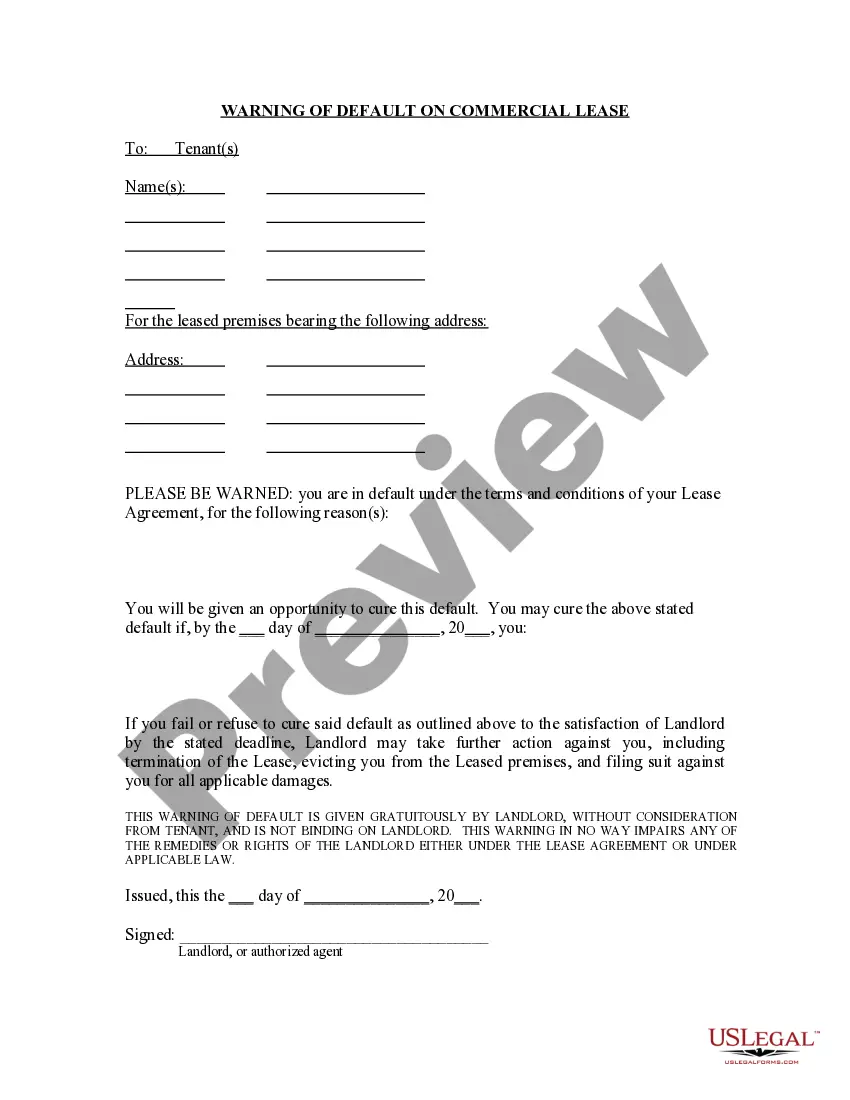
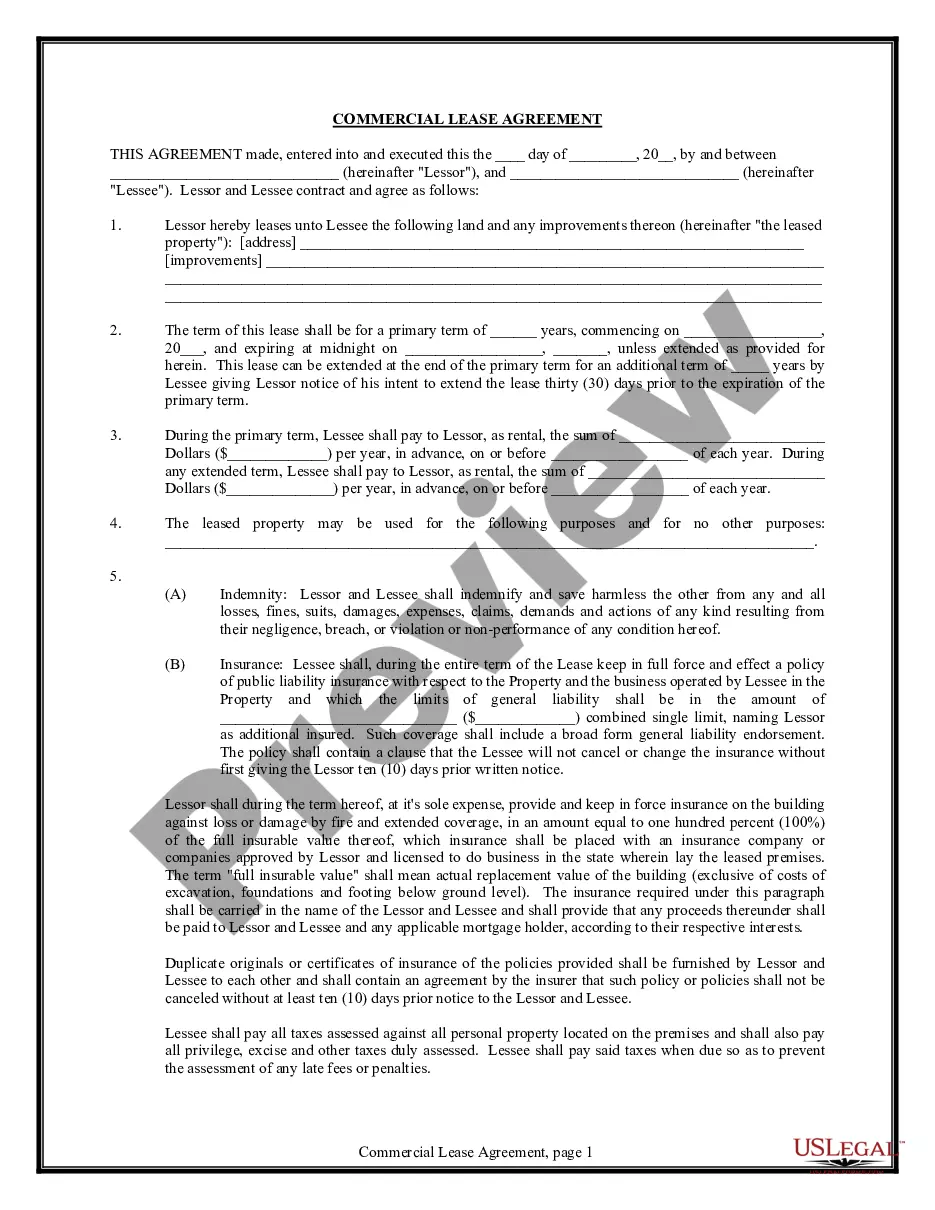
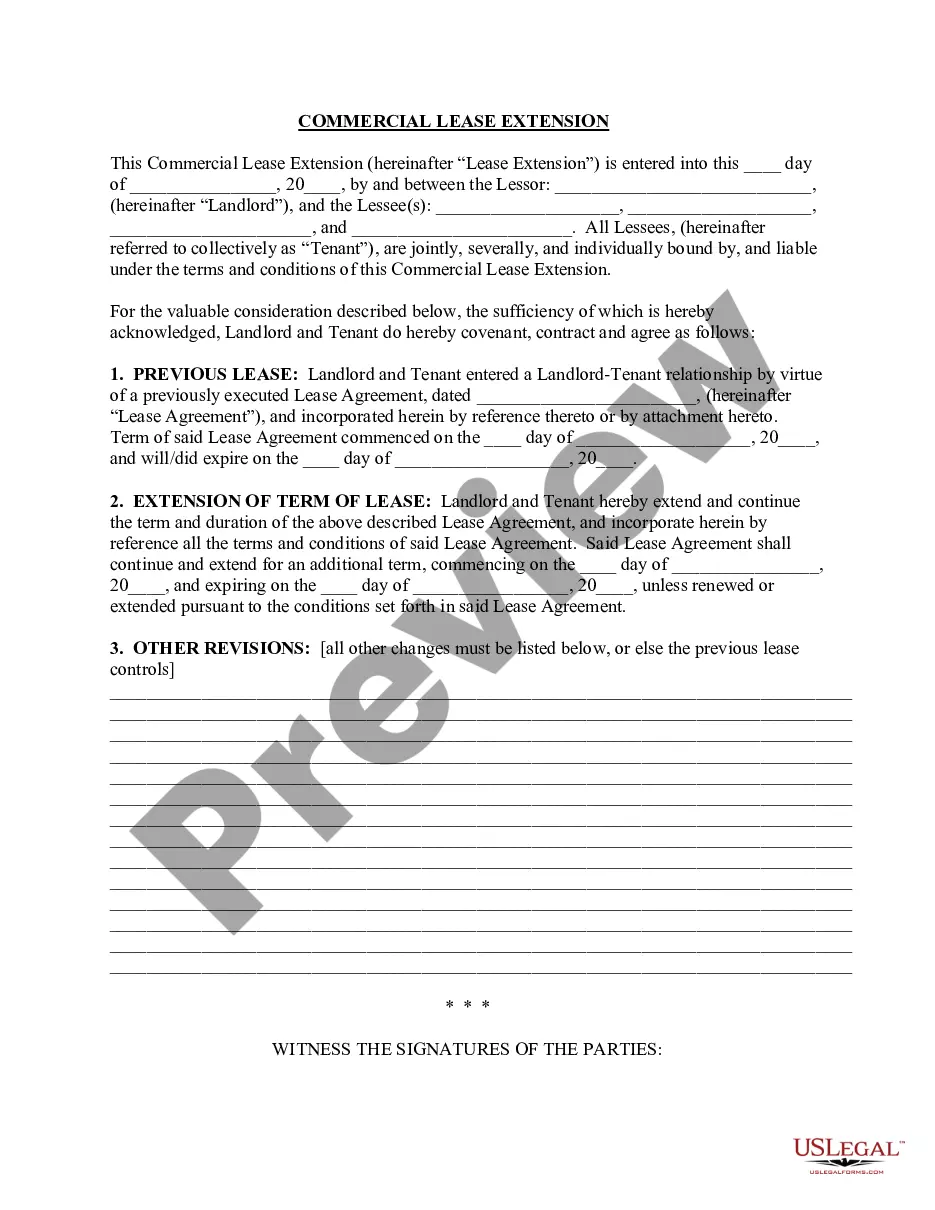
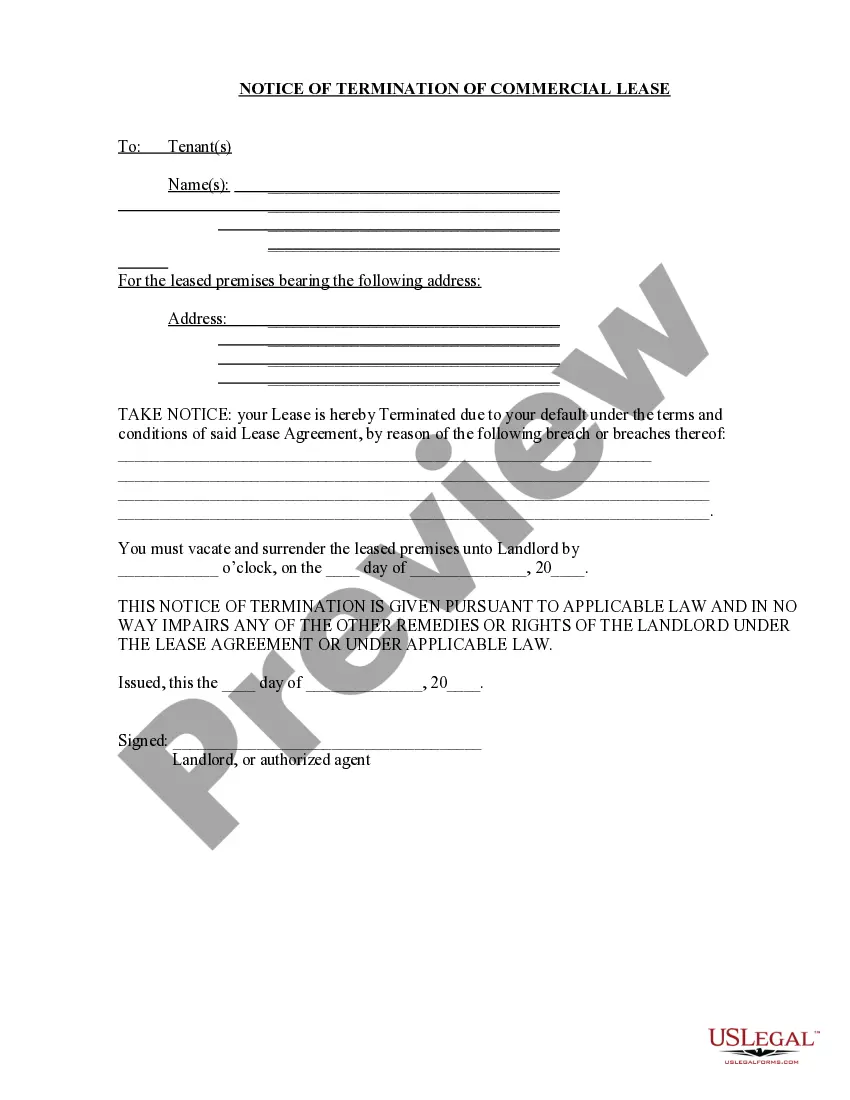
The Warning of Default on Commercial Lease is a notice from a landlord to a tenant, alerting them that specific conditions of their lease agreement are not being met. This form serves to inform the tenant that failure to remedy these issues may lead to a default under the lease. It is essential to differentiate this warning from eviction notices, as it acts as an initial step for addressing potential lease violations, typically related to unpaid rent or other obligations.
Form components explained
- Warning issuance date: The date when the warning is issued.
- Landlord signature: Signature of the landlord or authorized agent, confirming the notice.
- Tenant obligations: Clear indication that the tenant is expected to remedy the specified defaults to avoid further action.
- Disclaimer: A statement confirming the warning is given without consideration and does not limit the landlord's rights under the lease.
When this form is needed
This form should be used when a landlord has concerns about a tenant's compliance with the lease agreement, particularly regarding timely rent payments or other contractual obligations. It is a proactive measure to address issues before they escalate into more serious actions, such as eviction proceedings.
Intended users of this form
- Landlords: Property owners or managers who need to formally notify tenants of a lease default.
- Commercial property owners: Those leasing commercial spaces who wish to ensure compliance with lease terms.
- Real estate agents: Professionals managing properties on behalf of landlords who need to follow proper legal procedures.
Completing this form step by step
- Identify the parties: Clearly state the names of the landlord and tenant involved in the lease.
- Specify the property: Include the address or details of the commercial property under lease.
- Enter the warning date: Fill in the date the warning is being issued.
- List defaults: Detail the specific defaults or issues that need to be addressed by the tenant.
- Provide signature: The landlord or authorized agent should sign and date the form to validate it.
Notarization guidance
In most cases, this form does not require notarization. However, some jurisdictions or signing circumstances might. US Legal Forms offers online notarization powered by Notarize, accessible 24/7 for a quick, remote process.
Get your form ready online
Our built-in tools help you complete, sign, share, and store your documents in one place.
Make edits, fill in missing information, and update formatting in US Legal Forms—just like you would in MS Word.
Download a copy, print it, send it by email, or mail it via USPS—whatever works best for your next step.
Sign and collect signatures with our SignNow integration. Send to multiple recipients, set reminders, and more. Go Premium to unlock E-Sign.
If this form requires notarization, complete it online through a secure video call—no need to meet a notary in person or wait for an appointment.
We protect your documents and personal data by following strict security and privacy standards.

Make edits, fill in missing information, and update formatting in US Legal Forms—just like you would in MS Word.

Download a copy, print it, send it by email, or mail it via USPS—whatever works best for your next step.

Sign and collect signatures with our SignNow integration. Send to multiple recipients, set reminders, and more. Go Premium to unlock E-Sign.

If this form requires notarization, complete it online through a secure video call—no need to meet a notary in person or wait for an appointment.

We protect your documents and personal data by following strict security and privacy standards.
Common mistakes to avoid
- Failing to specify the defaults clearly, which can lead to misunderstandings.
- Not including the date of the warning, making it unclear when the notice was issued.
- Missing signatures, which can invalidate the warning.
- Using the wrong format for the state in which the property is located.
Advantages of online completion
- Convenience: Easily download and complete the form from anywhere, at any time.
- Editability: Customize the form as needed to fit specific situations and requirements.
- Reliability: Access legally sound documents prepared by licensed attorneys, ensuring compliance with applicable laws.
Summary of main points
- The Warning of Default on Commercial Lease is crucial for landlords to formally notify tenants of lease violations.
- Completing this form accurately can help avoid potential legal issues down the line.
- Using this form can protect landlords' rights and facilitate clearer communication with tenants.
Looking for another form?

Form popularity
FAQ
For example, the lease may provide that in case of default, the landlord can recover late fees and interest. If the lease is a net lease, it may provide for the landlord to recover such things as property taxes, insurance, utilities, maintenance and repairs.
Paying the remainder of the rent still owed on the lease in full; Paying a specified amount of liquidated damages as outlined in the contract terms; Paying an additional amount of punitive damages, dependent on local state laws; and/or.
A break-early fee is a lump sum payment. The amount of the break-early fee will vary greatly depending upon the commercial tenant's specific circumstances. In exchange for the break-early fee, the landlord will agree to release the commercial tenant from all of its obligations under the commercial lease.
Look for a clause: Re-read your lease and look for either a bailout clause or a co-tenancy clause. Ask: If you are in a good space in a popular area, your landlord will be more inclined to an early termination of the lease than if you are in a bad space in a hard-to-rent location.
Unless your lease says otherwise simply breaking it is not an option. This is known as "unilateral breach" and typical penalties can include: Paying the rent - One way or another, if you walk away from your lease and no one else rents the apartment then you will owe the landlord this money.
Surrender the Lease. One option for getting out of your commercial lease early is to approach your landlord and request to surrender the lease. Early Termination Clause. Some lease agreements will contain an early termination clause (commonly called a break clause). Assignment of Lease. Subletting the Premises. Licensing.
CALGARY -- The province says commercial landlords will no longer be allowed to evict business tenants without first applying for rental relief from the government.
If the commercial tenant is a shell corporation and/or does not have any assets of value, the commercial tenant may choose to walk away from its commercial lease obligations.Often the landlord will require guarantees in order to prevent a commercial tenant from walking away from its lease obligations.