South Carolina Last Will and Testament for Widow or Widower with Minor Children
What this document covers
The Last Will and Testament for Widow or Widower with Minor Children is a legally binding document specifically designed for individuals who have lost a spouse and have minor children. This will allows you to specify how your assets will be distributed upon your passing, name guardians for your minor children, and appoint a personal representative to handle your estate. Unlike standard wills, this form includes specific provisions for the guardianship of children and trusts for their inheritance, ensuring their needs are met even after you are gone.
Key parts of this document
- Appointment of Personal Representative: Designate an executor to manage your estate.
- Guardianship Provisions: Specify who will care for your minor children in the event of your death.
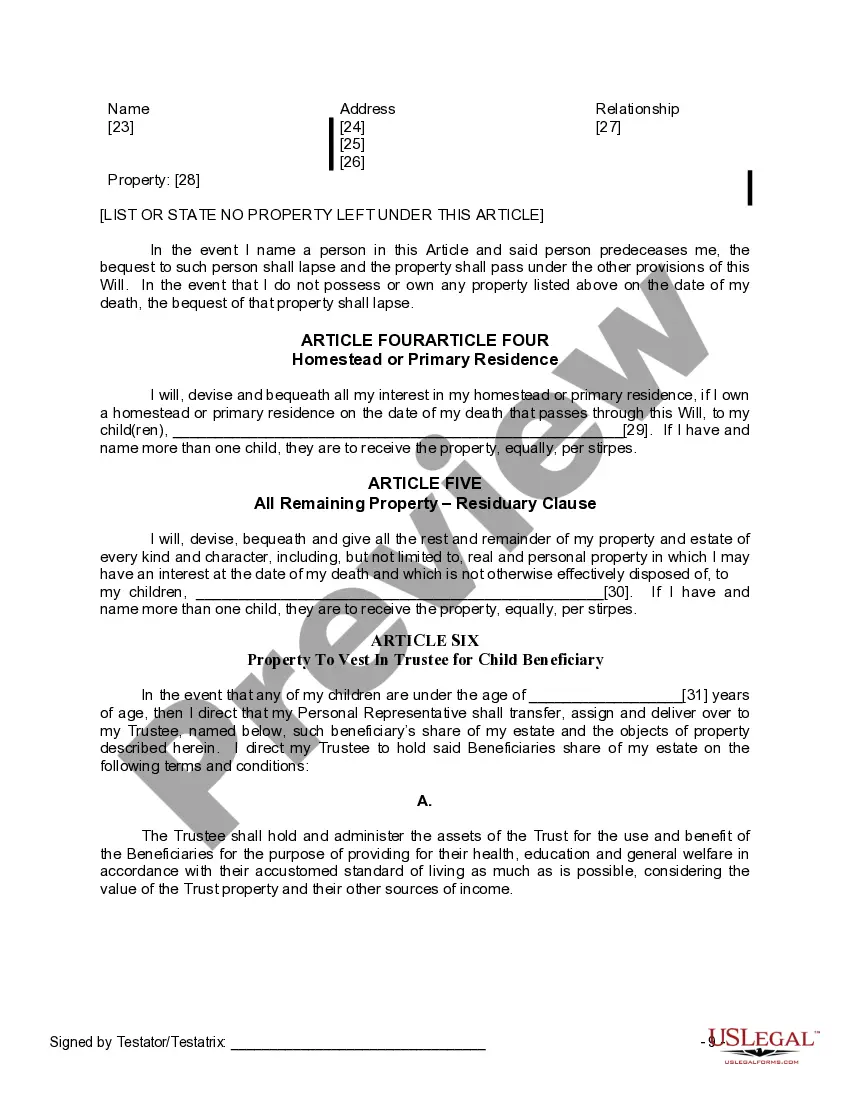
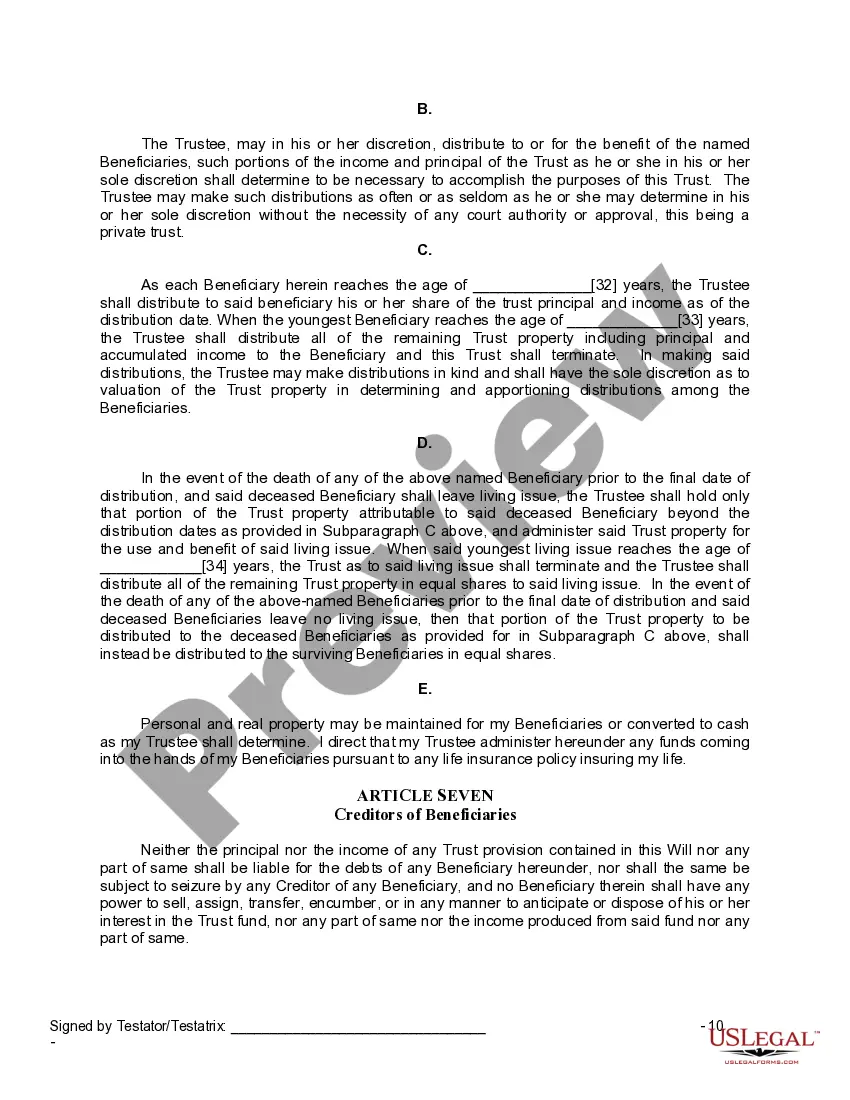
- Trust for Minor Children: Create a trust to manage assets until your children reach a certain age.
- Asset Distribution: Outline how your property and possessions will be distributed among beneficiaries.
- Self-Proving Affidavit: Include a clause to simplify the probate process by allowing the will to be verified without contacting witnesses.





When this form is needed
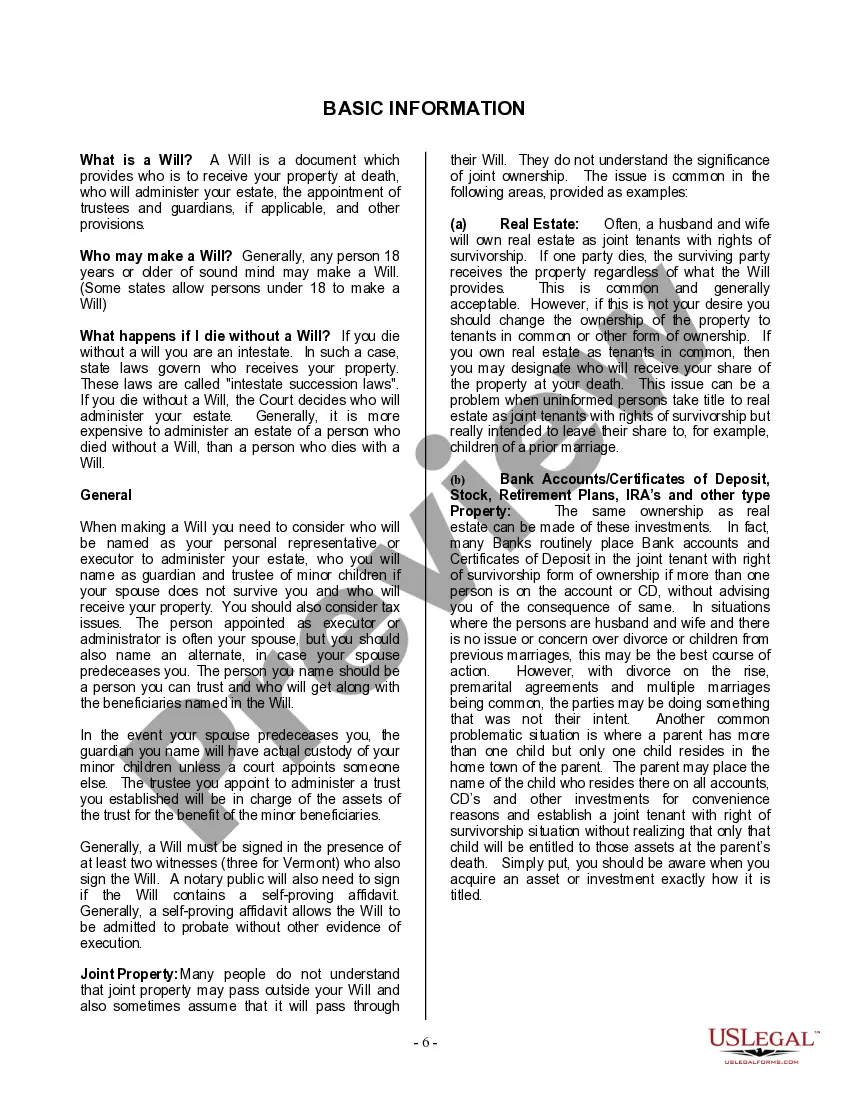
This form is essential when a widow or widower with minor children wishes to establish a clear distribution plan for their assets after passing. It ensures your children are cared for and your wishes are honored regarding who will manage their inheritance if they are still minors. You should consider using this form if your spouse has died, you want to name a guardian for your children, or if you wish to facilitate the management of your assets through a trust.
Who needs this form
This form is suitable for:
- Widows or widowers with minor children.
- Individuals who want to designate guardians for their children.
- Anyone seeking to create a trust for their minor children's assets.
- People who want to ensure their estate is settled according to their wishes rather than state laws of intestacy.
Instructions for completing this form
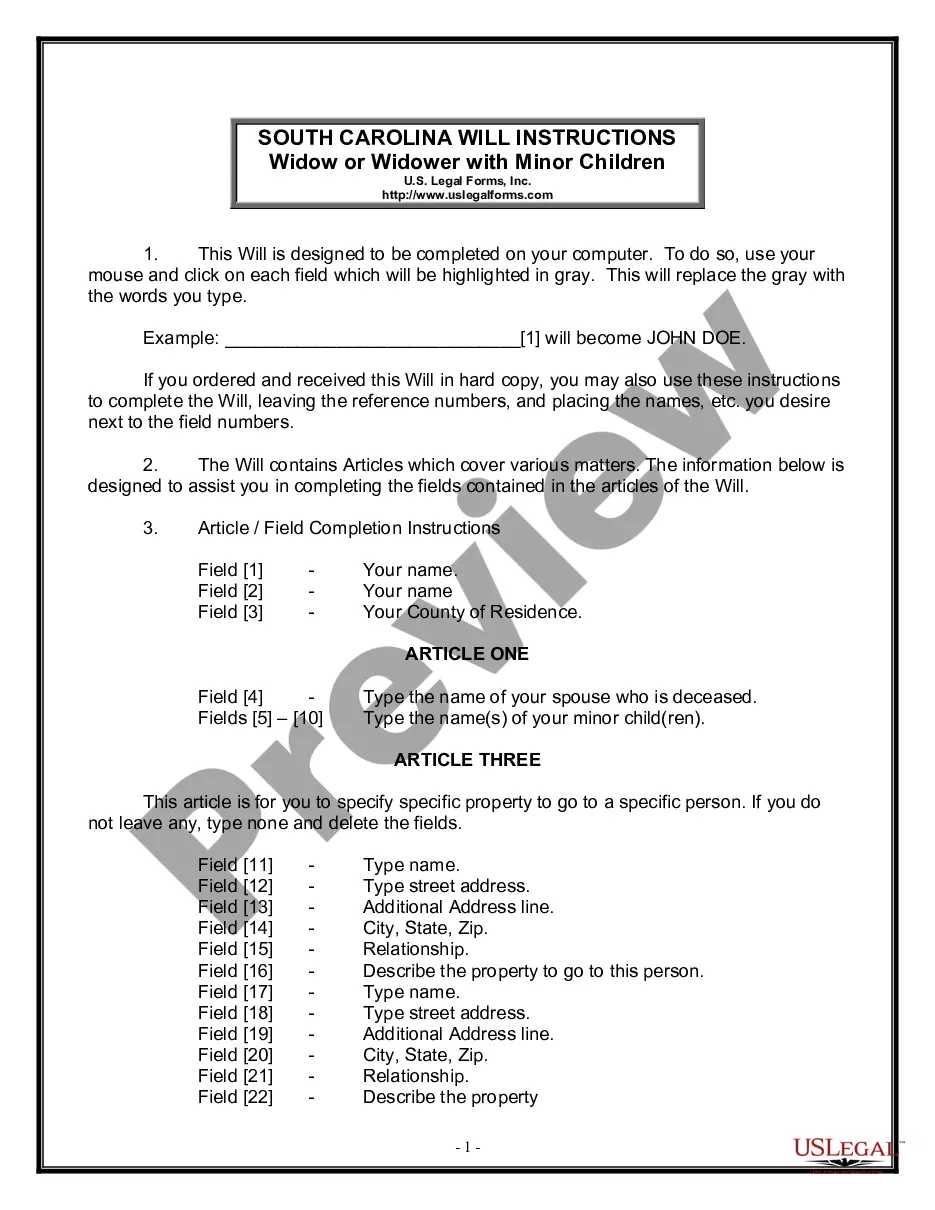
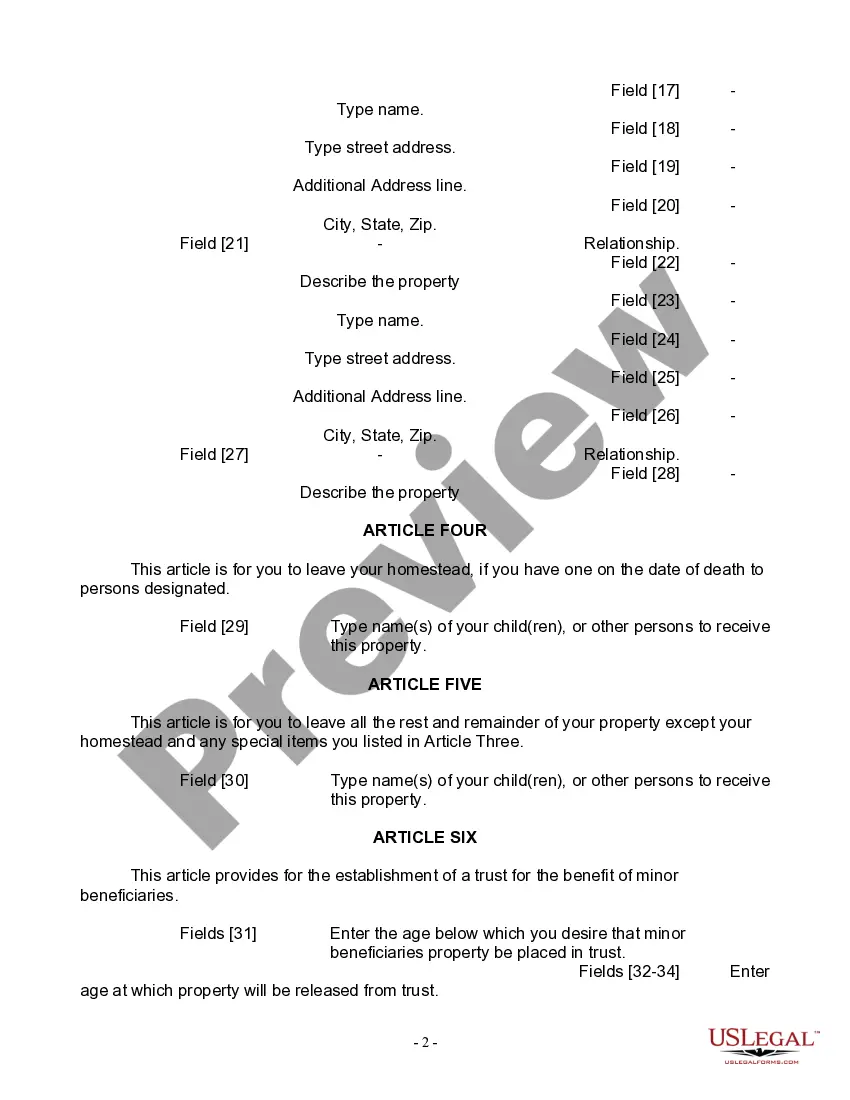
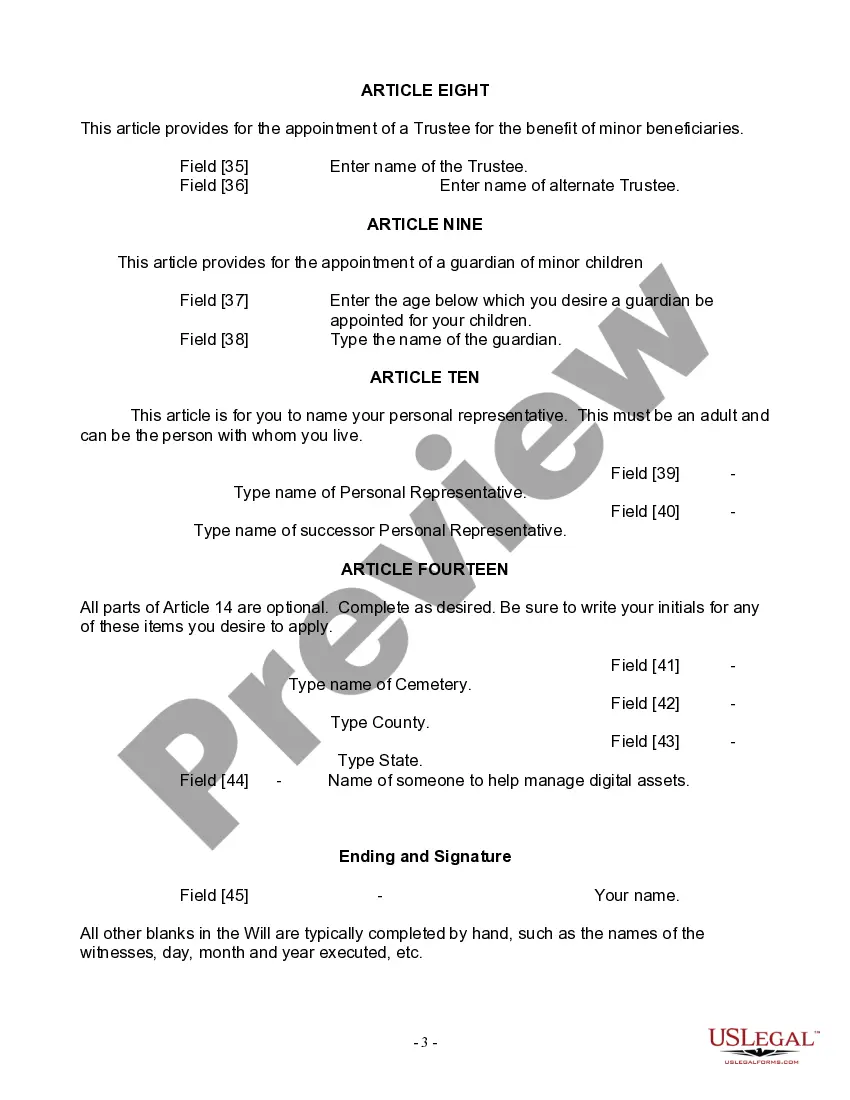
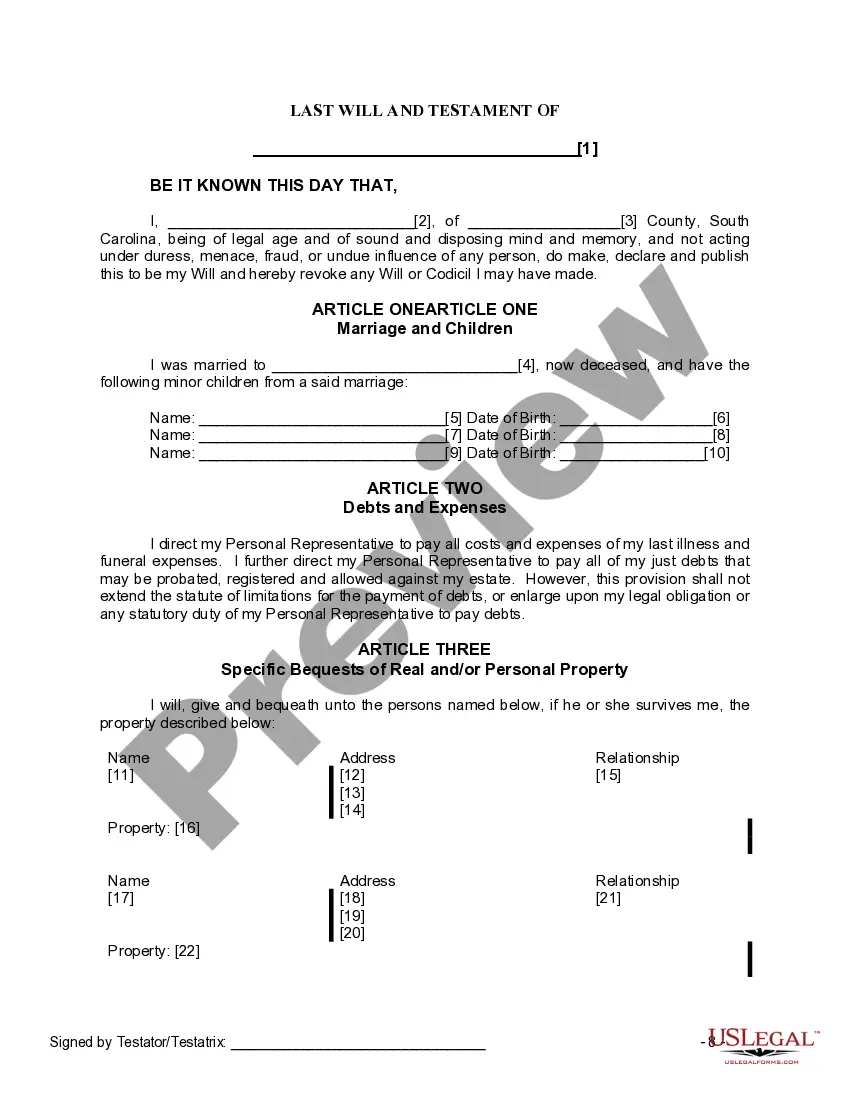
- Identify the parties involved: Provide your full name, county of residence, and details of your deceased spouse.
- Designate guardians: Specify the names of guardians for your minor children in the appropriate sections.
- Distribute your assets: Clearly outline how you wish to distribute specific items, real estate, and other properties.
- Establish a trust: Decide the age at which your minor children's inheritance will be released from the trust.
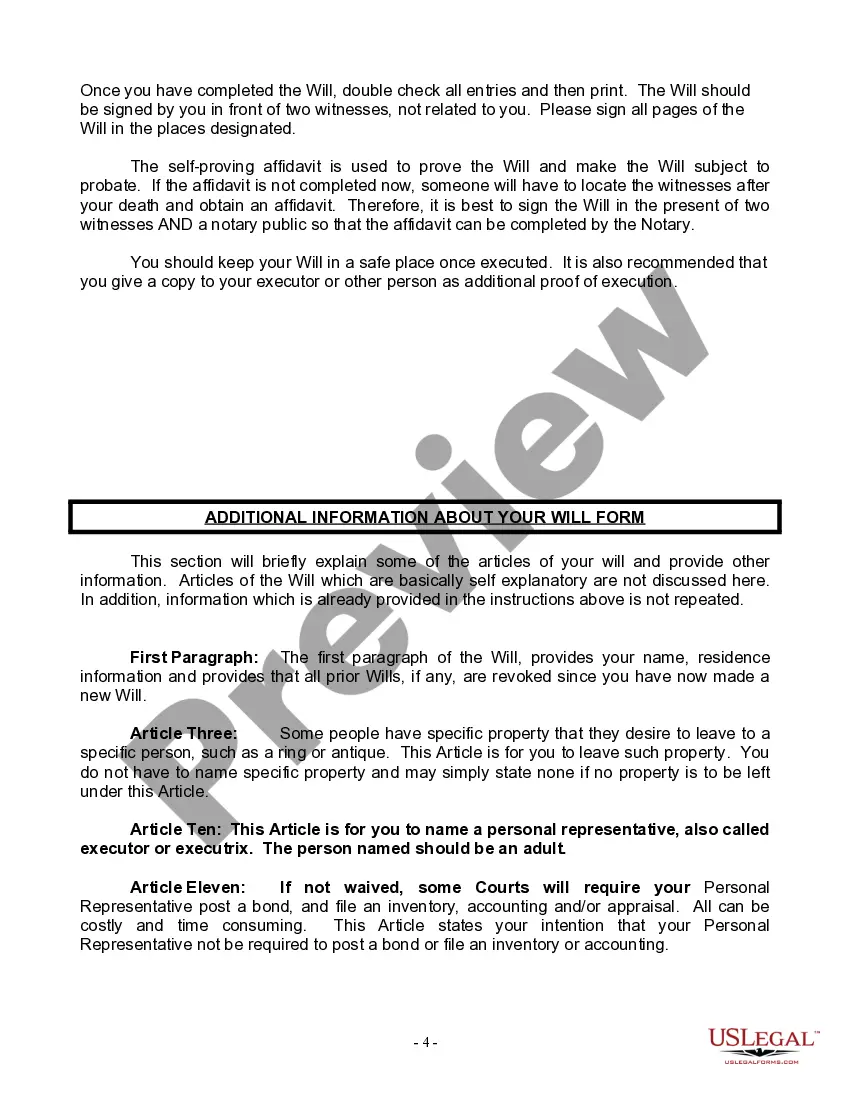
- Sign and witness: Ensure the will is signed in front of two witnesses and a notary public if a self-proving affidavit is included.
Does this document require notarization?
Yes, this form must be notarized to be legally valid. It is advised to sign the will in the presence of two witnesses, and also in front of a notary public to simplify the probate process by allowing the self-proving affidavit to be completed.
Get your form ready online
Our built-in tools help you complete, sign, share, and store your documents in one place.
Make edits, fill in missing information, and update formatting in US Legal Forms—just like you would in MS Word.
Download a copy, print it, send it by email, or mail it via USPS—whatever works best for your next step.
Sign and collect signatures with our SignNow integration. Send to multiple recipients, set reminders, and more. Go Premium to unlock E-Sign.
If this form requires notarization, complete it online through a secure video call—no need to meet a notary in person or wait for an appointment.
We protect your documents and personal data by following strict security and privacy standards.

Make edits, fill in missing information, and update formatting in US Legal Forms—just like you would in MS Word.

Download a copy, print it, send it by email, or mail it via USPS—whatever works best for your next step.

Sign and collect signatures with our SignNow integration. Send to multiple recipients, set reminders, and more. Go Premium to unlock E-Sign.

If this form requires notarization, complete it online through a secure video call—no need to meet a notary in person or wait for an appointment.

We protect your documents and personal data by following strict security and privacy standards.
Common mistakes to avoid
- Not updating the will after significant life changes, such as remarriage or having more children.
- Failing to appoint a guardian for minor children, which could lead to court intervention.
- Not signing the will in front of required witnesses, rendering it invalid.
- Leaving out specific bequests or assets that you intended to distribute.
Benefits of completing this form online
- Convenience: Complete the form from anywhere with internet access, saving time and effort.
- Editability: Easily make changes before finalizing your will to reflect your current wishes.
- Reliability: Ensure your document adheres to legal formats and requirements, reducing the risk of errors.
- Access to legal guidance: Benefit from instructions provided with the form to aid in your understanding.
Legal use & context
- This will is valid in South Carolina and meets the stateâs specific legal requirements for wills and trusts.
- It provides specific legal instructions on how to manage and distribute your estate after death.
- Using this form facilitates the probate process, ensuring your estate is settled according to your intentions.
Quick recap
- The Last Will and Testament is critical for widows or widowers with minor children.
- It allows you to name guardians, manage your estate, and establish trusts for your children.
- Ensuring proper execution by witnessing and notarization is essential for legality.
- Using this form can simplify the estate-management process and reduce potential conflicts among beneficiaries.
Looking for another form?
Form popularity
FAQ
The form may be downloaded in fillable Adobe PDF, Rich Text Format, and Microsoft Word templates and should be signed by the testator and at least two (2) witnesses or a notary public (See your State's Probate Code).
The Free Last Will and Testament Template for Word is compatible with Word 2003 or later versions.
In most situations, a will template is an easy and inexpensive way to make sure your wishes are known and carried out. Most people can get everything they need by using a will template, with little cost or hassle.
Choose an online legal services provider or locate a will template. Carefully consider your distribution wishes. Identify a personal representative/executor. Understand the requirements to make your will legal. Make sure someone else knows about your will. Consult a lawyer if you have a more complicated estate.
Handwritten wills prepared in South Carolina are not legal. However, a holographic will created in another state may be valid in South Carolina.
All wills must be property signed and witnessed to be effective. For example, South Carolina requires two witnesses for a will to be valid. A notary is not sufficient, or even required. Also it is important to have impartial persons as witnesses.
South Carolina law requires that you deliver the will to the Probate Court within thirty (30) days after the person's death.
Do I Need to Have My Will Notarized? No, in South Carolina, you do not need to notarize your will to make it legal.A self-proving will speeds up probate because the court can accept the will without contacting the witnesses who signed it.
All wills must be property signed and witnessed to be effective. For example, South Carolina requires two witnesses for a will to be valid. A notary is not sufficient, or even required. Also it is important to have impartial persons as witnesses.