South Carolina Commercial Sublease
What this document covers
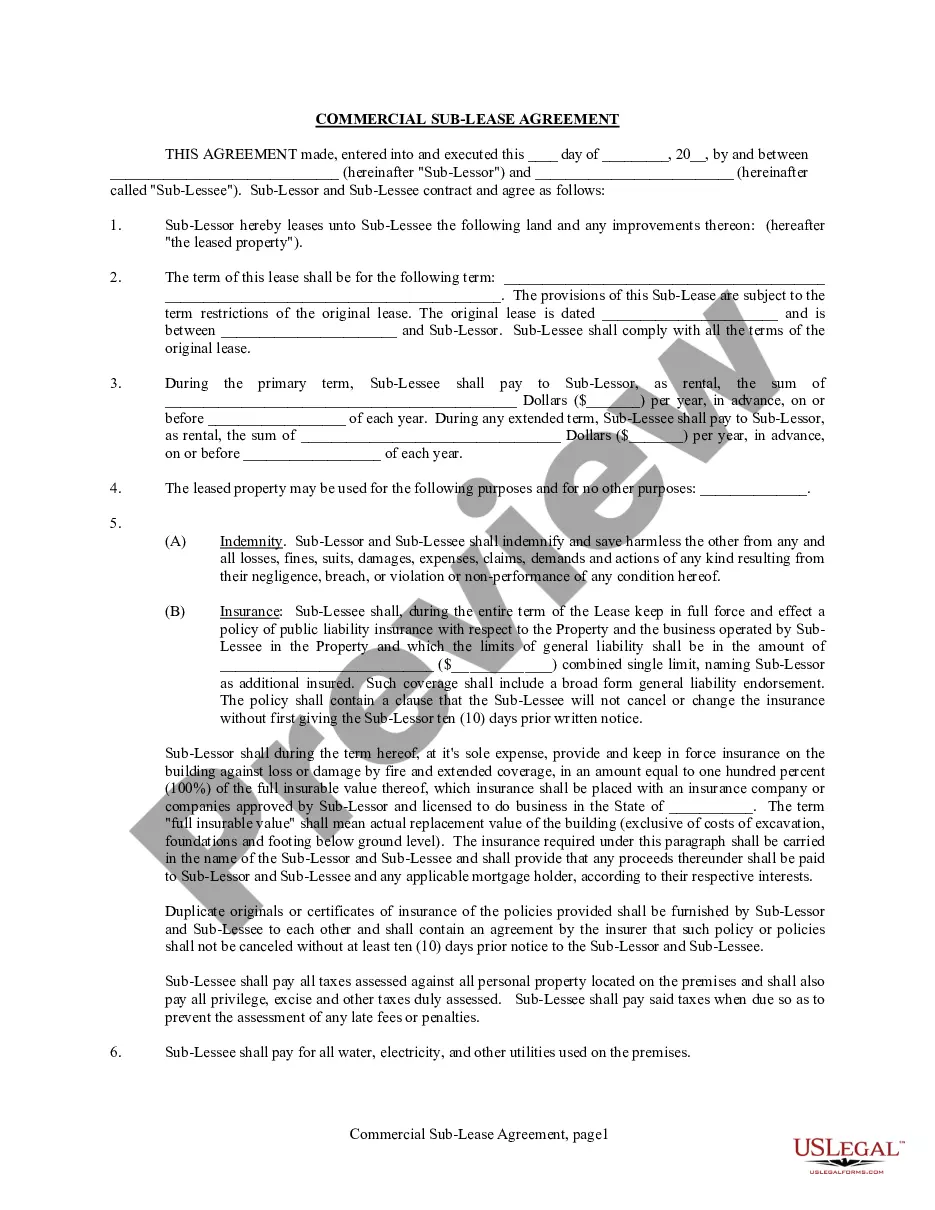
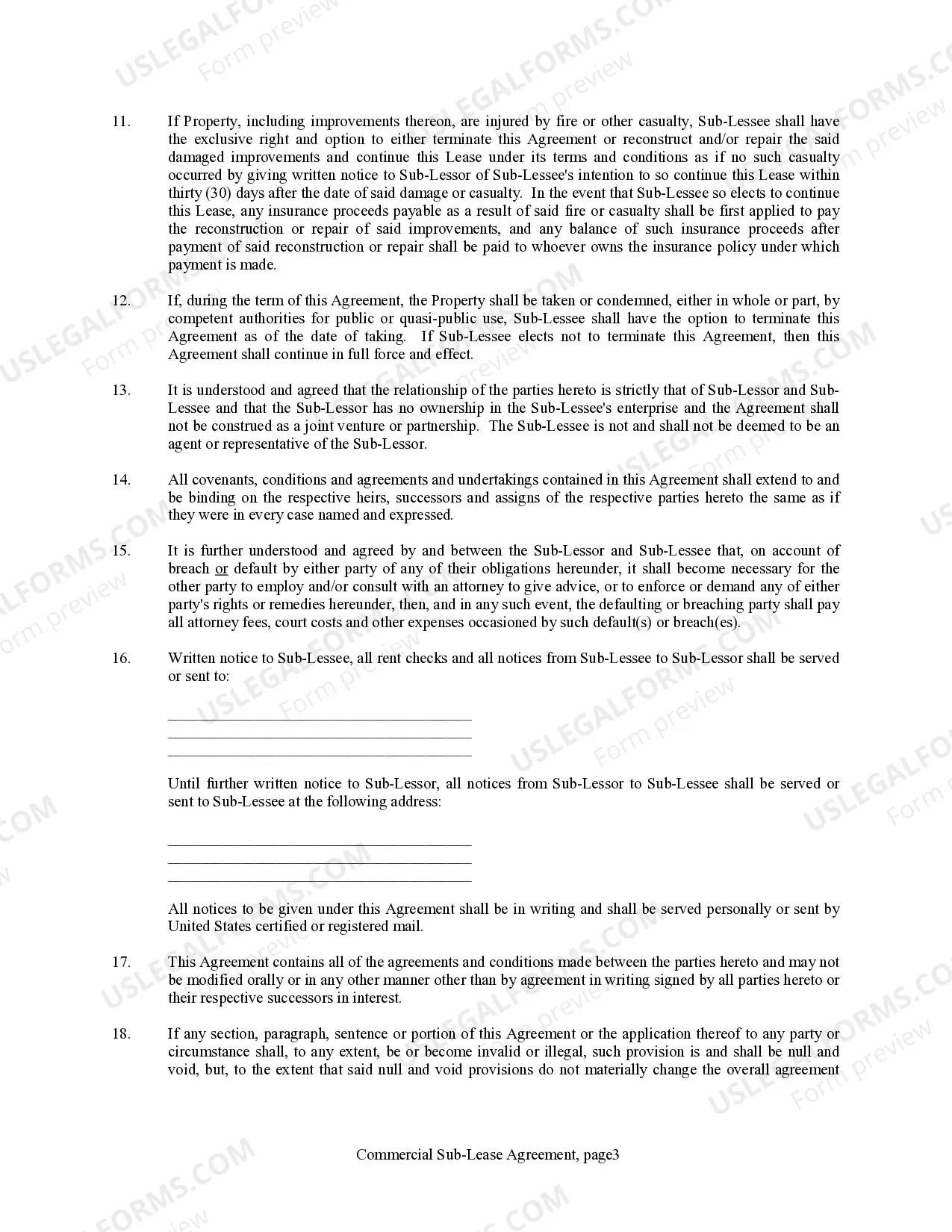
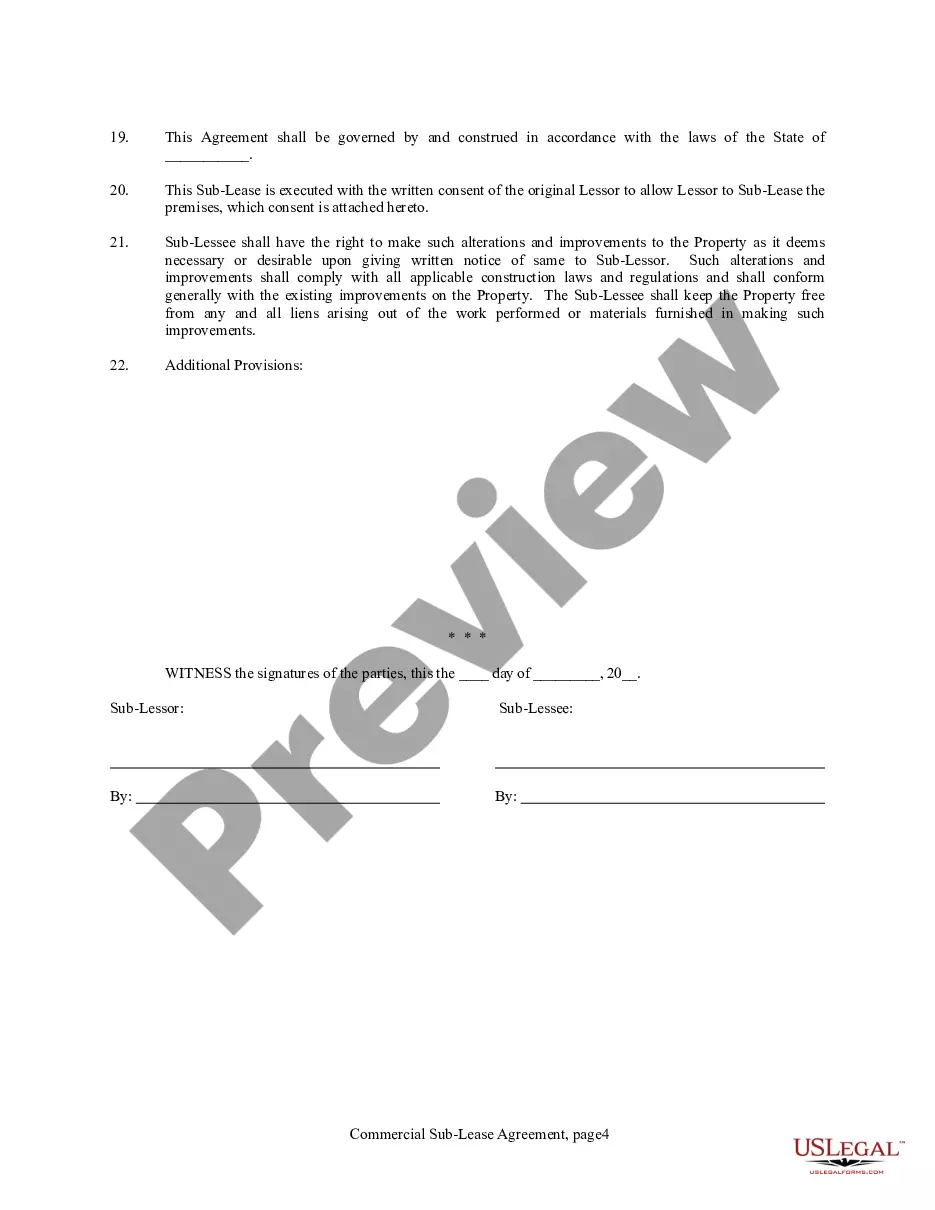
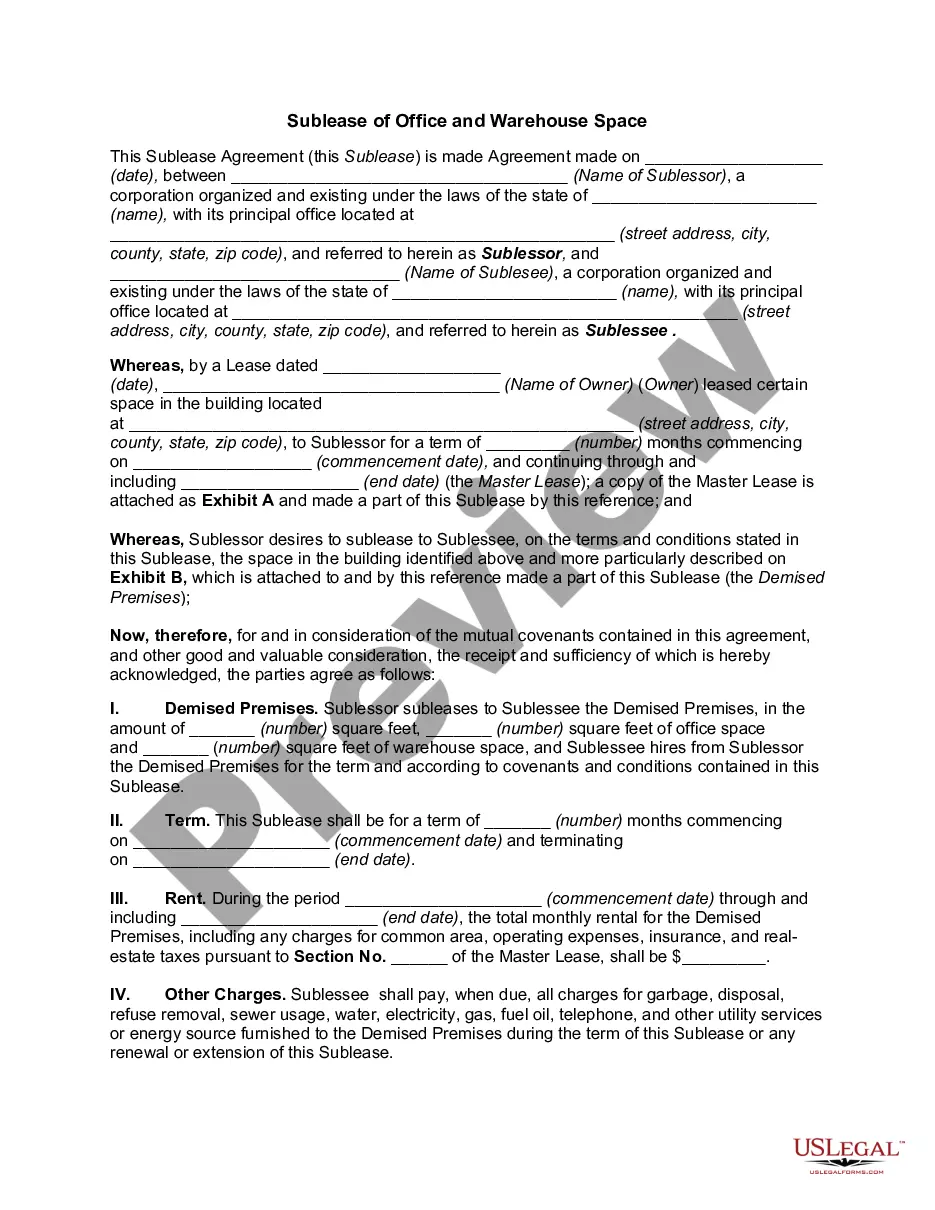
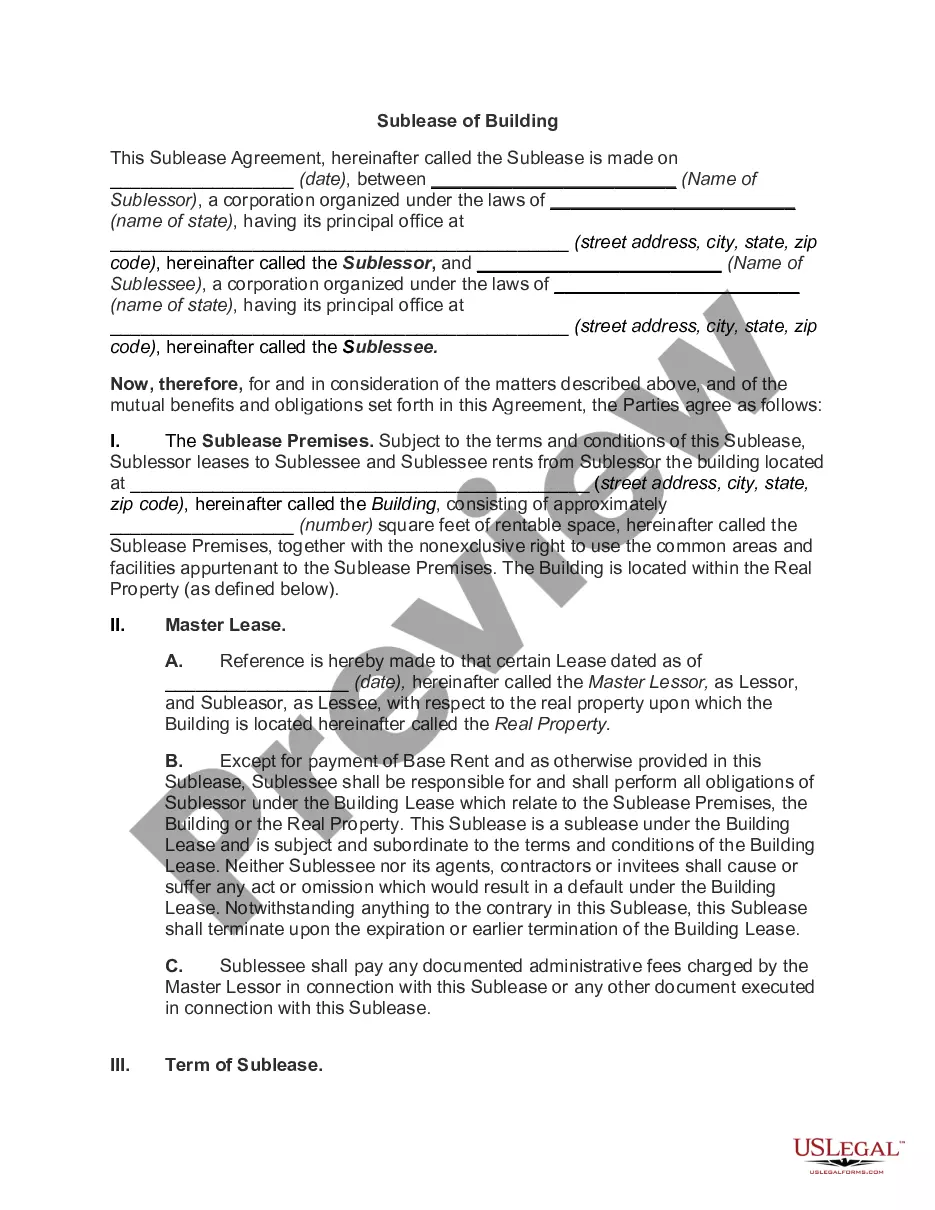
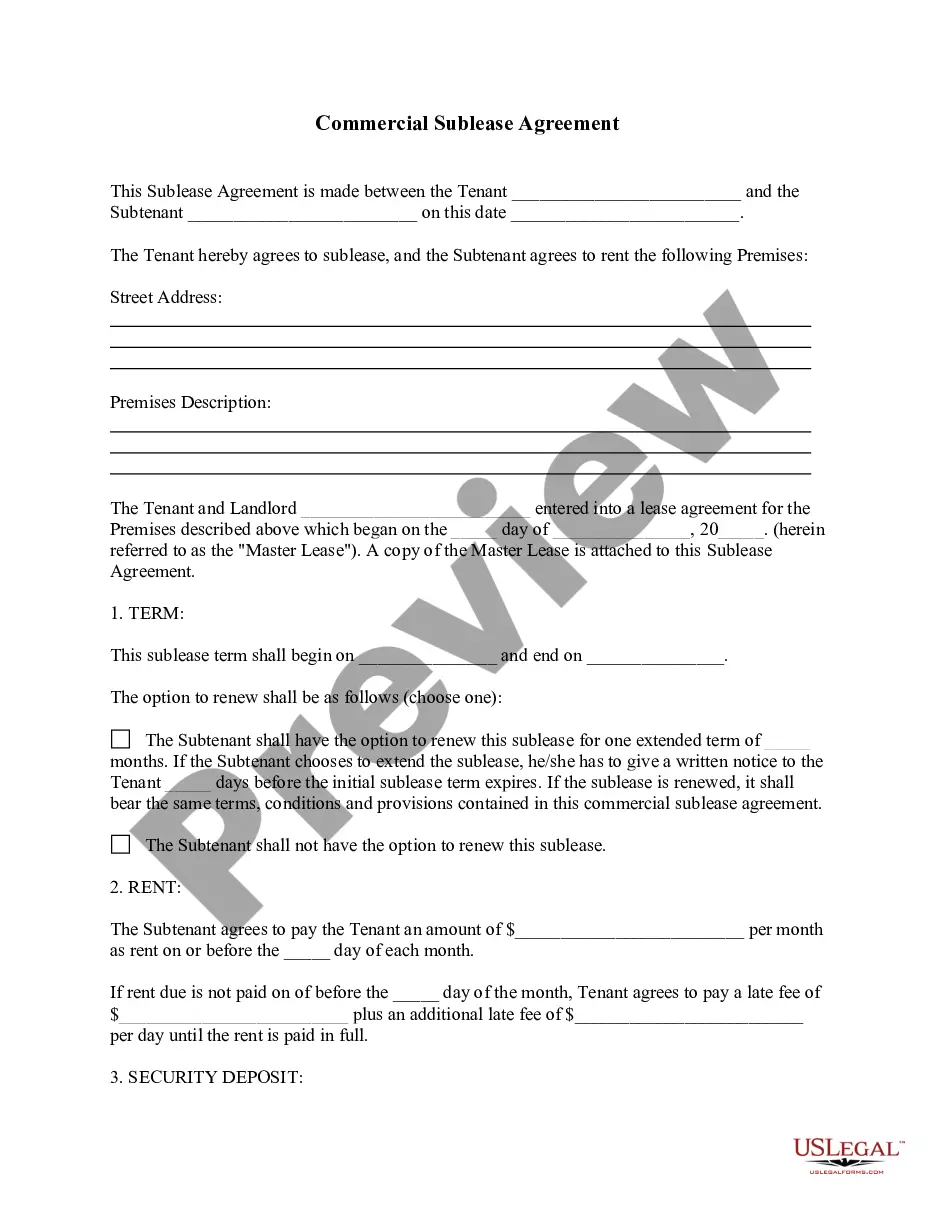
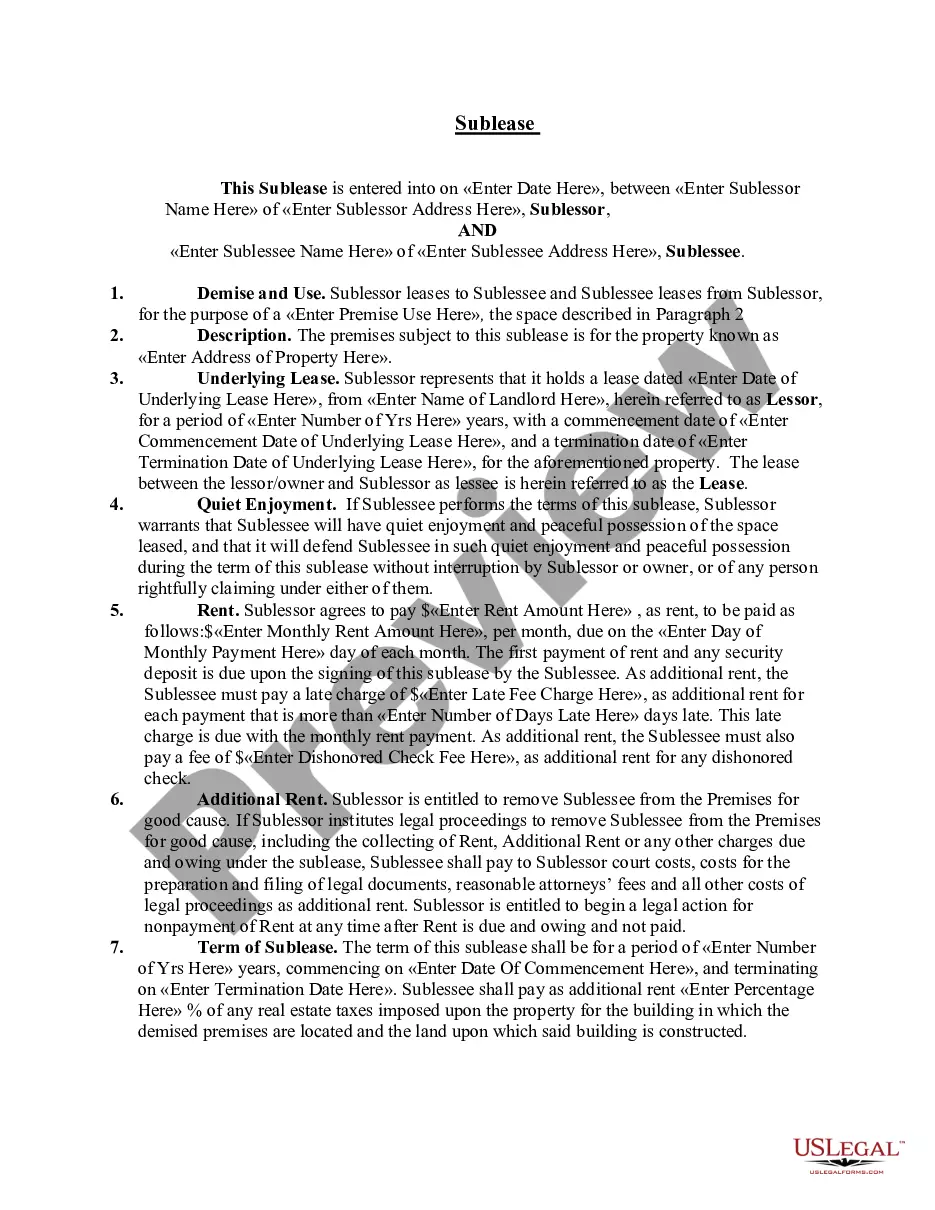
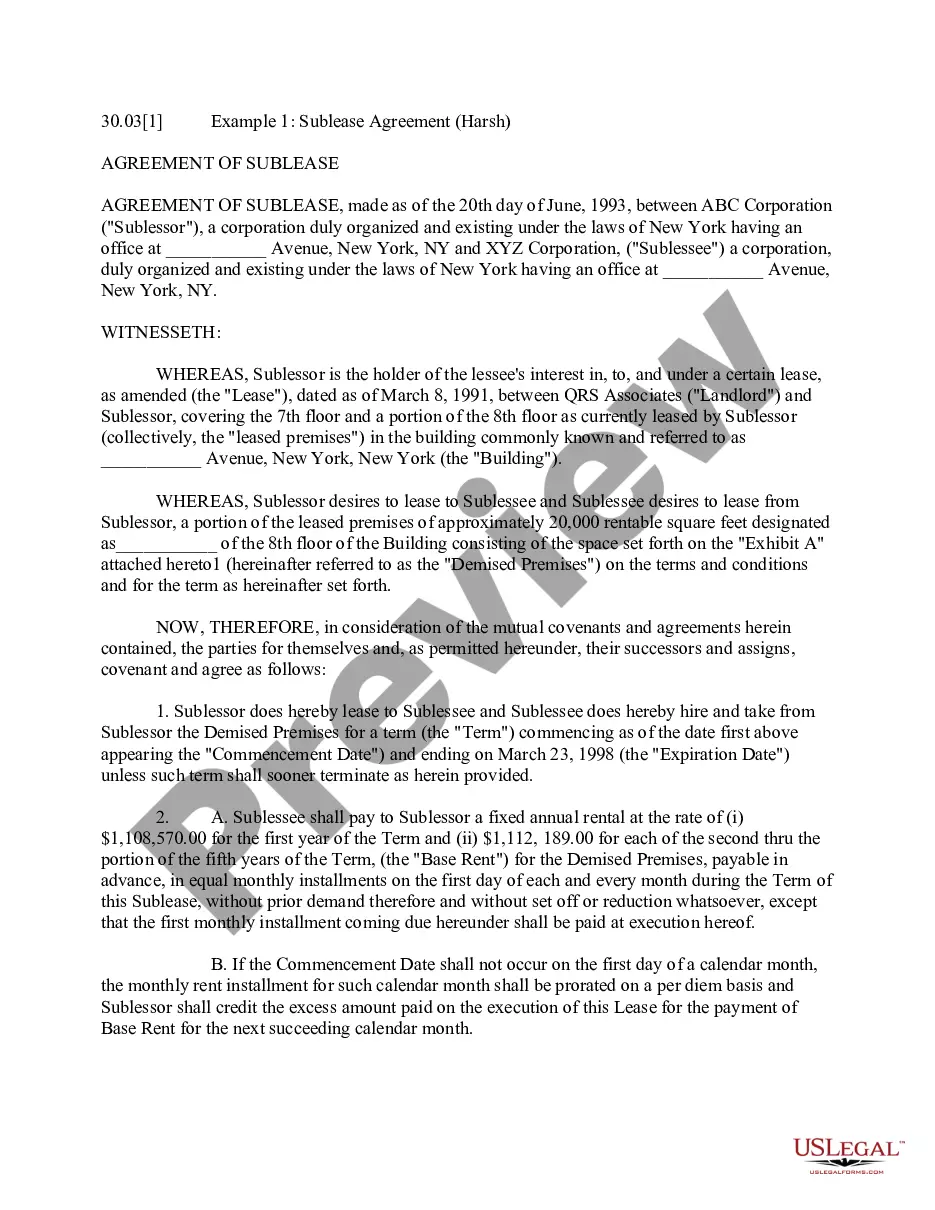
The Commercial Sublease form is a legal document that allows a tenant (Sub-Lessor) to lease out property they are renting to another tenant (Sub-Lessee). This form is different from a traditional lease agreement because it operates under the terms of an existing lease. This sublease enables the Sub-Lessor to retain their original lease obligations while granting the Sub-Lessee rights to occupy and use the property as specified in the original lease agreement.
What’s included in this form
- Names and addresses of the Sub-Lessor and Sub-Lessee
- Description of the leased property, including any improvements
- Duration of the lease and rental amounts
- Specific permitted uses of the leased property
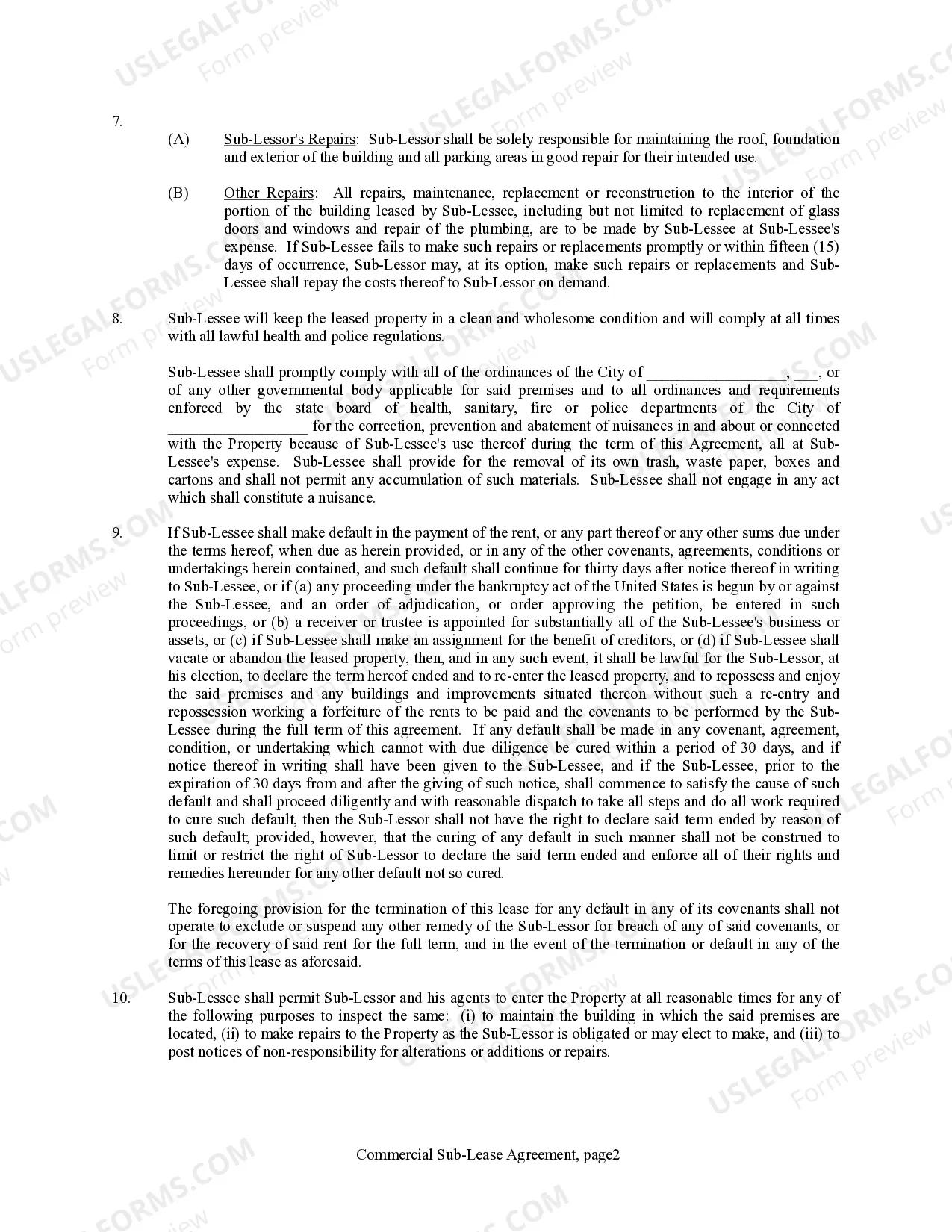
- Indemnity clauses regarding liability and insurance requirements
- Maintenance responsibilities and rights of entry for inspections
Situations where this form applies
This Commercial Sublease form is necessary when a tenant wishes to sublease a portion or the entirety of their leased commercial property to another party. Situations may include relocating temporarily, sharing space with another business, or when the primary tenant can no longer fulfill their lease obligations for a specified duration. It ensures that both parties understand their rights and responsibilities under the subleasing arrangement.
Who needs this form
- Current tenants of commercial properties who want to sublease
- Landlords or property managers overseeing subleases
- New tenants looking to occupy leased commercial space under a sublease agreement
Completing this form step by step
- Identify the parties involved by entering the names and addresses of both Sub-Lessor and Sub-Lessee.
- Specify the property being leased, including any additional improvements.
- Fill in the lease duration, including start and end dates.
- Indicate the rental payment terms, including amounts and due dates.
- Outline the permitted uses for the leased property and any specific maintenance responsibilities.
- Ensure signatures are provided to validate the agreement.
Does this document require notarization?
Notarization is generally not required for this form. However, certain states or situations might demand it. You can complete notarization online through US Legal Forms, powered by Notarize, using a verified video call available anytime.
Get your form ready online
Our built-in tools help you complete, sign, share, and store your documents in one place.
Make edits, fill in missing information, and update formatting in US Legal Forms—just like you would in MS Word.
Download a copy, print it, send it by email, or mail it via USPS—whatever works best for your next step.
Sign and collect signatures with our SignNow integration. Send to multiple recipients, set reminders, and more. Go Premium to unlock E-Sign.
If this form requires notarization, complete it online through a secure video call—no need to meet a notary in person or wait for an appointment.
We protect your documents and personal data by following strict security and privacy standards.

Make edits, fill in missing information, and update formatting in US Legal Forms—just like you would in MS Word.

Download a copy, print it, send it by email, or mail it via USPS—whatever works best for your next step.

Sign and collect signatures with our SignNow integration. Send to multiple recipients, set reminders, and more. Go Premium to unlock E-Sign.

If this form requires notarization, complete it online through a secure video call—no need to meet a notary in person or wait for an appointment.

We protect your documents and personal data by following strict security and privacy standards.
Common mistakes to avoid
- Failing to obtain the original landlord's approval for the sublease.
- Not clearly specifying the duration of the sublease.
- Omitting details regarding the rental payment schedule.
- Neglecting to outline permitted uses of the property clearly.
Why complete this form online
- Convenience of instant downloads for quick access.
- Editability allows for customization to meet specific needs.
- Reliability from templates drafted by licensed attorneys.
Legal use & context
- This Commercial Sublease form is legally binding and protects the interests of both the Sub-Lessor and Sub-Lessee.
- It is recommended to review the original lease agreement as the terms of the sublease may be restricted by it.
- Parties should consult with legal counsel if unsure about any terms or state-specific regulations.
Looking for another form?
Form popularity
FAQ
A sublease is a legally binding contract made between a tenant and a new tenant (also known as a subtenant or a sublessee).Usually, the first tenant must get consent from the landlord before he/she is allowed to sublease the premises.
A break-early fee is a lump sum payment. The amount of the break-early fee will vary greatly depending upon the commercial tenant's specific circumstances. In exchange for the break-early fee, the landlord will agree to release the commercial tenant from all of its obligations under the commercial lease.
Recording a lease means that it (or a Notice of Lease) is submitted to the public record, usually at the local Registry of Deeds following the signing of it by both parties. Generally, recording of the lease protects the tenant against subsequent claims to the property.
Can the landlord refuse consent to an Assignment? Most leases will say that the Landlord cannot unreasonably withhold consent. According to section 19 (1A) of the Landlord and Tenant Act 1927 the landlord can insert conditions in the lease, which need to be met in the case of an assignment.
In short, subletting allows a new renter to take over the lease directly with the landlord, while subleasing involves renting all or part of the space to another renter through the original renter.
A sublet, sometimes called a sublease, is a contract under which a tenant rents out their apartment to another individual while their name is still on the lease.When subleasing, only the original tenant's name is on the lease. In a roommate situation, all tenants are named on the lease.
A commercial sublease is an agreement between a tenant currently leasing a property, a new tenant looking for space, and the property owner. When you sublease your space you are the sublessor (or sublandlord) and your new tenant is the sublessee (or subtenant).
A sublease is the re-renting of property by an existing tenant to a new third party for a portion of the tenant's existing lease contract.Even if a sublease is permitted, the original tenant is still liable for the obligations stated in the lease agreement, such as the payment of rent each month.
If the commercial tenant is a shell corporation and/or does not have any assets of value, the commercial tenant may choose to walk away from its commercial lease obligations.Often the landlord will require guarantees in order to prevent a commercial tenant from walking away from its lease obligations.