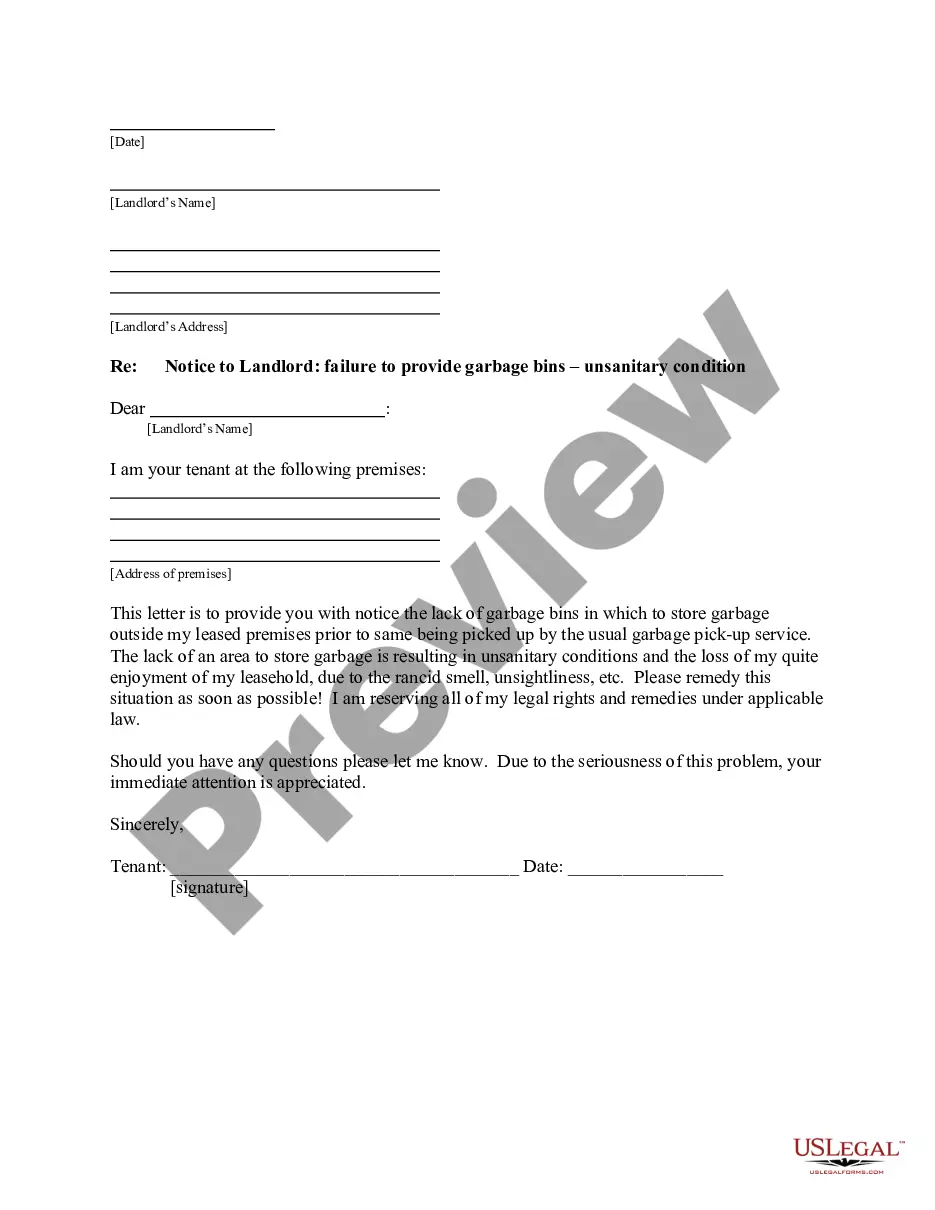
South Carolina Letter from Tenant to Landlord with Demand that landlord provide proper outdoor garbage receptacles
Understanding this form
This form is a Letter from Tenant to Landlord with a demand that the landlord provide proper outdoor garbage receptacles. It serves to inform the landlord about unsanitary conditions due to a lack of garbage bins, which is a breach of the lease agreement. This letter is essential for tenants wishing to formally address this issue and request timely repairs, differentiating it from other forms like standard maintenance requests.
Main sections of this form
- Tenant's contact information: Details the tenant's name and address.
- Landlord's contact information: Includes the landlord's name and address.
- Date of the letter: Specifies when the letter is issued.
- Statement of breach: Clearly identifies the unsanitary conditions due to a lack of garbage bins.
- Demand for action: Requests immediate attention and resolution from the landlord.
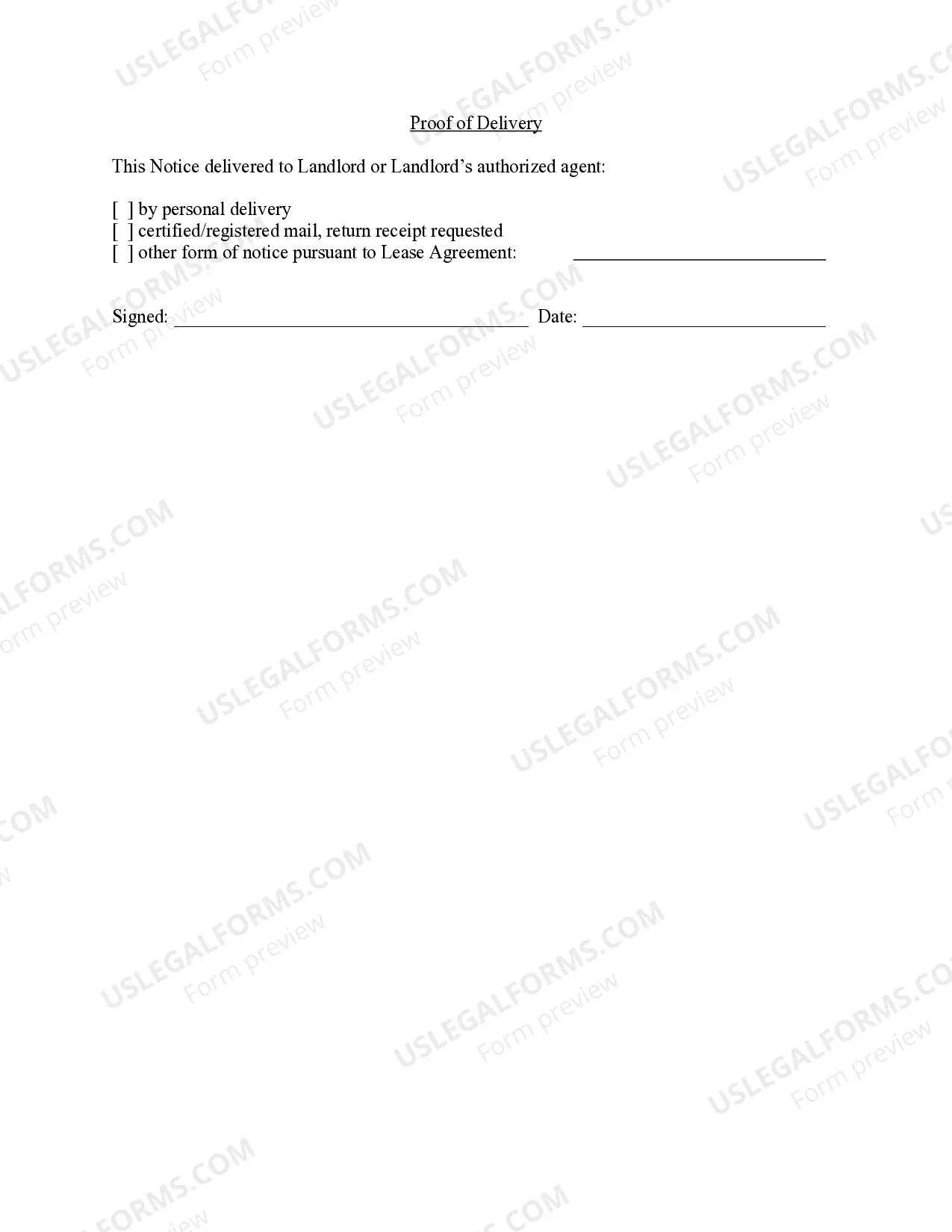
- Proof of delivery method: Indicates how the notice was delivered (e.g., personal delivery or certified mail).

Common use cases
This form should be used when a tenant encounters unsanitary conditions in their rental property due to the landlord's failure to provide garbage receptacles. It is appropriate when previous verbal or informal requests have not led to the necessary action. This can include situations where garbage is piling up, creating health hazards or attracting pests, thus requiring formal documentation of the issue.
Who can use this document
- Tenants experiencing issues with garbage disposal and cleanliness in their rental properties.
- Individuals looking to formally notify their landlords of a lease violation.
- Those seeking to document their requests for repairs or improvements regarding sanitation conditions.
Instructions for completing this form
- Identify the parties involved, including the names and addresses of both the tenant and landlord.
- Enter the date on which the letter is being sent.
- Describe the issue, specifically mentioning the absence of proper garbage receptacles and the resulting unsanitary conditions.
- Clearly state the demand for action and request the landlord to resolve the issue promptly.
- Choose a method of delivery and provide proof of delivery details at the bottom of the letter.
Notarization requirements for this form
This form does not typically require notarization unless specified by local law. However, documenting your communication with the landlord can provide additional legal protection if disputes arise.
Get your form ready online
Our built-in tools help you complete, sign, share, and store your documents in one place.
Make edits, fill in missing information, and update formatting in US Legal Forms—just like you would in MS Word.
Download a copy, print it, send it by email, or mail it via USPS—whatever works best for your next step.
Sign and collect signatures with our SignNow integration. Send to multiple recipients, set reminders, and more. Go Premium to unlock E-Sign.
If this form requires notarization, complete it online through a secure video call—no need to meet a notary in person or wait for an appointment.
We protect your documents and personal data by following strict security and privacy standards.

Make edits, fill in missing information, and update formatting in US Legal Forms—just like you would in MS Word.

Download a copy, print it, send it by email, or mail it via USPS—whatever works best for your next step.

Sign and collect signatures with our SignNow integration. Send to multiple recipients, set reminders, and more. Go Premium to unlock E-Sign.

If this form requires notarization, complete it online through a secure video call—no need to meet a notary in person or wait for an appointment.

We protect your documents and personal data by following strict security and privacy standards.
Common mistakes
- Failing to include complete contact information for both the tenant and landlord.
- Not specifying the date when the letter is issued.
- Using vague language when describing the problem.
- Neglecting to keep a copy of the letter for personal records.
- Overlooking the importance of proof of delivery.
Benefits of using this form online
- Convenient access to legal form templates tailored by licensed attorneys.
- Editable to suit individual circumstances, making customization easy.
- Available for immediate download, saving time on document preparation.
- Ensures reliability with professionally drafted legal language.
Legal use & context
- Acts as an official notice to the landlord of a lease violation.
- Can be used as evidence in potential legal disputes over tenant rights and landlord obligations.
What to keep in mind
- Utilize this form to demand proper garbage disposal methods from your landlord.
- This letter helps document communication and tenant rights focused on health standards.
- Always retain copies for record-keeping to protect your rights as a tenant.
Looking for another form?
Form popularity
FAQ
As a landlord you must: keep your rented properties safe and free from health hazards. make sure all gas and electrical equipment is safely installed and maintained. provide an Energy Performance Certificate for the property.
Location. Safety and Security. School District. Parking. Move-In Ready Condition. Appliances Included. Upgrades and Renovations. Age of Property.
As a landlord you must: keep your rented properties safe and free from health hazards. make sure all gas and electrical equipment is safely installed and maintained. provide an Energy Performance Certificate for the property.
Supply Proper Trash Receptacles: Provide Running Water: Maintain Common Areas of the Property: Perform Repairs: Make Sure All Vital Services Are Working: Keep Their Unit Free From Sanitary Hazards: Keep Their Unit Free From Safety Hazards:
There are general things that most landlords pay for like property maintenance, repairs and taxes and there are other items that may be more specific to a certain landlord, such as a property management fees or security costs.
Complying with all state and local health and building codes. Maintaining structural components and a reasonably weather-protected unit. Providing the necessary heat, electric, and hot and cold water facilities. Making any requested repairs promptly.
A landlord cannot evict a tenant without an adequately obtained eviction notice and sufficient time. A landlord cannot retaliate against a tenant for a complaint. A landlord cannot forego completing necessary repairs or force a tenant to do their own repairs.A landlord cannot remove a tenant's personal belongings.
If you think your landlord is violating the Fair Housing Act, you can get that landlord in trouble by filing a complaint at HUD.gov. Your remedy for breach of quiet enjoyment is to terminate the lease and move or sue in small claims court.