Rhode Island Written Revocation of Will
About this form
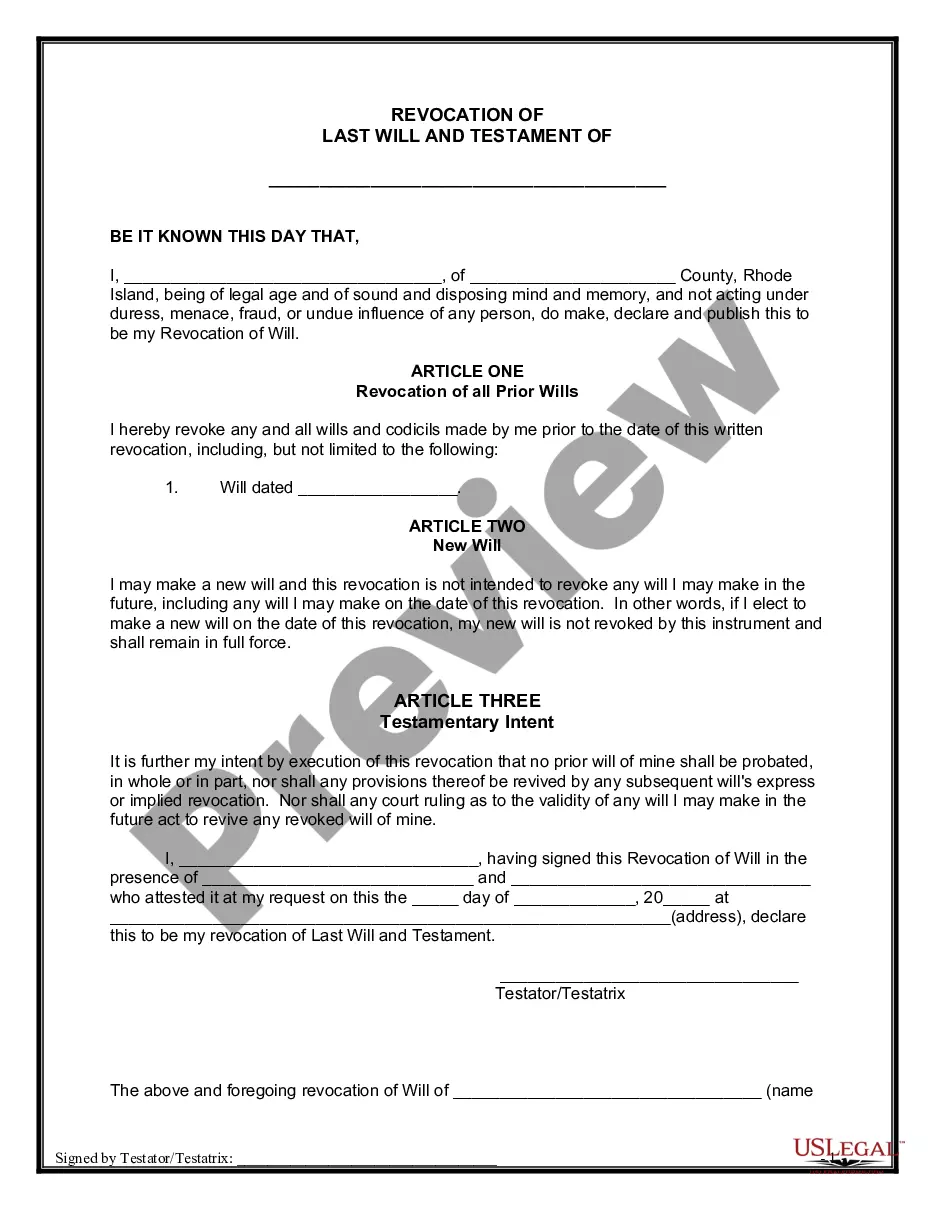
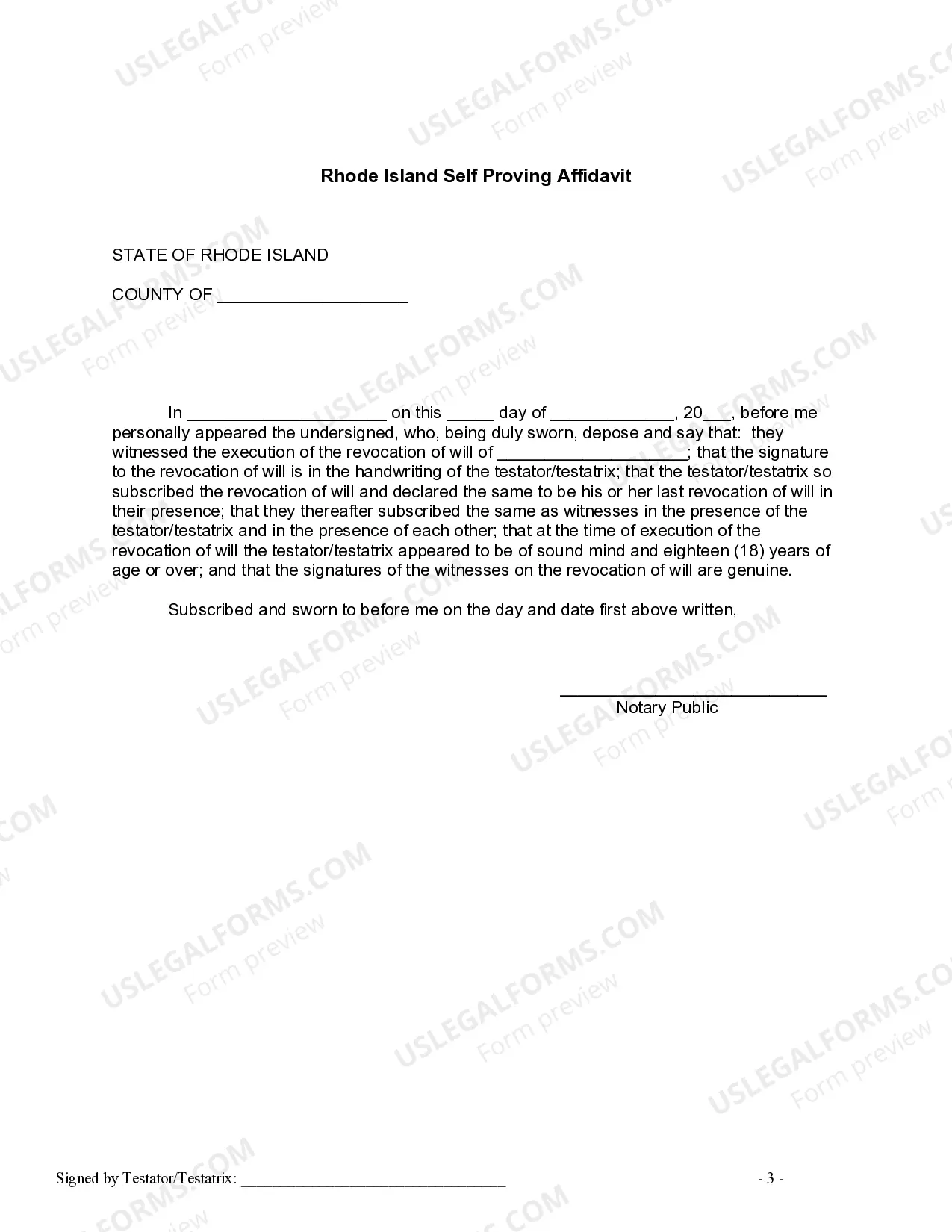
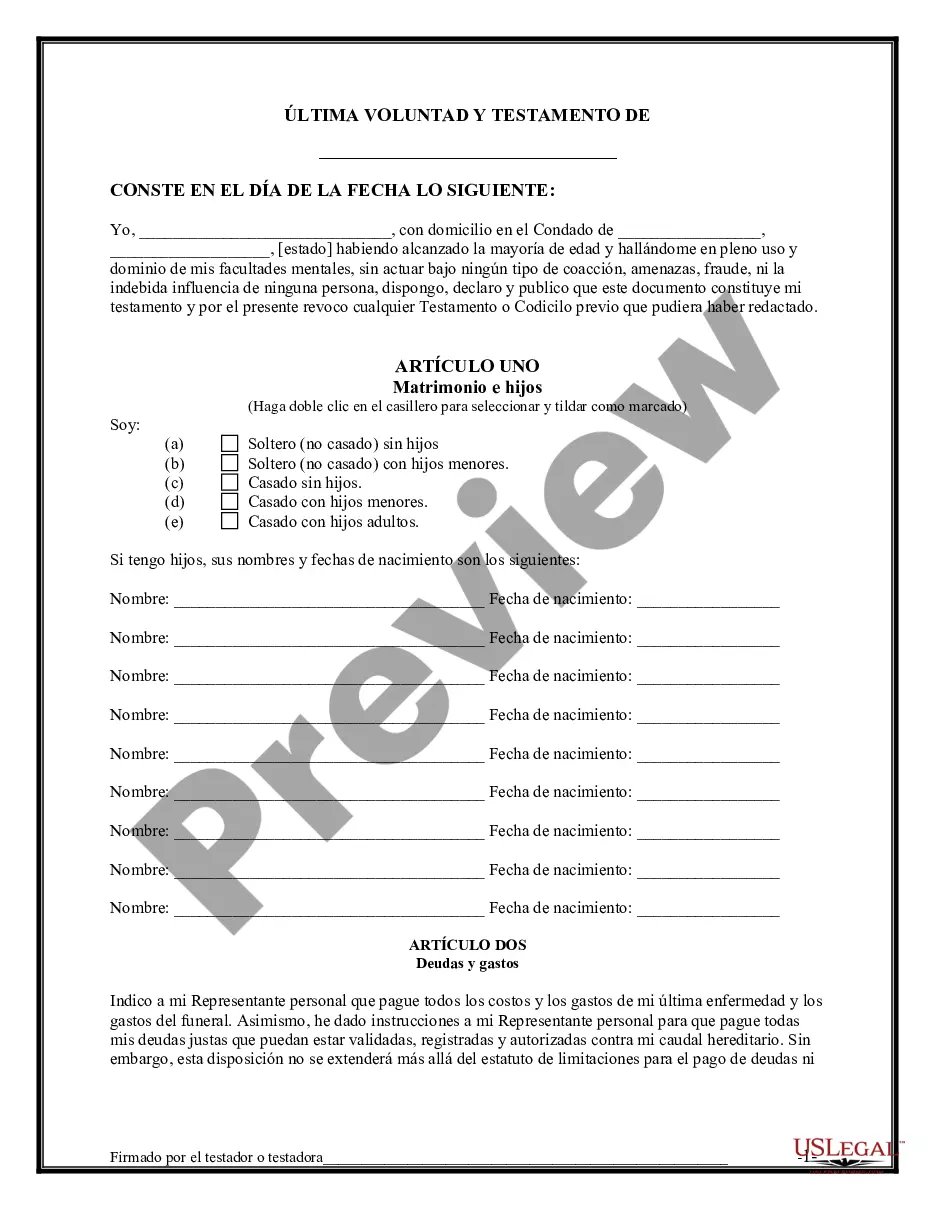
The Written Revocation of Will is a legal document that explicitly revokes any previous wills made by the testator. Unlike a new will that may contain a clause revoking prior versions, this separate revocation document ensures that no prior will is probated and establishes the individual's intent to nullify previous directives. This form is especially important if there are concerns that an undesired will may be presented during probate, ensuring that only the testator's most current wishes are recognized.
What’s included in this form
- Declaration of revocation of all prior wills and codicils.
- Statement on the validity of future wills.
- Testamentary intent sections to prevent previous wills from being probated.
- Signature line for the testator/testatrix.
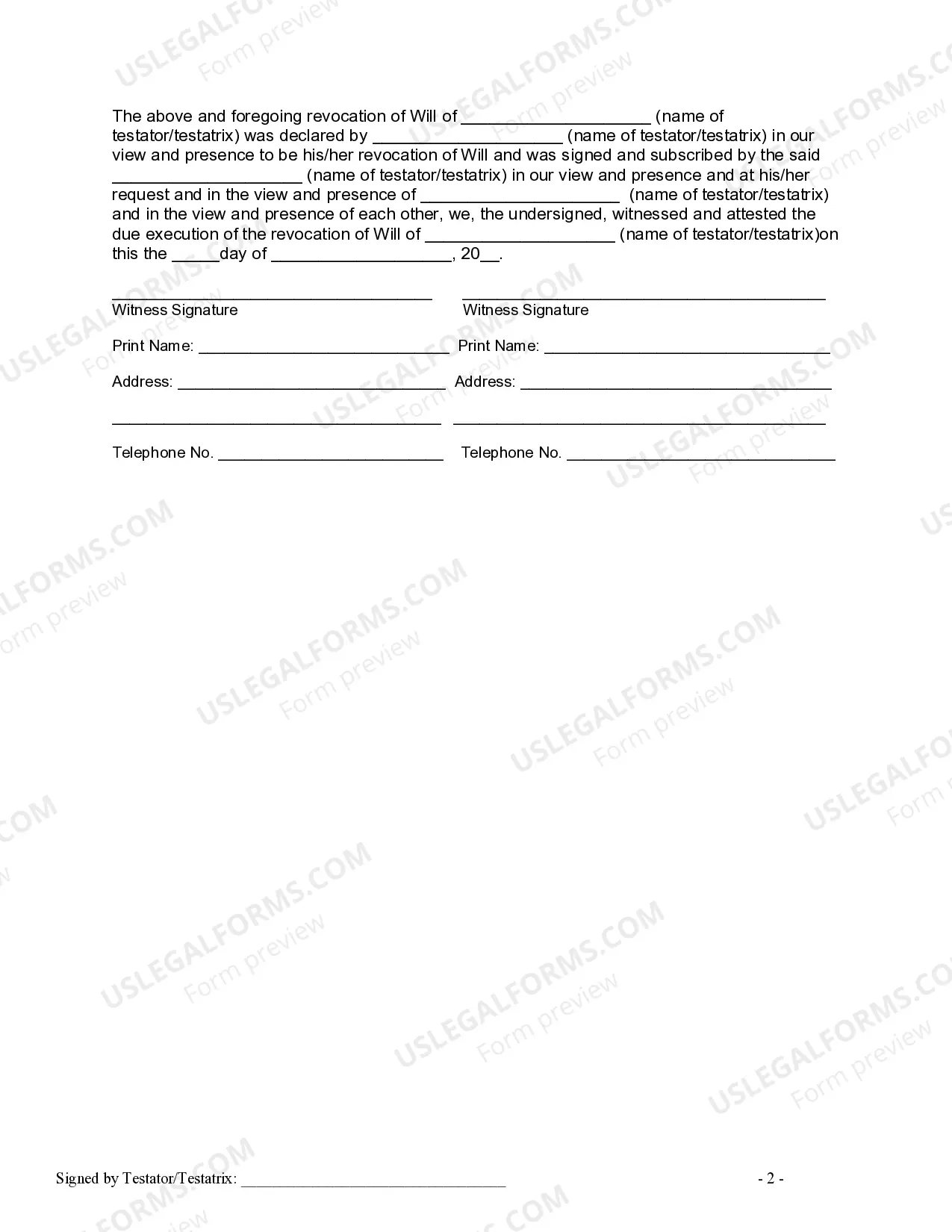
- Signature lines for witnesses to verify the execution of the revocation.
- Notary acknowledgement for verifying signatures, if applicable.

When to use this document
You should use the Written Revocation of Will when you wish to formally discard a previous will. This is particularly important if you have created a new will but want to ensure that any old documents are not recognized or considered valid. It is beneficial in situations where there may be disputes among heirs regarding which will to follow or when significant changes in circumstances necessitate a clearer statement of intent regarding your estate.
Who needs this form
- Individuals who have previously created a will and wish to revoke it.
- Testators seeking to simplify the probate process for their heirs.
- Those who want to ensure that their most recent wishes are clearly documented.
- People concerned about potential disputes regarding their estate plans.
Instructions for completing this form
- Begin by entering your name and county at the top of the document.
- Clearly declare the revocation of any prior wills and specify the date of the previous will.
- Make a statement regarding your intention to possibly create a new will after this revocation.
- Sign the revocation in the presence of witnesses.
- Have the witnesses sign and print their names and addresses to validate the document.
- If required, complete the notary acknowledgment for added legal security.
Notarization guidance
This document requires notarization to meet legal standards. US Legal Forms provides secure online notarization powered by Notarize, allowing you to complete the process through a verified video call, available 24/7.
Get your form ready online
Our built-in tools help you complete, sign, share, and store your documents in one place.
Make edits, fill in missing information, and update formatting in US Legal Forms—just like you would in MS Word.
Download a copy, print it, send it by email, or mail it via USPS—whatever works best for your next step.
Sign and collect signatures with our SignNow integration. Send to multiple recipients, set reminders, and more. Go Premium to unlock E-Sign.
If this form requires notarization, complete it online through a secure video call—no need to meet a notary in person or wait for an appointment.
We protect your documents and personal data by following strict security and privacy standards.

Make edits, fill in missing information, and update formatting in US Legal Forms—just like you would in MS Word.

Download a copy, print it, send it by email, or mail it via USPS—whatever works best for your next step.

Sign and collect signatures with our SignNow integration. Send to multiple recipients, set reminders, and more. Go Premium to unlock E-Sign.

If this form requires notarization, complete it online through a secure video call—no need to meet a notary in person or wait for an appointment.

We protect your documents and personal data by following strict security and privacy standards.
Avoid these common issues
- Failing to clearly list all prior wills being revoked.
- Not signing the document in front of witnesses.
- Using outdated language that may not reflect current legal standards.
- Neglecting to keep copies of the revocation document and informing relevant parties.
Advantages of online completion
- Convenient access to legally vetted forms drafted by licensed attorneys.
- Easy to edit, allowing personalization to fit your specific needs.
- Reliable and secure, ensuring that your legal documents are kept confidential.
- Accessible 24/7, giving you the flexibility to revoke a will at your convenience.
Quick recap
- The Written Revocation of Will is essential for invalidating prior wills.
- It helps clarify your final intentions regarding inheritance.
- Proper execution with witnesses is crucial for legal validity.
Looking for another form?
Form popularity
FAQ
You are allowed to make handwritten changes on the face of the will. However, this is generally not a good idea, unless the amendment is very minor, as it can cause your wishes to be uncertain or invalid. Generally, handwritten changes should not be considered for anything more than correcting a spelling or address.
A will can also be declared invalid if someone proves in court that it was procured by undue influence. This usually involves some evil-doer who occupies a position of trust -- for example, a caregiver or adult child -- manipulating a vulnerable person to leave all, or most, of his property to the manipulator instead
Destroy It Tearing, burning, shredding or otherwise destroying a will makes it null and void, according to the law office of Barrera Sanchez & Associates. The testator might do this personally or order someone else to do it while he witnesses the act.
A testator who wishes to revoke his original Will which is made by him on a specified date and time, he can make revocation of the will himself by writing a subsequent Will or codicil duly executed and by destruction of the previous will.
Can You Revoke a Will After the Death of the Testator? A will can only be canceled by the testator. A power of attorney does not grant the right to revoke a will. Therefore, no one else can cancel a will after the death of the testator.
Generally, you can revoke a will by (1) destroying the old will, (2) creating a new will or (3) making changes to an existing will. In some circumstances, simply giving away all or your property and assets before you die can have the effect of revoking a will (subject to estate tax penalties).
The testator can cancel his will at any time during his life time registered or non registered . It does not require stamp duty. If you want to cancel then make another will the fist one is automatic cancel.
If you want to destroy a will, you must burn it, tear it up or otherwise destroy it with the clear intention that it is revoked. There is a risk that if a copy subsequently reappears (or bits of the will are reassembled), it might be thought that the destruction was accidental.
A testator can revoke a will by making changes to parts of an existing will. The newly-amended will, now called a codicil, has the effect of creating a new will because it can change key aspects of an existing will, including new beneficiaries and property designations.