Rhode Island Construction or Mechanics Lien Package - Corporationv or LLC
What this form package covers
The Rhode Island Construction or Mechanics Lien Package for Corporations or LLCs is specifically crafted for businesses that provide labor, materials, or services to enhance real property. This essential package aids corporations and limited liability companies in recovering owed payments by filing a lien on the improved property. It includes vital information on the mechanics lien process, a comprehensive list and descriptions of forms, tips for completing them, and access to a law summary specific to Rhode Island.
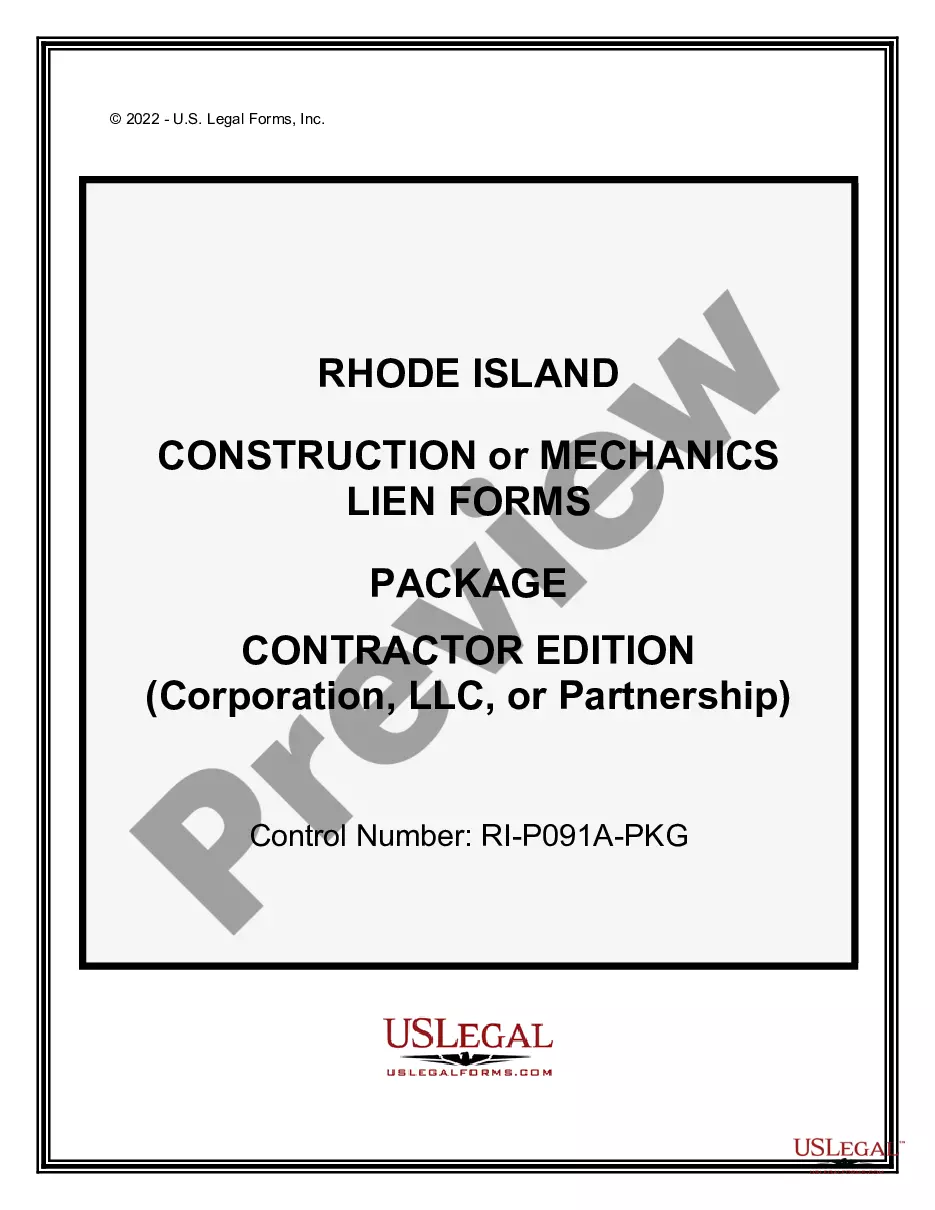
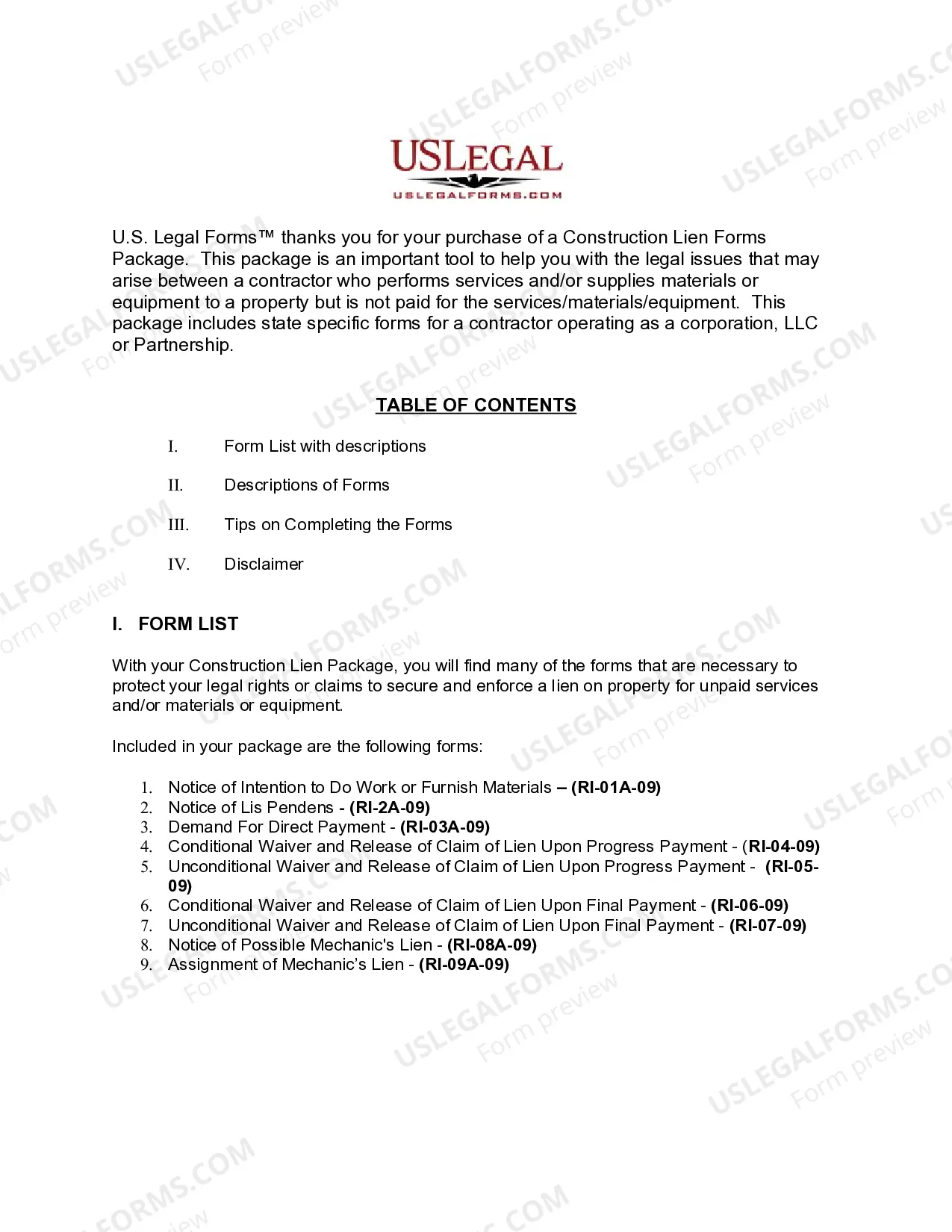
Forms included in this package
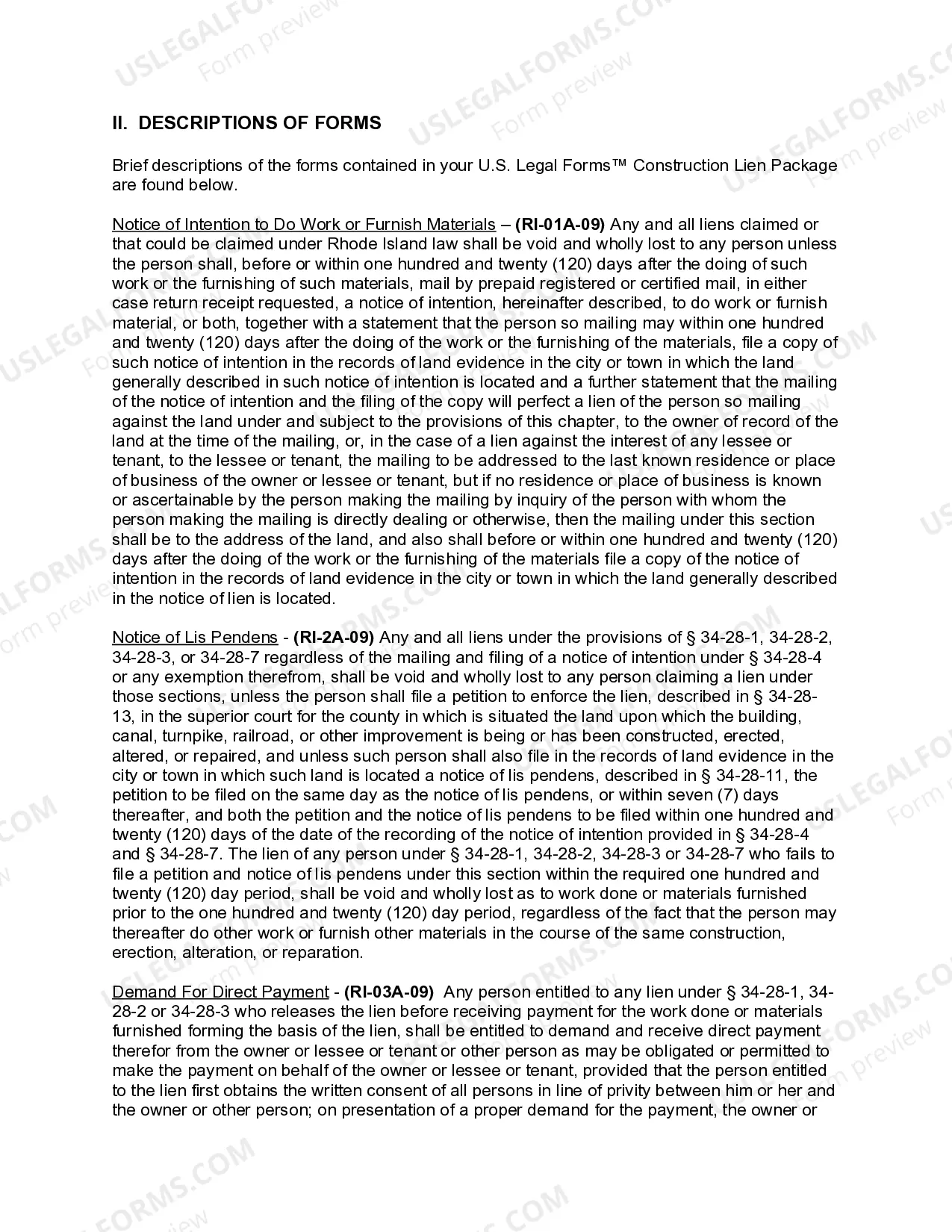
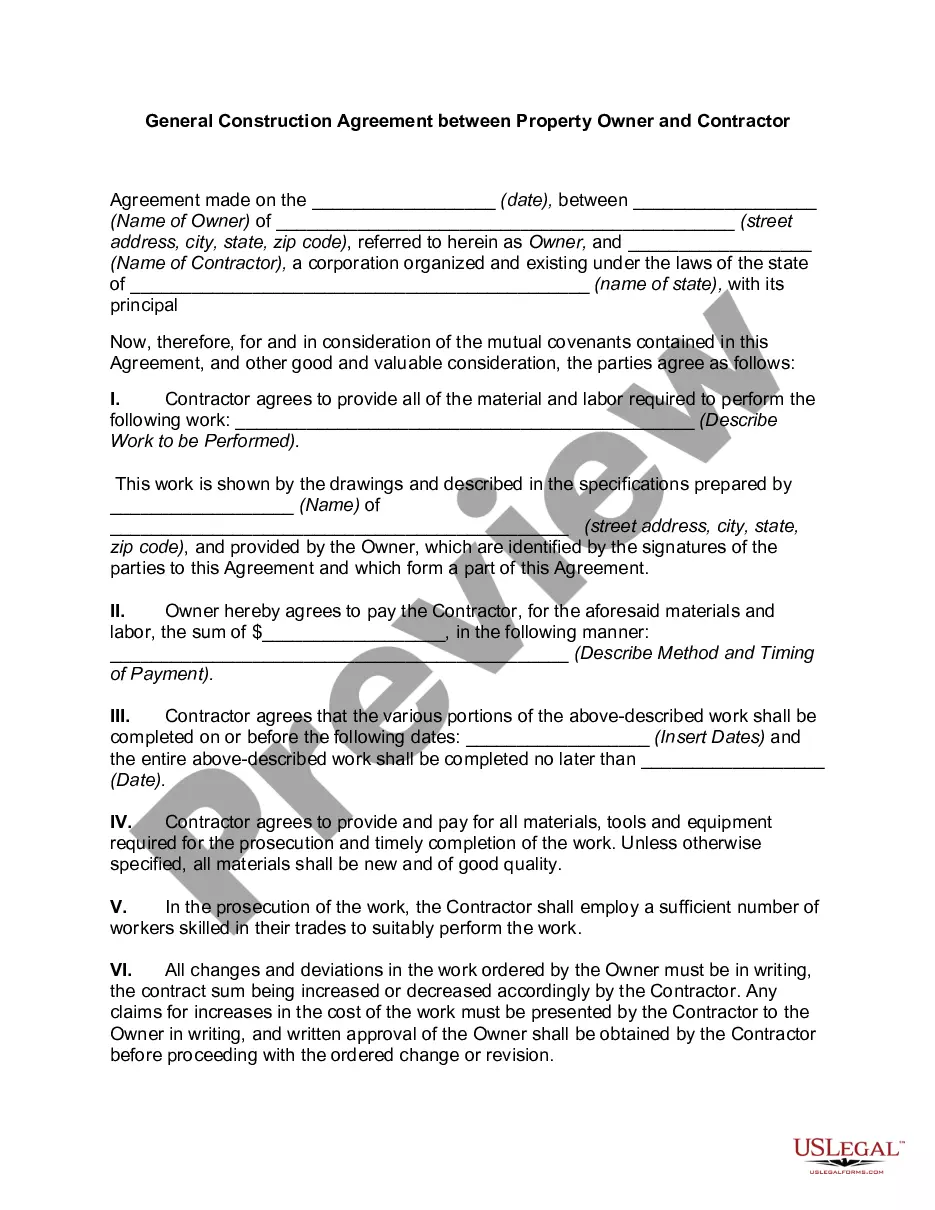
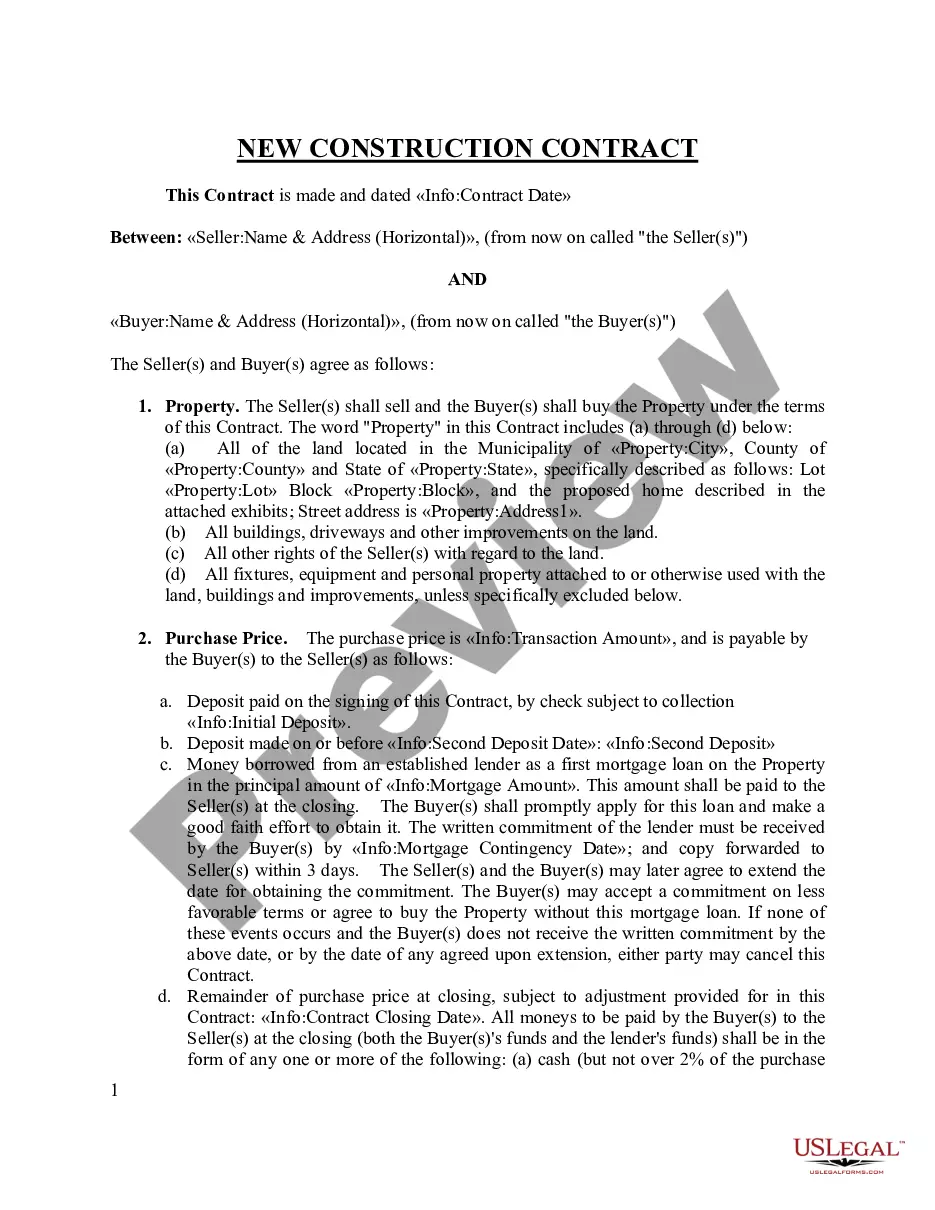
- Notice of Intention to Do Work or Furnish Materials - Corporation
- Notice of Lis Pendens - Corporation
- Demand For Direct Payment - Corporation
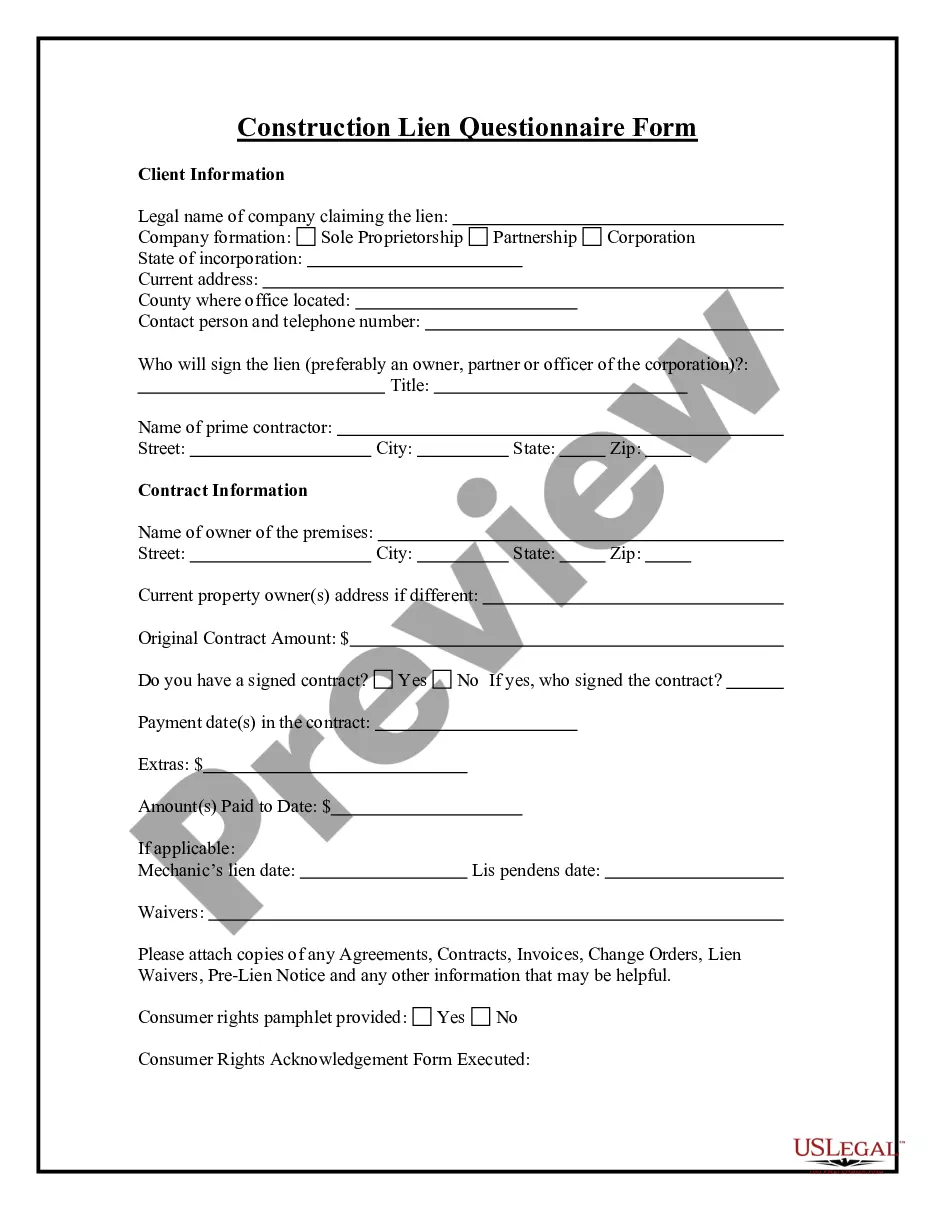
- Conditional Waiver and Release of Claim of Lien Upon Progress Payment
- Unconditional Waiver and Release of Claim of Lien Upon Progress Payment
- Conditional Waiver and Release of Claim of Lien Upon Final Payment
- Unconditional Waiver and Release of Claim of Lien Upon Final Payment
- Notice of Possible Mechanic's Lien - Corporation
- Assignment of Mechanic's Lien - Corporation
Situations where these forms applies
This form package is needed in various scenarios, including:
- When a corporation or LLC has completed work on a property but has not received payment for services or materials provided.
- When businesses want to assert a legal right to lien on a property to secure unpaid amounts.
- If a contractor needs to notify property owners of an intention to file a lien due to nonpayment.
- When finalizing payments, and there is a need to release lien rights.
Who this form package is for
- Corporations or LLCs that have provided construction-related services or materials in Rhode Island.
- Contractors who need to enforce their rights to be paid for work performed.
- Business owners looking for a straightforward process to pursue claims for unpaid invoices.
Steps to complete these forms
- Review the included forms and familiarize yourself with their purposes.
- Identify the parties involved in the project and the outstanding payments.
- Complete the forms by entering the required information in the designated fields.
- Ensure to follow the specific filing procedures outlined in the documentation.
- File the completed forms with the appropriate local authority or court as mandated by Rhode Island law.
Do documents in this package require notarization?
Forms in this package typically do not require notarization unless mandated by local law. It is always important to review each form carefully to determine if notarization is needed based on your specific circumstances.
Get your form ready online
Our built-in tools help you complete, sign, share, and store your documents in one place.
Make edits, fill in missing information, and update formatting in US Legal Forms—just like you would in MS Word.
Download a copy, print it, send it by email, or mail it via USPS—whatever works best for your next step.
Sign and collect signatures with our SignNow integration. Send to multiple recipients, set reminders, and more. Go Premium to unlock E-Sign.
If this form requires notarization, complete it online through a secure video call—no need to meet a notary in person or wait for an appointment.
We protect your documents and personal data by following strict security and privacy standards.

Make edits, fill in missing information, and update formatting in US Legal Forms—just like you would in MS Word.

Download a copy, print it, send it by email, or mail it via USPS—whatever works best for your next step.

Sign and collect signatures with our SignNow integration. Send to multiple recipients, set reminders, and more. Go Premium to unlock E-Sign.

If this form requires notarization, complete it online through a secure video call—no need to meet a notary in person or wait for an appointment.

We protect your documents and personal data by following strict security and privacy standards.
Common mistakes to avoid
- Failing to file necessary forms within the required time limits.
- Not providing complete or accurate information on the forms.
- Missing signatures or necessary acknowledgments.
- Ineffective communication with property owners regarding the intent to file a lien.
Advantages of online completion
- Convenience of downloading and completing forms at your own pace.
- Editability allows for quick updates and corrections to the forms.
- Access to forms prepared by licensed attorneys, ensuring legal validity.
- Comprehensive guidance provided through tips and instructions increases confidence in the filing process.
Legal use & context
The forms within this package are legally valid for filing construction or mechanics liens in Rhode Island, provided they are completed and filed according to state laws. Failure to adhere to specific requirements may result in the loss of lien rights.
Main things to remember
- This package is essential for corporations and LLCs seeking to recover payment for construction work done in Rhode Island.
- Forms must be completed accurately and filed within specific time frames to remain valid.
- Using this package online offers convenience and up-to-date legal resources.
Looking for another form?









Form popularity
FAQ
Get free mechanics lien form A construction mechanics lien is claimed against real estate property, and the lien must be filed in the appropriate office in order to be valid.Additionally, construction liens have strict timing and notice requirements. Machinery mechanics liens are possessory liens.
A construction lien is a claim made against a property by a contractor or subcontractor who has not been paid for work done on that property. Construction liens are designed to protect professionals from the risk of not being paid for services rendered.
Posting a Bond Asselta says to expect to pay 110 percent of the lien amount. Submit the bond to the court. The lien will then transfer to the bond and clear the property's title. Wait for the contractor claimant to foreclose on the lien in the allotted period to dispute the lien in court.
How does a creditor go about getting a judgment lien in Rhode Island? To attach the lien, the creditor must request execution of attachment within 48 hours after entry of the judgment, then file the execution with the town clerk or recorder of deeds in the Rhode Island town where the debtor's property is located.
Can a lien be placed on your property without you knowing? Yes, it happens. Sometimes a court decision or settlement results in a lien being placed on a property, and for some reason the owner doesn't know about it initially.
Prepare your Rhode Island Notice of Intention form. Serve the Rhode Island Notice of Intention as a preliminary notice. Record the Rhode Island Notice of Intention as a mechanics lien. File Notice of Lis Pendens and enforce the mechanics lien.
A mechanic's lien is a guarantee of payment to builders, contractors, and construction firms that build or repair structures. Mechanic's liens also extend to suppliers of materials and subcontractors and cover building repairs as well.
Someone who is owed money is generally not able to just put a lien on property without first securing a judgment. Securing a judgment requires the creditor to sue the debtor. This may be through circuit court in many jurisdictions. If under a certain dollar amount, this suit may be through the small claims court.
While it's unlikely that just anyone can put a lien on your home or land, it's not unheard of for a court decision or a settlement to result in a lien being placed against a property.