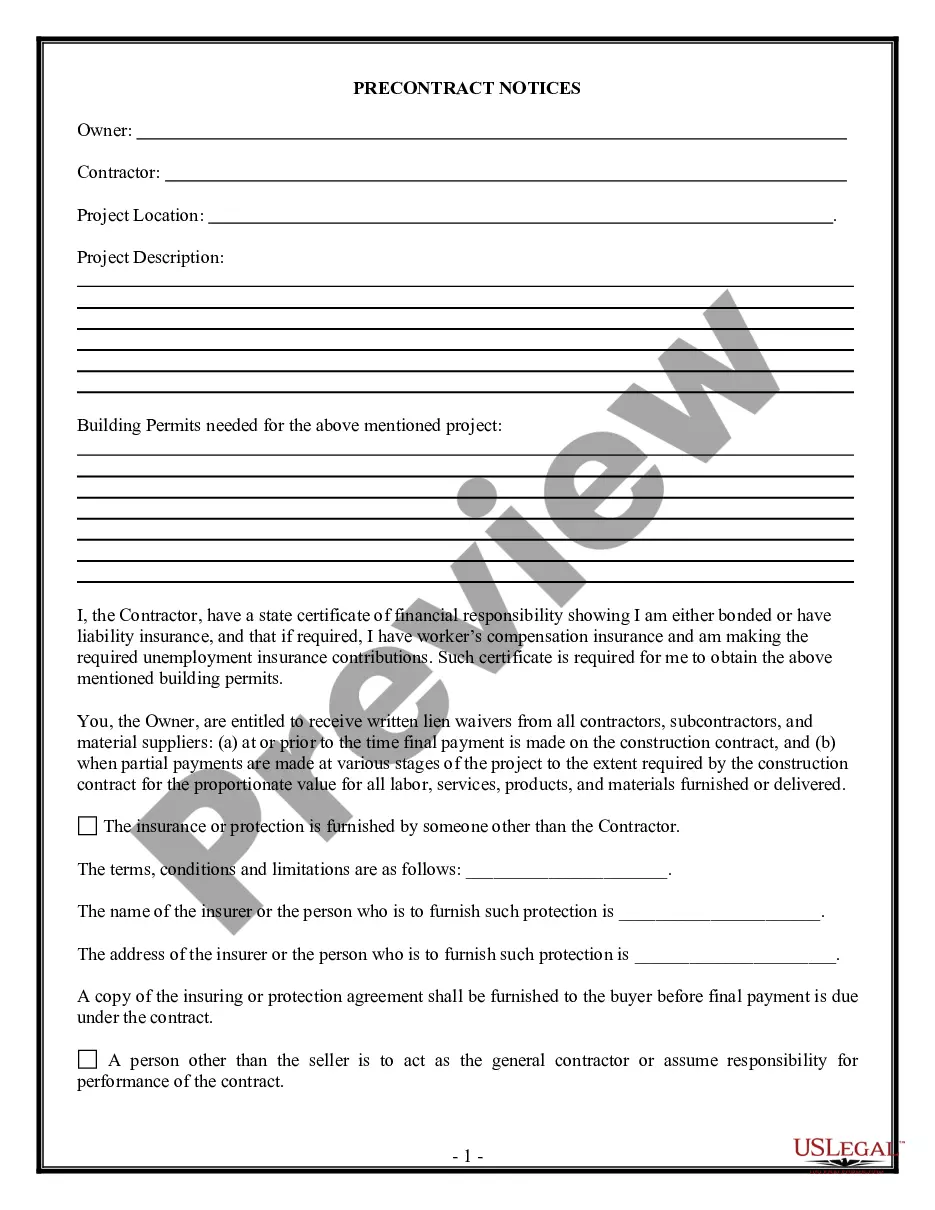
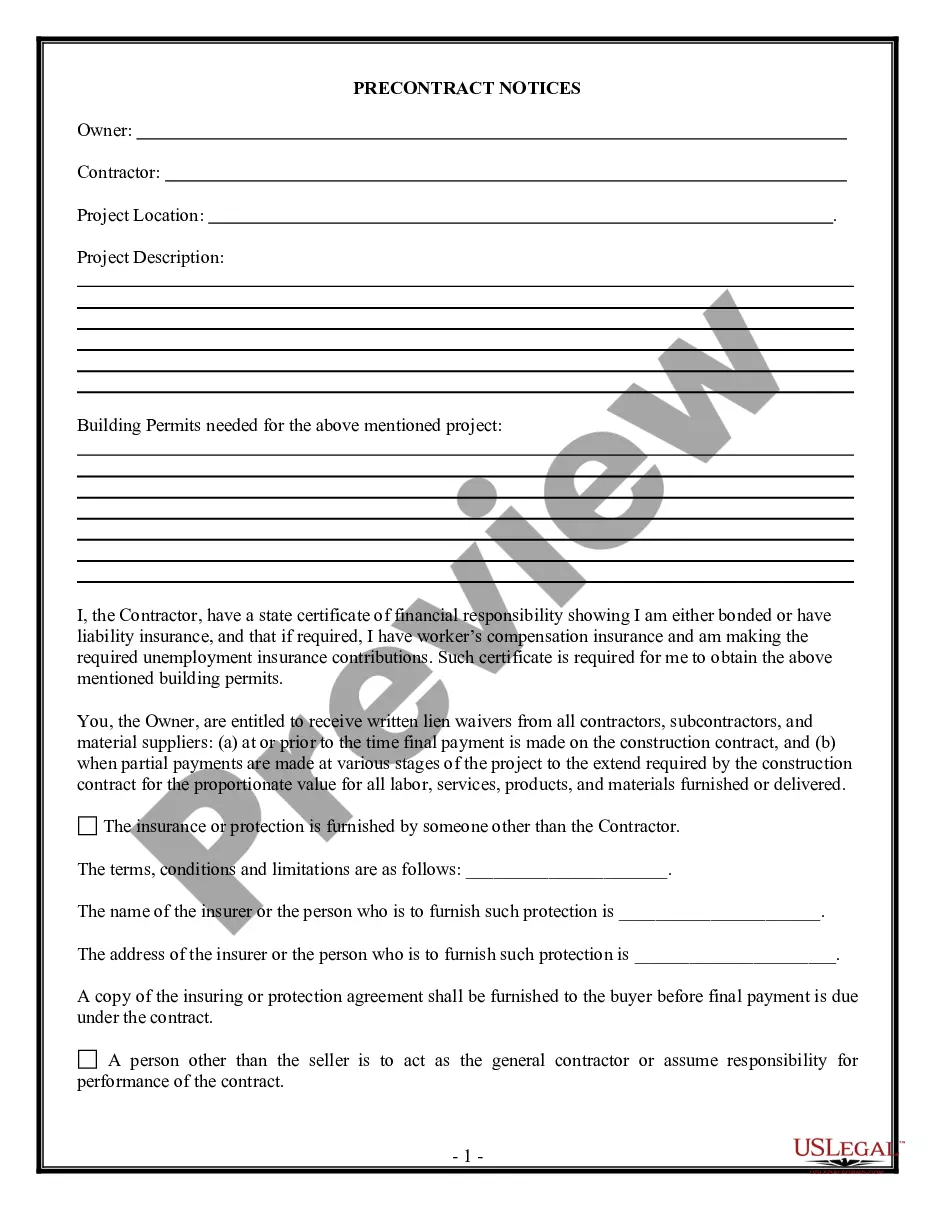
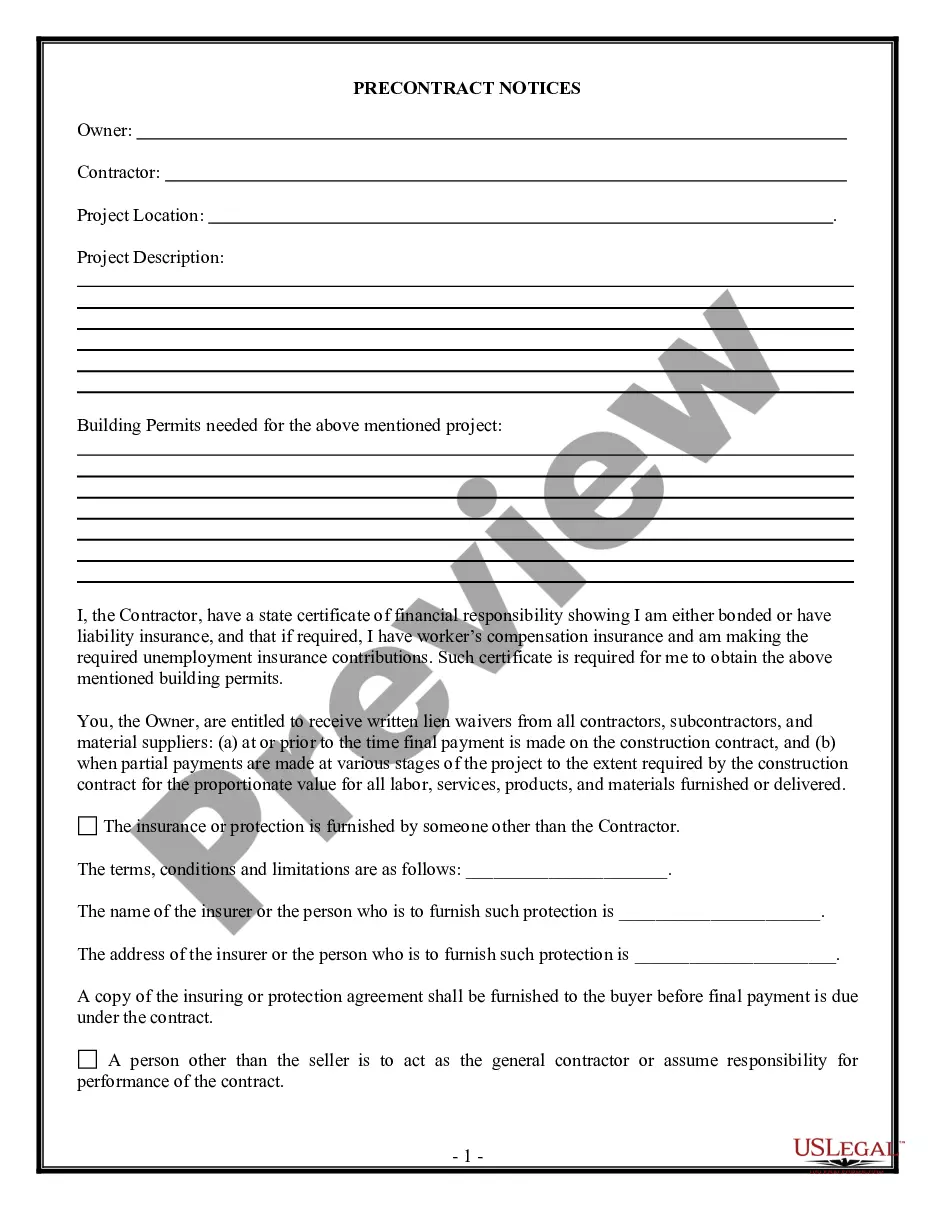
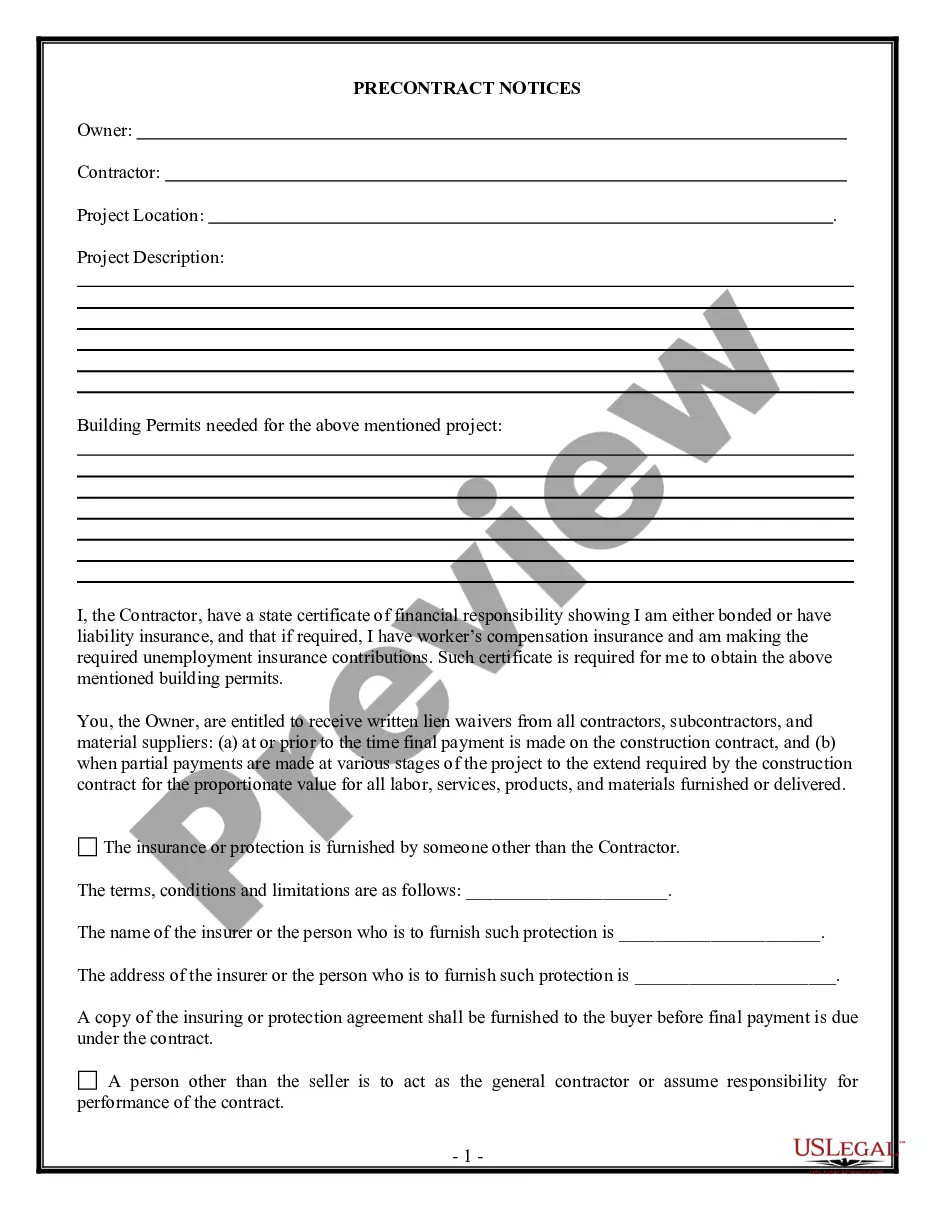
Rhode Island Residential Real Estate Sales Disclosure Statement
What is this form?
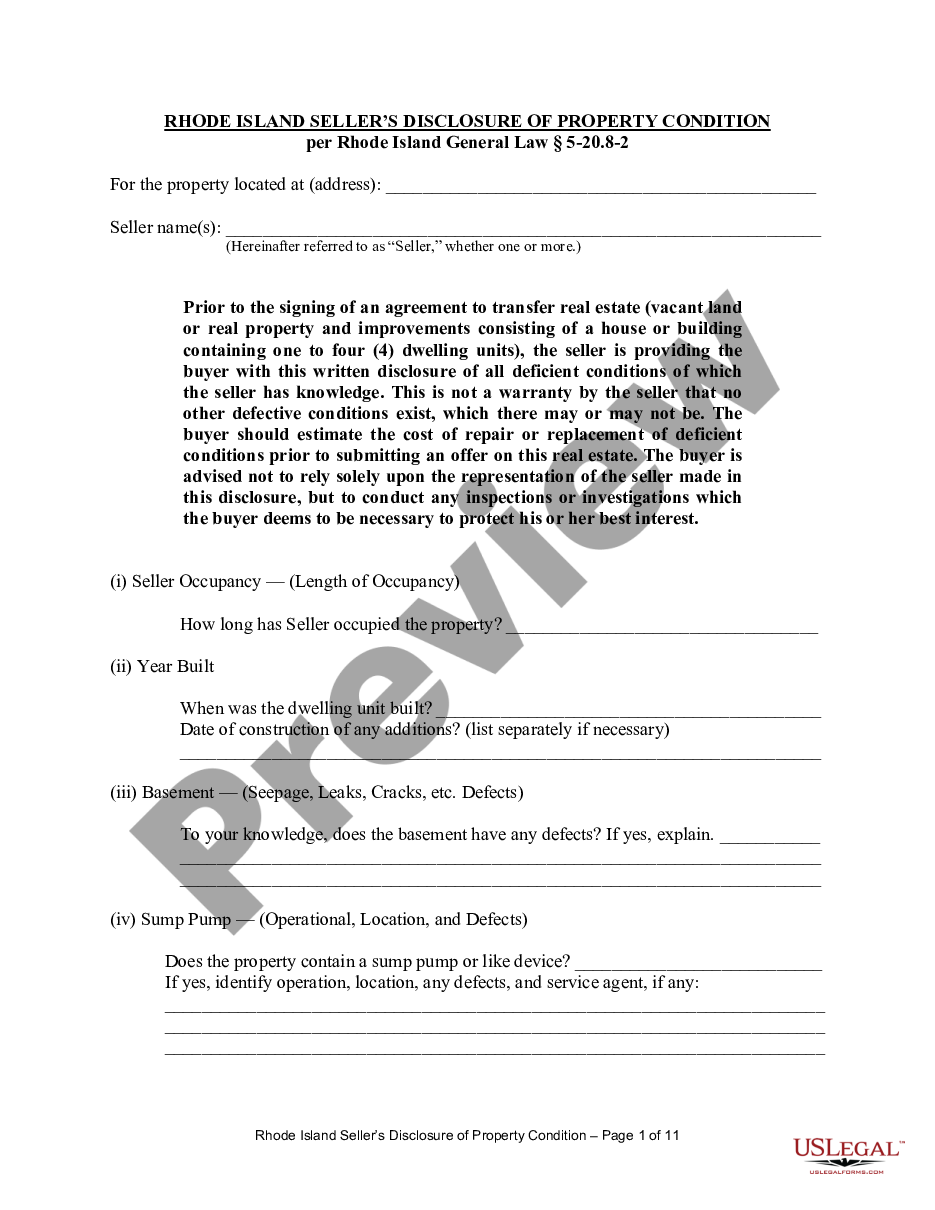
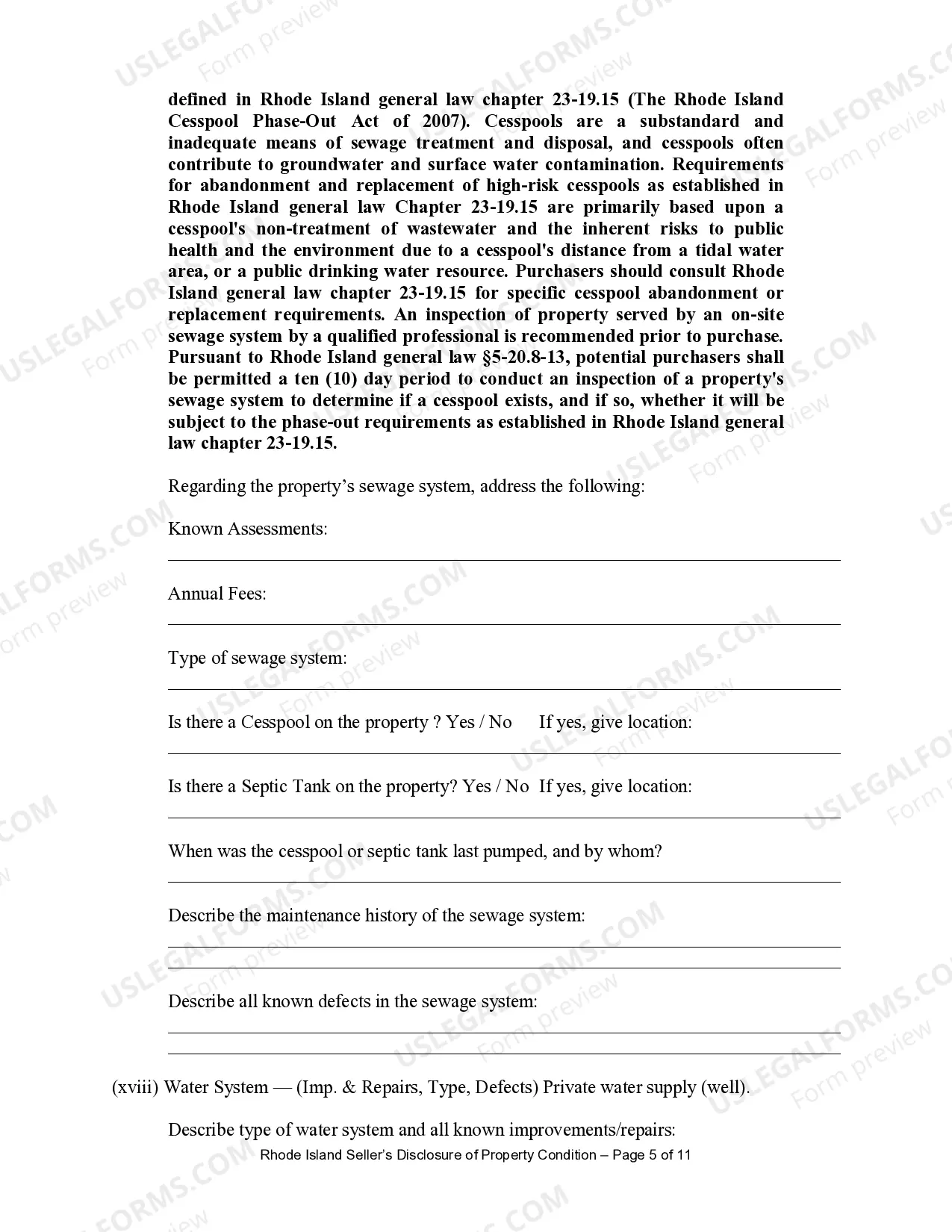
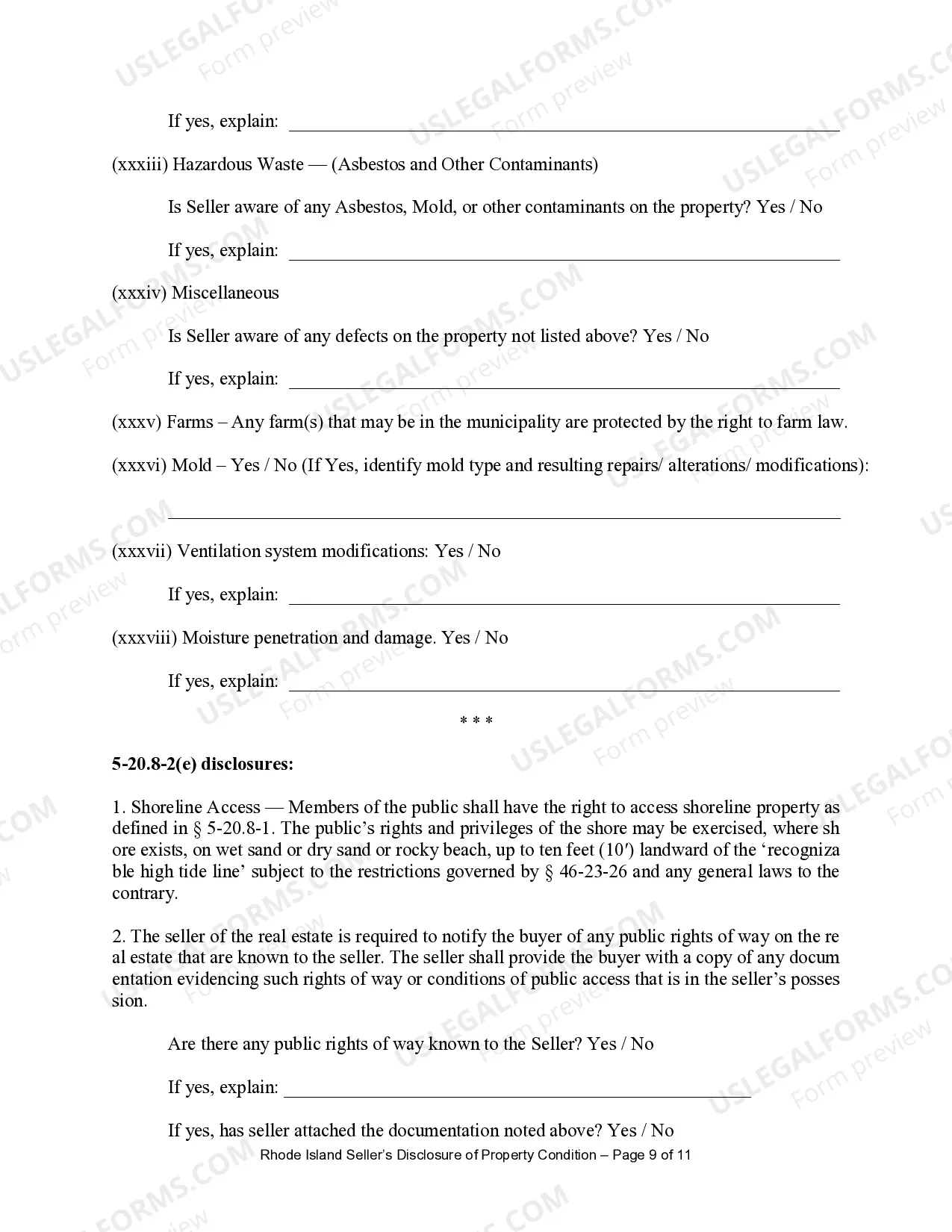
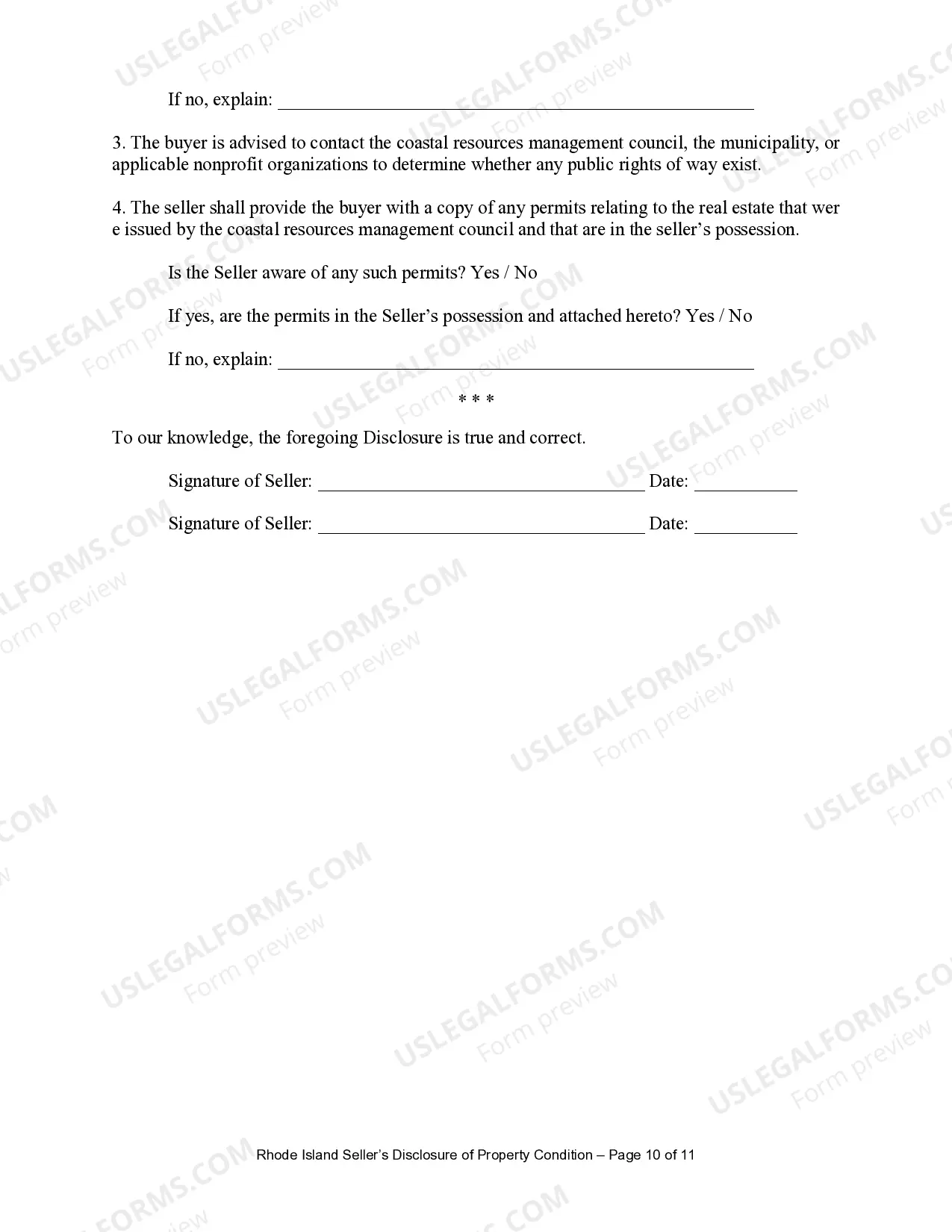
The Residential Real Estate Sales Disclosure Statement is a legal document required in Rhode Island, designed for sellers in residential sales transactions. This form serves to inform potential buyers about the condition of the property, highlighting any known defects or issues with the property. It differs from other forms, such as purchase agreements, by focusing on disclosing the seller's knowledge of property conditions rather than detailing the terms of the sale.
Key components of this form
- Seller and property identification
- Occupancy history of the property
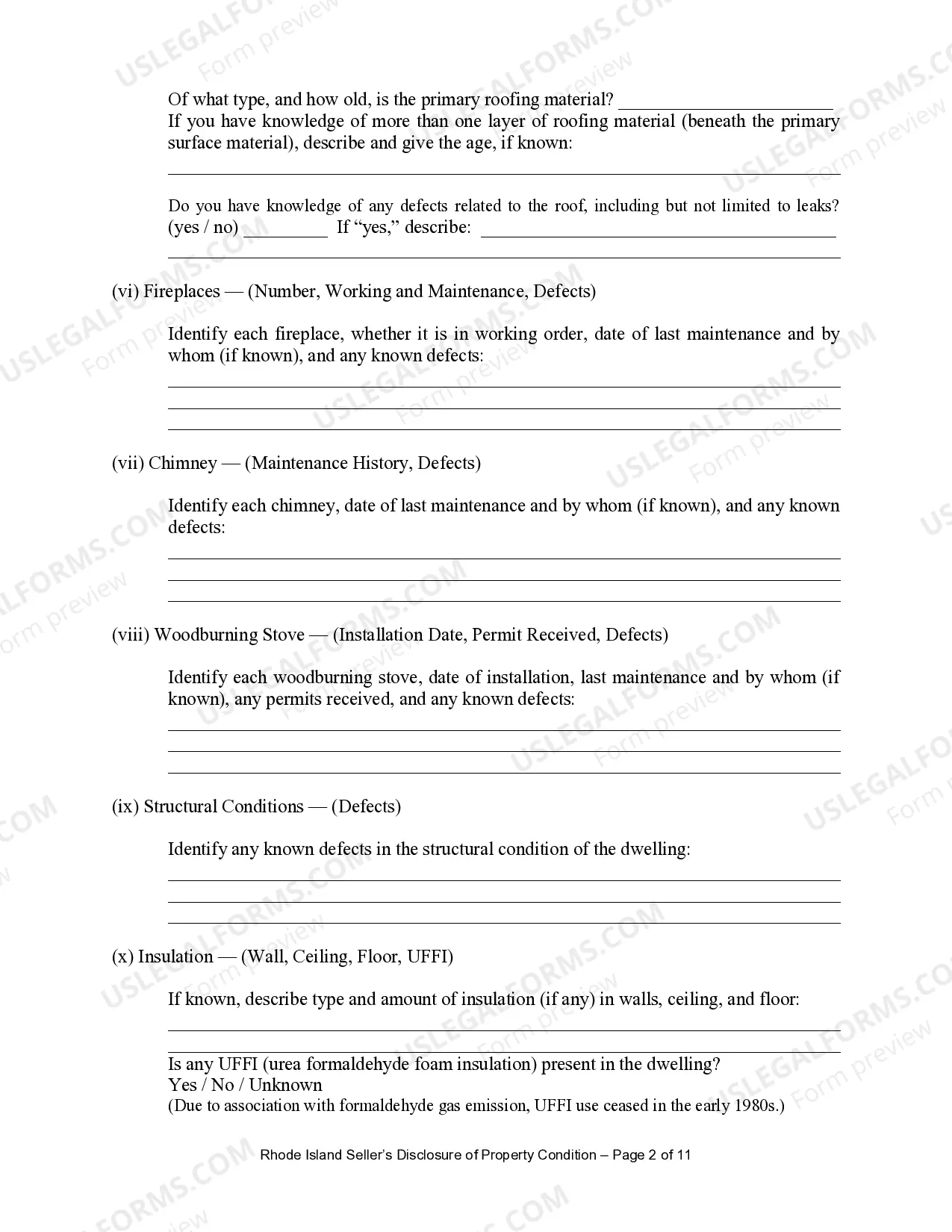
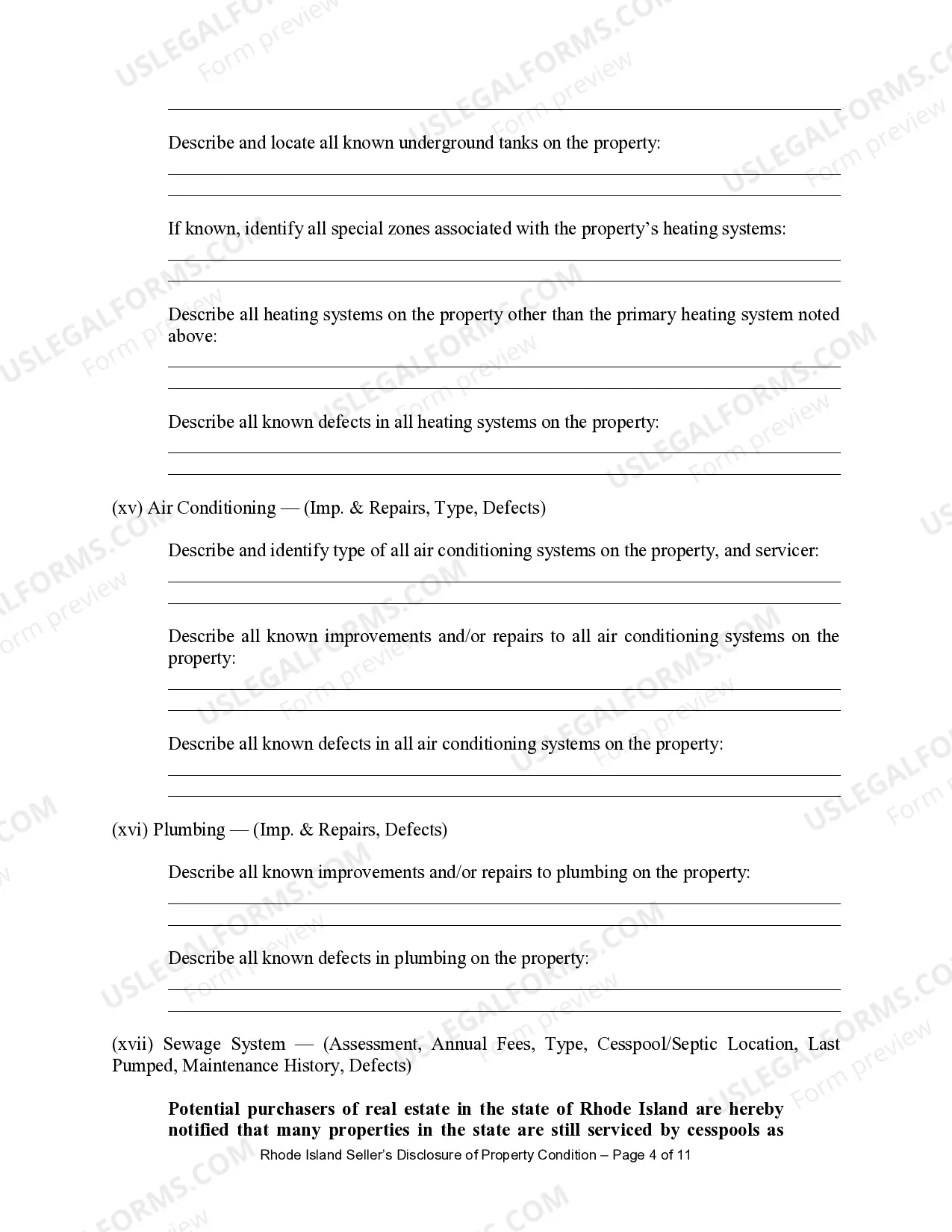
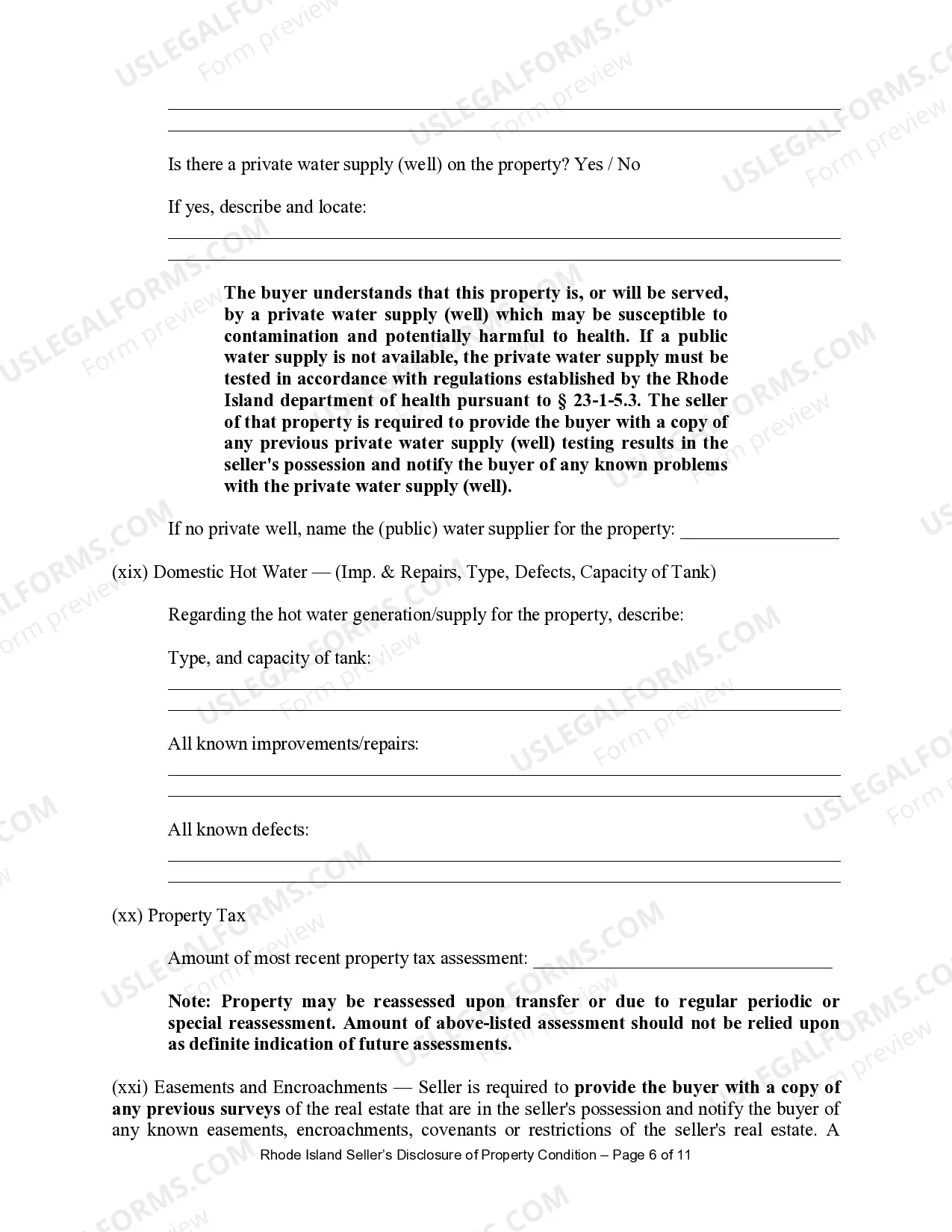
- Details on potential defects in various property components, including plumbing, roofing, and heating systems
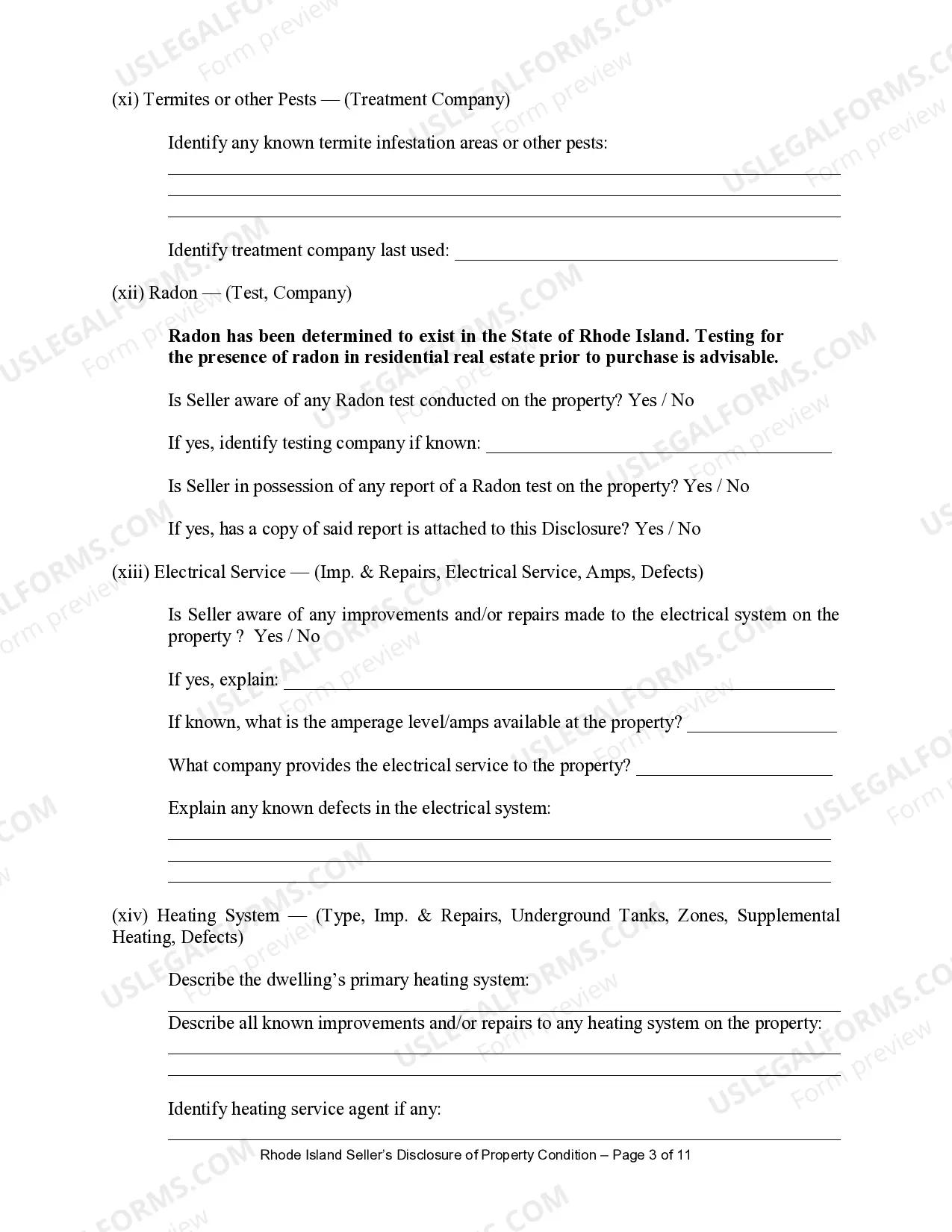
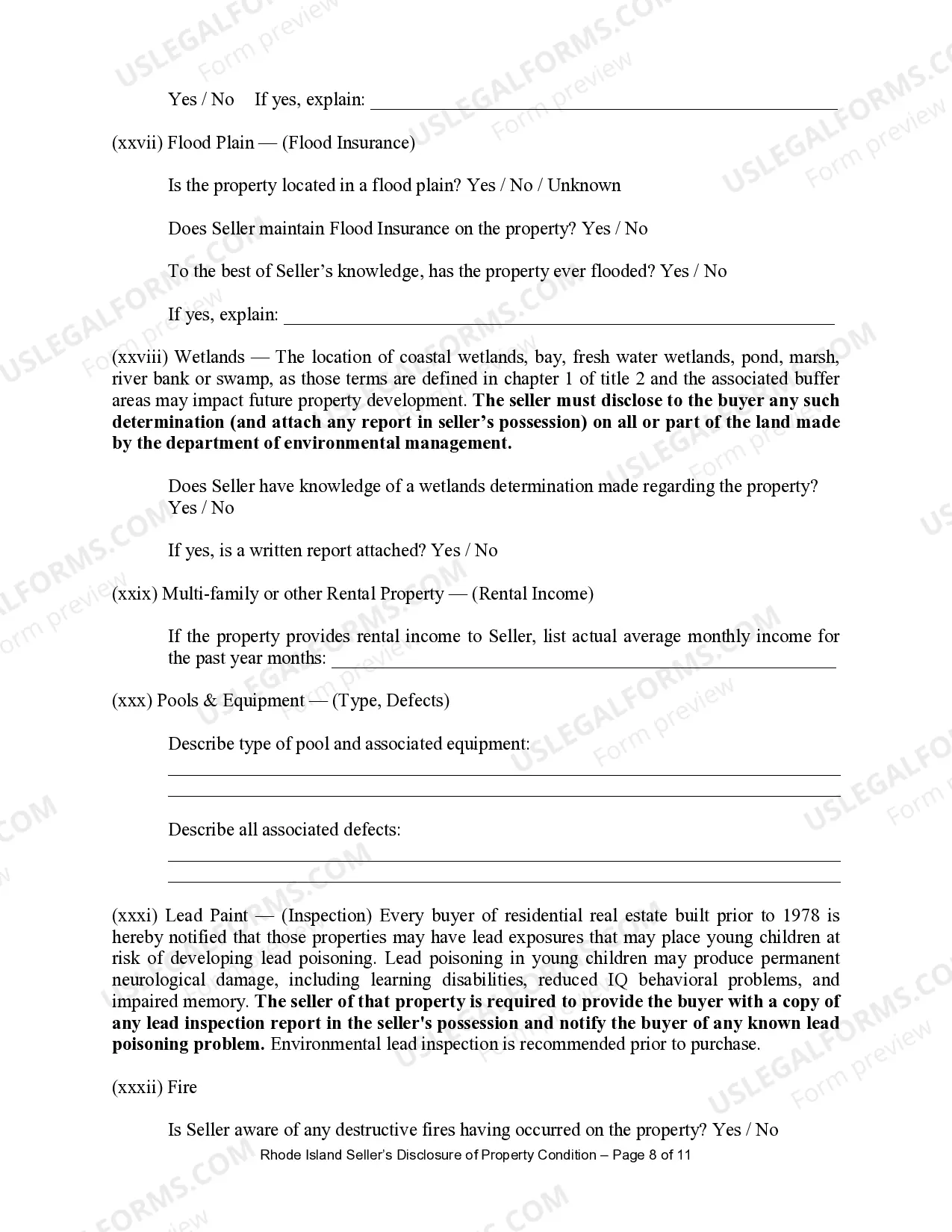
- Disclosure of pest infestations and hazardous materials
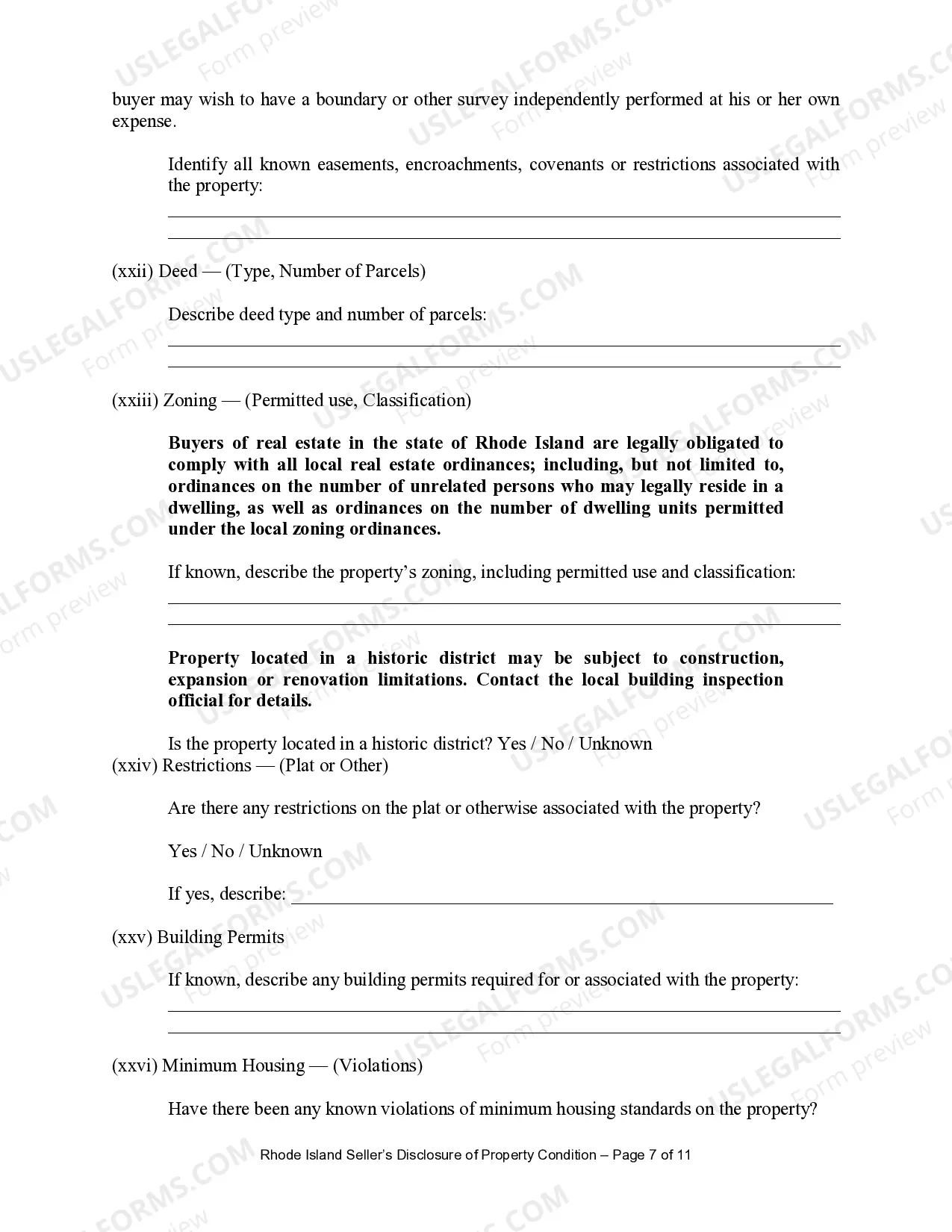
- Information about zoning and any easements associated with the property

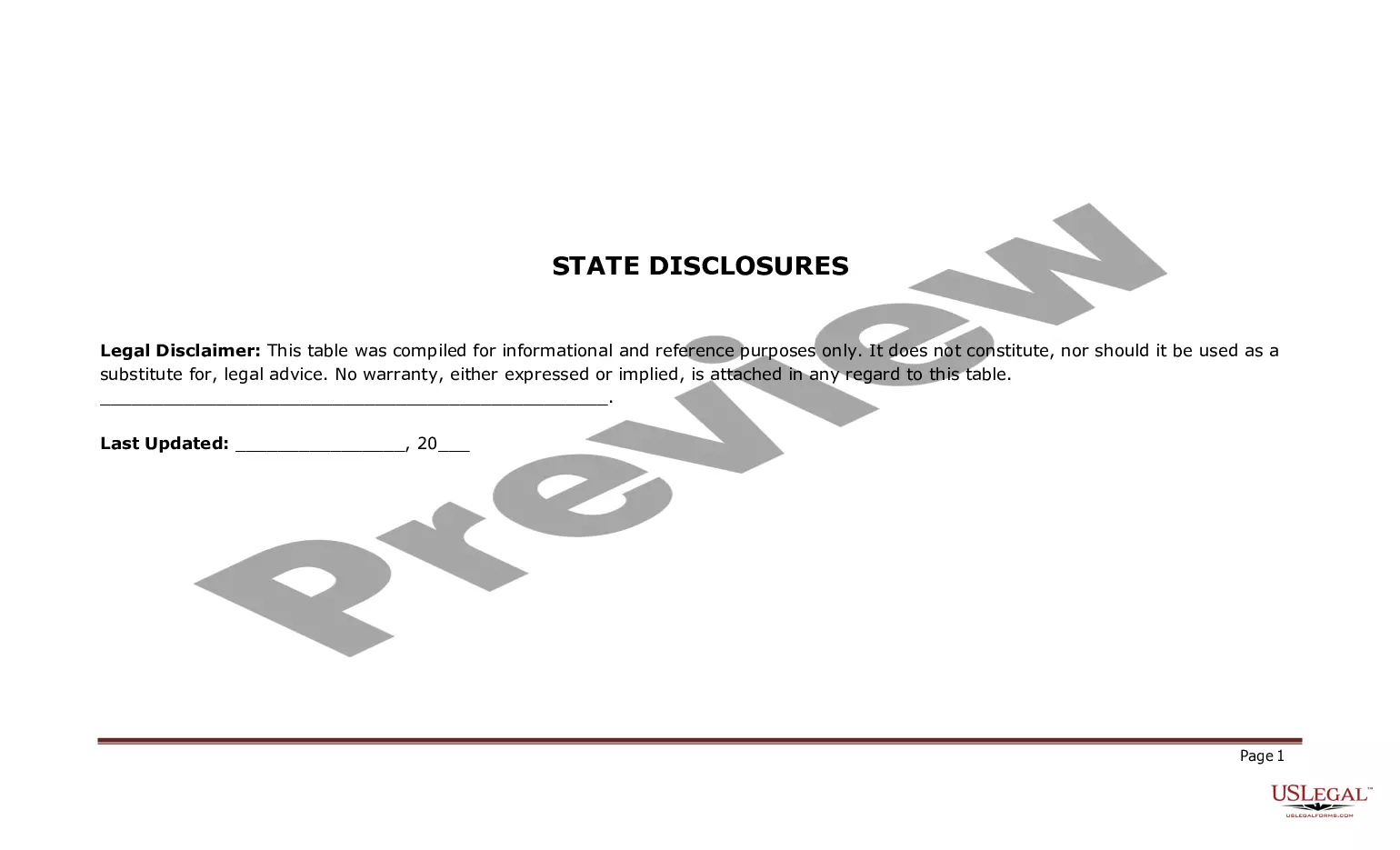
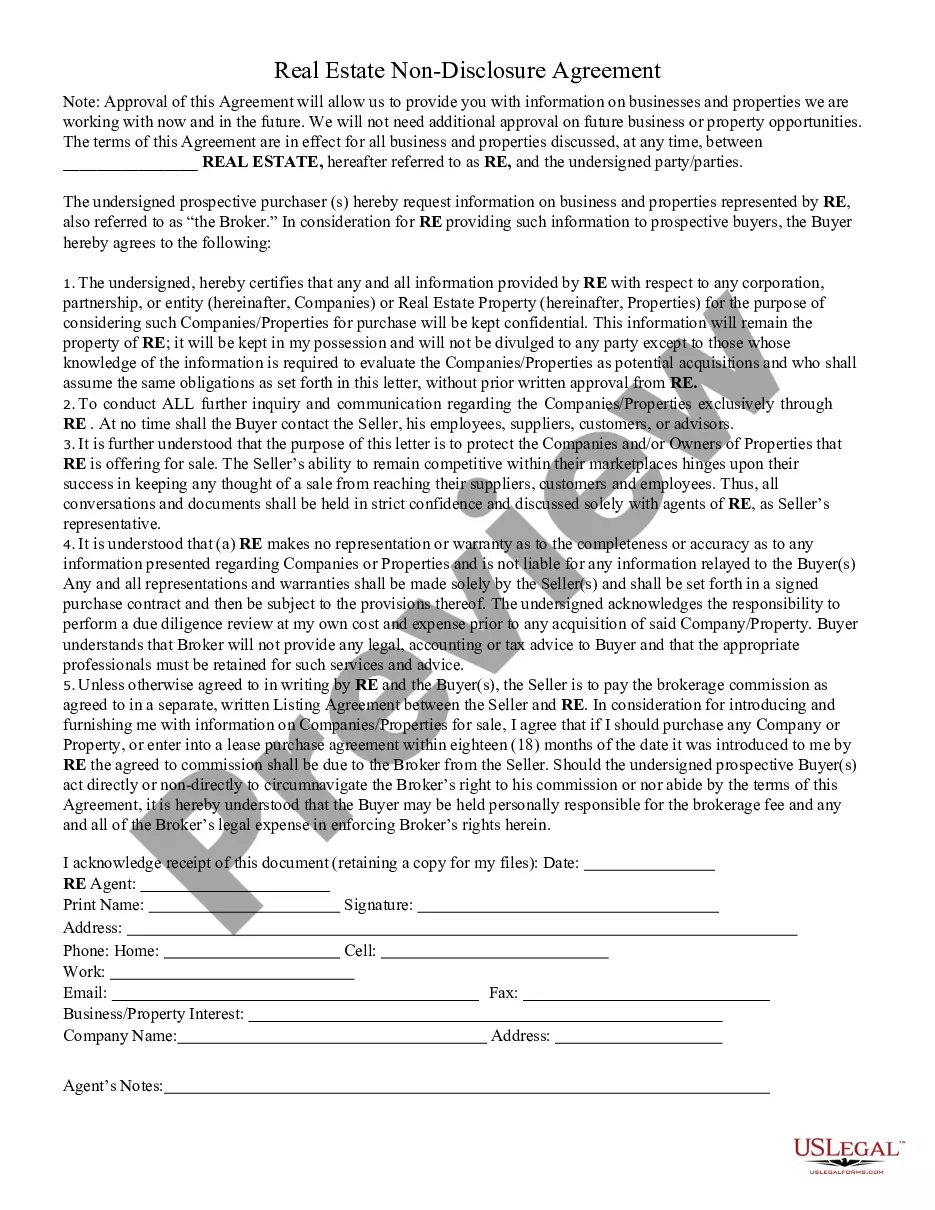
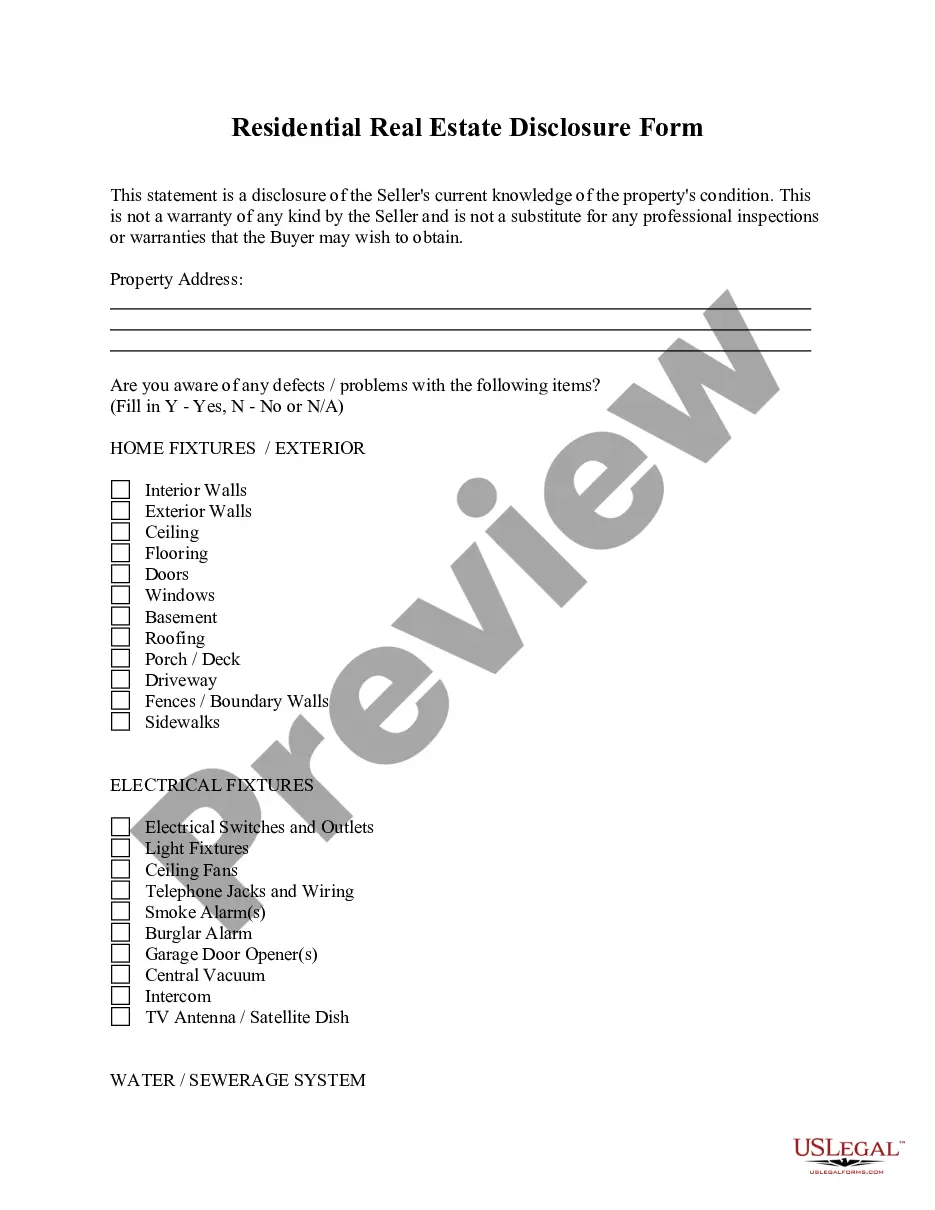
When this form is needed
This form should be used when a property owner in Rhode Island intends to sell residential real estate, including single-family homes, multi-family units, or properties with up to four dwelling units. It is essential for maintaining transparency with buyers regarding the condition of the property before an agreement is finalized.
Who this form is for
- Sellers of residential properties in Rhode Island
- Real estate agents representing sellers
- Potential buyers seeking a written disclosure of property conditions
Completing this form step by step
- Fill in the address and names of the seller(s) at the top of the form.
- Provide information regarding how long the seller has occupied the property and the year it was built.
- Disclose any known defects in various areas, including the basement, roof, plumbing, and heating systems.
- Answer questions related to pests, radon testing, and any hazardous materials.
- Sign the form, ensuring that both sellers and buyers acknowledge receipt of the disclosure.
Is notarization required?
To make this form legally binding, it must be notarized. Our online notarization service, powered by Notarize, lets you verify and sign documents remotely through an encrypted video session.
Get your form ready online
Our built-in tools help you complete, sign, share, and store your documents in one place.
Make edits, fill in missing information, and update formatting in US Legal Forms—just like you would in MS Word.
Download a copy, print it, send it by email, or mail it via USPS—whatever works best for your next step.
Sign and collect signatures with our SignNow integration. Send to multiple recipients, set reminders, and more. Go Premium to unlock E-Sign.
If this form requires notarization, complete it online through a secure video call—no need to meet a notary in person or wait for an appointment.
We protect your documents and personal data by following strict security and privacy standards.

Make edits, fill in missing information, and update formatting in US Legal Forms—just like you would in MS Word.

Download a copy, print it, send it by email, or mail it via USPS—whatever works best for your next step.

Sign and collect signatures with our SignNow integration. Send to multiple recipients, set reminders, and more. Go Premium to unlock E-Sign.

If this form requires notarization, complete it online through a secure video call—no need to meet a notary in person or wait for an appointment.

We protect your documents and personal data by following strict security and privacy standards.
Mistakes to watch out for
- Failing to disclose known defects, which can lead to legal issues.
- Incorrectly filling out property details or occupant information.
- Not providing thorough responses regarding inspections or testing, such as radon levels.
Why use this form online
- Convenience of immediate access to a legally vetted document.
- Easy monitoring and editing of information before finalizing the sale.
- Reliable format that ensures compliance with state regulations.
Legal use & context
- The form is legally recognized in Rhode Island and serves to protect both sellers and buyers during real estate transactions.
- Failure to disclose known property issues may result in legal consequences for the seller.
- Buyers are encouraged to seek independent professional inspections in addition to the disclosures provided.
Quick recap
- The Residential Real Estate Sales Disclosure Statement is crucial for sellers in Rhode Island to fulfill disclosure obligations.
- It helps protect both the seller and the buyer by outlining the known conditions of the property.
- Accurate and complete disclosures can prevent potential legal disputes after the sale.
Looking for another form?


Form popularity
FAQ
Under California law, all material facts that affect the value or desirability of the property must be disclosed to the buyer. There is no specific definition or rule on what is considered to be a material fact.
If a seller fails to disclose, or actively conceals, problems that affect the value of the property; they are violating the law, and may be subject to a lawsuit for recovery of damages based on claims of fraud and deceit, misrepresentation and/or breach of contract.
Once you and the buyer have signed a written agreement for the sale of your property, you must deliver a copy of your completed disclosures to the buyer within five business days.
In general, you have an obligation to disclose potential problems and material defects that could affect the value of the property you're trying to sell. In addition, it is considered illegal in most states to deliberately conceal major defects on your property.
California's Especially Stringent Disclosure Requirements Sellers must fill out and give the buyers a disclosure form listing a broad range of defects, such as a leaky roof, deaths that occurred within three years on the property, neighborhood nuisances such as a dog that barks every night, and more.
Generally, sellers complete real estate disclosure paperwork after the buyers sign the purchase offer agreement or may even have it filled out prior to listing their home. There's no official deadline for delivering the form but it's expected to be provided to the buyers in a timely fashion.
In the simplest terms, a Seller's Disclosure is a document a potential buyer receives in order to know what condition the property is in. It contains about 100 questions and it will take you 20-30 minutes at most to complete.You're not required to have this document ready until your home is under contract.
Whenever you sell real estate, you are obligated to follow local mandatory disclosure laws. This involves informing the buyer about specific hazards or problems affecting the property before the sale is completed.
Which seller is exempt from completing a transfer disclosure statement? A lender selling a property which they previously foreclosed upon.