What is Probate?
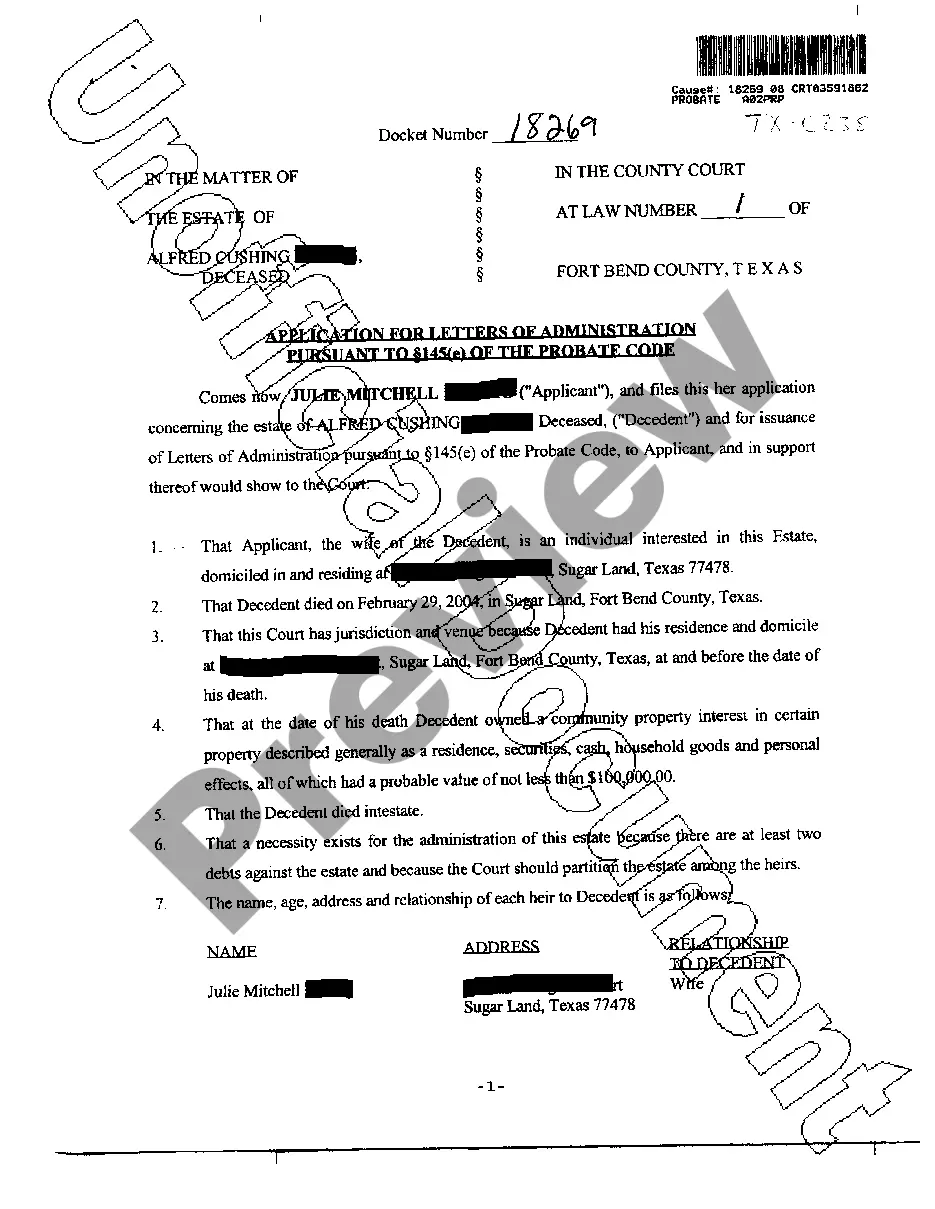
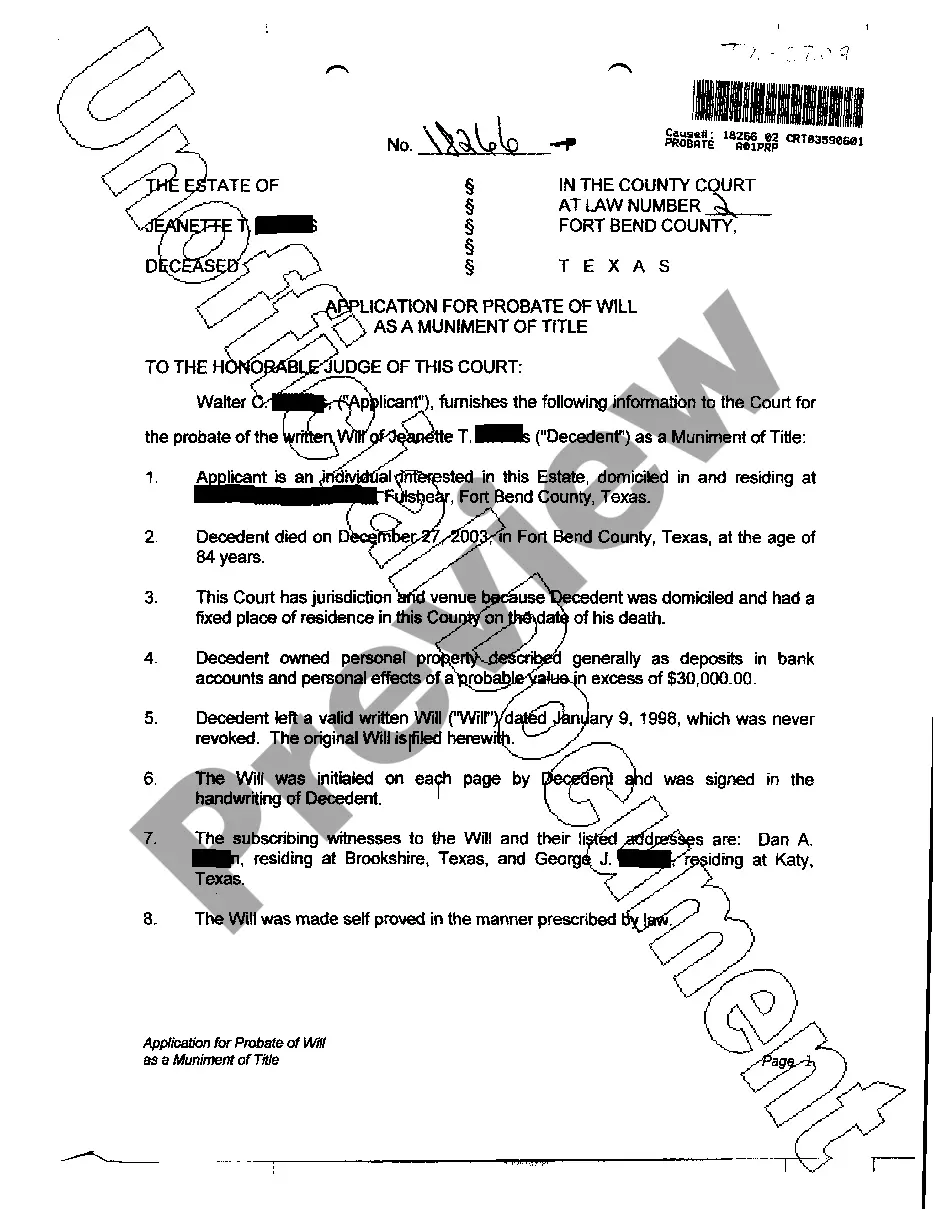
Probate refers to the legal process of validating a will, settling debts, and distributing assets. These documents help establish authority and clarify estate matters. Explore templates tailored for Texas to get started.
Probate involves legal processes for managing a deceased person's estate. Our attorney-drafted templates are quick and easy to complete.

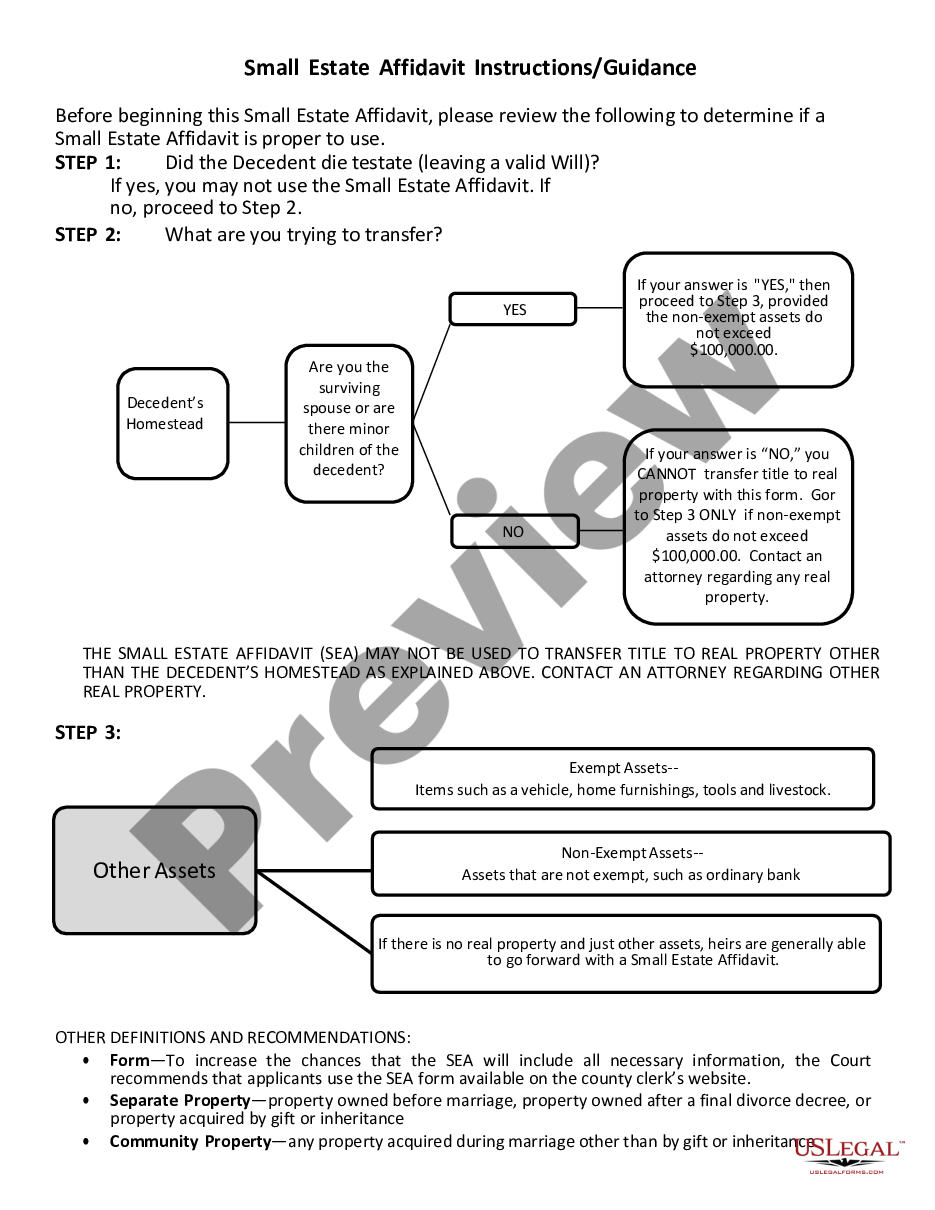
Easily transfer small estates without a formal probate process when the estate value is under $100,000.
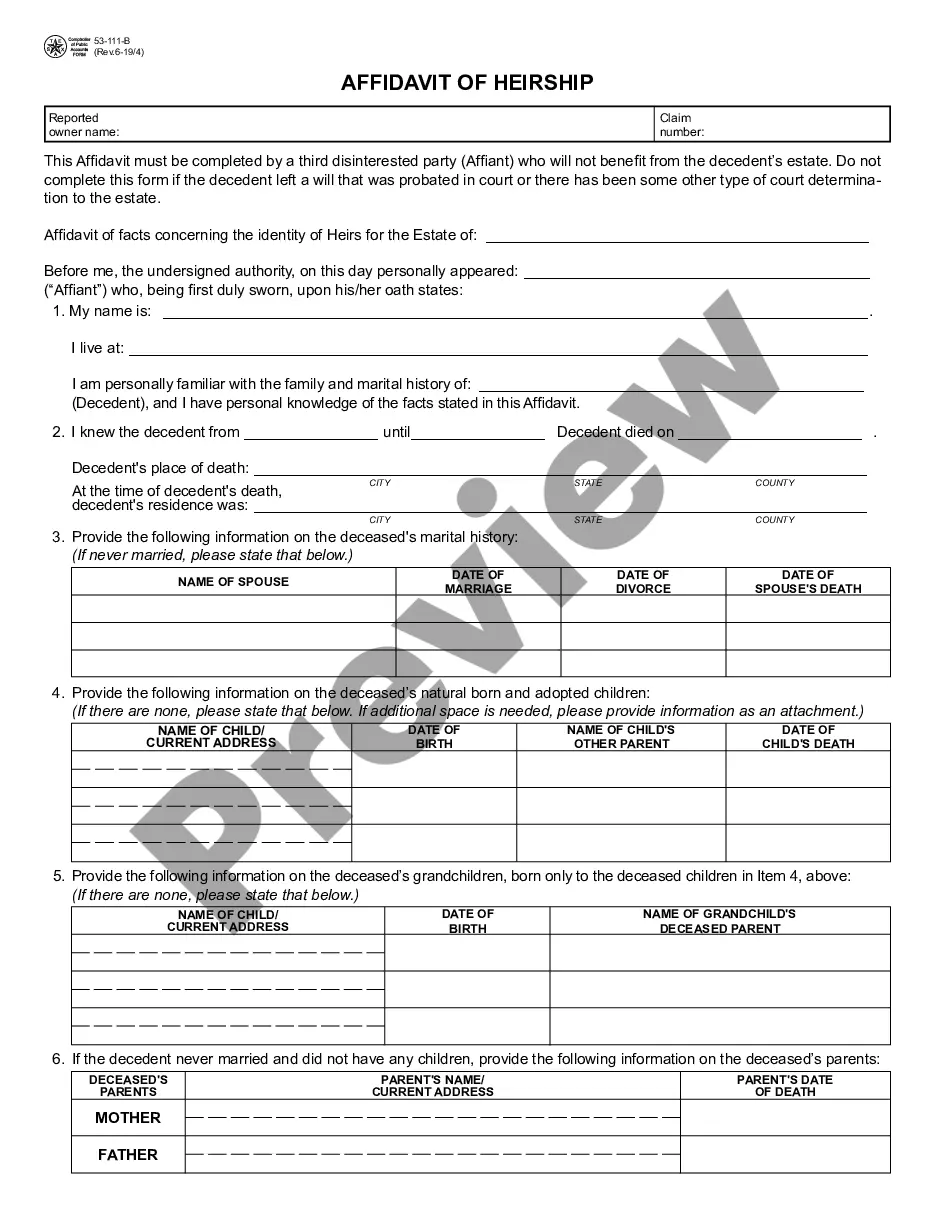
Use this affidavit to settle a small estate without a will in Texas, simplifying the probate process.
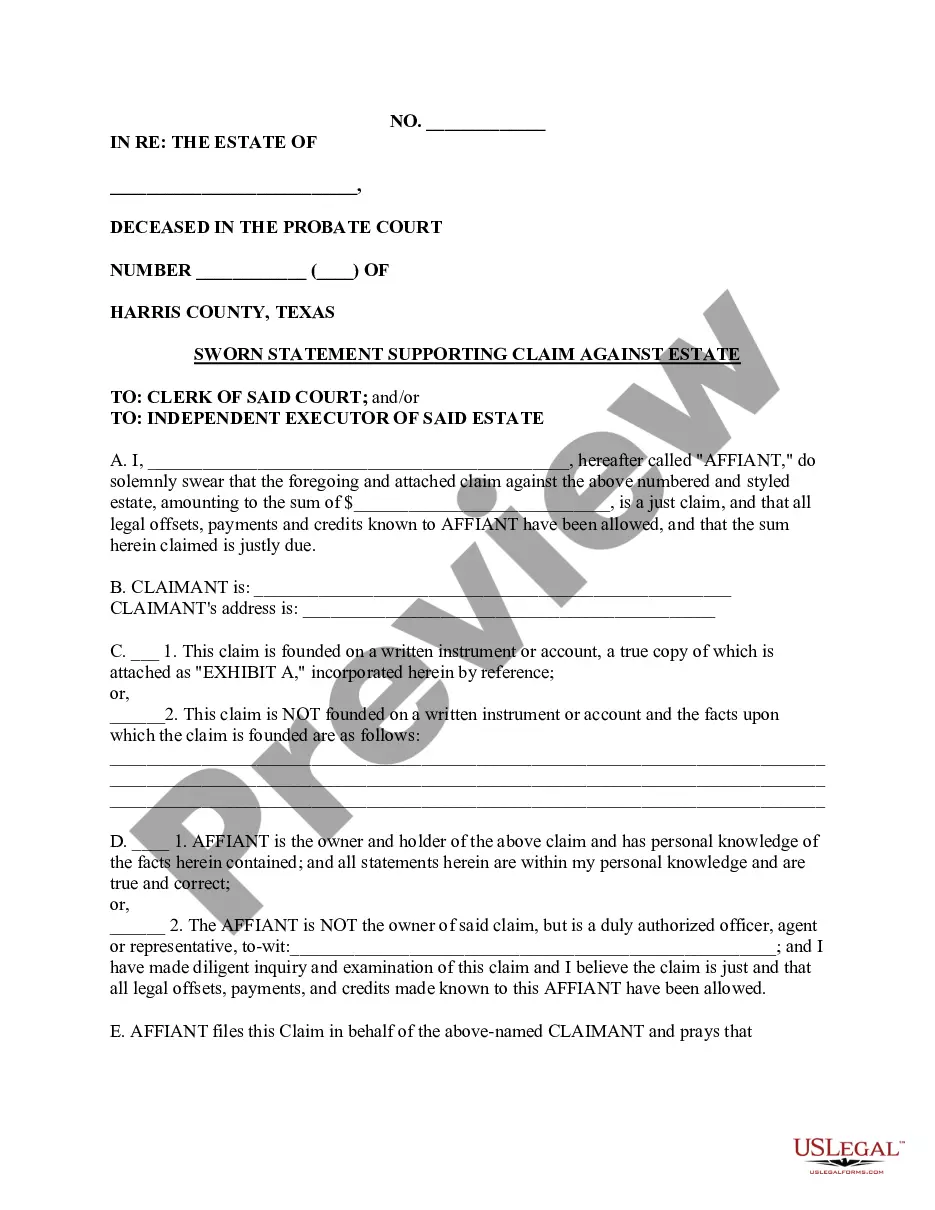
Essential for asserting a claim against a deceased person’s estate, ensuring claims are formally documented and considered.
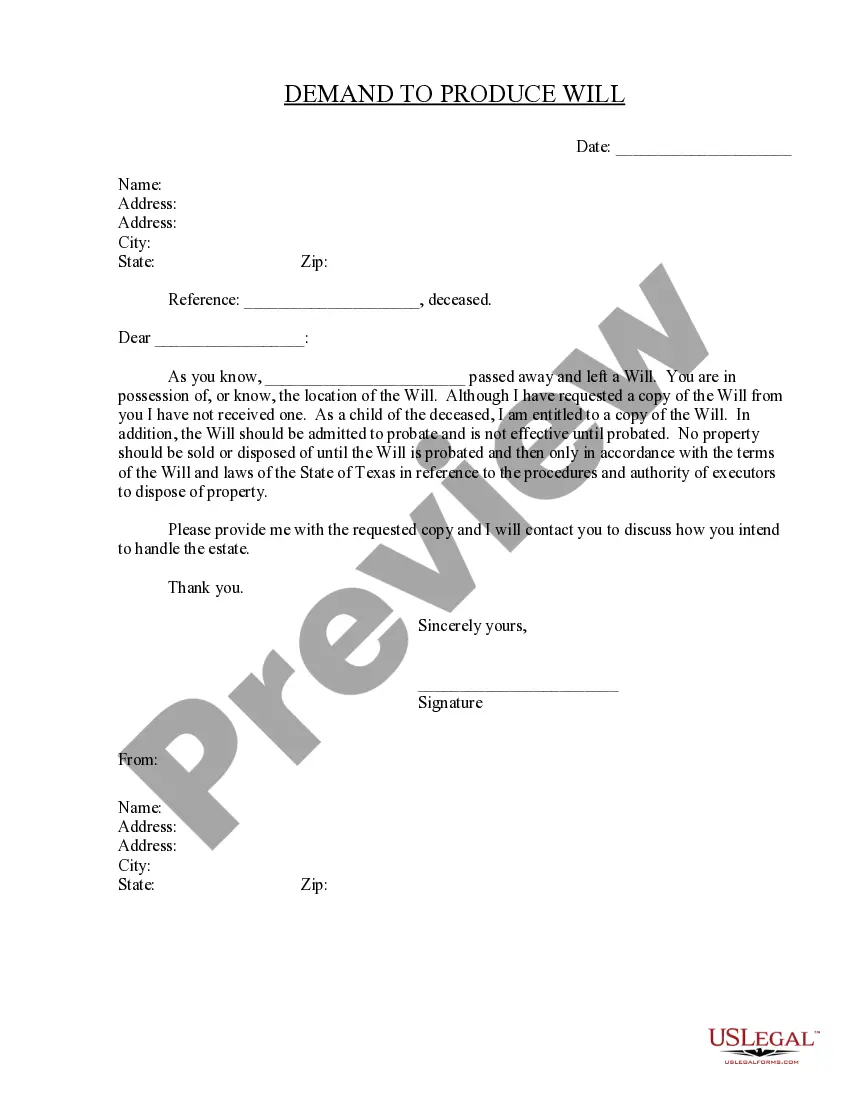
Request a copy of a deceased person's will to understand your rights and responsibilities as an heir.
Finalize the distribution of an estate to a specific beneficiary by independent executors, ensuring all claims have been settled.
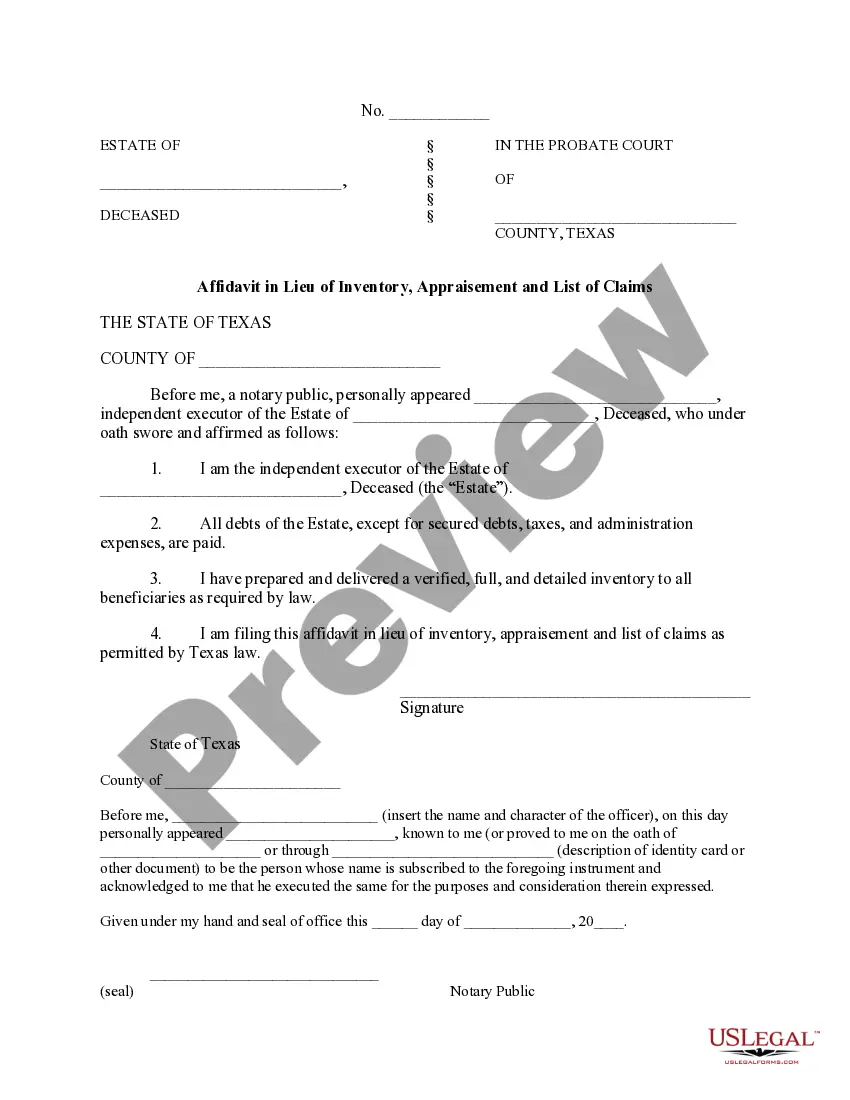
Use this affidavit to simplify the probate process by confirming estate debts are settled without a full inventory or appraisal.
Probate is necessary for managing a deceased person's estate.
Documents must often be notarized or witnessed.
Probate can take several months to complete.
Creditors are paid from the estate before distributions.
All beneficiaries should be notified of probate proceedings.
Begin the process easily with these steps.
A trust can help manage assets during your lifetime, while a will distributes them after death.
If no estate plan exists, state laws dictate how assets are distributed.
Review your estate plan regularly, especially after major life events.
Beneficiary designations often override wills, so ensure they align with your estate plan.
Yes, you can designate separate individuals for financial and healthcare decisions.