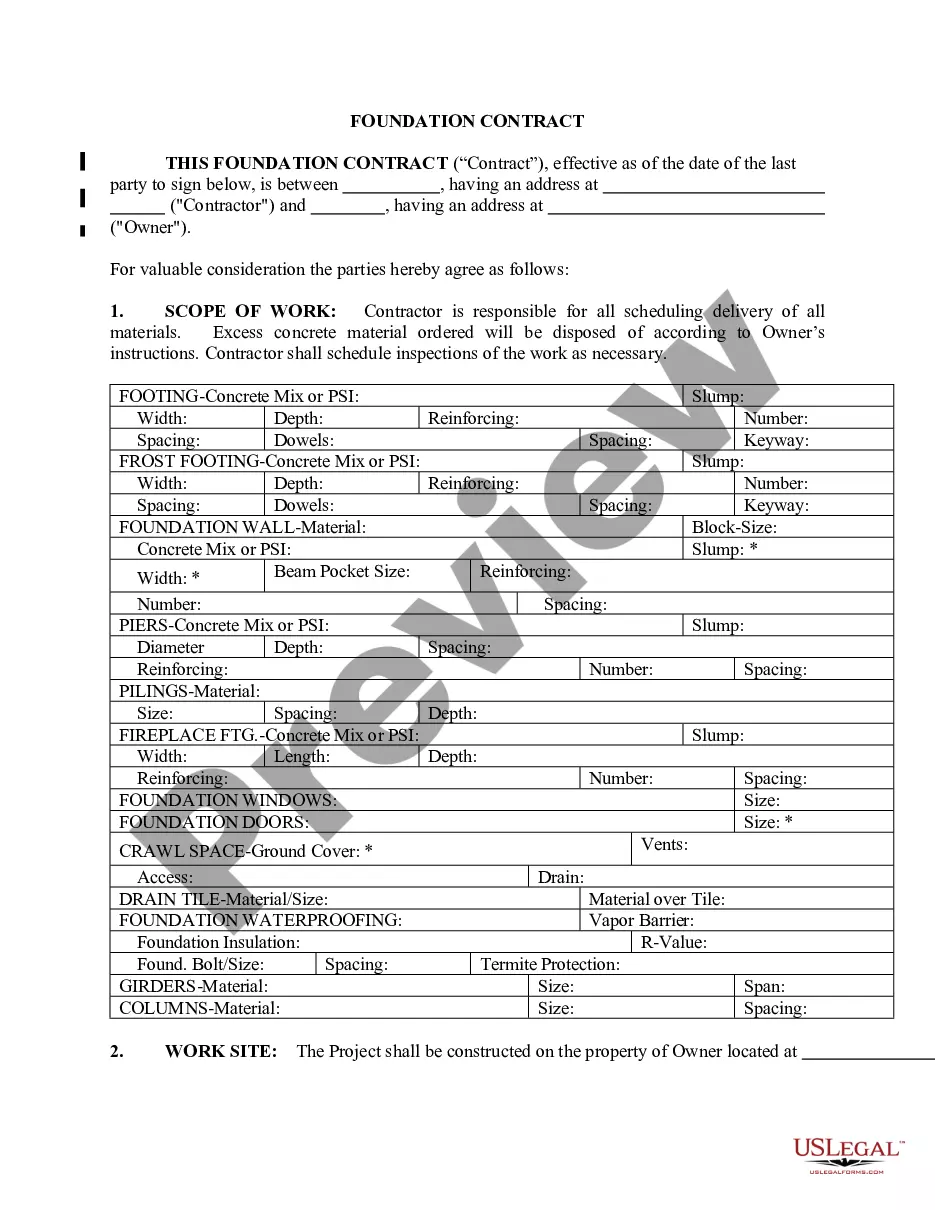
Pennsylvania Warranty Deed for Separate or Joint Property to Joint Tenancy
What is this form?
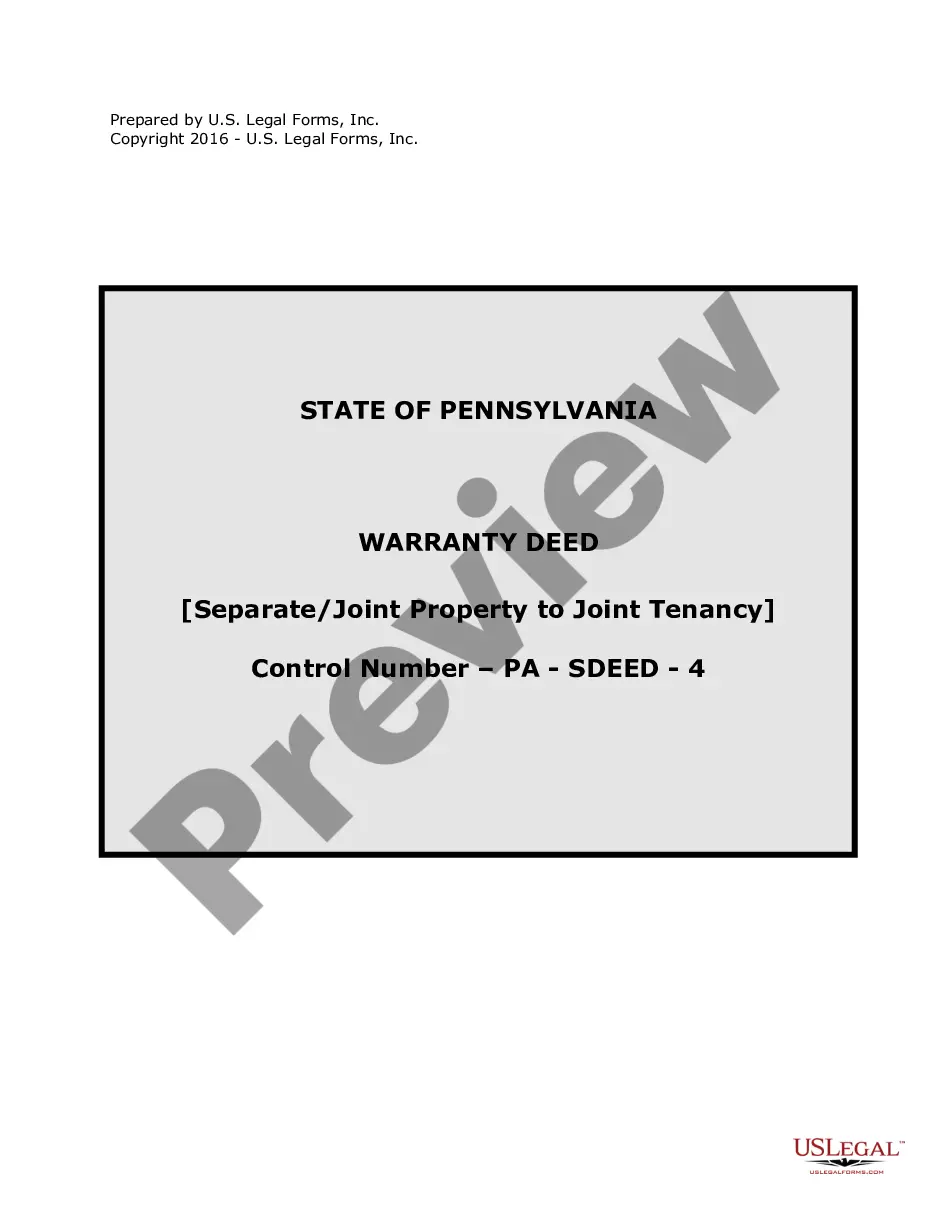
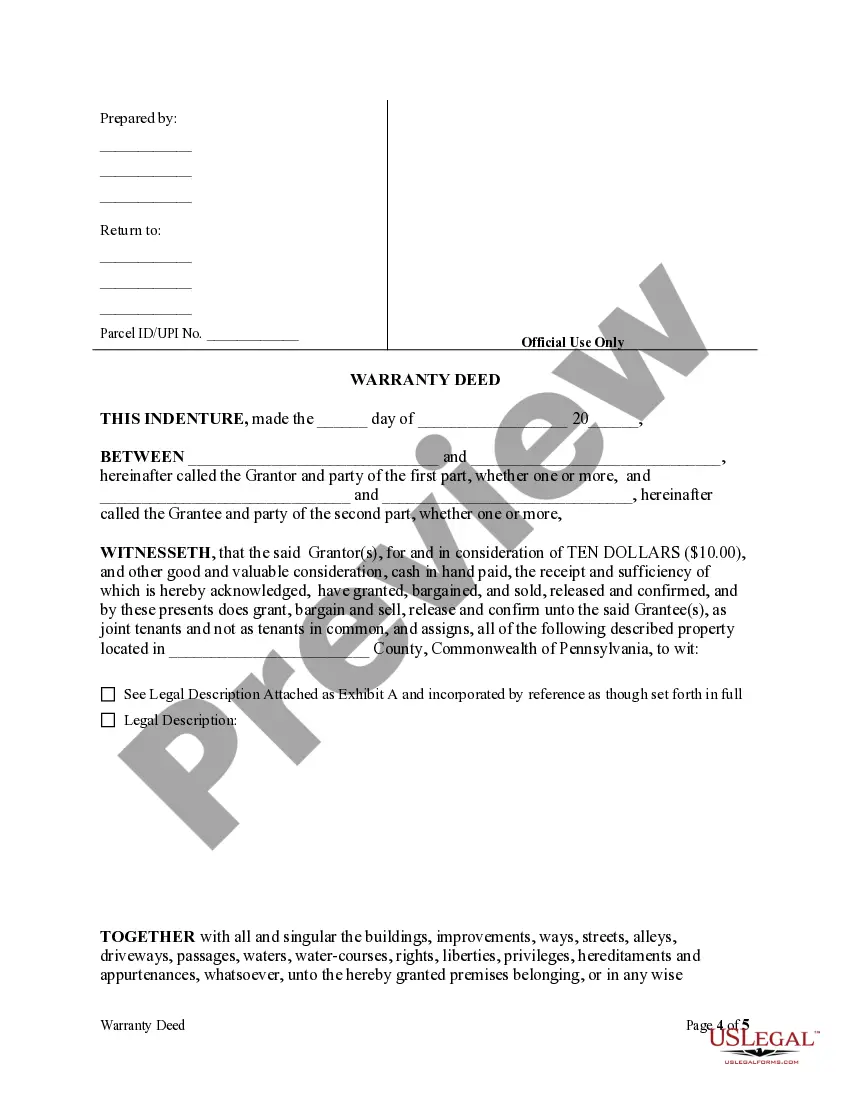
The Warranty Deed for Separate or Joint Property to Joint Tenancy is a legal document used to transfer property ownership into a joint tenancy. This type of deed allows two or more individuals to hold title to the property jointly, ensuring that in the event of a death, the surviving owner automatically inherits the deceased owner's share without the need for probate. Unlike other deeds, this document specifies that all parties own the property equally and simultaneously, making it an essential tool for real estate transactions involving shared ownership.
Form components explained
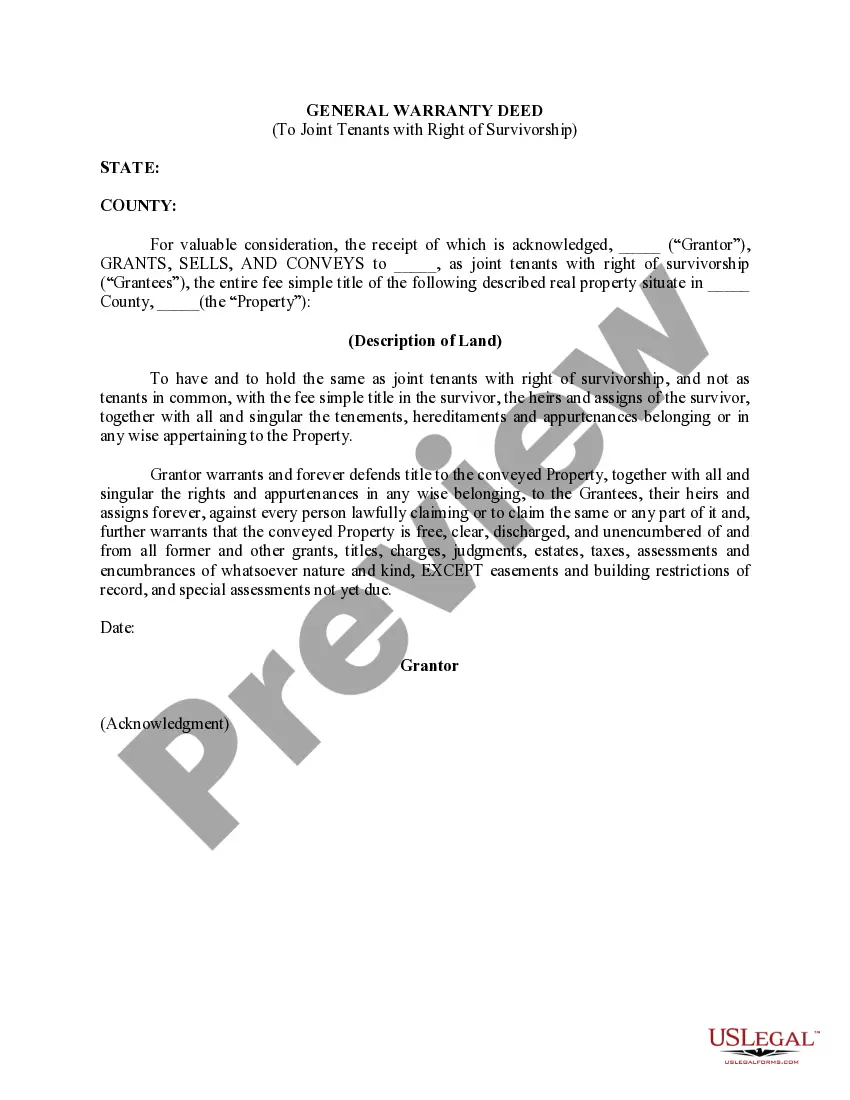
- Identifiers for the grantors (property transferors) and grantees (property transferees).
- Description of the property being transferred, including legal descriptions.
- Consideration amount, often listed as a nominal value, such as ten dollars.
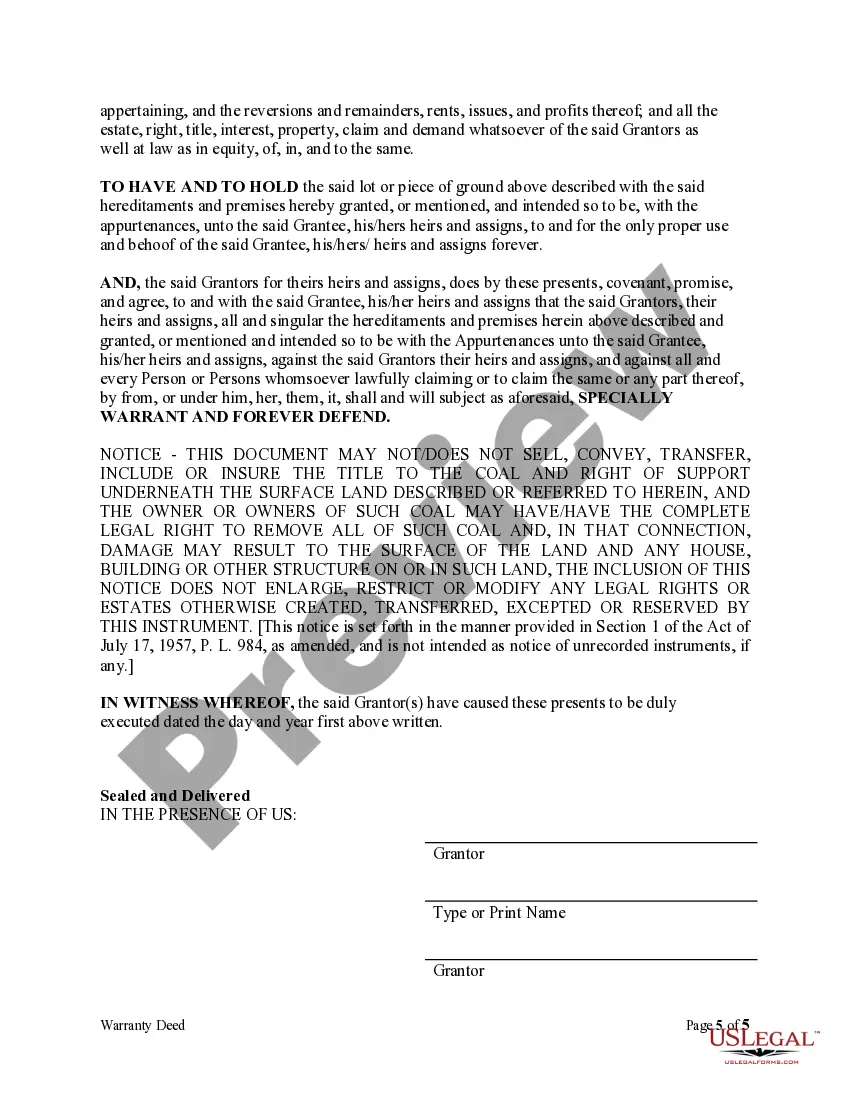
- Covenant of warranty, where the grantors agree to protect the grantees against any claims.
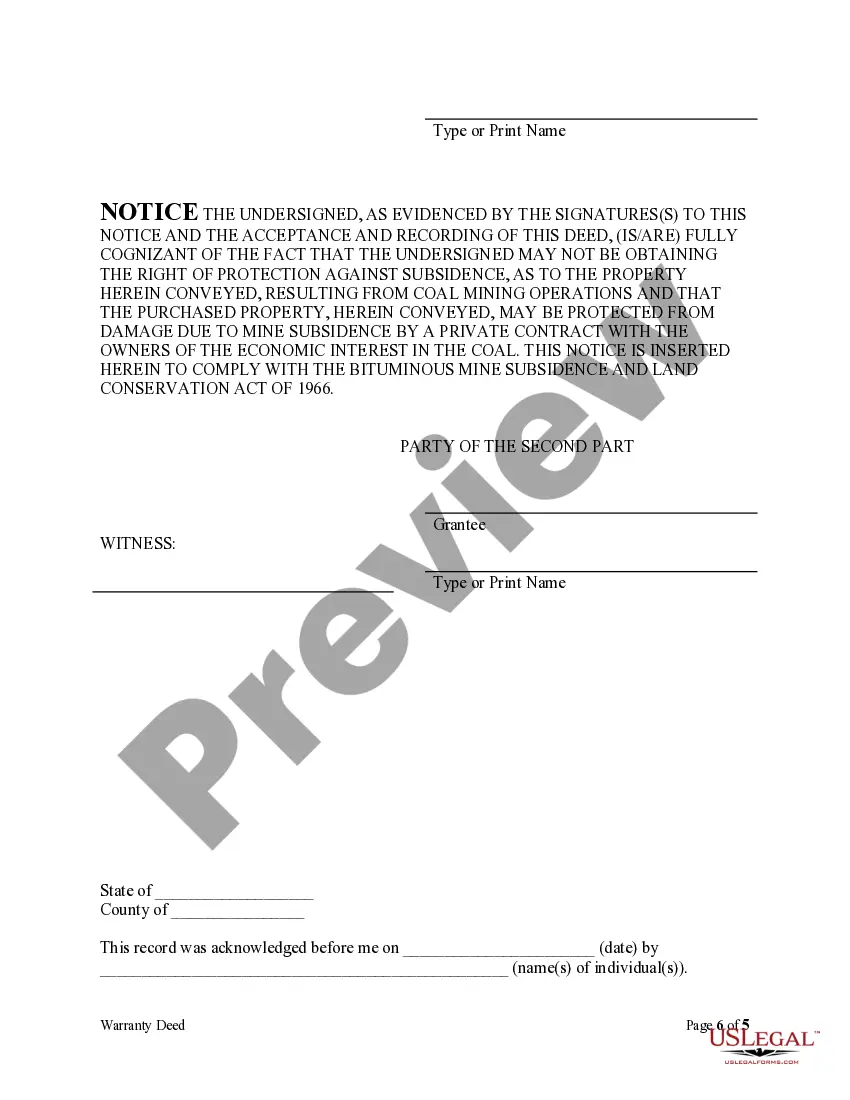
- Signature lines for grantors and witnesses, necessary for the form's execution.
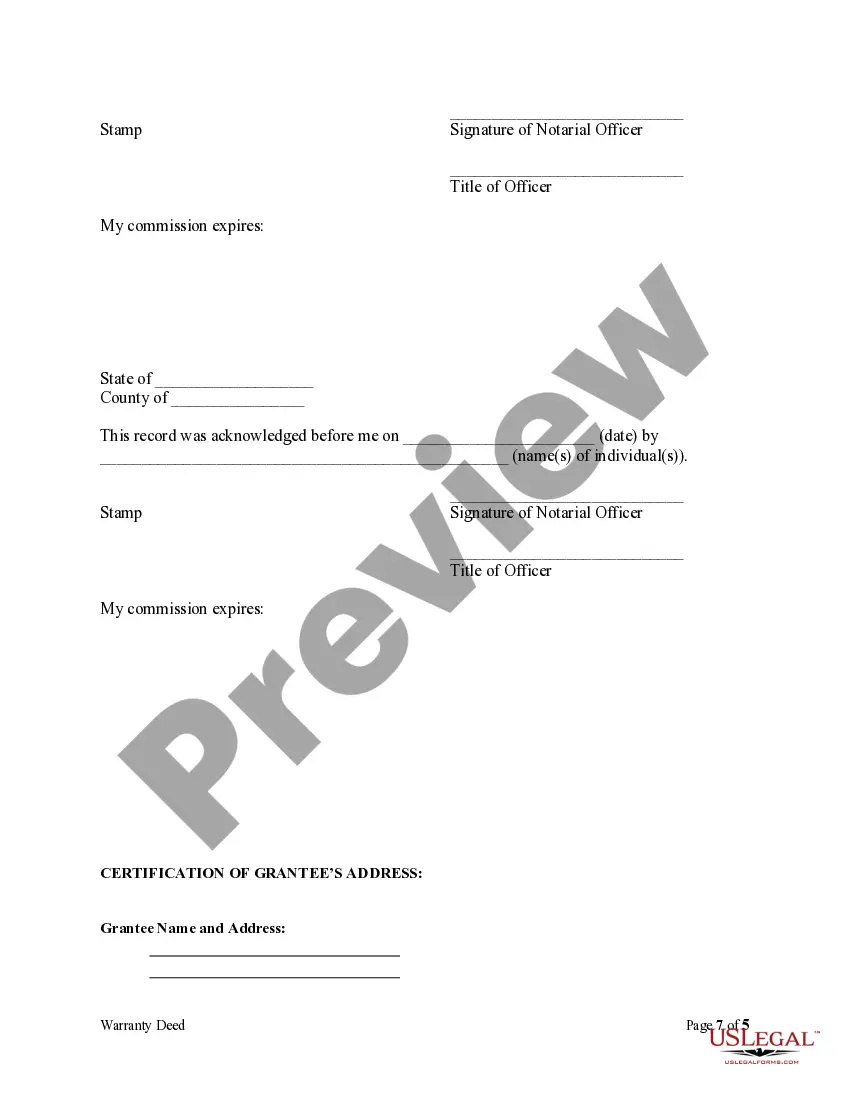
- Notary acknowledgment section to validate the deed's execution.



When this form is needed
This form is suitable in various situations, including when individuals want to convert separate property or previously held joint property into a joint tenancy. It's particularly useful among family members or partners looking to ensure that property automatically passes to the surviving owner in the event of death. Additionally, it can be used during estate planning processes to enhance inheritance strategies.
Who should use this form
- Couples or individuals wishing to hold real estate jointly.
- Property owners looking to simplify inheritance processes for their heirs.
- Individuals converting their separate property into joint tenancy.
- Any parties involved in a real estate transaction who require a clear transfer of property rights.
How to prepare this document
- Identify and enter the names of the grantors (individuals transferring ownership) and grantees (individuals receiving ownership).
- Specify the property being transferred by including its legal description and address.
- Complete the section detailing the consideration amount, often set at a nominal value.
- Ensure all grantors sign the document in the presence of a witness.
- Obtain notarization to validate the deed, as required by law.
- File the completed and notarized deed with the appropriate county recorder's office for public record.
Does this document require notarization?
Yes, this form must be notarized to be legally valid. Notarization serves to authenticate the identities of the individuals signing the document, thereby preventing fraud. US Legal Forms provides an integrated online notarization service, allowing you to complete this process securely via video call, available 24/7.
Get your form ready online
Our built-in tools help you complete, sign, share, and store your documents in one place.
Make edits, fill in missing information, and update formatting in US Legal Forms—just like you would in MS Word.
Download a copy, print it, send it by email, or mail it via USPS—whatever works best for your next step.
Sign and collect signatures with our SignNow integration. Send to multiple recipients, set reminders, and more. Go Premium to unlock E-Sign.
If this form requires notarization, complete it online through a secure video call—no need to meet a notary in person or wait for an appointment.
We protect your documents and personal data by following strict security and privacy standards.

Make edits, fill in missing information, and update formatting in US Legal Forms—just like you would in MS Word.

Download a copy, print it, send it by email, or mail it via USPS—whatever works best for your next step.

Sign and collect signatures with our SignNow integration. Send to multiple recipients, set reminders, and more. Go Premium to unlock E-Sign.

If this form requires notarization, complete it online through a secure video call—no need to meet a notary in person or wait for an appointment.

We protect your documents and personal data by following strict security and privacy standards.
Typical mistakes to avoid
- Failing to properly describe the property being transferred.
- Not having all necessary signatures or witnesses present at the signing.
- Neglecting to notarize the document, which may invalidate it.
- Using incorrect names or misspellings for the grantors or grantees.
Why complete this form online
- Convenient access to legal forms that can be filled out at your convenience.
- Editable format that allows for easy corrections before finalizing.
- Reliable and clear instructions provided throughout the completion process.
Legal use & context
- This form creates a legal framework for joint tenancy, allowing property ownership to transfer automatically upon a tenant's death.
- It is enforceable in Pennsylvania as long as it complies with state-specific regulations regarding property ownership and transfers.
- Parts of the property rights, such as mineral rights, may not be included unless explicitly stated, so understanding limitations is important.
Summary of main points
- The Warranty Deed for Separate or Joint Property to Joint Tenancy enables joint ownership of real estate.
- Proper completion and notarization are critical for the deed's legality and enforceability.
- Understanding the implications of joint tenancy is essential for effective estate planning.
Looking for another form?




Form popularity
FAQ
To hold a real estate property in joint tenancy, you and the co-owners have to write the abbreviation for joint tenants with the right of survivorship, or JTWROS, on the official real estate deed or title. This creates a legally binding joint tenancy.
Serve a written notice of the change (a 'notice of severance') on the other owners - a conveyancer can help you do this. Download and fill in form SEV to register a restriction without the other owners' agreement. Prepare any supporting documents you need to include.
The General Rule. In the great majority of states, if you and the other owners call yourselves "joint tenants with the right of survivorship," or put the abbreviation "JT WROS" after your names on the title document, you create a joint tenancy. A car salesman or bank staffer may assure you that other words are enough.
If you look at the registered title to your own jointly owned property and the text isn't shown on it, you own it as joint tenants. If it is there, you own it as tenants-in-common.This title is dealt with by Land Registry, Sample Town Office.
To transfer property in Pennsylvania, you'll need to prepare and execute a deed and record it in the county where the property is located. If the transfer was in exchange for money, you'll have to pay transfer tax.
You can apply to court to change your ex-partner's tenancy to your name, or remove their name from a joint tenancy. You can apply for a 'transfer of tenancy' if: your landlord refuses to change your tenancy. your tenancy doesn't allow a transfer.
What Is the Difference Between a Warranty Deed & a Survivorship Deed?A warranty deed is the most comprehensive and provides the most guarantees. Survivorship isn't so much a deed as a title. It's a way to co-own property where, upon the death of one owner, ownership automatically passes to the survivor.
With a Survivorship Deed in place, when one of the parties in a joint tenancy dies, the other party (or parties) takes over the deceased party's interest in the property instead of it passing to the deceased's heirs or beneficiaries.
In order to terminate a joint tenancy, one of the four unities must be destroyed. You may do this by conveying your joint tenancy interest to any third person. This can be done through gift or sale. Upon termination, a tenancy in common is formed between the third person and the remaining co-tenant(s).