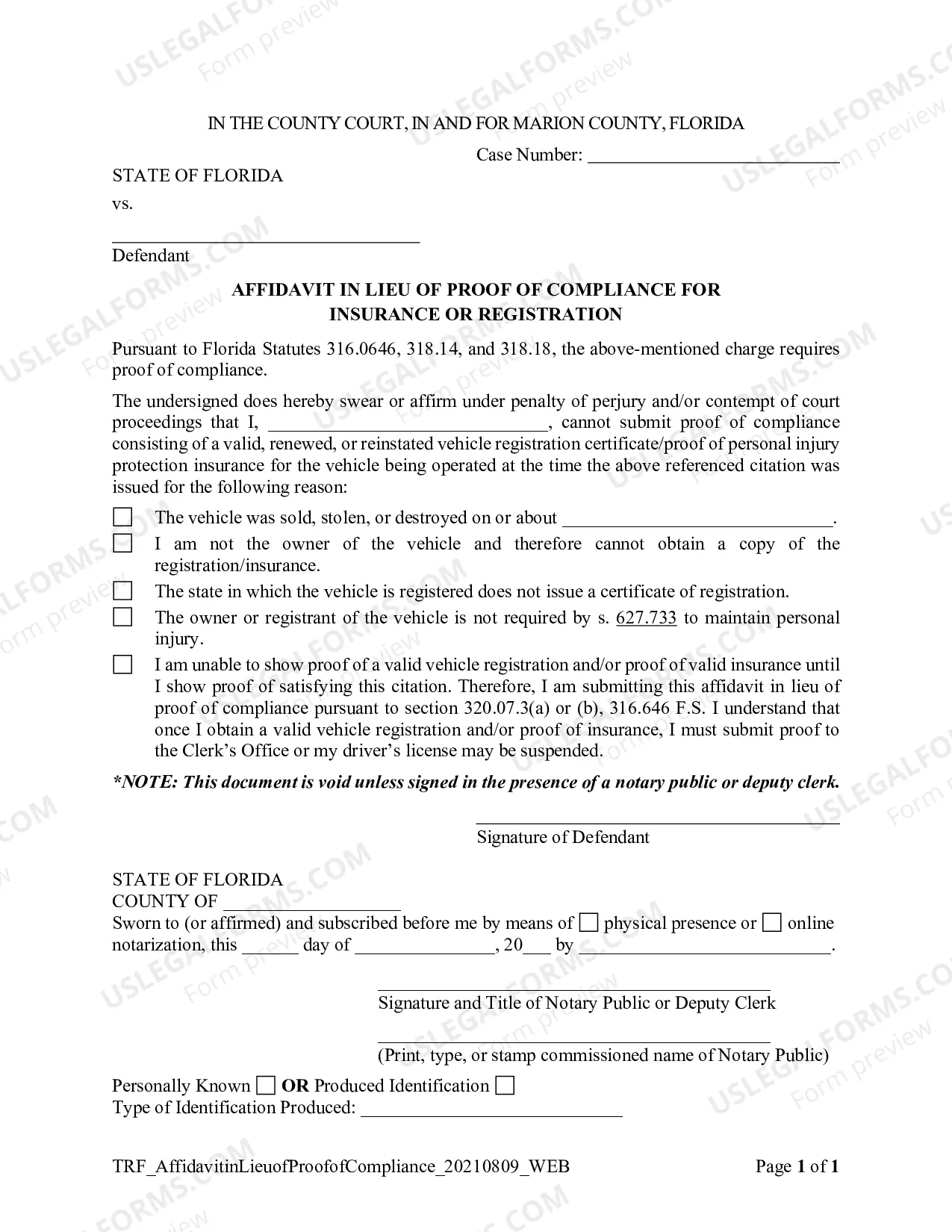
Oregon Co-Petitioner's (minor children) Affidavit in Support of Motion for Order Allowing Entry of Judgment on Affidavit in Lieu of Hearing
Understanding this form
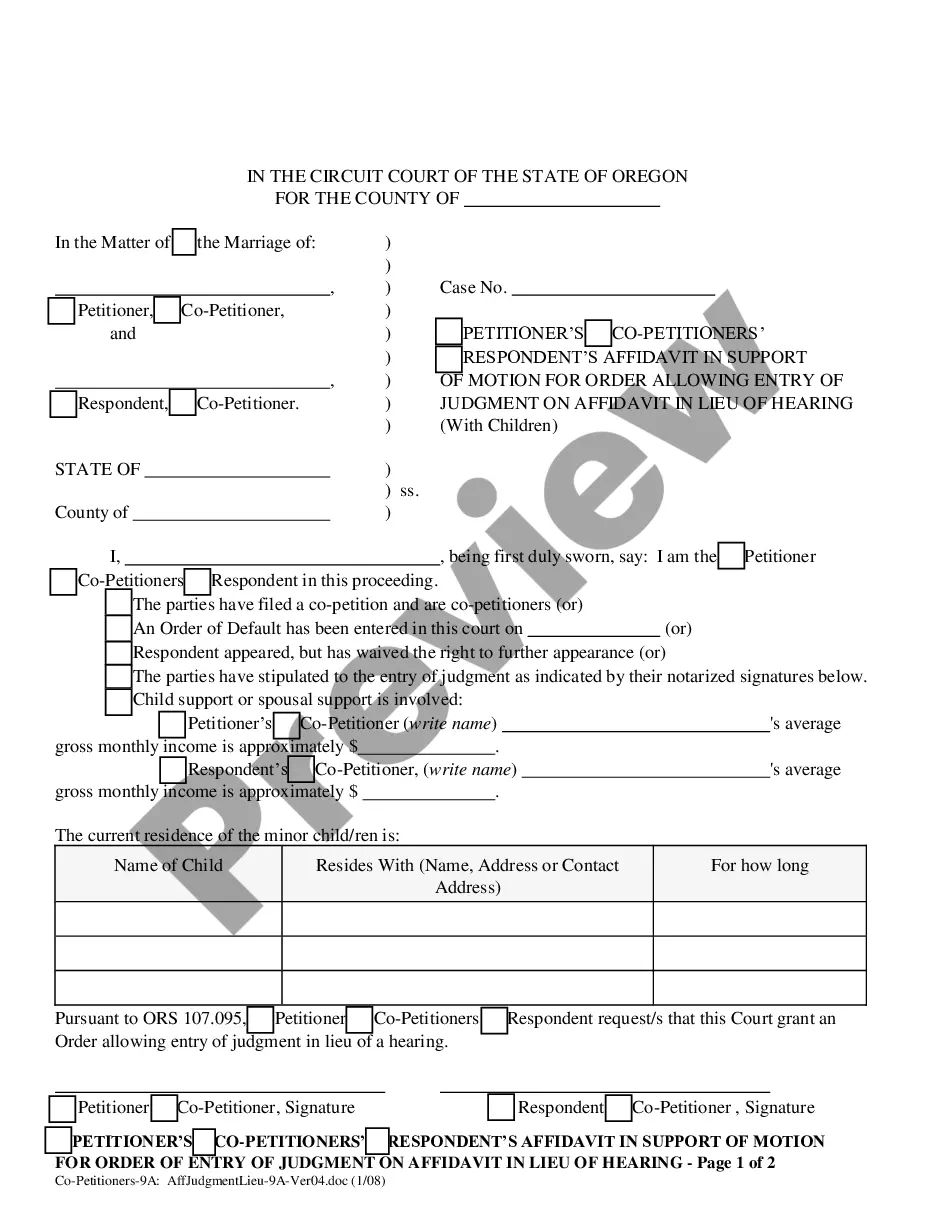
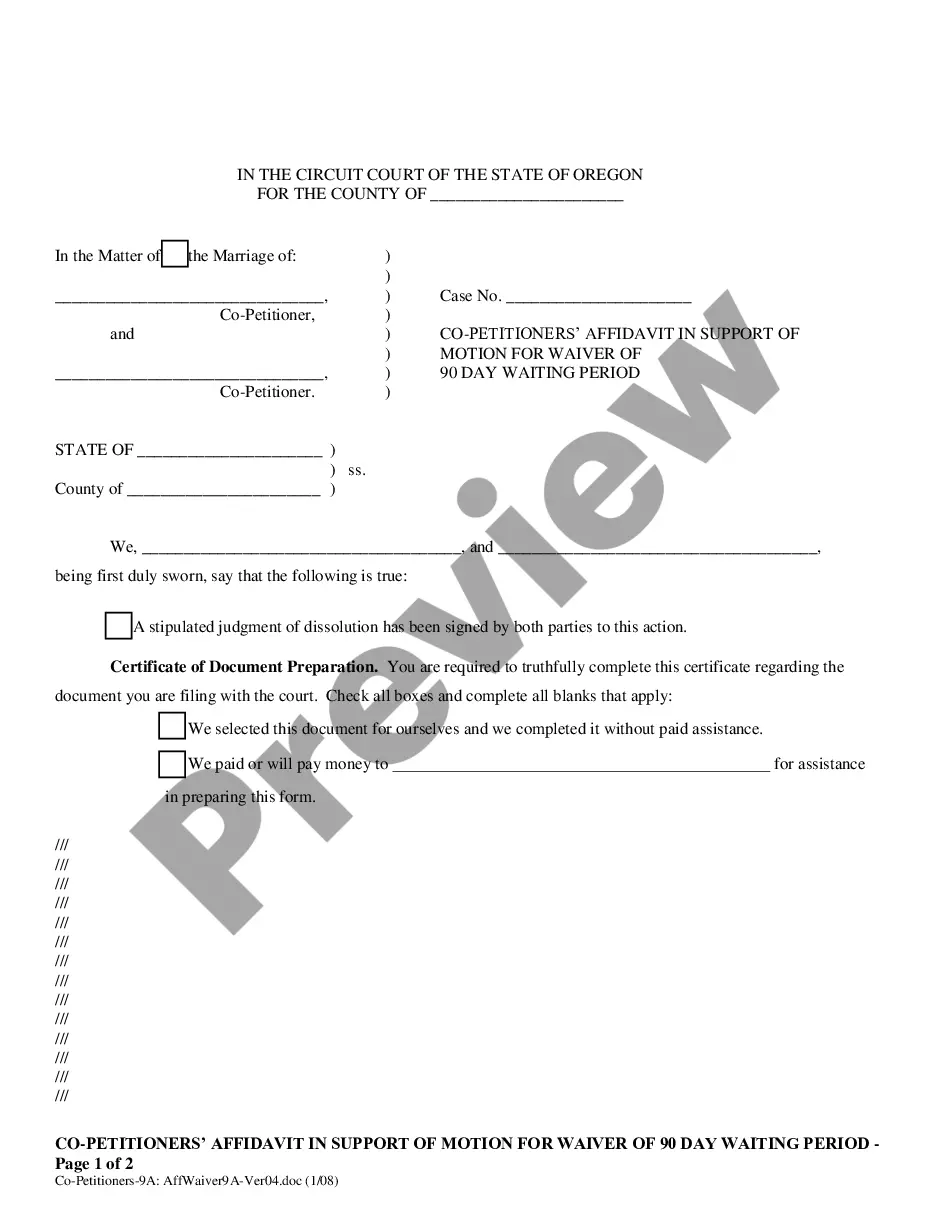
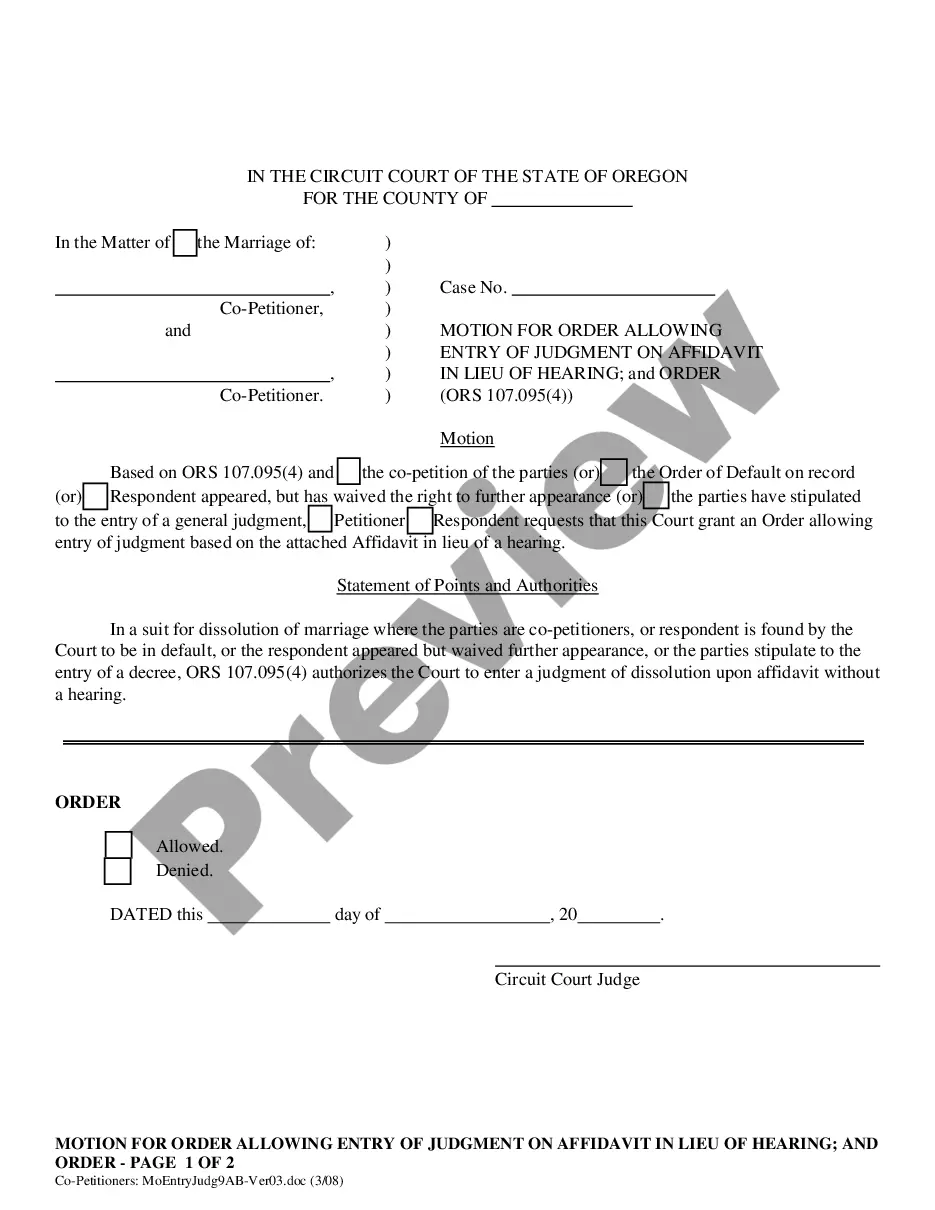
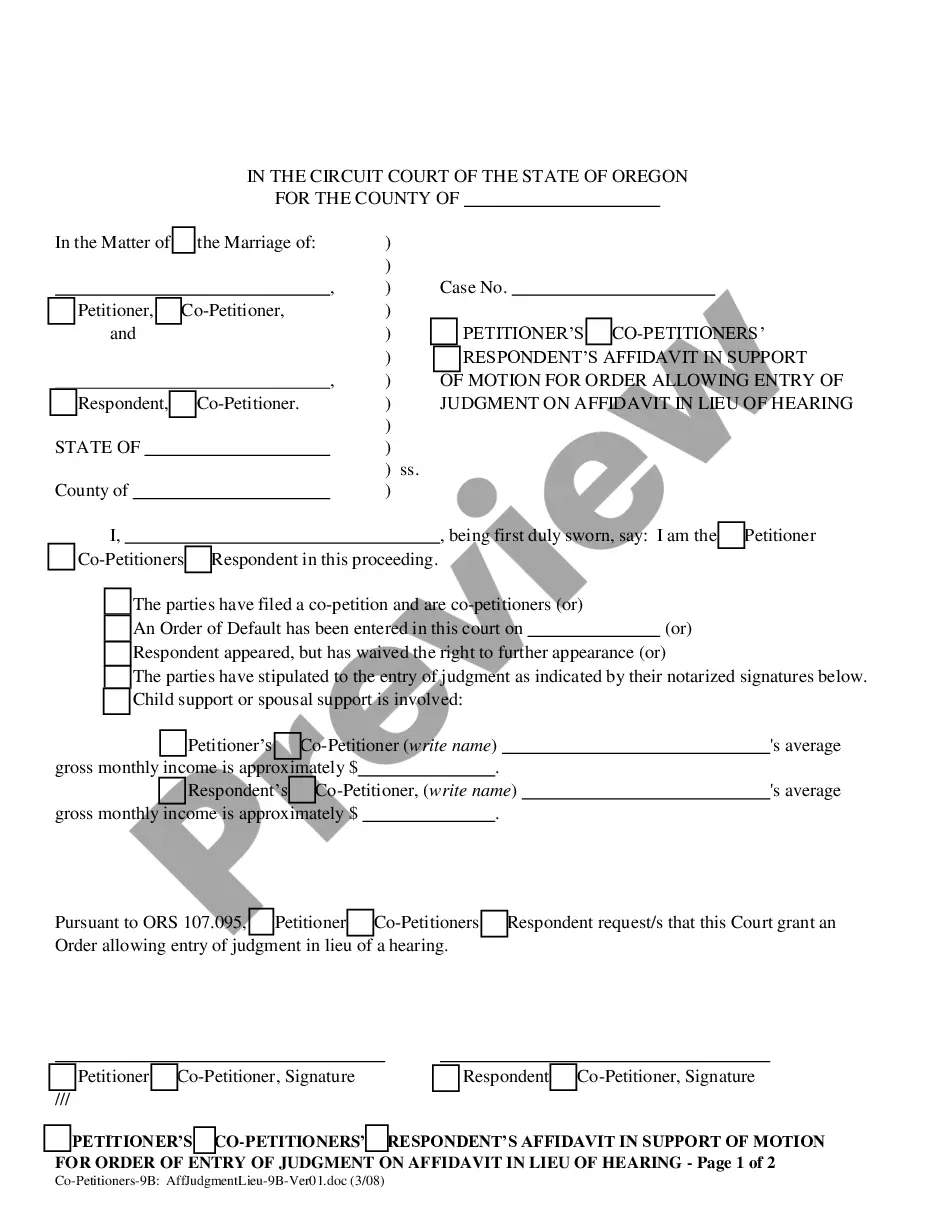
The Co-Petitioner's Affidavit in Support of Motion for Order Allowing Entry of Judgment on Affidavit in Lieu of Hearing form is designed for co-petitioners who need to request a court order allowing the entry of judgment without a hearing. This form provides necessary details about the case, including whether a respondent has defaulted or waived the right to appear, and addresses child and spousal support matters. Unlike standard petitions, this affidavit is specifically tailored for situations where a hearing is unnecessary, streamlining the legal process for co-petitioners.
Key components of this form
- Identification of the parties involved (Petitioner, Co-Petitioners, and Respondent).
- Confirmation of any default judgments or waivers of appearance by the respondent.
- Information regarding stipulations to enter judgment, including notarized signatures where applicable.
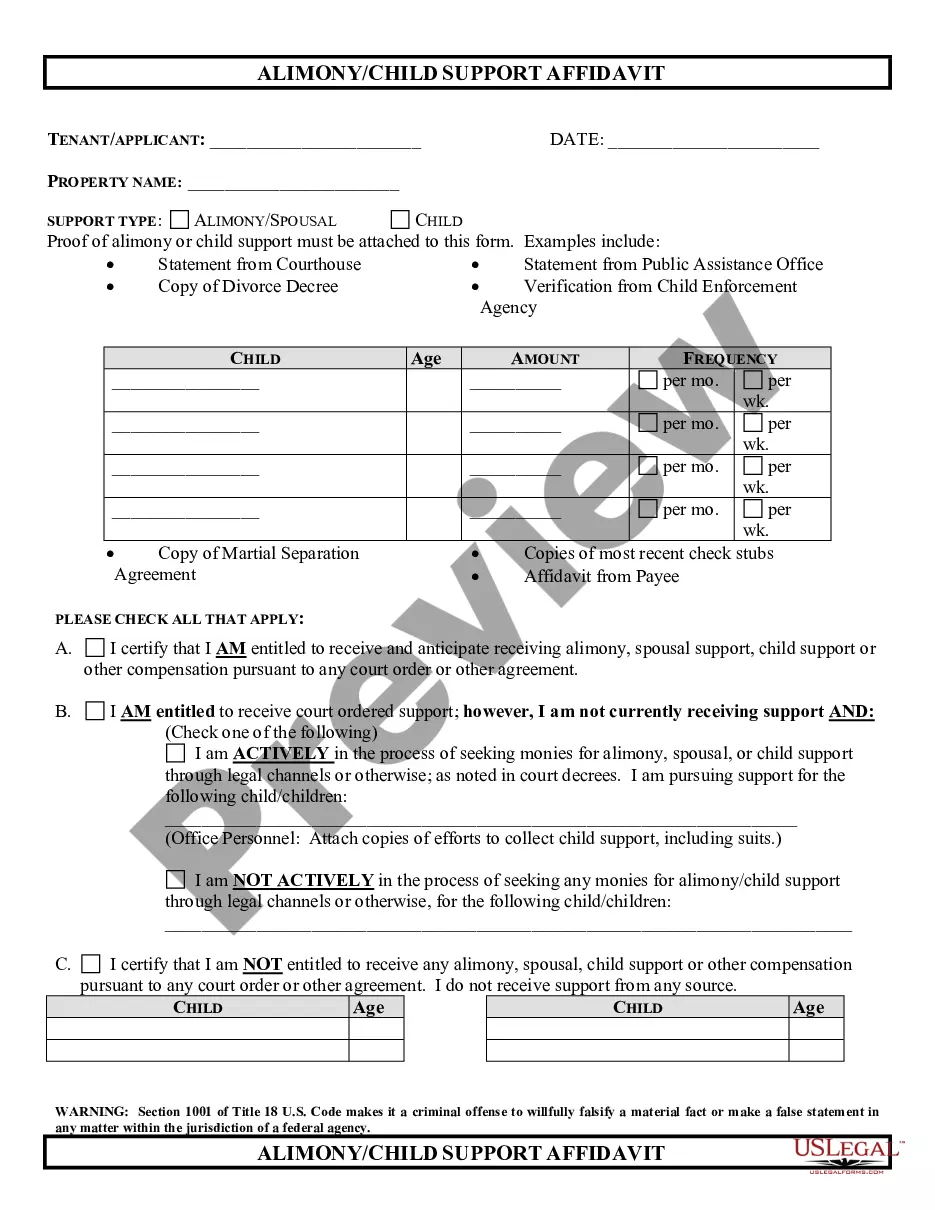
- Details on child and spousal support, including average gross monthly incomes of the parties.
- Current residency information of any minor children involved.
When to use this form
This form is commonly used in family law cases where co-petitioners seek a court judgment without needing a hearing. You might need to use this affidavit if the respondent has not contested the petition, has agreed to the petition terms, or if all parties have previously settled the disputes regarding child or spousal support. It is an efficient way to finalize a case where all necessary agreements are in place.
Who can use this document
This form is intended for:
- Co-petitioners involved in divorce or family law matters.
- Individuals seeking to expedite court proceedings when a hearing is not necessary.
- Parties who have settled terms regarding child and spousal support.
Instructions for completing this form
Follow these steps to complete the form:
- Identify the parties by marking the appropriate checkboxes (Petitioner, Co-Petitioners, Respondent).
- State whether a court order of default has been entered or if the respondent has waived their right to appear.
- Provide financial information related to child support or spousal support calculations.
- Complete the residency information of the minor children involved, including their current living arrangements.
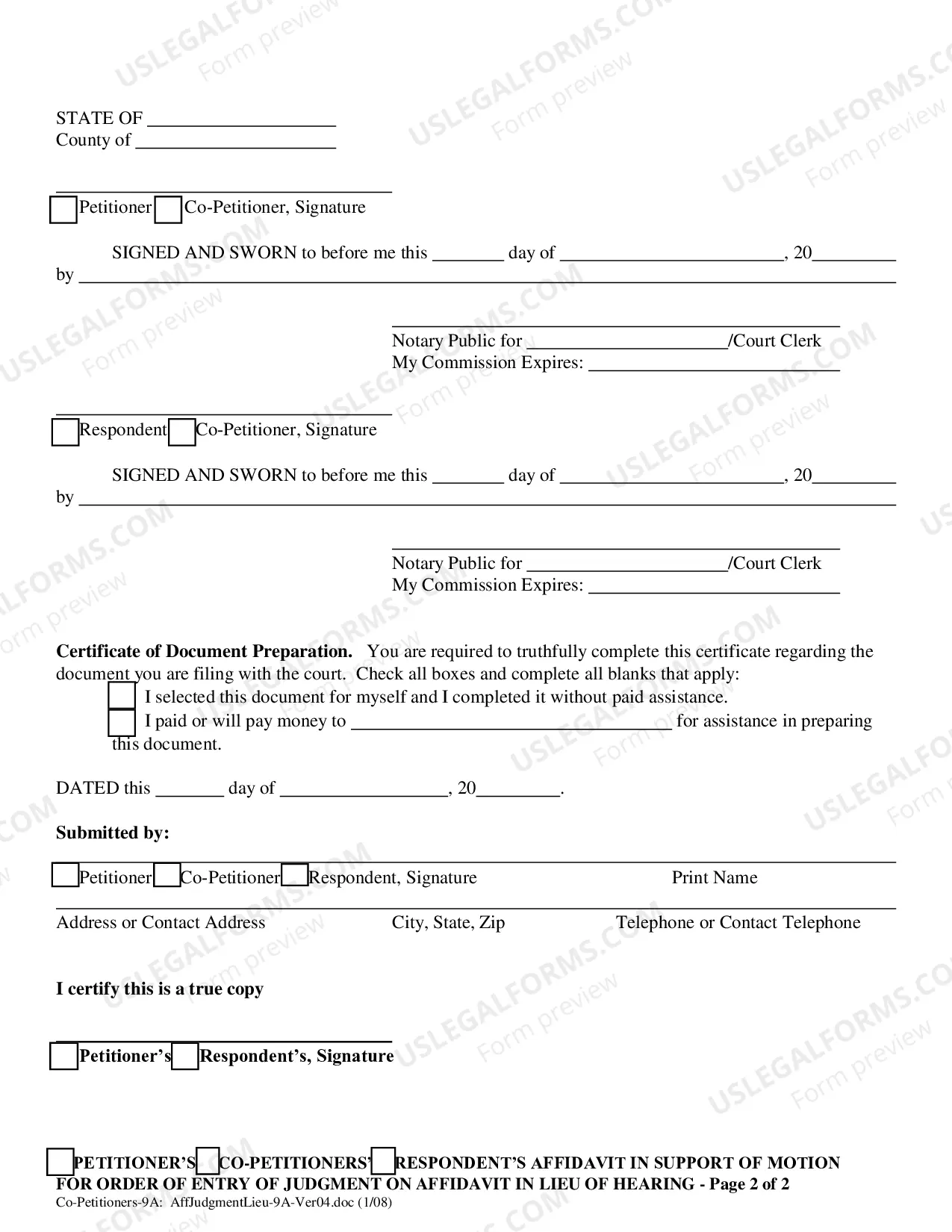
- Ensure all necessary parties sign the affidavit, including notarization if required.
Does this form need to be notarized?
Yes, this form must be notarized to be legally valid. Notarization ensures that the affidavits are authentic and meet court standards. US Legal Forms provides an integrated online notarization service that is available 24/7, allowing you to complete your notarization through a secure video call without the need to travel.
Get your form ready online
Our built-in tools help you complete, sign, share, and store your documents in one place.
Make edits, fill in missing information, and update formatting in US Legal Forms—just like you would in MS Word.
Download a copy, print it, send it by email, or mail it via USPS—whatever works best for your next step.
Sign and collect signatures with our SignNow integration. Send to multiple recipients, set reminders, and more. Go Premium to unlock E-Sign.
If this form requires notarization, complete it online through a secure video call—no need to meet a notary in person or wait for an appointment.
We protect your documents and personal data by following strict security and privacy standards.

Make edits, fill in missing information, and update formatting in US Legal Forms—just like you would in MS Word.

Download a copy, print it, send it by email, or mail it via USPS—whatever works best for your next step.

Sign and collect signatures with our SignNow integration. Send to multiple recipients, set reminders, and more. Go Premium to unlock E-Sign.

If this form requires notarization, complete it online through a secure video call—no need to meet a notary in person or wait for an appointment.

We protect your documents and personal data by following strict security and privacy standards.
Avoid these common issues
- Failing to complete all required signatures and notarizations.
- Inaccurately reporting financial details, which can affect support calculations.
- Not providing sufficient information about the minor children's current residence.
- Leaving out the checkboxes that indicate the status of the respondent's involvement in the case.
Benefits of using this form online
- Convenience of downloading and completing the form online.
- Ability to edit and customize the form as necessary to fit your specific situation.
- Access to professionally drafted templates that comply with legal standards.
Looking for another form?

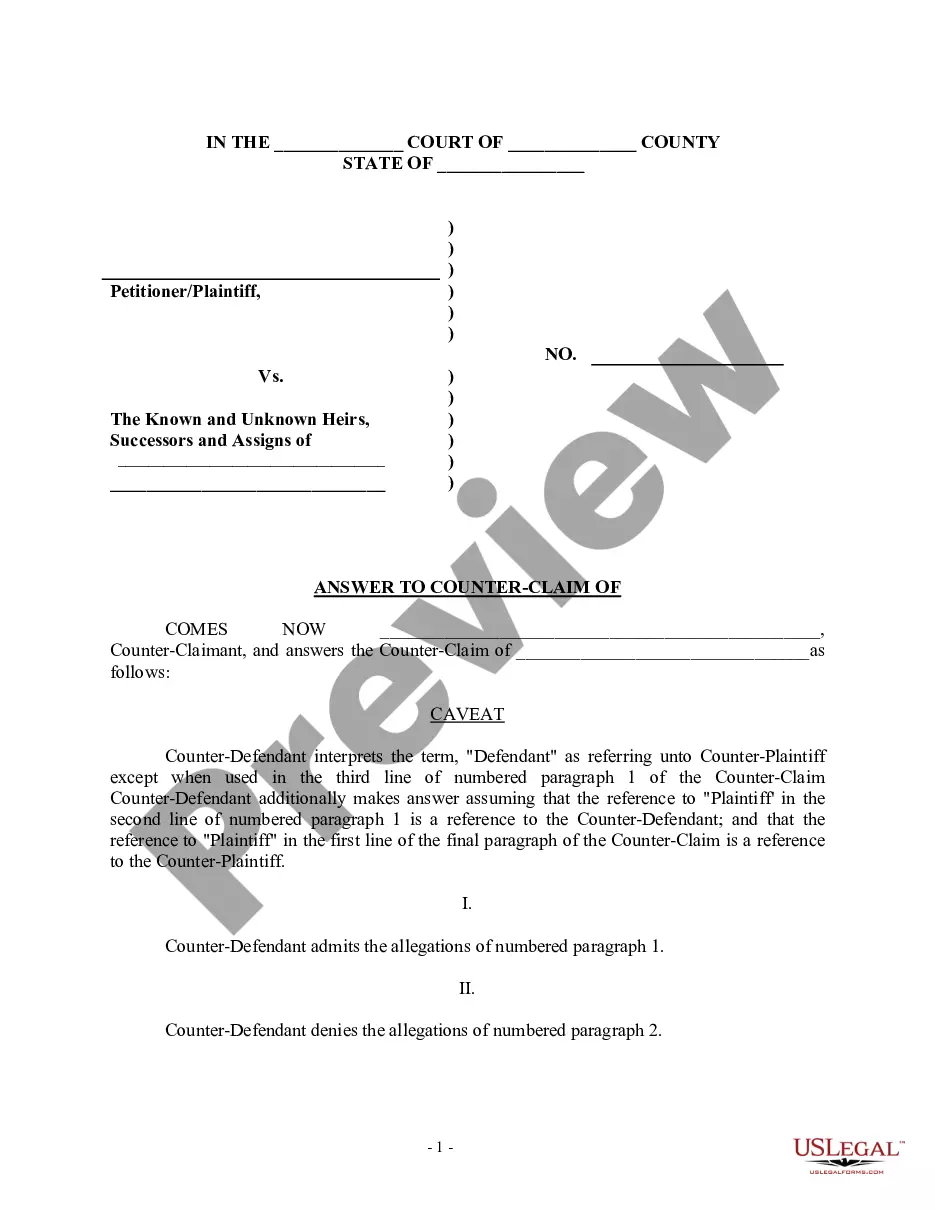


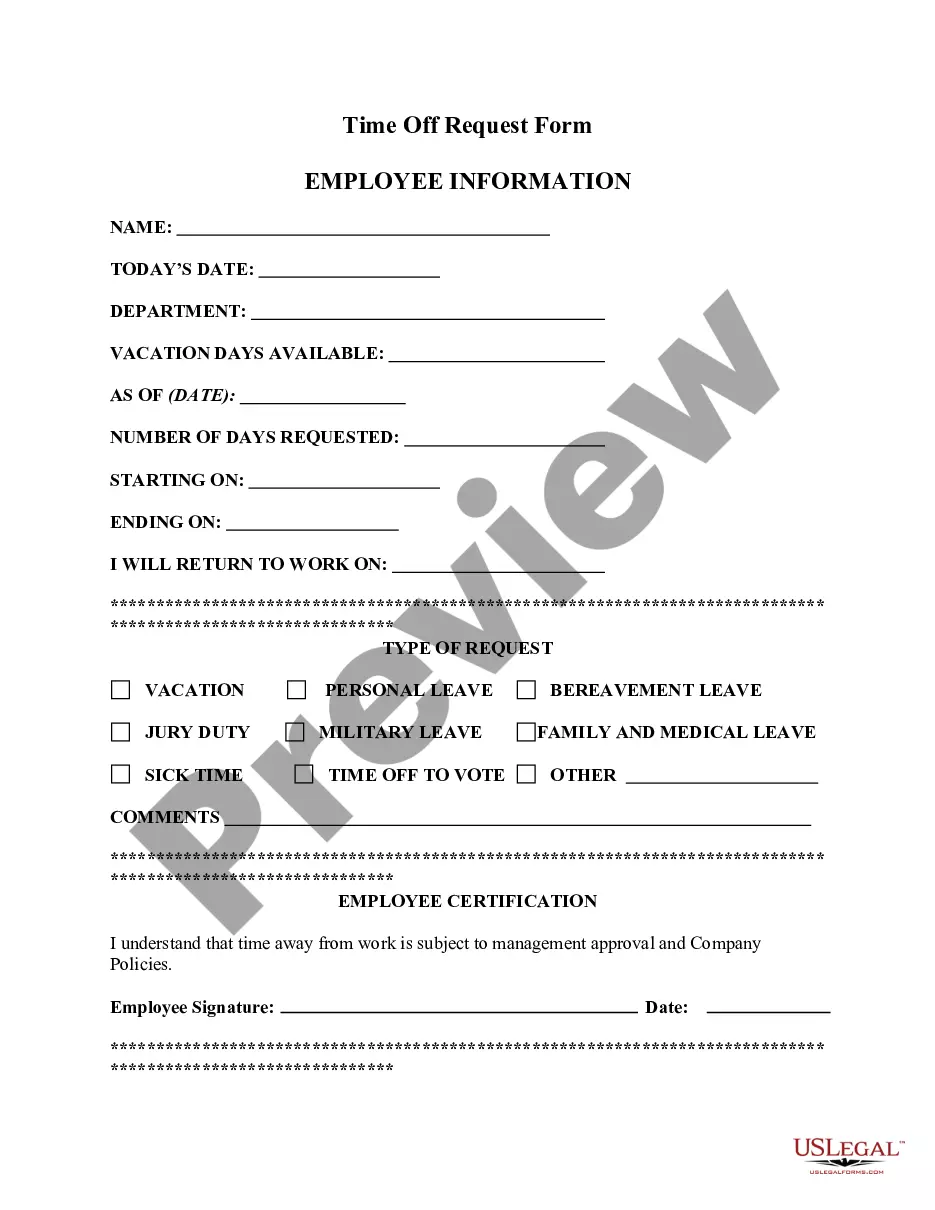
Form popularity
FAQ
Notice of Intent to Relocate Oregon Instead of lengthy hearings, the custodial parent must simply provide reasonable written notice to both the other parent and the court. This provides the non-custodial parent with ample time to take action if they have issues with the proposed move.
After you have gone through all the steps in a divorce, you will get a "General Judgment of Dissolution of Marriage," which is a court order that ends your marriage. The divorce judgment will usually state: The date your marriage ends (this is the date the judge signs the judgment);
A Notice of Entry of Judgment & Decree of Divorce (Default) is a document that notifies the other party that the Judge has signed a Judgment & Decree of Divorce (Default). This document must be sent to the other party and the Affidavit of Service filed with the Clerk of Courts.
In both Washington and Oregon, a child can only choose which parent they'd like to live with when they turn 18 or are otherwise emancipated. Minor children are not considered capable of making such decisions for themselves and are not permitted to ?choose? living with one parent over another.
Follow these steps when writing your cover letter for a job you'd like to relocate for: Write a concise introduction.Explain why this opportunity is important to you.Give an example of your relevant experience.Provide another example that highlights preferred qualifications.End with a conclusion or summary.
Under Oregon law, unless the parents agree otherwise in the custody and parenting time judgment, a custodial parent is usually permitted to relocate no more than 60 miles further distant from the other parent without notifying them or obtaining permission before the move.
The laws in Oregon require that any custodial parent may move up to 60 miles away from their current residence with no notice or approval. If, however, a custodial parent wishes to move more than 60 miles away, notification must be provided to both the other parent and the court.