Oklahoma Letter from Tenant to Landlord containing Notice to landlord to withdraw retaliatory rent increase
Overview of this form
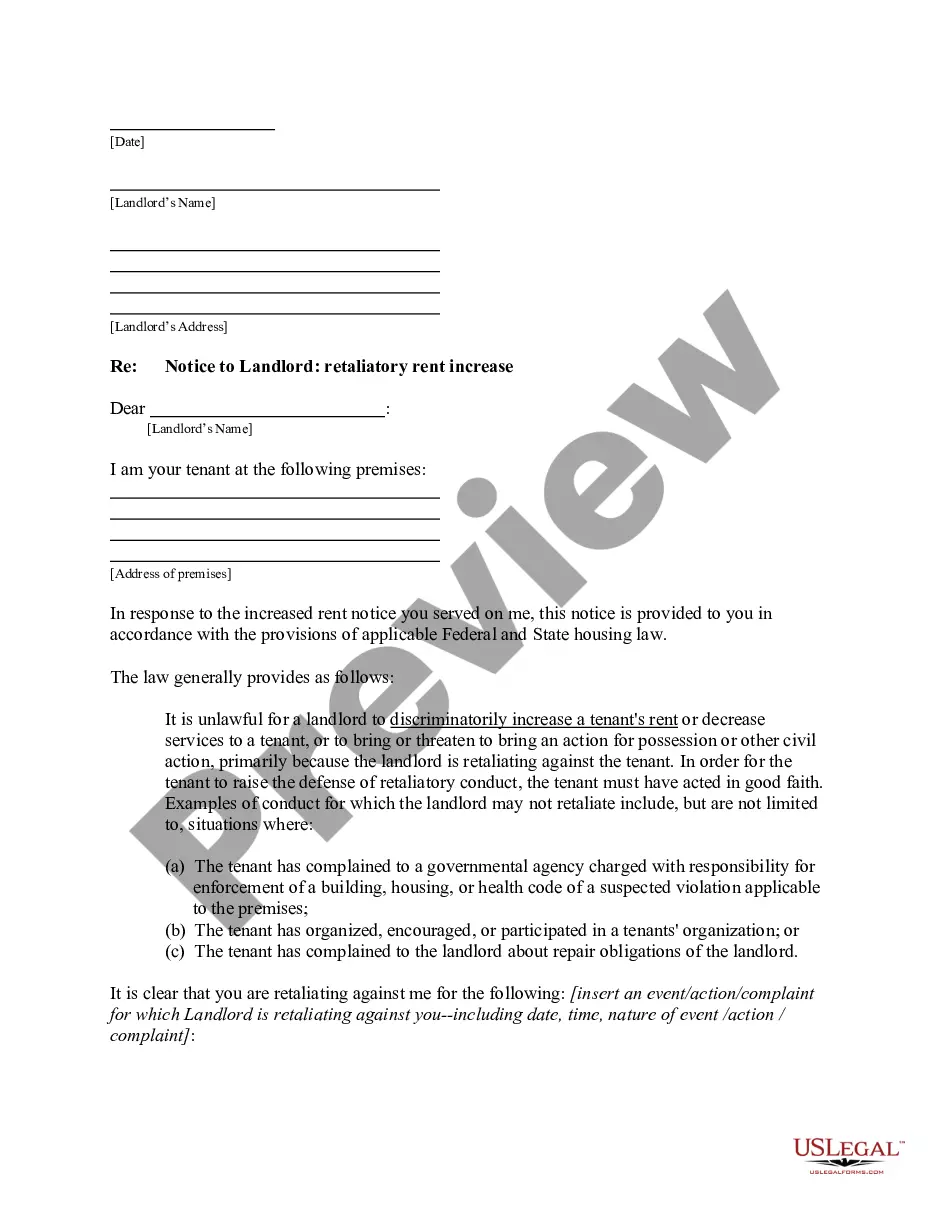
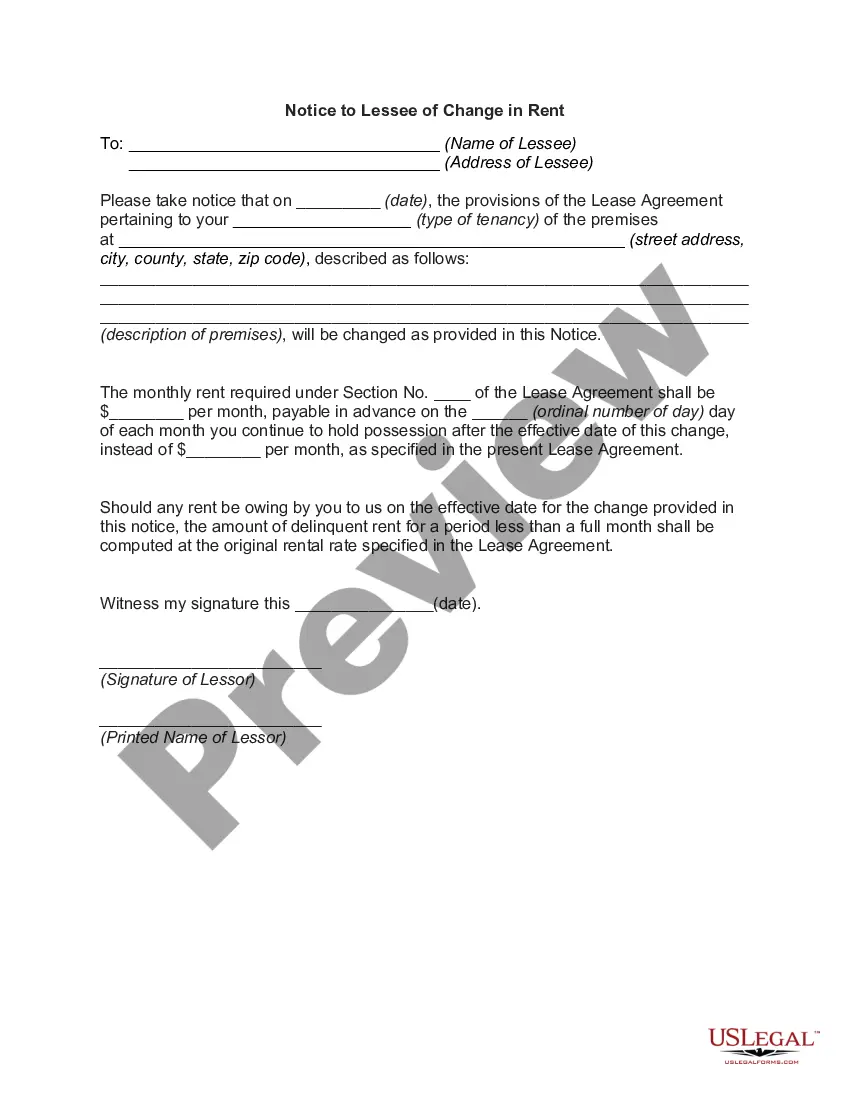
The letter from tenant to landlord containing notice to landlord to withdraw retaliatory rent increase is a formal notification used by tenants to inform their landlord about an unlawful rent increase that is retaliatory in nature. This form helps protect tenants from discriminatory actions taken by landlords due to tenant complaints or involvement in tenant rights activities. It serves a critical purpose in maintaining fair housing practices and differentiates itself by specifically addressing retaliatory conduct as outlined in state housing laws.
Form components explained
- Identification of the tenant and landlord
- Clear statement regarding the retaliatory rent increase
- Reference to relevant state housing laws
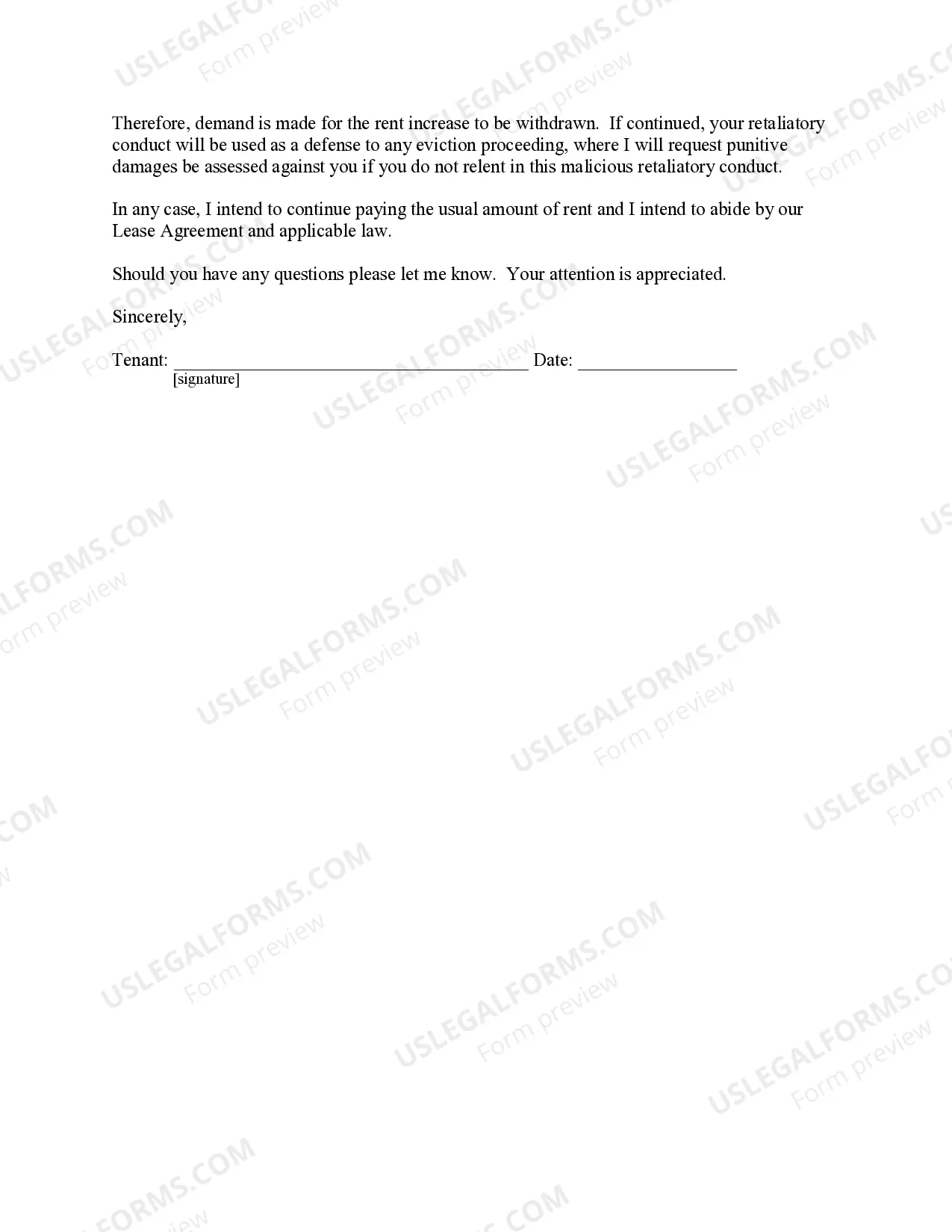
- Assertion of the tenant's commitment to continue paying rent
- Signature lines for both tenant and landlord



When this form is needed
This form should be used when a tenant believes their landlord has increased their rent in retaliation for taking certain actions, such as reporting code violations or participating in tenant organizations. It is crucial for tenants to assert their rights and inform their landlord that such retaliatory measures are illegal, ensuring they provide adequate notice of their intention to contest the increase.
Who can use this document
- Tenants experiencing a rent increase after making complaints to their landlord
- Individuals involved in tenant organizations
- Any tenant wanting to assert their rights under state housing laws
- Tenants who have reported health or safety violations to authorities
Steps to complete this form
- Identify yourself as the tenant and provide your address.
- Insert the landlord's name and address in the appropriate fields.
- Clearly state the details of the rent increase and your reasons for considering it retaliatory.
- Express your intention to continue paying the agreed-upon rent amount.
- Include signatures and dates for both the tenant and landlord for records.
Notarization requirements for this form
This form does not typically require notarization to be legally valid. However, some jurisdictions or document types may still require it. US Legal Forms provides secure online notarization powered by Notarize, available 24/7 for added convenience.
Get your form ready online
Our built-in tools help you complete, sign, share, and store your documents in one place.
Make edits, fill in missing information, and update formatting in US Legal Forms—just like you would in MS Word.
Download a copy, print it, send it by email, or mail it via USPS—whatever works best for your next step.
Sign and collect signatures with our SignNow integration. Send to multiple recipients, set reminders, and more. Go Premium to unlock E-Sign.
If this form requires notarization, complete it online through a secure video call—no need to meet a notary in person or wait for an appointment.
We protect your documents and personal data by following strict security and privacy standards.

Make edits, fill in missing information, and update formatting in US Legal Forms—just like you would in MS Word.

Download a copy, print it, send it by email, or mail it via USPS—whatever works best for your next step.

Sign and collect signatures with our SignNow integration. Send to multiple recipients, set reminders, and more. Go Premium to unlock E-Sign.

If this form requires notarization, complete it online through a secure video call—no need to meet a notary in person or wait for an appointment.

We protect your documents and personal data by following strict security and privacy standards.
Mistakes to watch out for
- Failing to include all necessary details about the rent increase.
- Not stating specific actions that triggered the retaliatory increase.
- Omitting signatures or dates, which can render the notice ineffective.
- Using unclear language that may confuse the landlord about your intentions.
Benefits of completing this form online
- Convenience of downloading and editing the form as needed.
- Access to professionally drafted templates that comply with legal standards.
- Quick turnaround, allowing tenants to address issues promptly.
- Ability to store and print the form easily for records.
Legal use & context
- The form serves as a formal declaration of your intent to contest a retaliatory rent increase.
- Using this form can help strengthen your legal position if the situation escalates.
- It is advisable to keep a copy for your records as evidence of your communication with the landlord.
Summary of main points
- This form serves as a vital tool for tenants facing retaliatory rent increases.
- Filling out the form accurately can strengthen a tenantâs position if disputes arise.
- Understand local laws to ensure the form meets all necessary criteria for your specific situation.
Looking for another form?

Form popularity
FAQ
If you're seeking damages for emotional distress caused by a landlord's discrimination, or punitive damages for especially blatant and intentional discrimination, a lawsuit may well be your best bet. Understand what's involved in suing your landlord. You may file a lawsuit in either federal or state court.
Tenant's name. Property address. Landlord name and contact information. Date the letter is written. Date the rent increase will take effect. Amount of rent increase. Current cost of rent.
Know your state's landlord/tenant laws. Read and respond to the court summons. Try to work out a settlement. Consider legal counsel. Show up for court. Look sharp and provide evidence.
The landlord had a duty to reasonably maintain the property; The landlord knew or should have known of the dangerous condition; The landlord breached their duty by failing to repair/fix the dangerous condition;
Benefits of Suing Your Landlord Filing a lawsuit does have some potential advantages for tenants. Could Motivate a Landlord to Settle Outside of Court: Notifying your landlord of your intention to sue him or her could motivate your landlord to do everything in their power to avoid actually going to court.
If your landlord breaches the warranty of habitability or the warranty of quiet enjoyment, you may be able to sue her to recover monetary damages.In some states, such as California and Arizona, you may be able to seek emotional distress damages if the landlord's actions were particularly egregious.
Dear (Name of landlord or manager), This letter constitutes my written (number of days' notice that you need to give based on your lease agreement)-day notice that I will be moving out of my apartment on (date), the end of my current lease. I am leaving because (new job, rent increase, etc.)
State that you will be making a complaint. Explain why you are making a complaint and make sure to add your account of the event and other supporting facts. Let the management know what steps you wish to be made to address your complaint. End on a positive tone.
Respectfully state that you are making a complaint. Explain the reason behind you making the complaint, making sure to put in the various reasons why you are making the complaint. Relate to the reader what you wish to be done about your complaint. End on a positive tone.