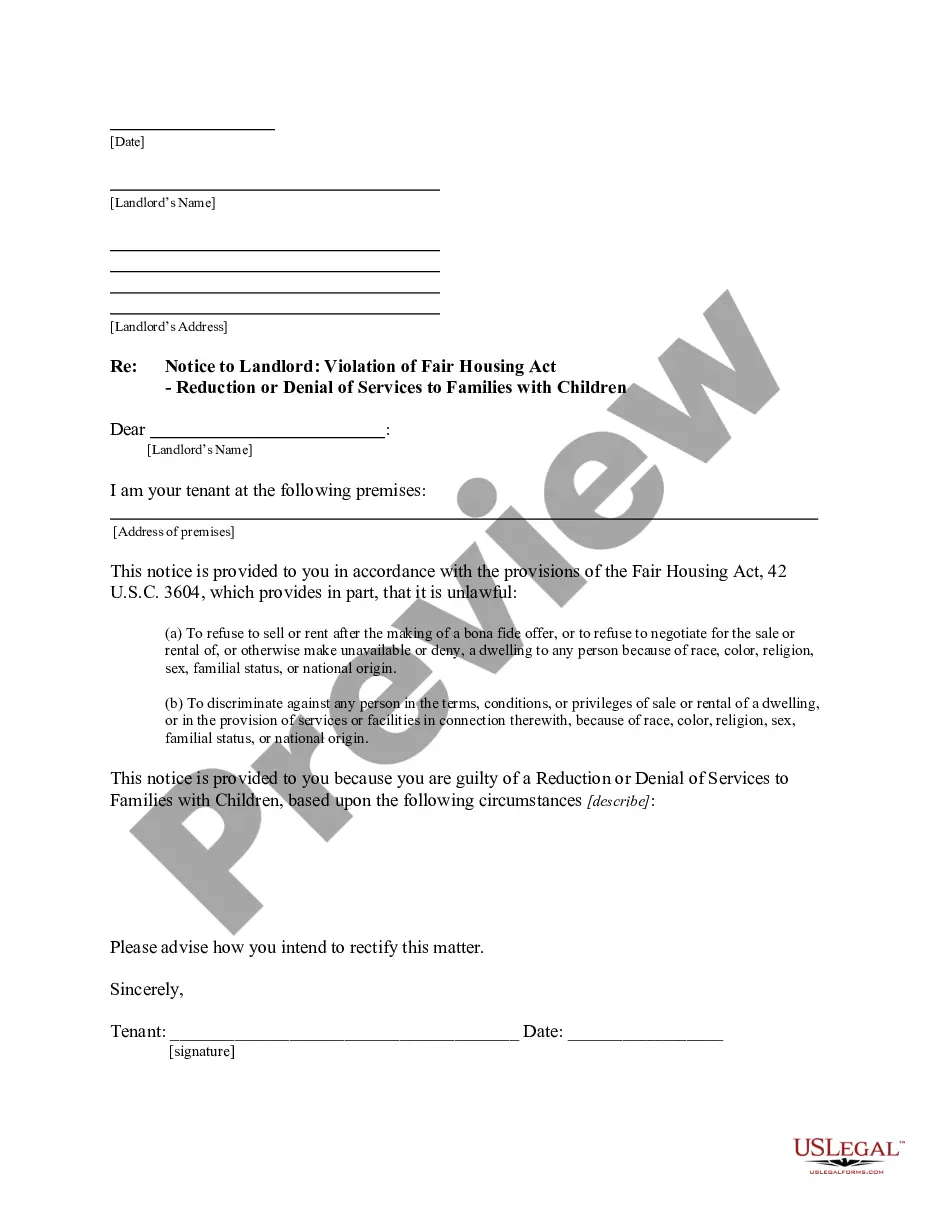
Oklahoma Quitclaim Deed from Individual to Two Individuals in Joint Tenancy

Understanding this form
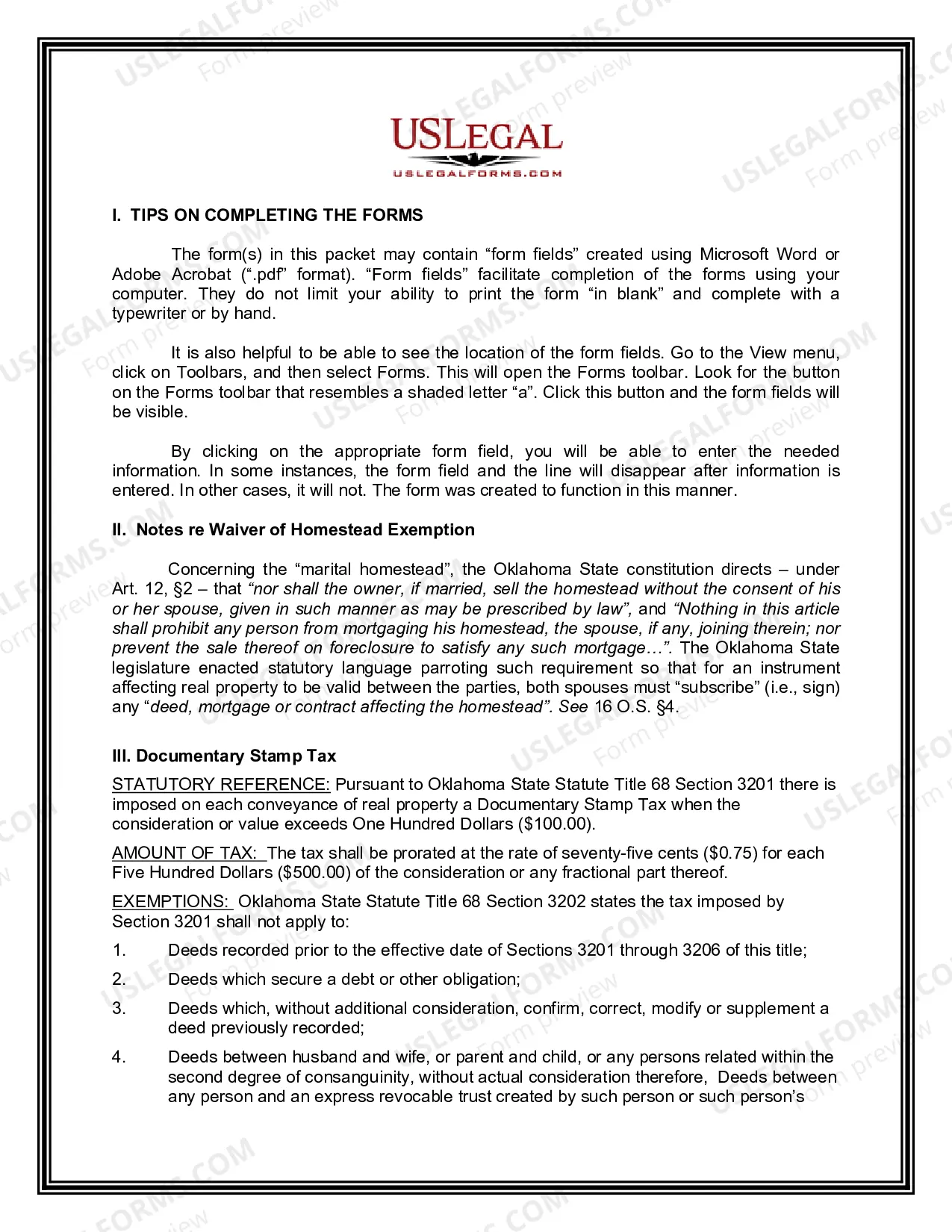
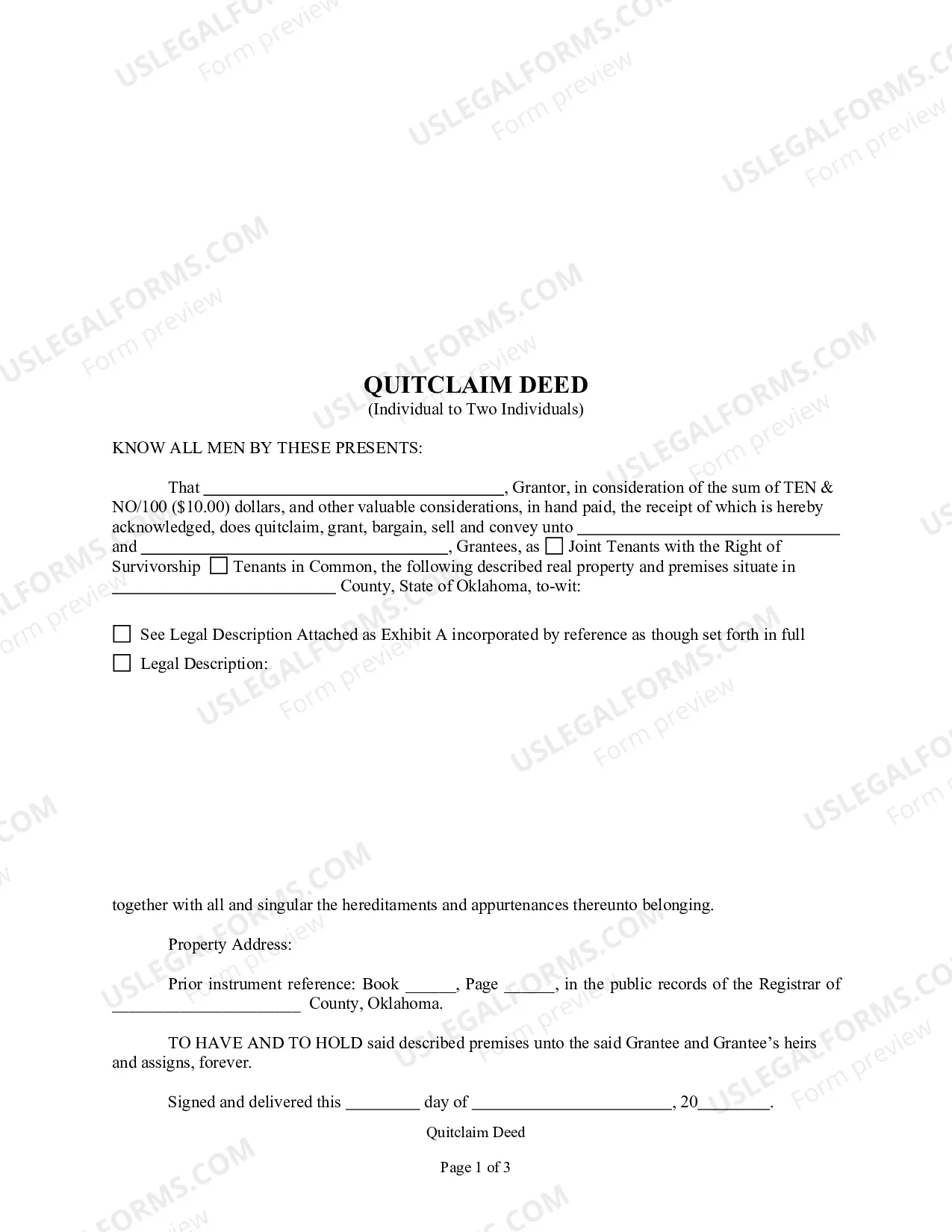
The Quitclaim Deed from Individual to Two Individuals in Joint Tenancy is a legal document used to transfer property ownership from one individual (the Grantor) to two individuals (the Grantees) who will hold the property as joint tenants. This form enables the Grantor to relinquish any rights they may have to the property, except for specified rights related to minerals. It is different from a warranty deed since it does not guarantee that the property is free of liens or claims, making it simpler yet potentially riskier for the Grantees. This document complies with all applicable state laws.
Key parts of this document
- Grantor's Information: Details about the individual transferring the property.
- Grantees' Information: Names and details of the two individuals receiving the property.
- Property Description: A clear description of the property being transferred, including its legal description.
- Mineral Rights Clause: A statement reserving oil, gas, and mineral rights for the Grantor, if applicable.
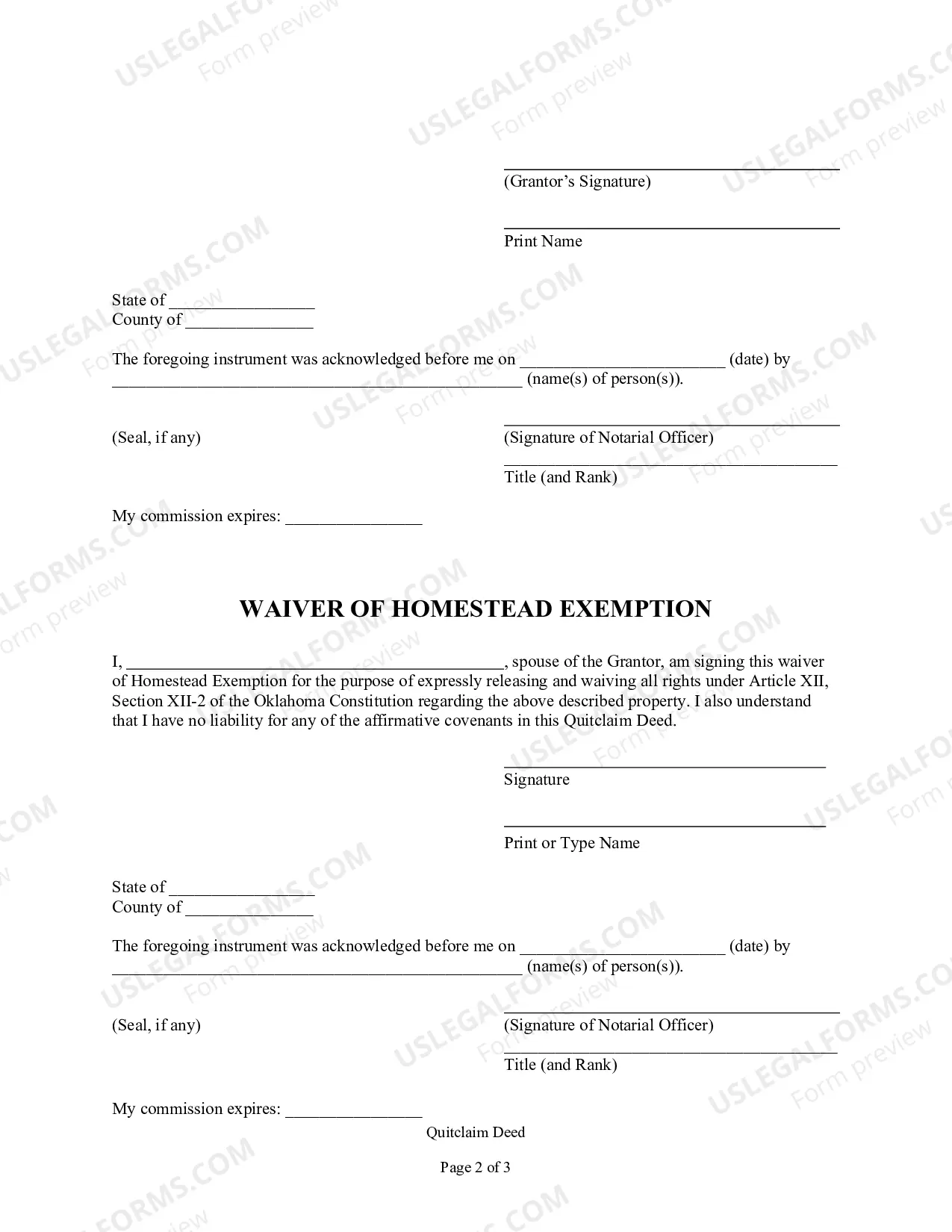
- Signatures: Signatures of the Grantor and, if required by state law, of the witnesses.
- Notary Section: Space for a notary public to validate the deed.





When this form is needed
This form is typically used when an individual wishes to transfer property ownership to two individuals while retaining certain rights. Common scenarios include family members transferring property to a spouse and another family member, or when individuals want to jointly own property for investment purposes or shared residence. Additionally, it may be used in situations where the Grantor wishes to relinquish ownership without the complexities of a warranty deed.
Who should use this form
- Individuals transferring real estate to two co-owners.
- Family members seeking to simplify property transfer without warranty guarantees.
- Investors looking to establish joint ownership in property.
- Anyone requiring a simple means to convey property with a minimal legal process.
Instructions for completing this form
- Identify the Grantor: Enter the name and address of the individual transferring the property.
- Specify the Grantees: List the names and addresses of the two individuals who will receive the property.
- Describe the Property: Provide a detailed legal description of the property being conveyed.
- Include the Mineral Rights Clause: If applicable, indicate that the Grantor retains rights to oil, gas, and minerals.
- Sign the document: The Grantor must sign the deed, and if required, have it witnessed.
- Notarize the document: If required, take the deed to a notary public for official validation.
Does this document require notarization?
Yes, this form must be notarized to be legally valid in Oklahoma. You can take advantage of US Legal Formsâ integrated online notarization services, which are available 24/7. This process allows for secure video verification, ensuring the document is recognized legally without the need for travel.
Get your form ready online
Our built-in tools help you complete, sign, share, and store your documents in one place.
Make edits, fill in missing information, and update formatting in US Legal Forms—just like you would in MS Word.
Download a copy, print it, send it by email, or mail it via USPS—whatever works best for your next step.
Sign and collect signatures with our SignNow integration. Send to multiple recipients, set reminders, and more. Go Premium to unlock E-Sign.
If this form requires notarization, complete it online through a secure video call—no need to meet a notary in person or wait for an appointment.
We protect your documents and personal data by following strict security and privacy standards.

Make edits, fill in missing information, and update formatting in US Legal Forms—just like you would in MS Word.

Download a copy, print it, send it by email, or mail it via USPS—whatever works best for your next step.

Sign and collect signatures with our SignNow integration. Send to multiple recipients, set reminders, and more. Go Premium to unlock E-Sign.

If this form requires notarization, complete it online through a secure video call—no need to meet a notary in person or wait for an appointment.

We protect your documents and personal data by following strict security and privacy standards.
Common mistakes
- Failing to include a legal description of the property.
- Not notarizing the deed when required by local laws.
- Leaving out the retention of mineral rights clause when applicable.
- Not having both spouses sign if the Grantor is married and transferring a homestead.
- Forgetting to enter the Grantees' information correctly.
Why use this form online
- Convenience of downloading and filling the form at your own pace.
- Editable fields allow for accurate input of information before printing.
- Compliance with state laws ensures legal validity of the form.
- Access to guidance and resources to help complete the document.
Quick recap
- The Quitclaim Deed is used for property transfers without warranties.
- It is vital for joint tenancy arrangements and familial property transfers.
- Ensure notarization and compliance with state-specific requirements for validity.
Looking for another form?
Form popularity
FAQ
Recording A quit claim deed must be filed with the County Clerk's Office along with the required filing fee (varies by location). Signing (§ 16-26) This form is required to be authorized by the Grantor(s) in front of a Notary Public with their acknowledgment and seal.
You can apply to court to change your ex-partner's tenancy to your name, or remove their name from a joint tenancy. You can apply for a 'transfer of tenancy' if: your landlord refuses to change your tenancy. your tenancy doesn't allow a transfer.
For example, joint tenants must all take title simultaneously from the same deed while tenants in common can come into ownership at different times. Another difference is that joint tenants all own equal shares of the property, proportionate to the number of joint tenants involved.
Joint tenants usually share ownership of land, but the property may instead be money or other items. Four main features mark this type of ownership: (1) The joint tenants own an undivided interest in the property as a whole; each share is equal, and no one joint tenant can ever have a larger share.
Discuss property ownership interests. Access a copy of your title deed. Complete, review and sign the quitclaim or warranty form. Submit the quitclaim or warranty form. Request a certified copy of your quitclaim or warranty deed.
A quitclaim deed must meet all state and local standards for recorded instruments. Sign the deed in the presence of a notary public and record at the clerk's office in the county where the property is located for a valid transfer. Contact the same office to verify accepted forms of payment.
It will depend what state the property is in. For example, the minimum fee payable when changing the title to have someone removed from a property title in NSW is $133.48. This fee must be paid to the NSW Government Land & Property Information Department.
If you do not have any loan or mortgage over the said property, then the easiest way to remove your name from the joint names, is if you were to execute a release deed or relinquishment deed in favour of your wife with respect to 50% share that you are the owner of, then she in turn becomes the full and absolute owner
But you might be wondering if an owner can transfer a deed to another person without a real estate lawyer. The answer is yes. Parties to a transaction are always free to prepare their own deeds.A quitclaim deed, for example, is far simpler than a warranty deed.