Arizona Abandonment of Easement
What is this form?
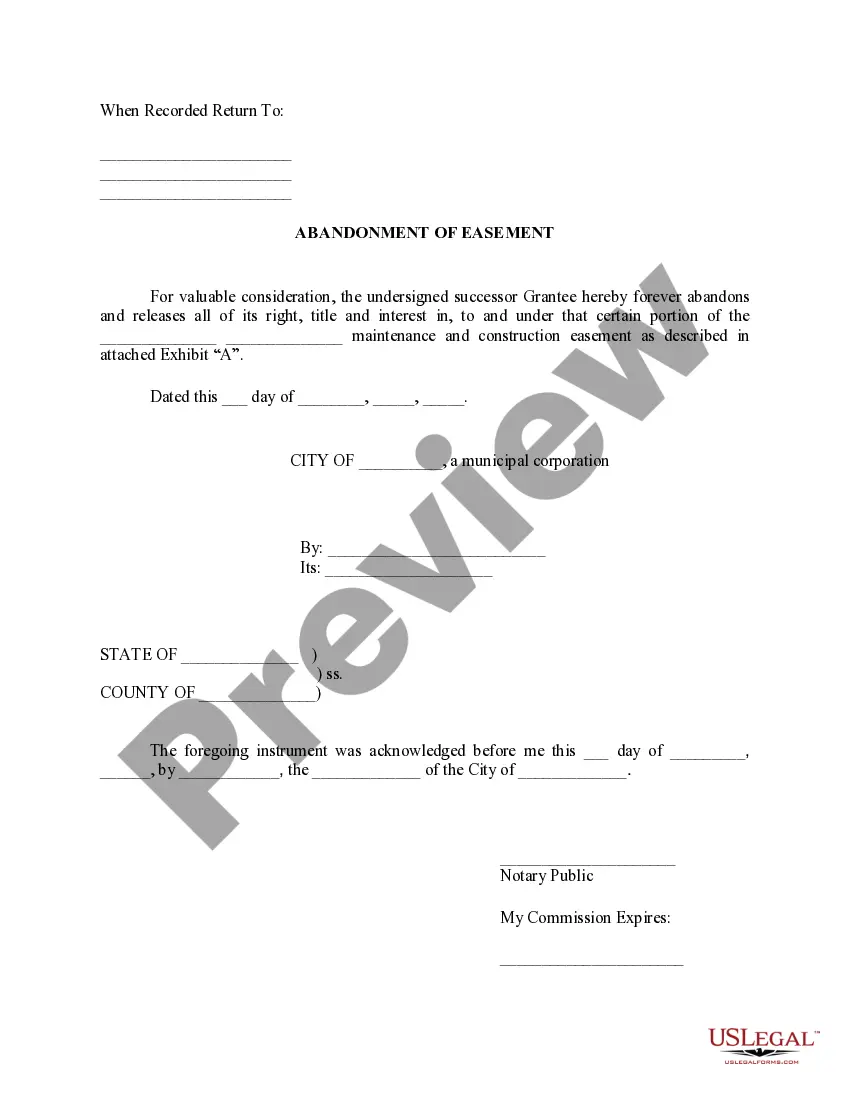
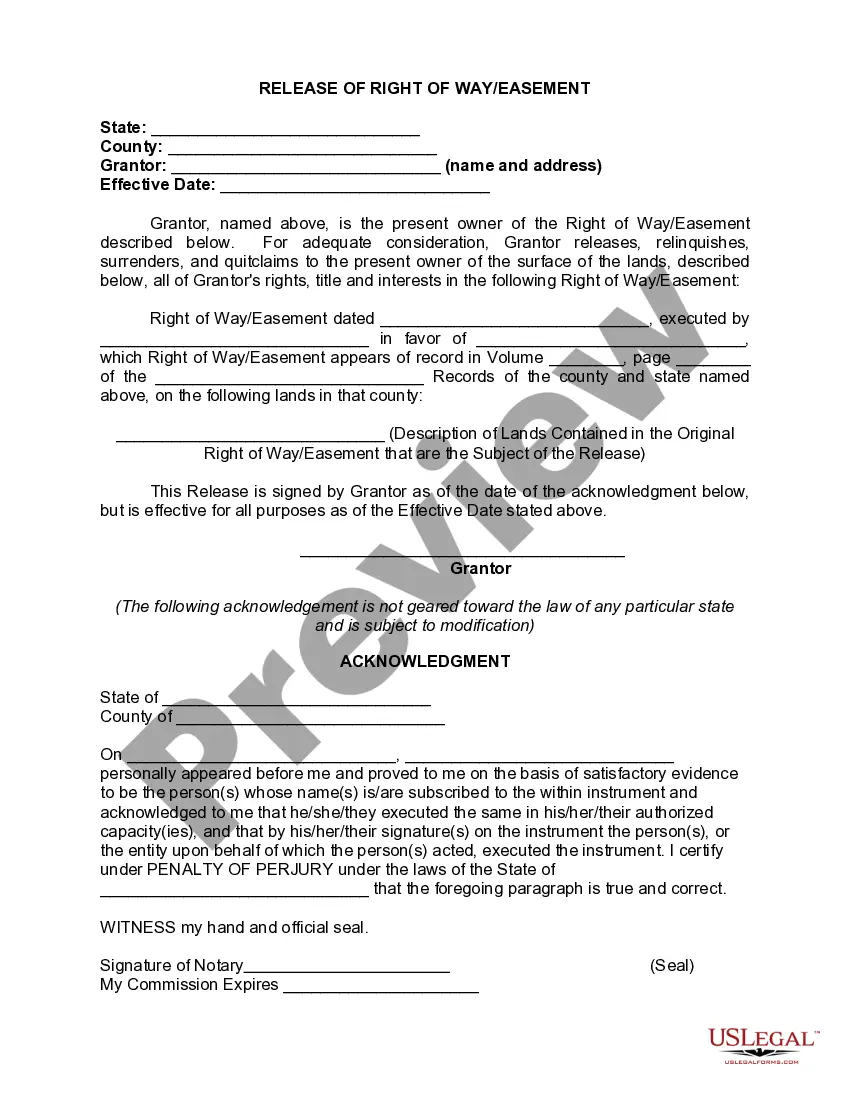
The Abandonment of Easement form is a legal document that officially terminates a specific easement, releasing all rights, title, and interest related to it. This form differs from other property-related forms as it specifically addresses the abandonment of an easement, allowing property owners to formally relinquish their rights to an easement that they no longer intend to use. This is important for clearing property titles and ensuring that the easement is no longer a claim against the property.
Key parts of this document
- Identifies the successor grantee who is abandoning the easement.
- Describes the specific easement being abandoned, referencing an attached exhibit.
- Includes the date and the municipal corporation's acknowledgment.
- Requires notarization to confirm the authenticity of the signatures.

When this form is needed
This form is used when a property owner decides to abandon a previously granted easement. Situations may include instances where the easement is no longer needed for maintenance or construction purposes, or when the property has been altered in a way that renders the easement unnecessary. It can also be relevant during property sales, ensuring that the relinquishment of the easement is documented for the buyerâs title security.
Who this form is for
- Property owners wishing to formally abandon an easement on their property.
- Successor grantees involved in property title transfers.
- Municipal corporations managing easements for public utilities or pathways.
How to prepare this document
- Identify the parties involved, including the successor grantee.
- Specify the easement being abandoned by referring to an attached exhibit.
- Enter the date when the abandonment is to take effect.
- Ensure the authorized representative from the municipal corporation signs the form.
- Have a notary public witness the signatures and provide notarization.
Notarization guidance
Yes, this form must be notarized to be legally valid. Notarization provides an added layer of authenticity and legal recognition, ensuring that the signatures are legitimate. US Legal Forms offers integrated online notarization, available 24/7 through secure video calls, allowing you to complete the process without needing to travel.
Get your form ready online
Our built-in tools help you complete, sign, share, and store your documents in one place.
Make edits, fill in missing information, and update formatting in US Legal Forms—just like you would in MS Word.
Download a copy, print it, send it by email, or mail it via USPS—whatever works best for your next step.
Sign and collect signatures with our SignNow integration. Send to multiple recipients, set reminders, and more. Go Premium to unlock E-Sign.
If this form requires notarization, complete it online through a secure video call—no need to meet a notary in person or wait for an appointment.
We protect your documents and personal data by following strict security and privacy standards.

Make edits, fill in missing information, and update formatting in US Legal Forms—just like you would in MS Word.

Download a copy, print it, send it by email, or mail it via USPS—whatever works best for your next step.

Sign and collect signatures with our SignNow integration. Send to multiple recipients, set reminders, and more. Go Premium to unlock E-Sign.

If this form requires notarization, complete it online through a secure video call—no need to meet a notary in person or wait for an appointment.

We protect your documents and personal data by following strict security and privacy standards.
Common mistakes
- Failing to attach the required description of the easement.
- Inaccurately identifying the property or parties involved in the easement.
- Not obtaining notarization, which is essential for the document's validity.
Why complete this form online
- Convenient access to the legal form anytime, from anywhere.
- Edit and customize the form easily to meet specific needs.
- Reliable templates drafted by licensed attorneys ensure legal compliance.
Looking for another form?

Form popularity
FAQ
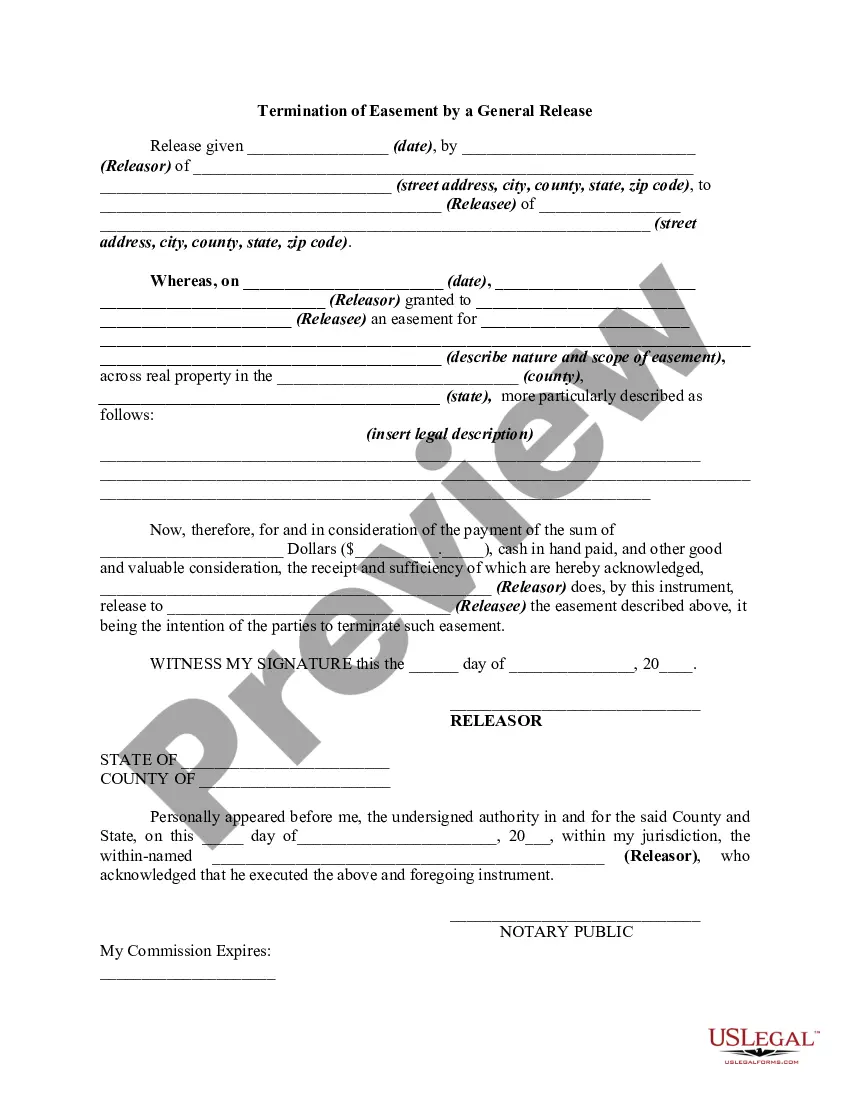
Terminating an easement in Arizona can occur through various legal methods, including mutual agreement, expiration, or abandonment. If both parties agree to end the easement, they can execute a written release, clarifying both parties' intentions. Alternatively, if a property owner no longer uses the easement and there is clear evidence of abandonment, they may seek to terminate it legally. When navigating the complexities of the Arizona abandonment of easement, consulting a legal expert or utilizing platforms like US Legal Forms can simplify the process.
In Arizona, abandonment of property occurs when an owner intentionally relinquishes their rights to the property without transferring those rights to another party. Generally, this may happen when the owner ceases to use the property, makes no efforts to maintain it, or has not visited it for an extended period. The Arizona abandonment of easement law requires clear evidence of the owner's intent to abandon, making documentation crucial. If you suspect an easement may be abandoned, understanding the legal ramifications is vital for property owners.
An easement is often terminated by a process known as Arizona Abandonment of Easement. This occurs when the owner of the easement fails to use it for a specified period, leading to the presumption that it is no longer necessary. Additionally, changes in circumstances or property ownership might also lead to the termination of an easement. Understanding these aspects can help you navigate property rights effectively.
Yes, you can refuse a utility easement in Arizona, but certain conditions apply. Your refusal may be based on the type of easement requested and its impact on your property. It is essential to understand your legal rights and the implications of an easement request. If you need guidance on how to navigate this process, US Legal Forms offers resources that can help you understand your rights related to the Arizona Abandonment of Easement.
Easement rights in Arizona allow a landowner to grant permission for someone to use a portion of their property for a specific purpose. This can include pathways, utility lines, or access to landlocked properties. Understanding these rights is important, as they can impact your property’s value and usage. If you are facing issues regarding easement rights, consider exploring the Arizona Abandonment of Easement process, which can clarify your property rights.
To resolve easement disputes in Arizona, start by communicating directly with the other party involved. If informal talks do not lead to a solution, consider mediation as a next step. Legal action may also be an option if disputes persist; however, it’s often best to explore resolution methods that maintain relationships. Utilizing platforms like US Legal Forms can provide necessary templates and legal guidance during the process.
Before granting an easement in Arizona, consider the intended use and how it might impact your property. Nailing down the specific terms in a written agreement can prevent misunderstandings in the future. Moreover, evaluating whether the easement could be abandoned in the future is significant for your long-term planning. Professional legal advice can help guide this decision-making process.
Maintenance responsibilities for an easement in Arizona usually fall on the party using the easement. It is vital to understand the specific terms outlined during the easement agreement. Miscommunication regarding maintenance roles can lead to conflicts, so clarifying these responsibilities in writing is advisable to avoid potential issues.
In Arizona, the period for claiming adverse possession is typically 10 years. During this timeframe, a person must openly use the property in a continuous and exclusive manner without the owner's permission. After fulfilling these criteria, the possessor may file a claim for ownership. It's essential to understand how this interacts with easement laws in Arizona, especially if you are considering the abandonment of an easement.
In certain situations, a property owner may be able to block an easement in Arizona. If the easement is not used for a significant period or is deemed unnecessary, it may be abandoned under the law. The Arizona Abandonment of Easement process allows property owners to reclaim their rights in such cases. Consulting a legal expert can provide clarity on how to proceed.