Ohio Special or Limited Power of Attorney for Real Estate Sales Transaction By Seller
What this document covers
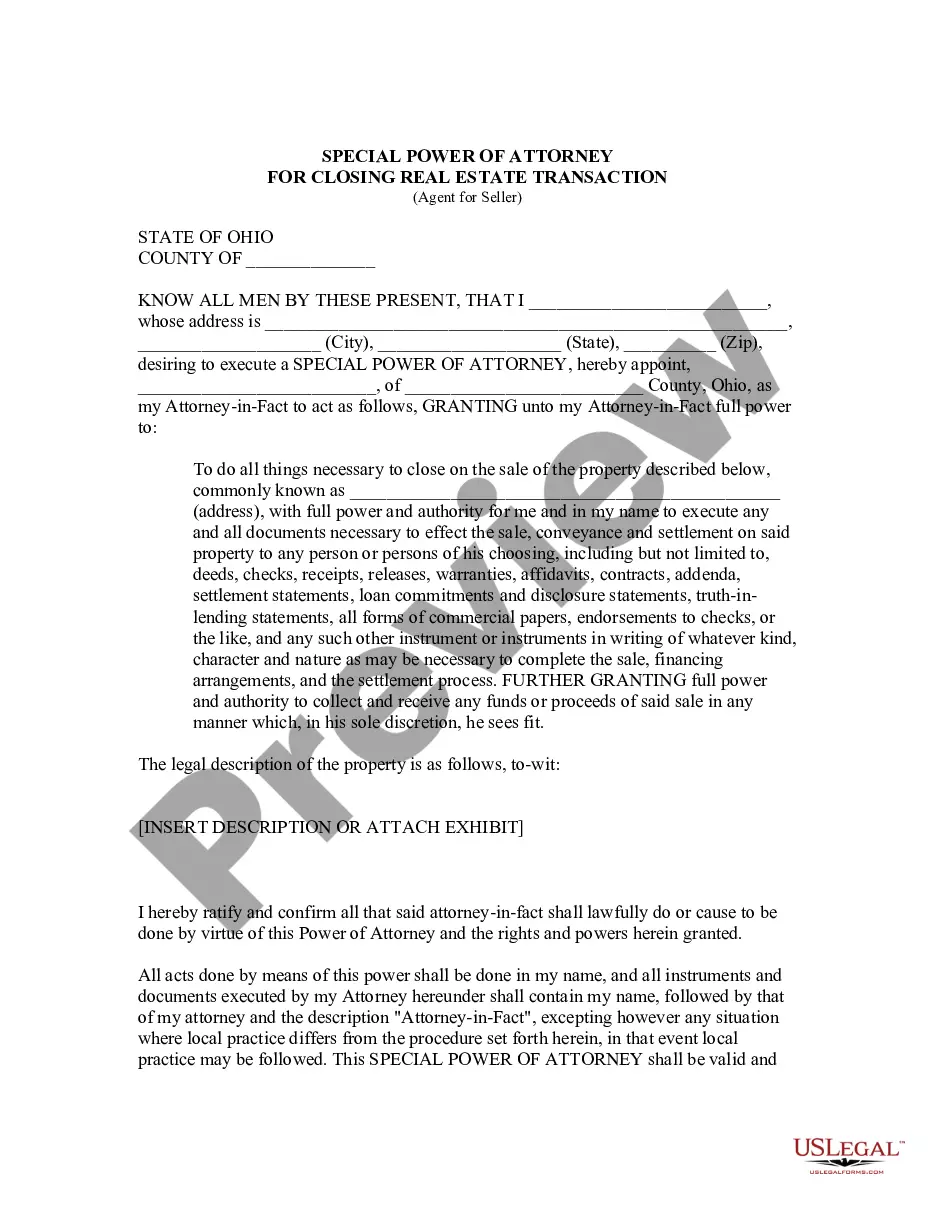
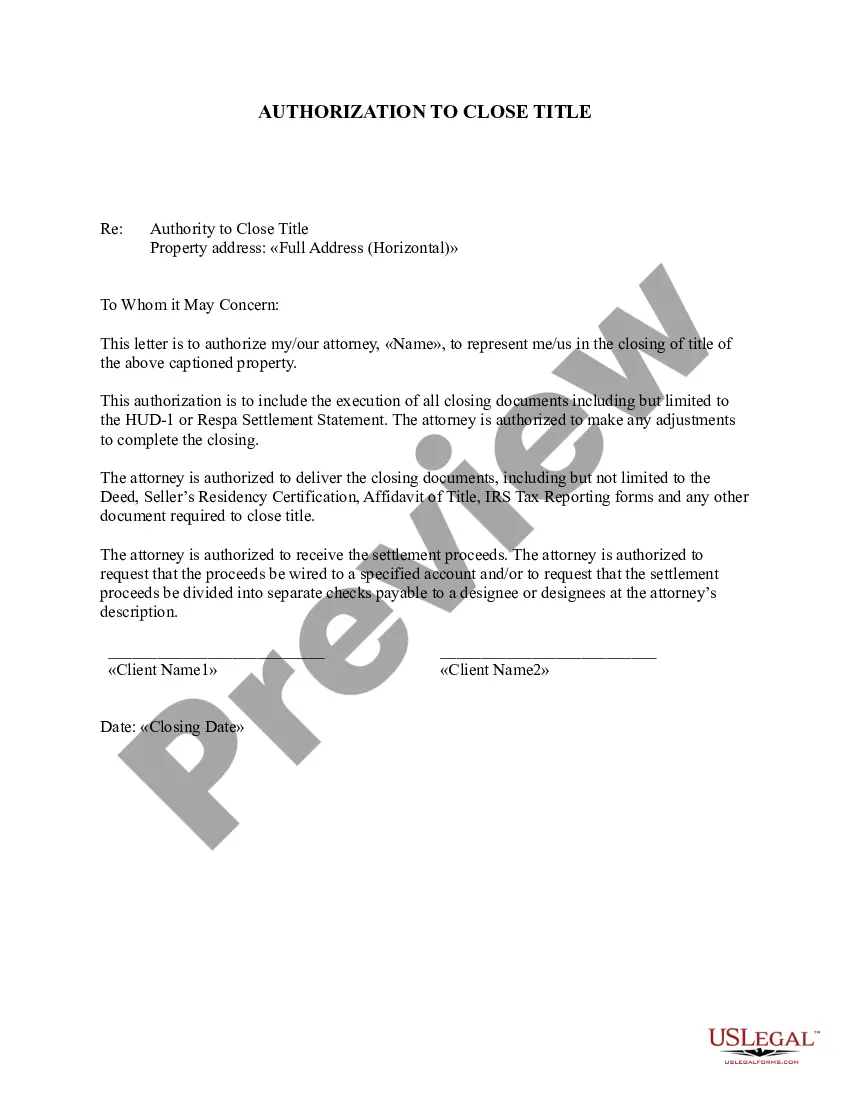
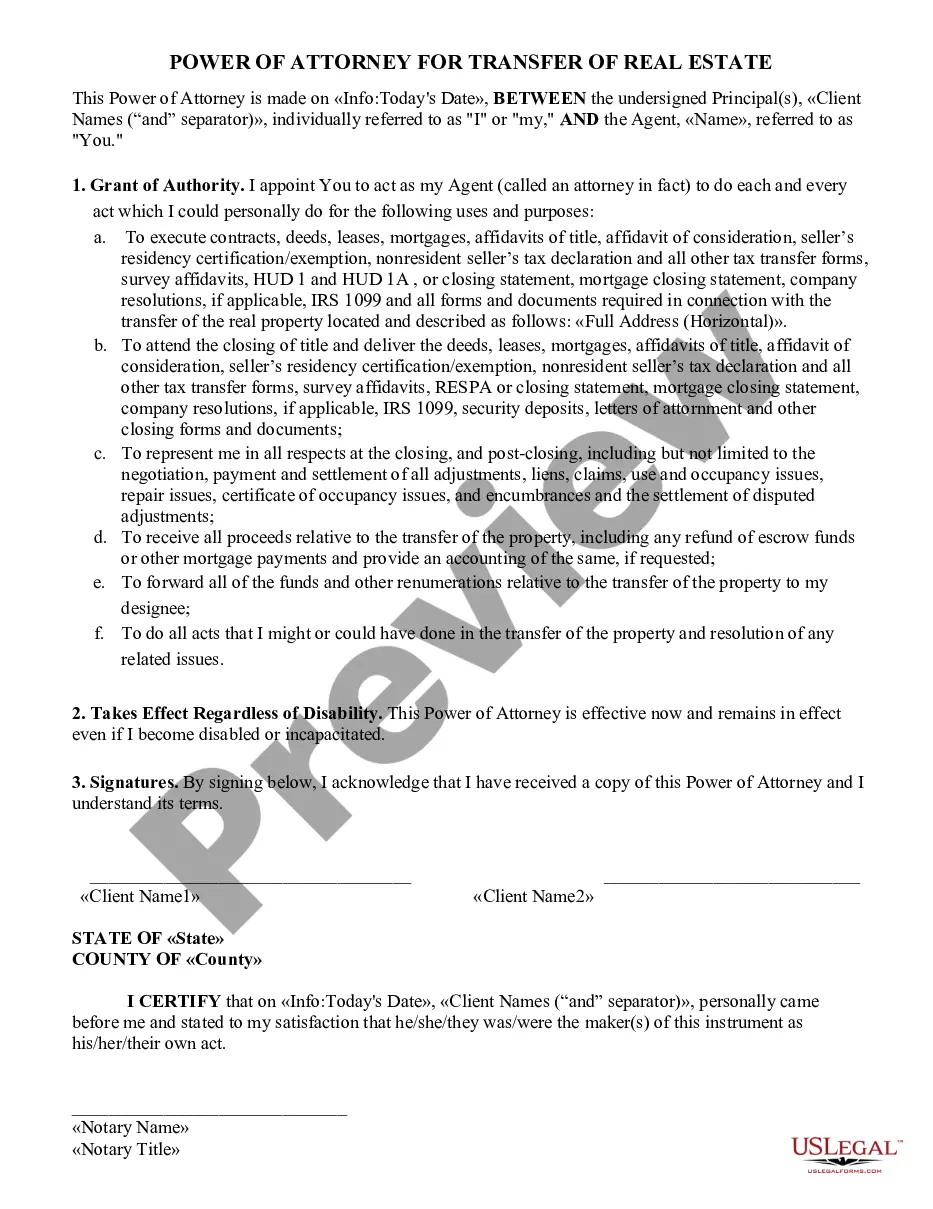
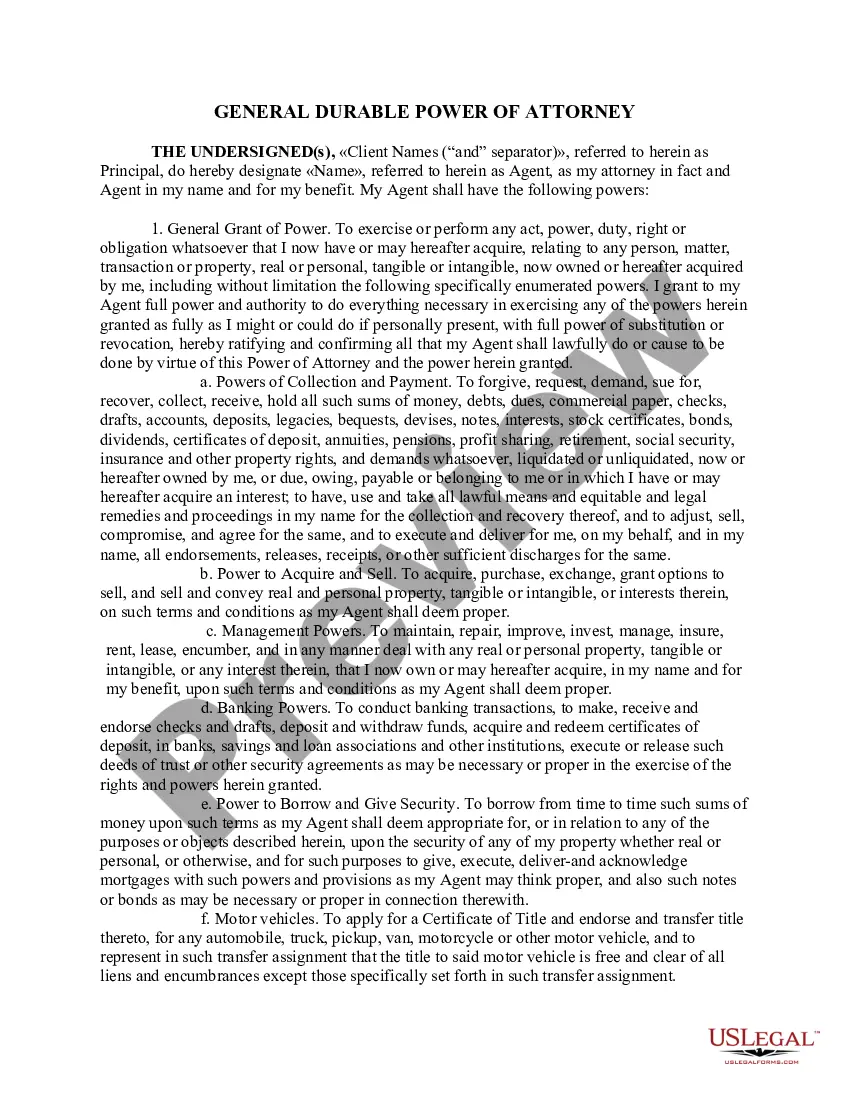
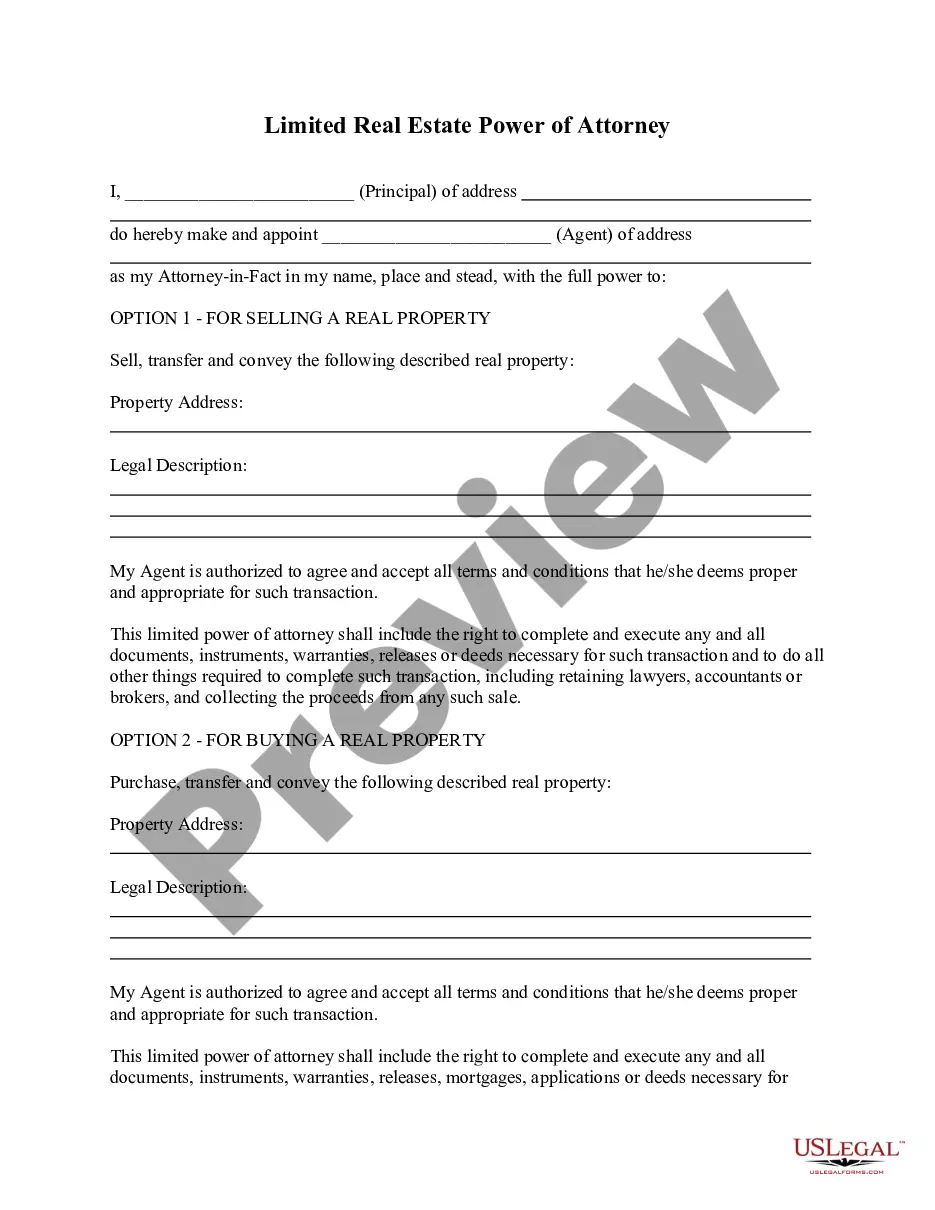
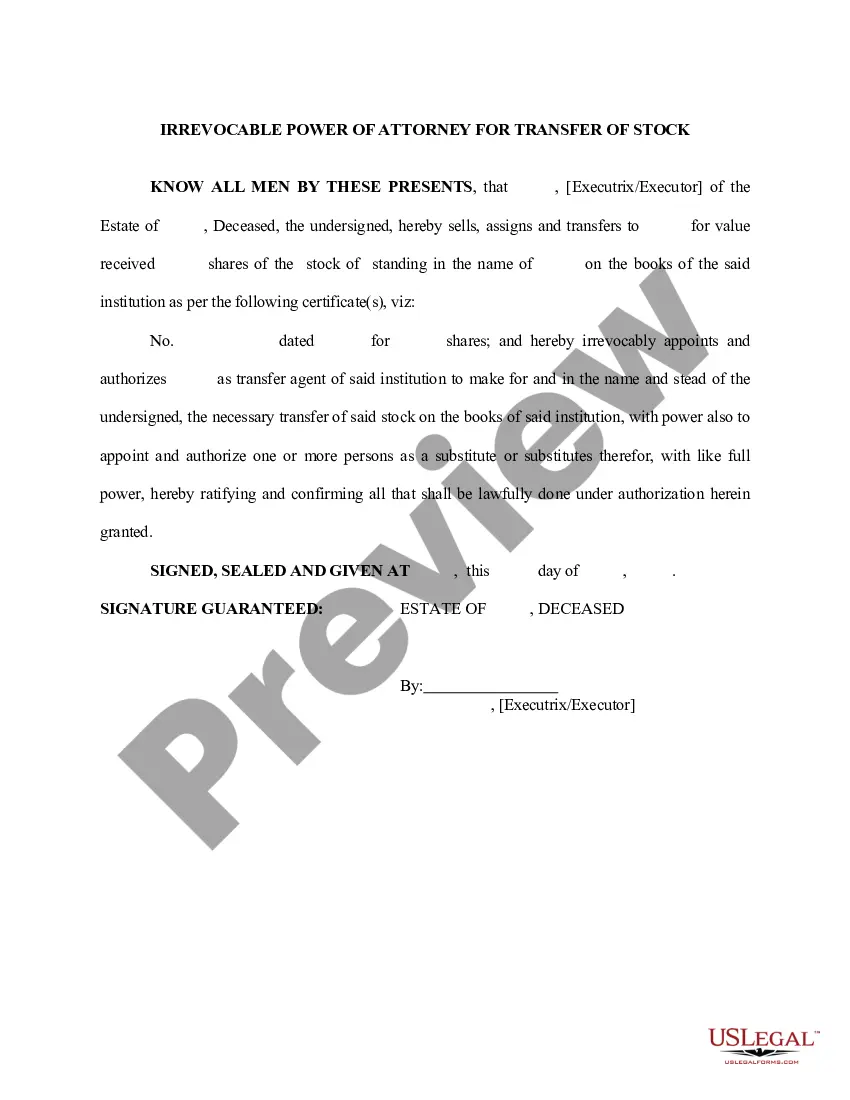
The Special or Limited Power of Attorney for Real Estate Sales Transaction By Seller is a legal document that allows a seller to designate an attorney-in-fact to act on their behalf in selling a specific parcel of real estate. This form differs from general powers of attorney by focusing specifically on real estate transactions, empowering the designated individual to execute necessary documents and facilitate the sale.
What’s included in this form
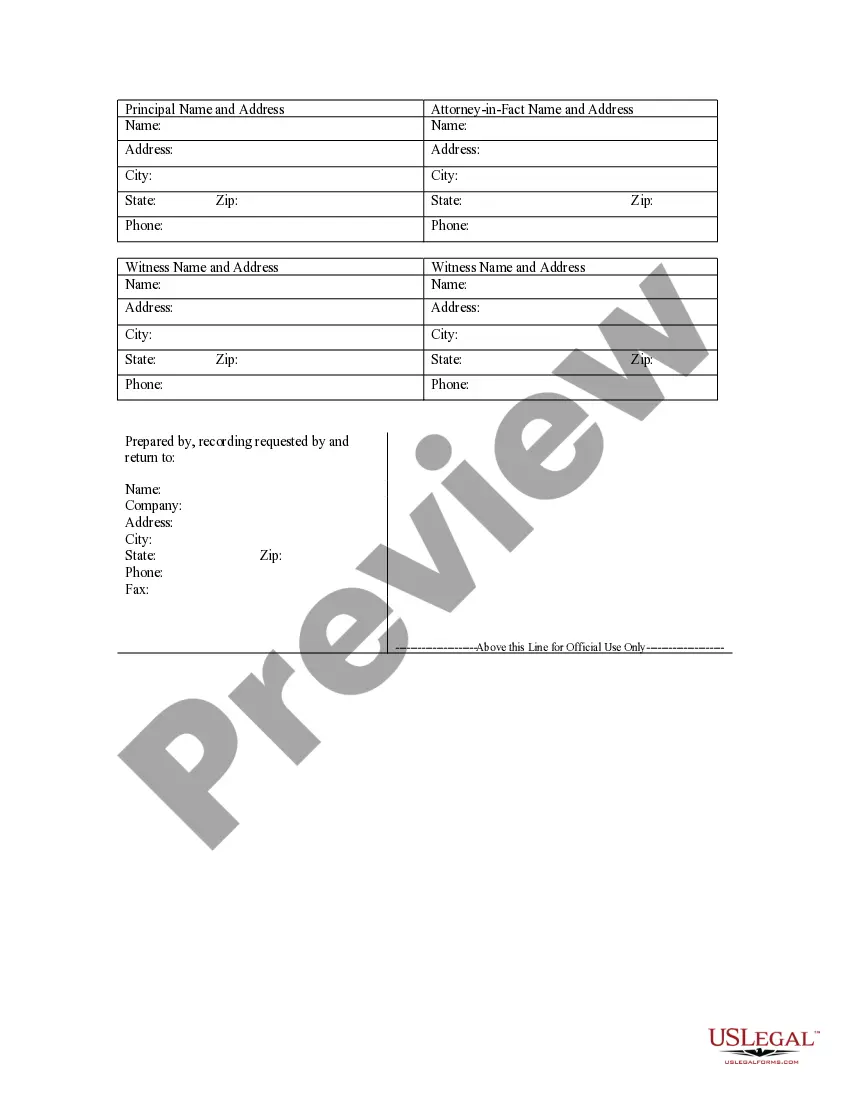
- Principal's details, including name and address.
- Name and address of the attorney-in-fact authorized to act on behalf of the seller.
- Description of the property being sold, including legal and common names.
- Scope of authority granted to the attorney-in-fact.
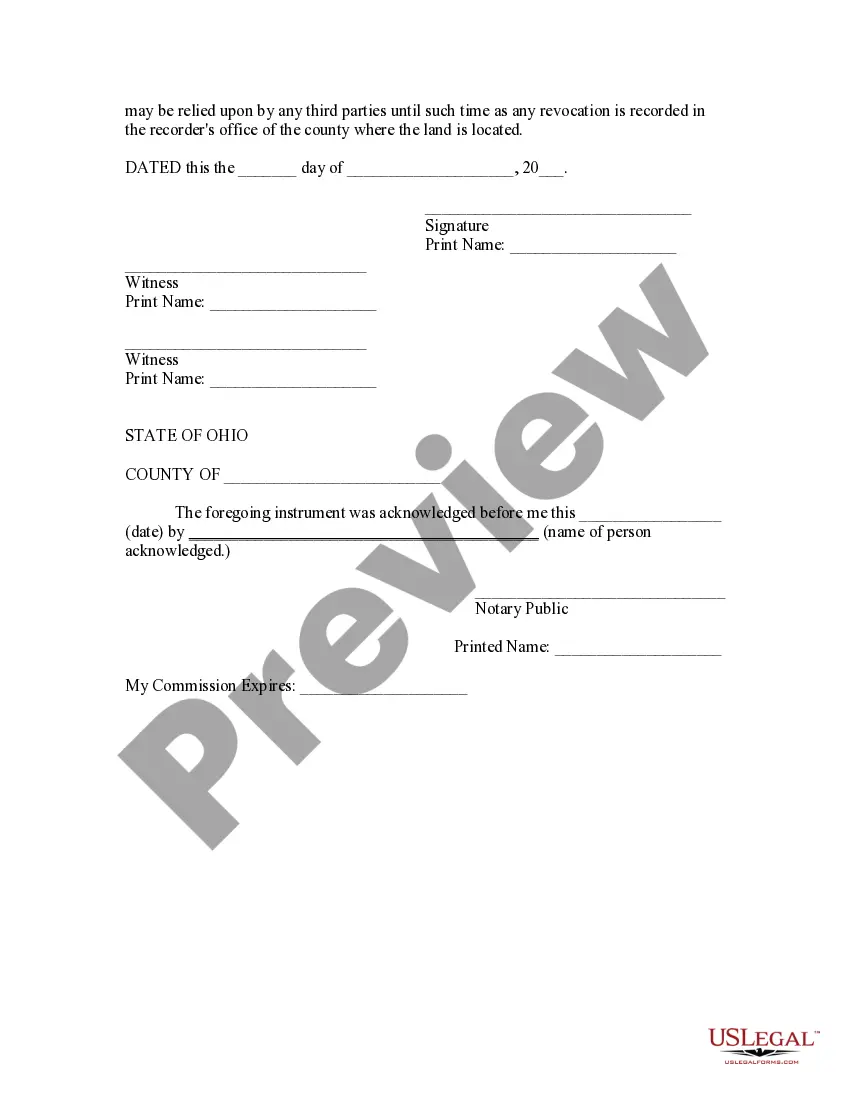
- Witness and notary sections for validation of the document.
When this form is needed
This form is essential when a seller needs to delegate the authority to sell their property, especially if they cannot be present to manage the transaction. Situations that may necessitate this form include living out of state, health issues, or scheduling conflicts that prevent the seller from being involved in the sale process.
Who needs this form
- Individuals selling real estate who cannot attend the closing personally.
- People temporarily out of town or unable to participate due to personal circumstances.
- Sellers looking to streamline the real estate transaction by appointing a trusted individual.
Steps to complete this form
- Identify the principal, including their full name and address.
- Designate the attorney-in-fact by providing their name and address.
- Clearly describe the property that is the subject of the sale.
- Specify the powers being granted to the attorney-in-fact in the document.
- Sign the form in the presence of witnesses and notary public.
Notarization requirements for this form
Yes, this form must be notarized to be legally valid. The notary acts as an impartial witness to the signing, ensuring the authenticity of the principal's signature. US Legal Forms offers integrated online notarization services, providing 24/7 availability through secure video calls.
Get your form ready online
Our built-in tools help you complete, sign, share, and store your documents in one place.
Make edits, fill in missing information, and update formatting in US Legal Forms—just like you would in MS Word.
Download a copy, print it, send it by email, or mail it via USPS—whatever works best for your next step.
Sign and collect signatures with our SignNow integration. Send to multiple recipients, set reminders, and more. Go Premium to unlock E-Sign.
If this form requires notarization, complete it online through a secure video call—no need to meet a notary in person or wait for an appointment.
We protect your documents and personal data by following strict security and privacy standards.

Make edits, fill in missing information, and update formatting in US Legal Forms—just like you would in MS Word.

Download a copy, print it, send it by email, or mail it via USPS—whatever works best for your next step.

Sign and collect signatures with our SignNow integration. Send to multiple recipients, set reminders, and more. Go Premium to unlock E-Sign.

If this form requires notarization, complete it online through a secure video call—no need to meet a notary in person or wait for an appointment.

We protect your documents and personal data by following strict security and privacy standards.
Common mistakes to avoid
- Failing to provide complete and accurate property details.
- Not signing the document in front of a witness or notary.
- Granting overly broad powers without specific limitations.
Benefits of using this form online
- Immediate access to a professionally drafted legal document.
- Easy customization for personal needs and details.
- Secure storage and retrieval options for important legal documents.
Looking for another form?









Form popularity
FAQ
Before death, a person doesn't have an executor (although the person may have granted the power of attorney to someone to act on his behalf).An ill, elderly parent who plans to sell or give away his or her principal residence would be well advised to consult with a lawyer who does Medicaid planning.
Step 1: Bring Your Power of Attorney Agreement and ID. Step 2: Determine the Preferred Signature Format. Step 3: Sign as the Principal. Step 4: Sign Your Own Name. Step 5: Express Your Authority as Attorney-in-Fact. Step 6: File the Documentation Somewhere Safe.
Is property sale through power of attorney legal? In 2011, the Supreme Court ruled that property sale through power of attorney (PoA) is illegal and only registered sale deeds provide any legal holding to property transactions.
Remember that all of the authorized agents under the power of attorney or representatives in an estate must sign the listing agreement, disclosure documents, etc. For example, when there are two executors in an estate, then they both must sign the Listing Contract.
A limited PoA, amongst other things, grants the PoA holder access and permission to execute trades/orders on your trading account, on your behalf. However, it does not allow the PoA holder to perform withdrawals requests or transfer of funds. All withdrawals must be requested by the authorized signatory of the account.
The Supreme Court has ruled that sale transactions carried through general power of attorney will have no legal sanctity. "A transfer of immovable property by way of sale can only be by a deed of conveyance (sale deed).
Is property sale through power of attorney legal? In 2011, the Supreme Court ruled that property sale through power of attorney (PoA) is illegal and only registered sale deeds provide any legal holding to property transactions.
The durable power of attorney is almost always required. This instrument gives another person specific powers to sign for an individual in a real estate transaction where the exact name and description of the property is stated in the document.
The signature line on the deed should clearly state that the attorney/agent is signing under a power of attorney authorized by the principal. For example, the signature line should read: "_____, as duly authorized attorney in fact for the Grantor." Additionally, the deed will need to be notarized by a public notary.