Ohio Letter from Landlord to Tenant as Notice to remove Wild Animals in Premises
About this form
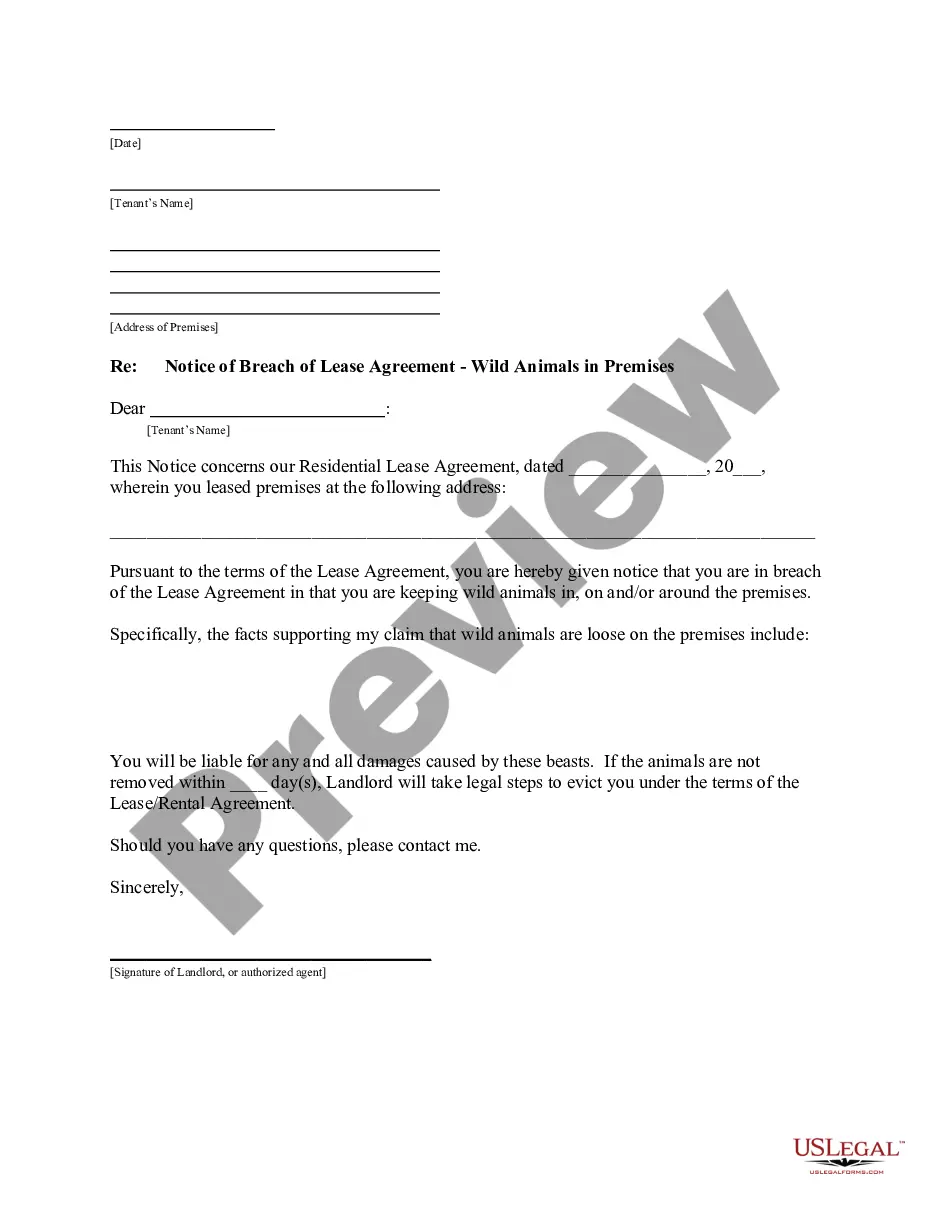
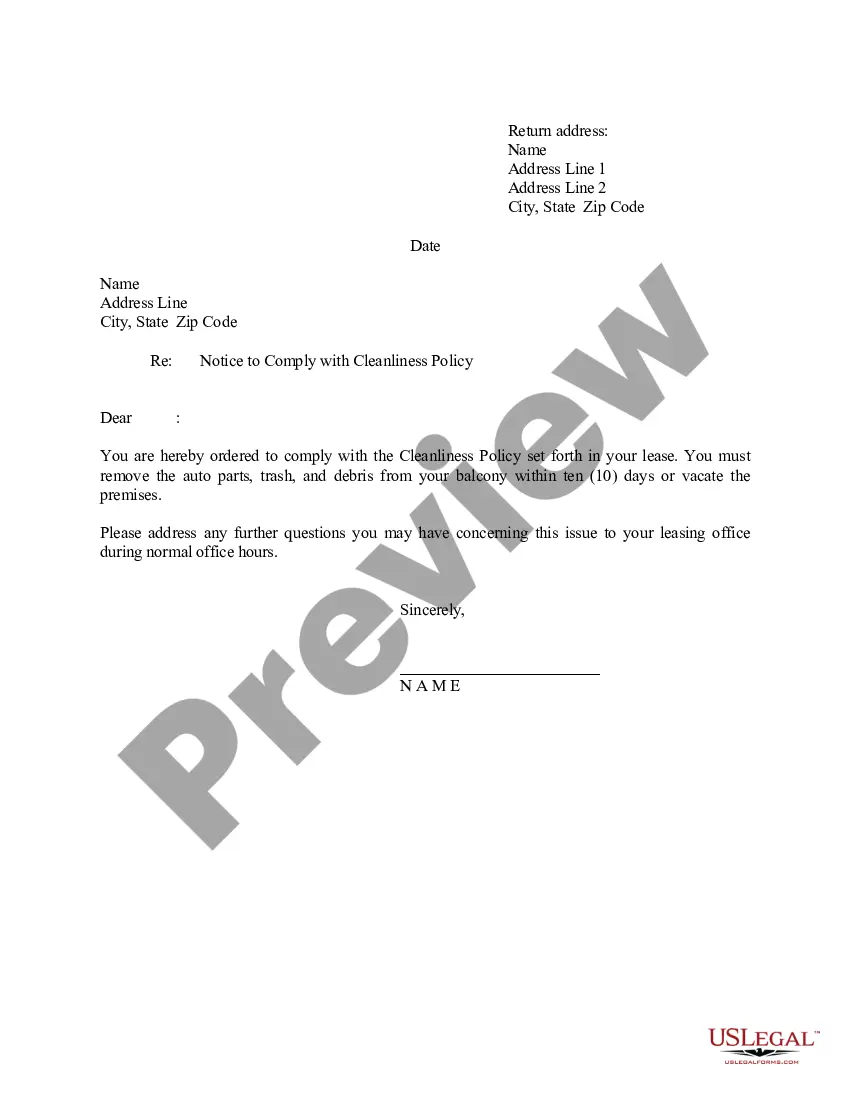
This form is a Letter from Landlord to Tenant as Notice to Remove Wild Animals on the premises. It serves as a formal notification that the tenant has violated the lease agreement by keeping wild animals in, on, or around the property. This document helps landlords address breach of contract in a clear and structured manner, distinct from other notices such as rent reminders or eviction notices.
Key components of this form
- Identification of the tenant and landlord.
- Reference to specific terms of the lease agreement that have been breached.
- A statement of the facts concerning the breach.
- A signature line for the landlord or authorized agent.
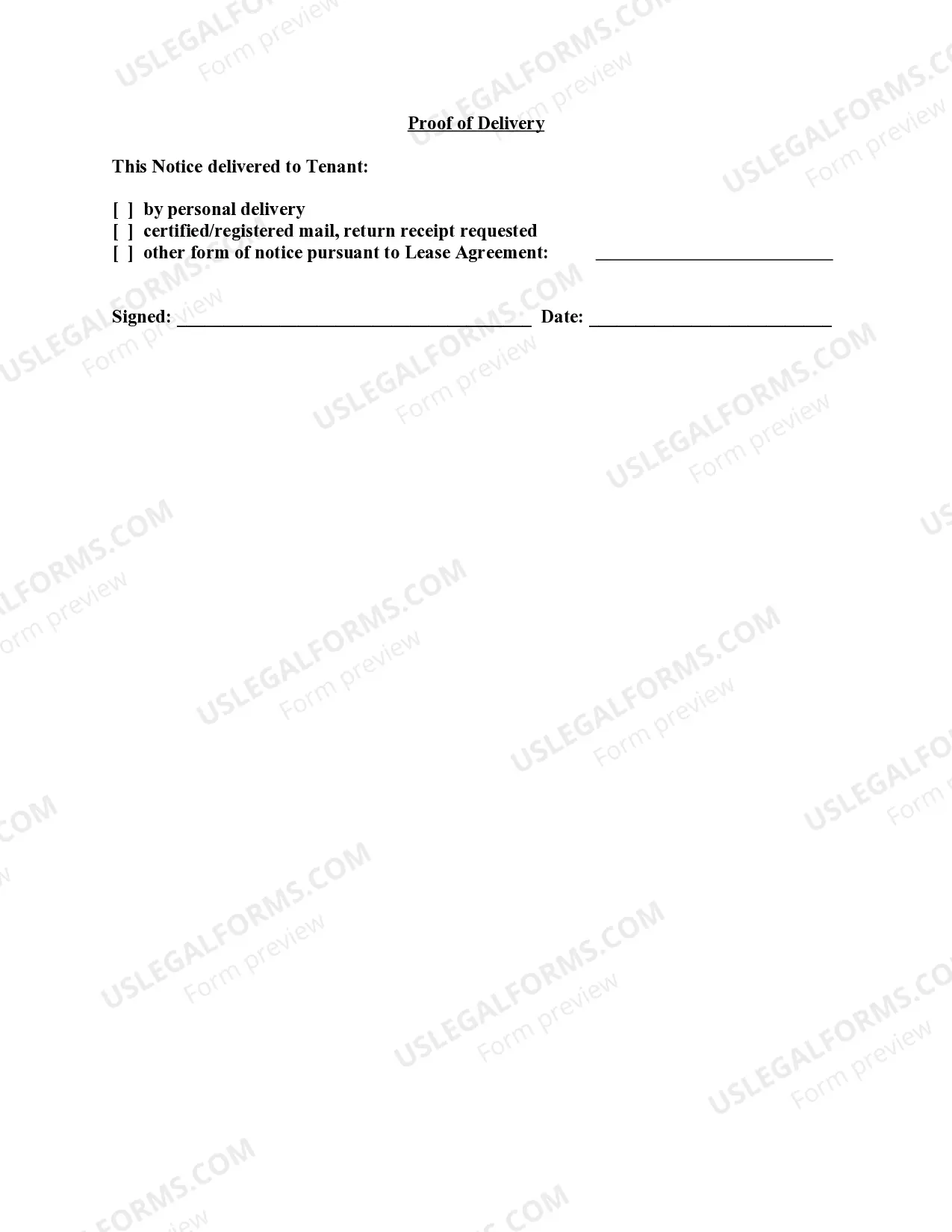
- Proof of delivery options, including personal delivery or certified mail.

Common use cases
Who needs this form
- Landlords managing residential or commercial rental properties.
- Property managers acting on behalf of landlords.
- Tenants receiving notice regarding violations of lease terms.
Instructions for completing this form
- Identify the parties involved, including the landlord and tenant.
- Refer to the specific lease agreement terms that have been breached.
- Provide a clear statement of the facts related to the presence of wild animals.
- Sign the form to validate the notice.
- Select a method for delivering the notice to the tenant, such as personal delivery or certified mail.
Is notarization required?
This form usually doesn’t need to be notarized. However, local laws or specific transactions may require it. Our online notarization service, powered by Notarize, lets you complete it remotely through a secure video session, available 24/7.
Get your form ready online
Our built-in tools help you complete, sign, share, and store your documents in one place.
Make edits, fill in missing information, and update formatting in US Legal Forms—just like you would in MS Word.
Download a copy, print it, send it by email, or mail it via USPS—whatever works best for your next step.
Sign and collect signatures with our SignNow integration. Send to multiple recipients, set reminders, and more. Go Premium to unlock E-Sign.
If this form requires notarization, complete it online through a secure video call—no need to meet a notary in person or wait for an appointment.
We protect your documents and personal data by following strict security and privacy standards.

Make edits, fill in missing information, and update formatting in US Legal Forms—just like you would in MS Word.

Download a copy, print it, send it by email, or mail it via USPS—whatever works best for your next step.

Sign and collect signatures with our SignNow integration. Send to multiple recipients, set reminders, and more. Go Premium to unlock E-Sign.

If this form requires notarization, complete it online through a secure video call—no need to meet a notary in person or wait for an appointment.

We protect your documents and personal data by following strict security and privacy standards.
Typical mistakes to avoid
- Failing to specify the lease terms that have been breached.
- Not delivering the notice in a legally recognized manner.
- Omitting the signature of the landlord or authorized agent.
Advantages of online completion
- Convenient access to a professionally drafted template tailored for landlords.
- Easy customization to meet specific circumstances and needs.
- Reliable format that ensures legality and clarity.
Legal use & context
- This form serves as a legal notice to rectify a violation of the lease.
- It provides documentation that the landlord has formally addressed the issue.
- Failure to comply with notice can strengthen the landlord's position in potential legal actions.
Quick recap
- The form is essential for notifying tenants about breaches of lease agreements regarding wild animals.
- Completing the form accurately ensures compliance with legal obligations.
- Proper delivery of the notice is crucial for enforceability.
Looking for another form?


Form popularity
FAQ
Third, Ohio law (R.C. 5321.04(A)(2)) requires a landlord to "do whatever is reasonably necessary to put and keep the premises in a fit and habitable condition." This requirement has been interpreted by some Courts to include a duty for the landlord to undertake pest control measures.
It is generally a good idea to find an apartment that accepts your pets. You could potentially get evicted and charged for any damages if you sneak a dog into your apartment.It's very difficult to hide a dog longterm, and you may end up owing your landlord some money if you get caught.
Tenants in the state of Ohio are granted certain rights by the state's landlord-tenant code, including the right to fair housing, the right to a return of the security deposit, and the right to notice before landlord entry.
They don't have to give you any reasons why they want to evict you. They have to give you at least 28 days notice, but this could be longer depending on your agreement. If you don't leave by the time your notice ends, your landlord has to go to court to get a court order to make you leave.
To end a month-to-month tenancy, a landlord must give a tenant at least a 30-day written notice to move. The notice must state the date by which the tenant needs to be out of the rental unit.
Tenants in the state of Ohio are granted certain rights by the state's landlord-tenant code, including the right to fair housing, the right to a return of the security deposit, and the right to notice before landlord entry.
If you want to hide your pet from your landlord, always cover up any evidence (odor, hair). Vacuum your house thoroughly, including the couches, curtains, and the rugs/carpets. Regularly make use of scented candles, room sprays to mask the pet smell. A portable air purifier can help in eliminating the pet odor.
Yes. You can kick that person out. (Unless you've been directed by a court to provide housing for the person.)
Notice Requirements for Ohio Landlords A landlord can simply give you a written notice to move, allowing you 30 days as required by Ohio law and specifying the date on which your tenancy will end.