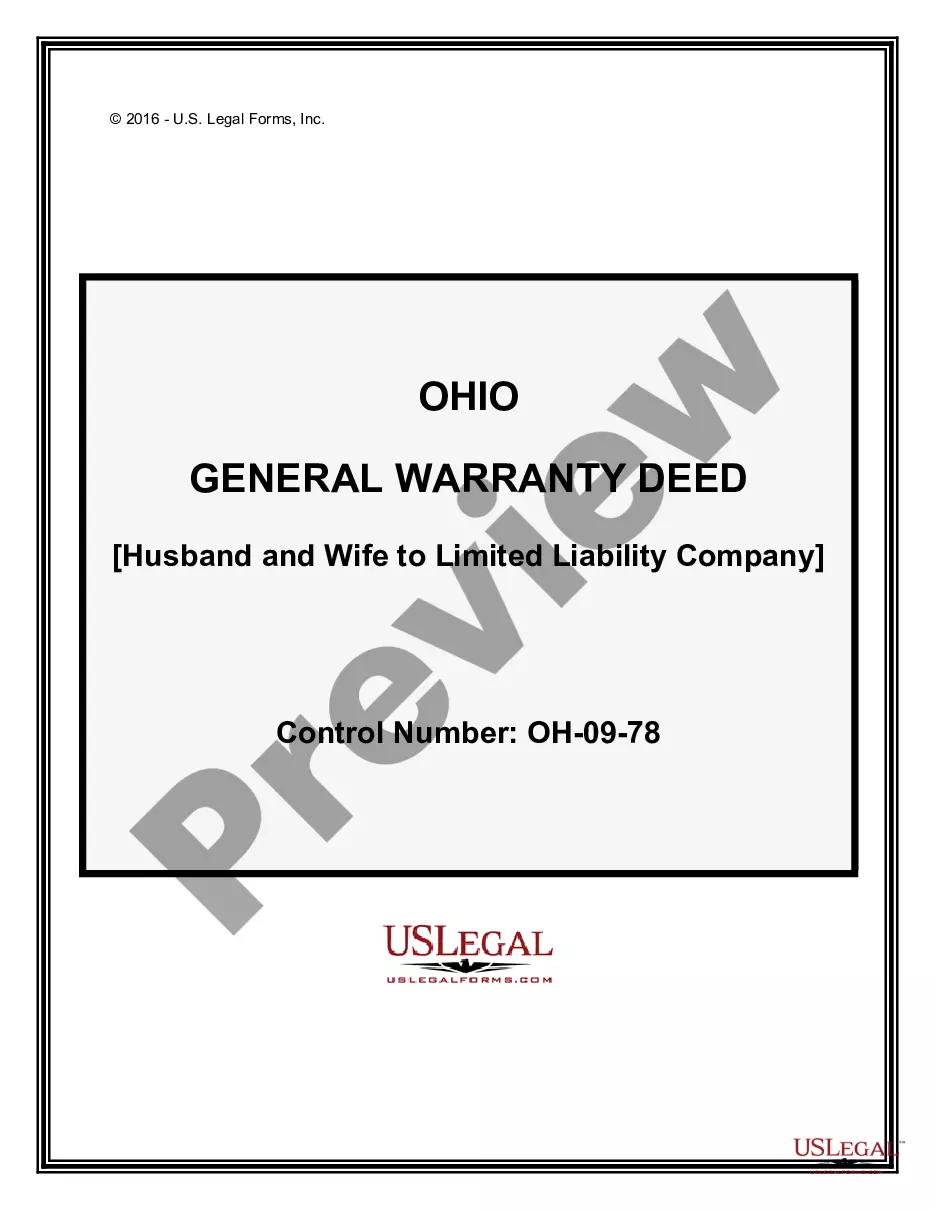
Ohio General Warranty Deed from Husband and Wife to LLC
What is this form?
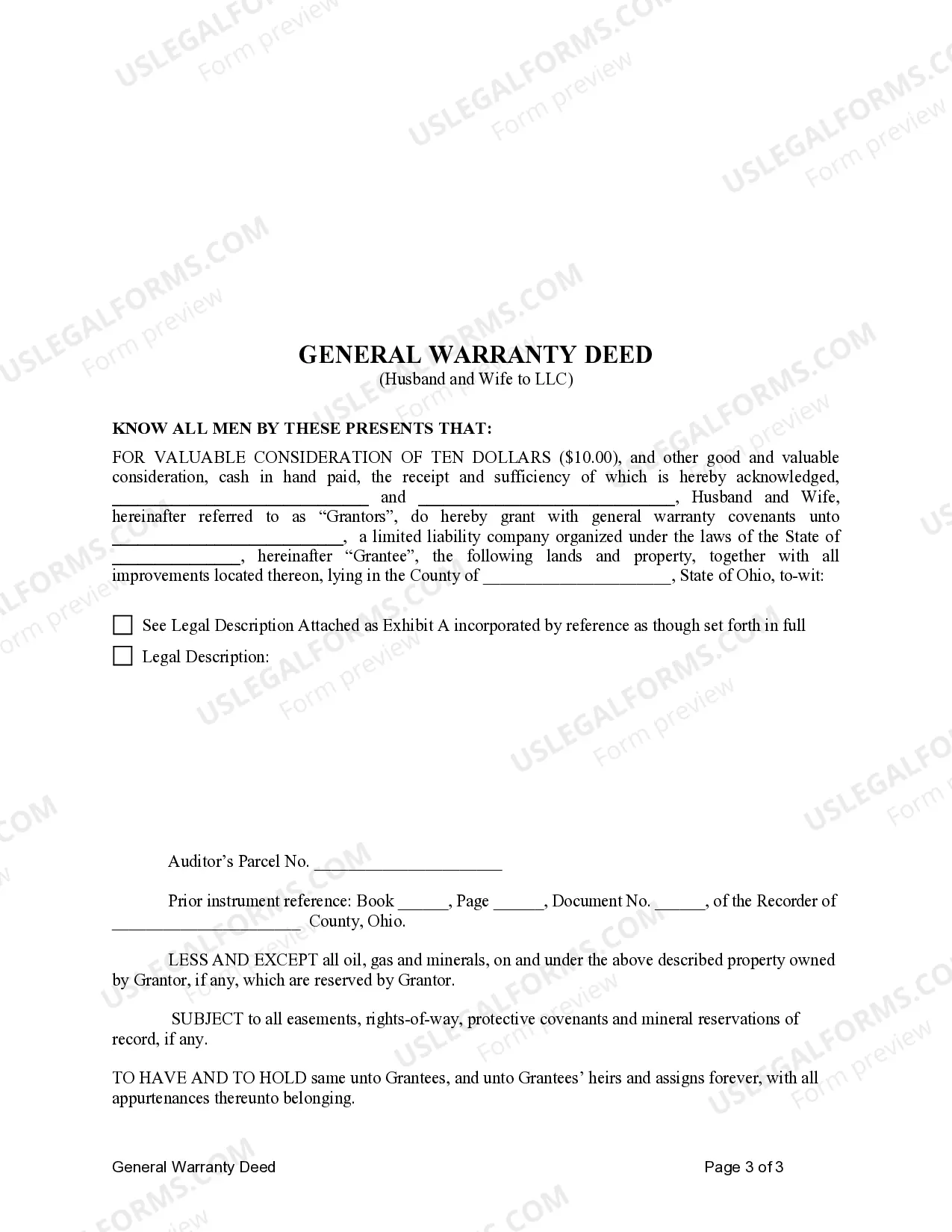
The General Warranty Deed from Husband and Wife to LLC is a legal document used to transfer ownership of real estate from a married couple to a limited liability company (LLC). This form guarantees that the grantors (the husband and wife) are conveying clear title to the property while reserving rights to any oil, gas, and minerals. Unlike other types of deeds, this warranty deed offers the highest level of protection to the grantee, ensuring that the property is free from encumbrances except as stated in the document.
Main sections of this form
- Identification of grantors (the husband and wife) and the grantee (the LLC).
- Legal description of the property being transferred.
- Reservation of rights to oil, gas, and minerals by the grantors.
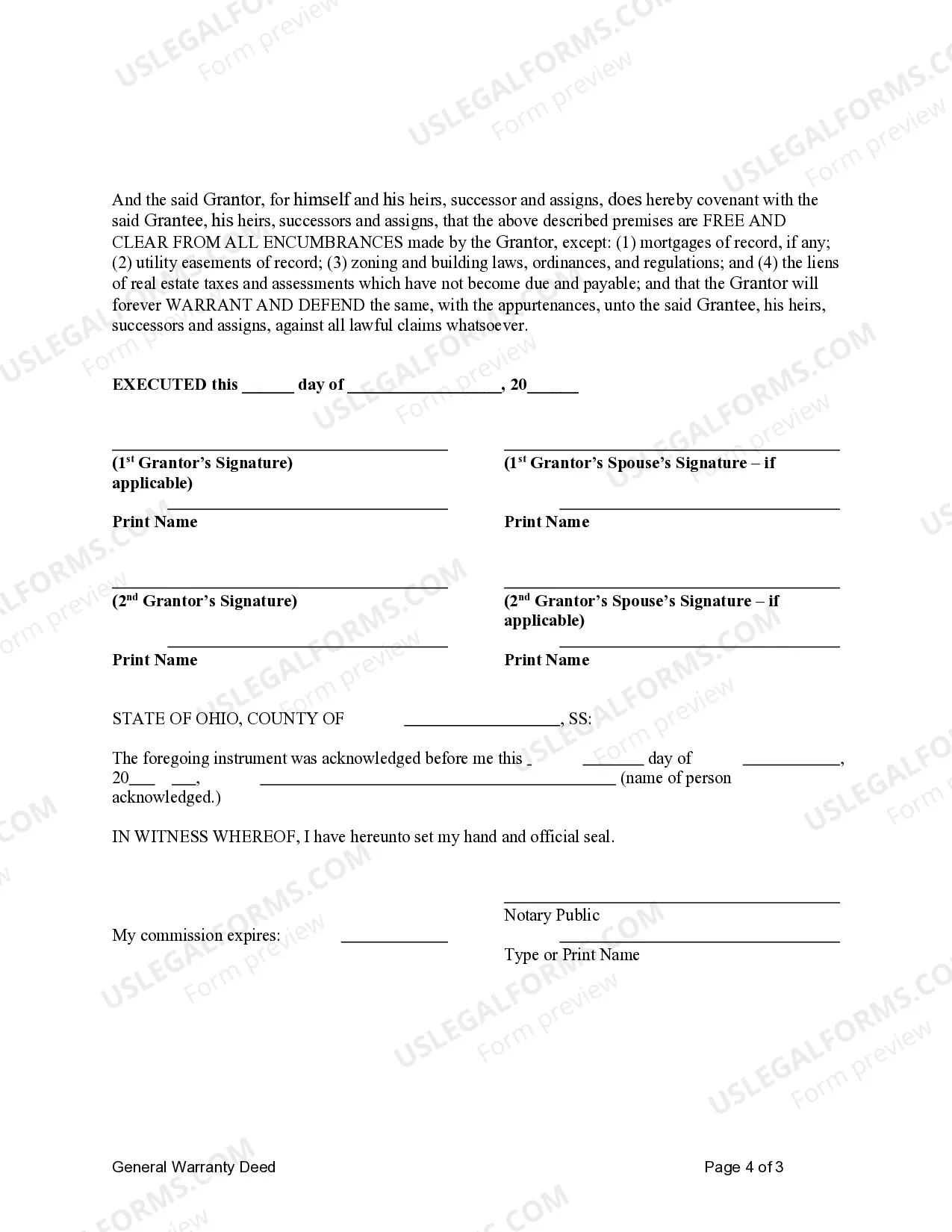
- Covenant of warranty that the property is free from encumbrances.
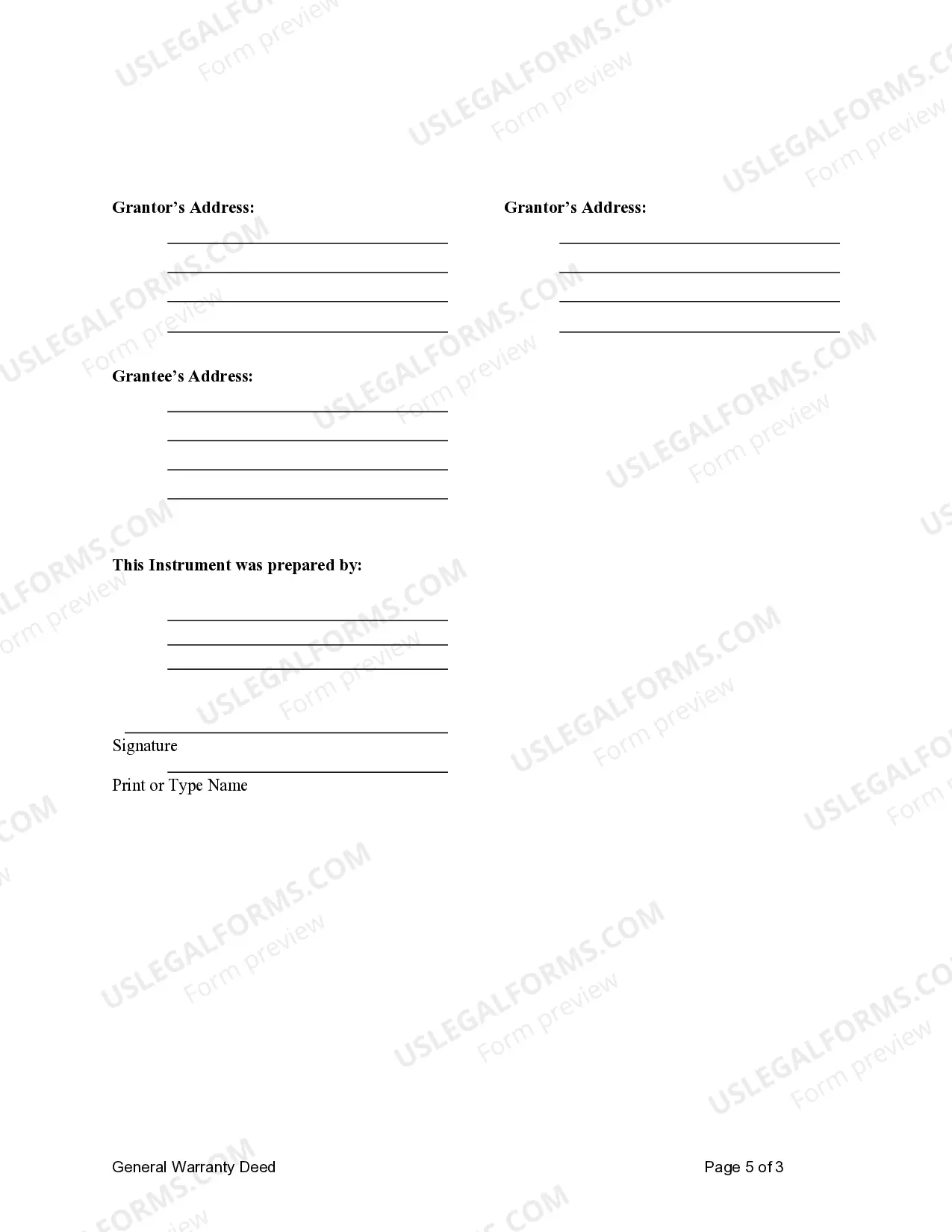
- Execution details, including dates and signatures of the grantors.





When to use this form
This form is used when a married couple wishes to transfer their property to an LLC for various reasons, such as asset protection, business purposes, or estate planning. It is particularly suited for couples who own property and want to ensure that their LLC holds clear title to it, offering protection against future legal claims or disputes regarding the property's ownership.
Who needs this form
This form is suitable for:
- Married couples looking to transfer their jointly owned property to an LLC.
- Property owners seeking liability protection and tax benefits associated with LLC ownership.
- Individuals involved in estate planning who want to simplify the transfer of property upon death.
Completing this form step by step
- Identify the grantors by entering the names of both spouses.
- Specify the name of the LLC as the grantee.
- Provide a clear legal description of the property being conveyed.
- Include any reservations, such as rights to oil, gas, and minerals.
- Enter the date of execution and obtain the necessary signatures from both grantors.
Does this form need to be notarized?
Notarization is required for this form to take effect. Our online notarization service, powered by Notarize, lets you verify and sign documents remotely through an encrypted video session, available 24/7.
Get your form ready online
Our built-in tools help you complete, sign, share, and store your documents in one place.
Make edits, fill in missing information, and update formatting in US Legal Forms—just like you would in MS Word.
Download a copy, print it, send it by email, or mail it via USPS—whatever works best for your next step.
Sign and collect signatures with our SignNow integration. Send to multiple recipients, set reminders, and more. Go Premium to unlock E-Sign.
If this form requires notarization, complete it online through a secure video call—no need to meet a notary in person or wait for an appointment.
We protect your documents and personal data by following strict security and privacy standards.

Make edits, fill in missing information, and update formatting in US Legal Forms—just like you would in MS Word.

Download a copy, print it, send it by email, or mail it via USPS—whatever works best for your next step.

Sign and collect signatures with our SignNow integration. Send to multiple recipients, set reminders, and more. Go Premium to unlock E-Sign.

If this form requires notarization, complete it online through a secure video call—no need to meet a notary in person or wait for an appointment.

We protect your documents and personal data by following strict security and privacy standards.
Common mistakes to avoid
- Failing to include a complete legal description of the property.
- Not properly naming the LLC or misstating its legal status.
- Omitting the reservation of rights for oil, gas, and minerals when applicable.
- Neglecting to sign and date the document before submission.
Why use this form online
- Convenient access to a professionally drafted form from anywhere.
- Edit and complete the form electronically for accuracy and ease.
- Download the form immediately upon completion for timely use.
Looking for another form?


Form popularity
FAQ
A warranty deed is a document often used in real estate that provides the greatest amount of protection to the purchaser of a property. It pledges or warrants that the owner owns the property free and clear of any outstanding liens, mortgages, or other encumbrances against it.
The answer is yes. Parties to a transaction are always free to prepare their own deeds. If you do so, be sure your deed measures up to your state's legal regulations, to help avert any legal challenge to the deed later.
Special warranties allow the transfer of property title between seller and buyer. The purchase of title insurance can mitigate the risk of prior claims to the special warranty deed.
A special warranty deed to real estate offers protection to the buyer through the seller's guarantee that the title has been free and clear of encumbrances during their ownership of the property. It does not guarantee clear title beyond their ownership.
The mortgage company usually prepares this deed as part of the loan package and delivers it to the title company for you to sign at closing. The title company is commonly the trustee to the deed and holds legal title to the property until the loan gets fully repaid.
They are (1) covenant for seisin; (2) covenant of the right to convey; (3) covenant against encumbrances; (4) covenant for QUIET ENJOYMENT; (5) covenant of general WARRANTY; and (6) covenant for further assurances.
A warranty deed guarantees that: The grantor is the rightful owner of the property and has the legal right to transfer the title.The title would withstand third-party claims to ownership of the property. The grantor will do anything to ensure the grantee's title to the property.
Go to the Deed Transfer Department to obtain a transfer form for a quit claim deed or warranty deed. Take the form, along with the person to whom the the property is being transferred, to a notary public. Take the form back to the Deed Transfer Department and turn it in to the County Auditor.
The name and address of the seller (called the grantor) The name and address of the buyer (called the grantee) A legal description of the property (found on the previous deed) A statement that the grantor is transferring the property to the grantee.