Ohio Request for Release of Funds - Individual
Overview of this form
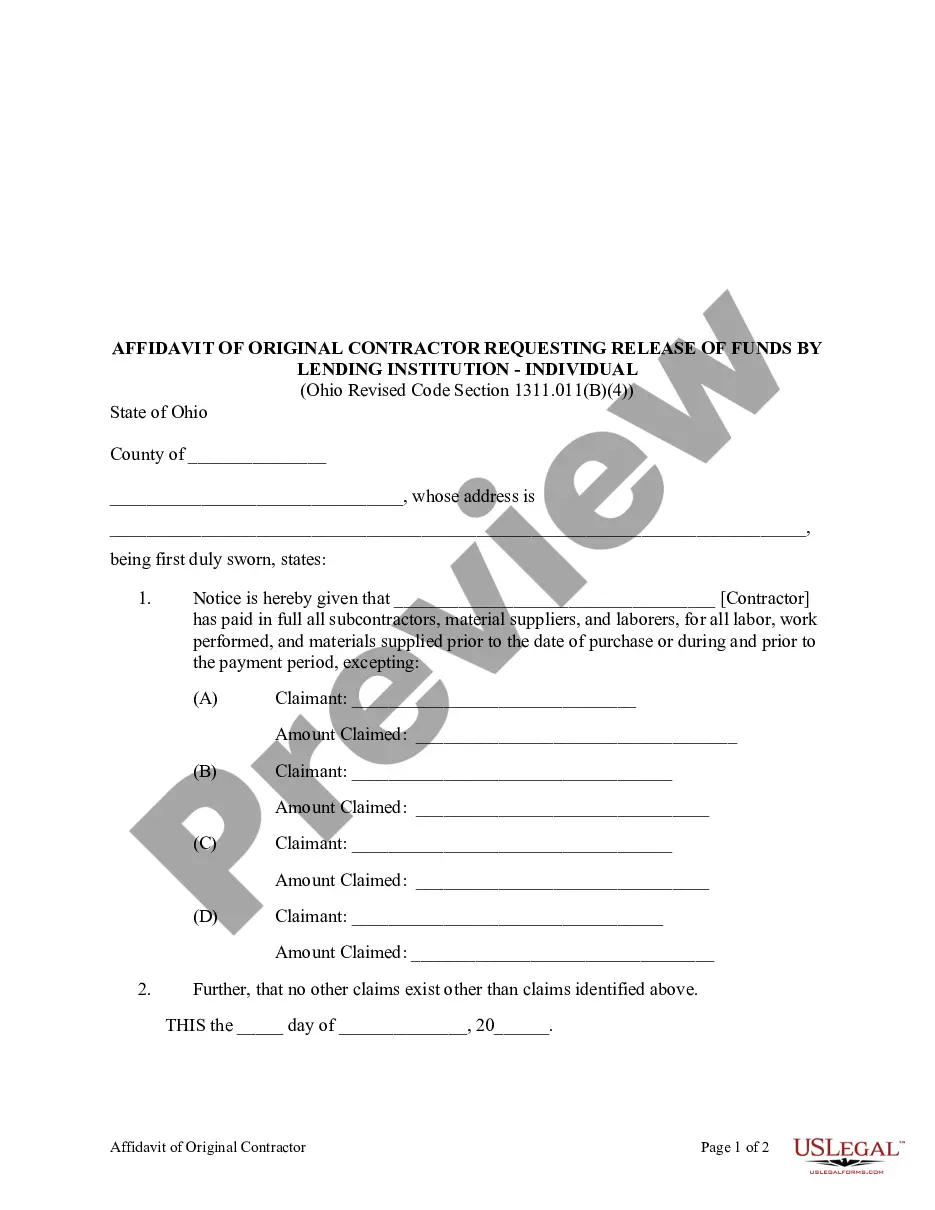
The Request for Release of Funds - Individual is a sworn affidavit that allows original contractors in Ohio to certify they have fully paid all subcontractors, suppliers, and laborers involved in a project. This form is crucial for ensuring that no outstanding claims exist before the release of funds by a lending institution, facilitating secure and timely payments in construction projects.
Main sections of this form
- Affidavit declaration by the original contractor regarding full payment of all involved parties.
- Specific claims and amounts that remain unpaid, if any.
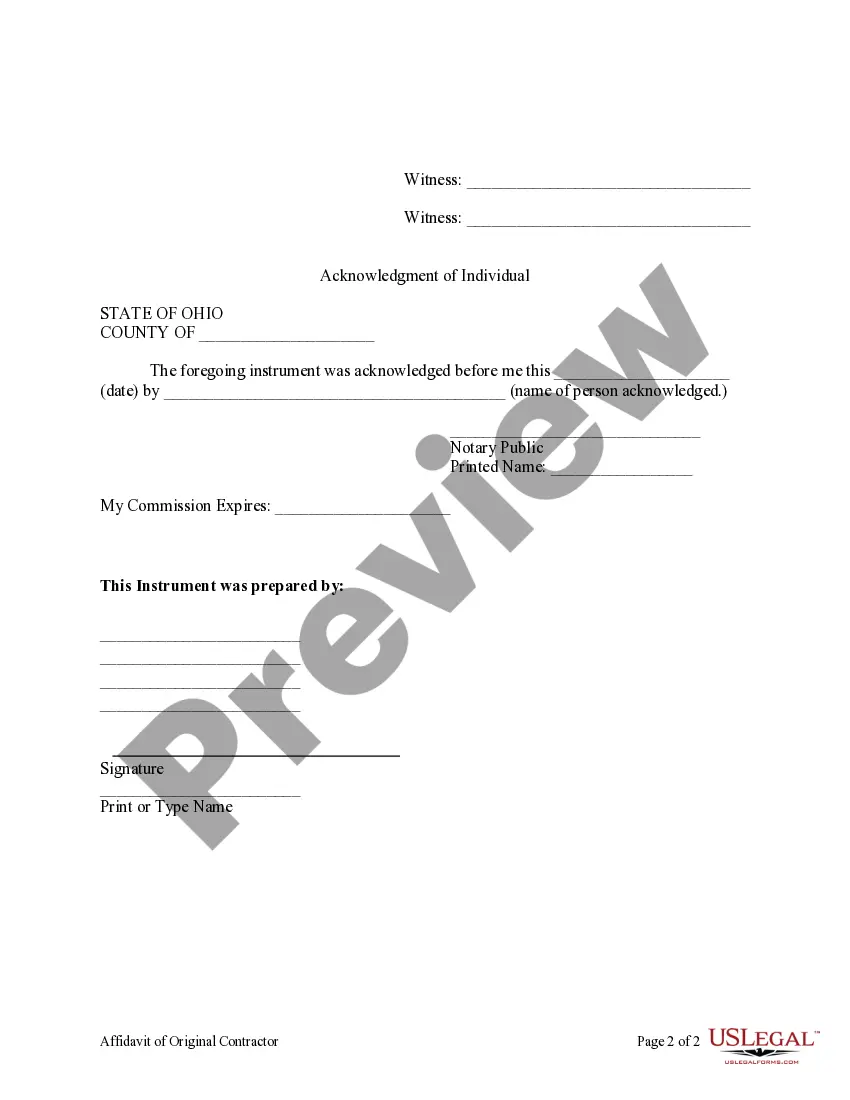
- Signature and acknowledgment section for the original contractor.
- Notary acknowledgment for legal verification.
When to use this document
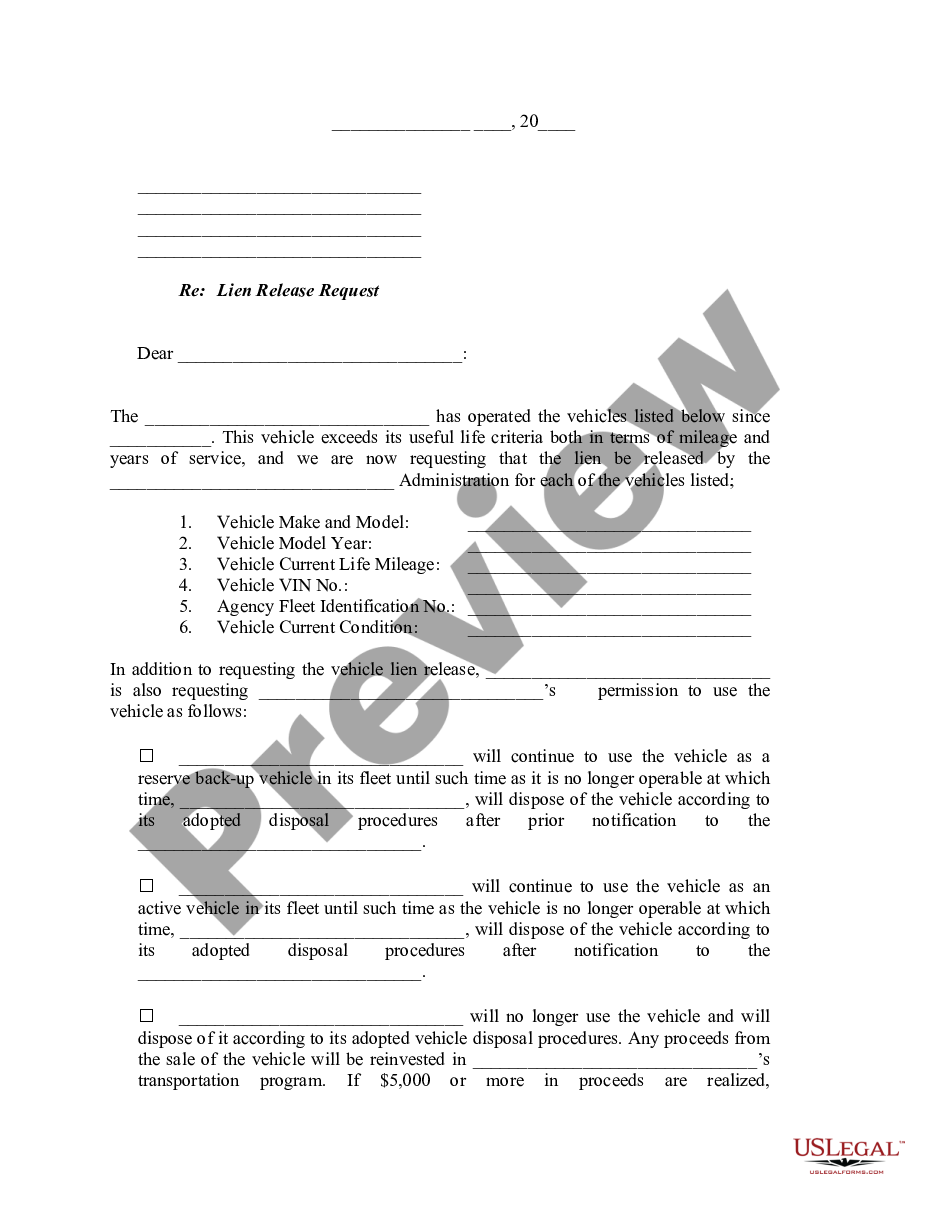
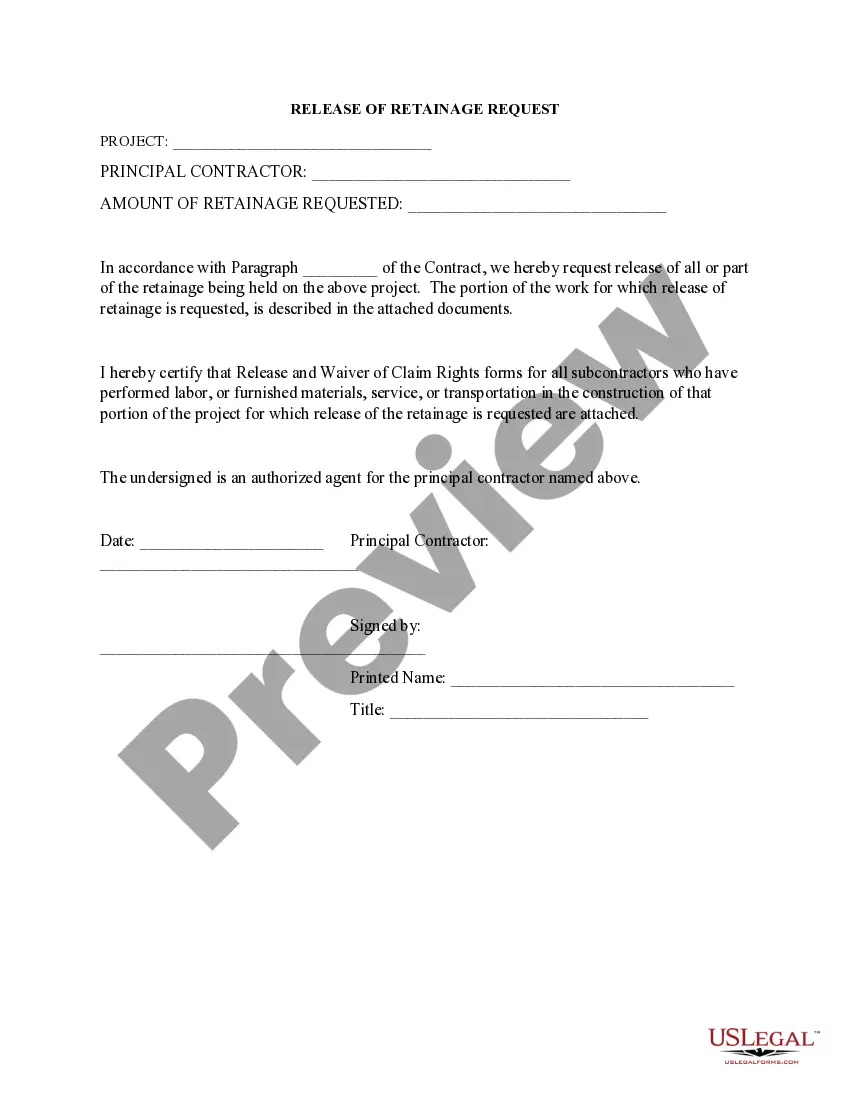
You should use the Request for Release of Funds - Individual when you, as an original contractor, have completed a project and have settled all financial obligations to your subcontractors and suppliers. This form is necessary for ensuring that funds will be released by the lending institution without any disputes regarding unpaid claims, facilitating the completion of the transaction.
Who needs this form
- Original contractors seeking payment from a lending institution.
- Contractors who have fulfilled all payment obligations to subcontractors and suppliers.
- Individuals involved in construction projects requiring official release of funds.
Steps to complete this form
- Identify and provide your name and contact information as the original contractor.
- Clearly state the contractor's name and confirm all payments have been made.
- List any unpaid claims with the respective claimant and amounts owed.
- Sign and date the affidavit, ensuring that it is witnessed as required.
- Obtain notarization to validate the affidavit and complete the process.
Does this document require notarization?
Yes, this form must be notarized to be legally valid. Notarization ensures that the affidavit is authenticated, providing a layer of trust and legal standing. US Legal Forms offers integrated online notarization, allowing you to complete this process securely via video call at any time, eliminating the need for travel.
Get your form ready online
Our built-in tools help you complete, sign, share, and store your documents in one place.
Make edits, fill in missing information, and update formatting in US Legal Forms—just like you would in MS Word.
Download a copy, print it, send it by email, or mail it via USPS—whatever works best for your next step.
Sign and collect signatures with our SignNow integration. Send to multiple recipients, set reminders, and more. Go Premium to unlock E-Sign.
If this form requires notarization, complete it online through a secure video call—no need to meet a notary in person or wait for an appointment.
We protect your documents and personal data by following strict security and privacy standards.

Make edits, fill in missing information, and update formatting in US Legal Forms—just like you would in MS Word.

Download a copy, print it, send it by email, or mail it via USPS—whatever works best for your next step.

Sign and collect signatures with our SignNow integration. Send to multiple recipients, set reminders, and more. Go Premium to unlock E-Sign.

If this form requires notarization, complete it online through a secure video call—no need to meet a notary in person or wait for an appointment.

We protect your documents and personal data by following strict security and privacy standards.
Mistakes to watch out for
- Failing to list all unpaid claims accurately.
- Omitting signatures or notary acknowledgment.
- Incorrectly identifying the contractor's name or details.
Benefits of completing this form online
- Convenience of filling out the form at your own pace.
- Immediate access to downloadable templates that are easy to edit.
- Reliability of templates drafted by licensed attorneys ensuring legal compliance.
Looking for another form?
Form popularity
FAQ
After one year or more, those assets are unclaimed and go to the state. That money is lawfully protected and kept by the state to be returned to the owner rather than reverting back to the party who initially distributed the money. In most states, the money is generally held until the owner is found.
Unclaimed property can include uncashed checks, wages, stocks, safe deposit boxes and insurance benefits, among other personal valuables. Residents and business owners can search the database and submit a claim at claimit.ca.gov or by calling 800-992-4647.
Relatives are entitled to unclaimed money belonging to a deceased family member. Billions of dollars in unclaimed property collects dust each year in the unclaimed property divisions that are maintained by state governments across the country.Unclaimed money can legally be claimed by relatives of a deceased person.
The Division of Unclaimed Funds does reach out to people but you can also check for yourself by visiting com.ohio.gov/unfd/, calling 877-644-6824 or emailing UnfdClaims.UnfdClaims@com.state.oh.us.
The Division of Unclaimed Funds does reach out to people but you can also check for yourself by visiting com.ohio.gov/unfd/, calling 877-644-6824 or emailing UnfdClaims.UnfdClaims@com.state.oh.us.
The time frame varies depending on the property but in most cases it is three to five years.
For most states, the dormancy period is five years. When property is officially designated by the state as abandoned or unclaimed, it undergoes a process known as escheatment, where the state assumes ownership of that property until the rightful owner files a claim.