New York Last Will and Testament with All Property to Trust called a Pour Over Will
Understanding this form
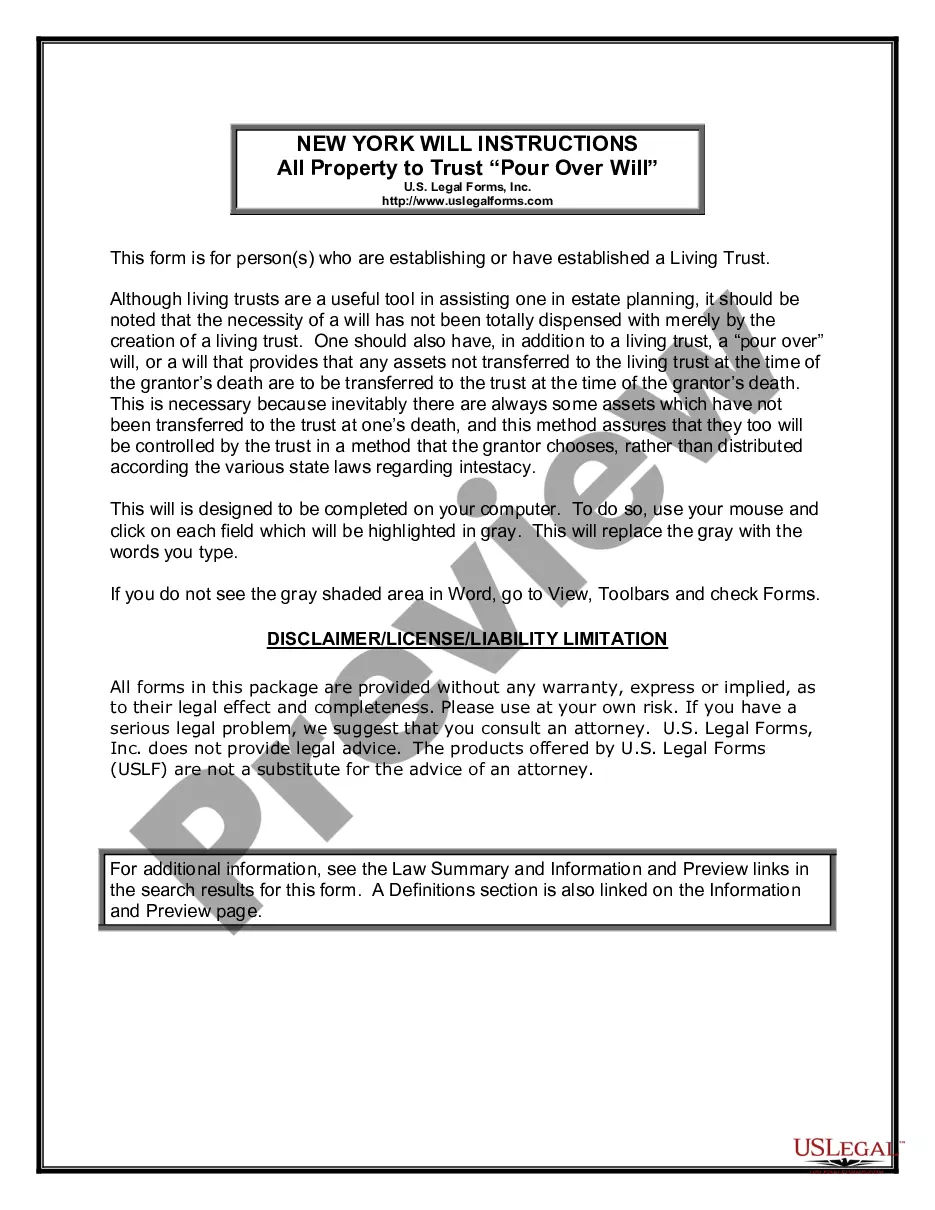
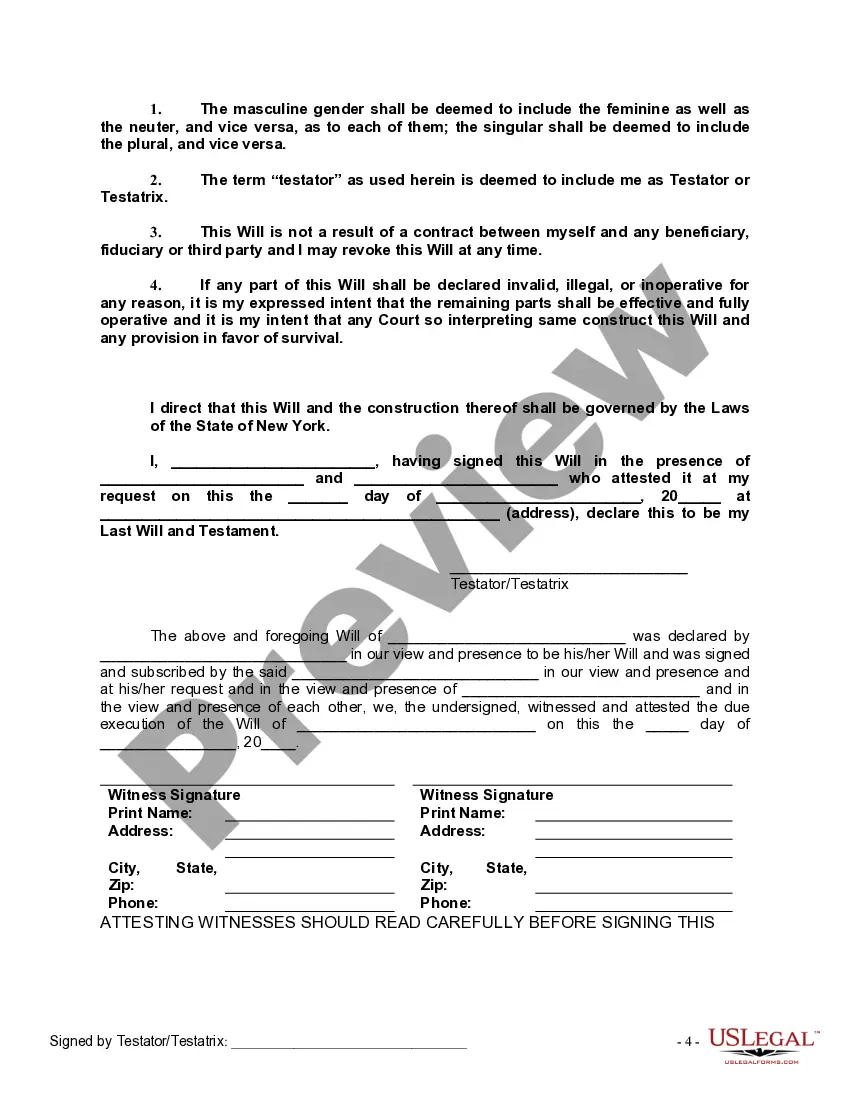
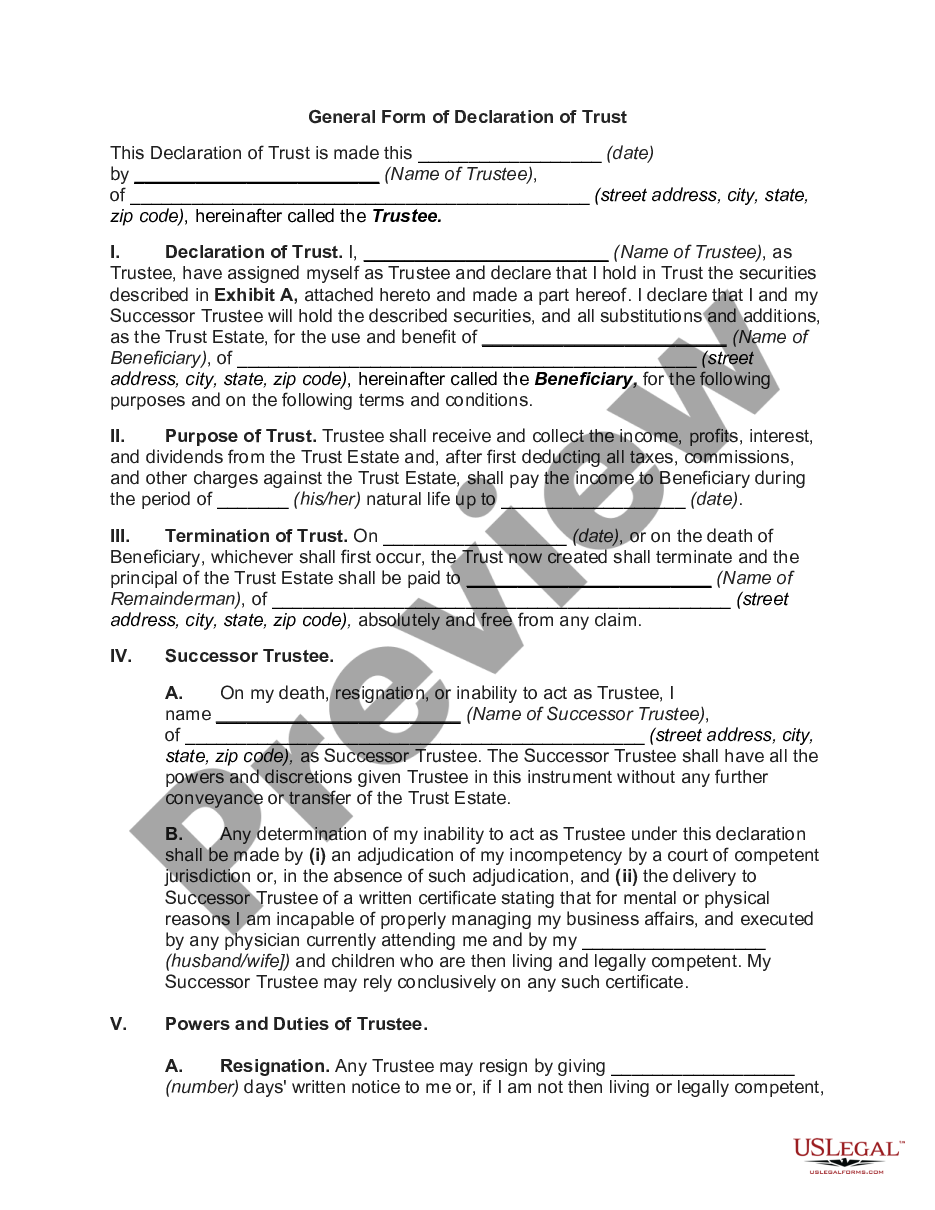
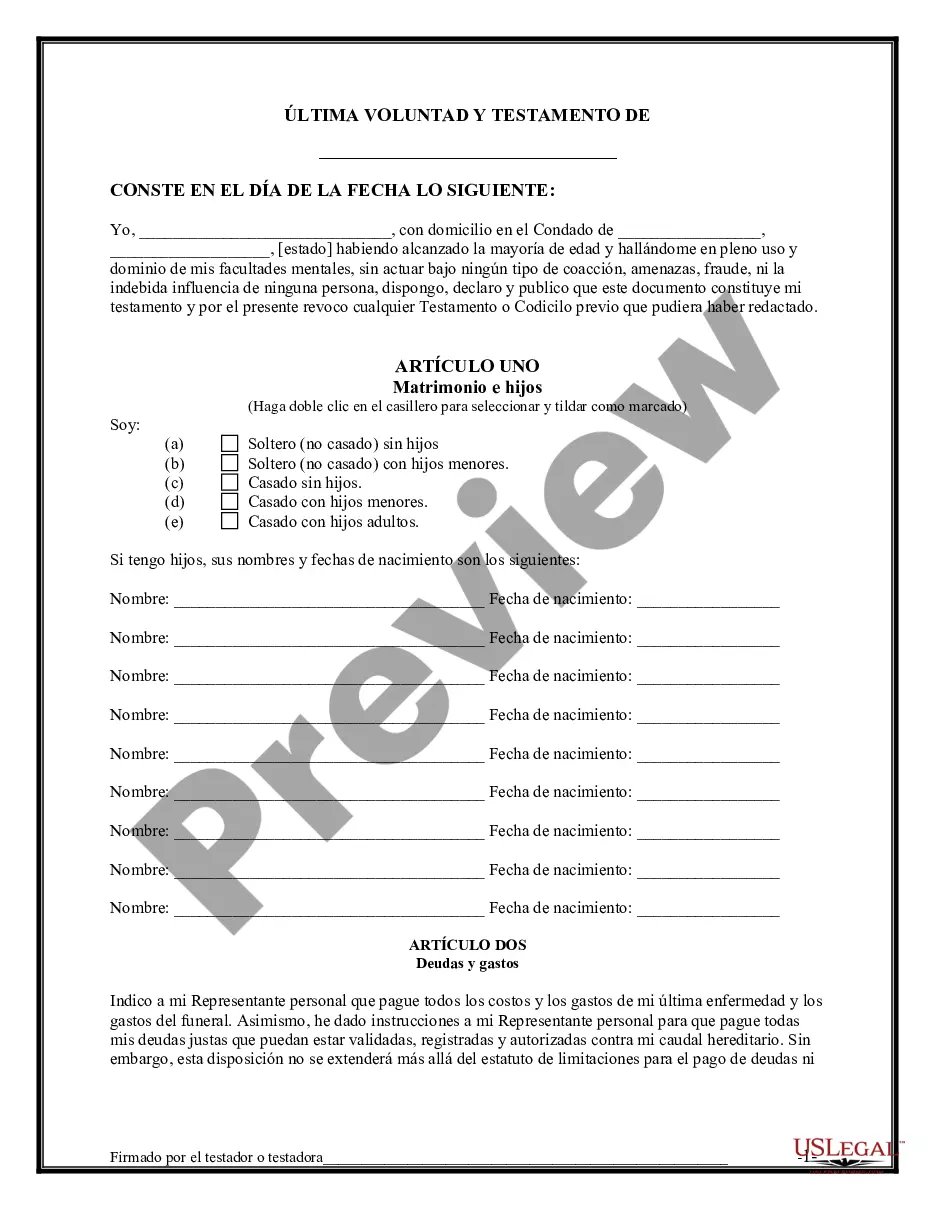
The Last Will and Testament with All Property to Trust, commonly referred to as a Pour Over Will, is a legal document that ensures all property not already transferred to a living trust is designated to pour over into that trust upon your death. This type of will is primarily for individuals who have established, or are in the process of establishing, a living trust. Unlike other wills, a Pour Over Will seamlessly transfers assets into the trust, aiming to simplify the estate management process according to your wishes while avoiding intestacy laws.
Main sections of this form
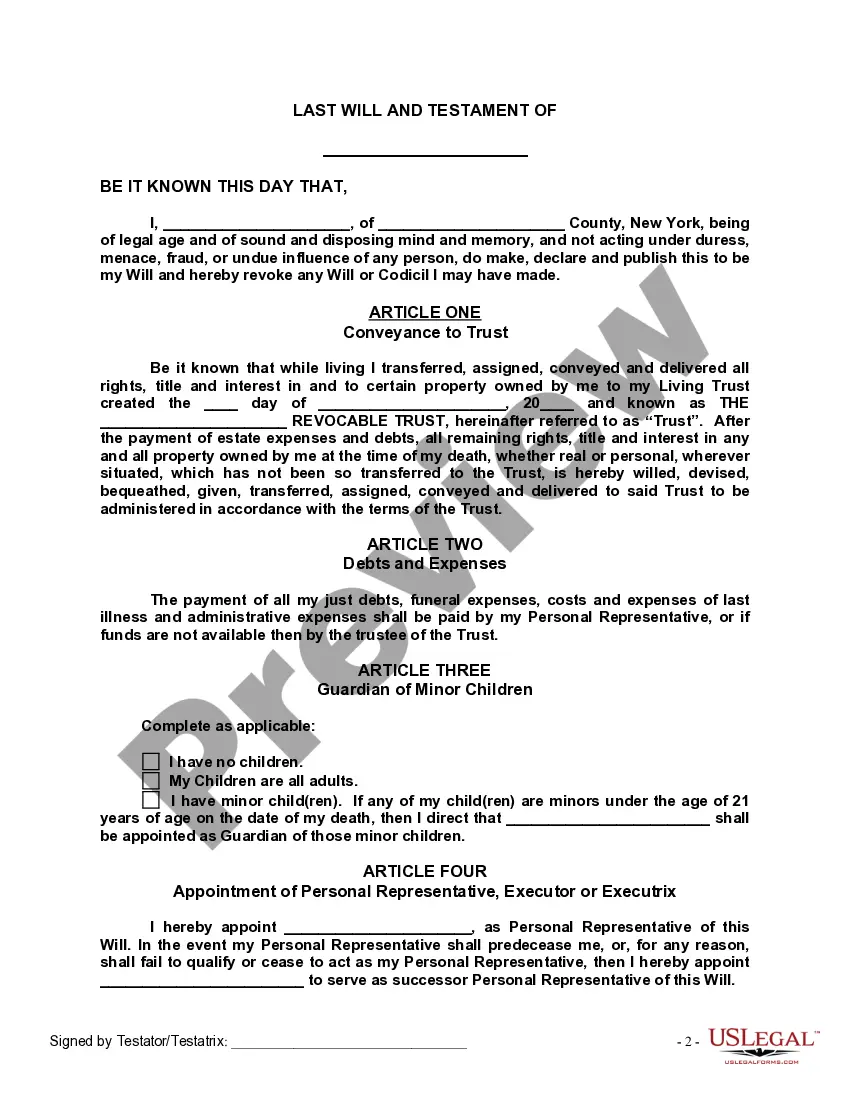
- Conveyance to Trust: Specifies that any untransferred assets at your death will be directed to your living trust.
- Debts and Expenses: Outlines how your debts and funeral expenses will be settled.
- Guardian for Minor Children: Designates a guardian if you have minor children under the age of 21.
- Appointment of Personal Representative: Names the individual responsible for executing your will.
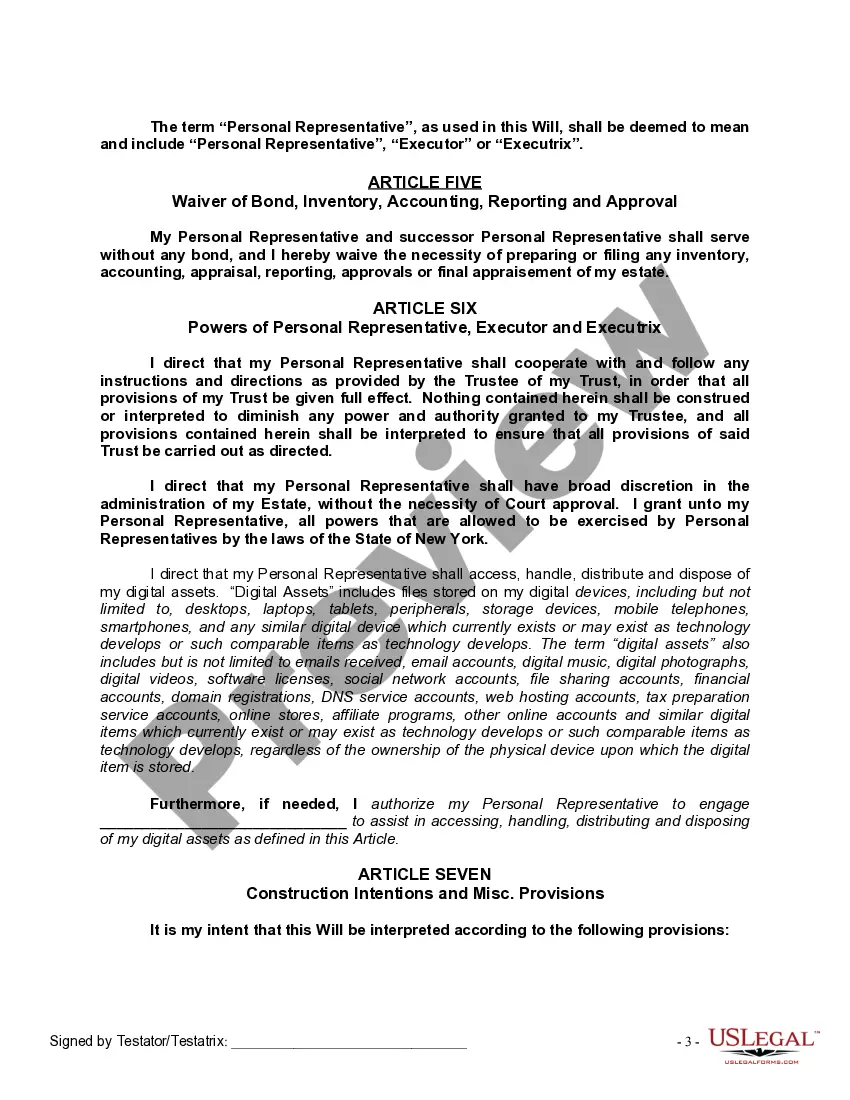
- Waiver of Bond: Allows your Personal Representative to serve without posting a bond.
- Powers of Personal Representative: Describes the authority granted to your Personal Representative in managing your estate.


When this form is needed
This form is best utilized in scenarios where an individual has a living trust and wants to ensure any assets not already placed into the trust are transferred accordingly after their death. It is helpful for those managing estate planning and who foresee that some of their assets may not have been included in the trust before their passing.
Who needs this form
- Individuals establishing or who have already established a living trust.
- People who want to avoid complications related to intestacy laws.
- Those planning their estate and need a method to control the disposition of all their property.
- Persons with minor children seeking to designate guardians in their will.
Completing this form step by step
- Identify the parties: Fill in your name and the name of your living trust.
- Specify the property: Indicate any assets that should be included in the trust.
- Appoint a guardian: If applicable, identify a guardian for your minor children.
- Designate a Personal Representative: Choose an individual to manage the execution of your will.
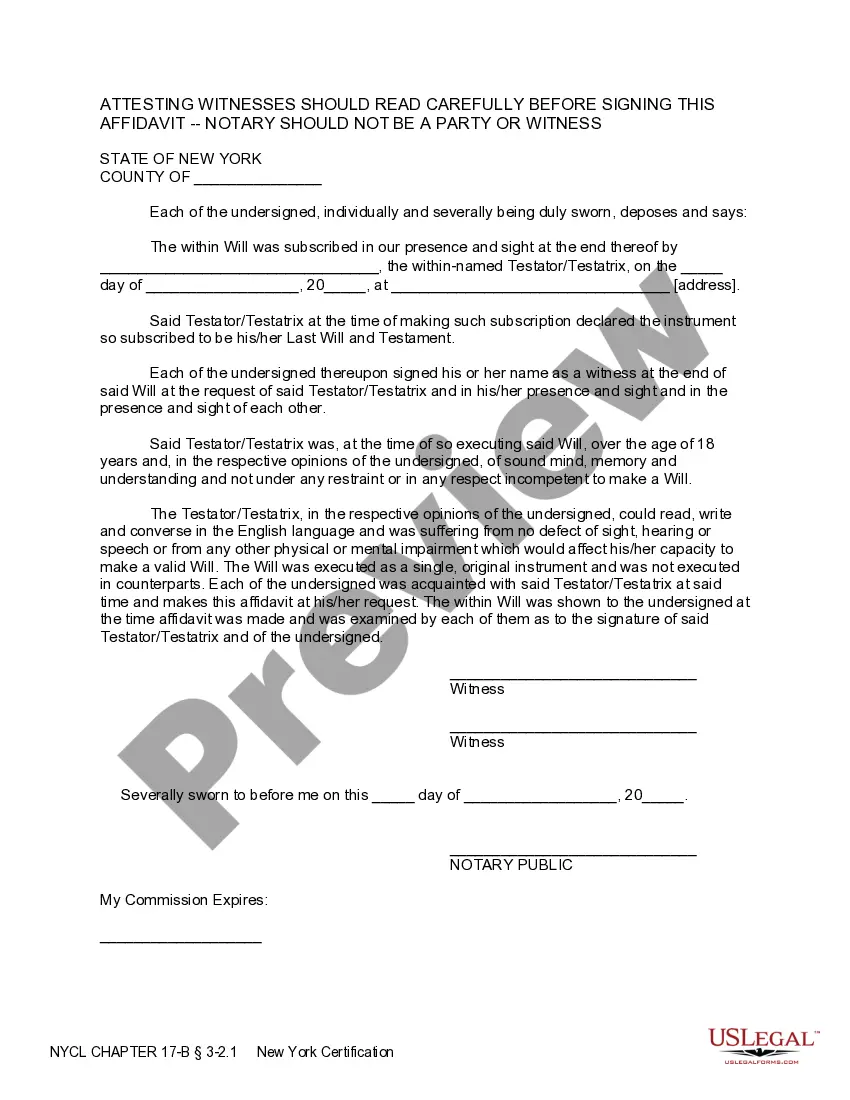
- Sign and date the document: Follow the required witness and notarization procedures if necessary.
Is notarization required?
This form does not typically require notarization unless specified by local law. However, having a notary can help validate the document and provide an additional layer of authenticity.
Get your form ready online
Our built-in tools help you complete, sign, share, and store your documents in one place.
Make edits, fill in missing information, and update formatting in US Legal Forms—just like you would in MS Word.
Download a copy, print it, send it by email, or mail it via USPS—whatever works best for your next step.
Sign and collect signatures with our SignNow integration. Send to multiple recipients, set reminders, and more. Go Premium to unlock E-Sign.
If this form requires notarization, complete it online through a secure video call—no need to meet a notary in person or wait for an appointment.
We protect your documents and personal data by following strict security and privacy standards.

Make edits, fill in missing information, and update formatting in US Legal Forms—just like you would in MS Word.

Download a copy, print it, send it by email, or mail it via USPS—whatever works best for your next step.

Sign and collect signatures with our SignNow integration. Send to multiple recipients, set reminders, and more. Go Premium to unlock E-Sign.

If this form requires notarization, complete it online through a secure video call—no need to meet a notary in person or wait for an appointment.

We protect your documents and personal data by following strict security and privacy standards.
Typical mistakes to avoid
- Failing to update the will after major life changes, such as marriage or divorce.
- Not specifying all assets, leading to potential disputes over property distribution.
- Ignoring state-specific laws regarding execution and witness requirements.
- Neglecting to appoint a guardian for minor children if applicable.
Why use this form online
- Convenience: Easily complete the form from your computer without the need for in-person legal consultations.
- Editability: Modify the document as necessary to reflect your current circumstances or preferences.
- Reliability: Access templates created by licensed attorneys and ensure compliance with legal standards.
Legal use & context
- A Pour Over Will is recognized as legally binding in New York, provided it meets state requirements.
- This form can help prevent intestate succession by directing how remaining assets should be handled.
- It should be used in conjunction with a living trust to ensure comprehensive estate planning.
Key takeaways
- The Pour Over Will is essential for individuals with a living trust to manage posthumous asset distribution.
- Proper completion and execution of this form can simplify estate management and avoid legal complications.
- Consult local laws to ensure compliance and consider notarization for added validity.
Looking for another form?
Form popularity
FAQ
A pour-over will is a testamentary device wherein the writer of a will creates a trust, and decrees in the will that the property in his or her estate at the time of his or her death shall be distributed to the Trustee of the trust.
Pour-over wills are subject to probate since the assets have not yet been transferred into the trust. Some states also require your assets to go through the probate process any time your assets or property are over a certain value.Even though pour-over wills don't avoid probate, there is still a measure of privacy.
Important: Although a revocable trust supersedes a will, the trust only controls those assets that have been placed into it. Therefore, if a revocable trust is formed, but assets are not moved into it, the trust provisions have no effect on those assets, at the time of the grantor's death.
After reading about the benefits of a revocable living trust, you may wonder, Why do I need a pour-over will if I have a living trust? A pour-over will is necessary in the event that you do not fully or properly fund your trust.Your trust agreement can only control the assets that the trust owns.
After reading about the benefits of a revocable living trust, you may wonder, Why do I need a pour-over will if I have a living trust? A pour-over will is necessary in the event that you do not fully or properly fund your trust.Your trust agreement can only control the assets that the trust owns.
Bank accounts. Brokerage or investment accounts. Retirement accounts and pension plans. A life insurance policy.
When people make revocable living trusts to avoid probate, it's common for them to also make what's called a "pour-over will." The will directs that if any property passes through the will at the person's death, it should be transferred to (poured into) the trust, and then distributed to the beneficiaries of the trust.
Pour-over wills are subject to probate since the assets have not yet been transferred into the trust. Some states also require your assets to go through the probate process any time your assets or property are over a certain value.Even though pour-over wills don't avoid probate, there is still a measure of privacy.
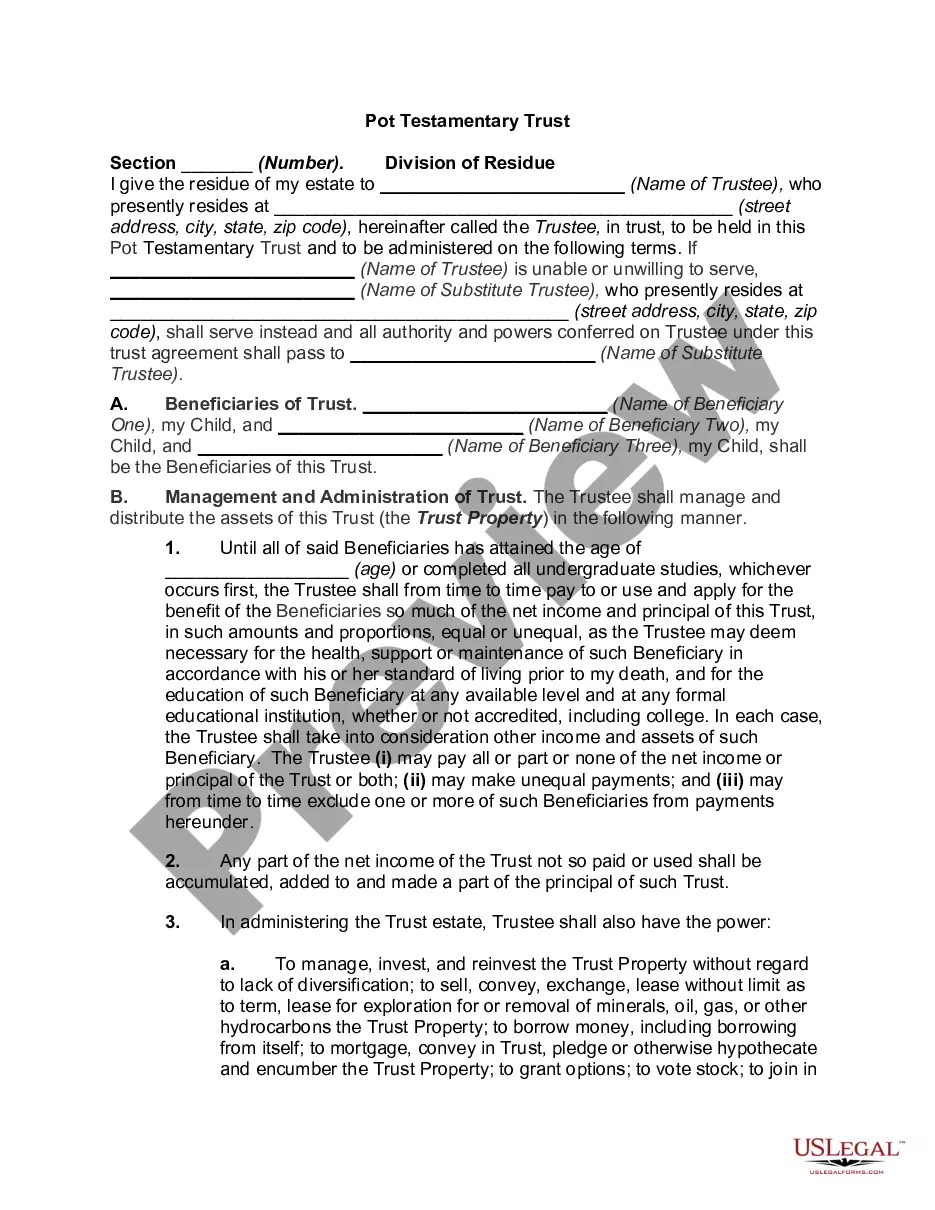
Spillover Trusts definition: Spillover trusts are established to hold any remaining assets after all other instructions from the will are carried out.