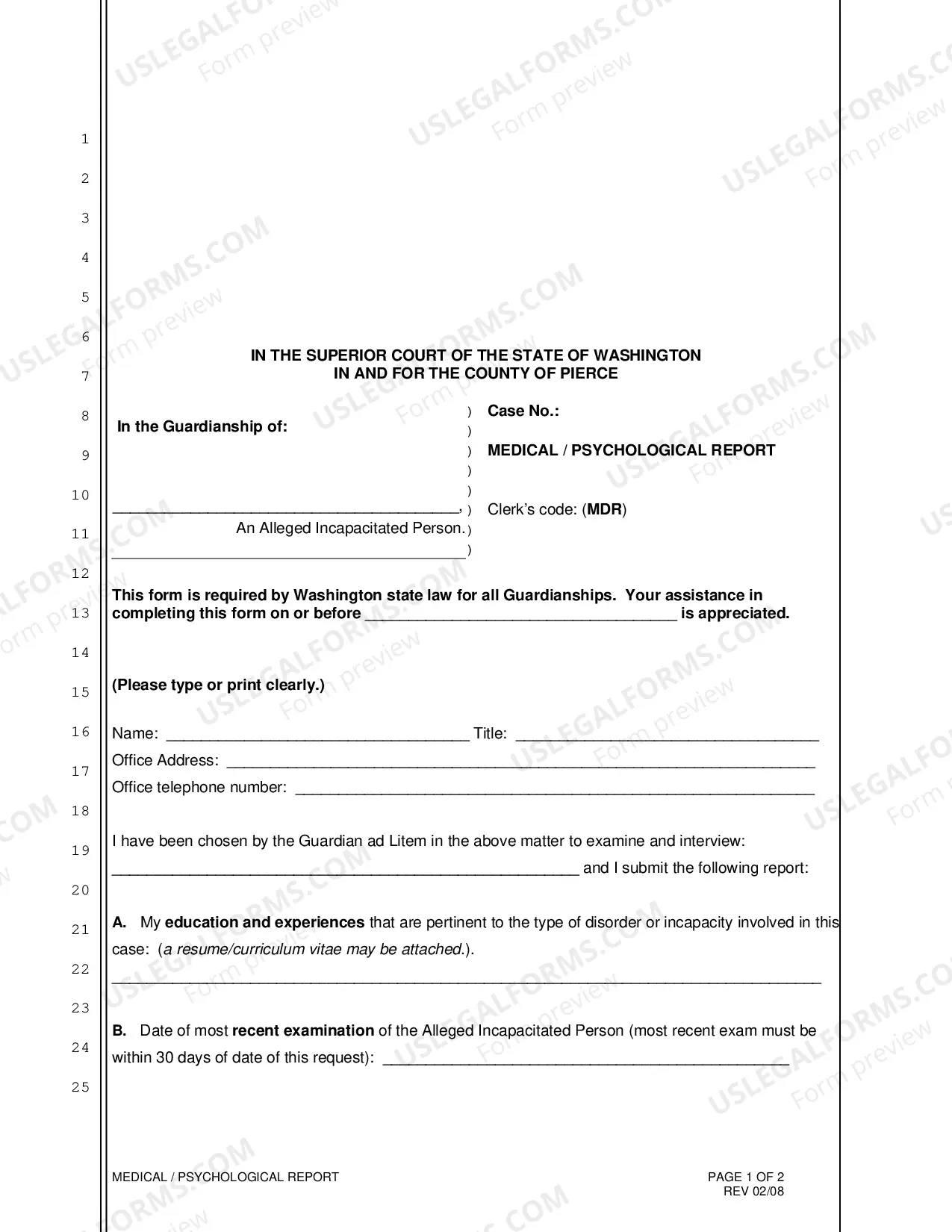
New York Last Will for a Widow or Widower with no Children
About this form
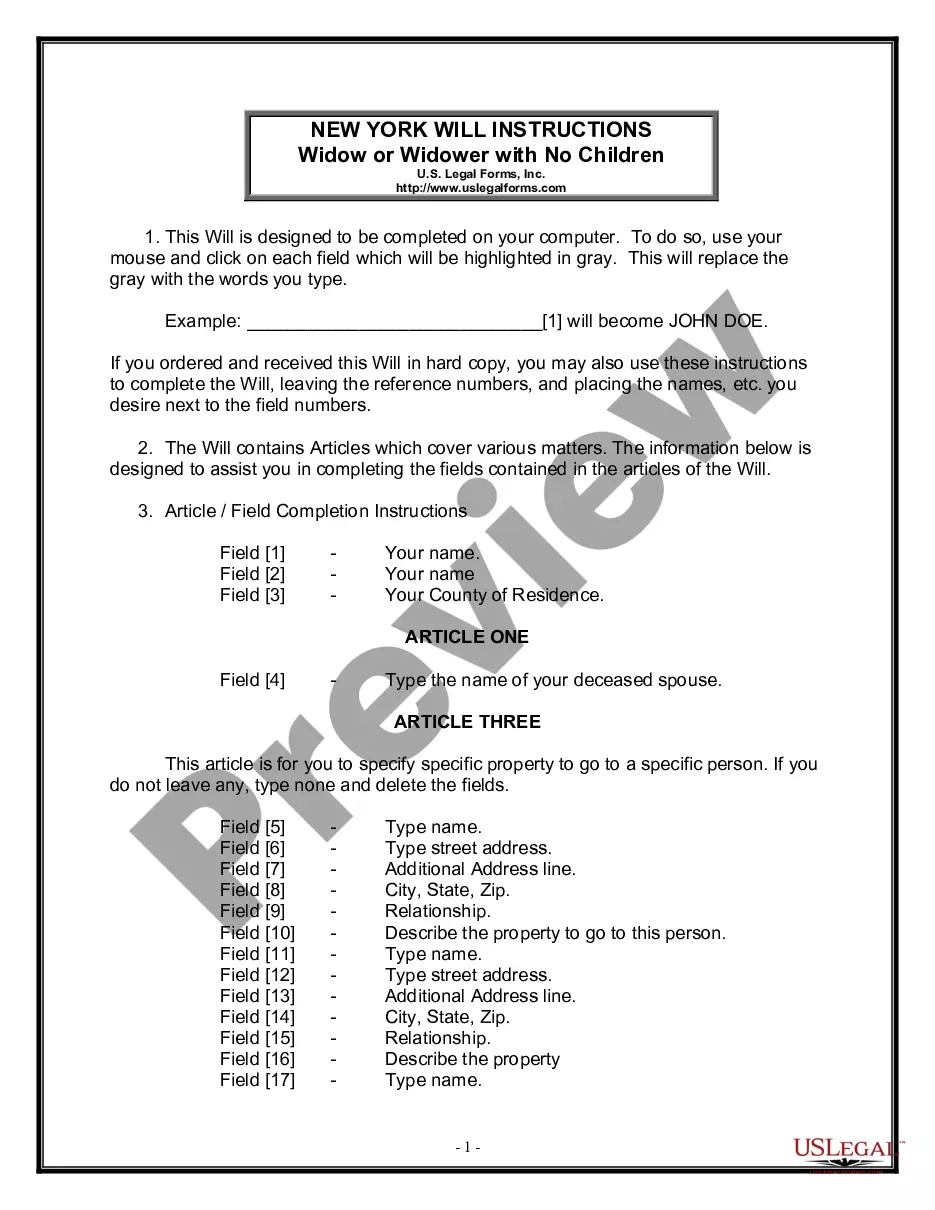
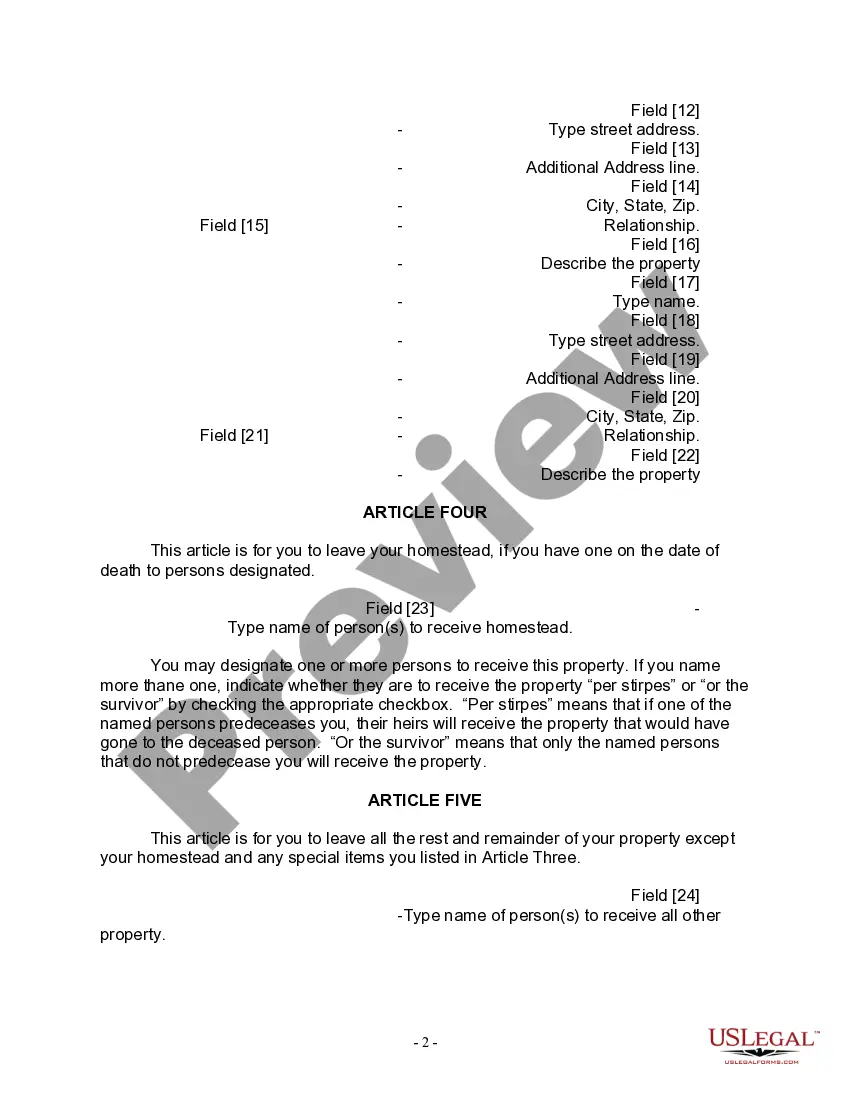
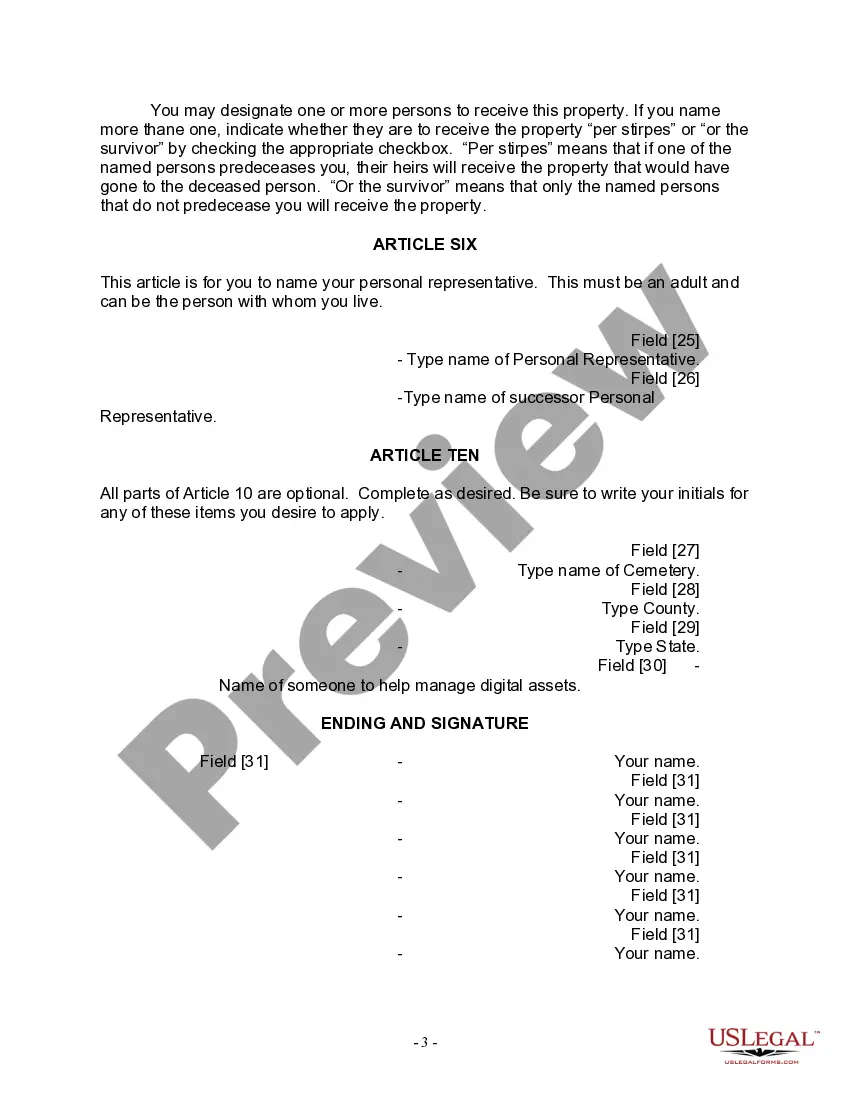
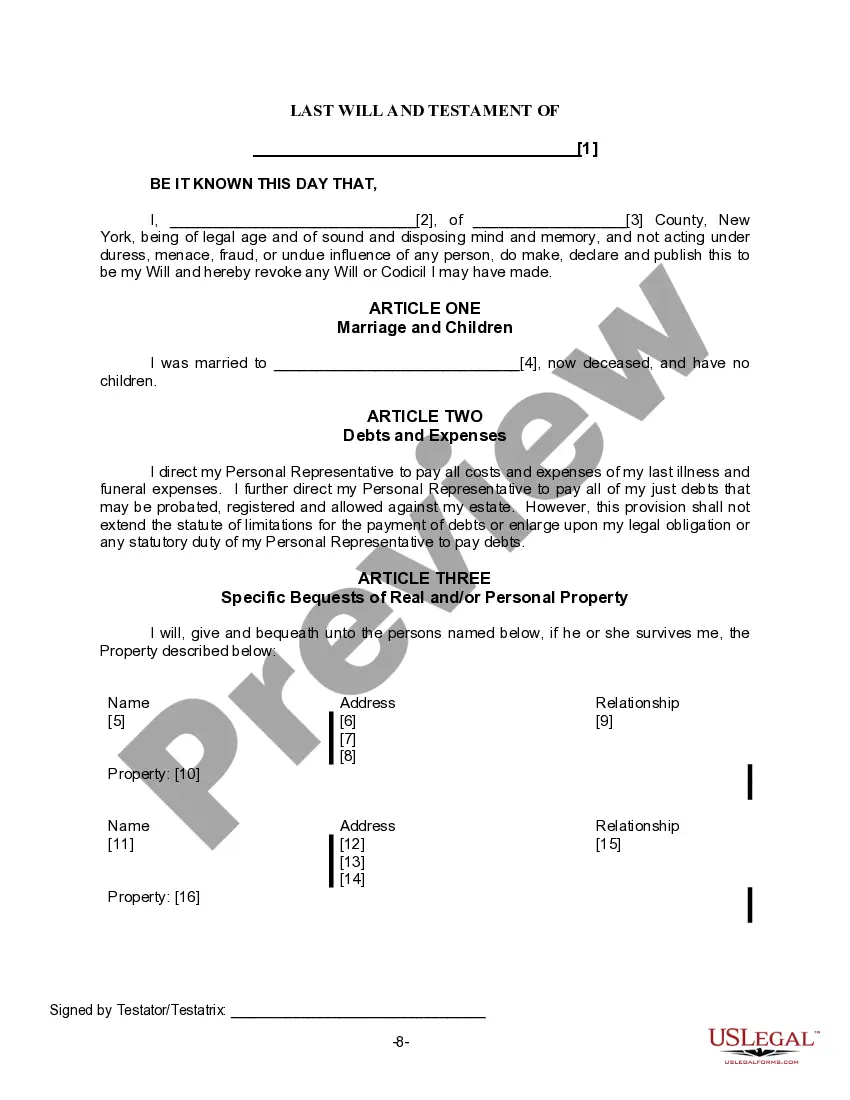
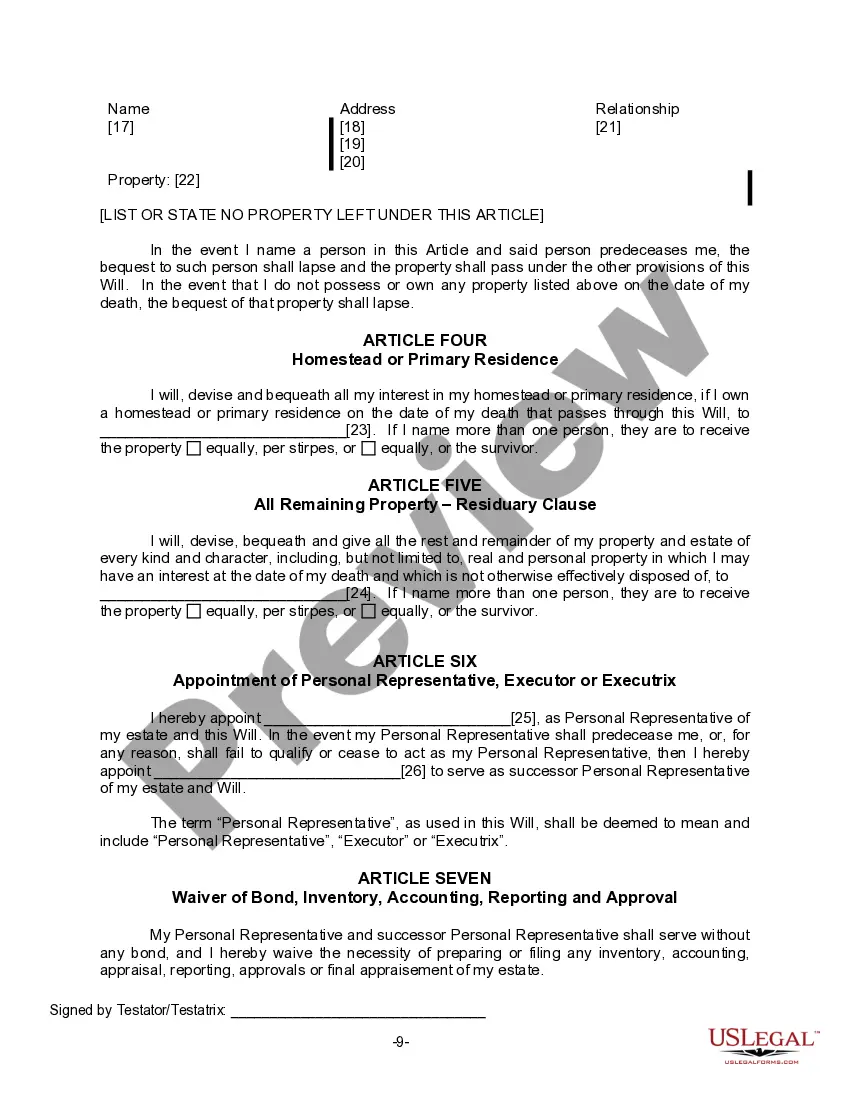
The Last Will for a Widow or Widower with No Children is a legal document that allows a surviving spouse to outline how their assets should be distributed after their death. This form specifically caters to individuals who are widowed or widowers without children, providing clarity in estate distribution. It includes the appointment of a personal representative, provisions for property distribution, and other relevant directives. It is essential for ensuring that your wishes are honored and can prevent potential disputes among surviving family members.
Form components explained
- Personal information of the testator, including name and county of residence.
- Designation of a deceased spouse and specific bequests of personal property.
- Instructions for the distribution of the homestead or primary residence.
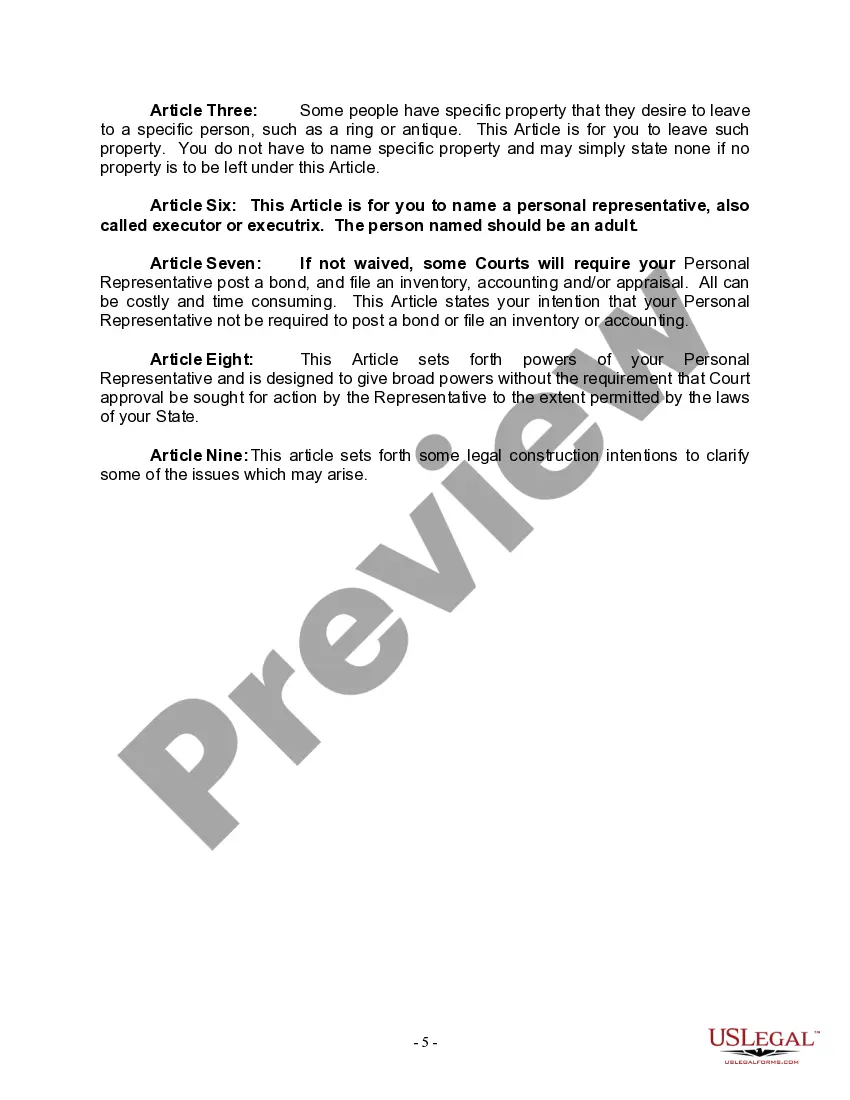
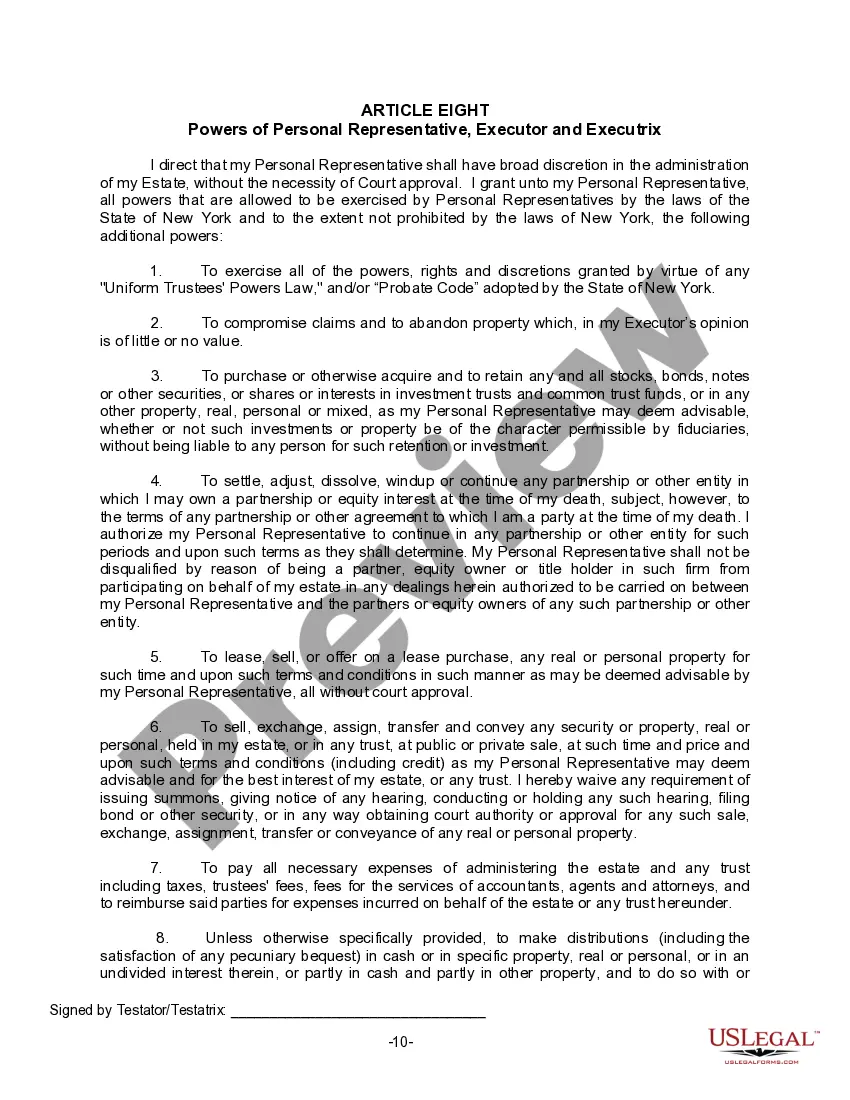
- Appointment of a personal representative to administer the estate.
- Provisions regarding debts and expenses, ensuring clarity on financial obligations.
- Optional articles addressing specific wishes regarding burial or cremation.



When to use this document
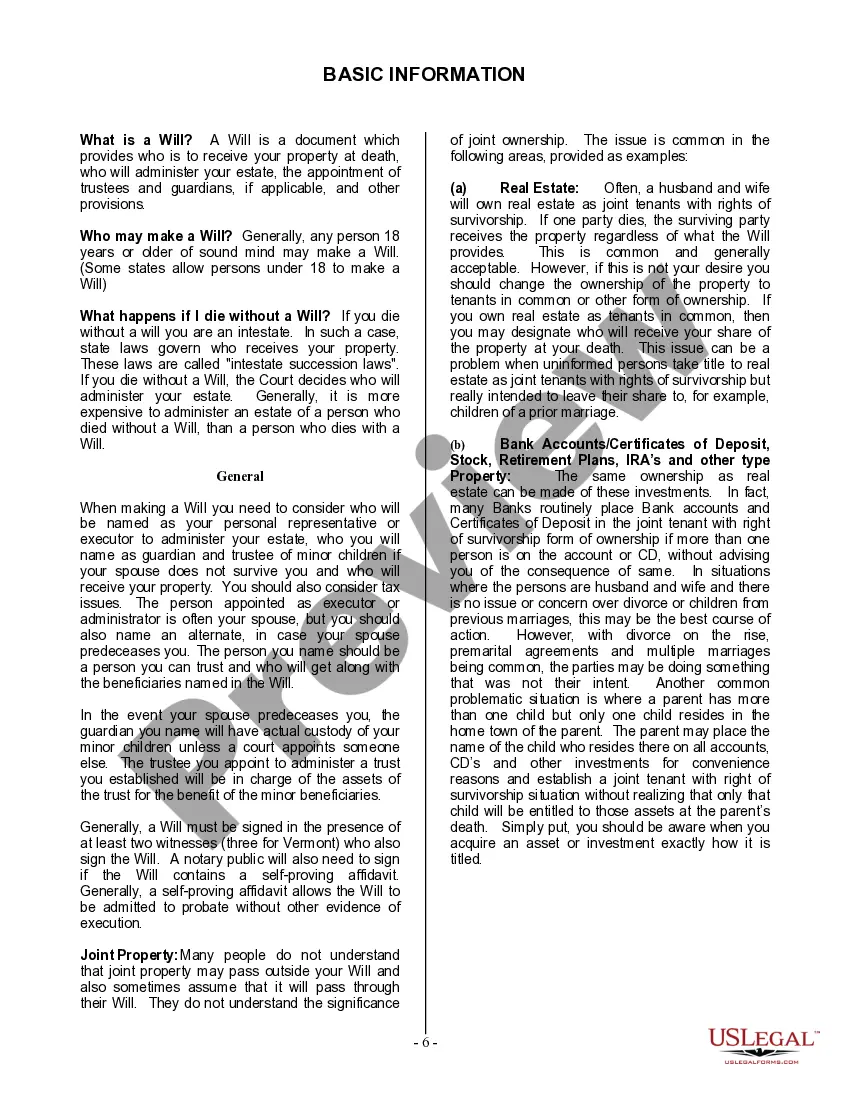
This form is necessary when a widow or widower wishes to specify how their estate will be managed and who will inherit their property after they pass away. Situations can include remarriage, having no children to inherit, or the desire to appoint a friend or relative as an executor. It is crucial to have this form completed to avoid the complications associated with dying intestate, where the state decides the distribution of your assets.
Who can use this document
- Widowers or widows who do not have children.
- Individuals who want to manage their estate planning without the complexities of traditional wills.
- Those who wish to specify their preferences in property distribution and executor appointment.
Completing this form step by step
- Identify the parties: Enter your full name and county of residence.
- Specify the property: Detail any specific bequests you wish to include in the will.
- Designate the personal representative: Choose an executor to manage your estate and a successor if necessary.
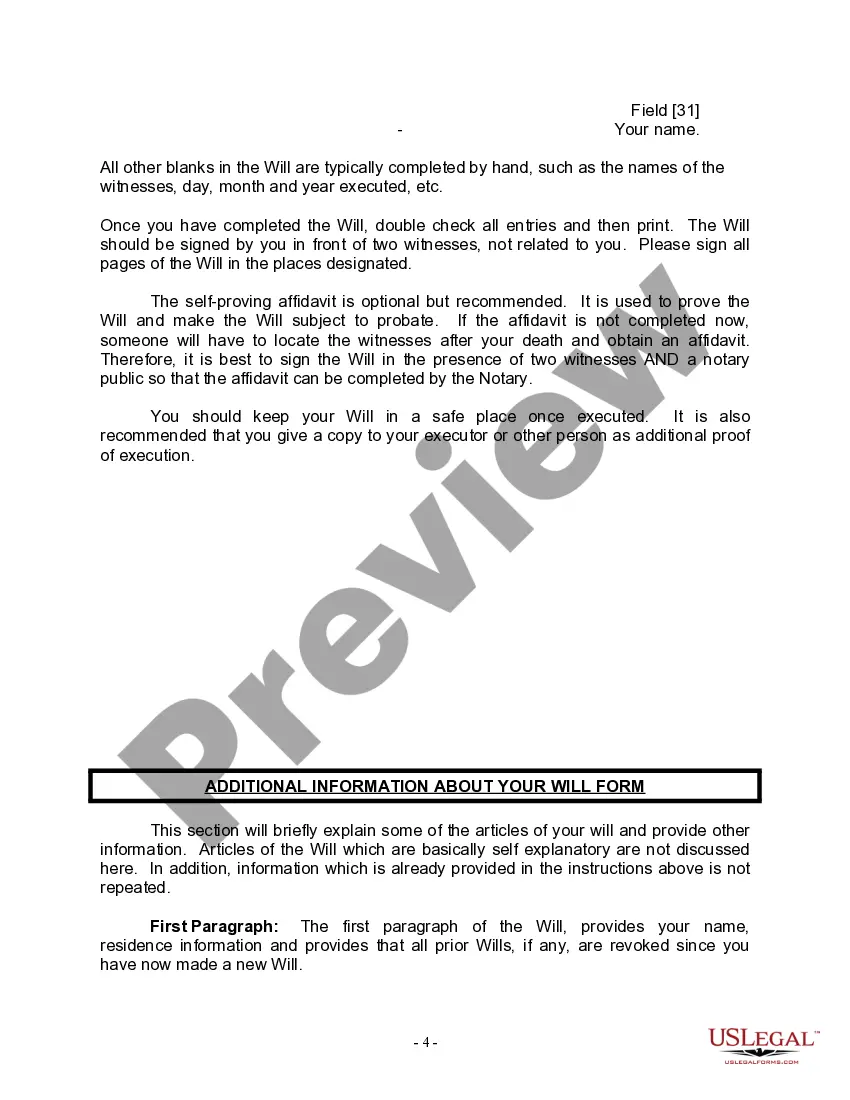
- Include witness and notarization requirements: Ensure you sign in the presence of two witnesses, and if applicable, have the will notarized.
- Review and print: Carefully review all entries before printing and signing the document.
Notarization guidance
This form needs to be notarized to ensure legal validity. US Legal Forms provides secure online notarization powered by Notarize, allowing you to complete the process through a verified video call, available anytime.
Get your form ready online
Our built-in tools help you complete, sign, share, and store your documents in one place.
Make edits, fill in missing information, and update formatting in US Legal Forms—just like you would in MS Word.
Download a copy, print it, send it by email, or mail it via USPS—whatever works best for your next step.
Sign and collect signatures with our SignNow integration. Send to multiple recipients, set reminders, and more. Go Premium to unlock E-Sign.
If this form requires notarization, complete it online through a secure video call—no need to meet a notary in person or wait for an appointment.
We protect your documents and personal data by following strict security and privacy standards.

Make edits, fill in missing information, and update formatting in US Legal Forms—just like you would in MS Word.

Download a copy, print it, send it by email, or mail it via USPS—whatever works best for your next step.

Sign and collect signatures with our SignNow integration. Send to multiple recipients, set reminders, and more. Go Premium to unlock E-Sign.

If this form requires notarization, complete it online through a secure video call—no need to meet a notary in person or wait for an appointment.

We protect your documents and personal data by following strict security and privacy standards.
Mistakes to watch out for
- Forgetting to include witnesses when signing the will.
- Assuming that all property will transfer automatically without specifying in the will.
- Neglecting to provide clear instructions for the personal representative's duties.
- Failing to update the will if personal circumstances change, such as remarriage or additional assets.
Why complete this form online
- Convenience of completing the form from home, at your own pace.
- Editable fields allow for easy adjustments to ensure accuracy.
- Access to attorney-drafted forms increases reliability and legal compliance.
Legal use & context
- This form provides a clear legal framework for asset distribution after death.
- Having a legally valid will reduces the risks of disputes and delays during probate.
- Local laws must be adhered to regarding witness requirements and notarization.
Quick recap
- The Last Will for a Widow or Widower with No Children is essential for outlining asset distribution.
- Proper execution, including witness signatures and notarization, is vital for legal validity.
- Using this form helps avoid intestacy issues and ensures your wishes are followed.
Looking for another form?
Form popularity
FAQ
A qualified widow or widower is a tax filing status that allows a surviving spouse to use the married filing jointly tax rates on an individual return for up to two years following the death of the spouse.
Qualifying widow/widower filing status applies to surviving spouses with dependents. This allows the surviving spouse to file taxes jointly with the deceased spouse. The qualifying widow/widower status applies the standard deduction for a married couple filing jointly.
If you are the widow or widower of a person who worked long enough under Social Security, you can: Receive full benefits at full retirement age for survivors or reduced benefits as early as age 60.
You qualified for married filing jointly with your spouse for the year he or she died. You didn't remarry before the close of the tax year in which your spouse died. You have a child, stepchild, or adopted child you claim as your dependent. You paid more than half the cost of maintaining your home.