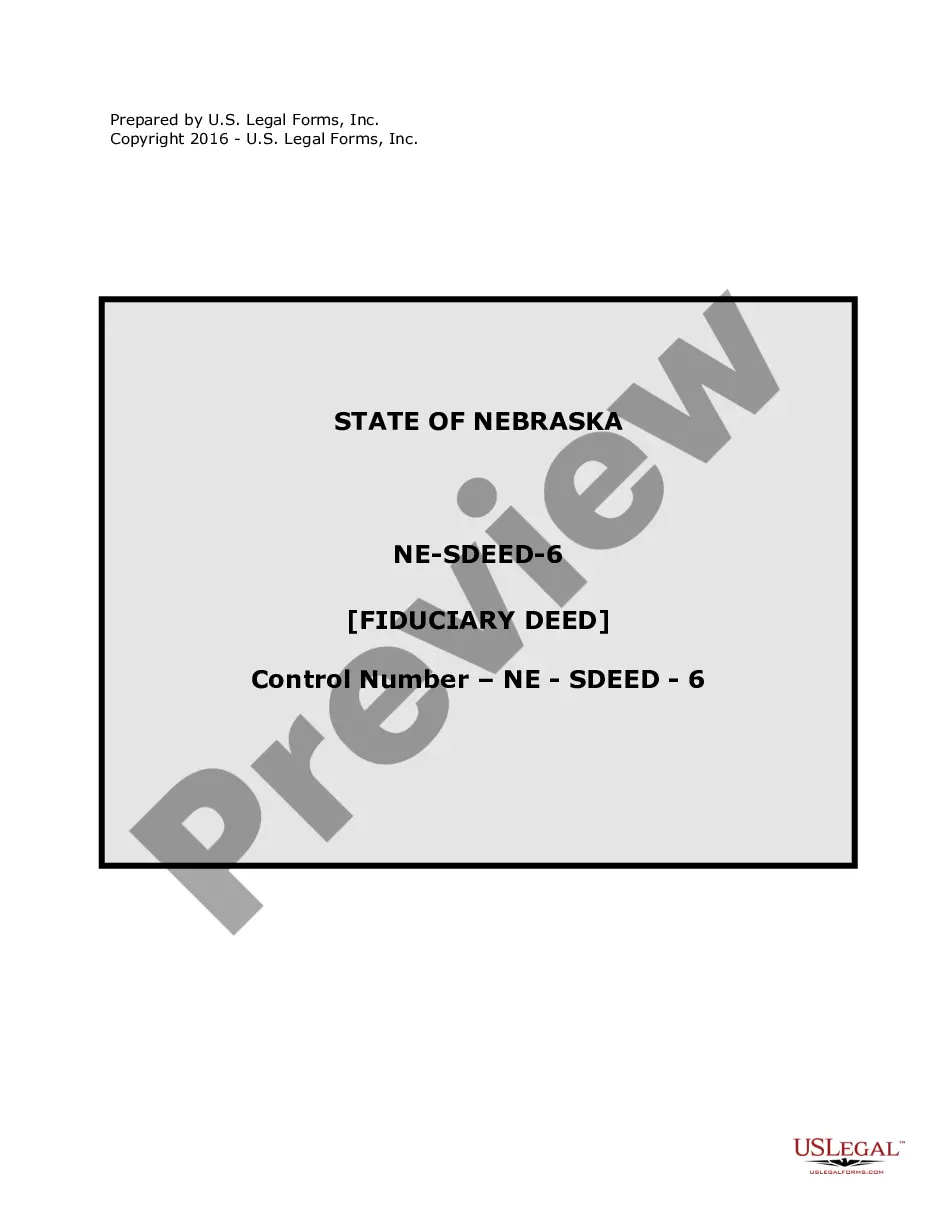
Nebraska Fiduciary Deed for use by Executors, Trustees, Trustors, Administrators and other Fiduciaries
About this form
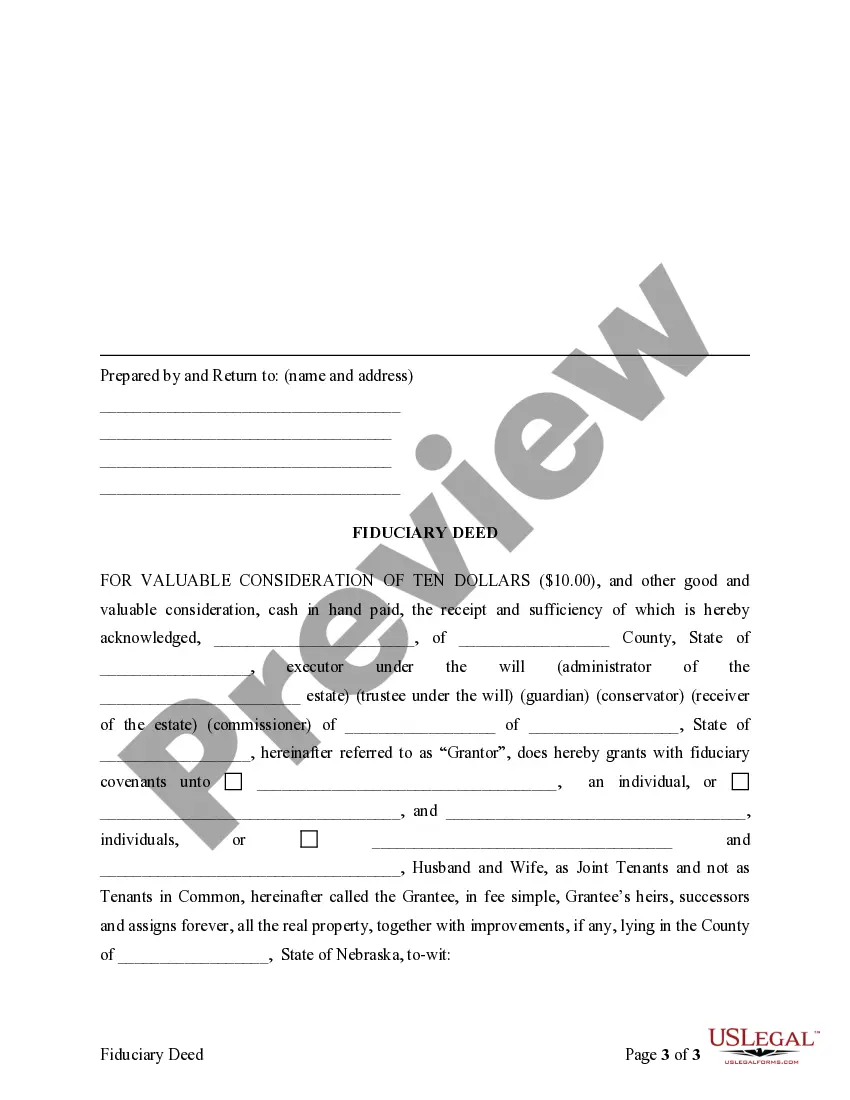
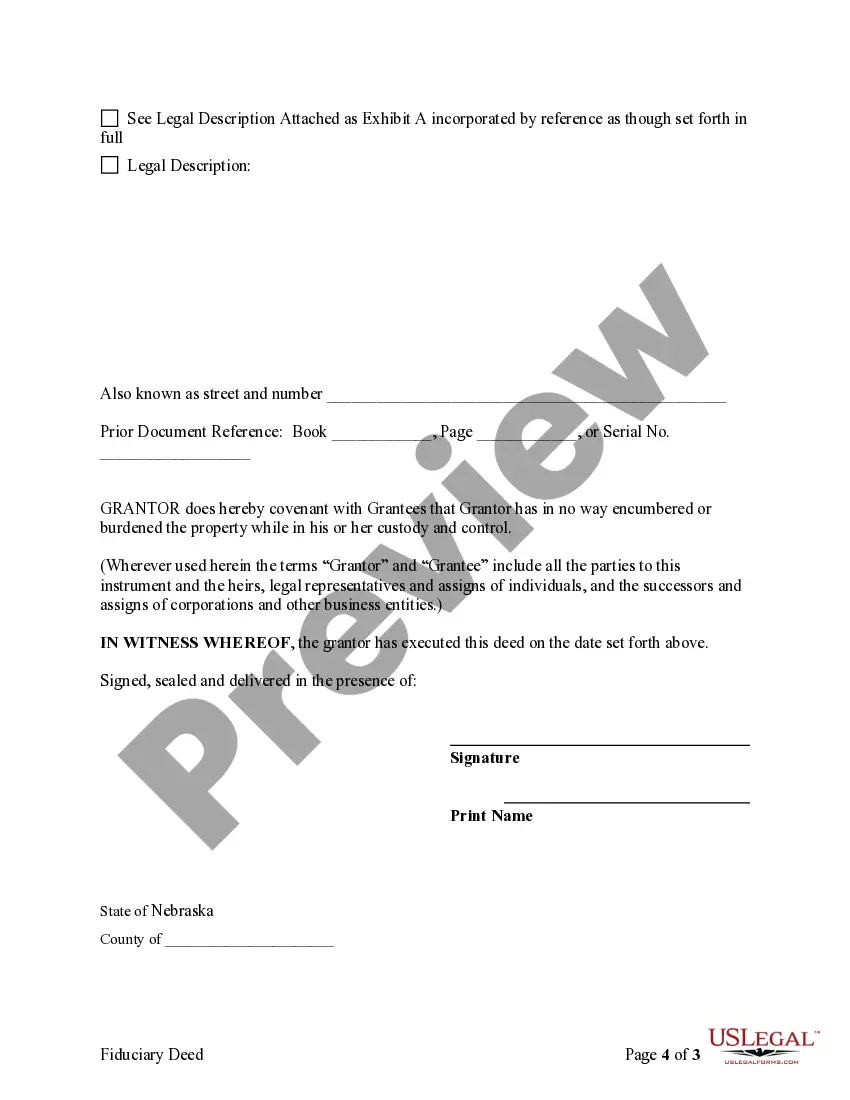
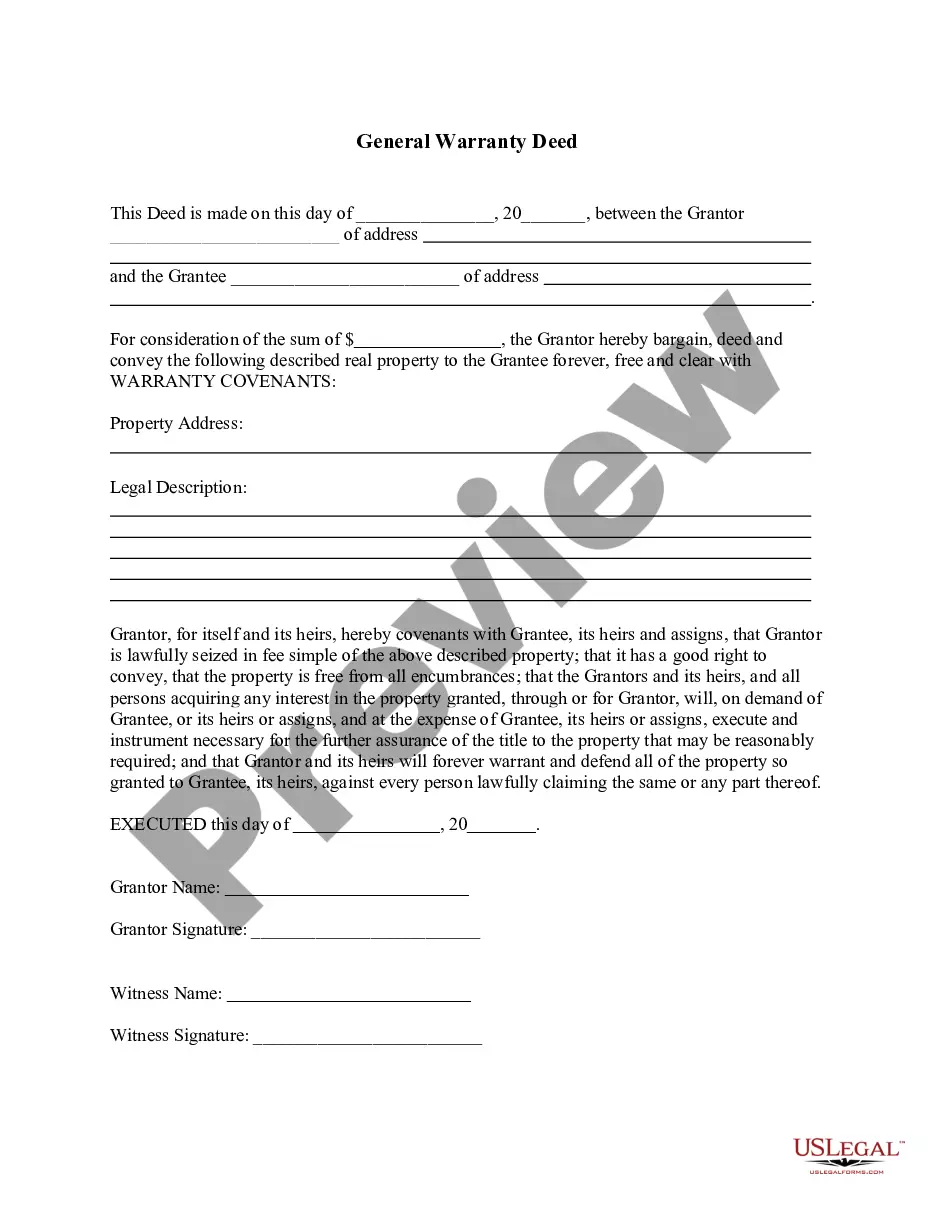
The Fiduciary Deed is a legal document used by executors, trustees, trustors, administrators, and other fiduciaries to transfer real property on behalf of an estate or trust. This form allows a fiduciary to convey property rights efficiently while ensuring compliance with legal obligations. Unlike standard deeds, this document is specifically tailored for individuals acting in a fiduciary capacity, providing added protections and responsibilities incumbent upon such roles.
Key components of this form
- Details about the grantor, including their fiduciary role (executor, trustee, etc.)
- Information regarding the grantee, who is receiving the property
- A description of the real property being transferred
- Fiduciary covenants ensuring the property has not been encumbered
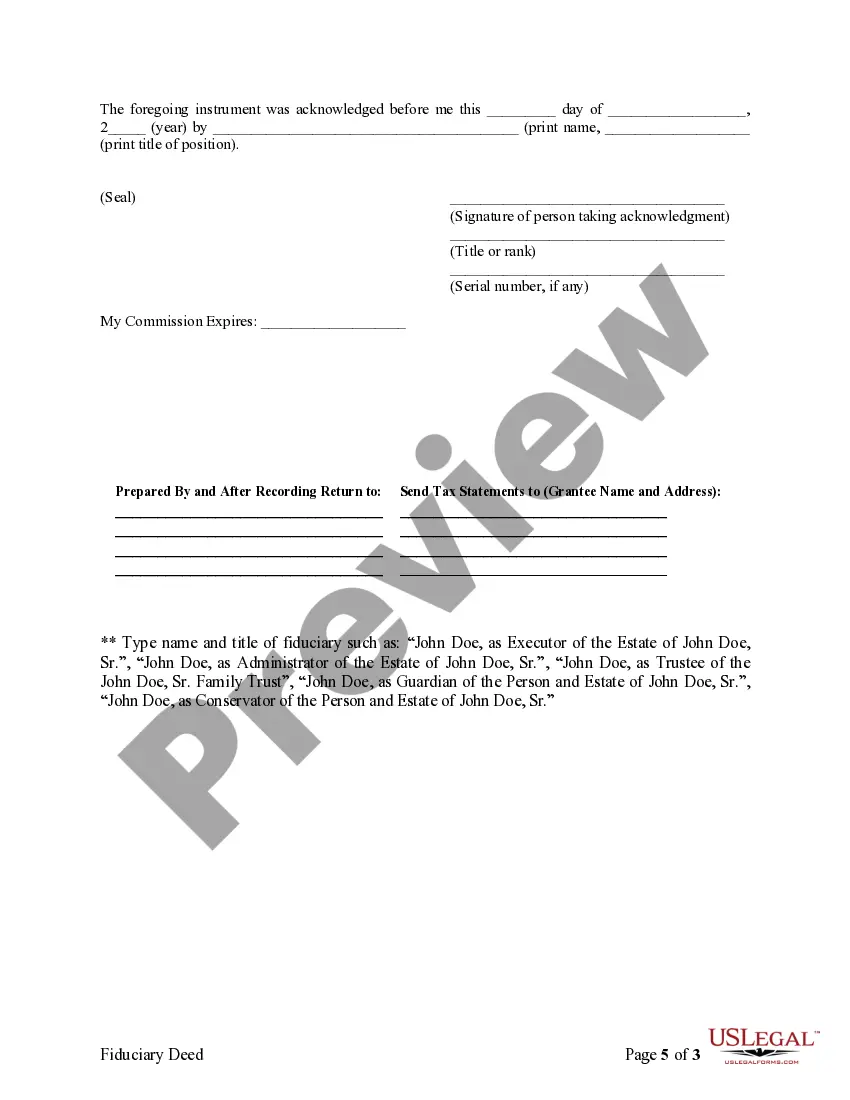
- Space for notarization and acknowledgment by a notary public



When to use this form
This form is necessary when a fiduciary is required to transfer ownership of real estate as part of the duties associated with managing an estate or trust. Scenarios include selling property of a deceased personâs estate, transferring property held within a trust, or managing assets for a minor or incapacitated individual. Utilizing this Fiduciary Deed ensures that the transaction is legally recognized and properly documented.
Who should use this form
This form is intended for:
- Executors of wills
- Trustees of trusts
- Administrators handling intestate estates
- Guardians or conservators managing assets for minors or incapacitated persons
- Any fiduciary acting on behalf of another party in relation to property transfer
Instructions for completing this form
- Identify the grantor (the fiduciary) and provide their information.
- Specify the grantee (the person or entity receiving the property) with complete details.
- Describe the real property being transferred, including any references to prior documents.
- Include any monetary consideration, typically stated as a nominal amount.
- Ensure the document is notarized, following the acknowledgment section.
Notarization guidance
Yes, this form must be notarized to be legally valid. The notarization process ensures that the identities of the signatories are verified, which adds a layer of authenticity to the transaction. U.S. Legal Forms offers integrated online notarization options, allowing you to have your document notarized securely via video call without the need for in-person visits.
Get your form ready online
Our built-in tools help you complete, sign, share, and store your documents in one place.
Make edits, fill in missing information, and update formatting in US Legal Forms—just like you would in MS Word.
Download a copy, print it, send it by email, or mail it via USPS—whatever works best for your next step.
Sign and collect signatures with our SignNow integration. Send to multiple recipients, set reminders, and more. Go Premium to unlock E-Sign.
If this form requires notarization, complete it online through a secure video call—no need to meet a notary in person or wait for an appointment.
We protect your documents and personal data by following strict security and privacy standards.

Make edits, fill in missing information, and update formatting in US Legal Forms—just like you would in MS Word.

Download a copy, print it, send it by email, or mail it via USPS—whatever works best for your next step.

Sign and collect signatures with our SignNow integration. Send to multiple recipients, set reminders, and more. Go Premium to unlock E-Sign.

If this form requires notarization, complete it online through a secure video call—no need to meet a notary in person or wait for an appointment.

We protect your documents and personal data by following strict security and privacy standards.
Common mistakes
- Failing to complete all required fields accuracy.
- Not having the form notarized, where required.
- Leaving out important property descriptions or prior document references.
- Using incorrect names or titles for the fiduciary roles.
- Not providing proper acknowledgment and signatures.
Why complete this form online
- Convenient access to legal forms from anywhere, anytime.
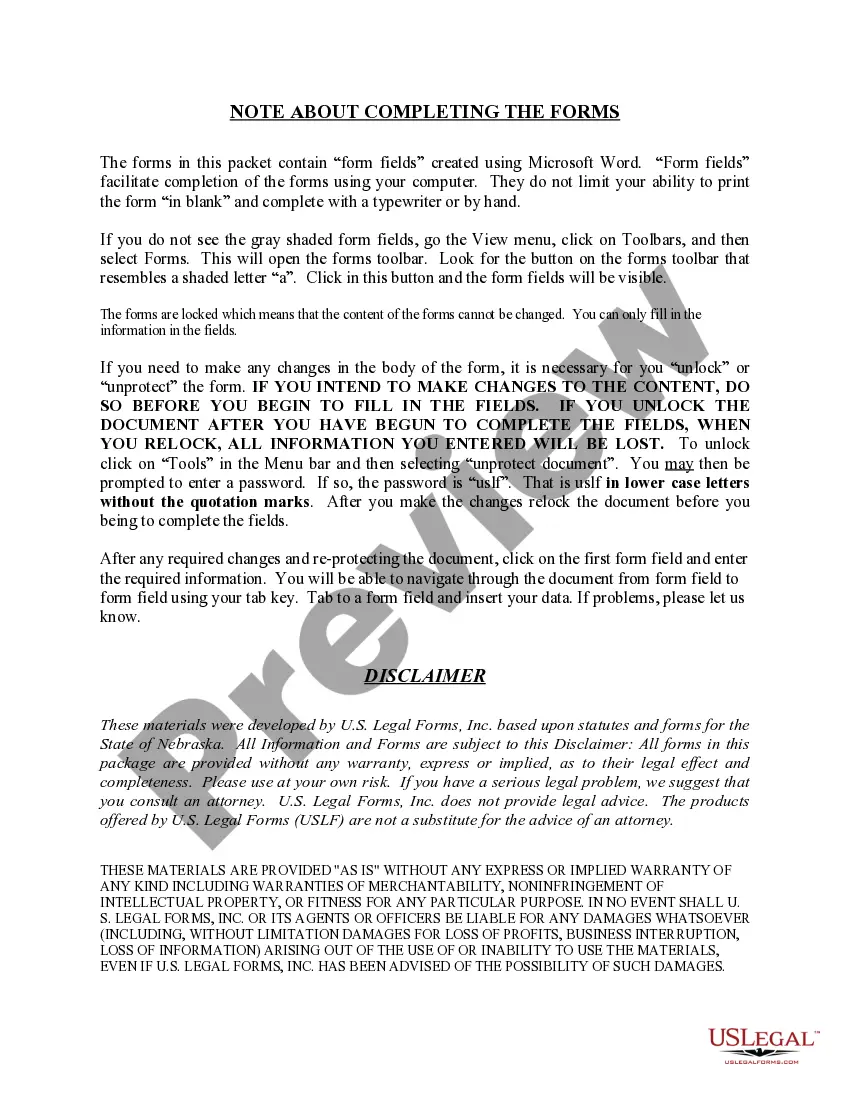
- Edit and complete forms easily using Microsoft Word.
- Reliable document accuracy, drafted by licensed attorneys.
- Efficient processing, minimizing mistakes commonly associated with manual forms.
Looking for another form?

Form popularity
FAQ
The executor or administrator's job is to manage the deceased estate, pay all debts and distribute the assets according to the Will (or, if there is no Will, according to the law). It is their duty to safeguard the assets and look after the interests of the people who will ultimately receive them (the beneficiaries).
Yes an estate can have 2 administrators but it is not likely. If a names co-executors the Court may allow this, but if two people want to serve as co-administrators most Courts say "No" to the future conflicts between adminsitrators.
Trustees, executors, administrators and other types of personal representatives are all fiduciaries.Executor - (Also called personal representative; a woman is sometimes called an executrix) An individual or trust company that settles the estate of a testator according to the terms of the will.
The difference between executor and administrator of estate in comes down to how the person came to be in charge of the estate. Someone who is appointed through the will of the person who died is called executor. Someone who is appointed because of any other reason is called administrator.
An administrator will take title legally on the estate's assets, and has legal responsibility to file all tax returns and pay all related taxes.In certain cases, the administrator may have personal liability for any unpaid tax amounts due for the estate.
In most states, an executor's deed must be signed by a witness and notarized. An executor's deed should be recorded in the real estate records of the county in which the property being conveyed is located.
You can do this by simply signing your name and putting your title of executor of the estate afterward. One example of an acceptable signature would be Signed by Jane Doe, Executor of the Estate of John Doe, Deceased. Of course, many institutions may not simply take your word that you are the executor of the estate.
Your executor and successor trustee can usually be the same person, and it's actually a quite common arrangement.It helps to understand the roles of the executor and the successor trustee in your estate plan as you make a decision because some of the factors can be personal.
A fiduciary is a person who stands in a position of trust with you (or your estate after your death) and your beneficiaries. There are different types of fiduciaries depending on the context: an executor or executrix is named in a will; a trustee is named by a trust; an agent is appointed by a power of attorney.