New York Eastern District Bankruptcy Guide and Forms Package for Chapters 7 or 13
Understanding this form
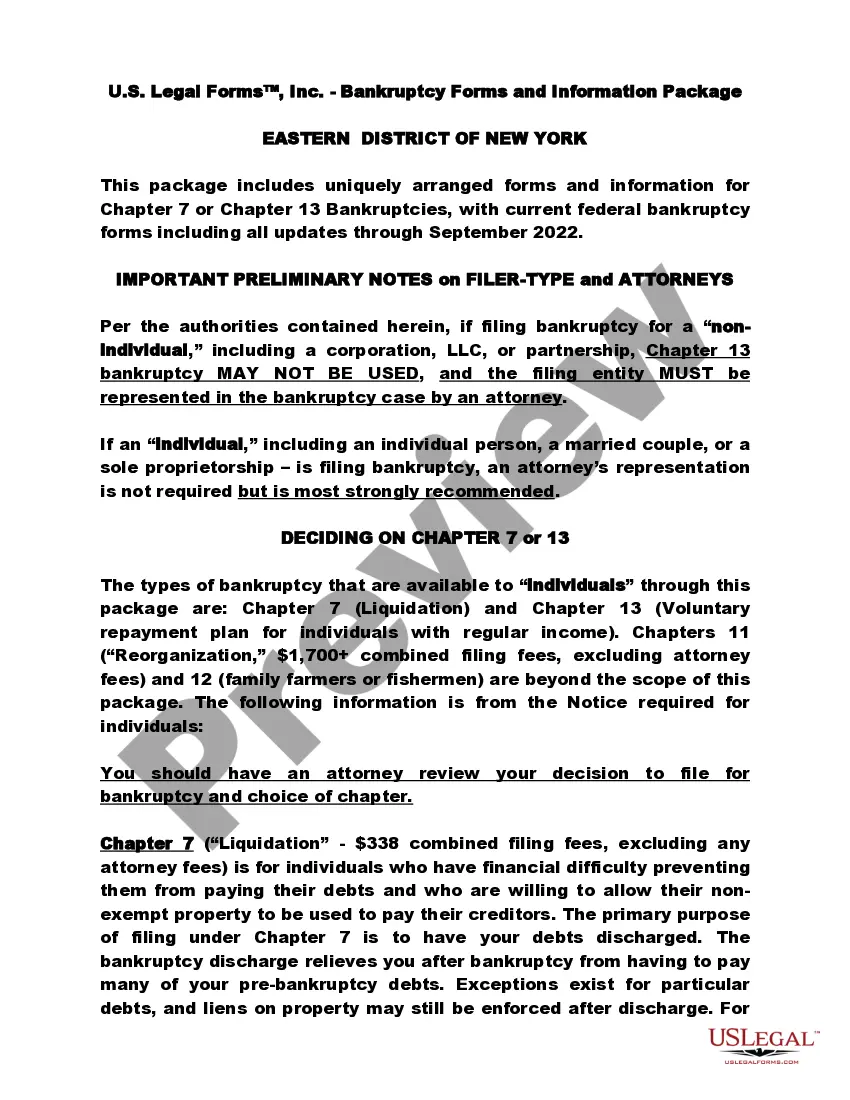
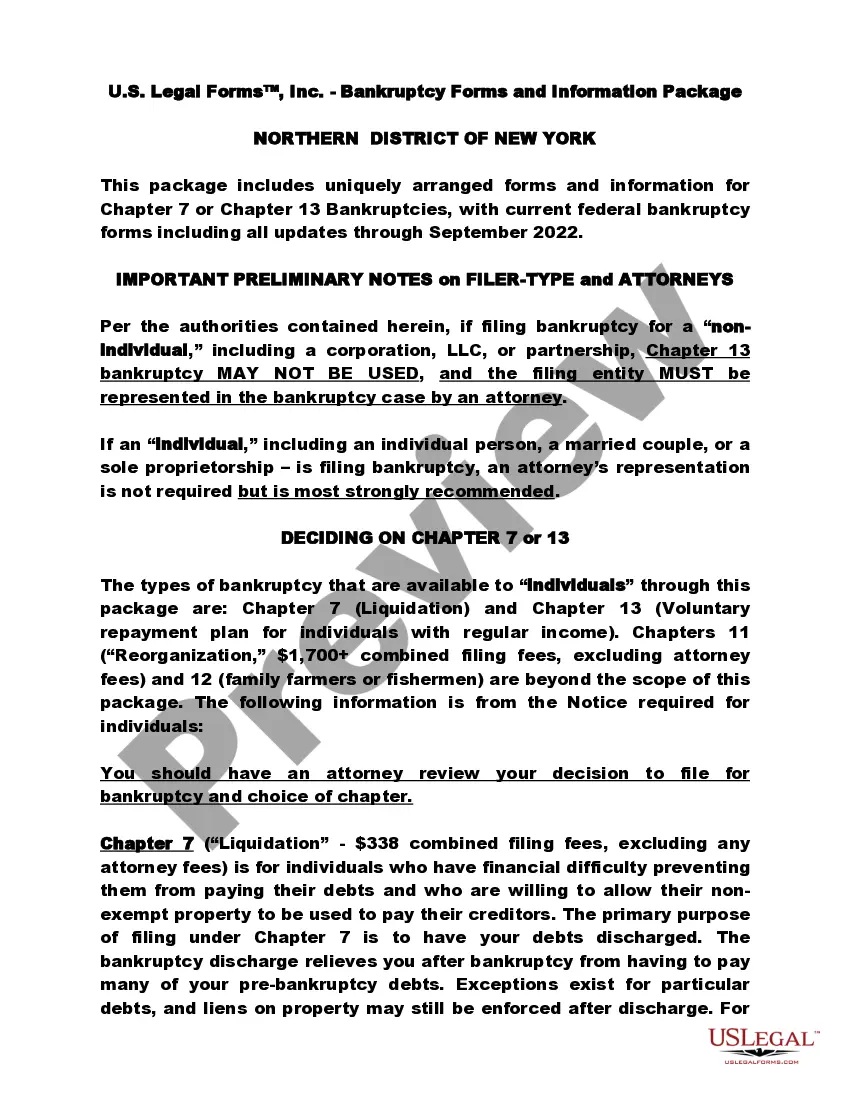
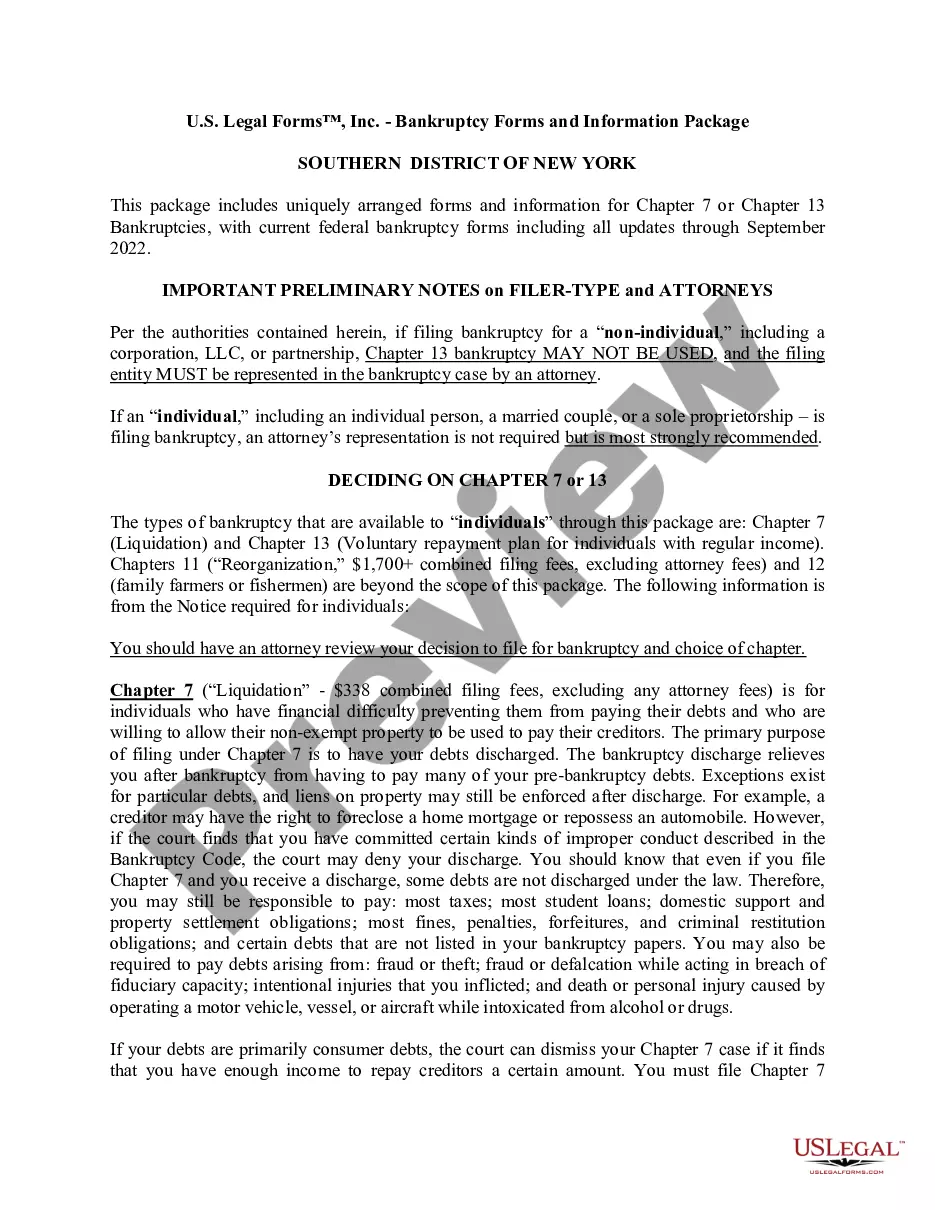
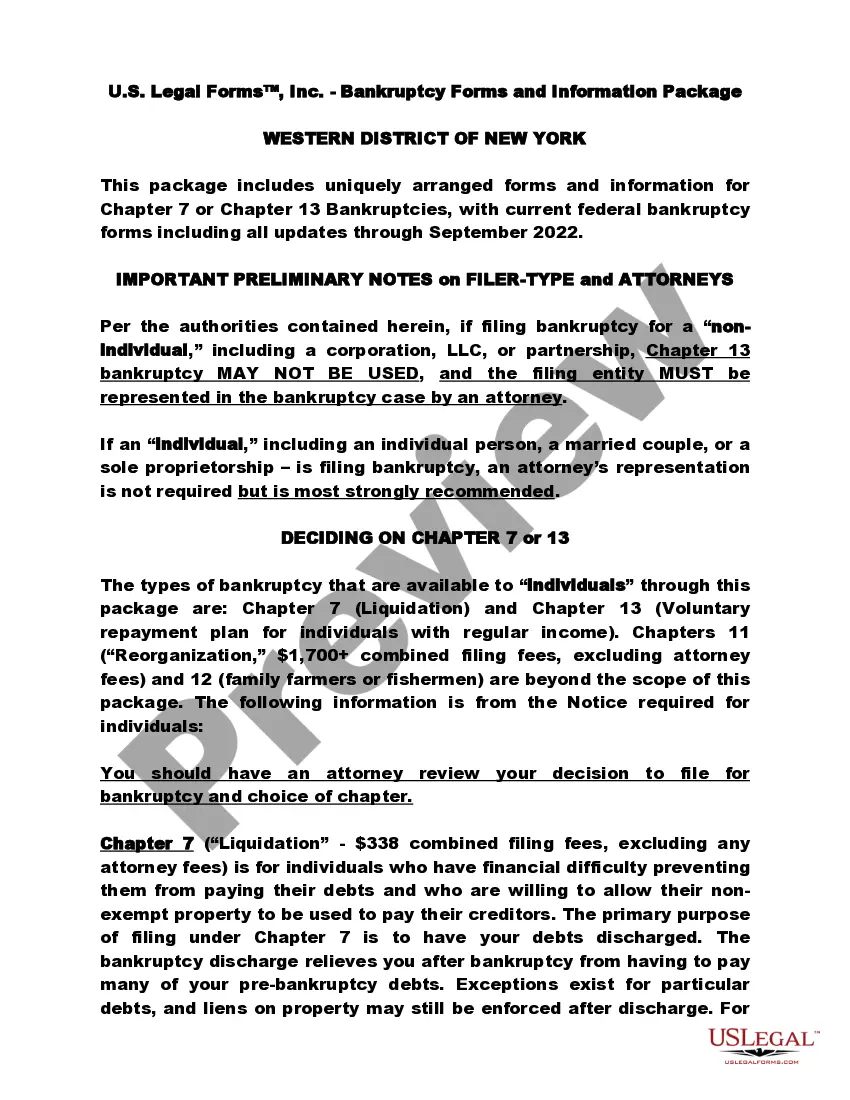
The New York Eastern District Bankruptcy Guide and Forms Package for Chapters 7 or 13 provides comprehensive legal templates and resources specifically designed for individuals looking to file for bankruptcy under these chapters. This package includes detailed instructions and relevant forms, setting it apart from basic bankruptcy forms by offering tailored support for both Chapter 7 liquidation and Chapter 13 repayment plans.
What’s included in this form
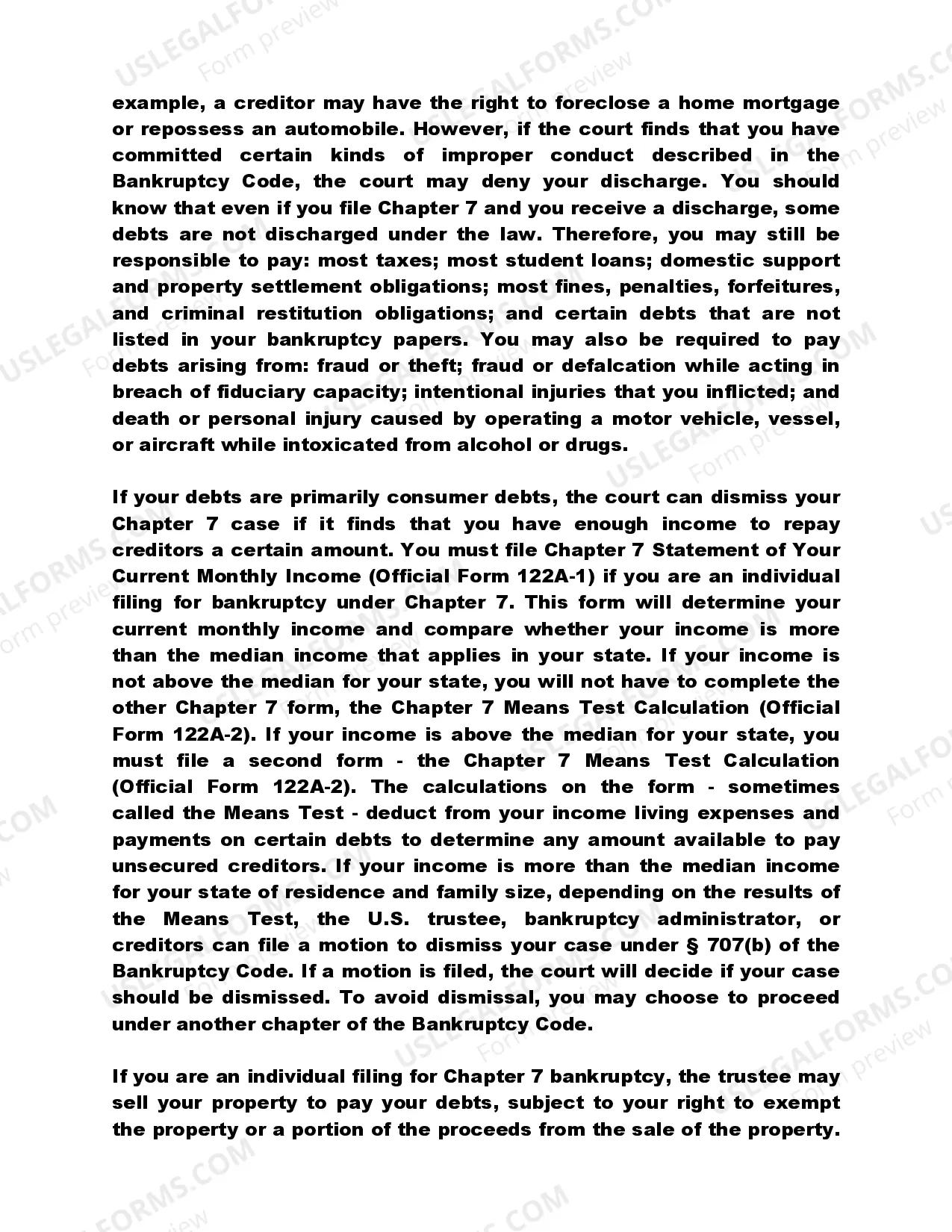
- Chapter 7 Statement of Your Current Monthly Income (Official Form 122A-1)
- Chapter 7 Means Test Calculation (Official Form 122A-2)
- Schedule C: The Property You Claim as Exempt (Official Form 106C)
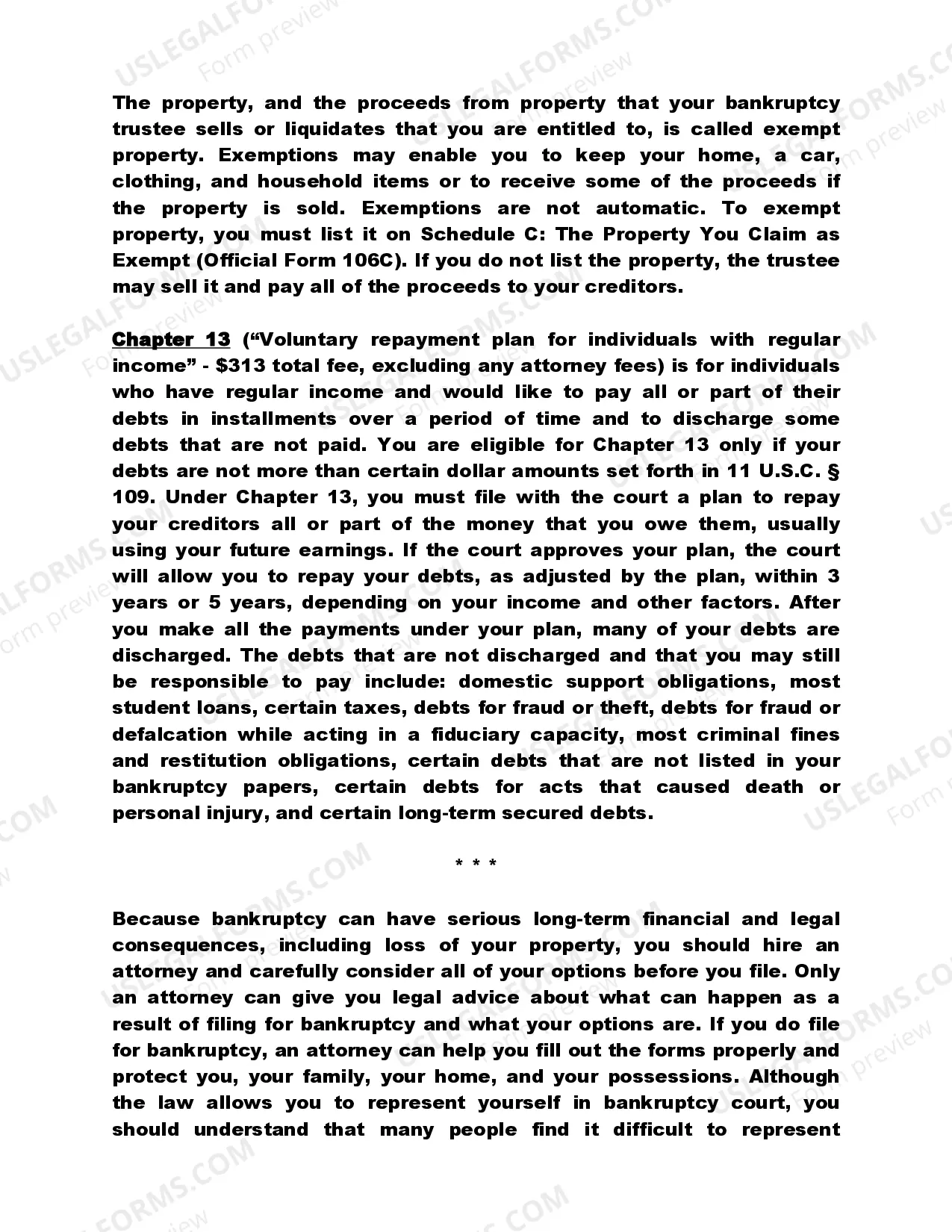
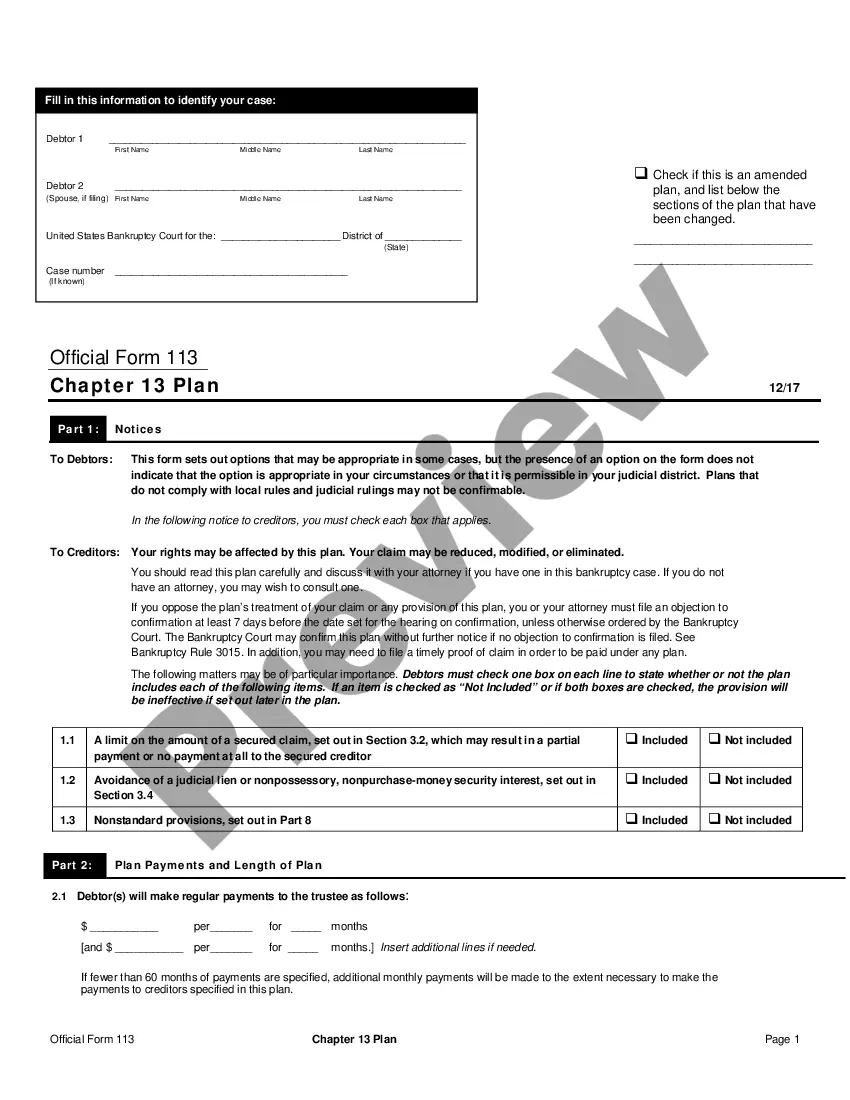
- Chapter 13 repayment plan format
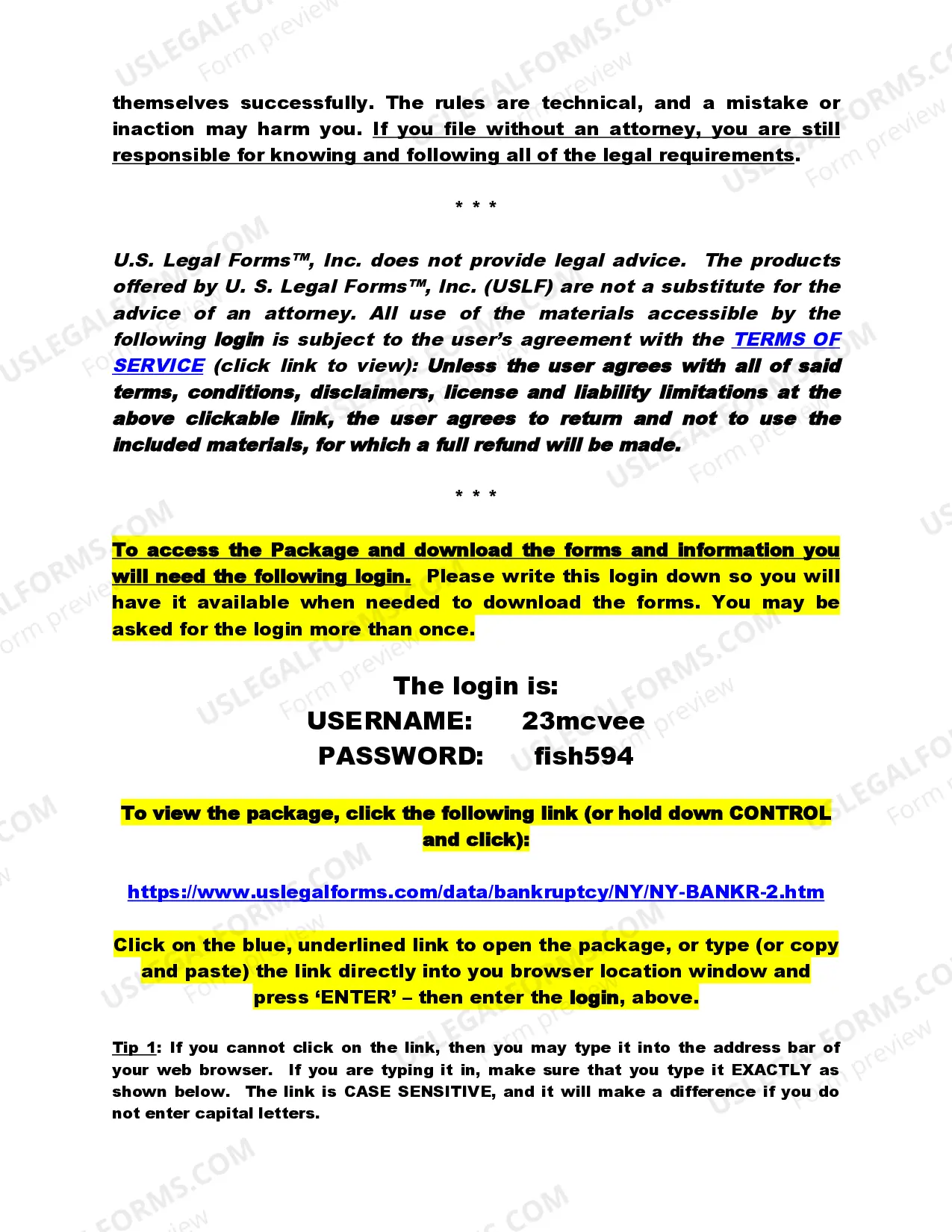
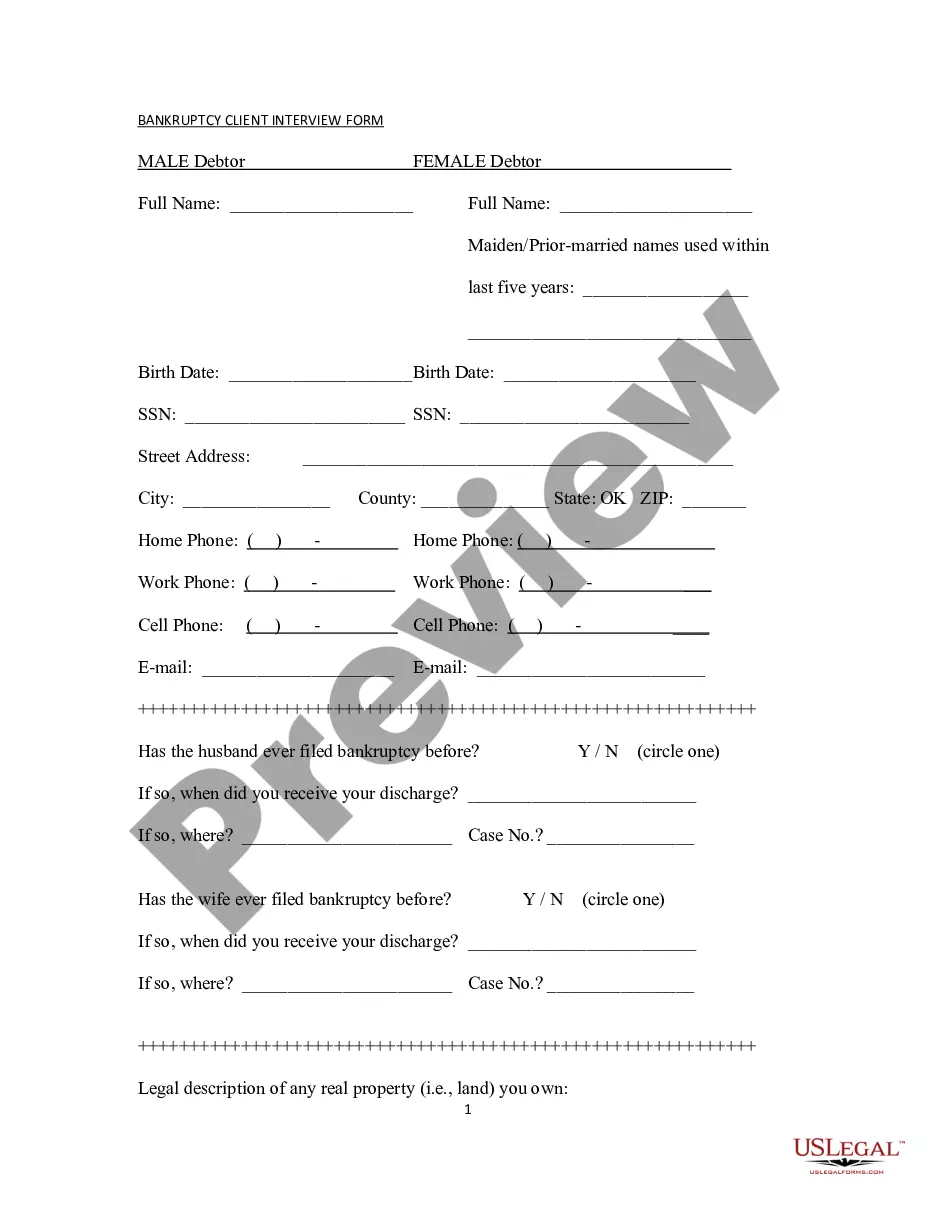
- Instructions for both Chapter 7 and Chapter 13 filings
When to use this document
This form should be used by individuals considering bankruptcy as a solution to debt relief. It is particularly relevant when you face overwhelming financial difficulty and need to determine whether Chapter 7 or Chapter 13 bankruptcy is appropriate for your situation. This package serves as a guide through the complex filing process, ensuring that you follow the correct procedures and complete necessary documentation effectively.
Who needs this form
This package is intended for:
- Individuals filing for Chapter 7 bankruptcy seeking debt discharge.
- Individuals filing for Chapter 13 bankruptcy who want to repay debts over time.
- Those experiencing financial difficulties who require legal templates crafted by licensed attorneys.
Instructions for completing this form
- Identify your current financial situation and determine whether Chapter 7 or Chapter 13 aligns with your goals.
- Gather information regarding your income, expenses, and debts to accurately fill out the required forms.
- Complete the Chapter 7 Statement of Your Current Monthly Income and any additional required forms.
- If filing for Chapter 13, outline your repayment plan based on your disposable income.
- File the completed forms with the court, including any necessary supporting documents.
Notarization requirements for this form
Notarization is not commonly needed for this form. However, certain documents or local rules may make it necessary. Our notarization service, powered by Notarize, allows you to finalize it securely online anytime, day or night.
Get your form ready online
Our built-in tools help you complete, sign, share, and store your documents in one place.
Make edits, fill in missing information, and update formatting in US Legal Forms—just like you would in MS Word.
Download a copy, print it, send it by email, or mail it via USPS—whatever works best for your next step.
Sign and collect signatures with our SignNow integration. Send to multiple recipients, set reminders, and more. Go Premium to unlock E-Sign.
If this form requires notarization, complete it online through a secure video call—no need to meet a notary in person or wait for an appointment.
We protect your documents and personal data by following strict security and privacy standards.

Make edits, fill in missing information, and update formatting in US Legal Forms—just like you would in MS Word.

Download a copy, print it, send it by email, or mail it via USPS—whatever works best for your next step.

Sign and collect signatures with our SignNow integration. Send to multiple recipients, set reminders, and more. Go Premium to unlock E-Sign.

If this form requires notarization, complete it online through a secure video call—no need to meet a notary in person or wait for an appointment.

We protect your documents and personal data by following strict security and privacy standards.
Typical mistakes to avoid
- Failing to list all debts or income, which can lead to case dismissal.
- Not completing the Means Test accurately, potentially resulting in ineligibility for Chapter 7.
- Neglecting to claim exemptions for certain property, risking loss during liquidation.
- Submitting forms without thorough review, leading to inaccuracies or missing information.
Advantages of online completion
- Convenient access to legal forms that can be downloaded and filled out at your own pace.
- Reliability of documents crafted by licensed attorneys, ensuring legal compliance.
- Editable templates that can be tailored to your specific financial situation.
- Step-by-step instructions to guide you through the bankruptcy filing process.
Looking for another form?


Form popularity
FAQ
There is no threshold amount that you need to reach to file a bankruptcy. Some chapters of bankruptcy have debt limits, but there is no such thing as a debt minimum. That being said, you certainly can and should evaluate if filing a bankruptcy makes sense in your current situation.
In general, attorney fees for a Chapter 7 bankruptcy range from $1,000 to $3,500 depending on the complexity of the case. Larger firms with more advertising and overhead costs sometimes charge more than a solo practitioner, but not always.
You can earn significant monthly income and still qualify for Chapter 7 bankruptcy if you have many expenses, such as a high mortgage and car loan payments (although they must be reasonable), taxes, and other expenses. Read on to determine if you can pass the means test and file for Chapter 7 bankruptcy.
Collect Your New York Bankruptcy Documents. Take Credit Counseling. Complete the Bankruptcy Forms. Get Your Filing Fee. Print Your Bankruptcy Forms. Go to Court to File Your Forms. Mail Documents to Your Trustee. Take Bankruptcy Course 2.
Any individual, even if self-employed or operating an unincorporated business, is eligible for chapter 13 relief as long as the individual's unsecured debts are less than $394,725 and secured debts are less than $1,184,200.
You must have regular income. Your unsecured debt cannot exceed $394,725, and your secured debt cannot exceed $1,184,200. You must be current on tax filings. You cannot have filed for Chapter 13 bankruptcy in the past two years or Chapter 7 bankruptcy in the past four years.
The main difference between Chapter 7 and Chapter 13 is that a Chapter 7 will allow the debtor to eliminate all dischargeable unsecured debt, whereas the Chapter 13 would allow for payments to be made on those debts.And why does bankruptcy, a legal means of getting out of debt, have such a stigma attached to it?
How much does it cost to file for bankruptcy? As of January 2018, it costs $335 for court fees to file for bankruptcy under Chapter 7 and $310 to file for bankruptcy under Chapter 13. The court will not likely waive the filing fees even if you are very low income.
Chapter 7 bankruptcy is a liquidation where the trustee collects all of your assets and sells any assets which are not exempt. (see New York Exemptions) The trustee sells the assets and pays you, the debtor, any amount exempted.