Nevada Last Will and Testament for Married person with Minor Children
What is this form?
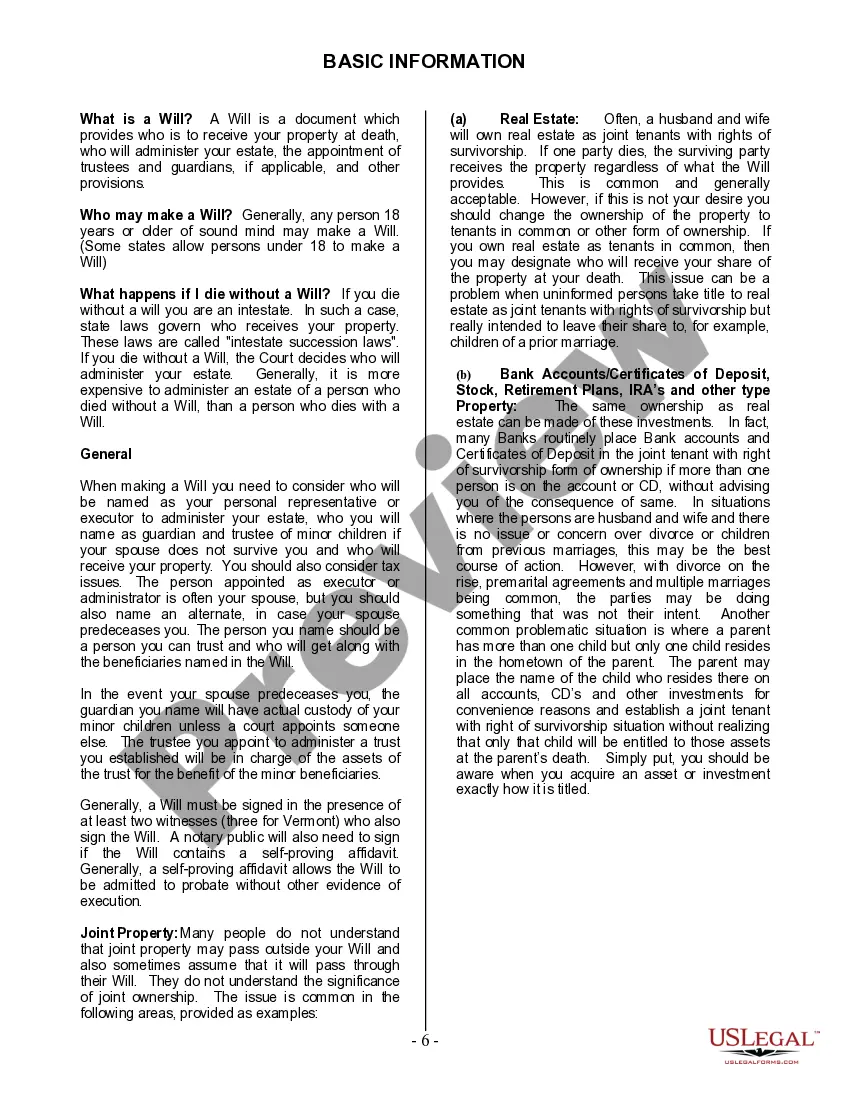
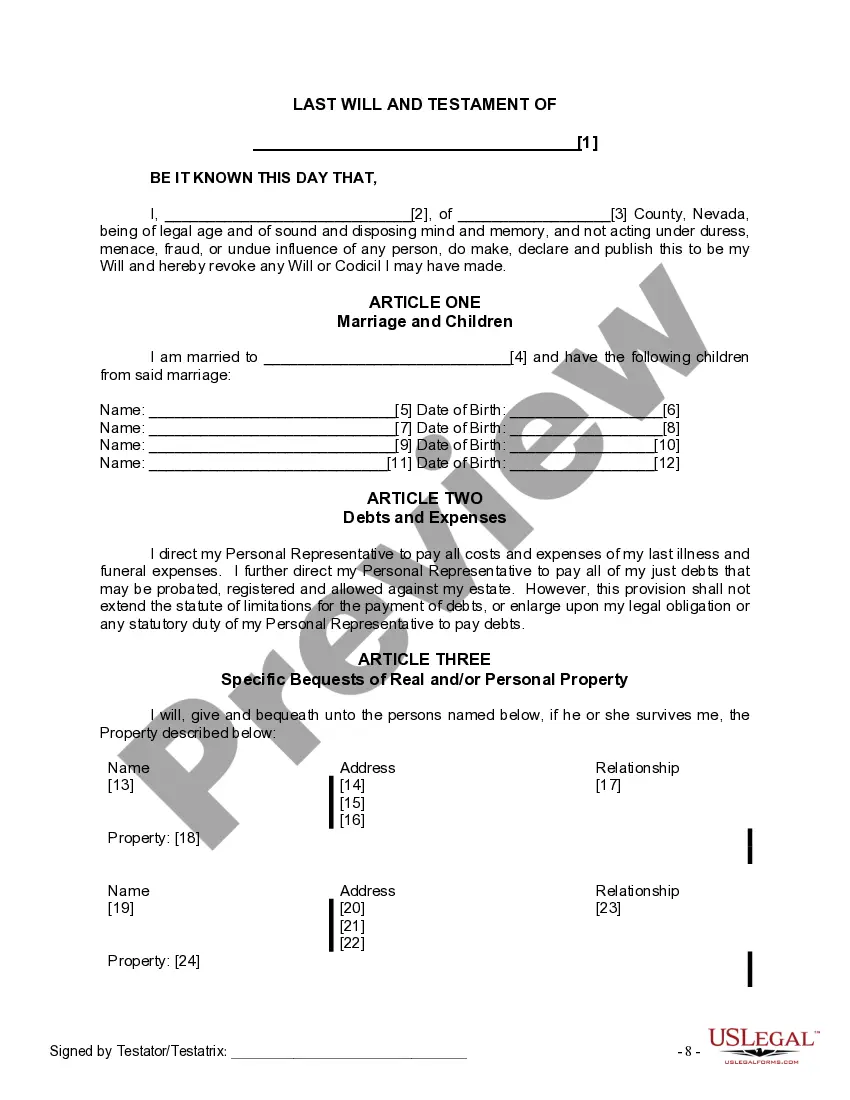
The Last Will and Testament for Married Person with Minor Children is a legal document that allows you to specify how your assets and property should be distributed after your death. This form is particularly designed for married individuals with minor children, enabling you to appoint a personal representative, designate guardians for your children, and set up trusts for your minor beneficiaries. Unlike simple wills, this document takes into account the unique needs of families, ensuring that your loved ones are cared for according to your wishes.
Key parts of this document
- Personal representative: Designate an executor to manage your estate.
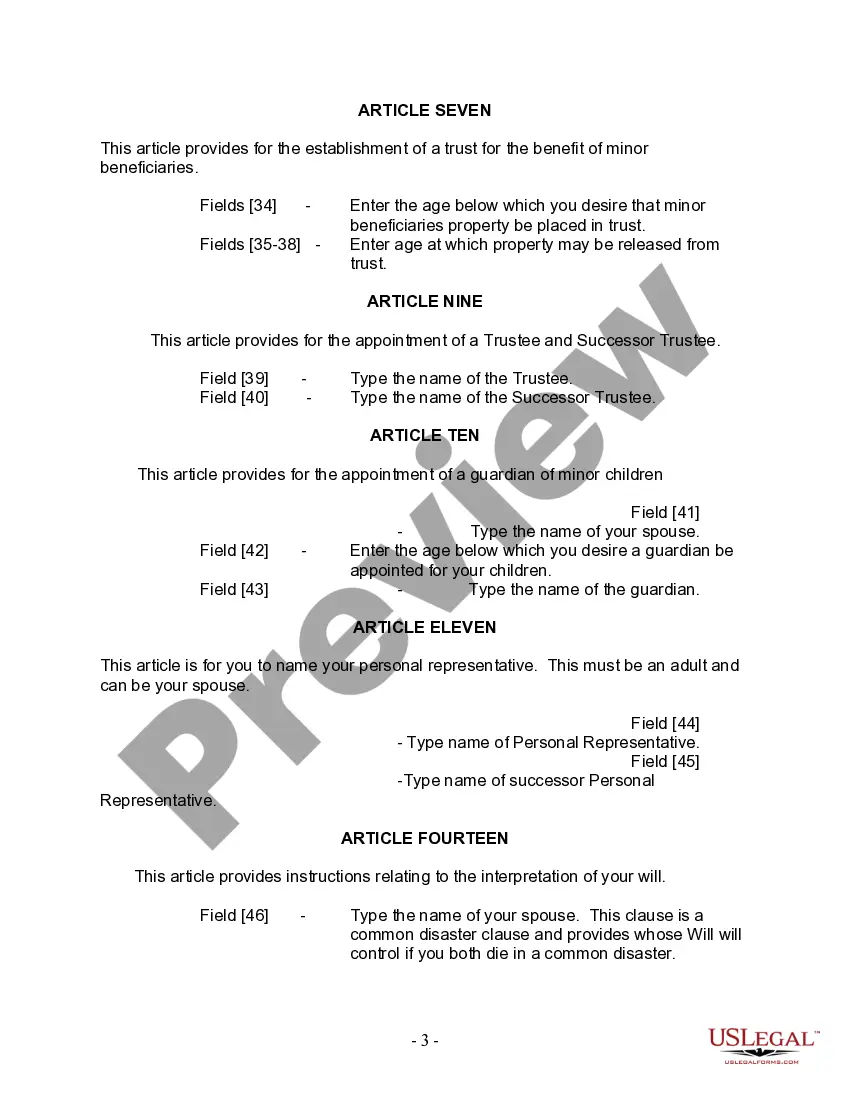
- Guardianship: Appoint guardians for your minor children in case of your death.
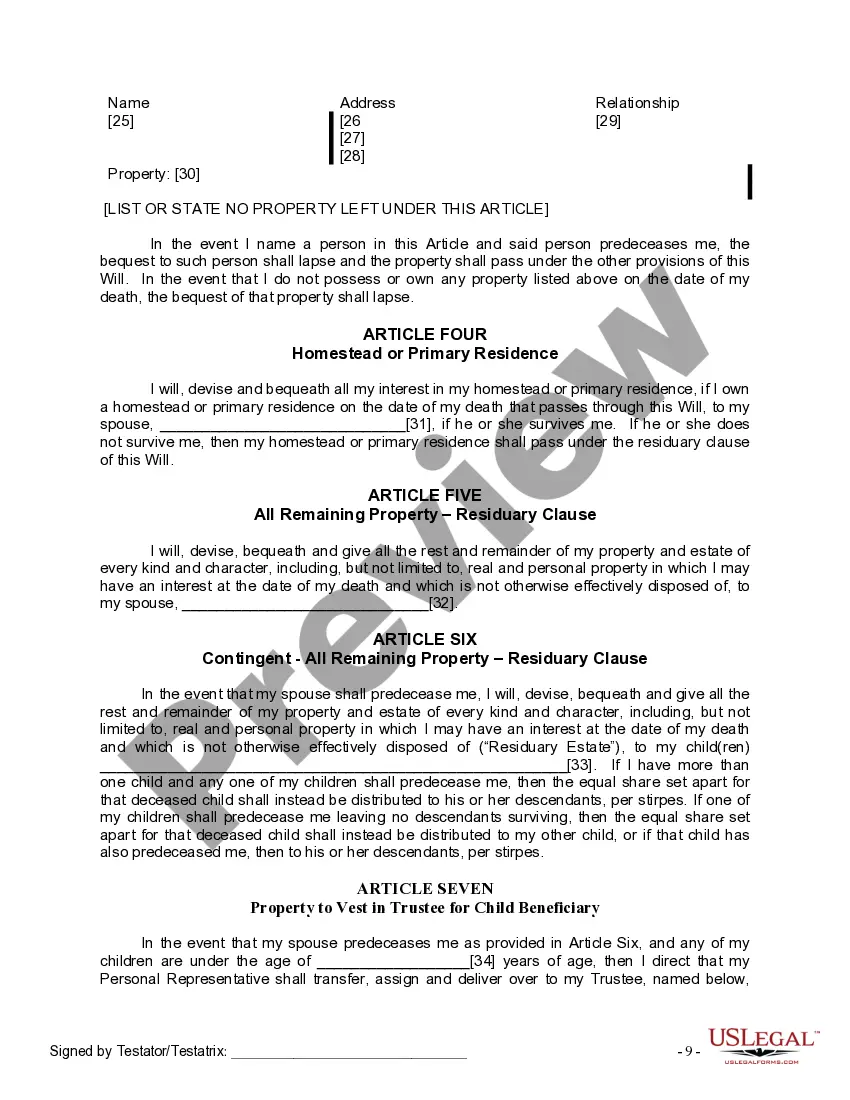
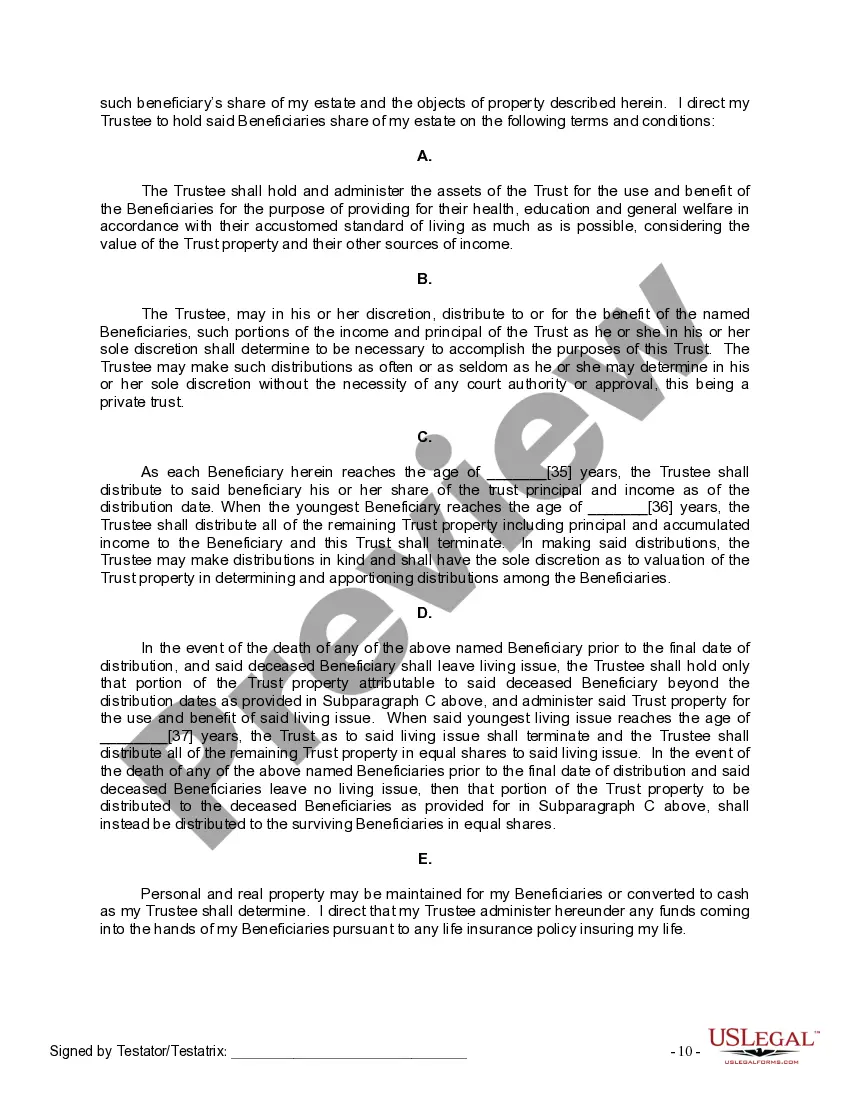
- Trust provisions: Establish trusts to protect and manage your children's inheritance.
- Specific bequests: Specify particular assets to be given to designated individuals.
- Residuary clause: Determine how the remainder of your estate should be distributed.







When this form is needed
You should use the Last Will and Testament for Married Person with Minor Children when you are a married individual with minor children and want to ensure that your property is distributed according to your preferences after your passing. This will is crucial if you wish to outline guardianship arrangements for your children, establish trusts for their care, and avoid potential disputes among family members regarding your estate.
Who needs this form
- Married individuals with minor children
- Parents looking to plan for their children's future
- Those wanting to outline specific property distributions
- Individuals seeking to appoint a guardian for their children
Steps to complete this form
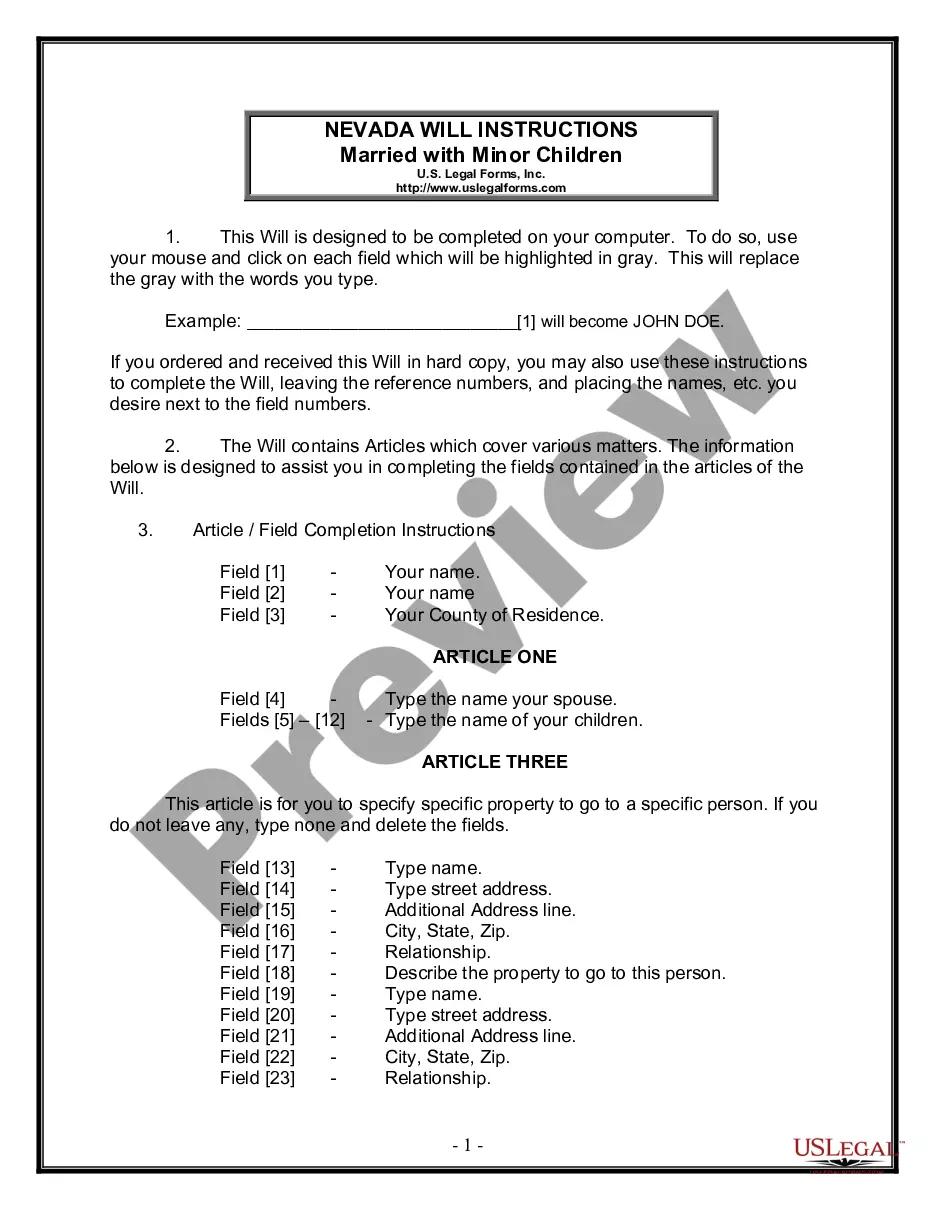
- Enter your personal details, including your name and county of residence.
- Designate your spouse's name and the names of your minor children.
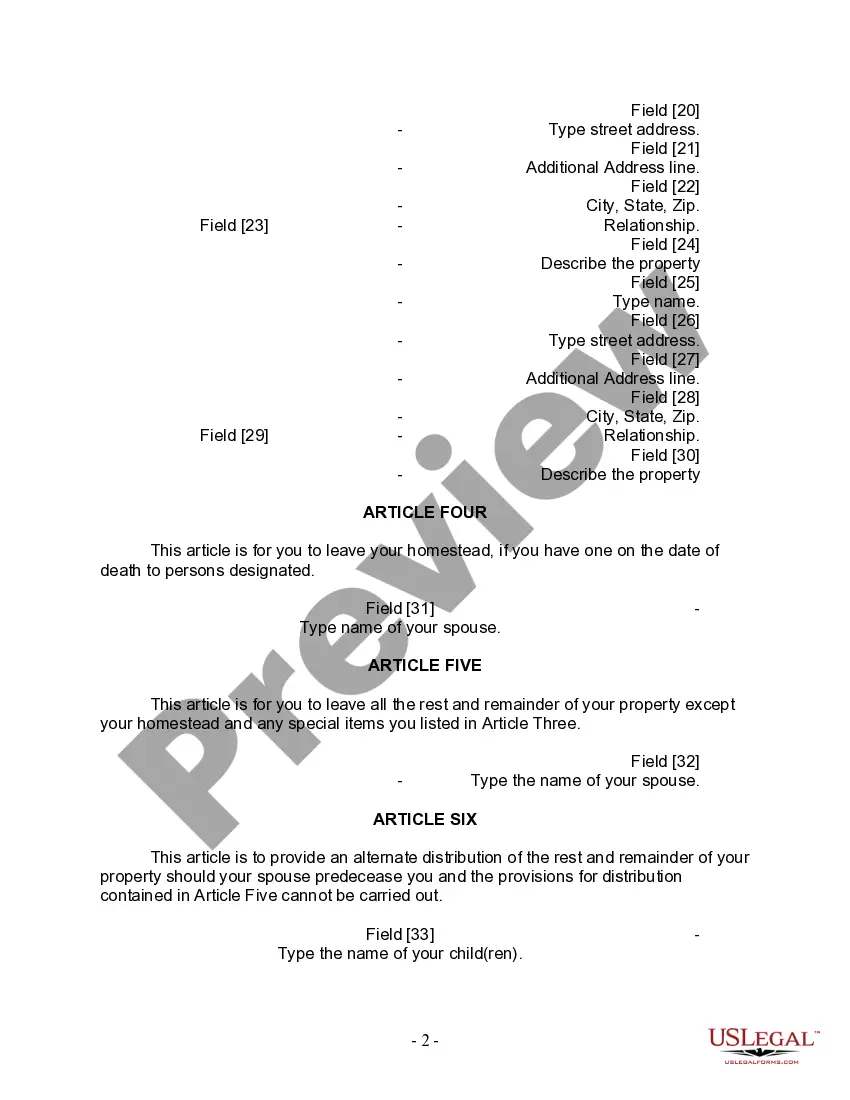
- Specify any specific assets you wish to bequeath to individuals.
- Assign a guardian for your minor children if your spouse predeceases you.
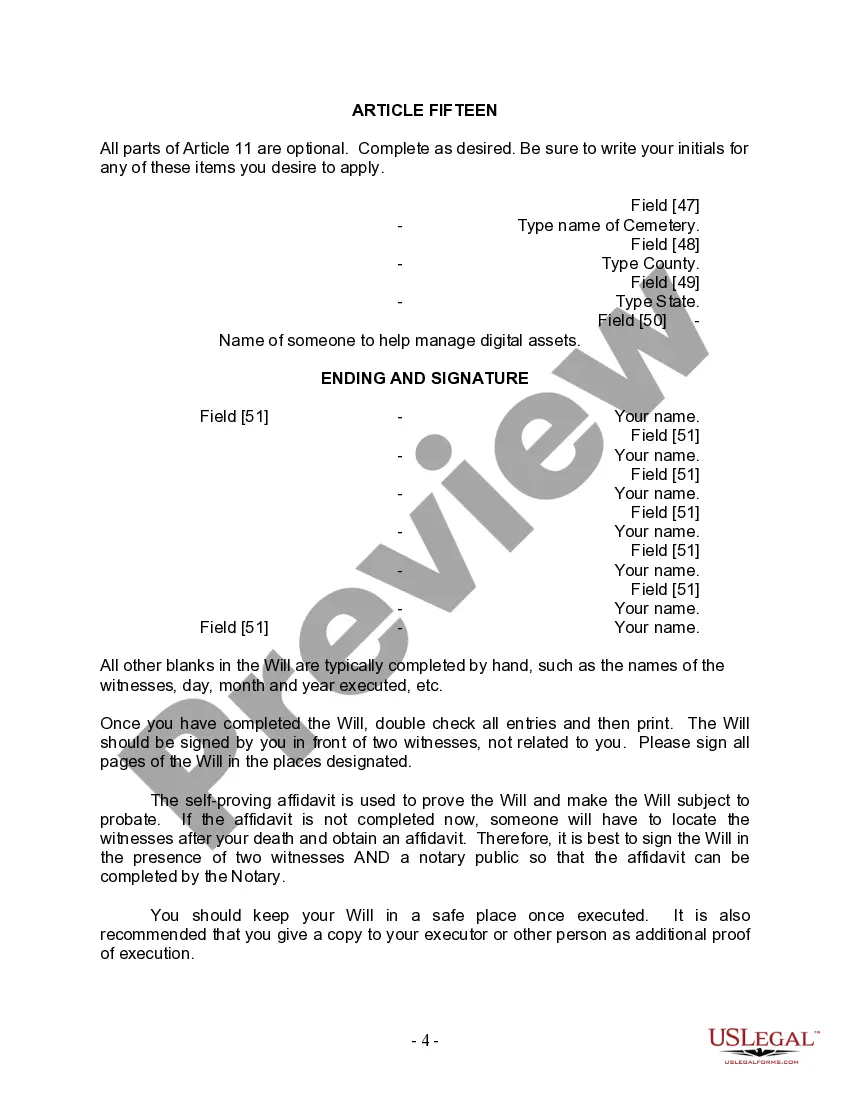
- Sign the will in the presence of two witnesses, ensuring they are not related to you.
Is notarization required?
Yes, this form must be notarized to be legally valid. The attached self-proving affidavit will allow your will to bypass the need for additional witness testimony during probate, simplifying the process for your loved ones. US Legal Forms offers integrated online notarization, making it convenient and secure to complete the necessary steps from home.
Get your form ready online
Our built-in tools help you complete, sign, share, and store your documents in one place.
Make edits, fill in missing information, and update formatting in US Legal Forms—just like you would in MS Word.
Download a copy, print it, send it by email, or mail it via USPS—whatever works best for your next step.
Sign and collect signatures with our SignNow integration. Send to multiple recipients, set reminders, and more. Go Premium to unlock E-Sign.
If this form requires notarization, complete it online through a secure video call—no need to meet a notary in person or wait for an appointment.
We protect your documents and personal data by following strict security and privacy standards.

Make edits, fill in missing information, and update formatting in US Legal Forms—just like you would in MS Word.

Download a copy, print it, send it by email, or mail it via USPS—whatever works best for your next step.

Sign and collect signatures with our SignNow integration. Send to multiple recipients, set reminders, and more. Go Premium to unlock E-Sign.

If this form requires notarization, complete it online through a secure video call—no need to meet a notary in person or wait for an appointment.

We protect your documents and personal data by following strict security and privacy standards.
Avoid these common issues
- Failing to sign the will in front of required witnesses.
- Not appointing an alternate personal representative.
- Leaving out specific bequests, which can lead to disputes.
- Not considering state-specific requirements for wills and trusts.
Why use this form online
- Convenient access to legal forms from the comfort of your home.
- Editable templates allow you to customize your will as needed.
- Reliable and professional legal language provided by licensed attorneys.
Looking for another form?
Form popularity
FAQ
The court can appoint a lawyer to act either as your child's attorney (called an Attorney for the Minor Child or AMC) or as your child's guardian ad litem (GAL). If your child is very young, a lawyer may be appointed to be your child's GAL.
Contact is the right of the child, not of the parent or any other person. There is an expectation that where parents have separated, the parent the child lives with allows a reasonable amount of contact with the other parent. Contact does not depend upon whether or not the child's parents were married.
Legal contact is anyone who has applied to a court for access to the child and been given legal contact rights.
Unless a court order authorizes such action, one parent can't block another parent with custodial rights from contacting their own child. Otherwise, the blocked parent will have legal recourse through the family courts.
Although the law specifically permits children at least 14-years-old to express an opinion, there is no specific age when a judge will listen to a child's opinion. California statutes also permit a child younger than 14 years old to testify regarding a custodial preference, unless the court decides it's not in the
That being said, legal rights to a child can often be acquired by: The mother: traditionally, courts have assigned primary custody rights to the mother, with the father providing child support.
If the question of who the child is to live with has to be resolved through court proceedings, then the courts will start to place weight on a child's wishes when they are considered competent to understand the situation. This can be around the age of 12 or 13 but varies on the circumstances.
Child Custody and Visitation (Parenting Time) Order Attachment (Form FL-341 ) Supervised Visitation Order (Form FL-341(A) ) Child Abduction Prevention Order Attachment (Form FL-341(B) ) Children's Holiday Schedule Attachment (Form FL-341(C) )
The answer is usually no, a parent cannot stop a child from seeing the other parent unless a court order states otherwise. This question often comes up in the following situations. The parents (whether married or unmarried) are no longer together and the child resides with one of the parents.