Nevada Warranty Deed from Trust to Trust
Overview of this form
The Warranty Deed from Trust to Trust is a legal document that facilitates the transfer of property ownership between two trusts. Its purpose is to ensure the transfer is executed with full warranty, meaning the grantor assures that the title is clear and free from any claims. This type of deed is specifically designed for situations where both parties involved in the transaction are trusts, making it distinct from other forms of warranty deeds that may involve individual owners or corporations.
Key parts of this document
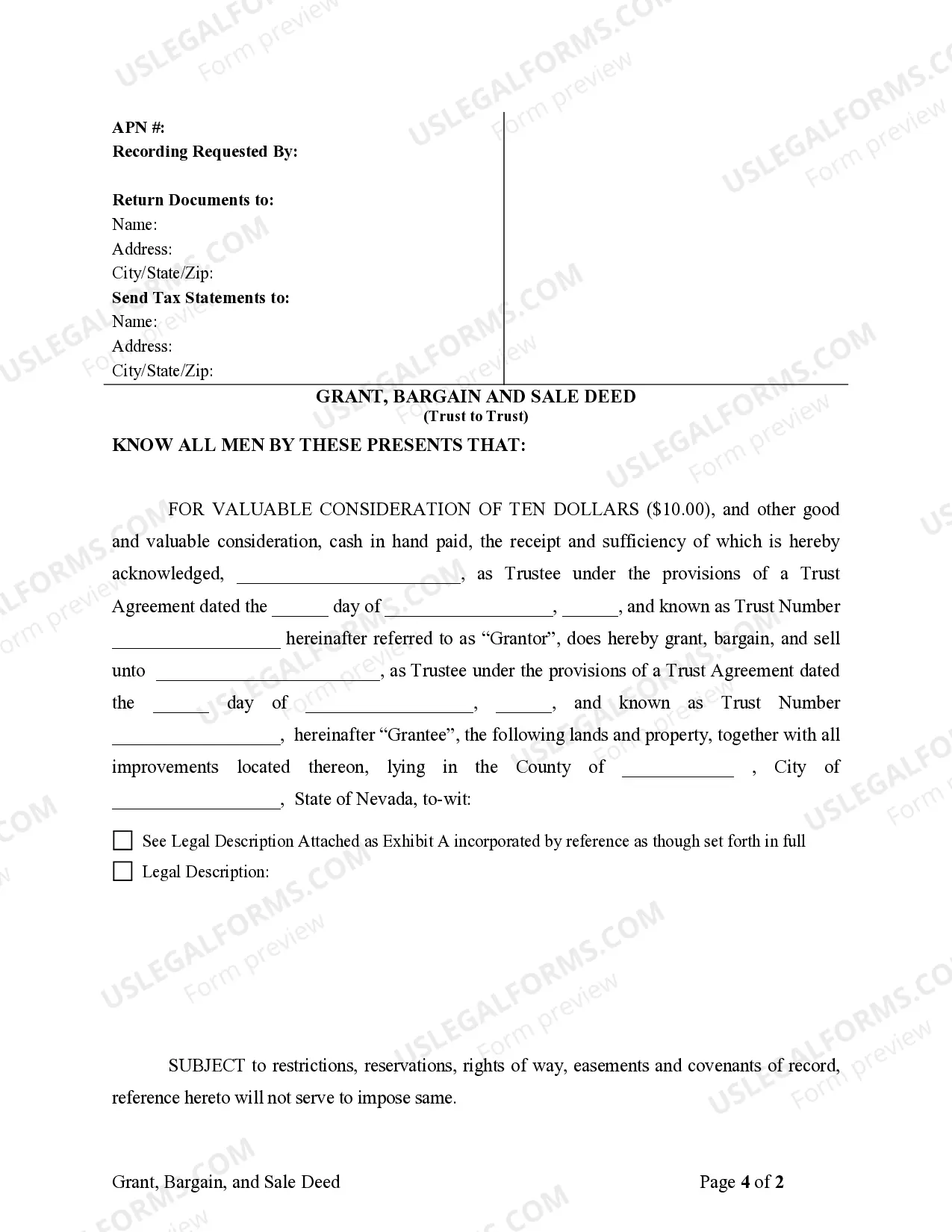
- Grantor information: Details of the trust transferring the property.
- Grantee information: Details of the trust receiving the property.
- Legal description: Precise identification of the property being transferred.
- Warranty clause: This assures the grantee that the title is free from defects.
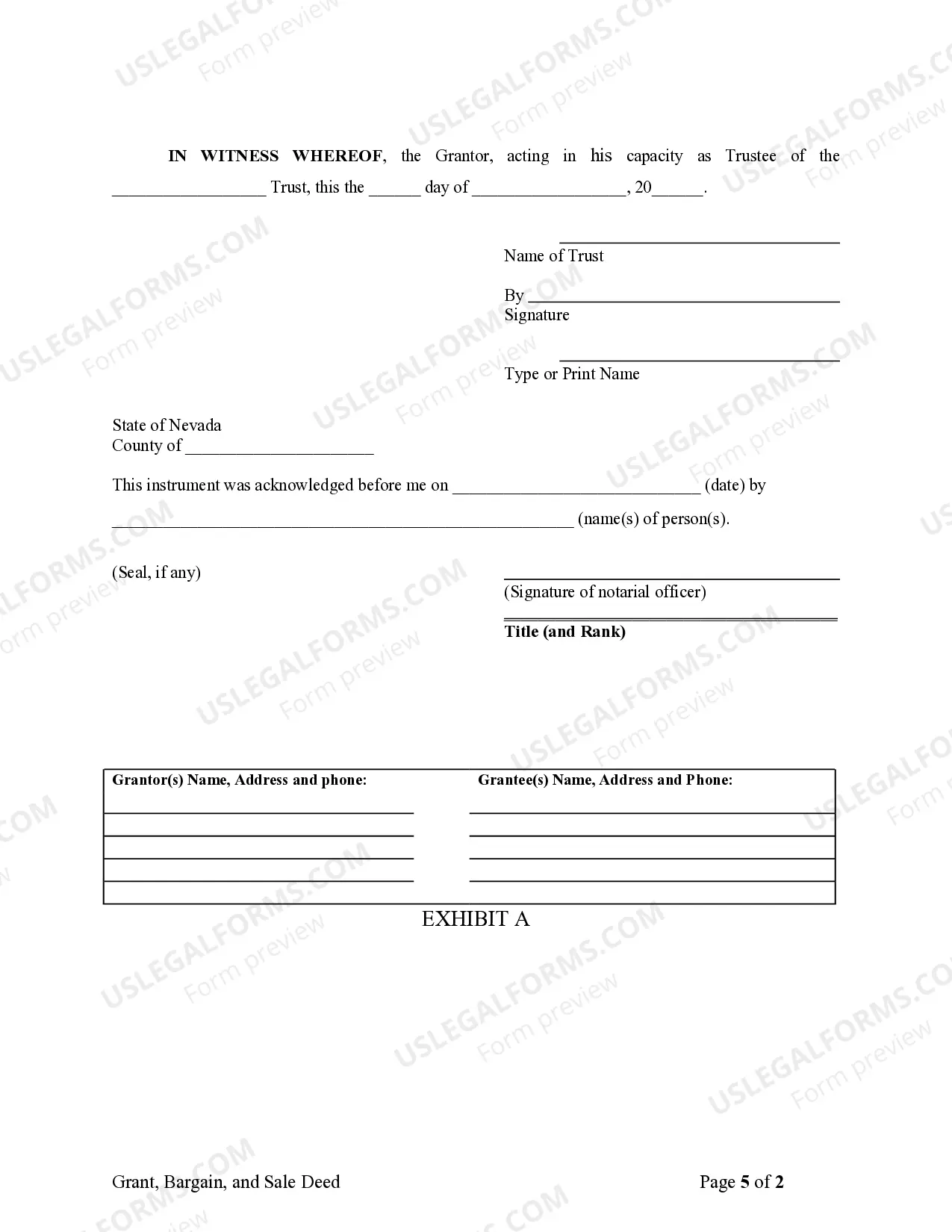
- Signatures: Requires the signatures of the trustees involved in the transaction.





When this form is needed
This form is typically used when a property is being transferred from one trust to another. Common scenarios for its use include property reallocation among family trusts, estate planning adjustments, or whenever a trust needs to convey property ownership to another trust for asset management or distribution purposes.
Who should use this form
The following individuals or entities should consider using this form:
- Trustees responsible for managing the assets of a trust.
- Individuals establishing estate plans that involve trusts.
- Family members involved in adjusting property ownership among family trusts.
Instructions for completing this form
- Identify the grantor trust by entering its name and details.
- Specify the grantee trust's name and relevant information.
- Provide a complete legal description of the property being transferred.
- Review and include the warranty clause to assure the grantee.
- Sign the document in the presence of any required witnesses to ensure validity.
Does this form need to be notarized?
Notarization is required for this form to take effect. Our online notarization service, powered by Notarize, lets you verify and sign documents remotely through an encrypted video session, available 24/7.
Get your form ready online
Our built-in tools help you complete, sign, share, and store your documents in one place.
Make edits, fill in missing information, and update formatting in US Legal Forms—just like you would in MS Word.
Download a copy, print it, send it by email, or mail it via USPS—whatever works best for your next step.
Sign and collect signatures with our SignNow integration. Send to multiple recipients, set reminders, and more. Go Premium to unlock E-Sign.
If this form requires notarization, complete it online through a secure video call—no need to meet a notary in person or wait for an appointment.
We protect your documents and personal data by following strict security and privacy standards.

Make edits, fill in missing information, and update formatting in US Legal Forms—just like you would in MS Word.

Download a copy, print it, send it by email, or mail it via USPS—whatever works best for your next step.

Sign and collect signatures with our SignNow integration. Send to multiple recipients, set reminders, and more. Go Premium to unlock E-Sign.

If this form requires notarization, complete it online through a secure video call—no need to meet a notary in person or wait for an appointment.

We protect your documents and personal data by following strict security and privacy standards.
Mistakes to watch out for
- Failing to provide complete legal property descriptions.
- Missing signatures from all required trustees.
- Not verifying the authority of trustees to enter into the agreement.
Benefits of using this form online
- Convenience of downloading and completing the form at your own pace.
- Editable fields allow for quick adjustments without starting over.
- Access to forms developed by licensed attorneys, ensuring legal accuracy.
Looking for another form?
Form popularity
FAQ
Typically, the lender will provide you with a copy of the deed of trust after the closing. The original warranty deeds are often mailed to the grantee after they are recorded. These are your original copies and should be kept in a safe place, such as a fireproof lockbox or a safe deposit box at a financial institution.
A warranty deed protects property owners from future claims that someone else actually owns a portion (or all) of their property, while trustee deeds protect lenders when borrowers default on their mortgage loans.
The mortgage company usually prepares this deed as part of the loan package and delivers it to the title company for you to sign at closing. The title company is commonly the trustee to the deed and holds legal title to the property until the loan gets fully repaid.
Locate your current deed. Use the proper deed. Check with your title insurance company and lender. Prepare a new deed. Sign in the presence of a notary. Record the deed in the county clerk's office. Locate the deed that's in trust. Use the proper deed.
No. And unless the deed identifies the trust as an owner, then father is the owner of an interest. It is a common mistake to set up a trust and then fail to deed property into the trust. However, you cannot force him to make the changes you are...
A trustee deed offers no such warranties about the title.
Trustee's deeds convey real estate out of a trust.This type of conveyance is named for the person using the form the trustee who stands in for the beneficiary of the trust and holds title to the property.
In the context of a California mortgage transaction, a trust deed also transfer ownership. Only this time, the title is being placed in the hands of a third-party trustee, who holds the property on behalf of the lender and the homeowner-borrower until the mortgage is paid.
The act of transferring a property that is owned by an individual into a trust, will see the trust liable to pay stamp duty on acquisition of the asset. Additionally, the individual who is transferring ownership to the trust, will be liable to pay capital gains tax on the disposal of the asset.