Nevada Notice of Default in Payment of Rent as Warning Prior to Demand to Pay or Terminate for Nonresidential or Commercial Property
About this form
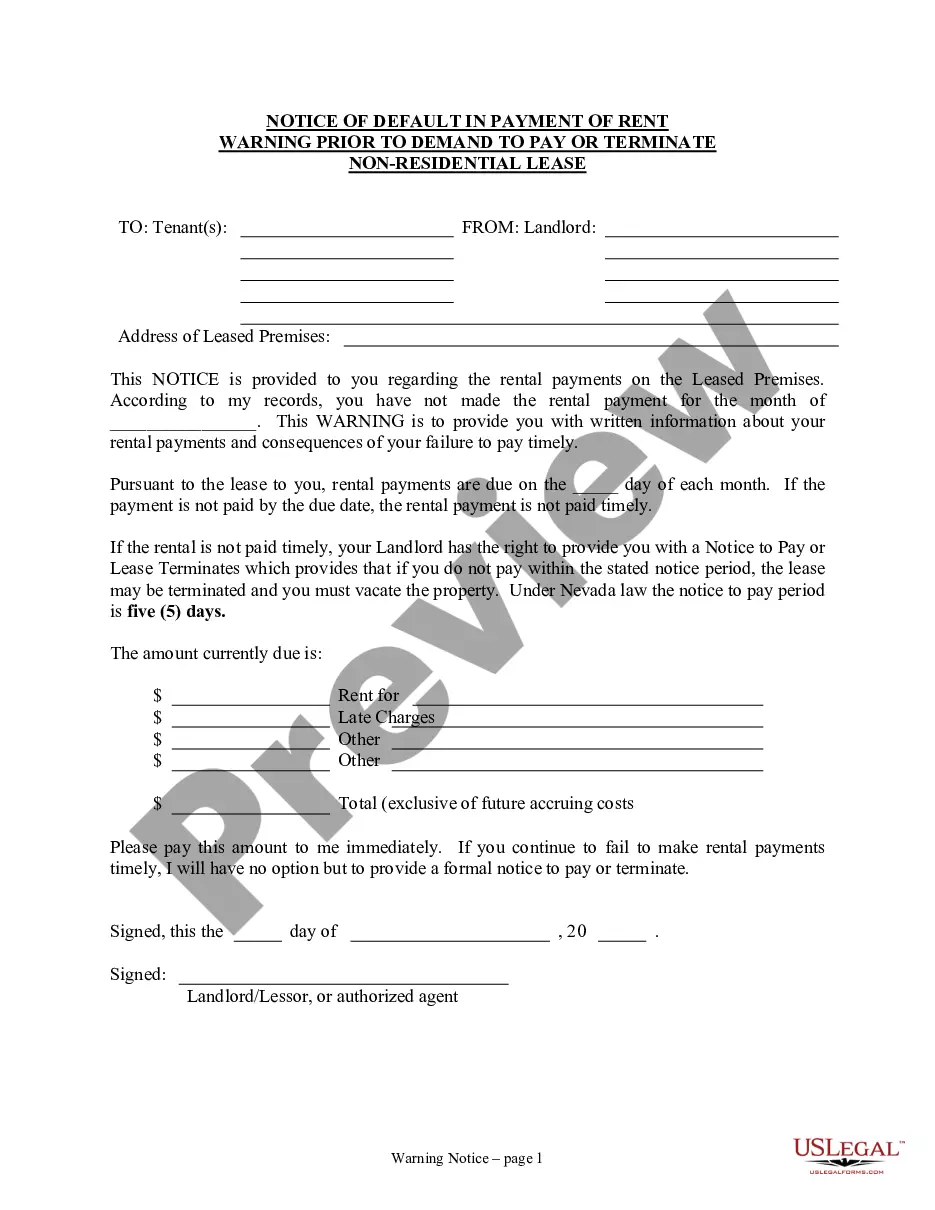
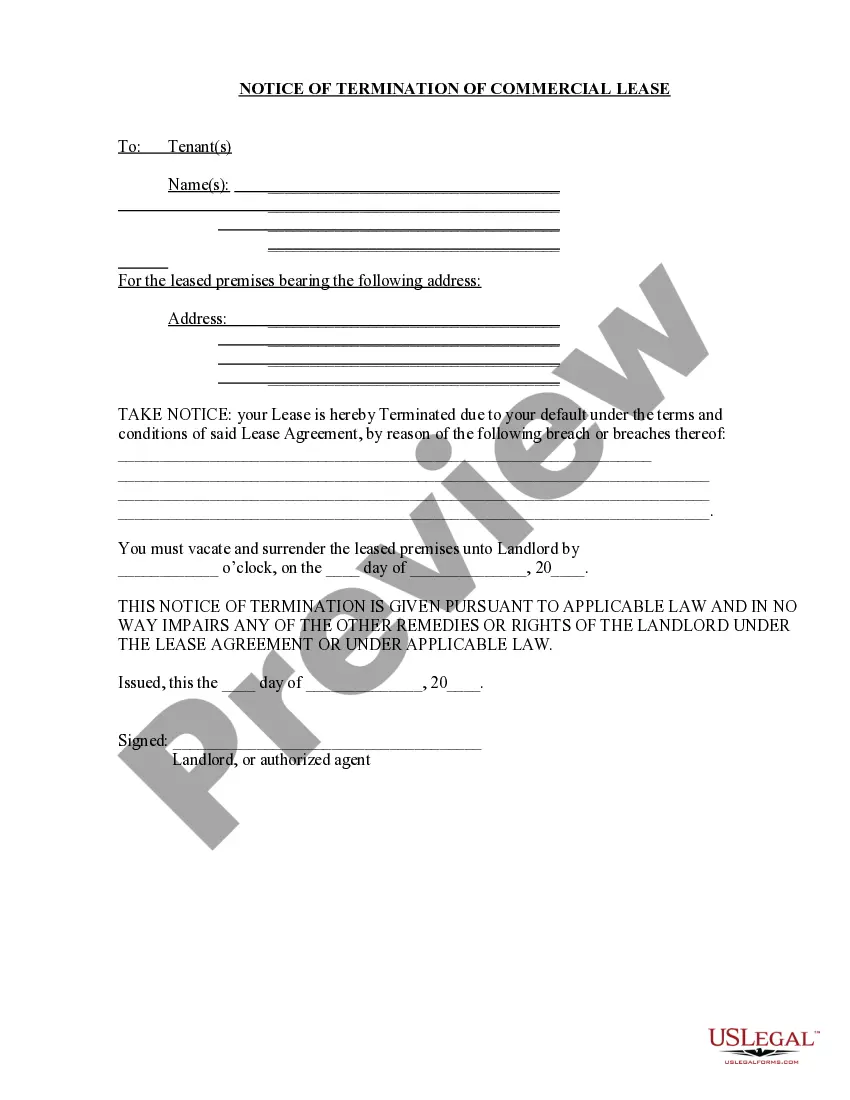
The Notice of Default in Payment of Rent as Warning Prior to Demand to Pay or Terminate for Nonresidential or Commercial Property is a legal document used by landlords. It serves to inform tenants of their failure to pay rent on time. This notice acts as a formal warning before proceeding with a demand for payment or termination of the lease. Distinct from other rental notices, this form provides clear information on payment terms and the consequences of non-compliance under the applicable lease agreement and state law.
Key components of this form
- Tenant identification: Names of the tenant(s) involved.
- Rental property details: Address of the leased premises.
- Payment information: Description of the missed payment and due date.
- Consequences: Information on potential lease termination for continued non-payment.
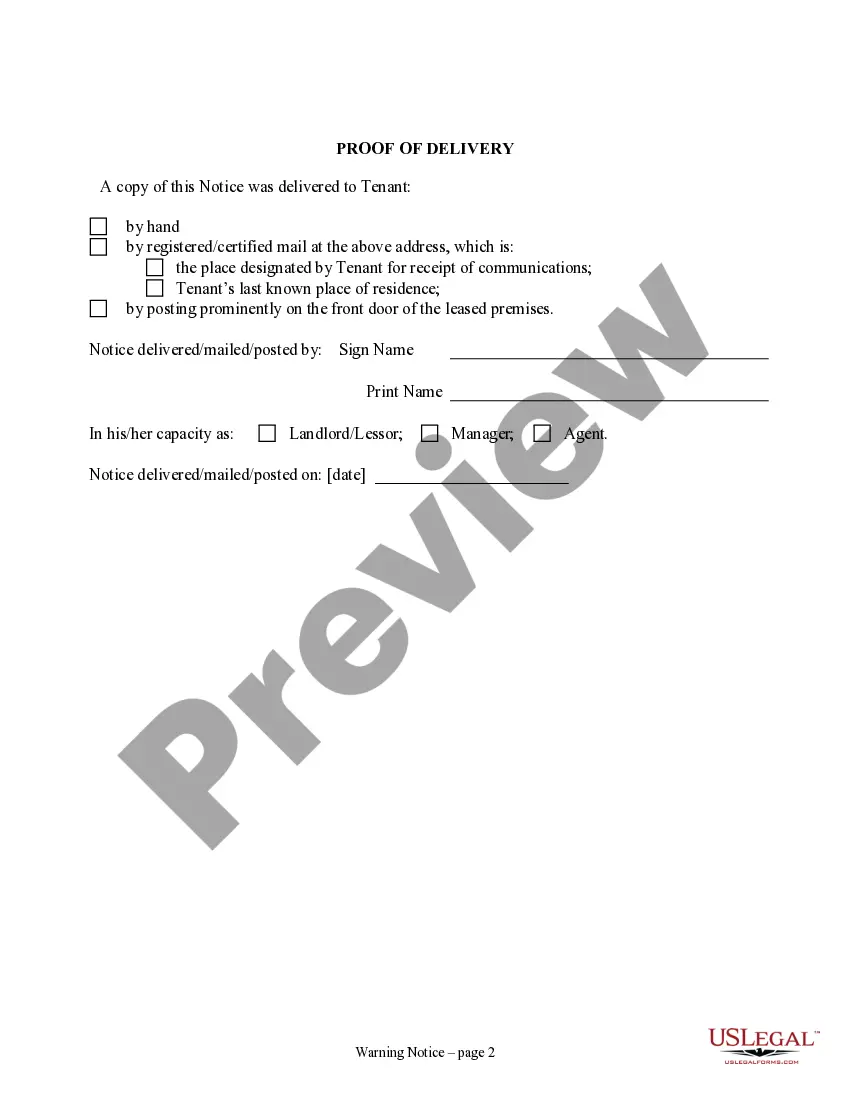
- Proof of delivery: Options for how the notice was delivered to the tenant.


When to use this form
This form should be used when a tenant has failed to make timely rental payments for nonresidential or commercial properties. It is an important step for landlords to formally document the default and notify the tenant about their late payments before taking further legal action. This notice is appropriate prior to issuing a more severe notice to pay or terminate the lease.
Who should use this form
- Landlords of nonresidential or commercial properties.
- Property managers acting on behalf of landlords.
- Real estate professionals seeking to maintain compliance in rental agreements.
How to complete this form
- Identify the landlord and tenant: Fill in the names and contact information for both parties.
- Specify the rental property: Enter the complete address of the leased premises.
- Detail the payment information: Indicate the month for which rent was unpaid and the total amount due.
- Include dates: Record the due date for rent and the date of completing the notice.
- Sign the document: Ensure the landlord or authorized agent signs the form, acknowledging delivery of the notice.
Notarization requirements for this form
This form usually doesn’t need to be notarized. However, local laws or specific transactions may require it. Our online notarization service, powered by Notarize, lets you complete it remotely through a secure video session, available 24/7.
Get your form ready online
Our built-in tools help you complete, sign, share, and store your documents in one place.
Make edits, fill in missing information, and update formatting in US Legal Forms—just like you would in MS Word.
Download a copy, print it, send it by email, or mail it via USPS—whatever works best for your next step.
Sign and collect signatures with our SignNow integration. Send to multiple recipients, set reminders, and more. Go Premium to unlock E-Sign.
If this form requires notarization, complete it online through a secure video call—no need to meet a notary in person or wait for an appointment.
We protect your documents and personal data by following strict security and privacy standards.

Make edits, fill in missing information, and update formatting in US Legal Forms—just like you would in MS Word.

Download a copy, print it, send it by email, or mail it via USPS—whatever works best for your next step.

Sign and collect signatures with our SignNow integration. Send to multiple recipients, set reminders, and more. Go Premium to unlock E-Sign.

If this form requires notarization, complete it online through a secure video call—no need to meet a notary in person or wait for an appointment.

We protect your documents and personal data by following strict security and privacy standards.
Common mistakes to avoid
- Failing to provide the correct tenant information, leading to delays in communication.
- Not specifying the correct amount due, which can lead to disputes.
- Omitting the date of the missed rental payment, affecting clarity on the timeline.
- Forgetting to sign the document, which renders the notice invalid.
Advantages of online completion
- Convenience: Easily fill out the form from any device at any time.
- Editability: Modify the form to suit your specific situation.
- Reliability: Ensure that you have a legally compliant notice drafted by licensed professionals.
Legal use & context
- This notice serves as a preliminary step in addressing non-payment issues and is crucial in fulfilling landlord obligations prior to eviction actions.
- It helps establish a record of communication, which may support future legal proceedings if necessary.
- Using the official format can help ensure compliance with state laws, thereby protecting the landlord's rights.
Quick recap
- The Notice of Default helps landlords address unpaid rent issues formally.
- It is essential to follow state-specific laws regarding notice periods for tenant payments.
- Completing the form correctly is crucial for maintaining legal standing in potential eviction processes.
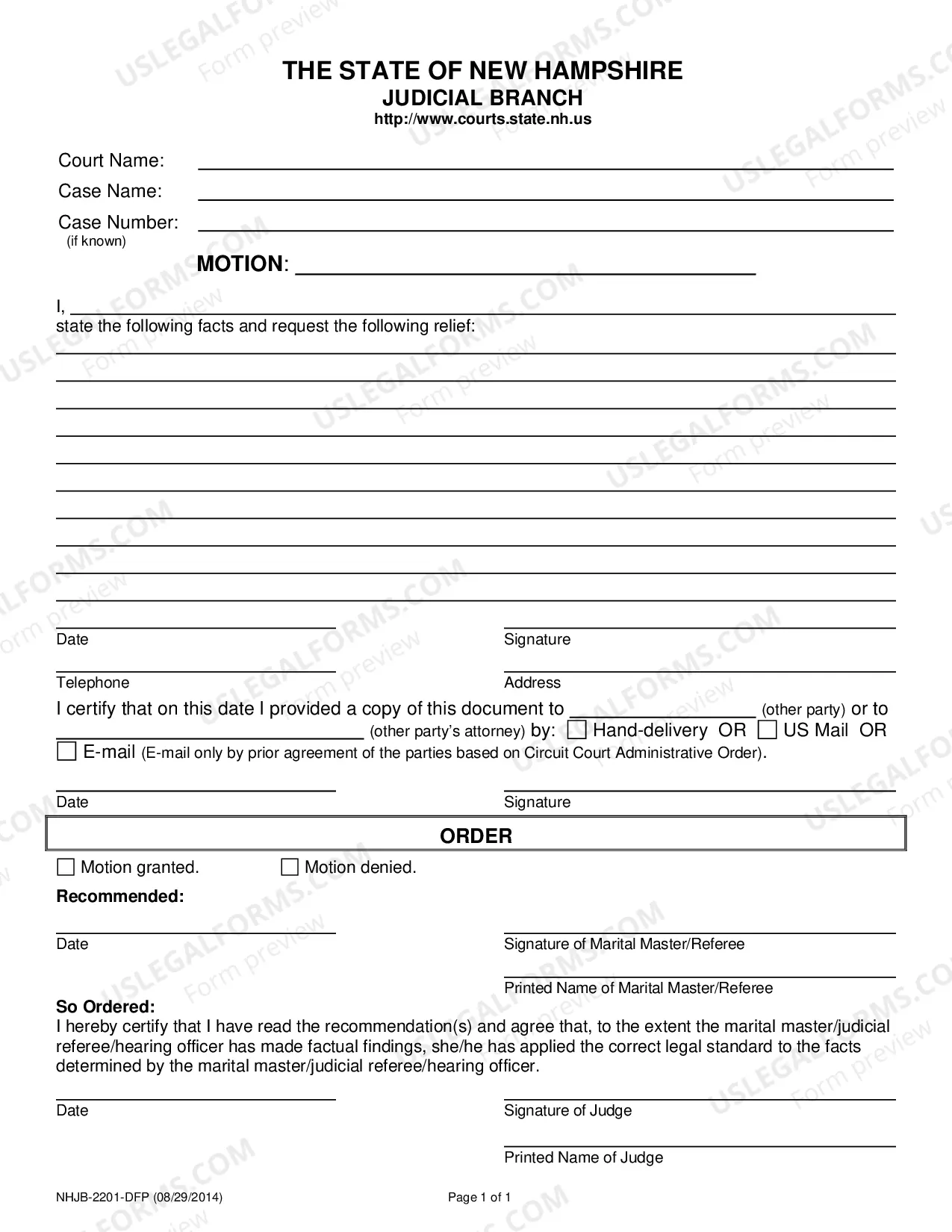
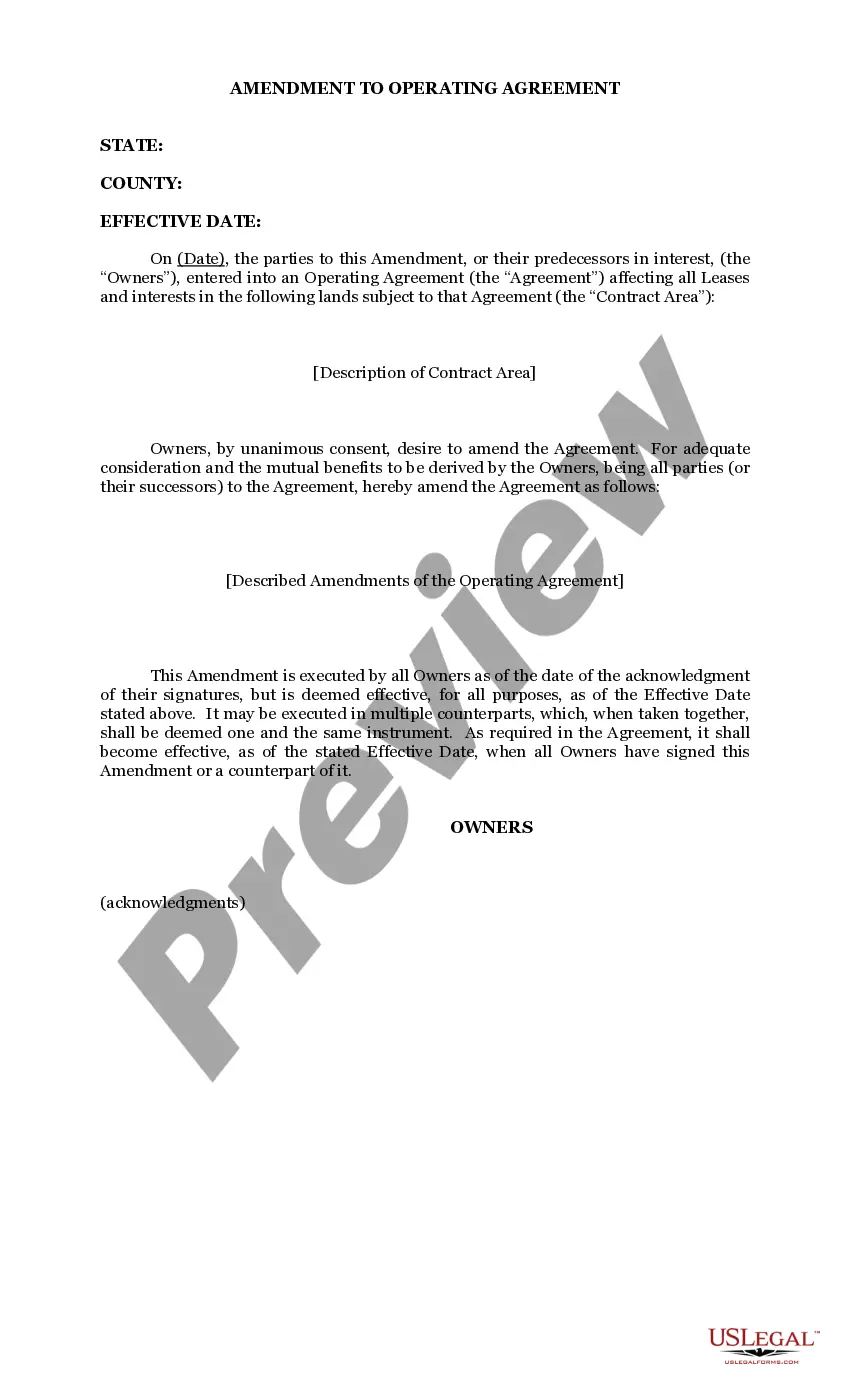
Looking for another form?








Form popularity
FAQ
If you accept the full or even partial late rent payment, your eviction process must be dismissed by the courts. Landlords are waiving their rights to the eviction process as originally filed. If you want to evict again, you must start over from the beginning, which is serving a new pay or quit notice.
The landlord can enter the rental property, without the tenant's consent, if there is an emergency. (NRS 118A.Show the unit to potential or actual purchasers, mortgage companies, tenants, workers, contractors, or other people with a true interest in inspecting the property. (NRS 118A.
In Colorado, evictions are sometimes referred to as forcible entry & detainer (FED). Before you can file for eviction, you must generally provide 10 days' notice (increased from 3 days prior) for tenants to correct a deficiency or leave the property, except in certain circumstances.
Nevada Revised Statutes require a seven-day notice to the tenant, instructing the tenant to either pay the rent or "quit" (leave) the rental property. To evict a tenant for nonpayment of rent, the landlord must "serve" (deliver) a Seven-Day Notice to Pay Rent or Quit to the tenant.
A no-cause eviction is when a tenant hasn't done anything wrong and the landlord does not want to renew a lease. A landlord cannot use a no-cause eviction before a lease is up. Currently, property owners have to give tenants a 30-days notice for normal renters.
State law regulates several rent-related issues, including late and bounced-check fees, the amount of notice (at least 45 days in Nevada) landlords must give tenants to raise the rent, and how much time (five days in Nevada) a tenant has to pay overdue rent or move before a landlord can file for eviction.
Substantial Violation If the landlord is evicting the tenant for any of these reasons, the landlord must give the tenant a three-day notice to quit. (Colo. Rev.If the tenant does not move out of the rental unit by the end of three days, then the landlord can file an eviction lawsuit against the tenant.
Nevada Revised Statutes require a seven-day notice to the tenant, instructing the tenant to either pay the rent or "quit" (leave) the rental property. To evict a tenant for nonpayment of rent, the landlord must "serve" (deliver) a Seven-Day Notice to Pay Rent or Quit to the tenant.