New Mexico Warranty Deed from Husband and Wife to LLC
Understanding this form
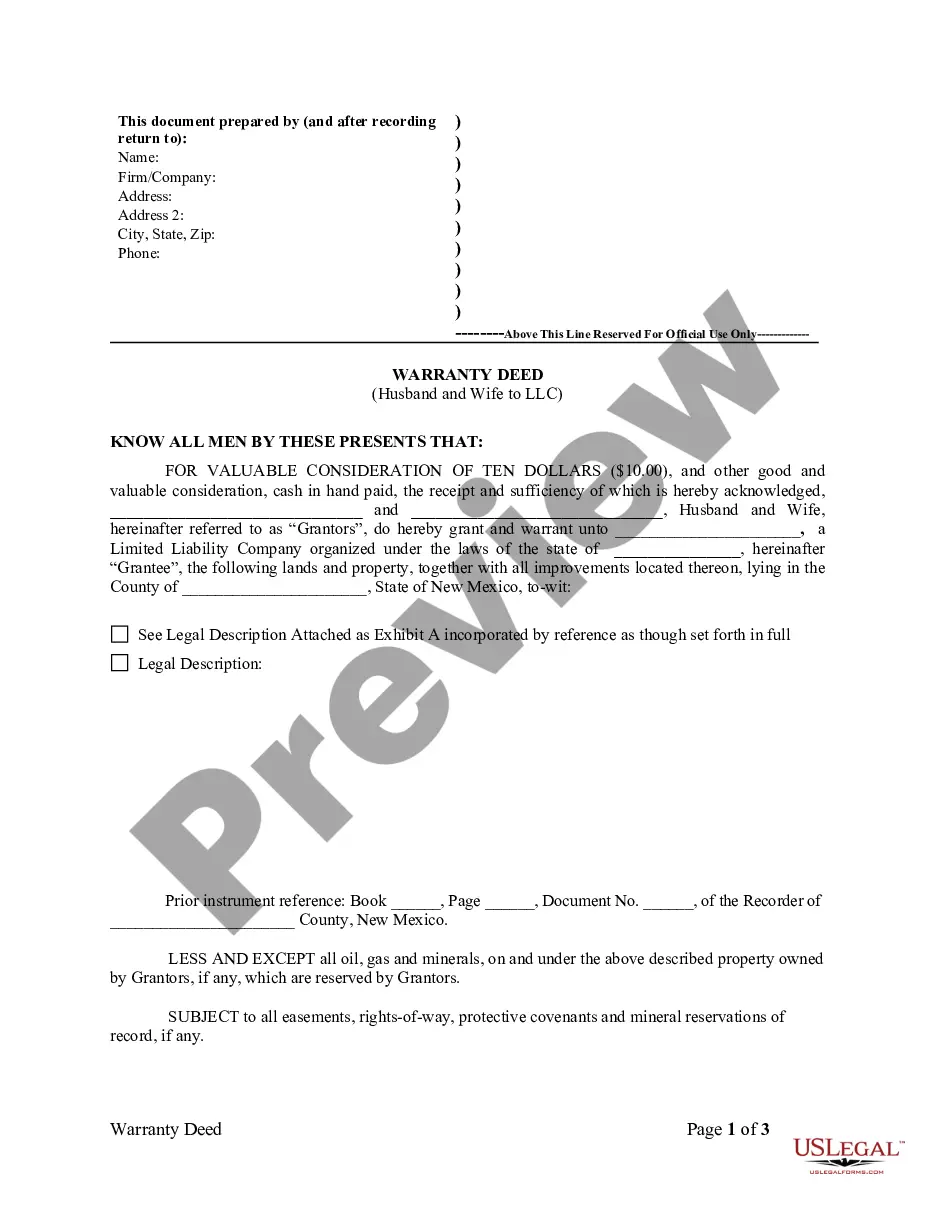
The Warranty Deed from Husband and Wife to LLC is a legal document that transfers property ownership from a married couple (the grantors) to a limited liability company (the grantee). This type of warranty deed ensures that the grantors guarantee a clear title to the property, free of encumbrances. It differs from other forms of deeds by specifically involving a married couple as the sellers and an LLC as the buyer, making it suited for business-related property transfers while maintaining personal liability protections.
Key components of this form
- Identification of the grantors (husband and wife) and grantee (LLC).
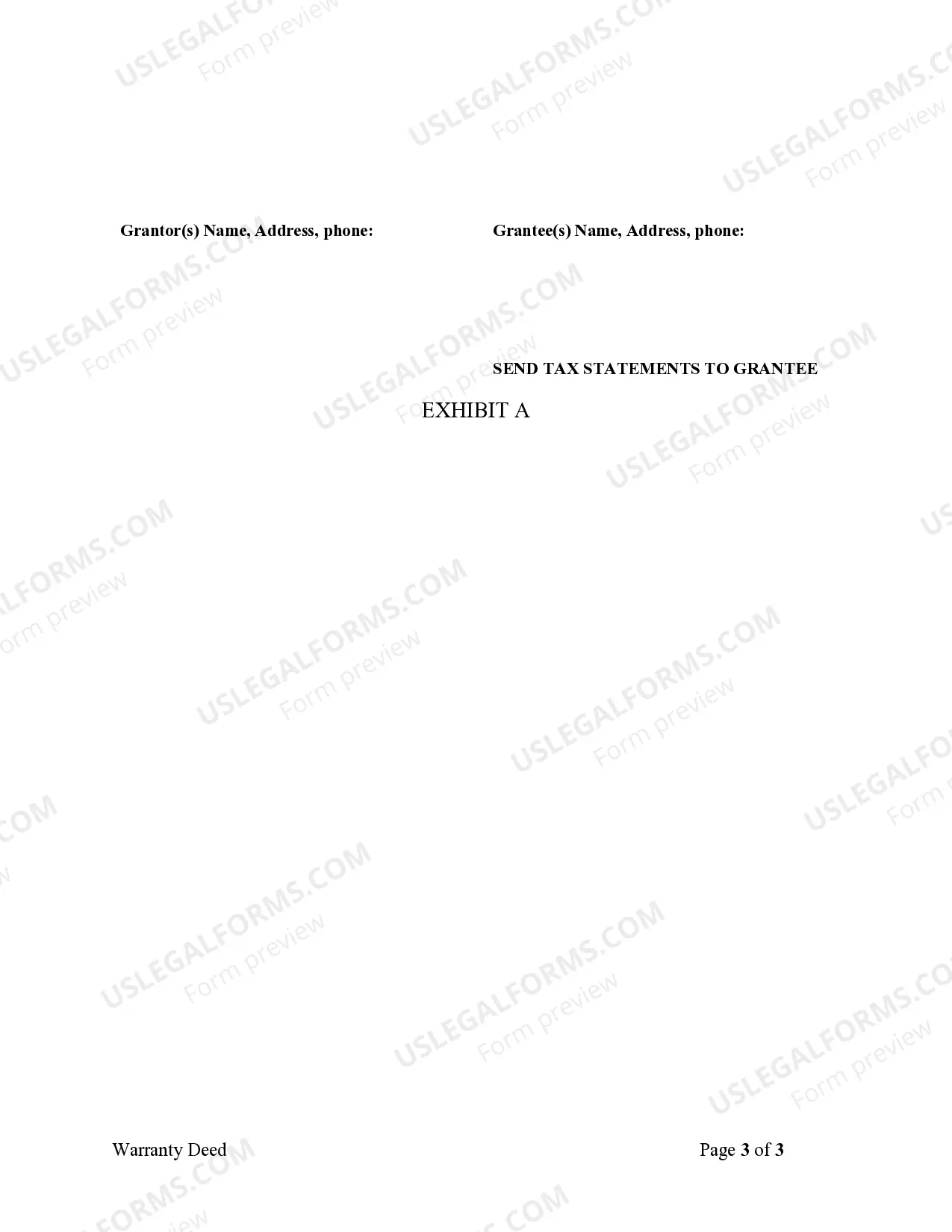
- Legal description of the property being conveyed.
- Warranty of clear title and freedom from encumbrances by the grantors.
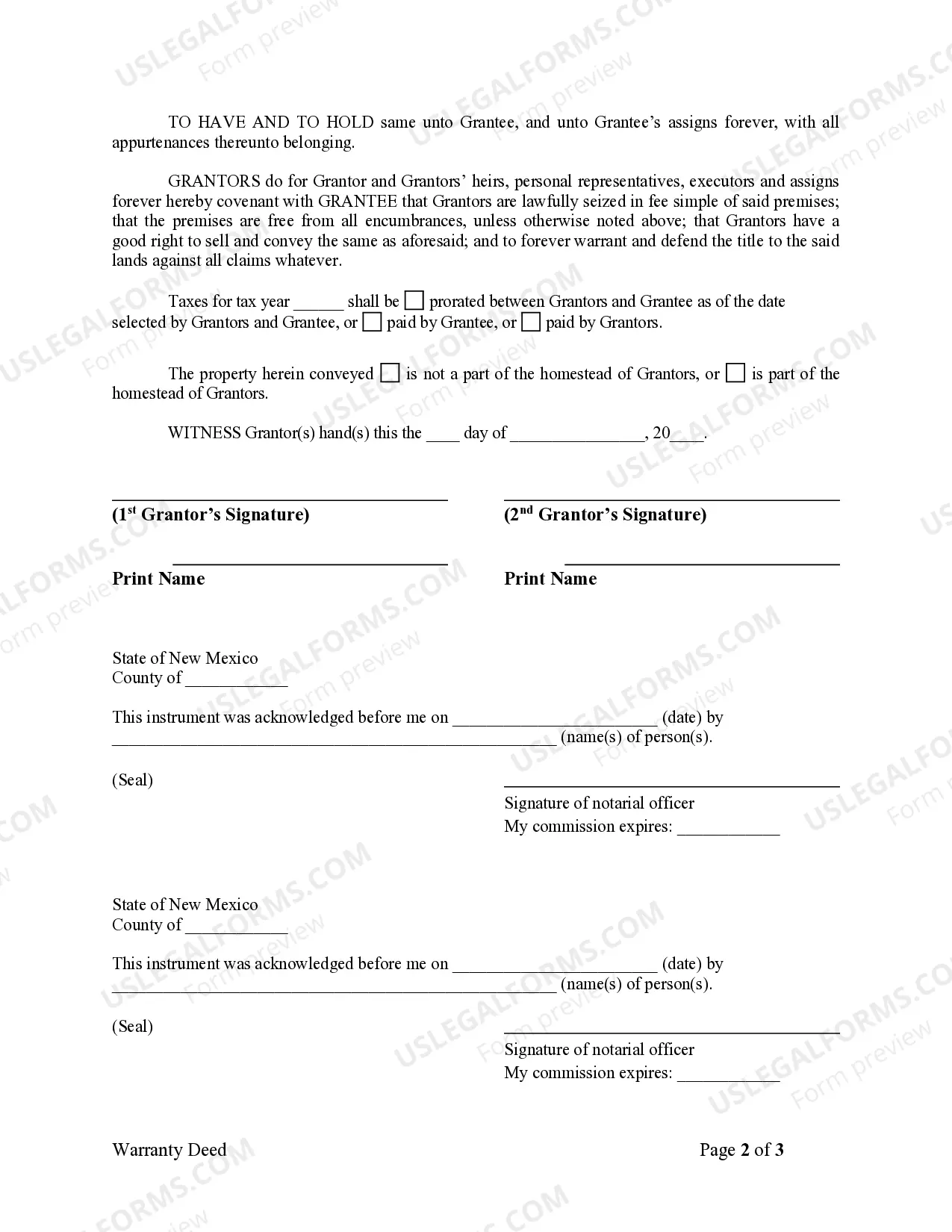
- Provisions regarding taxes and the status of the property as a homestead.
- Signature lines for both grantors with a date of execution.






Common use cases
This form should be used when a married couple wishes to transfer ownership of real estate to an LLC. It's commonly used for estate planning, business ventures, or asset protection purposes. For instance, if the couple wants to manage their rental property under the LLC structure to limit personal liability, this warranty deed is the appropriate legal instrument to execute that transfer.
Who should use this form
This form is intended for:
- Married couples looking to transfer property to an LLC.
- Business owners planning to manage real estate through a limited liability company.
- Individuals seeking to protect personal assets by transferring property into an LLC structure.
- Real estate professionals facilitating property transfers between couples and LLCs.
Instructions for completing this form
- Identify the grantors (husband and wife) and the grantee (the LLC) clearly.
- Accurately describe the property being transferred, referencing the legal description.
- Indicate any reserved rights related to oil, gas, and mineral rights.
- Specify how taxes will be handled for the transfer year.
- Both grantors must sign and date the document to make it valid.
Is notarization required?
This form does not typically require notarization unless specified by local law. However, having it notarized can provide additional assurance of its validity and may be required by some states for property transactions. Consult local regulations to confirm.
Get your form ready online
Our built-in tools help you complete, sign, share, and store your documents in one place.
Make edits, fill in missing information, and update formatting in US Legal Forms—just like you would in MS Word.
Download a copy, print it, send it by email, or mail it via USPS—whatever works best for your next step.
Sign and collect signatures with our SignNow integration. Send to multiple recipients, set reminders, and more. Go Premium to unlock E-Sign.
If this form requires notarization, complete it online through a secure video call—no need to meet a notary in person or wait for an appointment.
We protect your documents and personal data by following strict security and privacy standards.

Make edits, fill in missing information, and update formatting in US Legal Forms—just like you would in MS Word.

Download a copy, print it, send it by email, or mail it via USPS—whatever works best for your next step.

Sign and collect signatures with our SignNow integration. Send to multiple recipients, set reminders, and more. Go Premium to unlock E-Sign.

If this form requires notarization, complete it online through a secure video call—no need to meet a notary in person or wait for an appointment.

We protect your documents and personal data by following strict security and privacy standards.
Common mistakes to avoid
- Failing to provide a complete legal description of the property.
- Not signing the document or missing the date of execution.
- Overlooking any outstanding encumbrances or rights that need to be clearly stated.
- Inadequately specifying tax responsibilities at the time of transfer.
Benefits of using this form online
- Convenient digital access allows you to complete the form at your pace.
- Easy to edit and customize the document according to your unique situation.
- Reliable templates prepared by licensed attorneys to ensure legal compliance.
- Cost-effective way to manage property transfers without needing legal representation.
Key takeaways
- The warranty deed effectively transfers property from a husband and wife to an LLC.
- It provides legal assurances about the property's title and ownership.
- Include a clear legal description and signatures from all parties to validate the document.
Looking for another form?




Form popularity
FAQ
A warranty deed, also known as a general warranty deed, is a legal real estate document between the seller (grantor) and the buyer (grantee). The deed protects the buyer by pledging that the seller holds clear title to the property and there are no encumbrances, outstanding liens, or mortgages against it.
Contrary to normal expectations, the Deed DOES NOT have to be recorded to be effective or to show delivery, and because of that, the Deed DOES NOT have to be signed in front of a Notary Public. However, if you plan to record it, then it does have to be notarized as that is a County Recorder requirement.
Contrary to normal expectations, the Deed DOES NOT have to be recorded to be effective or to show delivery, and because of that, the Deed DOES NOT have to be signed in front of a Notary Public. However, if you plan to record it, then it does have to be notarized as that is a County Recorder requirement.
The New Mexico special warranty deed is a legal document used to convey real estate.A special warranty includes a guarantee from the grantor that there are no hidden interests or encumbrances on the property that arose while he or she owned the property.
Let's start with the definition of a deed: DEED: A written instrument by which one party, the Grantor, conveys the title of ownership in property to another party, the Grantee. A Warranty Deed contains promises, called covenants, that the Grantor makes to the Grantee.
It's important to note that a warranty deed does not actually prove the grantor has ownership (a title search is the best way to prove that), but it is a promise by the grantor that they are transferring ownership and if it turns out they don't actually own the property, the grantor will be responsible for compensating
Step 1 Write in the name of the grantor or seller. Step 2 Fill in the name and address of the grantee or buyer. Step 3 Specify the property information including county, lot, block and recording information. Step 4 Sign and date in the presence of a notary public.
Fill out the "grantor" section of the warranty deed. The grantors are the givers, or current owners, of the property. Use the legal name of each grantor and insert current addresses after each grantor's name.
Retrieve your original deed. Get the appropriate deed form. Draft the deed. Sign the deed before a notary. Record the deed with the county recorder. Obtain the new original deed.