New Mexico Warranty Deed from Corporation to Corporation
What is this form?
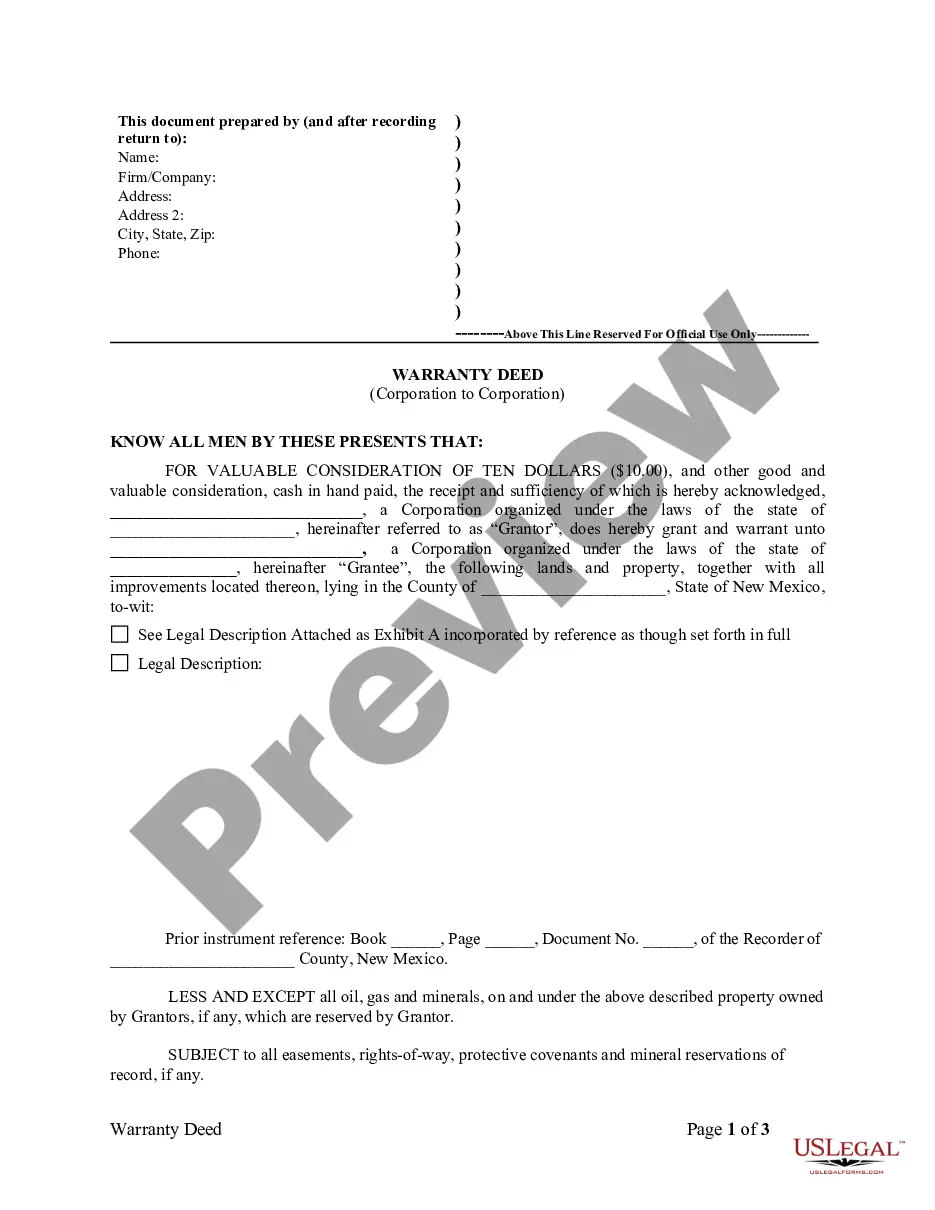
The Warranty Deed from Corporation to Corporation is a legal document used when one corporation conveys property ownership to another corporation. This form ensures that the Grantor, the entity transferring the property, warrants the title against any claims, while specifically reserving rights to oil, gas, and minerals beneath the property. This form is vital for corporations engaging in real estate transactions and differs from personal property deeds by involving corporate entities instead of individuals.
What’s included in this form
- Identification of the Grantor (selling corporation) and Grantee (buying corporation).
- Description of the property being transferred, referenced in an attached legal description.
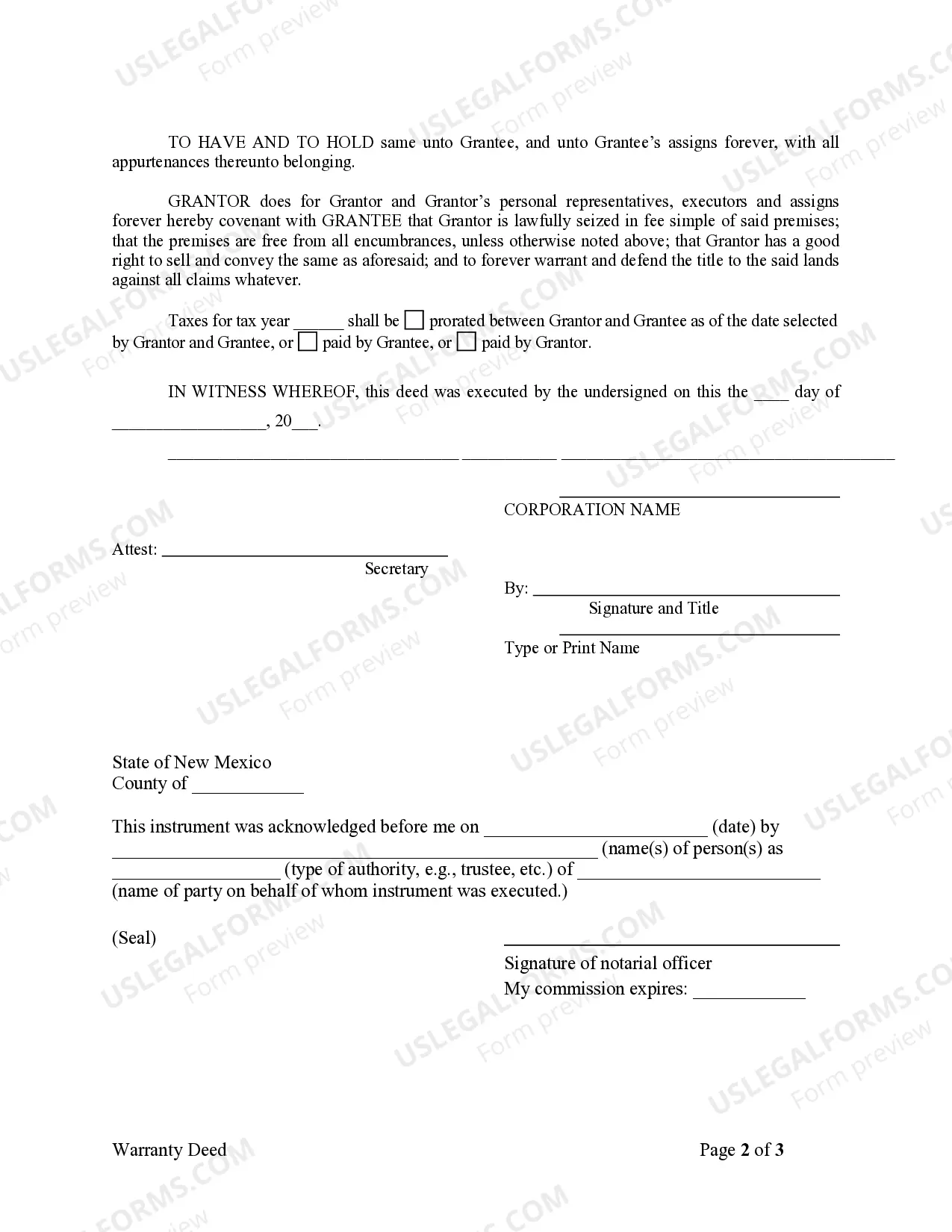
- Covenants from the Grantor to warrant that the property is free from encumbrances.
- Provisions regarding the prorating of taxes between the parties.
- Indication of any reservations, such as mineral rights.


Situations where this form applies
This form is used when a corporation sells or transfers its property to another corporation. It is appropriate in situations such as mergers, acquisitions, or the sale of corporate real estate. If your corporation is involved in a transaction where ownership of property is changing hands to another corporate entity, this warranty deed is essential.
Who needs this form
The following parties should consider using this form:
- Corporations looking to transfer real estate assets to another corporation.
- Legal representatives or attorneys handling corporate real estate transactions.
- Companies involved in mergers or acquisitions that include property transfers.
How to complete this form
- Identify both parties clearly by entering the full names of the Grantor and Grantee corporations.
- Attach the legal description of the property as Exhibit A.
- Specify any reservations, such as rights to oil, gas, and other minerals.
- Include provisions for the prorating of property taxes.
- Both parties should sign and date the document where indicated.
Notarization requirements for this form
Notarization is required for this form to take effect. Our online notarization service, powered by Notarize, lets you verify and sign documents remotely through an encrypted video session, available 24/7.
Get your form ready online
Our built-in tools help you complete, sign, share, and store your documents in one place.
Make edits, fill in missing information, and update formatting in US Legal Forms—just like you would in MS Word.
Download a copy, print it, send it by email, or mail it via USPS—whatever works best for your next step.
Sign and collect signatures with our SignNow integration. Send to multiple recipients, set reminders, and more. Go Premium to unlock E-Sign.
If this form requires notarization, complete it online through a secure video call—no need to meet a notary in person or wait for an appointment.
We protect your documents and personal data by following strict security and privacy standards.

Make edits, fill in missing information, and update formatting in US Legal Forms—just like you would in MS Word.

Download a copy, print it, send it by email, or mail it via USPS—whatever works best for your next step.

Sign and collect signatures with our SignNow integration. Send to multiple recipients, set reminders, and more. Go Premium to unlock E-Sign.

If this form requires notarization, complete it online through a secure video call—no need to meet a notary in person or wait for an appointment.

We protect your documents and personal data by following strict security and privacy standards.
Common mistakes
- Failing to attach the required legal description of the property.
- Not specifying reservation of rights (like oil and gas) clearly.
- Missing signatures from both corporations on the deed.
Benefits of using this form online
- Conveniently download and edit the form to suit your specific transaction needs.
- Access reliable templates drafted by licensed attorneys, ensuring legal compliance.
- Save time and legal fees by preparing your document online.
What to keep in mind
- The Warranty Deed from Corporation to Corporation facilitates property transfers between two corporate entities.
- Ensure accurate descriptions and proper reservations to avoid legal complications.
- Consult state laws regarding any additional requirements for validity.
Looking for another form?



Form popularity
FAQ
The New Mexico special warranty deed is a legal document used to convey real estate.A special warranty includes a guarantee from the grantor that there are no hidden interests or encumbrances on the property that arose while he or she owned the property.
It's important to note that a warranty deed does not actually prove the grantor has ownership (a title search is the best way to prove that), but it is a promise by the grantor that they are transferring ownership and if it turns out they don't actually own the property, the grantor will be responsible for compensating
Both the warranty deed and deed of trust are recorded with the county clerk or recorder. Generally, the lender sends the documents to be recorded after the closing.The original warranty deeds are often mailed to the grantee after they are recorded.
Corporate warranty deeds offer the seller's guarantee to the buyer in regards to the validity of the chain of title. Generally, special warranty deeds only protect against problems occurring since the seller purchased the property.
A special warranty deed is a deed to real estate where the seller of the propertyknown as the grantorwarrants only against anything that occurred during their physical ownership. In other words, the grantor doesn't guarantee against any defects in clear title that existed before they took possession of the property.
Fill out the "grantor" section of the warranty deed. The grantors are the givers, or current owners, of the property. Use the legal name of each grantor and insert current addresses after each grantor's name.
A warranty deed, also known as a general warranty deed, is a legal real estate document between the seller (grantor) and the buyer (grantee). The deed protects the buyer by pledging that the seller holds clear title to the property and there are no encumbrances, outstanding liens, or mortgages against it.
Step 1 Write in the name of the grantor or seller. Step 2 Fill in the name and address of the grantee or buyer. Step 3 Specify the property information including county, lot, block and recording information. Step 4 Sign and date in the presence of a notary public.
A warranty deed is a higher level of protection produced by the seller upon the real estate closing. It includes a full legal description of the property, and confirms the title is clear and free from all liens, encumbrances, or title defects. Most property sales make use of a warranty deed.