New Mexico Seller's Disclosure of Financing Terms for Residential Property in connection with Contract or Agreement for Deed a/k/a Land Contract
About this form
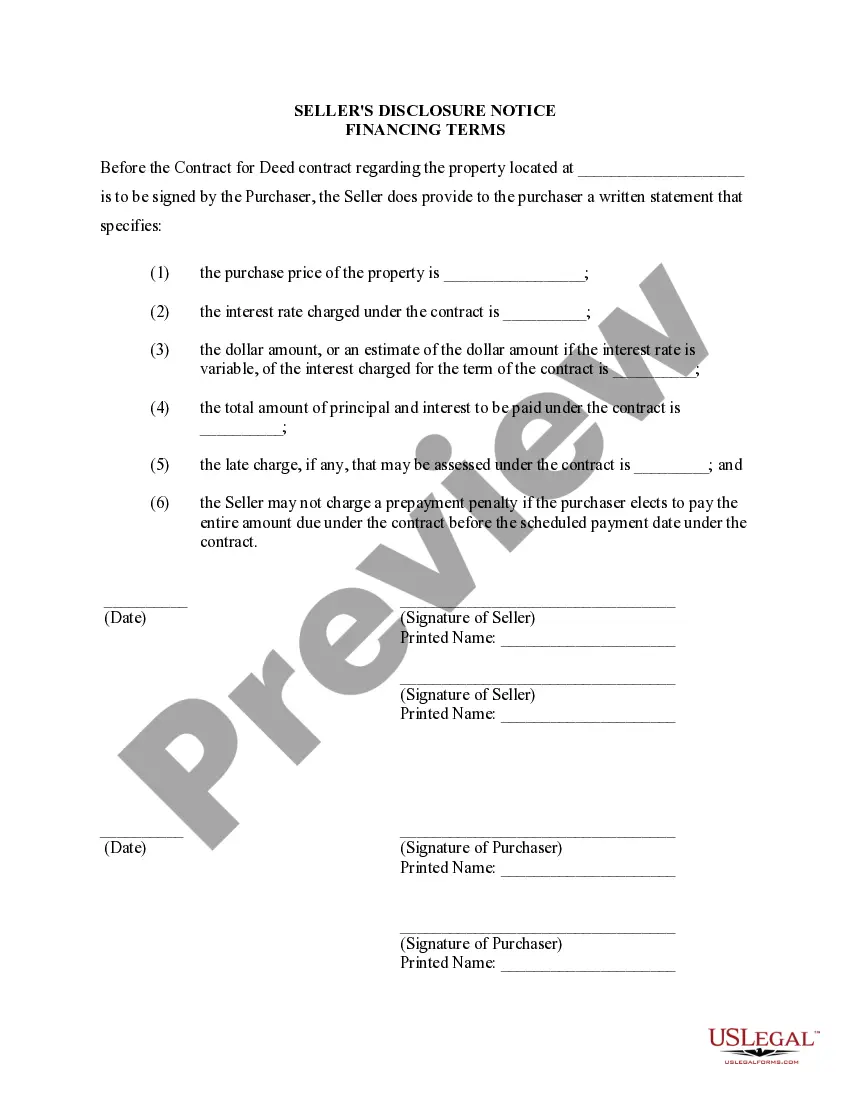
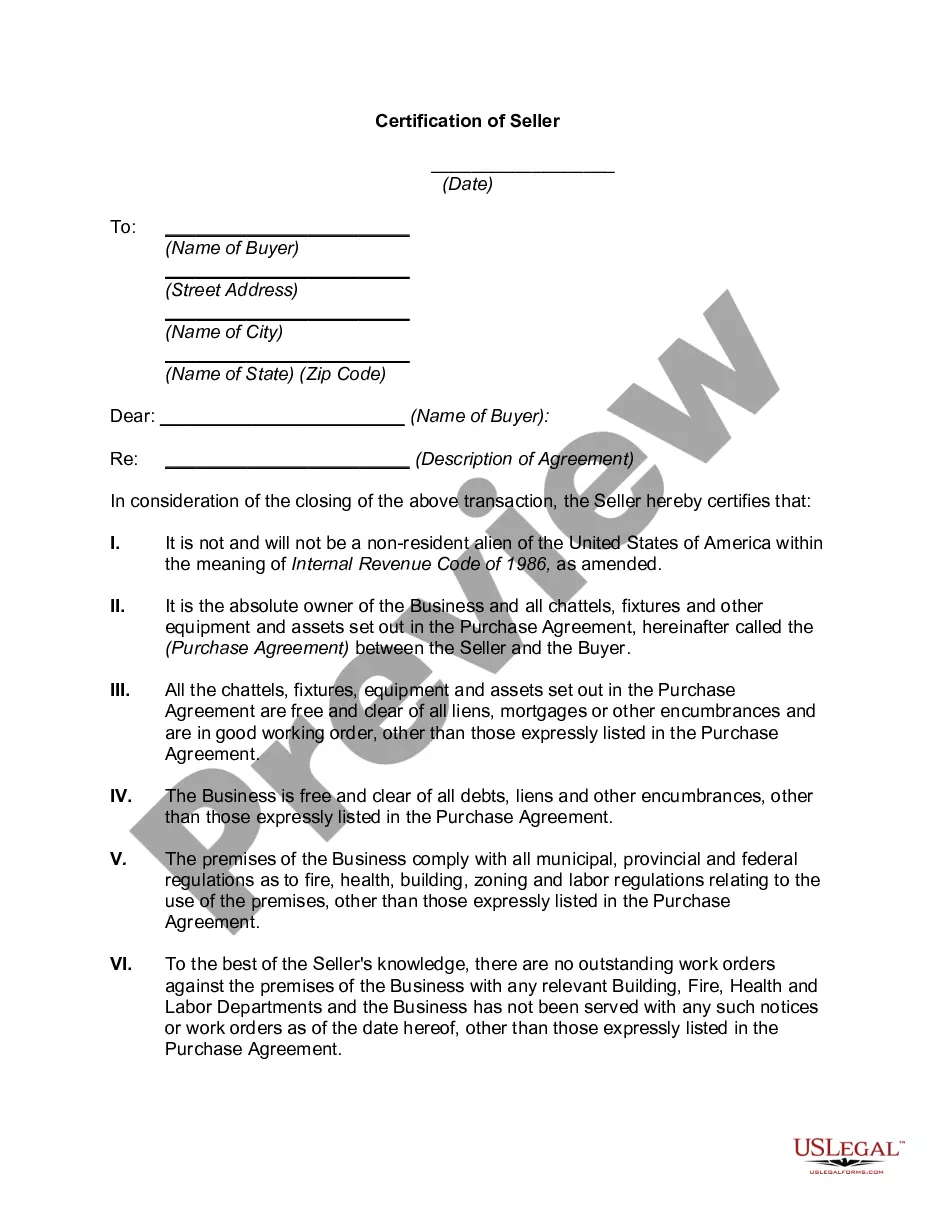
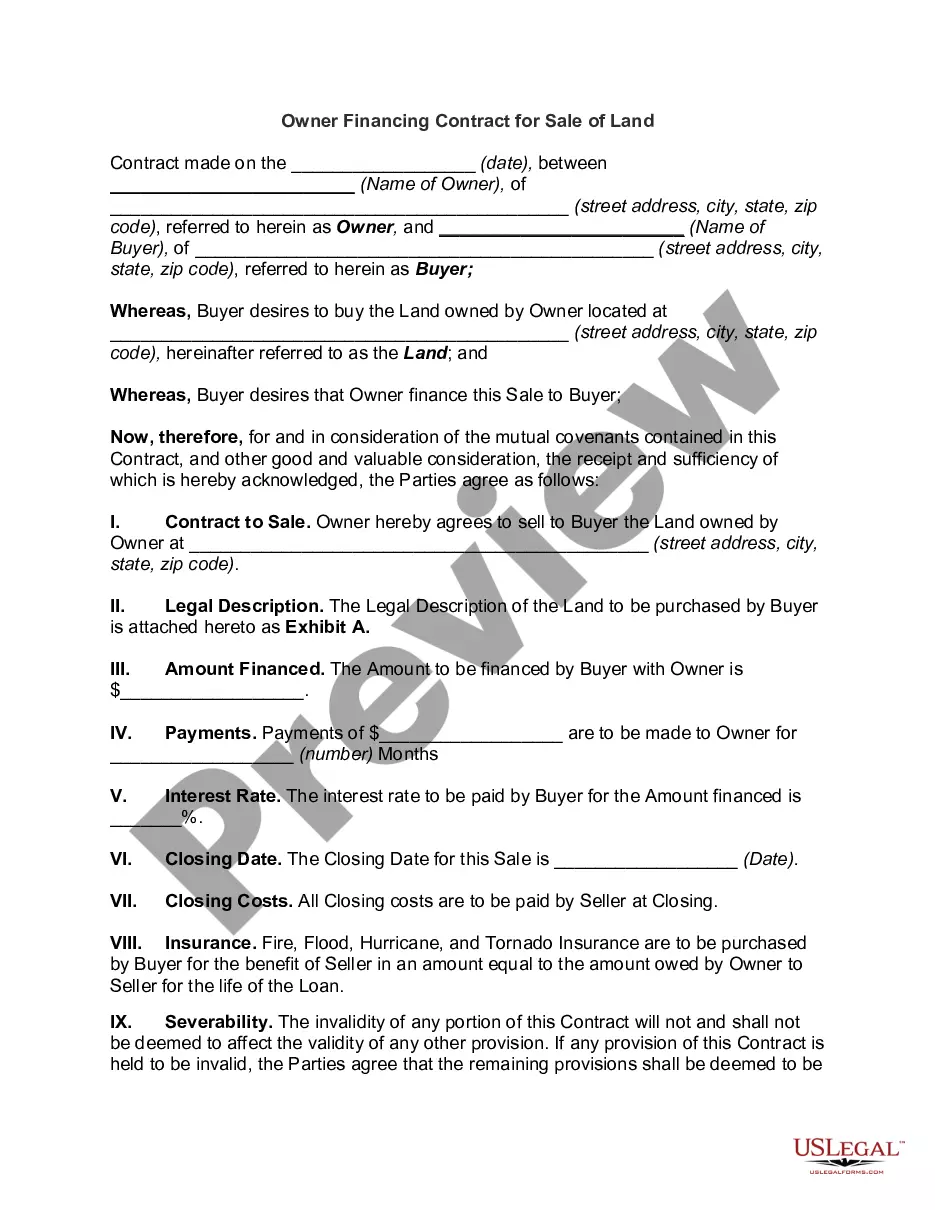
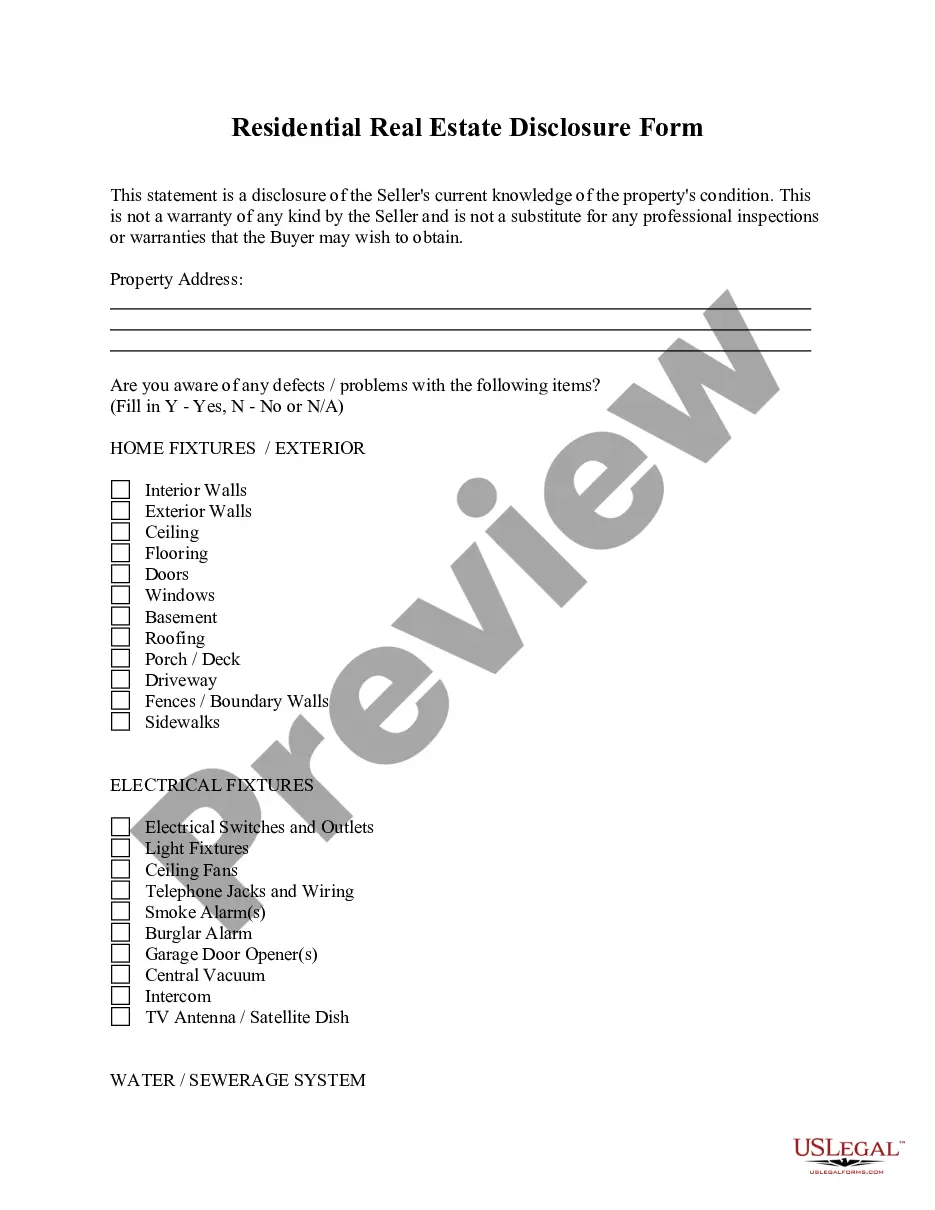
The Seller's Disclosure of Financing Terms for Residential Property, also known as the Contract for Deed, is a legal document that outlines the financing details of a property purchase. This form serves to inform the purchaser about the total purchase price, payment schedule, interest rates, and any late charges associated with the transaction. Unlike traditional real estate agreements, this form specifically addresses financing arrangements between the seller and buyer, making it essential for those engaging in land contracts.
Form components explained
- Purchase price: Clearly states the total cost of the property.
- Payment terms: Outlines the schedule for payments and how they should be made.
- Interest rate: Specifies the interest that will be applied to the outstanding balance.
- Late charges: Details any fees incurred for late payments.
- Seller's obligations: Describes what the seller must provide at the time of closing.
Common use cases
This form should be used when a seller and purchaser agree on a land contract for the sale of residential property. It is particularly useful in scenarios where the buyer is unable to secure traditional financing, thus requiring alternative payment arrangements directly with the seller. It is important to complete this form prior to signing the contract for deed to ensure clarity and agreement on financing terms.
Intended users of this form
Consider using this form if you are:
- A seller financing the sale of a residential property through a contract for deed.
- A purchaser seeking to understand the financing terms associated with your property purchase.
- A real estate agent or attorney involved in property transactions that require clear disclosures of financing terms.
Completing this form step by step
- Identify the parties: Include the names and contact information of both the seller and buyer.
- Specify the property: Clearly describe the residential property being sold.
- Enter the purchase price: Fill in the total amount the buyer will pay for the property.
- Detail payment terms: Decide and write down the schedule and amounts of payments.
- State the interest rate: Clearly indicate the interest rate that will apply to financing.
- List late charges: If applicable, outline any penalties for late payments.
Is notarization required?
Notarization is generally not required for this form. However, certain states or situations might demand it. You can complete notarization online through US Legal Forms, powered by Notarize, using a verified video call available anytime.
Get your form ready online
Our built-in tools help you complete, sign, share, and store your documents in one place.
Make edits, fill in missing information, and update formatting in US Legal Forms—just like you would in MS Word.
Download a copy, print it, send it by email, or mail it via USPS—whatever works best for your next step.
Sign and collect signatures with our SignNow integration. Send to multiple recipients, set reminders, and more. Go Premium to unlock E-Sign.
If this form requires notarization, complete it online through a secure video call—no need to meet a notary in person or wait for an appointment.
We protect your documents and personal data by following strict security and privacy standards.

Make edits, fill in missing information, and update formatting in US Legal Forms—just like you would in MS Word.

Download a copy, print it, send it by email, or mail it via USPS—whatever works best for your next step.

Sign and collect signatures with our SignNow integration. Send to multiple recipients, set reminders, and more. Go Premium to unlock E-Sign.

If this form requires notarization, complete it online through a secure video call—no need to meet a notary in person or wait for an appointment.

We protect your documents and personal data by following strict security and privacy standards.
Avoid these common issues
- Failing to provide accurate information regarding financing terms.
- Neglecting to have both parties sign and date the form.
- Overlooking the importance of clear communication about payment schedules and late fees.
- Using outdated or incorrect legal language that may confuse the buyer.
Benefits of using this form online
- Convenience: Easily download and complete the form from anywhere.
- Editability: Customize the form to fit the specific financing arrangement.
- Reliability: Forms are drafted by licensed attorneys, ensuring legal compliance.
- Accessibility: Obtain the necessary forms quickly without the need for in-person visits or consultations.
Looking for another form?

Form popularity
FAQ
When committing to a general warranty deed, the seller is promising there are no liens against the property, and if there were, the seller would compensate the buyer for those claims. Mainly for this reason, general warranty deeds are the most commonly used type of deed in real estate sales.
The Difference Between A Title And A Deed A deed is an official written document declaring a person's legal ownership of a property, while a title refers to the concept of ownership rights.In this way, a book title and a property title are the same: neither are physical objects, but rather concepts.
When you own a home, you own both the deed and title for that property. In real estate, title means you have ownership and a right to use the property.The deed is the physical legal document that transfers ownership. It shows who you bought your house from, and when you sell it, it shows who you sold it to.
Any land -- or interest in land -- that has been transferred by a deed is deed land. One example of a deeded property interest is if your property is not directly adjacent to a road and you have to cross someone else's property to leave it.
The purpose of a deed is to transfer a title, a legal document proving ownership of a property or asset, to another person. For the document to be binding in a court of law, it must be filed in the public record by a local government official tasked with maintaining documents.
The Difference Between A Title And A Deed A deed is an official written document declaring a person's legal ownership of a property, while a title refers to the concept of ownership rights.
Deeded Acreage: The official acreage listed in the deed which is the historic record of conveyance for property ownership and the primary legal record defining the property and its boundaries.
Quitclaim Deed. Deed of Trust. Warranty Deed. Grant Deed. Bargain and Sale Deed. Mortgage Deed.