New Jersey Inventory and Condition of Leased Premises for Pre Lease and Post Lease
Understanding this form
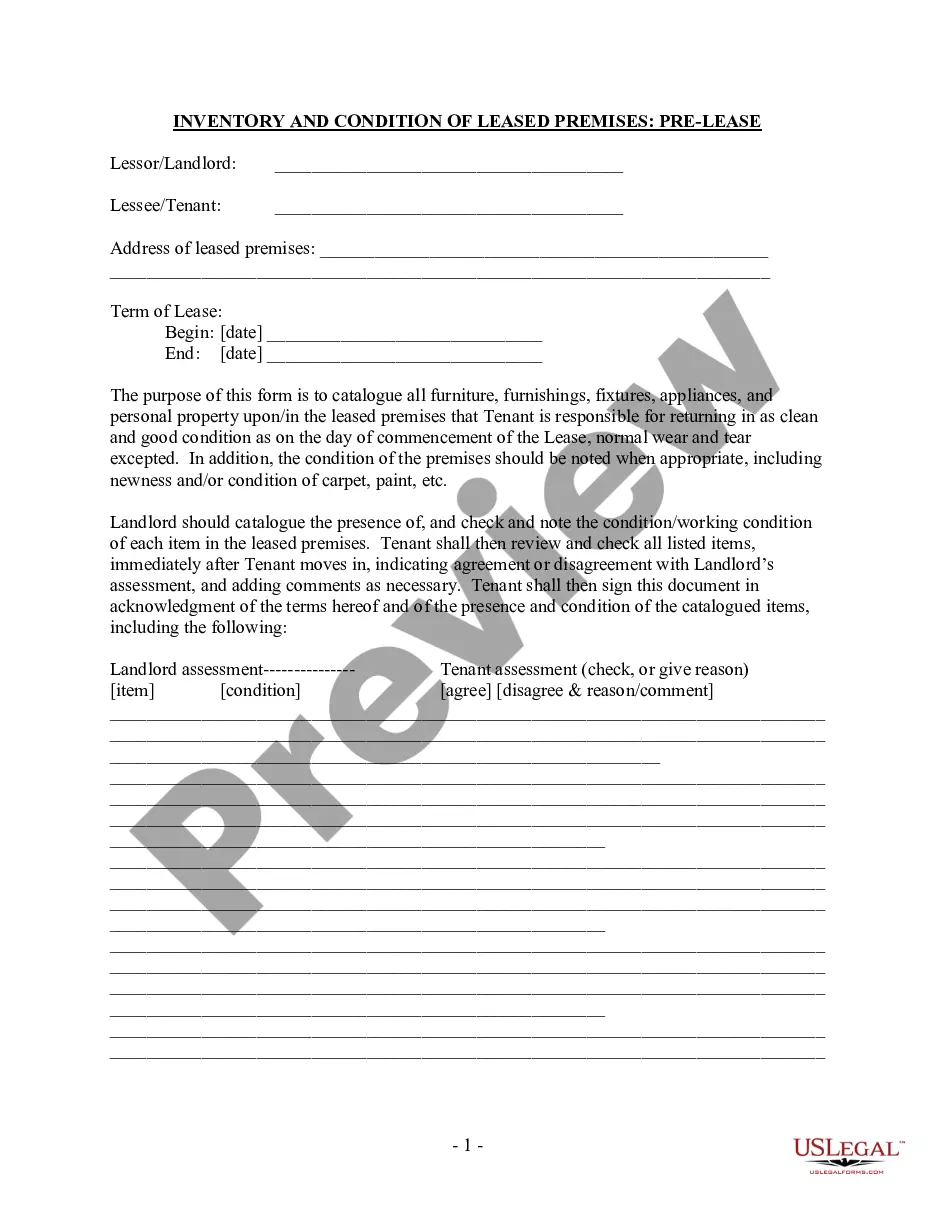
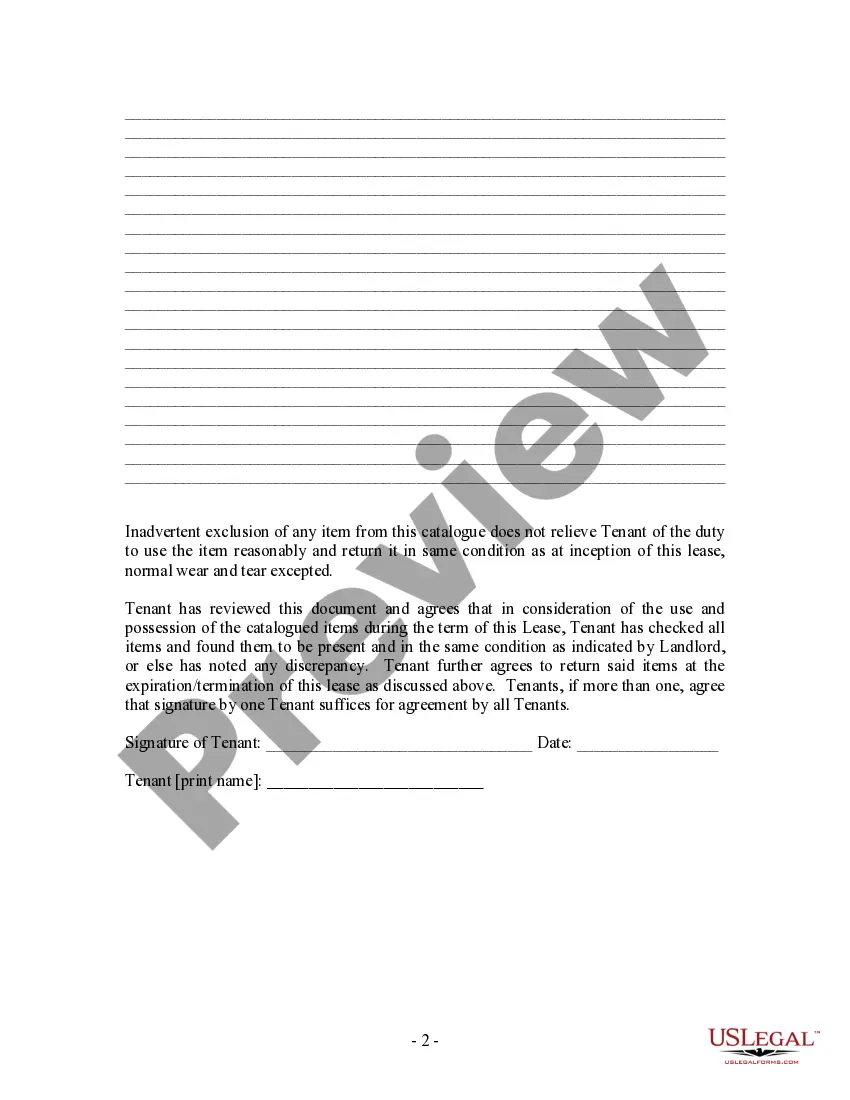
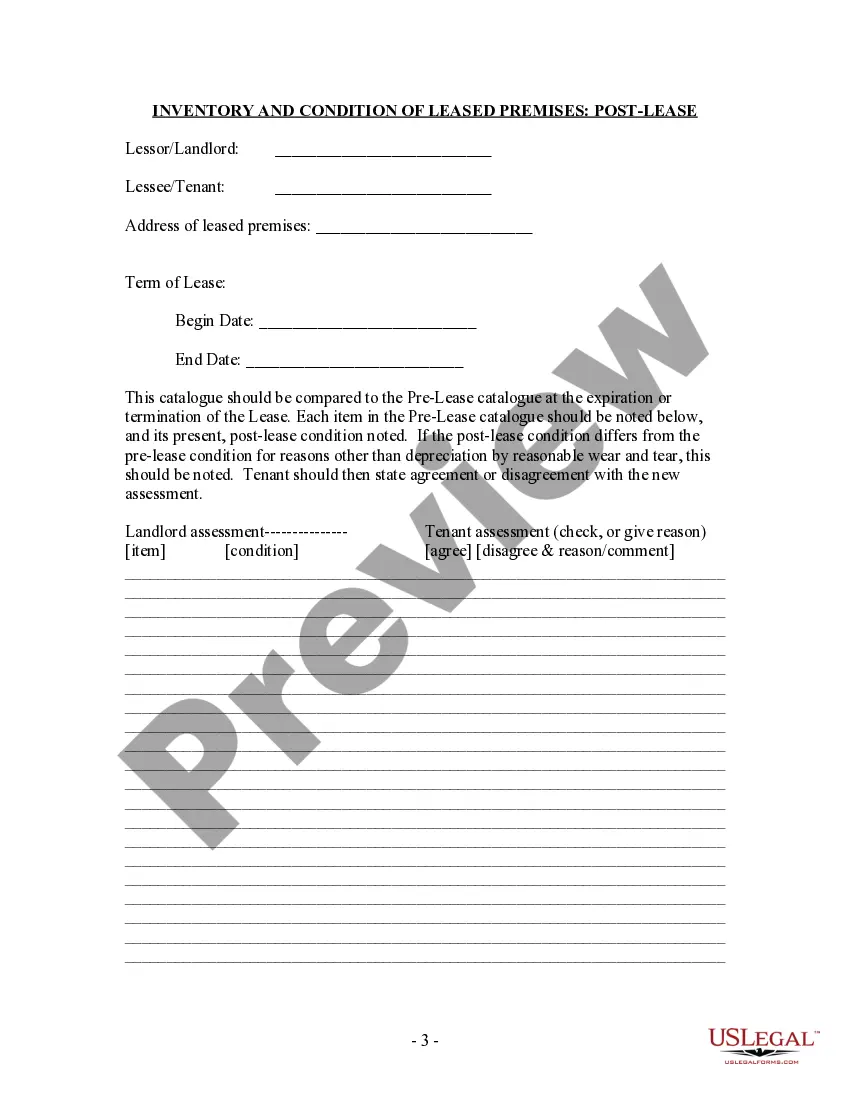
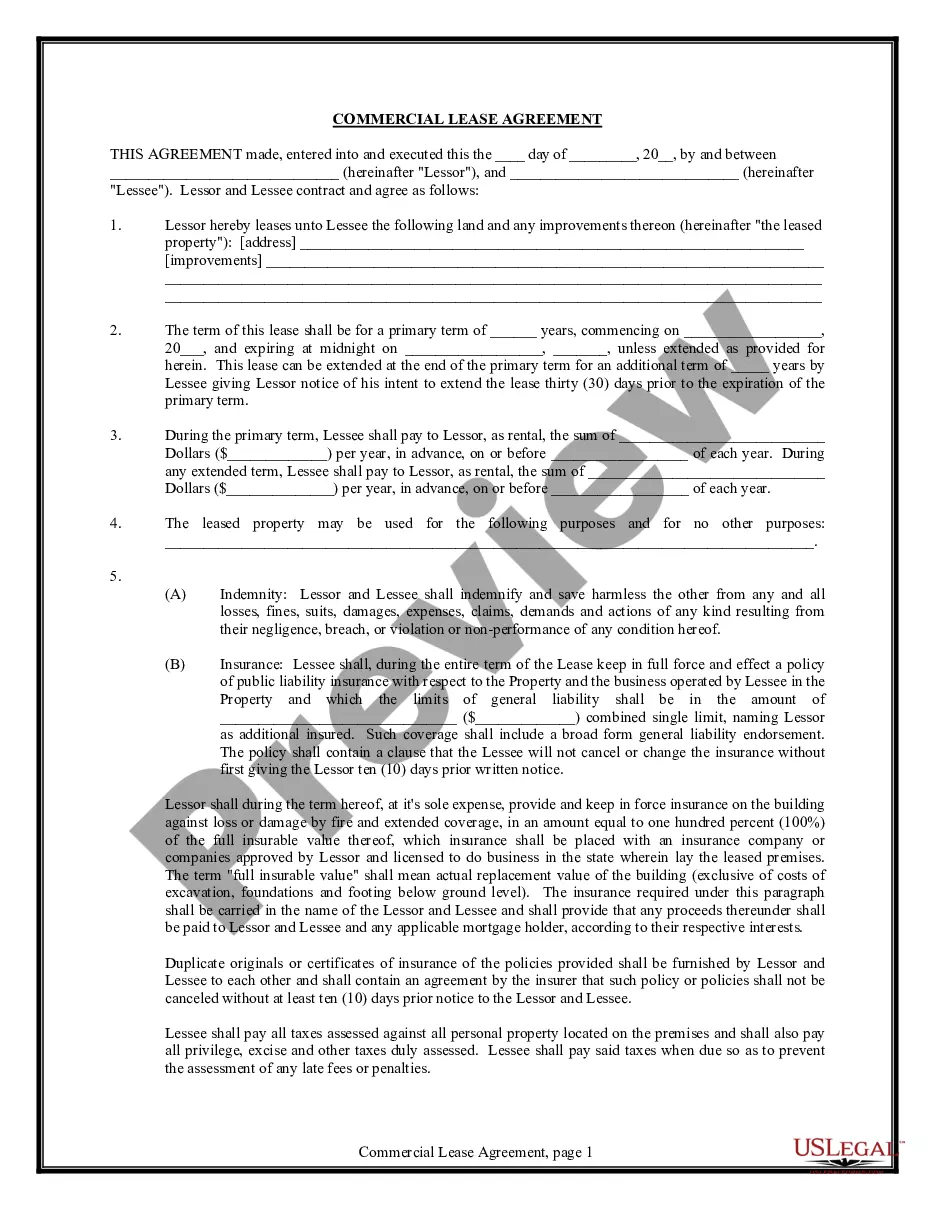
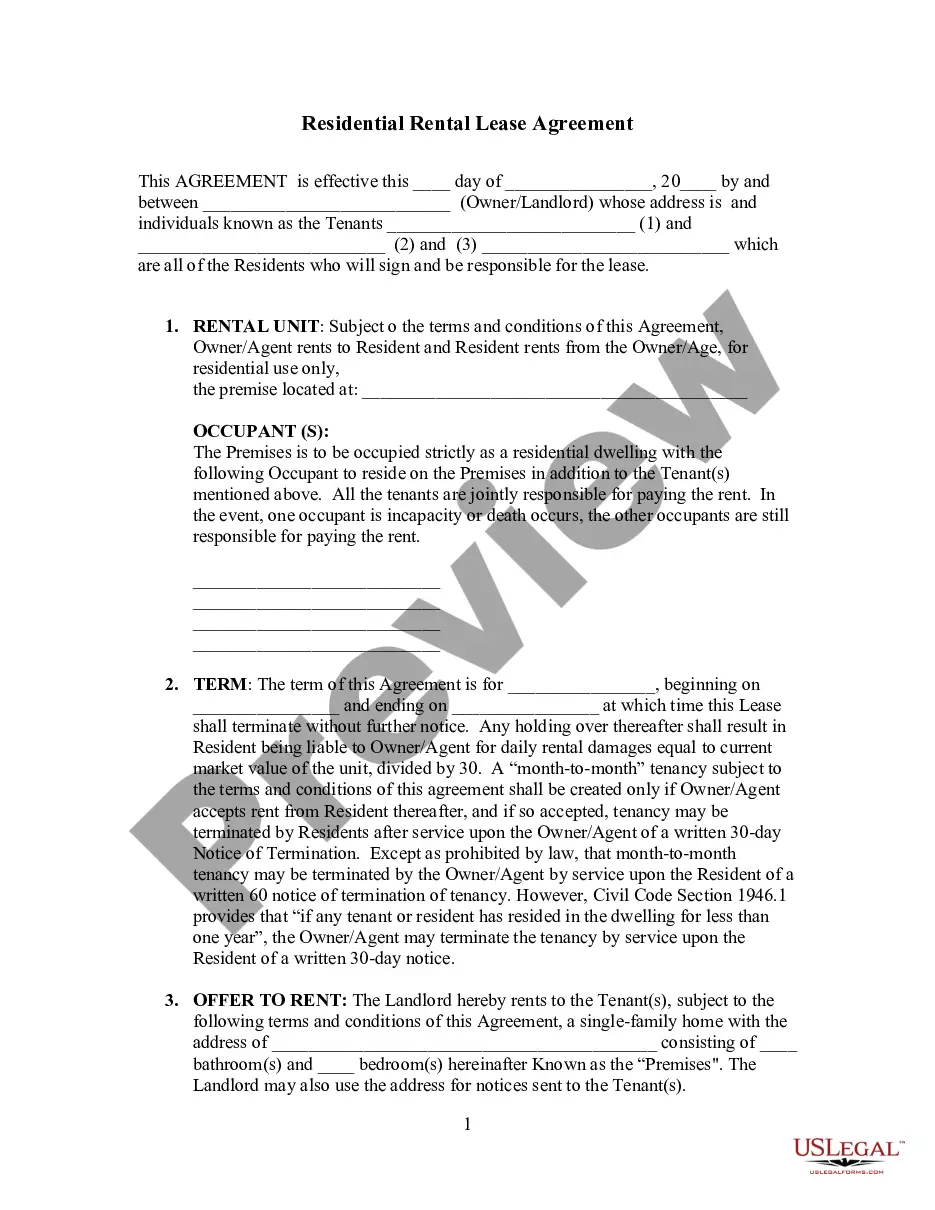
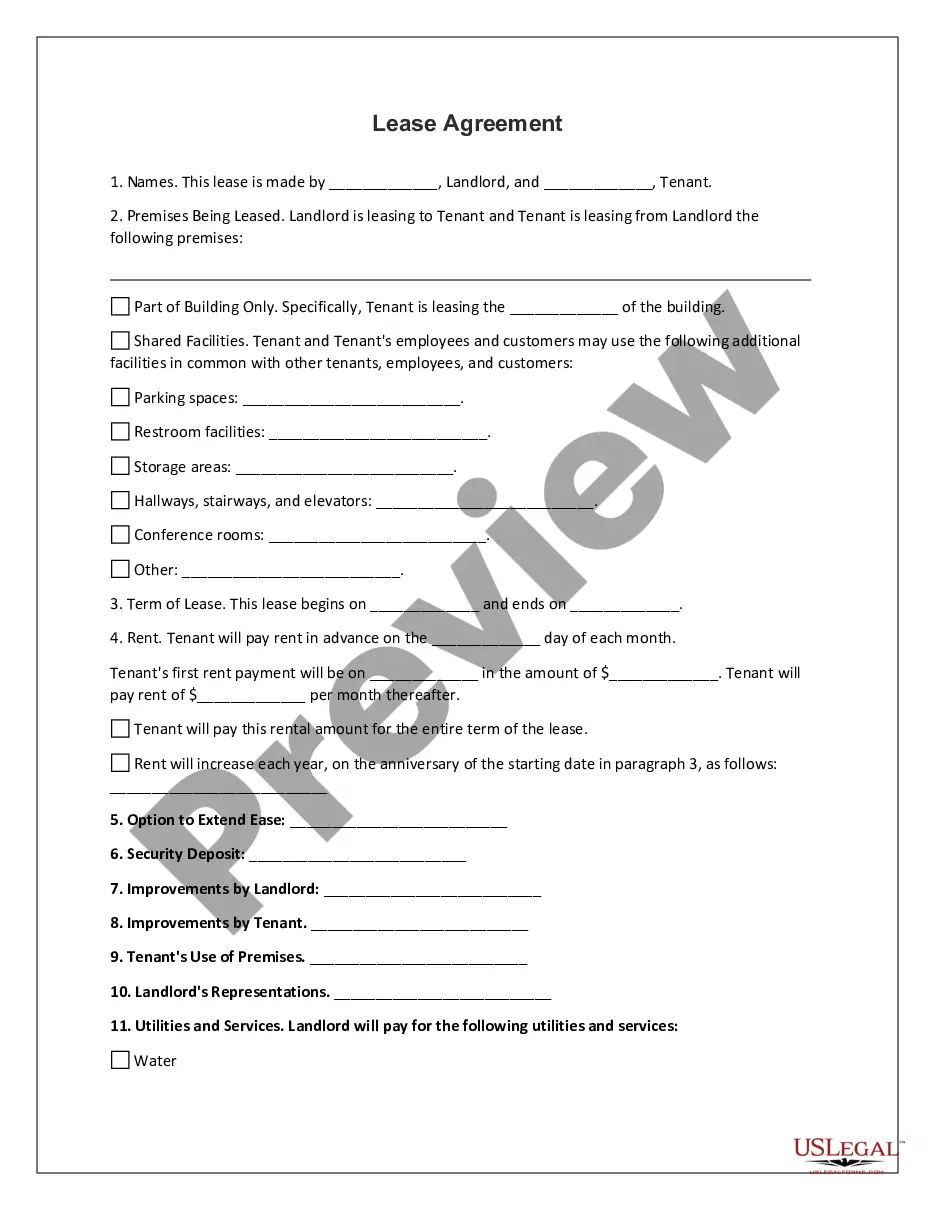
The Inventory and Condition of Leased Premises for Pre Lease and Post Lease is a legal document used by tenants and landlords to assess and agree upon the condition of a rental property both before and after the lease period. This inventory includes detailed descriptions of all furniture, fixtures, appliances, and personal property included with the lease. Unlike generic lease agreements, this form serves to document specific item conditions, helping to avoid disputes over damages when the lease ends.
Form components explained
- Identification of the landlord and tenant parties.
- Address and details of the leased premises.
- Beginning and ending dates of the lease term.
- A checklist of items present in the property, with space for condition assessments.
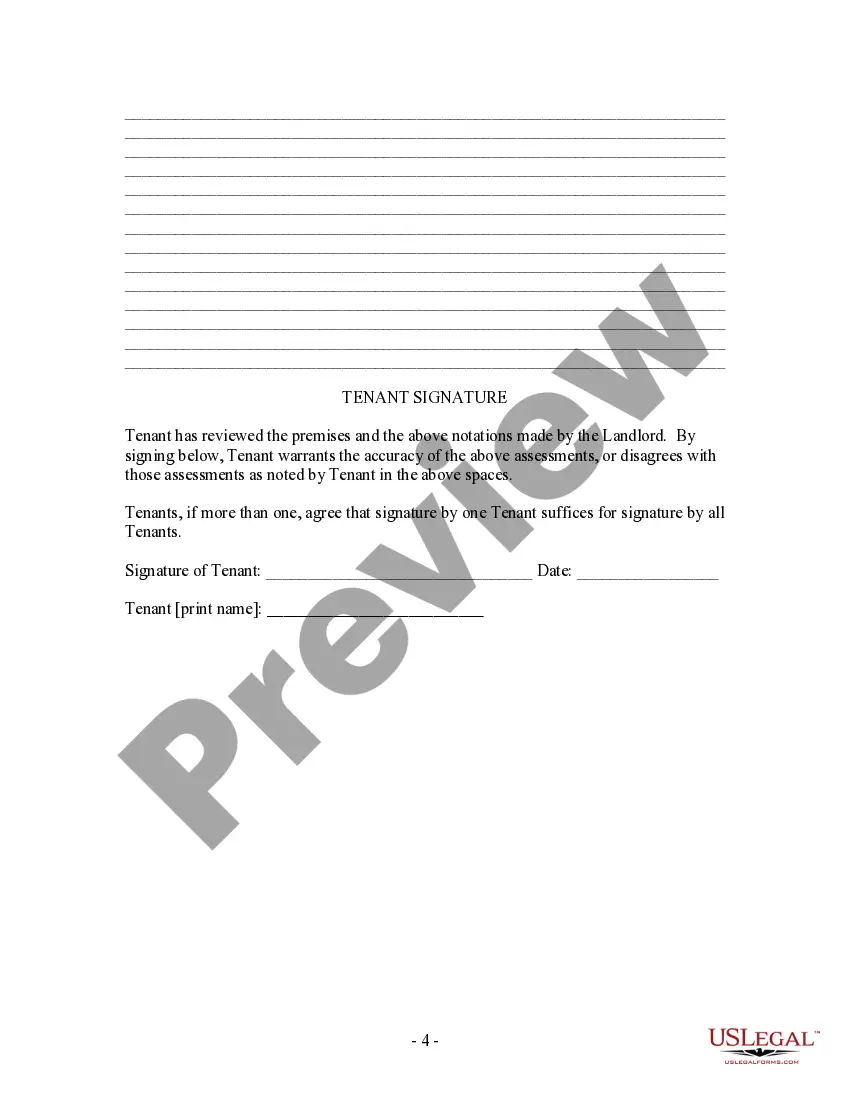
- Agreement or disagreement sections for the tenant to verify the condition noted by the landlord.
- Signatures of the tenant and landlord for acknowledgment.
When this form is needed
This form should be used at the beginning of a rental agreement to document the condition of the leased premises and any included items. It is vital for protecting both the tenant's and landlord's interests. It's also essential to use the form again at the end of the lease term to compare the current condition with the initial inventory, ensuring that any changes or damages are adequately addressed.
Who this form is for
This form is suitable for:
- Tenants renting residential properties.
- Landlords managing rental agreements.
- Property managers overseeing multiple rental units.
- Any party involved in a lease agreement who wishes to legally document the condition of the premises.
Instructions for completing this form
- Identify the parties by entering the names and contact information for both the landlord and tenant.
- Specify the leased property's address and the term of the lease, including start and end dates.
- List all furniture, fixtures, and appliances present in the premises, noting their condition as assessed by the landlord.
- Have the tenant review the inventory, marking their agreement or disagreement with the landlord's assessments and adding comments as necessary.
- Both parties must sign and date the form to acknowledge their agreement on the condition of the premises at the time of lease commencement.
Does this document require notarization?
This form does not typically require notarization unless specified by local law. Always verify local requirements to ensure compliance with any applicable regulations.
Get your form ready online
Our built-in tools help you complete, sign, share, and store your documents in one place.
Make edits, fill in missing information, and update formatting in US Legal Forms—just like you would in MS Word.
Download a copy, print it, send it by email, or mail it via USPS—whatever works best for your next step.
Sign and collect signatures with our SignNow integration. Send to multiple recipients, set reminders, and more. Go Premium to unlock E-Sign.
If this form requires notarization, complete it online through a secure video call—no need to meet a notary in person or wait for an appointment.
We protect your documents and personal data by following strict security and privacy standards.

Make edits, fill in missing information, and update formatting in US Legal Forms—just like you would in MS Word.

Download a copy, print it, send it by email, or mail it via USPS—whatever works best for your next step.

Sign and collect signatures with our SignNow integration. Send to multiple recipients, set reminders, and more. Go Premium to unlock E-Sign.

If this form requires notarization, complete it online through a secure video call—no need to meet a notary in person or wait for an appointment.

We protect your documents and personal data by following strict security and privacy standards.
Typical mistakes to avoid
- Failing to complete the inventory for both pre-lease and post-lease evaluations.
- Not allowing sufficient time for both parties to review and agree on the condition of items.
- Providing incomplete or vague descriptions of the condition of items.
- Not obtaining signatures from both the landlord and tenant, which can lead to disputes.
- Ignoring to compare the pre-lease inventory with the post-lease condition assessment.
Why use this form online
- Instant access to professionally drafted forms that ensure legal compliance.
- Easy to edit and customize according to specific lease agreements.
- Downloadable and printable formats for convenience in record keeping.
- A secure method of documenting property conditions, reducing the potential for disputes.
Legal use & context
- This form serves as a legal record of the condition of the rental property and items at the beginning and end of the lease term.
- It is important for tenants to maintain a copy for their records in case of disputes over damages or security deposits.
- Both parties are encouraged to review the form together to ensure mutual agreement and understanding.
Summary of main points
- The Inventory and Condition of Leased Premises form protects both landlords and tenants by documenting the propertyâs condition.
- It is important to complete this form at both the beginning and end of the lease term.
- Both parties should ensure they review and agree on the assessment of the property to avoid any disputes.
- Keeping a copy of this document can help resolve any issues regarding property damage or missing items when the lease ends.
Looking for another form?
Form popularity
FAQ
Names of all tenants. Limits on occupancy. Term of the tenancy. Rent. Deposits and fees. Repairs and maintenance. Entry to rental property. Restrictions on tenant illegal activity.
Subleasing occurs when the tenant transfers a part of their legal tenancy to a third-party as a new tenant.That means that if a new subtenant does not pay rent for three months, the original tenant that subleased the property is liable to the landlord for the overdue rent amount and any late fees.
Record a liability calculated as the present value of the remaining minimum lease payments due under the original (head) lease, reduced by the present value of any estimated sublease income, Write off the deferred rent from the original lease, and. Record a loss on the income statement for the difference.
On your sublease agreement, include a list of various areas of the property (including the subtenant's room, hardwood floors, walls, exterior, etc.) and note its condition. And since you and your subtenant will need to abide by the original lease that you signed, it's important to include this with your sublease.
Your name, and the landlord's name and address. The date you're writing the letter. Informing the landlord you're breaking your lease early. The reason why you're breaking your lease. The building and apartment you're vacating. The date by which you're vacating.
Writing Your Sublease. State the name of the parties and the date of the contract. Identify the full names of each party and what their role is in the contract. The original leaseholder of the property is the Tenant and the person subletting the property is the Subtenant.
Secure and flexible tenants have a legal right to sublet part of their home with their landlord's written permission. If you sublet part of your home without permission, you are in breach of your tenancy agreement. Your landlord cannot unreasonably withhold its consent to a request to sublet part of your home.
If you keep detailed records of the condition the rental property was in before a tenant moves into the unit, you will be able to pinpoint what damage was existing and what damage occurred while the tenant lived in the unit. Damage is anything in excess of normal wear and tear to the property.
Tenant's name & address. Move-in date. Date of move-in inspection. Move-out date. Date of move-out inspection. Tenant signature. Landlord name & address. Landlord contact information.