Ohio Fiduciary Deed for use by Executors, Trustees, Trustors, Administrators and other Fiduciaries
What is this form?
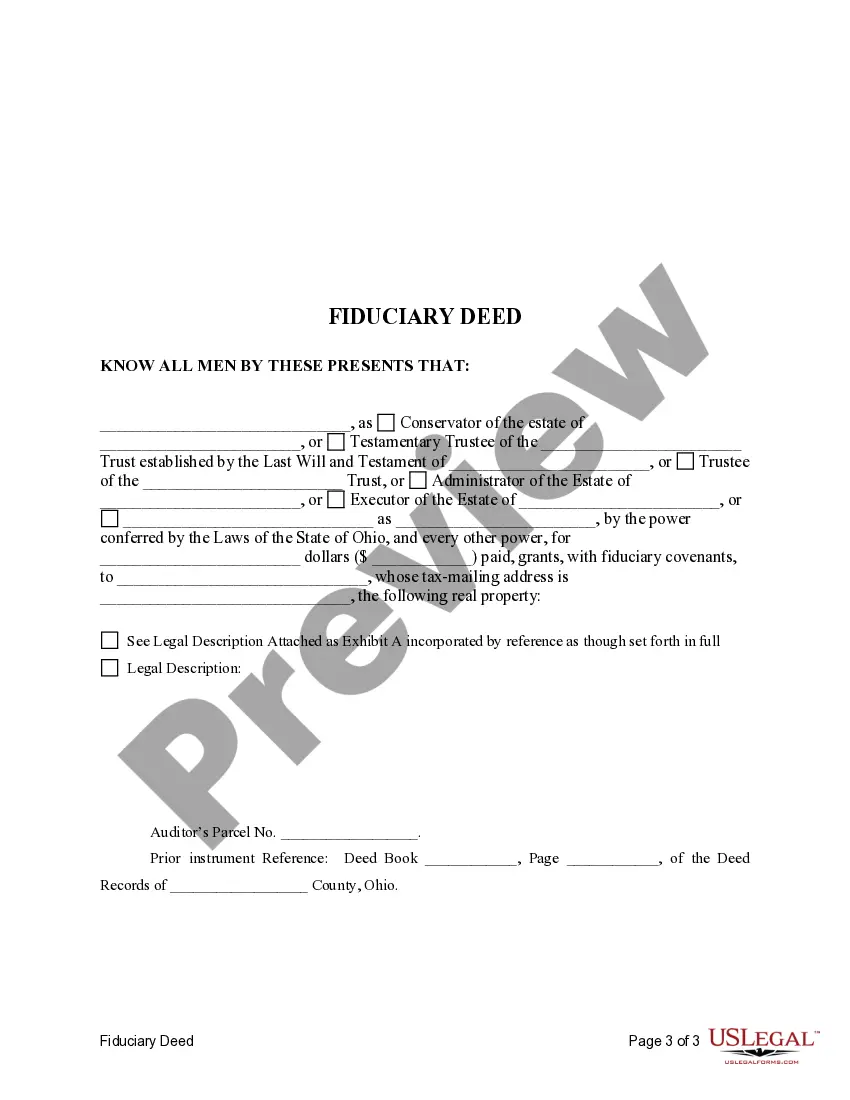
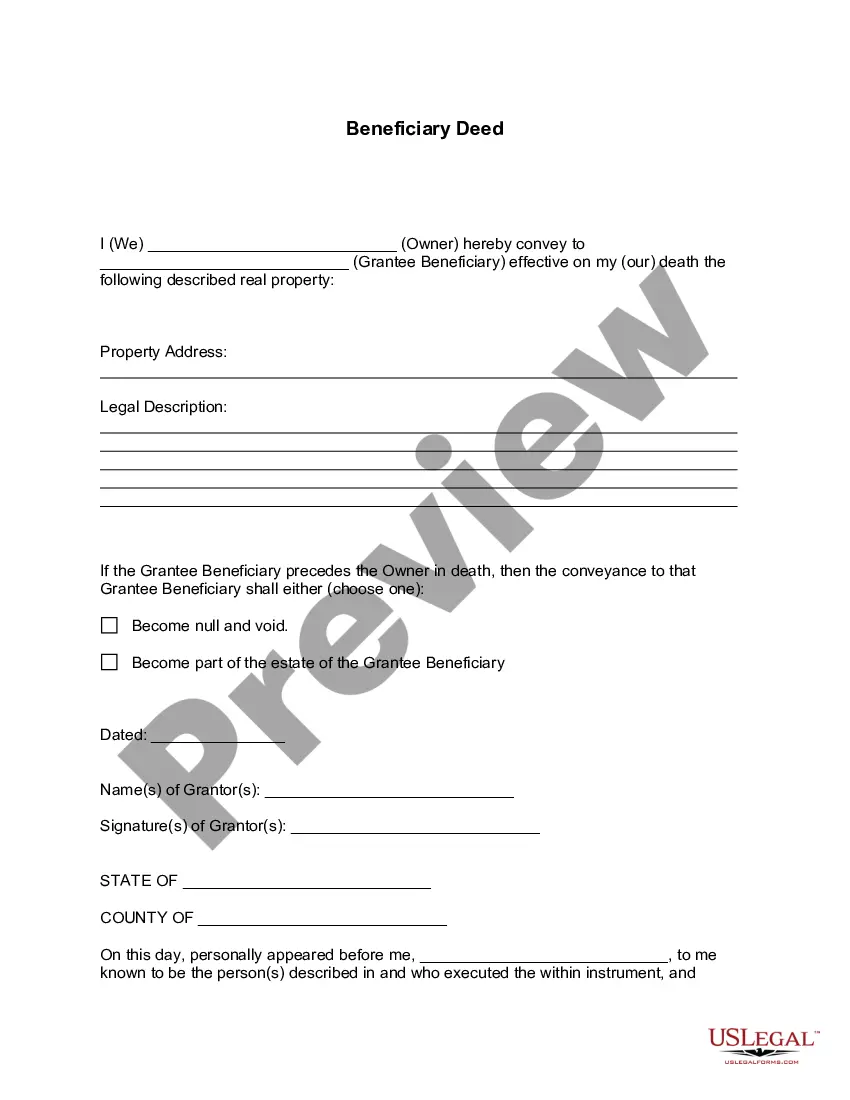
The Fiduciary Deed is a legal document that allows executors, trustees, trustors, administrators, and other fiduciaries to transfer property on behalf of an estate or trust. This form is essential for individuals acting in a fiduciary capacity to ensure that property is conveyed in compliance with legal requirements. It differs from other deeds by specifying the responsibilities of the fiduciary and clarifying their authority to act on behalf of others.
Main sections of this form
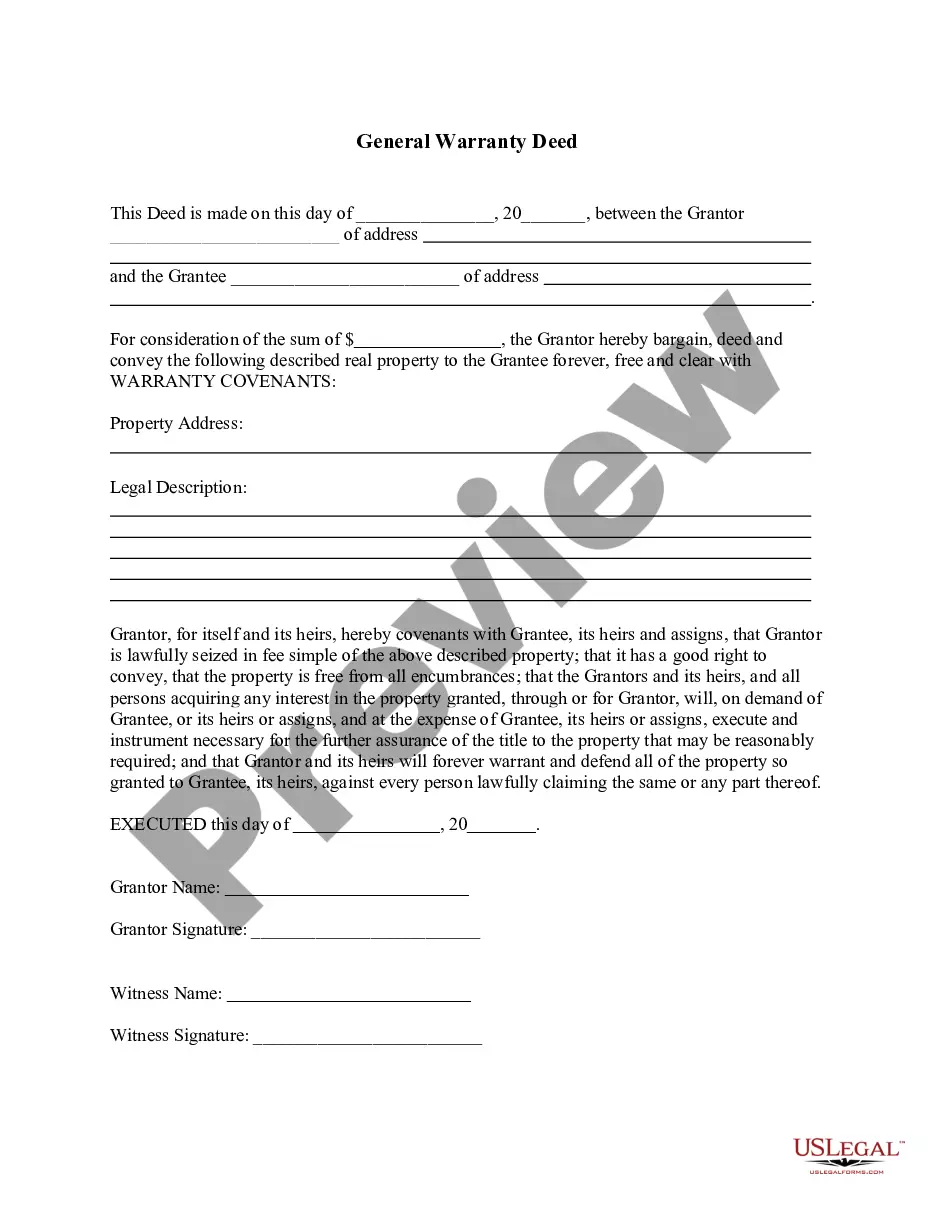
- Identification of the grantor and grantee.
- Legal description of the property being transferred.
- Statement of the fiduciary's authority to execute the deed.
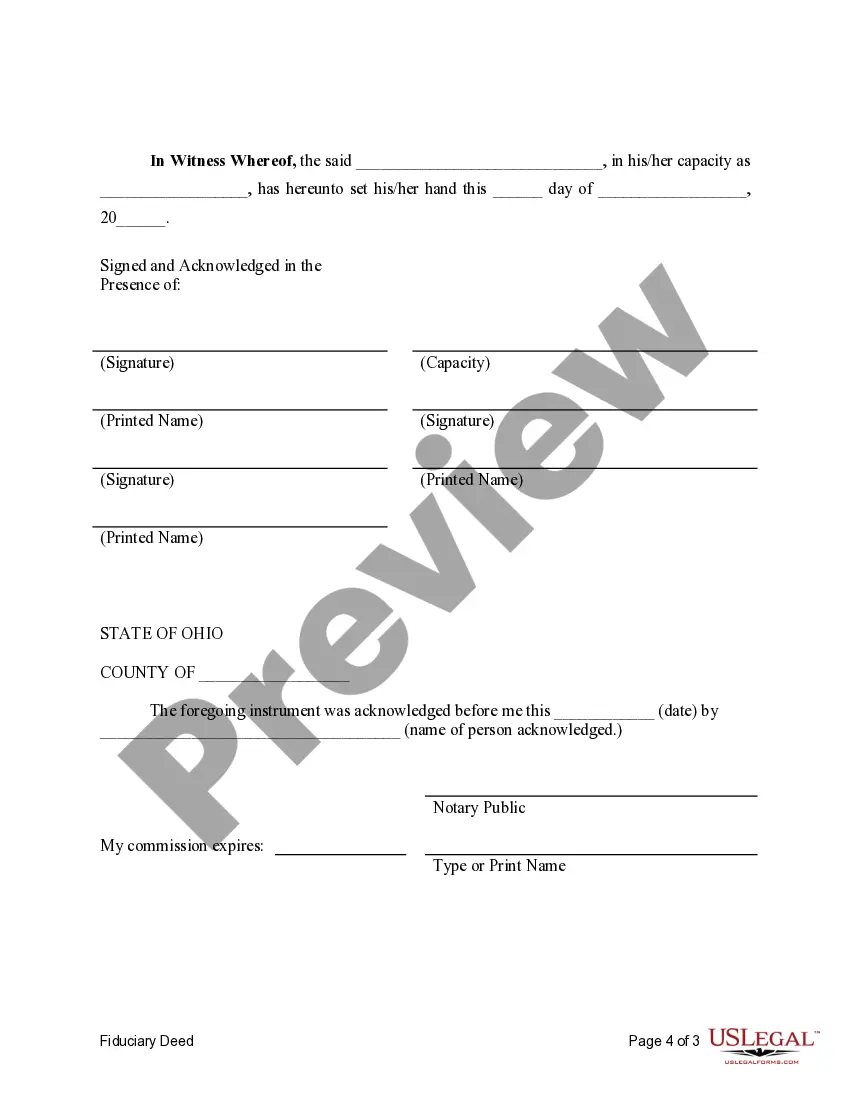
- Signature lines for the fiduciary and witnesses.
- Notarization section to validate the document.




Common use cases
This Fiduciary Deed should be used whenever property needs to be transferred as part of estate management. Common scenarios include selling or transferring real estate held in a trust, property transferred by a decedentâs executor as part of the estate settlement process, or situations where a guardian or conservator must manage the assets of a ward. Using this form ensures that the transfer is legally recognized and protects all parties involved.
Who can use this document
- Executors of wills managing an estate.
- Trustees overseeing a trust and its assets.
- Guardians or conservators acting on behalf of a minor or incapacitated person.
- Administrators of an estate without a will.
- Any individual legally designated to manage property on behalf of another party.
Completing this form step by step
- Identify the parties: specify the grantor (fiduciary) and the grantee (recipient).
- Describe the property being transferred, including its legal description.
- State the authority of the fiduciary to act on behalf of the estate or trust.
- Sign the deed in the presence of a witness and a notary public.
- Complete any required notarization to ensure the deed is legally valid.
Is notarization required?
Yes, this form must be notarized to be legally valid. Notarization provides a level of verification and prevents fraud by confirming the identities of the parties involved. US Legal Forms offers integrated online notarization services, allowing users to complete this process via secure video calls at any time.
Get your form ready online
Our built-in tools help you complete, sign, share, and store your documents in one place.
Make edits, fill in missing information, and update formatting in US Legal Forms—just like you would in MS Word.
Download a copy, print it, send it by email, or mail it via USPS—whatever works best for your next step.
Sign and collect signatures with our SignNow integration. Send to multiple recipients, set reminders, and more. Go Premium to unlock E-Sign.
If this form requires notarization, complete it online through a secure video call—no need to meet a notary in person or wait for an appointment.
We protect your documents and personal data by following strict security and privacy standards.

Make edits, fill in missing information, and update formatting in US Legal Forms—just like you would in MS Word.

Download a copy, print it, send it by email, or mail it via USPS—whatever works best for your next step.

Sign and collect signatures with our SignNow integration. Send to multiple recipients, set reminders, and more. Go Premium to unlock E-Sign.

If this form requires notarization, complete it online through a secure video call—no need to meet a notary in person or wait for an appointment.

We protect your documents and personal data by following strict security and privacy standards.
Mistakes to watch out for
- Failing to accurately describe the property can lead to legal disputes.
- Not having the deed notarized, which may invalidate the document.
- Leaving out signatures from either the fiduciary or required witnesses.
- Not clearly stating the fiduciary's authority, which can create issues in the transfer.
Why use this form online
- Convenient access allows users to complete the form at their own pace.
- Editable format enables users to tailor the details to their specific situation.
- Provides a reliable template drafted by licensed attorneys, ensuring legal compliance.
Legal use & context
- This form is legally binding when executed properly and complies with applicable state laws.
- It serves as evidence of the fiduciary's authority to transfer property, protecting both the fiduciary and the beneficiaries.
- Improper use or execution may result in the deed being deemed invalid, leading to legal disputes.
What to keep in mind
- The Fiduciary Deed is essential for property transfers by executors and trustees.
- Accurate completion and notarization are critical for legal validity.
- This form facilitates compliance with fiduciary duties while protecting the interest of beneficiaries.
Looking for another form?
Form popularity
FAQ
Attorney Involvement An attorney licensed to practice law in Ohio must prepare deeds, powers of attorney, and other instruments that are to be recorded. One exception is that a party to the transaction may prepare an instrument in which they are a party.
A fiduciary deed is used to transfer property when the executor is acting in his official capacity. A fiduciary deed warrants that the fiduciary is acting in the scope of his appointed authority but it does not guarantee title of the property.
Fiduciary Deed: A deed given by a court-appointed fiduciary. This usually happens with a guardian, executor, receiver, or administrator. It may or may not include a warranty. Usually, it includes only the right title and interest of the person whom the fiduciary represents.
Fiduciary deeds are just one of several types of deeds used in property transfers. This type is used to transfer property such as real estate when the owner can't sign a deed for legal or other reasons. Fiduciary deeds are commonly employed when settling estates and the original owner of the property is deceased.
A fiduciary deed is for use by a fiduciary such as an executor or administrator of an estate or a trustee of a trust. In this type of deed there is a warranty, but only as a fiduciary. A fiduciary does not own the property, rather they essentially manage it for another.
Three basic types of deeds commonly used are the grant deed, the quitclaim deed, and the warranty deed. A sample grant deed. the property he or she is transferring is implied from such language.